
College towns plan to challenge results of 2020 census

Some college towns plan to challenge the results of the 2020 census, claiming they were shortchanged because the pandemic forced students to leave campuses and complaining that the undercount could cost them federal money and prestige. College communities such as Bloomington, Indiana; Tuscaloosa, Alabama; and State College, Pennsylvania, are exploring their options for contesting the population counts, which they say do not accurately reflect how many people live there. When the pandemic struck the U.S. around spring break of 2020, it set off an exodus in college towns as classrooms went virtual almost overnight. The sudden departure of tens of thousands of students made it difficult to count them in the census, which began at almost the same time. Because universities were able to provide the Census Bureau with records for students living in dorms and other on-campus housing, off-campus students “ran the risk of being missed,” said Dudley Poston, a sociology professor at Texas A&M University. An Associated Press review of 75 metro areas with the largest share of residents between 20 and 24 showed that the census results fell well below population estimates in some cases but also exceeded them significantly in others. Officials in college towns are not sure why there was such variation, and they are reviewing whether it was due to the timing of spring breaks, outreach efforts, or the percentage of students living on campus versus off. Another variable is whether schools cooperated when the Census Bureau asked for records on off-campus students. Only about half of schools did so since many had privacy concerns or did not have the requested information. “You can kind of go crazy thinking about the variations,” said Douglas Shontz, a spokesman for the Borough of State College, home of Penn State University, where officials believe the census missed 4,000 to 5,800 residents. The AP review showed that the population counts were below estimates by about 5% to 7% in Mount Pleasant, Michigan; Greenville, North Carolina; and Bloomington, Indiana, metro areas, which are home to Central Michigan University, East Carolina University, and Indiana University, respectively. The 2020 census put the city of Bloomington at 79,168 residents, a decline from about 80,405 in 2010. City officials expected a 2020 count of 85,000 to 90,000 residents. The nation’s headcount was just beginning in March 2020 when schools, including Indiana University, told students not to return to campus in response to the spread of the coronavirus. Most of the university’s 48,000 students were on spring break. “It’s just not a credible number,” Bloomington Mayor John Hamilton said. “The simplest explanation is that the count was done after the university told students, ‘Don’t return to Bloomington and go back to your parents’ homes.′ I’m not blaming anybody. The university did the right thing to protect its students.” Counting university students has always been a difficult task, even before the pandemic. The Census Bureau’s rule of thumb was that students should be counted at their college addresses, even if the coronavirus temporarily sent them elsewhere on the April 1 date that provides a benchmark for the census. In State College, home to Penn State’s 39,000 students, the bureau’s message prior to the pandemic was that people should be counted “where they sleep most of the time,” which was confusing to students after they went home. As a result, neighborhoods dominated by students had the lowest census response rates in the borough, said State College Borough Manager Tom Fountaine in a memo to city officials. In Greenville, North Carolina, home to East Carolina University’s 29,000 students, the census figure fell more than 6% below estimates, and Mayor P.J. Connelly worries that could affect the city’s ability to get funding for its bus system and low-income housing. Connelly plans to challenge his city’s count of 87,521 residents. “We believe there were some miscalculations based off the college students,” Connelly said. Some metro areas, such as Tuscaloosa, Alabama, and Huntsville, Texas, had census counts that were 6% above their estimates, according to the AP review. The cities are respectively home to the University of Alabama and Sam Houston State University. Even so, Tuscaloosa Mayor Walt Maddox believes thousands of off-campus students were overlooked, and the city plans to challenge the numbers. The 2020 count put the city 400 people shy of 100,000 residents, which could cost it access to certain federal funding that is available only to cities with 100,000 residents or more. “In terms of economic development, the perception of being above 100,000 has a greater psychological impact in your recruiting and development,” Maddox said. Auburn, Alabama, home to Auburn University, had census numbers well above estimates, but city officials believe the strong count was just a correction for an undercount in 2010, city spokesman David Dorton said. Cities, states, and tribal nations can start contesting their numbers in January through the bureau’s Count Question Resolution program, but it looks only at number-crunching errors, such as an overlooked housing unit or incorrect boundaries. The program only revises figures used for population estimates over the next decade that help determine federal funding. The Census Bureau won’t revise the numbers used for determining how many congressional seats each state gets nor the redistricting data used for drawing congressional and legislative districts. “While we are anticipating more cases because of the many challenges the 2020 census went through, the scope is going to be limited, and the data products are going to be limited,” Census Bureau official Matthew Frates told Texas demographers and economists during a presentation last summer. There have been victories in the past, such as the city of Houston’s effort to get its population count revised from 2.09 million to 2.1 million residents after the 2010 census. The change triggered the addition of two city council seats. “It’s going to be an uphill battle, but it’s worth a try,” said Shontz in State College. Republished with the permission of the Associated Press.
Steve Flowers: Reapportionment and gerrymandering

Hopefully, you participated in the census last year. It is vitally important for each state that every person is counted. One of the first premises set out by our nation’s founding fathers is that there be a census taken every 10 years. The reason for the United States census is to determine how many seats each state is appropriated in the U.S. House of Representatives. It is based on the democratic principle of one man, one vote. Each state shall be equally represented based on the number of people they have within their state borders. The power to draw the congressional lines rests with the State Legislature. For that reason, there was a lot of time and money spent by the national political parties to capture the majority of seats in the swing state legislative bodies. The pen to draw the lines is in the hands of the majority party. In Alabama, that is overwhelmingly Republican. Therefore, you can rest assured that Congressional lines in the Heart of Dixie will be favorable toward the GOP’s six-to-one control. Indeed, this reapportionment pencil has the same application for the legislators’ own districts. This preferential partisan parameters of districts are generally referred to as gerrymandering. Dictionaries define the word “gerrymander” as “to divide a state, country or city limits into voting districts to give unfair advantage to one party in elections.” This is a pretty apt and succinct description of gerrymandering. The word was derived from an 1812 journalist’s evaluation of a Massachusetts reapportionment map and lines that looked like a salamander. The Governor of Massachusetts, who developed the salamander district, was named Gerry. Thus, the term gerrymander. In bygone days, gerrymandering was bold, overt, and racist. The courts have curtailed racist and ethical boundaries. So gerrymandering is not nearly as blatantly overtly partisan as in past times. Alabama’s 1901 constitution is as archaic as any in the nation. It has contributed to the poor image that persists today regarding our racist past. However, much of the damage was done during the 1960s. I had the opportunity to serve as a page in the state legislature when I was a boy. It was quite a learning experience. The older men, who were Senators and House members, would visit with the pages and tutor us on the rules and nuances of parliamentary procedures. One day, I was looking around the House, and it occurred to me that the urban areas and especially north Alabama were vastly underrepresented. As a boy, I knew that the Birmingham area was home to about 20% of the state’s population, but they certainly did not have a fifth of the House members. The same was true of Huntsville and other larger cities in North Alabama. The rural and black belt counties were enjoying the power that had been granted them by the 1901 constitution. The state legislature was very malapportioned as late as the 1960s. It was so severely imbalanced that it was almost comical. The legislature had simply ignored the constitutional mandate to reapportion itself every ten years. It was not until 1974 that the courts finally intervened and made the legislature reapportion itself. The federal courts not only mandated the reapportionment but also eventually had to draw the lines and districts. This federal court intervention gave African Americans representation in the legislature for the first time. Today, about 25% of the seats are held by African Americans. The reapportionment also gave fair and equitable representation to the urban areas of North Alabama. A cursory look at the legislative chambers today reveals that the majority of legislators are from Birmingham north because that is where the people live. You will see that trend become more accentuated when the lines are drawn this year. The population figures will reveal that North Alabama is where the growth is in the state. It will be interesting to see how the lines are drawn for the next decade. There will be a little political gerrymandering, but not like in the past years. It was thought that the 2020 census figures would be available for legislators by January. However, it may now be June, which could delay this year’s reapportionment session and, in turn, delay the 2022 election primaries. See you next week. Steve Flowers is Alabama’s leading political columnist. His weekly column appears in over 60 Alabama newspapers. He served 16 years in the state legislature. Steve may be reached at: www.steveflowers.us.
Alabama last in Census response as much of Deep South lags
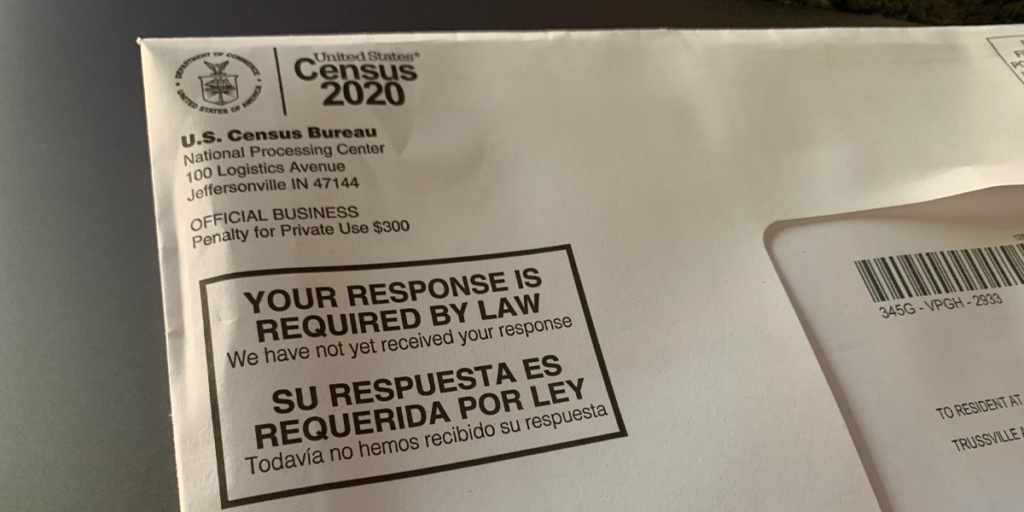
Alabama so far has the lowest percentage of households responding.
Martha Roby: Complete your 2020 census today
Completing the Census is easy and quick.
2020 census participation ‘critical’ for Alabama

With a congressional seat on the line 2020 census participation is “critical.”
States oppose Alabama’s effort exclude migrants in Census
A coalition of 15 states and several major cities is opposing a lawsuit by the state of Alabama that would have the U.S. Census count only U.S. citizens and other legal residents in totals that play a key role in congressional representation and the distribution of federal funding. New York, California, Virginia, other states, the District of Columbia and some other cities have asked to intervene in Alabama’s federal lawsuit against the U.S. Census Bureau. The states and cities want to defend the longstanding practice of counting all U.S. residents regardless of immigration status, and oppose Alabama’s effort to have it declared illegal. Alabama’s 2018 lawsuit continues a battle over immigration status and the U.S. Census after President Donald Trump abandoned an effort to include a citizenship question on the 2020 Census. New York Attorney General Letitia James said in a statement that the coalition will fight to ensure all people are counted in the census “despite the Trump Administration’s previous racist and xenophobic attempts to tip the balance of power in the nation and Alabama’s endeavor to continue down that path.” “No individual ceases to be a person because they lack documentation. The United States Constitution is crystal clear that every person residing in this country at the time of the decennial census — regardless of legal status — must be counted, and no matter what President Trump says, or Alabama does, that fact will never change,” James said. The cities and states argued in a Monday court filing that the Constitution requires an actual enumeration of the population, which means all people regardless of their citizenship or legal status. Alabama Attorney General Steve Marshall and U.S. Rep. Mo Brooks of Huntsville filed the 2018 lawsuit that says counting all residents, regardless of immigration status, was not intended by the Constitution’s writers and the practice unfairly shifts political power and electoral votes from “states with low numbers of illegal aliens to states with high numbers of illegal aliens.” Alabama argued in the lawsuit that “illegal aliens have not been admitted to the political community and thus are not entitled to representation in Congress or the Electoral College.” Alabama has said it could lose a congressional seat as a result of the 2020 Census.Attorneys for the intervening states argued they too have a “significant stake in the outcome of this litigation” because it will affect their political representation in Congress and their eligibility for federal funds. In 2016, the U.S. Supreme Court in a similar case ruled against two Texas residents who argued their votes were diluted by the practice of using the “whole population” to draw legislative district lines. The Department of Justice is defending the Census Bureau in the lawsuit. However, the cities and states seeking to intervene in the case questioned the Trump’s administration commitment to defending the practice. U.S. District Judge David Proctor in December allowed others to intervene in the case, noting the federal government’s “rather halfhearted” argument to dismiss the lawsuit. The latest motion to intervene noted that Trump Attorney General William Barr had noted the “current dispute over whether illegal aliens can be included for apportionment purposes.”The states seeking to intervene in the lawsuit are: New York, California, Colorado, Connecticut, Illinois, Massachusetts, Minnesota, Nevada, New Jersey, New Mexico, Oregon, Rhode Island, Vermont, Virginia and Washington. The United States Conference of Mayors, the District of Columbia and nine other cities and counties, including Seattle and New York City, are also asking to join the lawsuit. The city of Atlanta also asked to intervene in a separate court filing. This story has been corrected to say the opponents include 15 states and several major cities, not 16 states. Republished with permission from the Associated Press.
Parker Snider: Why everyone, including limited-government conservatives, should participate in the Census

It’s September 5th, 2020. You, like most of Alabama, have been waiting months for this day. As summer slowly faded into autumn, the cool evenings punctuating the still-stifling afternoons, you took heart knowing the long months of faint interest in the NBA and baseball were almost gone. Today, after all this time, the drought is finally over: the first Saturday of college football season has arrived. Just as you’ve settled in, the doorbell rings. Wholeheartedly intending to ignore the unscheduled visitor, your heart sinks when one of your guests (a Tennessee fan) opens the door and calls for you. Confident you will not be inviting this particular friend over again next weekend, you begrudgingly make your way to the door to see a man with a clipboard and a bag with the words “United States Census Bureau” on both sides. You politely ask if you could respond later, perhaps online or via the mail. He kindly answers that, yes, that was an option, and then points to a stack of unopened mail on your front table that also reads “Census Bureau”. Point taken. Being the gracious Southerner you are, you answer his questions and are back watching the game in less than ten minutes. The truth is that this scenario will likely occur repeatedly during the 2020 Census. While most will comply with the requests of the Census Bureau, there are always those who successfully skirt the eye of the federal government. For limited-government conservatives, slamming your door on the person who says, “I’m with the federal government and I’d like to ask you a few questions” may indeed be a natural response. It is not, however, considerably helpful, especially to the conservative cause. In fact, Alabamians failing to be counted in the 2020 Census could fuel debilitating blows to the conservative movement, both in Alabama and across the nation. That’s because the Census is more than an arbitrary headcount. The Census totals, in fact, shape how billions of federal dollars every year are allocated to states for Medicare, SNAP (food stamps), highway construction, and more. In addition, businesses rely heavily on Census data to determine where to build factories, restaurants, and stores. Inaccurate data here could cost jobs and create unnecessary economic hardship. Perhaps most importantly, however, is that the Census determines how many seats in the U.S. House of Representatives each state gets and, with that number, how votes are allocated in the Electoral College. Unfortunately, most projections suggest that Alabama will lose a seat in the U.S. House as a result of the 2020 Census. That’s because, although Alabama is growing, it is not growing as fast as other states. The 435 seats in the House, as directed in the Constitution, must be allocated to each state so that each member of Congress represents roughly the same number of people. Since the population is increasing quickly in places like Texas, Oregon, and Florida, the reapportionment of congressional seats will likely benefit their interests over ours. Since states are given votes in the Electoral College by their number of Congressmen (Senate and House), losing a House district would also mean Alabama loses power to determine the U.S. President. This would be, perhaps, the most discouraging byproduct of a low Census count. Overall, the results of the 2020 Census could reduce Alabama to a state that has fewer voices in Congress, a lower rate of federal funding, and less power to choose the President. This version of Alabama is not good for the conservative cause. As one of the most conservative states in the nation, the conservative movement needs a healthy Alabama that has strong, multilayered representation and power in the Electoral College to push a conservative candidate to 270. The truth is that Alabama just might keep all seven of our congressional districts and all nine electoral college votes. To do so, however, we need a full count of everyone living in the state. Conservatives (really everyone for that matter), therefore, should make sure they and every person they know are counted in the 2020 Census. Complete it online, mail it in, or risk a Census worker interrupting your football Saturday. If that happens, you’d best respond. You (probably) won’t miss another Kick Six. Parker Snider is the Director of Policy Analysis at the Alabama Policy Institute.
Government seeks to dismiss Alabama lawsuit over census
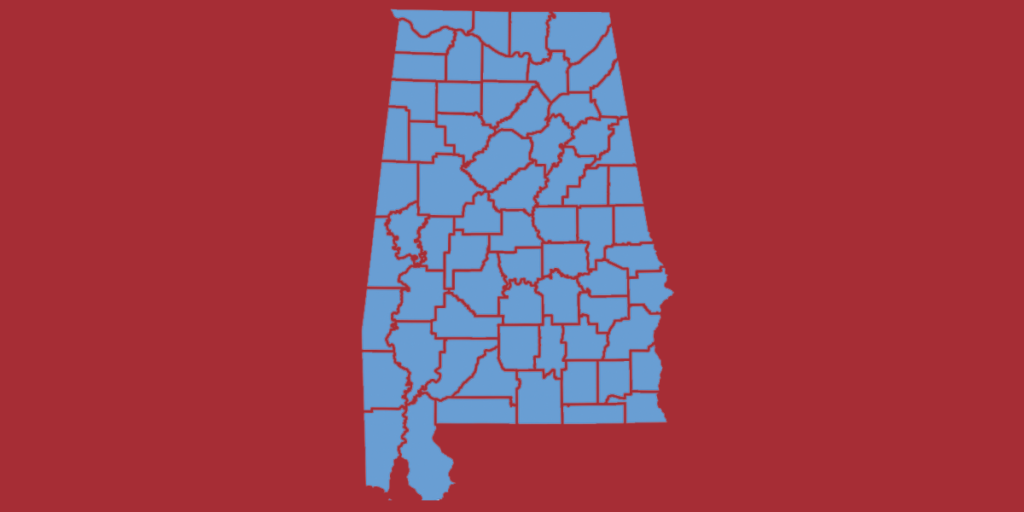
The federal government on Friday asked a judge to dismiss Alabama’s lawsuit seeking to include only citizens and other legal residents in 2020 U.S. census counts. U.S. Department of Commerce made the request in a filing responding to the state’s lawsuit. Alabama and U.S. Rep. Mo Brooks sued the Commerce Department and U.S. Census Bureau last year over the practice of counting all U.S. residents, regardless of their citizenship status. The lawsuit contends that Alabama could lose a congressional seat and an electoral vote to a state with a “larger illegal alien population.” In June refused to dismiss the case on jurisdictional grounds, but made no comment on the merits of the case. Lawyers for the government on Friday renewed their request for the judge to dismiss the lawsuit after filing their response. The Constitution says that apportionment shall be decided after “counting the whole number of persons in each state.” It has been the practice to include all U.S. residents in the census counts, which also determine the number of congressional seats for each state.Alabama is seeking to have the practice declared unconstitutional. In 2016, the U.S. Supreme Court ruled against two Texas residents who argued their votes were diluted by the practice of using the “whole population” to draw legislative district lines. Republished with permission of the Associated Press.
Census, redistricting top remaining Supreme Court cases
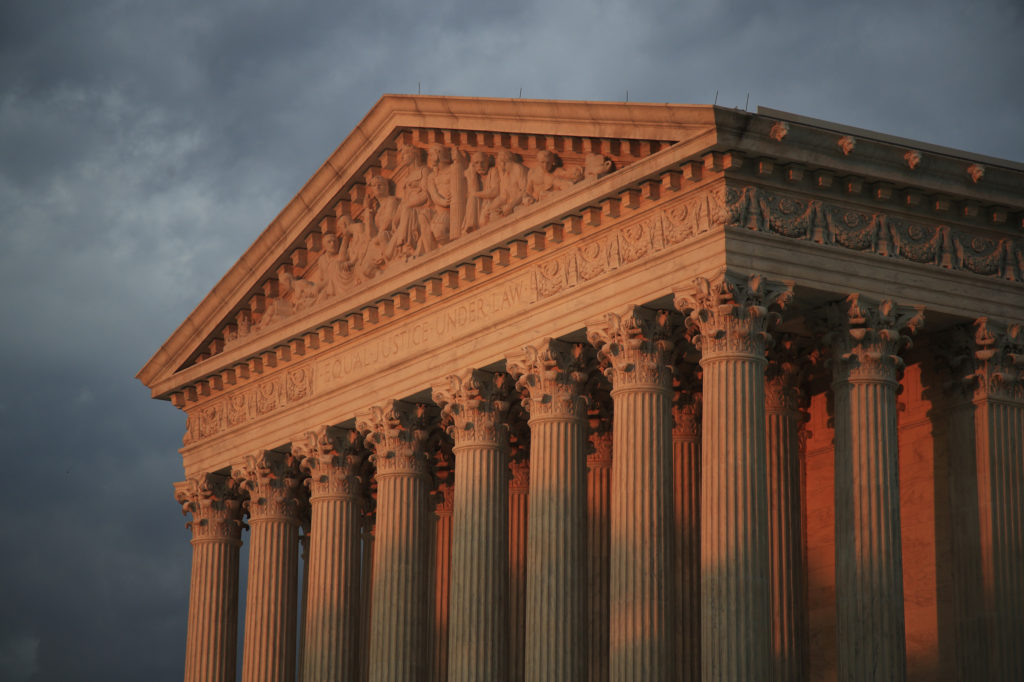
The Supreme Court enters its final week of decisions with two politically charged issues unresolved, whether to rein in political line-drawing for partisan gain and allow a citizenship question on the 2020 census. Both decisions could affect the distribution of political power for the next decade, and both also may test Chief Justice John Roberts’ professed desire to keep his court of five conservatives appointed by Republican presidents and four liberals appointed by Democrats from looking like the other, elected branches of government. Decisions that break along the court’s political and ideological divide are more likely to generate criticism of the court as yet another political institution. In addition, the justices could say as early as Monday whether they will add to their election-year calendar a test of President Donald Trump’s effort to end an Obama-era program that shields young immigrants from deportation. The court’s new term begins in October. Twelve cases that were argued between November and April remain to be decided. They include disputes over: a trademark sought by the FUCT clothing line, control of a large swatch of eastern Oklahoma that once belonged to Indian tribes and when courts should defer to decisions made by executive branch agencies. But the biggest cases by far involve the citizenship question the Trump administration wants to add to the census and two cases in which lower courts found that Republicans in North Carolina and Democrats in Maryland went too far in drawing congressional districts to benefit their party at the expense of the other party’s voters. The Supreme Court has never invalidated districts on partisan grounds, but the court has kept the door open to these claims. The court has struck down districts predominantly based on race. Now though the justices are considering whether to rule out federal lawsuits making claims of partisan gerrymandering. Conversely, the court also could impose limits on the practice for the first time. It was not clear at arguments in March that any conservative justices were prepared to join the liberals to limit partisan gerrymandering. In the census case, the Census Bureau’s own experts say that Hispanics and other immigrants are likely to be undercounted if the census questionnaire asks everyone about their citizenship status. The last time the question appeared on the once-a-decade census was in 1950, and even then it wasn’t asked of everyone. Democratic-led states and cities, and civil rights groups challenging the citizenship case, have argued that the question would take power away from cities and other places with large immigrant populations and reward less populated rural areas. They have more recently pointed to newly discovered evidence on the computer files of a now-dead Republican consultant that they say shows the citizenship question is part of a broader plan to increase Republican power. The administration has said the new allegations lack merit. When the case was argued in April, it appeared that the conservative justices were poised to allow the question to be asked. Census results determine how seats in the House of Representatives are allocated among the 50 states and how billions of dollars in federal money is distributed. The population count also forms the basis for the redrawing of districts from Congress to local governments that takes place every 10 years. The court’s decisions in the redistricting cases will affect the tools state lawmakers can use to draw those districts, especially in states in which one party controls the governor’s office and both houses of the state legislature. Republican successes in the 2010 election cycle left them completely in charge of the process in such states as Michigan, North Carolina, Ohio and Wisconsin. In all four states, Democratic voters sued over congressional or legislative districts, and federal courts determined that the districts violated those voters’ constitutional rights. Democrats controlled the process in Maryland, where they successfully reshaped one district to pry it from longtime Republican control. Once the court’s work is done for the summer, the justices typically leave town to teach and travel. Justice Brett Kavanaugh will teach a course on the origins of the U.S. Constitution for George Mason University’s summer program in England, near where the Magna Carta was sealed 800 years ago. By Mark Sherman Associated Press Republished with the permission of the Associated Press.
Martha Roby: An accurate 2020 census
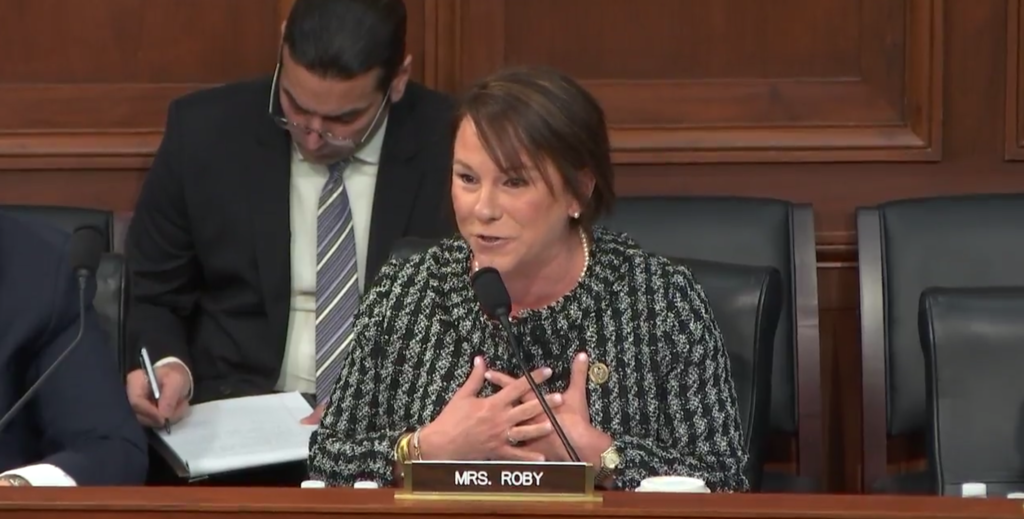
Every ten years, the U.S. Census Bureau conducts a count of every resident in the United States, as mandated by Article I, Section 2 of our Constitution. This action is critically important to understanding current facts and figures about our country’s people, places, and economy. It’s hard to believe that a decade has almost passed, and we are just eleven months away from next year’s April 1 Census. It goes without saying that a lot has changed over the last ten years, especially on the technological front. As times and trends change, it is important that the method by which we conduct the Census also evolves to ensure we are reaching the most people possible. That said, it’s no surprise that in 2020, we will largely depend on an Internet system to count Americans, relying heavily on digital advertising and social media platforms to spread the word. As the Census Bureau works to modernize its various platforms ahead of the 2020 Census, I was glad to hear about these efforts directly from Dr. Steven Dillingham, Director of the U.S. Census Bureau, during a recent Commerce, Justice, Science, and Related Agencies Appropriations Subcommittee hearing. During this hearing, I had the opportunity to discuss with Director Dillingham how important it is that all Alabamians be accurately counted in 2020. Back in 2010, our state did not do a great job accounting for all of our people, especially children below the age of six and those individuals in rural communities. As I told Director Dillingham, we must make sure that is not the case in next year’s count. You see, the Census doesn’t just decide the number of congressional seats Alabama has, it also decides our number of Electoral College votes. We currently have nine Electoral College votes, and if the 2020 Census is not accurate, that number will drop to eight. This is a very big deal, and it is something we Alabamians do not want to see happen. The Census also determines the amount of federal dollars that come into Alabama, specifically to hospitals, job training centers, schools, infrastructure projects, and other emergency services. Inaccurate Census numbers force our state to do more with less, and that cannot happen again in 2020. As we all know, Alabama’s Second District and the rest of the Southeastern corner of the state are made up of very rural communities. To achieve the most accurate count possible in next year’s Census, it is critical that we reach the men, women, and children living in the rural areas throughout the country. During my conversation with Director Dillingham, I asked him how the Census Bureau plans to use its resources to partner with our state and community-based organizations to encourage participation in the Census, especially in hard-to-count, rural communities. I made sure Director Dillingham understands that a large part of our district, and many areas of our state, lack access to reliable broadband and thus may not utilize the Internet and social media enough to encounter online advertising about the upcoming Census. This will certainly be a challenge, but it is one we must address. I also brought up another challenging reality that we must face: Over the last year, Alabama and other states in the Southeast have been beaten with hurricanes, tornadoes, and other powerful storms. There has been flooding throughout the Midwest and fires ravaging California. These disastrous events have caused thousands of Americans to be displaced from their homes, and we must ensure that they, too, are counted in next year’s Census. To make sure the 2020 Census is as accurate as it can possibly be, it is important that leaders on all levels of federal, state, and local governments are communicating about ways we can spread the word and reach the most people. I believe the modernization of our Census process will lead to excellent results next year, but it is critical that we make every effort to reach those who have been displaced by severe weather as well as the people in rural communities who may not have reliable access to social media and online advertising. The future of our state’s representation in Congress and the Electoral College are at stake, and we must ensure that Alabama receives its fair share of federal funding for numerous programs we all depend on. I encourage you to start spreading the word about the April 1, 2020, Census. It will be here before we know it, and Alabama needs an accurate count.# Martha Roby represents Alabama’s Second Congressional District. She lives in Montgomery, Alabama, with her husband Riley and their two children.
Alabama’s population gain lags behind other states
Alabama’s total population gain last year might fill up half of Cramton Bowl, Montgomery’s municipal football stadium. That could spell trouble for the state’s political prospects. The U.S. Census Bureau this week estimated that Alabama grew by about 12,751 people during the year ending July 1, a minimal 0.2 percent increase that was slower than other states. Alabama’s birth rate is roughly comparable to the nation as a whole — during the year, Alabama had 11.7 births per 1,000 people, vs. about 11.8 per 1,000 for the United States. But the state also had the second-highest rate of death in the country last year, reporting 10.9 deaths per 1,000 people vs. 8.6 for the nation, possibly a reflection of an aging population. West Virginia, with 12.4 deaths per 1,000, reported the highest mortality rate. The rate of people moving into the state was also low, due in part to low rates of immigration in Alabama. The Census Bureau estimates Alabama gained 1.9 people per 1,000 from people moving into the state last year. Most of that came from individuals moving from other parts of the country. The rate of international migration was 0.7 individual per 1,000, well below the national rate of 3.0 per 1,000. Alabama’s birth rate was below the South’s overall rate (12.1 per 1,000), as was the rate of migration into the state (6.1 per thousand). The death rate in Alabama was notably higher than the region’s (8.9 per 1,000). The state had 4,887,871 residents on July 1, according to the Census. With reapportionment looming after the 2020 Census, Alabama is on the cusp of losing one of its seven seats in the U.S. House of Representatives, a development that could reduce the state’s voice in the lower chamber. It would be the first loss of a seat for the state since 1970. The state’s growth rate among the states also fell from 27th in 2017 to 34th in 2018, which could possibly increase the chances of the state losing a seat. State officials are trying to prevent the loss in several ways. Gov. Kay Ivey’s administration has launched a program aimed at securing a high participation rate in the Census. Attorney General Steve Marshall has also sued to try to prevent the counting of undocumented immigrants in the Census, a move that could reduce the official level of growth in states like Texas, though it could also reduce the total count of people in Alabama. Nevada had the highest percentage growth last year, with its population going up 2.1 percent, according to Census estimates. Idaho also reported 2.1 percent growth. Texas added the most individuals, with the Census estimating 379,128 joining the residents of the state last year. Florida added 322,513 people last year. West Virginia’s population shrunk 0.6 percent last year, while Illinois saw a population drop of 0.4 percent. Alaska; Connecticut; Hawaii; Louisiana; Mississippi; New York and Wyoming also reported population drops last year. Republished with permission from the Associated Press.
U.S. Census Bureau now hiring workers for 2020 Census in Alabama
Alabama residents looking for some extra income may have a great opportunity to help their country, their state and earn a little extra money all at the same time with a federal job related to the 2020 Census in Alabama. The U.S. Census Bureau is now hiring workers for temporary jobs available in Alabama in advance of the 2020 Census. Those jobs include census takers, recruiting assistants, office staff and supervisory staff out of their Birmingham, Ala. office with pay ranging from $14.50-18 an hour. “The 2020 census is critical to the future of our state, and I’d like to encourage Alabamians – especially retirees, college students or others looking for part-time, temporary work – to take advantage of this opportunity not only to earn a paycheck but assist the Census Bureau with a task that will benefit all of the people of our state,” said Gov. Kay Ivey in a news release. The U.S. Census and Alabama Participation in the census count, which is required every 10 years by the U.S. Constitution, affects many aspects of Alabama, including congressional representation and the amount of federal funding allocated to the state for many critical programs. While the census count is several months away, taking place in April 2020, the state is already gearing up preparations. In August, Ivey issued an executive order establishing the Alabama Counts! 2020 Census Committee to promote and educate the public on census activities. Led by the Alabama Department of Economic and Community Affairs (ADECA), the committee is currently filling in membership of its eight subcommittees and will develop an action plan to guide the state’s efforts at maximum participation in the 2020 census. “The stakes are high for Alabama in the 2020 U.S. Census, and our success depends greatly on our ability to help Alabamians understand the importance of completing and submitting their census forms,” Ivey previously said of the census. “For that reason, I am forming this committee a full 20 months before the April 1, 2020 census count to bring leaders of many statewide public and private groups together to ensure every Alabamian knows the importance of doing their part and participating in the census. When we all do our duty, we ensure that the state gets our fair share of funding for dozens of critical programs and ensure we maintain fair representation in Congress.”
