
Data: Nearly five dozen given a third of all 2016 campaign cash
It took Ted Cruz three months to raise $10 million for his campaign for president, a springtime sprint of $1,000-per-plate dinners, hundreds of handshakes and a stream of emails asking supporters to chip in a few bucks. One check, from one donor, topped those results. New York hedge fund magnate Robert Mercer‘s $11 million gift to a group backing the Texas Republican’s White House bid put him atop a tiny group of millionaires and billionaires whose contributions already dwarf those made by the tens of thousands of people who have given to their favorite presidential candidate. An Associated Press analysis of fundraising reports filed with federal regulators through Friday found that nearly 60 donations of a million dollars or more accounted for about a third of the more than $380 million brought in so far for the 2016 presidential election. Donors who gave at least $100,000 account for about half of all donations so far to candidates’ presidential committees and the super PACs that support them. The review covered contributions to outside groups that can accept checks of any size, known as super PACs, and to the formal campaigns, which are limited to accepting no more than $2,700 per donor. The tally includes donations from individuals, corporations and other organizations reflected in data filed with the Federal Election Commission as of Friday, the deadline for super PACs to report for the first six months of the year. That concentration of money from a small group of wealthy donors builds on a trend that began in 2012, the first presidential contest after a series of court rulings and regulatory steps that created the super PAC. They can openly support candidates but may not directly coordinate their actions with their campaigns. “We have never seen an election like this, in which the wealthiest people in America are dominating the financing of the presidential election and as a consequence are creating enormous debts and obligations from the candidates who are receiving this financial support,” said Fred Wertheimer, president of Democracy 21, a Washington-based group that wants to limit money in politics. Others see an upside to the rainmakers. “Big money gives us more competitive elections by helping many more candidates spread their message,” said David Keating, director of the Center for Competitive Politics, which advocates for fewer campaign finance limits. For any number of reasons, these donors are willing to give so generously. Some may have a business that stands to gain from an executive branch that changes how an industry is regulated, while others hope for plum administration assignments, such as a diplomatic post overseas or a cabinet position. Many say their contributions, which the U.S. Supreme Court has recognized as equivalent to free speech, merely reflect their intense belief in a particular candidate – and in the political system in general. “I’d think that the fact that I’m willing to spend money in the public square rather than buying myself a toy would be considered a good thing,” said Scott Banister, a Silicon Valley investor who gave $1.2 million to a super PAC helping Kentucky Sen. Rand Paul in the Republican presidential race. “The voters still, at the end of the day, make the decision,” he said. “You can spend $1 billion trying to tell the voters to vote for a set of ideas they don’t like, and they will still vote against the candidate.” For Florida developer Al Hoffman, financial support of the state’s former governor, Jeb Bush, is personal. A longtime friend and political contributor to the Bush family, he gave $1 million to Bush’s super PAC, contributing to its record-setting haul of $103 million in the first six months of the year. Hoffman was ambassador to Portugal during former President George W. Bush‘s second term. He said he sometimes offered Bush advice during his time as Florida’s governor, but doesn’t expect to influence a Jeb Bush administration. “I’d just like to see one,” he said. While the existence of high-dollar donors is more pronounced on the Republican side, they’re also among those giving to the super PAC backing Democratic front-runner Hillary Rodham Clinton. Seven donors of at least a million dollars accounted for almost half of the total collected by Priorities USA Action. Entertainment mogul Haim Saban and his wife, Cheryl, led with a $2 million gift, and hedge-fund billionaire George Soros, historically one of the Democratic Party’s biggest givers, donated $1 million. But no one has capitalized on the new era of big money like Bush. After announcing plans to explore a presidential run in December, Bush embarked on a nearly seven-day-a-week travel schedule to raise money for his Right to Rise super PAC. Bush navigated limits on how candidates can raise money for super PACs by playing coy about his intentions. Now that he is officially a candidate, he has left Right to Rise in the hands of his trusted strategist and friend, Mike Murphy. He’s not alone in the use of super PACs to fuel a presidential run. New Jersey Gov. Chris Christie and Wisconsin Gov. Scott Walker are too new to the presidential contest, announcing only weeks ago, to have filed any reports about their campaigns’ finances. Yet super PACs that sprang up months ago to support them show their efforts will be financially viable: A group backing Christie raised $11 million, while two supporting Walker brought in $26 million. Such totals put them well ahead of Paul, former technology executive Carly Fiorina, former Arkansas Gov. Mike Huckabee and former Sen. Rick Santorum – who all began their presidential campaigns in the spring. Cruz’s super PACs, meanwhile, didn’t just get the $11 million from Mercer. They also received a $10 million donation from Toby Neugebauer, an energy investor in Texas, while the Texas-based Wilks family pooled together a $15 million gift. Super PACs will spend as campaigns do, investing in polling and data sets, hiring employees in key states and buying pricey television and digital advertising, direct mailings and phone calls to voters.
Super PACs rise in influence in 2016 campaign
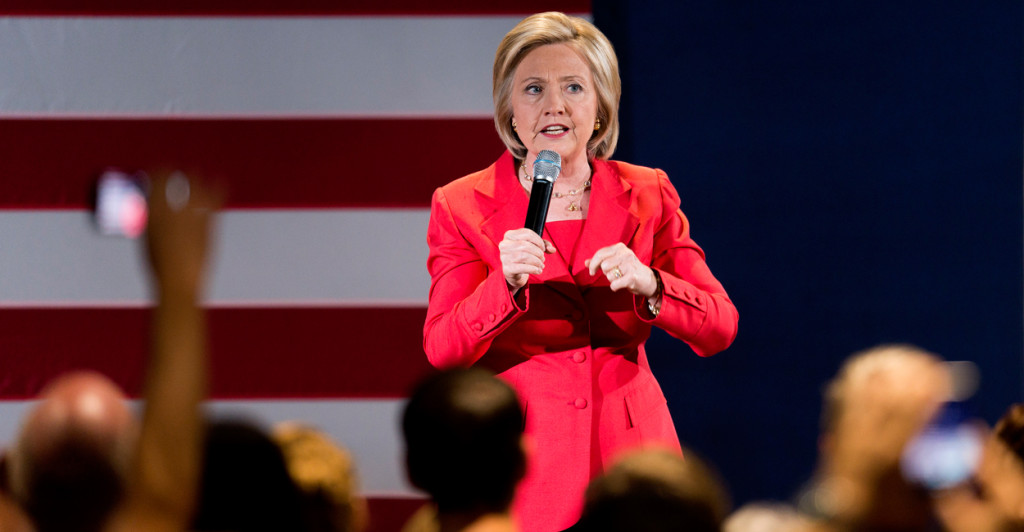
When Hillary Rodham Clinton takes the stage at fundraisers thrown by a group that wants to elect her president, she’s not presented as a White House candidate. She’s a “special guest.” When Jeb Bush raises money for a group preparing to run major parts of his all-but-certain presidential campaign, he doesn’t ask for the cash himself. And the hundreds of millions these groups will raise? They have to spend it without talking strategy with the candidates and campaigns they support. The groups are called super PACs, and their influence in selecting the next president will be without precedent. Born out of two Supreme Court decisions in 2010, they are governed by rules some see as a game of winks and nods, enforced by an agency bedeviled by partisan gridlock. As with most things in Washington, there’s not even agreement on whether they are a problem to solve, or are a solution to celebrate. “What’s really going on largely is a breakdown of the enforcement system of the campaign finance laws,” said Craig Holman of the left-leaning consumer group Public Citizen. “The Federal Election Commission is just broken.” Countered David Keating of the right-leaning Center for Competitive Politics, “I think this is overblown. The line has been drawn: It’s the First Amendment. So if people want to speak, let them.” The primary benefit for campaigns of the super PACs is that they can raise and spend unlimited amounts of money to advocate for and against candidates, with only a few rules holding them back. Among the rules is a ban on campaigns and super PACs working together. They cannot discuss political strategy or share key information such as internal polling. While candidates can attend super PAC events, they cannot technically ask for the unlimited donations that make the groups such a powerful force. “Most of these super PACs that are going to be spending millions of dollars, I think they have a good understanding of what the law is,” Keating said. But even should they break the rules, there are questions about what price they might pay. The six commissioners of the Federal Election Commission are split evenly between Republicans and Democrats, and they have only once cited someone for breaking the rules. In February, the campaign manager for a failed Virginia Republican congressional candidate pleaded guilty to funneling money illegally from a super PAC to bolster his campaign. Clinton has decried the existence of “unaccounted money” in politics and has suggested a constitutional amendment to overturn the case that helped usher in the new system. Yet during a California fundraising trip last week, she took her first steps to embrace Priorities USA Action, a Democratic super PAC that helped support President Barack Obama in 2012. Like other candidates, Clinton cannot legally ask donors to give more than $5,000 to the group. But she can appear as a “special guest.” Her husband, former President Bill Clinton, has headlined Priorities events in the past. On the Republican side, Bush is taking it even further. The former Florida governor is preparing to delegate many of the operations of his expected campaign to his allied Right to Rise super PAC, using the group to produce campaign ads, conduct voter data analysis and run get-out-the-vote efforts. Mike Murphy, one of Bush’s closest political advisers, is expected to lead the super PAC and is intimately involved in Bush’s current operation, where he guides staffing decisions, courts donors and shapes political strategy. Bush takes care to say he’s not yet a candidate, allowing him to work with Murphy and the super PAC in a way that won’t be allowed once he’s in the race. A dozen White House prospects are already benefiting from allied super PACs, frequently led by former political advisers and business partners. For example, Kentucky Sen. Rand Paul will benefit from a super PAC run by his former campaign manager, who is also married to Paul’s niece. Texas Sen. Ted Cruz‘s college roommate is working prominently in a network of four allied super PACs, while a longtime friend and financial backer, Dathan Voelter, is the treasurer. Voelter said the pro-Cruz groups have already raised more than $31 million. During his run for re-election in 2012, Obama never really warmed up to the super PAC world and the group supporting him, Priorities USA Action. He declined to appear at fundraising events even though his opponent, Republican Mitt Romney, frequently attended gatherings held by Restore Our Future, a pro-Romney super PAC. Seeking to succeed Obama in the White House, Clinton and her allies have taken steps recently to strengthen Priorities USA Action. Among them: She will appear at the group’s events and reach out to potential donors, something Obama declined to do. The group is also bringing aboard Guy Cecil, a former staff member of Clinton’s 2008 presidential campaign who remains close to Bill Clinton and previously worked for a firm stocked with longtime Clinton advisers. Republished with permission of The Associated Press.
Jeb Bush preparing to delegate many campaign tasks to super PAC
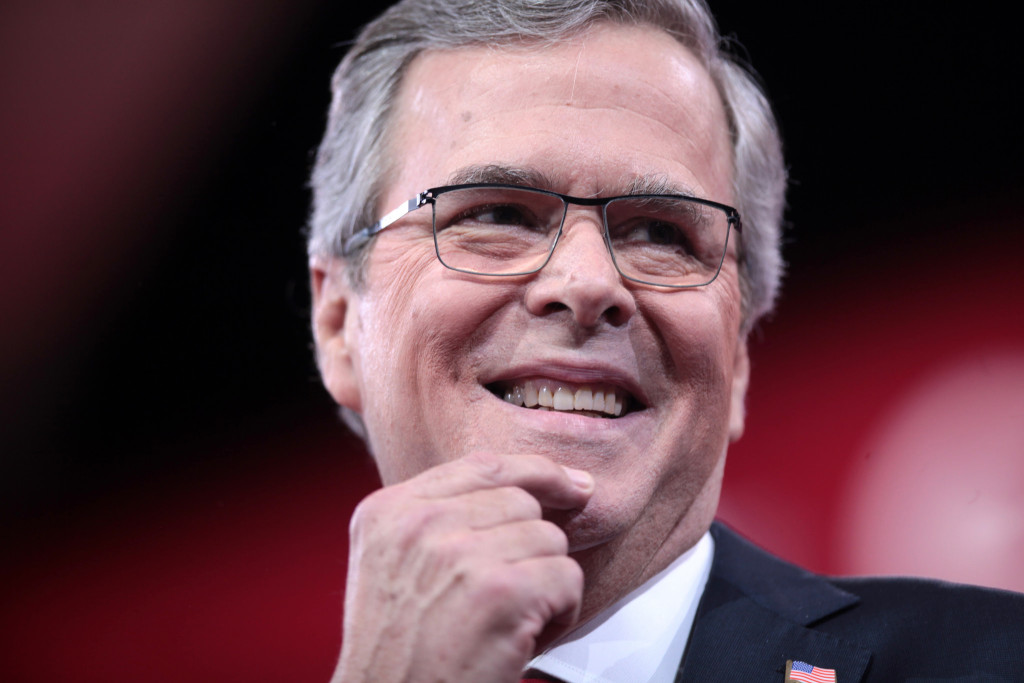
Jeb Bush is preparing to embark on an experiment in presidential politics: delegating many of the nuts-and-bolts tasks of seeking the White House to a separate political organization that can raise unlimited amounts of campaign cash. The concept, in development for months as the former Florida governor has raised tens of millions of dollars for his Right to Rise super PAC, would endow that organization not just with advertising on Bush’s behalf, but with many of the duties typically conducted by a campaign. Should Bush move ahead as his team intends, it is possible that for the first time a super PAC created to support a single candidate would spend more than the candidate’s campaign itself — at least through the primaries. Some of Bush’s donors believe that to be more than likely. The architects of the plan believe the super PAC’s ability to legally raise unlimited amounts of money outweighs its primary disadvantage, that it cannot legally coordinate its actions with Bush or his would-be campaign staff. “Nothing like this has been done before,” said David Keating, president of the Center for Competitive Politics, which opposes limits on campaign finance donations. “It will take a high level of discipline to do it.” The exact design of the strategy remains fluid as Bush approaches an announcement of his intention to run for the Republican nomination in 2016. But at its center is the idea of placing Right to Rise in charge of the brunt of the biggest expense of electing Bush: television advertising and direct mail. Right to Rise could also break into new areas for a candidate-specific super PAC, such as data gathering, highly individualized online advertising and running phone banks. Also on the table is tasking the super PAC with crucial campaign endgame strategies: the operation to get out the vote and efforts to maximize absentee and early voting on Bush’s behalf. The campaign itself would still handle those things that require Bush’s direct involvement, such as candidate travel. It also would still pay for advertising, conduct polling and collect voter data. But the goal is for the campaign to be a streamlined operation that frees Bush to spend less time than in past campaigns raising money, and as much time as possible meeting voters. Bush’s plans were described to The Associated Press by two Republicans and several Bush donors familiar with the plan, who spoke on condition of anonymity because the former Florida governor has not yet announced his candidacy. “This isn’t the product of some genius thinking,” said a Republican familiar with the strategy. “This is the natural progression of the rules as they are set out by the FEC.” Bush spokeswoman Kristy Campbell said: “Any speculation on how a potential campaign would be structured, if he were to move forward, is premature at this time.” The strategy aims to take maximum advantage of the new world of campaign finance created by a pair of 2010 Supreme Court decisions and counts on the Federal Election Commission to remain a passive regulator with little willingness to confront those pushing the envelope of the law. One reason Bush’s aides are comfortable with the strategy is because Mike Murphy, Bush’s longtime political confidant, would probably run the super PAC once Bush enters the race. Meanwhile, David Kochel, a former top adviser to Mitt Romney‘s campaigns and an ally of Bush senior adviser Sally Bradshaw, would probably be the pick to lead Bush’s official campaign. “Every campaign is going to carefully listen to the lawyers as to what is the best way to allocate their resources and how to maximize them,” said Al Cardenas, former chairman of the American Conservative Union and a Bush adviser. “Nobody wants to relinquish any advantage.” For Bush, the potential benefits are enormous. Campaigns can raise only $2,700 per donor for the primary and $2,700 for the general election. But super PACs are able to raise unlimited cash from individuals, corporations and groups such as labor unions. In theory, that means a small group of wealthy Bush supporters could pay for much of the work of electing him by writing massive checks to the super PAC. Bush would begin a White House bid with confidence that he will have the money behind him to make a deep run into the primaries, even if he should stumble early and spook small-dollar donors, starving his own campaign of the money it needs to carry on. Presidential candidates in recent elections have also spent several hours each day privately courting donors. This approach would not eliminate that burden for Bush, but would reduce it. “The idea of a super PAC doing more … means the candidate has to spend less time raising money and can spend more time campaigning,” said longtime Mitt Romney adviser Ron Kaufman, who supports Bush. The main limitation on super PACs is that they cannot coordinate their activities with a campaign. The risk for Bush is that his super PAC will not have access to the candidate and his senior strategists to make pivotal decisions about how to spend the massive amount of money it will take to win the Republican nomination and, if successful, secure the 270 electoral votes he will need to follow his father and brother into the White House. “The one thing you give away when you do that is control,” Kaufman said. Bush will also be dogged by advocates of campaign finance regulation. The Campaign Legal Center, which supports aggressive regulation of money and politics, has already complained to the FEC that Bush is currently flouting the law by raising money for his super PAC while acting like a candidate for president. Others are on guard, too. “In our view, we are headed for an epic national scandal,” said Fred Wertheimer, president of the pro-regulation group Democracy 21. “We intend to carefully and closely monitor all the candidates and their super PACs, because they will eventually provide numerous examples of violations.” All of the major candidates for president
