
New COVID-19 cases in U.S. soar to highest levels on record

More than a year after the vaccine was rolled out, new cases of COVID-19 in the U.S. have soared to their highest level on record at over 265,000 per day on average, a surge driven largely by the highly contagious omicron variant. New cases per day have more than doubled over the past two weeks, eclipsing the old mark of 250,000, set in mid-January, according to data kept by Johns Hopkins University. The fast-spreading mutant version of the virus has cast a pall over Christmas and New Year’s, forcing communities to scale back or call off their festivities just weeks after it seemed as if Americans were about to enjoy an almost normal holiday season. Thousands of flights have been canceled amid staffing shortages blamed on the virus. Dr. Anthony Fauci, the top U.S. infectious disease expert, said Wednesday that there is no need to cancel small home gatherings among vaccinated and boosted family and friends. But “if your plans are to go to a 40- to 50-person New Year’s Eve party with all the bells and whistles and everybody hugging and kissing and wishing each other a happy new year, I would strongly recommend that this year we not do that,” he said. The threat of omicron and the desire to spend the holidays with friends and loved ones have spurred many Americans to get tested for COVID-19. Aravindh Shankar, 24, flew to San Jose, California, on Christmas from West Lafayette, Indiana, to be with family. Though he felt fine, he decided to get tested Wednesday just to play it safe since he had been on an airplane. He and his family spent almost an entire day searching for a testing appointment for him before he went to a site in a parking lot next to the San Jose airport. “It was actually surprisingly hard,” Shankar said about trying to find a test. “Some people have it harder for sure.” The picture is grim elsewhere around the world, especially in Europe, with World Health Organization chief Tedros Adhanom Ghebreyesus saying he is worried about omicron combining with the delta variant to produce a “tsunami” of cases. That, he said, will put “immense pressure on exhausted health workers and health systems on the brink of collapse.” The number of Americans now in the hospital with COVID-19 is running at around 60,000, or about half the figure seen in January, the Centers for Disease Control and Prevention reported. While hospitalizations sometimes lag behind cases, the hospital figures may reflect both the protection conferred by the vaccine and the possibility that omicron is not making people as sick as previous versions. COVID-19 deaths in the U.S. have climbed over the past two weeks from an average of 1,200 per day to around 1,500. Public health experts will be closely watching the numbers in the coming week for indications of the vaccines’ effectiveness in preventing serious illness, keeping people out of the hospital, and relieving strain on exhausted health care workers, said Bob Bednarczyk, a professor of global health and epidemiology at Emory University. CDC data already suggests that the unvaccinated are hospitalized at much higher rates than those who have gotten inoculated, even if the effectiveness of the shots decreases over time, he said. “If we’re able to weather this surge with hopefully minimal disruptions to the overall health care system, that is a place where vaccines are really showing their worth,” Bednarczyk said. It’s highly unlikely that hospitalization numbers will ever rise to their previous peak, said Amesh Adalja, senior scholar at the Johns Hopkins Center for Health Security at the Bloomberg School Public Health. Vaccines and treatments developed since last year have made it easier to curb the spread of the virus and minimize serious effects among people with breakthrough infections. “It’s going to take some time for people to get attuned to the fact that cases don’t matter the same way they did in the past,” Adalja said. “We have a lot of defense against it.” But even with fewer people hospitalized compared with past surges, the virus can wreak havoc on hospitals and health care workers, he added. “In a way, those hospitalizations are worse because they’re all preventable,” he said. Several European countries, including France, Greece, Britain, and Spain, also reported record case counts this week, prompting a ban on music at New Year’s celebrations in Greece and a renewed push to encourage vaccination by French authorities. WHO reported that new COVID-19 cases worldwide increased 11% last week from the week before, with nearly 4.99 million recorded Dec. 20-26. But the U.N. health agency also noted a decline in cases in South Africa, where omicron was first detected just over a month ago. Republished with the permission of the Associated Press.
John Meigs: Alabama physicians face challenges head-on during vaccine rollout
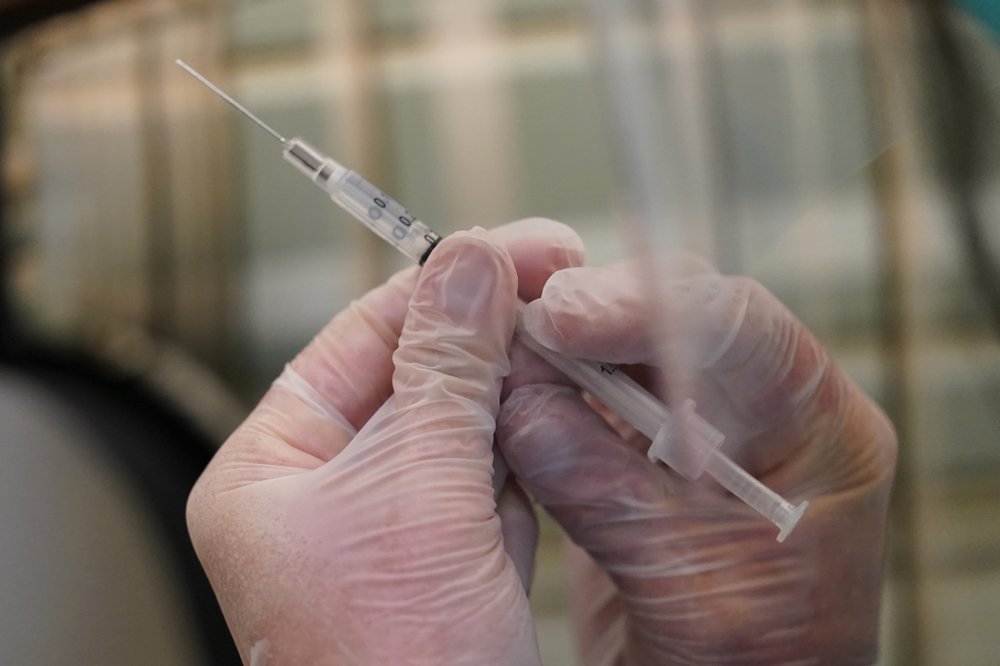
Because of a seemingly slow rollout of the COVID-19 vaccine, physicians have started to hear many concerns from their patients. Understandably, the people of Alabama are growing more eager each day to get vaccinated. Physicians were privileged to be included in the first tier of vaccine recipients and remain our patients’ biggest advocate for vaccination against the Coronavirus. In addition to issues like staffing shortages, a major obstacle we face is the fact that from week to week, our practices and hospitals are not alerted to when we are getting more vaccines or exactly how many we will receive. Even the Alabama Department of Public Health (ADPH) has no input into the quantity allocated and is typically notified less than 24 hours before the vaccine is shipped. This makes it extremely difficult to set up vaccination and follow-up appointments. It’s tempting, but comparing Alabama’s response to surrounding states doesn’t necessarily make sense. The number of COVID-19 vaccine doses allocated to Alabama is based on our population and is not determined by how much vaccine is on hand in the state. The number of doses remaining from previous allocations does not affect the number of doses that the Centers for Disease Control and Prevention (CDC) authorizes for Alabama. Alabama still faces struggles in figuring out the logistics of vaccine distribution and allocation, but there are a few things your physician wants you to know about the process. ● The Federal Government determines the quantity of vaccines that are allocated to the state. ● There is a shortage of available vaccines in Alabama. ●There are 326,000 healthcare providers, nursing home residents, law enforcement officers, firefighters, and 350,000 persons 75 years of age and older that are currently eligible for the vaccine. ●The number of first doses of the vaccine shipped to Alabama per week only averages around 50,000 to 60,000. Wide distribution of the COVID-19 vaccine will take time. While we are anxious for the vaccine to be made available to all Alabamians, physicians also want to urge you to wait until you fall into the appropriate tier. As of January 28th, Alabama is administering vaccines to healthcare workers, residents, and staff in long-term care facilities, first responders, and individuals 75 years of age and older. We know vaccines are the best bet to slow this pandemic down and get enough folks immunized so the virus won’t spread as easily. However, for now, even after we get vaccinated, we need to continue to wear masks and physically distance. We want to protect folks from a disease that can be very deadly. If we all work together, we will be that much closer to getting life back to normal. John Meigs Jr., MD is the President of the Medical Association of the State of Alabama.
Bill Miller: The critical ingredient to the success of vaccination programs

Only a few weeks into a new administration and with it comes unwelcome medical news. The age-old debate about the safety and appropriateness of vaccination has been renewed and a vocal stage has been delivered to a small group of anti-vaccination zealots. Reports have circulated that Robert F. Kennedy, Jr, a highly visible critic of vaccination, has been invited to chair a commission on vaccination safety by the new administration. If it comes to pass, one result can be accurately predicted. It will become a confused platform of ideological rhetoric that will diminish trust in those scientific bodies charged with making sound judgments for the public welfare. This inevitable outcome is particularly unfortunate since there has never been any advance in medical history that has had a more positive impact on our lives than vaccination. Humanity has been in eternal conflict with infectious disease throughout history. Perhaps no disease better illustrates the vast range of impacts of epidemic disease than smallpox.In 18th Century Europe, at least 400,000 people died annually from smallpox. One-third of the survivors went blind. Mortality rates were as high as 60% in some communities. Infant mortality was even more frightening, approaching 80%. The ultimate success of smallpox vaccination is credited to Sir Edward Jenner in England. In 1796, he successfully introduced the technique of cowpox vaccination demonstrating its subsequent protective effect against smallpox. Today, due to the effectiveness of worldwide smallpox vaccination programs, that disease has been effectively eradicated from the planet. However, this is not the case for other consequential infectious diseases. Two years ago, a whooping cough epidemic swept through California where vaccination rates are steadily lagging. Contrary to any ordinary expectation, it is often the most affluent parents who are shunning immunization. Some of these anti-vaccine proponents are highly educated people being misled by social media. The trend appears to have originated with a fraudulent report in a British medical journal linking vaccination with autism. This report was subsequently revealed to have been based on fraudulent research and was retracted by that scientific journal. Similar rumors that vaccine stabilizers, such as thimerosol, contribute to autism have also been refuted. Nonetheless, damage has been done by ill-informed repetition. There is no doubt that those parents that refuse to vaccinate their children are well meaning. However, their actions are ill advised on two levels. The first is that refusing to appropriately vaccinate themselves or their child exposes both of them to the risks of deadly infections that can be entirely avoided. Yet, although vaccination is safe and highly effective it does have its limits. This links to the other critical factor that makes universal vaccination so crucial. No vaccination ever devised provides 100% protection and some individuals in any population cannot be vaccinated. This includes very young infants whose immune systems are not yet mature enough for vaccination and members of our community that are immunosuppressed due to diseases that weaken their immune system from a variety of illnesses including cancer. Their protection is through our actions. When there are high levels of vaccination within any community, the infectious agent is unable to find enough hosts to reproduce and sustain itself within that population. This level of community-wide protection is termed herd immunity. It is our joint responsibility, all of us together, to be part of the process of achieving this level of immunity both in our own interests and for the protection of the other members of our community. The next outbreak of a preventable infectious disease with its incumbent tragedies is always lurking. A political committee to examine the evidence based on ideological biases is not needed. Instead, our policies should rely on the expertise of already existing scientific organizations such as the Global Advisory Committee on Vaccine Safety (GACVS), an independent expert clinical and scientific advisory body, as well as our own Centers for Disease Control and the National Institutes of Health. The critical ingredient to the success of vaccination programs is education. Therefore, there needs to be a concerted program to recover our eroded memories of the consequences of now distant epidemic diseases that have been conquered or reduced through vaccination. The success of vaccination programs depends on being familiar with the bitter lessons of our continuous struggle with epidemic disease. Such an educational process must be ever ongoing. ••• Dr. Bill Miller has been a physician in academic and private practice for over 30 years. He is the author of The Microcosm Within: Evolution and Extinction in the Hologenome. He currently serves as a scientific advisor to OmniBiome Therapeutics, a pioneering company in discovering and developing solutions to problems in human fertility and health through management of the human microbiome. For more information, www.themicrocosmwithin.com.
Martha Roby: Democrats’ dangerous game with Zika funding

In June I relayed the good news that the House had passed appropriations legislation providing funding for our nation’s response to the Zika virus. It is important for Congress to ensure agencies like the Centers for Disease Control, the National Institutes of Health, and others have the resources they need to combat the disease and prevent it from spreading. Sadly, two months later, that compromise funding bill has yet to become law. Why? Senate Democrats, led by Democratic Minority Leader Harry Reid of Nevada, have twice blocked the legislation by denying the majority the 60 votes needed to allow a vote on the bill. The Wall Street Journal opines further that “they walked out on their own bill on Thursday to use the issue as a campaign bludgeon against Republicans.” Is that fair? Let’s review their stated objections: First, Senate Democrats take issue with temporarily waiving a requirement to obtain a permit from the Environmental Protection Agency to use certain proven mosquito-killing sprays like DDT. However, killing mosquitoes is exactly what we need to be doing right now and an emergency waiver of this kind can help states and communities quickly respond to the Zika threat without a bureaucratic permitting delay. Furthermore, the bill specifically requires any pesticide used to already be approved under and applied in compliance with The Federal Insecticide, Fungicide and Rodenticide Act. Next, Senate Democrats objected to the bill offsetting the cost by reallocating $543 million from Obamacare funding. However, the Obamacare money in question is leftover funding meant for setting up healthcare exchanges in territories that became unnecessary — and unused — when Puerto Rico expanded Medicaid. Finding unspent funds to help offset the costs of emergency spending is basic fiscal responsibility, not a reason to block a bill. Finally, and probably most importantly, Senate Democrats are upset the Zika appropriations bill does not allocate funding for Planned Parenthood, arguing it leaves women without care options. But, that’s not true. The bill allocates $40 million for community health centers that are more plentiful and offer a wider range of care, plus $6 million for the National Health Service Corps and $95 million to the Social Services Grant Program that can distribute funds for preventive care to the most at-risk areas. It is simply not the job of the federal government to fund the nation’s largest abortion provider, and it is unconscionable that Senate Democrats would block funding aimed to help protect pregnant women and babies because their friends at Planned Parenthood don’t get a cut. Of course, President Obama has taken the Senate Democrats’ side for the most part. However, as Roll Call reports, the president’s spokesmen are having a hard time explaining why, amid all the clamoring for more funding from Congress, the administration has yet to tap into at least $385 million in unspent funds it could quickly access without congressional approval to combat Zika. The Zika threat is real and it is here. Critical legislation is one step (and about four Senate votes) away from the president’s desk. A public health crisis of this magnitude is no time to block emergency funding in the name of politics. ••• Martha Roby represents Alabama’s 2nd Congressional District. She lives in Montgomery, Alabama with her husband, Riley, and their two children.
Martha Roby: The Zika threat and our response
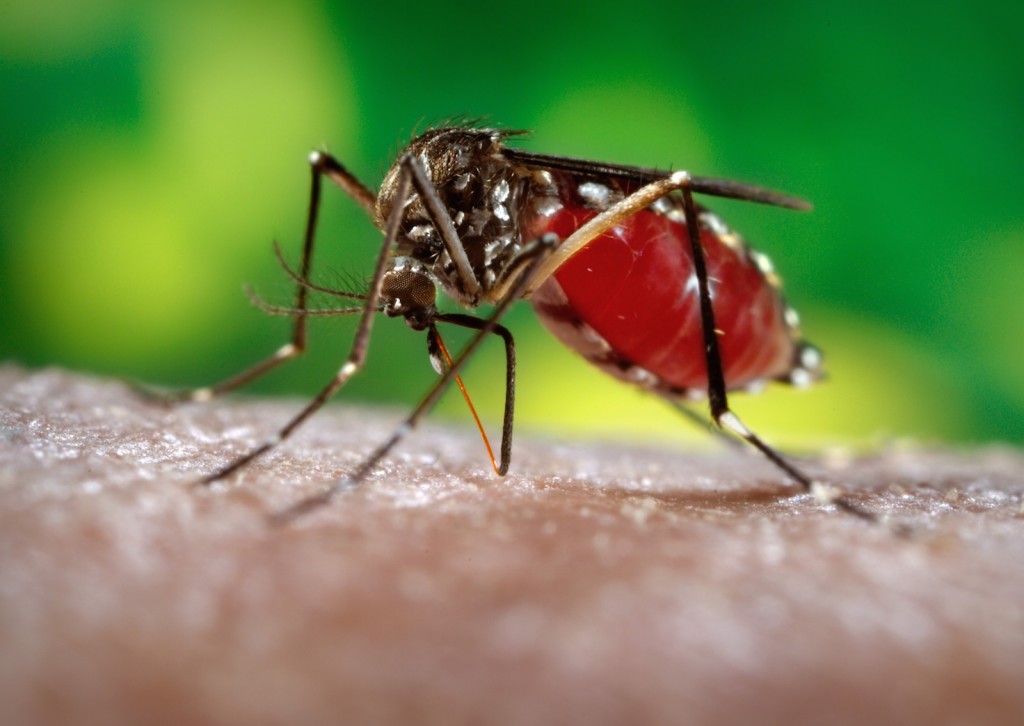
.By now you’ve probably heard of the Zika Virus and the harm it has caused in Brazil and other South and Central American countries. According to the Centers for Disease Control (CDC), Zika is comparable to the West Nile Virus, spread by mosquitoes and can cause fever, rash, joint pain and eye irritation. The real threat, however, is for pregnant women and their babies. Though rarely fatal, Zika can cause serious birth defects in newborn babies if an expectant mother is infected. Zika is also a growing threat in the United States, particularly here in the South where mosquitoes flourish in the Summertime. As of May 25, 591 Zika infections have been reported in the United States, including at least 162 in pregnant women. So far, all infections have be the result of travel and not local transmissions. This past week I met with CDC Director Dr. Thomas Freiden in my office for a briefing on the Zika situation. His team of experts is hard at work combatting this virus by closely monitoring its movement, controlling the mosquito population and educating the public about how best to avoid infections. The website www.CDC.gov/Zika is a great resource for anyone seeking information about the virus. Congress is also taking action to ensure our country is prepared to prevent and combat a Zika outbreak. The House recently passed bipartisan legislation to encourage the development, testing and distribution of a Zika vaccine as well as the Zika Vector Control Act to remove Environmental Protection Agency restrictions on mosquito sprays that can be essential to preventing infections. Of course, in situations like these it is also important to ensure our response agencies have the resources they need to meet the emerging threat. However, instead of writing a “blank check,” the House Appropriations Committee has sought to be responsible with the use of taxpayers’ money in crafting a funding plan. First, we insisted the Administration use existing funds left over from the Ebola outbreak response to meet any emergency needs. Next, we crafted a plan that includes $622 million allocated between the CDC, the National Institutes of Health (NIH), the Biomedical Advances Research and Development Authority (BARDA), and other agencies helping to administer Zika response and vaccine development. This appropriation is fully paid for through reprograming unused administrative funding from Health and Human Services and additional leftover Ebola response accounts. Finally, the House plan also places important constraints on the use of these funds and requires full transparency for how they are spent. House Speaker Paul Ryan asked me to serve on the Conference Committee charged with working out the differences between the House and Senate versions of Zika funding bills. I will work alongside my colleagues to reach a final bill that provides the needed resources to combat this virus while remaining responsible with the taxpayers’ hard-earned money. ••• Martha Roby represents Alabama’s 2nd Congressional District. She lives in Montgomery, Alabama, with her husband, Riley, and their two children.
Daniel Sutter: Making good decisions about risk

Can Americans make good decisions about risks to life and limb? Many policy experts don’t think so. Although there are challenges, I think that people make better decisions than they sometimes get credit for. The mirage of perfect safety provides a huge obstacle to good decisions. We value safety, so zero risk seems like a reasonable goal. But zero risk, when not impossible, almost always entails enormous costs. To see why, consider driving. Auto accidents claim over 35,000 victims annually, so it would be great to reduce this toll. We can do so by driving slower, but we then spend more time traveling. We drive faster than 5 mph because we want to get places in a reasonable time. Given the cost, we do not choose zero risk. An excessive focus on one risk also leads us to ignore costs or unavoidable tradeoffs. A person who is extremely afraid of flying might choose to drive instead. They reduce the risk of dying in a plane crash to zero, but face a greater risk of dying overall. People also estimate risks inaccurately. Misperceptions, which some observers view as evidence of poor decisions, are a consequence of the cost of information. Reading the Census of Fatal Occupational Injuries or the Centers for Disease Control’s mortality reports takes time and is boring. Most people rely instead on news reports. The mass media, however, covers stories people find interesting. Consequently Americans tend to think that more murders than suicides occur each year, and overestimate the chances of dying in plane crashes, tornadoes, or terrorist attacks. Undoubtedly people make mistakes concerning risky choices. But government bureaucrats find it nearly impossible to unambiguously identify and correct mistakes, because of peoples’ different values and tolerances for risk. Personally I see no value and only risk in riding motorcycles and rock climbing. Yet I know that other people accept some risk of injury or death to enjoy these activities. The dread of the person who fears flying may lead her to choose a riskier but less terrifying mode of transportation. These decisions are not wrong. Government also makes poor risk decisions. This really shouldn’t surprise us, since voters, politicians and bureaucrats all make the types of mistakes discussed above. But the environment also encourages poor decisions. One factor is bureaucracies addressing narrowly defined risks. Thus the FDA handles foods and medicines, the EPA covers environmental risks, and so on. This allows the assembling of great expertise about risks, but also encourages bureaucratic tunnel vision. Here’s an example I’ve observed while researching the societal impacts of severe weather. Researchers or bureaucrats might remark how Americans’ preference to spend $5,000 on flat-screen TVs and not in-home tornado shelters is a problem. Holding one risk as paramount might strike us as ridiculous, but the attitude results from the narrowness of professional expertise combined with exclusive organizational focus on one risk. The symbolic and disjointed nature of legislation also leads to trade offs being ignored. When a threat emerges, politicians want to be seen taking action to protect the public. So they pass a law and announce that we are now safe. The costs emerge only with implementation of the law, and then regulatory costs are typically hidden in new higher prices. Consequently we never really debate whether the improvement in safety is worth the cost. Estimates of costs per life saved for different safety measures by economists help us make better decisions. A regulation estimated to cost $30 million and save 10 lives would have a cost per life saved of $3 million. Costs per life saved are comparable across different regulations. This identifies regulations with really high costs per life saved as bad investments. Some people believe that it is wrong to talk about how much we should spend to save lives. They think that we should save lives regardless of the cost. And yet this is perhaps the greatest error we face when thinking about risk. Every potential life-and-death decision involves a value of life; our only choice is whether we evaluate the trade off. Ignoring trade offs produces inconsistent and costly decisions. Daniel Sutter is the Charles G. Koch Professor of Economics with the Manuel H. Johnson Center for Political Economy at Troy University and host of Econversations on TrojanVision.
