
Darryl Paulson: A look at Obama’s legacy, foolish hope of ‘post-racial’ America
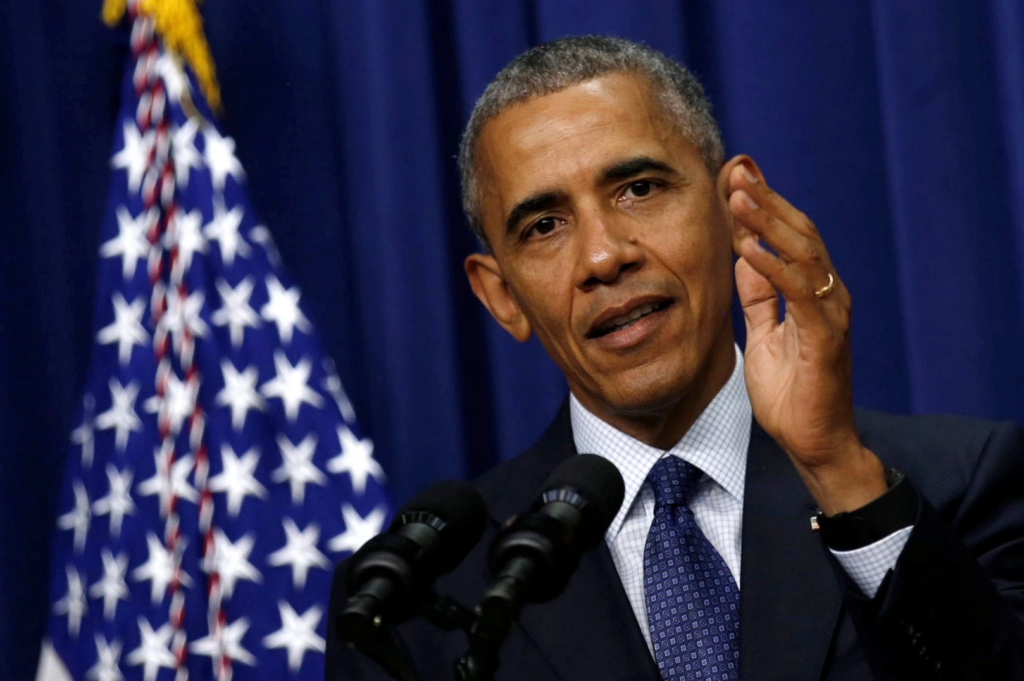
(Part 1 of two. Part two will deal with Obama’s political legacy) The 2008 presidential campaign of Barack Obama focused on the theme of change. Obama promised to “restore our moral standing” and “focus on nation-building here at home.” Obama, as a candidate, told audiences that “we are the ones we’ve been waiting for. We are the change we seek.” “Yes, we can” and “change you can believe in” became the campaign themes. Obama promised to “make government cool again.” This would be achieved by an activist, expanding federal government. Obama seemed to be contradicting the message of the last Democratic president, Bill Clinton, who argued that “the era of big government is over.” Although Obama viewed himself as a transformative president, much of his first year in office was spent stabilizing America’s collapsing economy and avoiding another Great Depression. America was losing 700,000 to 800,000 a month with no let up in sight. Major banks and Wall Street brokers were declaring bankruptcy, and the American auto industry was on the verge of collapse. If nothing else, Obama deserves credit for stabilizing the economy. His action plan included an unpopular stimulus program, a bailout of the auto industry that some described as socialism, and shoring up the big banks that were responsible for much of the economic instability with their risky loans. As a result of President Obama’s efforts, an economic catastrophe was avoided. We have had eight consecutive years of economic growth, although critics pointed out the less than 3 percent growth rate was low. The economic programs, in part, lead to an 88 percent increase in the national debt and the loss of the United States AAA bond rating. “Obamacare,” or the Affordable Care Act (ACA), was the primary domestic accomplishment of the Obama presidency. Young individuals could remain on their parent’s insurance until age 26, preexisting conditions would not disqualify you from coverage and 20 million more Americans received health care coverage. The ACA was not without its critics. The plan did not control health care costs as promised, and Obama’s promise to Americans that “if you like your doctors, you can keep them” and “if you like your health care plan, you can keep it” proved not to be true. In fact, Politics-Fact labeled those promises the “lie of the year.” The ACA was narrowly passed without a single Republican vote. That does not bode well for its long-term success. Major public policy change in the United States, to succeed, needs to be comfortably passed with bipartisan support. Civil rights legislation and Medicare are just two examples of that. Democrats contend that Republicans were not going to vote for the ACA and give Obama a major political victory. Republicans argued that the president made no attempt to reach out to them and find common ground. The president has many tools available to curry support, most importantly, the power of persuasion. For whatever reason, the goal seemed to pass the ACA with or without Republican votes. The election of Donald Trump now jeopardizes the ACA. Republicans must realize that if they attempt to “repeal and replace” Obamacare without Democratic support, their plan will fail just as Obama’s plan is likely to fail. Obama, the nation’s first African-American president, was supposed to lead to a “post-racial America.” That was a foolish and unrealistic expectation. During the 2008 campaign, Obama gave a speech on race in Philadelphia in an attempt to counter the negative public reaction to statements from Jeremiah Wright, the president’s longtime friend and minister. Wright attacked racism in America in many of his talks. The most explosive comment found Wright stating: “Not God bless America. God damn America!” In his address on race, Obama said Wright was correct in talking about racism but wrong in speaking “as if no progress had been made.” Almost as soon as he assumed the presidency, Obama dealt with one racial issue after another. In 2009, Obama said a police officer “acted stupidly” when he arrested Henry Louis Gates, a prominent black Harvard professor when Gates entered his home through a window after forgetting his house key. Obama quickly held a “beer summit,” inviting both Gates and the police officer to talk through their dispute. In 2012, the nation was divided when a white neighborhood watch volunteer shot and killed a young black male named Trayvon Martin. Obama told reporters that “if I had a son, he would look like Trayvon Martin.” The white shooter was found not guilty. A police shooting of another black teen in Ferguson, Missouri in 2014 led to criticism of Obama by both whites and blacks. Whites attacked the president for criticizing the police in “using excessive force” against protestors who were “lawfully exercising their First Amendment rights.” Blacks criticized the president for stating that there is “no excuse for violence against the police” or “those who would use this tragedy to cover for vandalism or looting.” In 2015, the nation was shocked by the brutal murder of nine black parishioners in Charleston, South Carolina by Dylann Roof, a young white male who had been invited to join the Bible study. The nation saw the moving acts of forgiveness as one relative after another of the victims said they forgave him. This act of grace led President Obama to conclude his remarks at the church by singing Amazing Grace. Obama was widely criticized for his foreign policy actions or inactions. Critics blamed the early exit if American forces from Iraq as creating a vacuum which allowed ISIS to emerge. His nuclear pact with Iran was criticized by Republicans, the military, Israel and others who saw the act as creating a nuclear-armed Iran in the Middle East. The president’s failure to enforce his “red line” in Syria if chemical weapons were used by Bashar al-Assad, created an inroad for both ISIS and the Soviets to expand their role. Like all presidents, Obama has a mixed bag of successes and failures as president. In his own analysis
In final year, Barack Obama seeks to stave off lame-duck status
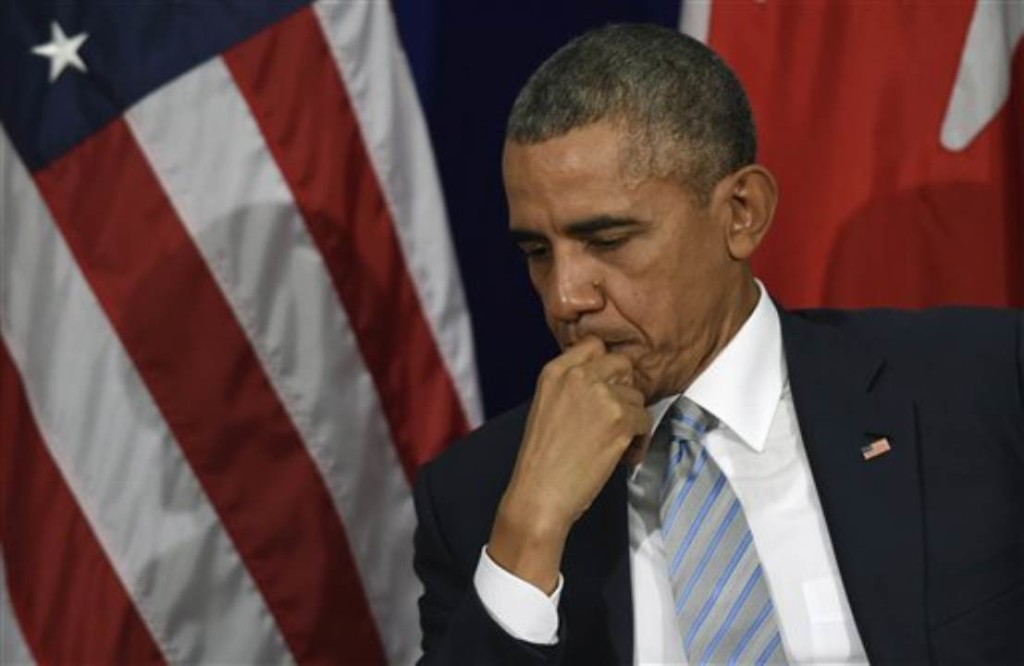
In June, during one of the best stretches of his presidency, Barack Obama strode through a West Wing hallway exclaiming, “Offense! Stay on offense!” It was a rallying cry for a White House that suddenly seemed to find its footing in the final quarter of Obama’s tenure. An Asia-Pacific trade agreement was moving forward, as was the diplomatic opening with Cuba and work on an historic nuclear accord with Iran. The Supreme Court upheld a key tenant of the president’s long-embattled health care law and legalized gay marriage nationwide. Even in the depths of tragedy following a church shooting in Charleston, South Carolina, the president struck an emotional chord with his stirring eulogy for the victims. “I said at the beginning of this year that interesting stuff happens in the fourth quarter — and we are only halfway through,” Obama said during his annual year-end news conference. But the seventh year of Obama’s presidency also challenged anew his cautious and restrained approach to international crises, particularly in the Middle East. Attacks in Paris and San Bernardino, California, heightened fears of terror on American soil and Obama’s attempts to reassure Americans fell flat. And a seemingly endless string of mass shootings elsewhere in the country exposed the sharp limits of Obama’s power to implement the gun control measures he speaks of with passion. Obama now stares down 11 months before his successor is chosen in an election shaping up to be a referendum on his leadership at home and abroad. He stirs deep anger among many Republicans, a constant reminder of his failure to make good on campaign promises to heal Washington’s divisiveness. But he remains popular among Democrats and foresees a role campaigning for his party’s nominee in the general election. The president is packing his final year with foreign travel and has about a half-dozen trips abroad planned, including a likely visit to Cuba. The White House’s legislative agenda is slim and centers mostly on areas where he already has overlapping priorities with Republicans, including final passage of the Trans-Pacific Partnership trade pact and criminal justice reform. But he’s also eyeing provocative executive actions, including an expansion of background checks for gun purchases and the closure of the Guantanamo Bay detention center. “We recognize there’s limited time left,” said Jennifer Psaki, Obama’s communications director. • • • At times, Obama’s second term has appeared to play out in reverse. He struggled to capitalize on his decisive re-election victory in 2012, stumbling through a two-year stretch that exposed the limits of his power and made him a political liability for his party. Then in an unexpected twist, his party’s devastating defeats in the 2014 midterm election spurred one of the most productive years of his presidency, positioning Obama to be a valuable political ally for Democratic presidential front-runner Hillary Clinton. “Barack Obama will loom over the election,” said Dan Pfeiffer, a longtime Obama adviser who left the White House earlier this year. Advisers say the Supreme Court’s ruling in May, which upheld the subsidies at the heart of Obama’s health care law, came as a particular relief to the president. The decision ensures the law survives his presidency, even as Republican candidates campaign on pledges to repeal it. Obama sees the Iran nuclear accord, Pacific Rim trade pact and sweeping climate change agreement finalized in Paris earlier this month as examples of how America should wield its power on the world stage. The agreements have driven the debate in the presidential campaign for long stretches — a point of pride for a White House eager to show that the president remains the country’s most relevant politician even as he eyes the exist. Yet Obama hasn’t been able to escape the Middle East. No matter how many times he tries to pivot to Asia or rebrand U.S. foreign policy as more about diplomacy than military might, the volatile region continues to be the dominant force in the way his foreign policy is viewed. Nearly every candidate running for president — including Clinton, his former secretary of state — is calling for more aggressive action to fight the Islamic State group. Obama has inched the military deeper into the conflict, including backtracking on his refusal to put U.S. troops on the ground in Syria, but has largely stuck with his initial strategy of combating the extremist group from the air. The terror attacks in Paris and California, however, have taken a worrying but distant fight against the Islamic State militants and made it top-of-mind for many Americans. White House advisers say Obama is well aware that he misjudged the public’s level of anxiety about terrorism and must scramble to counter what he sees as overheated rhetoric from Republican presidential candidates that filled the void he created by his tepid initial response. Aides say outlining an alternative to Republicans on foreign policy and other matters will be a central part of his final State of the Union address to Congress on Jan. 12. The address was purposely scheduled earlier than usual to give the president space to make his case before primary voting begins. He departed for his annual Hawaii vacation with a draft of the speech in hand. Julian Zelizer, a political historian at Princeton University, said a well-crafted speech can only go so far in helping Obama reassure the public of his national security stewardship. “The only way he regains ground is concrete victories where people can literally see progress made,” Zelizer said. “This is an area where he has to have policy gains” • • • As he closed out 2015, Obama promised he wouldn’t fade into the background in his final year in office. But he’s also realistic about the limited legislative opportunities for a Democratic president and Republican-led Congress in a presidential election year. His relatively modest congressional agenda includes final passage of the TPP trade pact, criminal justice reforms, dealing with Puerto Rico’s debt crisis and funding programs to address the spike in opioid use. At
Jeb Bush: New gun control limits not way to prevent shooting tragedies
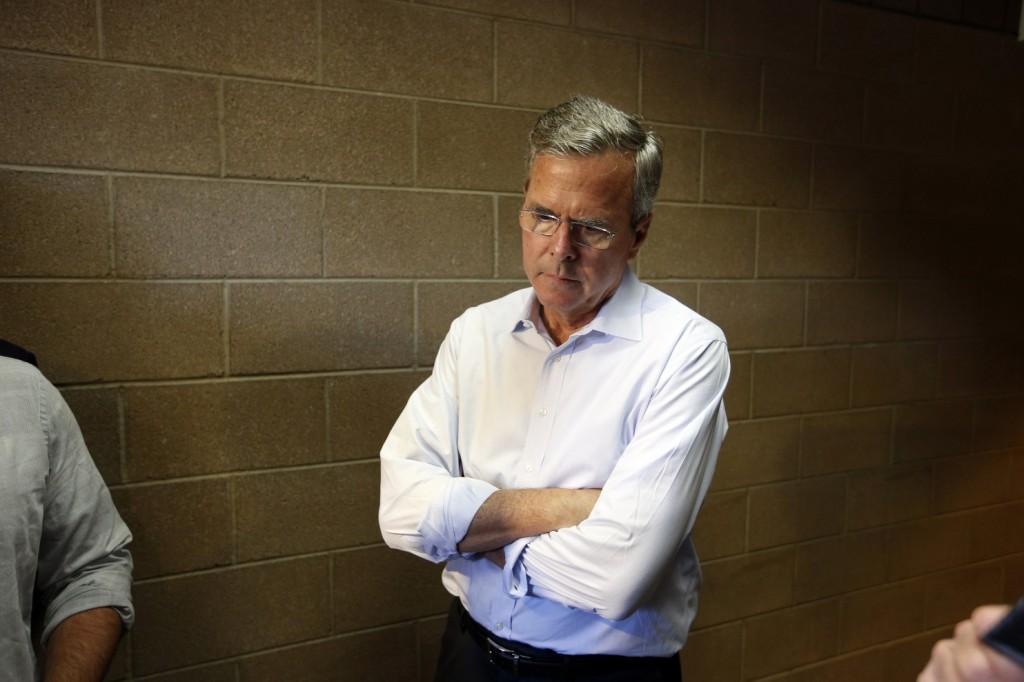
New gun control measures are not the way to prevent mass killings such as the shooting deaths of nine people in a South Carolina church, Republican presidential candidate Jeb Bush said Saturday. Bush, who plans to meet with black ministers in Charleston, South Carolina, on Monday, said identifying potentially violent people before they commit such crimes is a better approach than further restrictions on gun ownership. “We as a society better figure out how we identify these folks long before they feel compelled to take up a gun and kill innocent people,” the former Florida governor said at a town hall meeting. Afterward, he told reporters gun control was an issue that should be sorted out at the state level. “Rural areas are very different from teeming urban areas,” he said. The comments came less than a day after President Barack Obama eulogized one of the nine people shot to death June 17 at Emmanuel African Methodist Church in Charleston. During his remarks, Obama recalled episodes in Aurora, Colorado, and Newtown Connecticut, to again, suggest Americans seek tighter restrictions. “For too long, we’ve been blind to the unique mayhem that gun violence inflicts upon this nation. Sporadically, our eyes are open,” Obama said. “But I hope we also see the 30 precious lives cut short by gun violence in this country every single day.” Republished with permission of the Associated Press.
Jeb Bush schedules meetings with pastors in Charleston
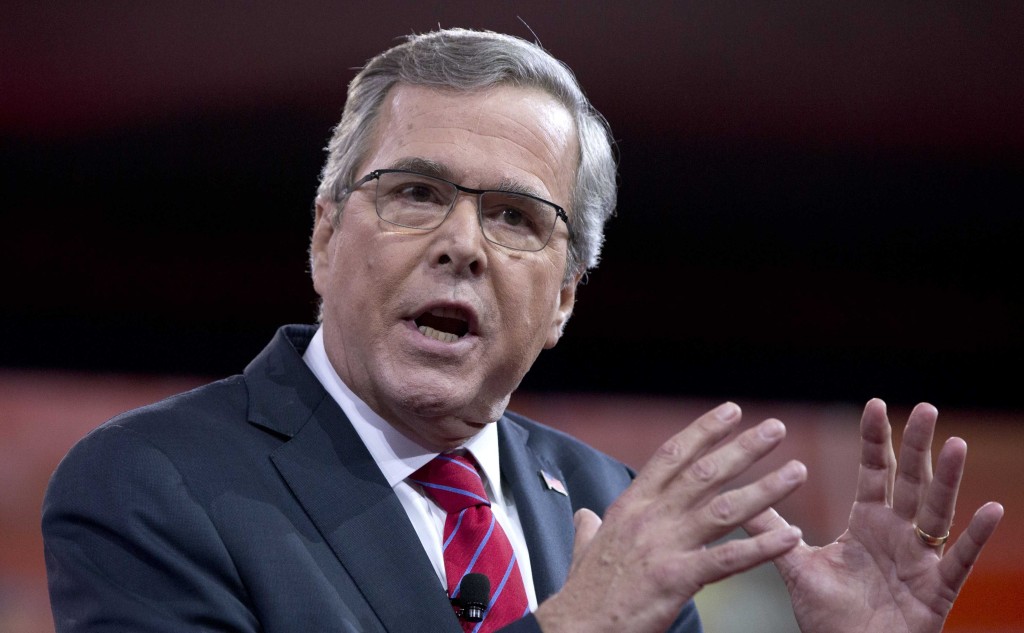
Jeb Bush plans to meet with black pastors in Charleston, South Carolina, on Monday — part of a rescheduled visit to the state after he cut short an earlier stop because of the church shooting. The Republican presidential candidate was in Charleston as part of his campaign kickoff on the day that nine people were shot to death during a prayer meeting at a church. Bush was staying not far from the scene of the shooting. Bush then canceled the rest of his visit, which included a town hall meeting focusing on military issues. His campaign says Monday’s meeting with the ministers will be closed to the media. Later that day, Bush plans to visit a pharmaceutical company in the Columbia area. Republished with permission of the Associated Press.
The confederate flag debate is cheating us out of real solutions
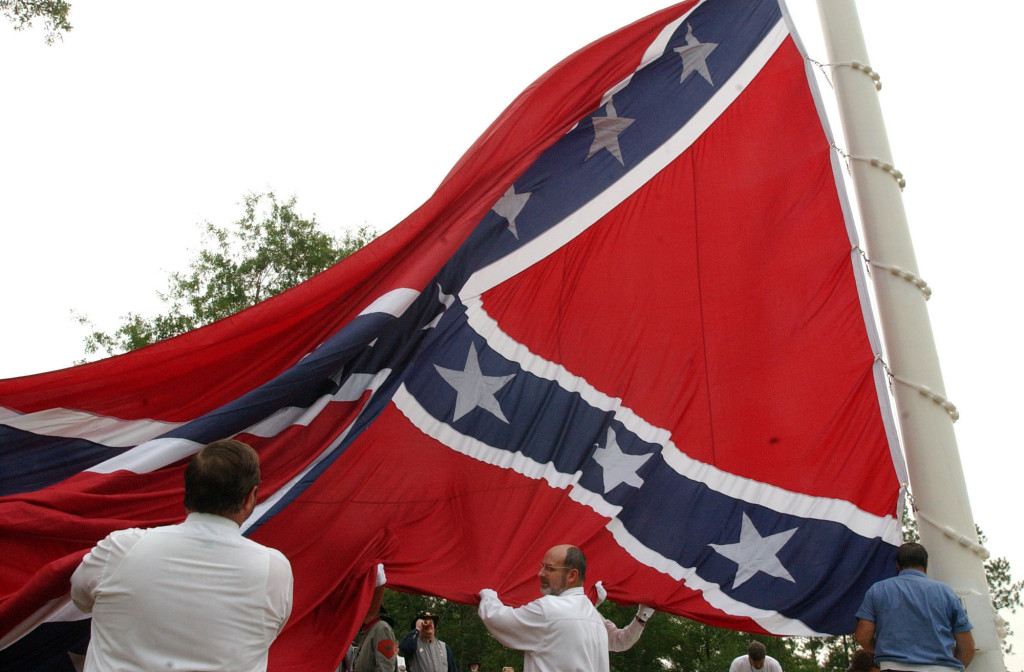
My thoughts are scattered as I read the multiple stories calling to remove the confederate flag from public places and retail stores. I’ve seen more chatter surrounding the confederate flag debate than the shooter or his 9 victims combined in the last 24-hours. Rather than writing a novel on the topic here are three quick thoughts: Governor Nikki Haley did the right thing calling for the flag to be taken down in South Carolina this week. Everyone is entitled to their opinions about the symbolism of the flag but right now what we need is solidarity and to not pour fuel on the raging fire of racial tensions nationally. I ordinarily wouldn’t support this type of bowing to pubic pressure but this time it’s appropriate. Before it gets out of hand though let’s not kid ourselves that’s what’s happening; the argument against the flag is not an argument based on facts or a historical truth it is purely based on feelings but if ever there were a time to give a little this may be it. The flag debate and the political posturing that has come from it is a distraction from the real issues: racism and racial bias. These are real the issues that are keeping our nation from moving forward not the flag. The flag just gives people a tangible target. Seeing the flag removed from state capitols and taken off store shelves makes people feel like they’ve won a victory but the fact is we are no closer to preventing another tragic shooting without it there than we were with it flying and we are no closer to understanding what motivated the horrific shooting. All of the real issues and questions we need to address aren’t solved by removing flags. Some of those questions are: Was this incident and are future ones preventable? How do we recognize and respond to threats? How do we address the growing racial divide in our country and the economic and social impacts they have? This issue is evolving and it seems the strength of the movement against not just the flags but all historic references the confederacy is growing. It will be interesting to see how this plays out and more importantly how we get back to a conversation about the issues that matter.
Angi Stalnaker: No flag can erase all of the hate and racism and violence in the world
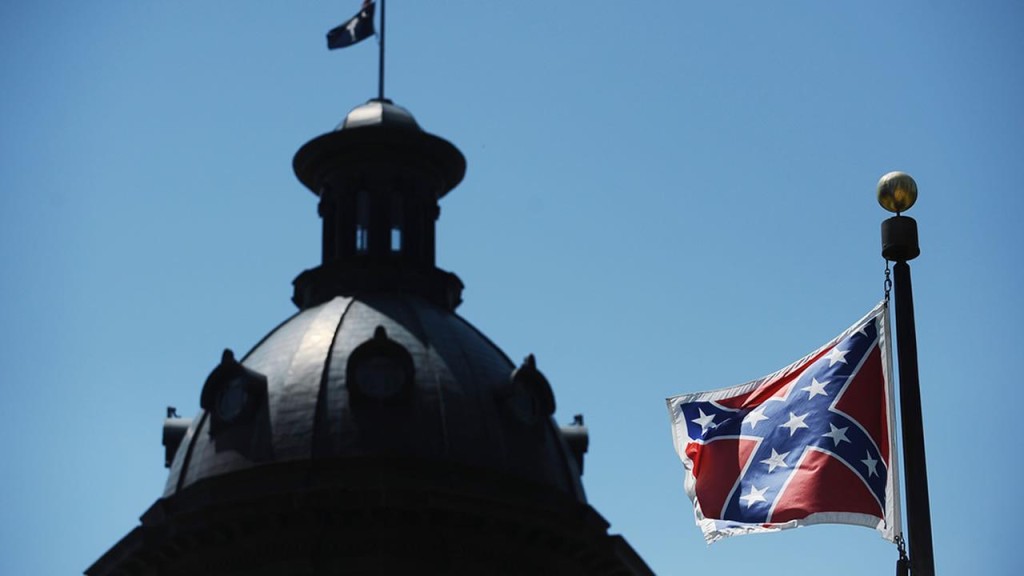
I wish that we could erase all of the hate and racism and violence in the world by eliminating the Confederate Flag. Oh how I wish it was that easy. If taking down displays of that flag would turn our world into a place where racism no longer existed and where hate crimes never again happened, I would tear the flags off of the Confederate Memorial myself. I would make it my life’s mission to eradicate the Confederate Flag from this planet. The fact is, though, that flag didn’t cause the tragic events in Charleston. Those who are using the deaths of 9 innocent churchgoers as an opportunity to focus on a flag are doing a disservice to the memories of those Christian men and women who died last week at the hands of a hate filled mad man and they are doing an even bigger disservice to our society as a whole.Some people are inherently evil. Some people are raised to hate. Some people are insane. Unfortunately, those are the facts of the real world. No flag can change those facts. The tragedy that occurred last Wednesday in a small town in South Carolina is tragic and horrible. Those 9 men and women died at the hands of evil. Their deaths are an opportunity to have a real discussion about what happened and how it could have been prevented. We should discuss why the shooter’s friends are telling news reporters that their “friend” told them he wanted to shoot up a University and told them last Wednesday would be the day he went on that shooting spree, yet none of these friends went to authorities or warned anyone that they knew someone who was planning a mass shooting. We should discuss how certain medications like suboxone have terrible side effects that seem to push certain people to commit unspeakable acts of violence. We should discuss how the mental health community responds to the needs of individuals who clearly need help. We should discuss why racism still exists. We should talk about how children of all races play nicely with each other but as they grow up, some of those innocent children begin to view race in a different way. We should have a lot of candid discussions after the Charleston church massacre but if we focus on a flag, we are missing a real opportunity to have meaningful conversations about hate and evil and violence. Abolishing the Confederate flag won’t change the hearts or minds of a single violent, mentally disturbed racist but why should would be focus on the real problems when we can argue about a square piece of fabric instead. Sure, that makes sense. Angi Stalnaker is Alabama native and political consultant who has worked on numerous statewide, legislative and constitutional amendment races for conservative causes and candidates. She is the founder of Virtus Solutions, a full service government relations and communications firm.
Dylann Roof almost didn’t go through with Charleston shooting because ‘everyone was so nice’
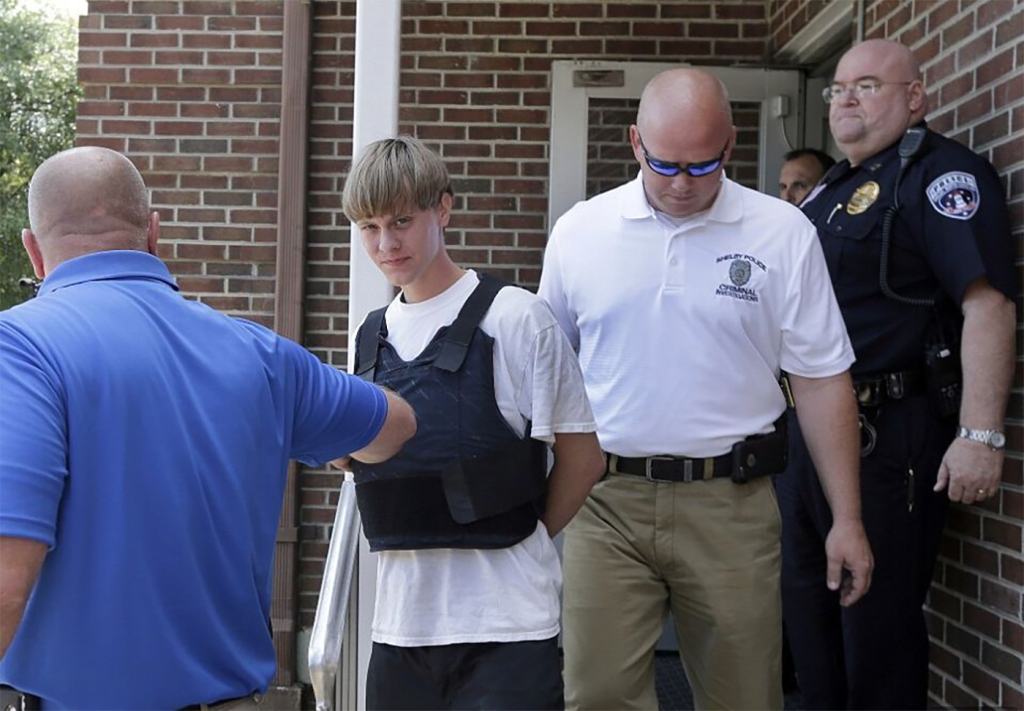
Dylann Roof, the 21-year-old suspect in the shooting of nine people Wednesday evening at a historic black church in Charleston, S.C., had been planning the shooting for months, friends say. But he almost didn’t go through with the “mission” at the last minute, reports NBC News, because he said “everyone was so nice to him.” Roof, from Lexington, S.C., was arrested Thursday in North Carolina, and is currently being held at a detention center in South Carolina. He will appear at a 2 p.m. bond hearing through closed-circuit television. After spending about an hour in a prayer meeting at the Emanuel African Methodist Episcopal Church, Roof, a white man, opened fire, killing nine and injuring several others. He then fled and NBC reports Roof was captured in Shelby, N.C., Thursday morning. He waived extradition and was immediately taken back to South Carolina. According to Charleston County Coroner Rae Wooten, the nine victims were: Cynthia Hurd, 54; Susie Jackson, 87; Ethel Lance, 70; Rev. DePayne Middleton-Doctor, 49; Hon. Rev. Clementa Pinckney, 41; Tywanza Sanders, 26; Rev. Daniel Simmons Sr., 74; Rev. Sharonda Singleton, 45; Myra Thompson, 59. Pinckney was a pastor of what is referred to as the “Mother Emanuel” AME Church, one of the oldest African-American churches in the United States. He was also a pillar of the local and regional Democratic community, who served as a member of the North Carolina House of Representatives. “Michelle and I know several members of the Emanuel AME church,” said President Barack Obama on Thursday. “We knew their pastor, Rev. Clementa Pinckney, who, along with eight others, gathered in prayer and fellowship and was murdered last night. And to say our thoughts and prayers are with them and their families and their community doesn’t say enough to convey the heartache and sadness and the anger that we feel.” Roof has confessed to the shooting on Friday, telling authorities his plan was to start a race war.
