
LGBTQ Charter school denied again but supporters are forging ahead

At the September 10 charter school commission meeting, the Alabama Public Charter School Commission rejected the application for the first LGBTQ charter school. Four of the eight commissioners abstained from the vote, three voted yes, and one commissioner voted no, reported AL.com. The single no vote effectively denied approval for Magic City Acceptance Academy. This was the second chance for the Magic City Acceptance Academy to be approved. However, Commission Chairman Henry Nelson appealed to Commissioner Marla Green to call for a new vote. Green refused, so Nelson called for a commission meeting for September 17. It is unclear if they will reconsider at this meeting. Birmingham Aids Outreach started the charter school application process in order to “provide an affirming learning environment for LGBTQ students”, according to a BAO press release. “We’re thrilled to support BAO and the Magic Center Acceptance Center in their application for a charter school. All kids deserve a school environment that is welcoming and affirming, and far too often, that is just not the experience kids in the LGBTQ community have in a traditional school. This application has all of the elements to not only deliver a nurturing school environment but also an excellent academic experience,” said Tyler Barnett, Executive Director of New Schools for Alabama. The mission of BAO is to “enhance the quality of life for people living with HIV/AIDS, at-risk, affected individuals, and the LGBTQ community through outreach, age-appropriate prevention education, and supportive services.” Commissioner Nelson has questioned whether the denial was due to bias. Al.com quoted Commissioner Nelson as saying, “There’s no school that’s come before us with stronger leadership, with the amount of money they have and have their own facility,” said Nelson. “I can’t see any reason based on our previous votes…that this school matches if not exceeds, every other school that we’ve voted on.” After the vote, MCAA Principal Michael Wilson spoke to the commissioners. “I would implore you to put bias aside and let us save some lives by providing the atmosphere and the academic environment that so many students out there need,” Wilson said. During the meeting, the commission approved two charter applications: Breakthrough Charter School in Perry County and Ivy Classical Academy in Prattville. They also denied an application from Knowledge Unlimited. Magic City Acceptance Academy was planning to open with 200-300 students grades 6-12 and be located in Bessemer. To reach the commissioners, go to their website for information.
Rachel Blackmon Bryars: Four myths to dispel during Alabama School Choice Week

Gov. Kay Ivey recently proclaimed this “Alabama School Choice Week” and thousands of families are celebrating reforms created by the Alabama Accountability Act, including scholarships so low-income parents can transfer their children from under-performing schools. Critics of the program, however, will likely respond by repeating some of the many myths about the law. Here are four you’ll probably hear: Myth #1: Scholarships steal money from public schools The Alabama Accountability Act “has directly siphoned more than $140 million from Alabama’s cash-strapped K-12 classrooms,” wrote the Alabama Education Association in a September 2018 edition of the teacher’s union magazine. But public school systems aren’t actually losing money. They are now collecting more money to educate fewer students with the biggest budget in a decade. Overall, the state’s multi-billion dollar education trust fund has grown since the scholarships were first offered, even while enrollment has steadily decreased. Last year alone, tax revenue that funds the education budget grew by nearly half a billion dollars– about three times as much as the scholarship program has spent in six years combined. Also, it costs roughly $9,500 annually to educate a student in public school, according to budget data. But it only costs about $6,500 to educate the same child in private school, which includes the costs of administering the scholarships, according to Warren Callaway, executive director of Scholarships For Kids, one of the largest scholarship granting organizations in the state, and a member of the recently formed Alabama Accountability Act Coalition. “It’s a great deal for taxpayers,” Callaway said. “They’ve given us $146 million and we’ve provided $200 million in education. The cost of education is not fixed because [public schools] don’t have to educate the child we have taken off their hands.” Myth #2: Even high performing schools that don’t have any students transferring out on scholarship still “lose money” “The highest performing school districts lose revenue at the same rate as all other districts,” according to the teachers’ union article. “It does not matter if you have no failing schools in your district. It does not matter if you have no scholarship recipients in your district. All school systems are still penalized under the [program].” Callaway says this is “bogus.” “The AEA tells Mountain Brook City, arguably the best system in the state, that they’ve lost $834,956 due to the Accountability Act,” Callaway said. “That’s hogwash. They haven’t lost a dollar.” Callaway examined state budget data showing Mountain Brook enrollment has largely been static, while state spending on students has gone up. In effect, they’ve received more money than years prior despite the AEA’s claims they’ve lost money. Myth #3: A University of Alabama study proves school choice doesn’t work A state-commissioned study conducted by the University of Alabama’s Institute for Social Science Research found that students using the scholarships performed about as well, on average, as their public school peers. Critics believe this proves school choice doesn’t help students improve academically. But advocates claim this indicates a huge achievement since research shows poverty strongly correlates with poor academic performance – a fact highlighted by the recent release of this year’s failing schools list. “In 72 of the 76 [failing] schools, more than nine out of 10 students are in poverty,” reports Al.com’s Trisha Powell Crain. “Even in the other four, more than half of the students are poor. In every one of the nine K-5 and K-6 elementary schools on the list, every student is poor. The University of Alabama study also showed low-income scholarship students often did better academically than their low-income public school counterparts. “We’ve taken kids who you would predict would be on the bottom side of the bell curve of achievement and we’ve gotten them to the mean,” Callaway said. “I would put the headline of that study, instead of ‘They scored average, ho-hum,’ I would say ‘They scored average, exclamation point!’” Myth #4: The program should be repealed because not all scholarship recipients are zoned for failing schools Students zoned for failing schools are awarded the scholarships first, and any remaining funds are then given to other disadvantaged families in schools that are generally close to the bottom 6th percentile — the state’s definition of a failing school. “Would you want to send your child to a 7th percentile school or an 8th percentile school?” Callaway asked. “The answer is no. Those are still low performing schools.” Overall, there’s a lot about education besides school choice that Alabamians can celebrate this week. Our recently released state report card revealed district and school improvement last year, with more As, Bs and Cs than the year before. Our First Class Pre K program continues to succeed and draw national attention. And Montgomery will open its first charter school this year. None of these achievements, including school choice, would have happened without new ideas and reform. “The Accountability Act wasn’t an initiative to take the place of public education, it was just intended to show there is an alternative way of doing things and to upset the status quo,” Callaway said. No doubt the families celebrating their life-changing opportunity this week thank God that it did. ••• Rachel Blackmon Bryars is a senior fellow at the Alabama Policy Institute. Email her at Rachel@alabamapolicy.org or connect with her on Instagram @rbryars.
Parker Snider: Charter schools are keeping promises

On the campaign trail in 2012, Mitt Romney remarked that “charter schools are so successful that almost every politician can find something good to say about them.” Romney was right. President Bush told crowds he was a “big believer” in charter schools, President Obama proclaimed National Charter Schools Week year after year, and 2016 presidential candidates Bernie Sanders, Donald Trump, and Hillary Clinton are all on record praising public charter schools. From 2016 to 2017, however, support for charter schools dropped a startling 12 percent, from above 50% to below 40%, according to a 2017 EdNext poll. Interestingly enough, the decrease was equal for both Democrats and Republicans. One reason for falling support is likely an increased public awareness of the failures of some charter schools and charter school executives. In 2016, documented cases of charter school executives turned criminals hit the airwaves in multiple states. Additionally, reports of charter schools suddenly closing, leaving students to fend for themselves in the middle of the school year, have made headlines and been the subject of many op-eds in national newspapers. It’s easy to see why these public failures might quell support for charter schools. Truthfully, however, across the nation and in Alabama, many charter schools are fulfilling their promises. For example, KIPP, the nation’s largest non-profit public charter school network with over two hundred schools, sees a majority of its students outpacing national growth averages. Additionally, most KIPP schools are outperforming the traditional public schools in their districts. Although there are no KIPP schools in Alabama, Sumter County’s new University Charter School opened its doors last Monday. As described in Trisha Powell Crain‘s AL.com article, the mission of UCS is to integrate the community while providing a high-quality education. UCS is on its way towards achieving that mission. Contrary to county tradition, UCS boasts a student population that is about half black and half white. Before UCS, the schools in Alabama’s poorest county were still segregated, decades after the U.S. Supreme Court ruled that separating white and black children in different schools was unconstitutional. Although charter schools are few and far between in Alabama (only five have been approved since charter school legislation made them possible in 2015), the strides that University Charter School has made for its community should encourage more districts to pursue innovative ideas for their school systems. Innovative ideas include charter schools, of course, but NBA superstar LeBron James‘ I Promise School in Akron, Ohio – a public non-charter school that is a partnership between the I Promise Network, the LeBron James Family Foundation, and Akron Public Schools – proves that solutions to education woes can come in many forms. Regardless of the specifics, Alabamians should be thankful for the good that charter schools and other innovative education options have created for students across the country. We must not, however, neglect to learn from the failures of schools in other areas. Alabamians should work, therefore, to replicate those innovate solutions that are successful, as University Charter School is doing, here in our state. ••• Parker Snider is Manager of Policy Relations for the Alabama Policy Institute, an independent, nonpartisan, nonprofit research and educational organization dedicated to strengthening free enterprise, defending limited government, and championing strong families.
New charter school brings integration to Alabama county
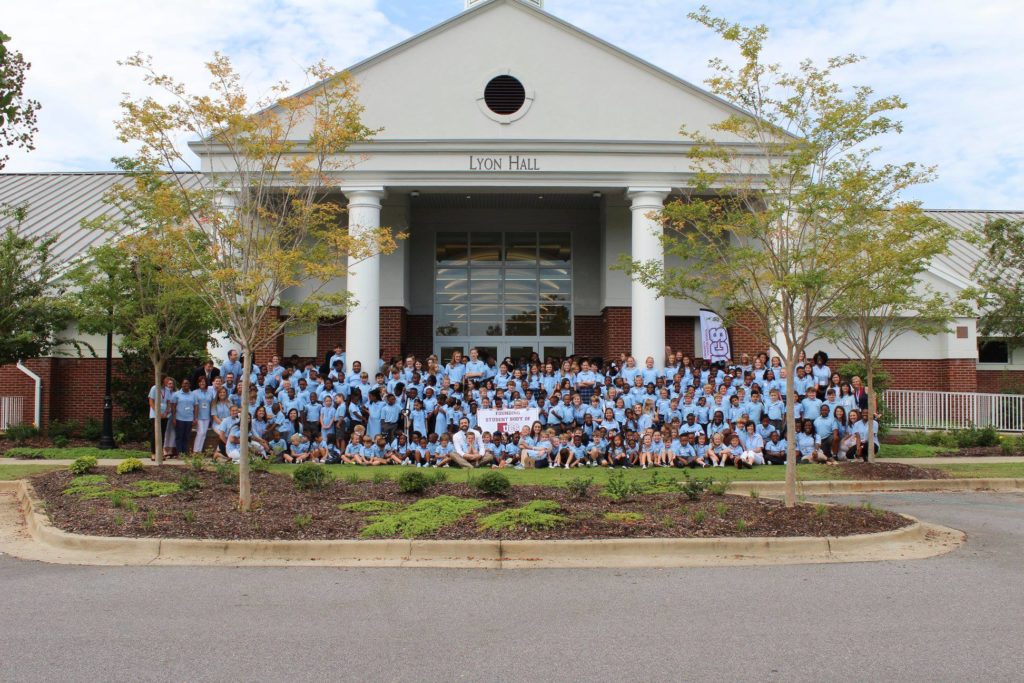
At 7:50 a.m. Monday, when classes started at University Charter School, students in kindergarten through eighth grade began a new era, hardly aware of the history they were making. Black students and white students were learning side-by-side in integrated public school classrooms in the west Alabama county. More than half of the school’s 300-plus students are black, while just under half are white. While not fully representative of the county’s split — 76 percent black, 24 percent white — no public school in the county has come close to reaching the percentage at University Charter, according to historical enrollment documents. The implications of the opening of the charter school weren’t lost on parents, teachers and school administrators. “This is an historic day and an historic mission,” principal John Cameron said as he directed cars in the student drop off lane. Cameron is a native of this area of Alabama, known as the Black Belt first for its fertile soil and now also because the majority of residents are black. Kindergarten teacher Brittany Williams, who is one of the school’s 20-plus teachers recruited to open the school, graduated from the University of West Alabama in December. She said during last week’s open house she was thrilled to teach at University Charter in part because she fell in love with Livingston and didn’t want to leave. Williams sees both the historical significance and the way students’ lives can be changed by attending an integrated school. “For me,” she said, “I’m inspired because now students, when they come to this school as a kindergartner, that’s all they will know is an integrated school.” Parent Robert Beard walked his first- and fourth-grade children inside the school. Beard said he hopes the school is able to bring everybody together and provide the support to build relationships in the community. “Hopefully we can keep everybody together and provide a great education program,” he said. Beard said the quality of teachers and the state-of-the-art offerings are great for the students. As students were dropped off, families waited with their younger children inside the school. The conference center was jam-packed with students and their families. Parent Markeitha Tolliver waited with her fourth-grade son, Marquez. Tolliver’s niece is a teacher at the school. “The school will work wonders for the community,” she said. “I’m praying they keep it for a very long time.” When the federal courts demanded Alabama integrate public schools in 1969, 15 years after the Supreme Court decision ending segregation, white students in Sumter County, as in many places across the state, left public schools and created their own all-white, private schools. Sumter Academy, a K-12 school, opened in 1970 with more than 500 students, but by 2016 that number was down to 172, according to news reports. The school closed at the end of the 2016-2017 school year with school officials in part blaming the opening of the charter school. According to the state, during the 2017-2018 school year, all but 11 of Sumter County’s 1,500 students were black. Black students accounted for nearly 100 percent of enrollment in five nearby counties. As Alabama’s first rural charter school, University Charter joins the small but growing number of rural charter schools which, according to the National Center for Education Statistics, are only 11 percent of the nation’s 7,000 charter schools. More than 3.2 million students attended charter schools during the last school year. There are no admission requirements at University Charter, and students enrolled this year are assured enrollment in subsequent years. The school plans to add one grade each year, becoming a K-12 school by the start of the 2022 school year, and a lottery will be held if enrollment next year exceeds capacity. The school plans to add football in the future, officials said, but will start with a wide array of middle school sports, including boys’ and girls’ basketball. The school is housed on the site of the old Livingston High School, now called Lyon Hall, adjacent to the University of West Alabama. The campus became the center of controversy when the Sumter County Board of Education sued the college and the charter school claiming that when the university purchased the building from the county in 2011 they promised not to open a school in the building. A circuit court judge ruled in the charter school’s favor in July, clearing the way for the school’s opening. Republished with permission from the Associated Press.
Sumter County Board of Education seeks to stop charter school opening

The case of an Alabama county board of education that’s trying to stop the opening of a charter school this fall will be heard in court. The Tuscaloosa News reports the Sumter County Board of Education is seeking an injunction against a charter school set to open in Livingston this year. The case is set to go before a judge Friday. Court documents say the board argues using the former Livingston High School as a charter school violates the terms of a 2011 sales agreement with the University of West Alabama. The university bought the school in 2011 for $4 million. The lawsuit says the university agreed to prevent the use of the building by a school outside of the board’s supervision. Republished with permission from the Associated Press.
Judge rules against Montgomery’s first charter school; won’t open in 2018
Montgomery’s first charter school is no longer on track to open in 2018. On Tuesday, Circuit Judge J.R. Gaines ruled the Alabama Public Charter School Commission’s 5-1 vote to approve the LEAD Academy’s application for a charter school missed the mark by one vote that it legally needed for approval. Alabama law requires at least six votes for the charter school’s approval to be valid. The judge’s decision follows a March lawsuit made against the school by the Alabama Education Association, which alleged the state charter commission’s approval of Montgomery’s first-approved charter school was “invalid” or “arbitrary,” calling into question the legitimacy its approval of LEAD Academy. It named both LEAD Academy and state commission members as defendants. The AEA applauded Judge Gaine’s decision, which they believe stops “the unlawful granting of a charter school to out-of-state investors.” “The Commission’s own national experts said this application was deficient in all three core areas it reviewed and should be denied,” explained AEA President Sherry Tucker. “Thus, it was no surprise that its backers could not get enough votes in favor of it. AEA will continue to be the strongest supporter of all students in all of Alabama’s public schools.” Theron Stokes, AEA Associate Executive Director, added, “AEA will remain vigilant and fight all attempts to illegally divert public school dollars from Alabama classrooms to out-of-state, for-profit, charter school corporations and those operators should know that before trying to take public money from our public schools. We celebrate this victory for the students in the Montgomery Public Schools and the taxpaying citizens of Montgomery County.” But the school’s spokeswoman said they’re not giving up. The school’s chairwoman Charlotte Meadows told the AP, “it’s a sad day for our students” but “this is not the end of a charter school in Montgomery.” Meadows said she’s looking into legal options, but the start date may be delayed to 2019. Last month the school secured a facility for its learning center, after their initial plans to renovate the building that houses the Small Business Resource Center in downtown Montgomery fell through in February. When it opens, LEAD Academy will be located at the former Algernon Blair Building, which previously served as a bank headquarters, at 2897 Eastern Boulevard.
Building falls through for Montgomery’s first charter school
The LEAD Academy, Montgomery, Ala.’s first charter school is still looking for a building for its students. The charter school was approved earlier in February, by the Alabama Public Charter School Commission. Charlotte Meadows, the LEAD Academy board chair expects the academy to have 360 students enrolled in the fall. The problem is, they have nowhere to put them. The plan was to renovate the building that houses the Small Business Resource Center in downtown Montgomery. Board members were ready to move forward with the renovations, but the Chamber of Commerce recently notified them that the building would not be sold to them after all. “We definitely can start in 2019 because we can buy a building and renovate it between now and then,” Meadows told Alabama News. “So that’s not the issue. The issue is finding a specific building that is already move in ready. We just don’t have time between now and August to do a ton of renovations.” The academy will begin the search for a new building to occupy before August. LEAD Academy will focus on K-5 education in the first year, adding higher grades every year. By 2024, the school aims to offer all grades K-12. The focus being on teaching children how to interact effectively with one another and adults. The school’s curriculum will focus on STREAMS: science, technology, reading, engineering, art, math and social/emotional learning. “Start from kindergarten on to help children learn social skills needed to survive in this world. Teach a child to speak face to face, look someone in the eye when you speak to them and shake hands when you meet someone,” said LEAD Academy board member, Lori White.
2 more Alabama charter schools approved by state commission board
The Alabama Public Charter School Commission on Tuesday approved two more public charter schools to open in Alabama. One, the University of West Alabama’s application to operate the University Charter School in Sumter County was fully approved by the Commission. It will be located on the University of West Alabama’s campus in Livingston, Ala. The school has already received over $370,000 in donations and intends to open next fall, with 150 students in grades K through 5. In 2019, the school plans to expand to include all grades, making it the first K-12 public charter school in the Yellowhammer State. The second, Infinity Learning Center, received conditional approval to accept at-risk students in Montgomery County. The schools plans to enroll 285 students and focus education in four primary areas: aviation, law and law enforcement, business and healthcare. Its conditional approval is pending the school’s ability to prove it is able to meet educational standards in each of the four target areas. A third applicant, Merit Academy, was denied by the Commission. It was to be located in Shelby County. The Commission is an independent state agency whose mission is to authorize high-quality public charter schools who do not have local system authorizing authority to apply to, or who are denied by the local authority.
Alabama’s first charter school approved for Mobile
Plans to open Alabama’s first charter school have been approved. The Alabama Charter School Commission voted Tuesday to allow the Accel Day and Evening Academy to begin operations in Mobile. The school will serve students at least 16 years of age who have dropped out or fallen behind academically. “What we really want to do is use the charter opportunity as a way to take it to the next scale, to serve the more than 2 -thousand young people down on the Gulf Coast of Mobile who really need this option,” says Jeremiah Newell of the Mobile Area Education Foundation. The Alabama Legislature passed a bill in February 2015 authorizing charter schools, which are publicly funded but have more operational freedom than traditional public schools, for the first time. Alabama was the 43rd state to pass a charter school law. On Tuesday, the 10-member Commission, chaired by former state Superintendent Ed Richardson, interviewed three applicants hoping to start charter schools in their areas. Edge Preparatory School: Based in Huntsville, the school would be primarily intended for students zoned for elementary schools in lower-income areas. Accel Day and Evening Academy: The Mobile Area Education Foundation plans to start this high school for students 16 and older who have dropped out or fallen behind. The Sports Leadership and Management Foundation (SLAM): based in Miami, the school plans to start a school in the Huntsville area for pre-kindergarten through second grade that will use learning programs based on sports themes with a heavy focus on science and technology. Only the Mobile school was outright approved, which is slated to open for the academic year beginning in August 2017. SLAM was conditionally approved, but the Commission says operators must get approval under a federal court order on desegregation. The Commission rejected plans for another charter school in Huntsville.
Alabama business roundup: Headlines from across the state

Can you guess how many AL counties have more registered voters than adult residents? Find out more about a possible new electricity-natural gas utility coming to the Yellowhammer state. What’s happening to AL’s first charter school? And more inside today’s business roundup of headlines from across the state: Alabama Newscenter: Southern Company/AGL Resources deal would create leading U.S. joint electricity-natural gas utility Southern Company and AGL Resources have agreed to a $12 billion deal that would make the natural gas giant a new Southern operating company and puts the electricity company into the growing natural gas business. Alabama Power is a Southern Company subsidiary with 1.4 million customers, 78,000 miles of power lines and 13,000 megawatts of electric generating capacity. Southern Company also owns Southern Power, which owns 3,175 megawatts of natural gas generating capacity in Alabama.The boards of directors of both companies said today they have a definitive merger agreement to create America’s leading U.S. electric and gas utility company. If finalized, AGL Resources will become a new wholly-owned subsidiary of Southern Company. In Alabama, AGL Resources owns a liquefied natural gas facility in Trussville that delivers about 60,000 gallons per day, its first such facility dedicated solely to the merchant market. Southern Company with AGL Resources under its umbrella would create a new electric and natural gas utility with approximately 9 million utility customers in nine states. It is Southern Company’s largest deal to diversify its utility holdings. “As America’s leader in developing the full portfolio of energy resources, we believe the addition of AGL Resources to our business will better position Southern Company to play offense in supporting America’s energy future through additional natural gas infrastructure,” Southern Company CEO Thomas A. Fanning said. “For some time, we have expressed our desire to explore opportunities to participate in natural gas infrastructure development.” Under the terms of the agreement, AGL Resources’ shareholders would receive $66 in cash for each share of common stock, a 36.3 percent increase in this month’s average trading price. Southern Company expects an increase in earnings the first year after the acquisition closes. The new company would become the second-largest utility company in the U.S. with: 11 regulated electric and natural gas distribution companies; 9 million customers with a projected regulated rate base of about $50 billion; Nearly 200,000 miles of electric transmission and distribution lines and more than 80,000 miles of gas pipelines; Generating capacity of about 46,000 megawatts. “With AGL Resources’ experienced team operating premier natural gas utilities and their investments in several major infrastructure projects, this is a natural fit for both companies,” Fanning said. “Moreover, this transaction is expected to position Southern Company to enhance earnings growth while maintaining a strong balance sheet and improving cost-effectiveness.” The Southern Company system is known for regularly outperforming industry peers in reliability, with prices below the national average and the highest customer satisfaction among peer utilities as measured by the Customer Value Benchmark survey. Alabama Power regularly tops such rankings along with other Southern Company operating companies Georgia Power, Mississippi Power and Gulf Power. “AGL Resources’ management team and board of directors wholeheartedly support this transaction, and we believe it will provide new opportunities and enhanced value for our shareholders, customers and employees,” AGL Resources CEO John W. Somerhalder II said. “Importantly, both companies are committed to safely delivering clean, reliable, affordable energy while providing customers with world-class service. The respective models of Southern Company and AGL Resources focus on the fundamental values of safety, operational excellence and environmental stewardship.” Fanning said Southern Company and AGL Resources share a focus on community involvement. “We believe this combination will also advance our customer-focused business model,” he said. “AGL Resources and Southern Company have long been leading corporate citizens and the combined company will further our support of all of the communities we serve.” Somerhalder agreed. “We’ve found a strong partner in Southern Company with its complementary businesses, excellent reputation and shared values,” he said. “They have committed to continuing our tradition of community and philanthropic support and exceptional service to customers. We look forward to working with Southern Company to complete the transaction as expeditiously as possible and ensure a smooth transition.” Birmingham Business Journal: Registered voters outnumber eligible adults in 10 Alabama counties The Public Interest Legal Foundation – a nonpartisan, nonprofit, public-interest law firm that specializes in civil litigation affecting elections, voting and other political processes – recently notified 10 Alabama counties that they have more registered voters than people in the voting age population. Alabama Secretary of State John Merrill confirmed the numbers listed by the group and said that all 10 had more registered voters than people over 18 years of age, according to a report from AL.com. The counties are Lowndes, Perry, Greene, Macon, Wilcox, Marengo, Hale, Washington, Conecuh and Choctaw. Merrill said all 10 counties have seen population decreases since 2010 and some people that previously left the counties still remain registered to vote in their districts. Former Alabama Secretary of State Jim Bennett’s office last year released numbers showing that four Alabama counties had more registered voters than voting age population. The 10 Alabama counties listed by the foundation are among 141 nationwide, according to data from the foundation. Only four other states had more counties on the foundation’s list than Alabama – Michigan (24), Kentucky (18), Illinois (17) and Indiana (11). Here are the continues by number of registered voters and those over the age of 18. Choctaw County, 10,765 registered voters, 10,582 adults Conecuh County, 10,102 registered voters, 9,957 adults Greene County, 7,230 registered voters, 6,561 adults Hale County, 12,042 registered voters, 11,641 adults Lowndes County, 10,230 registered voters, 8,135 adults Macon County, 17,700 registered voters, 15,865 adults Marengo County, 16,108 registered voters, 15,485 adults Perry County, 8,521 registered voters, 7,621 adults Washington County, 13,382 registered voters, 13,048 adults Wilcox County, 9,059 registered voters, 8,341 adults Birmingham Business Journal: Alabama delays first charter school opening until 2017 The first meeting of the Alabama Charter School Commission on Thursday resulted in
Education funding, school choice biggest wins this session, say lawmakers

According to House and Senate leaders, education reform and school choice were the brightest spots of the 2015 legislative session. In separate radio interviews on Friday, Senate President Pro Tem Del Marsh and House Speaker Mike Hubbard both said that investing in classrooms, expanding school choice, and supporting workforce readiness for community college students were among the biggest accomplishments by lawmakers this year. The $6 billion state education budget includes a $13 million increase for textbooks and more than $10 million for the Alabama’s nationally acclaimed Pre-K program. “I think this year’s education budget is the largest it’s ever been,” Marsh said. Marsh and Hubbard also pointed to the bill to authorize Alabama’s first charter schools as an accomplishment this session, calling it a step forward for students and parents. The new law creates public schools with the ability to develop curriculum and select teachers bound by contracts instead of regulations set by the state. Before this session, Alabama was one of only eight states without charter schools, according to the Alabama Coalition for Public Charter Schools. “We passed the charter school bill, which I think is a huge step forward for the state of Alabama,” Hubbard said. “And the budget that we passed for education puts more money in the classrooms.” Speaker Hubbard added that the biggest accomplishments weren’t only in the K-12 classrooms, adding that the state’s first commission to oversee Alabama’s 25 community and technical colleges could make a difference to future workforce prospects. “The change of governance for the two-year school system I think is a huge game changer for the state long term,” Hubbard said. “I think we’re putting more of a focus in the community colleges on workforce development and getting them out from underneath the K-12 school board — they have enough to worry about themselves. Getting a board that is business oriented that will support the chancellor and the mission of the two-year system in terms of creating the skills that we need in the state of Alabama.”
Alabama governor, education board OK charter school commission
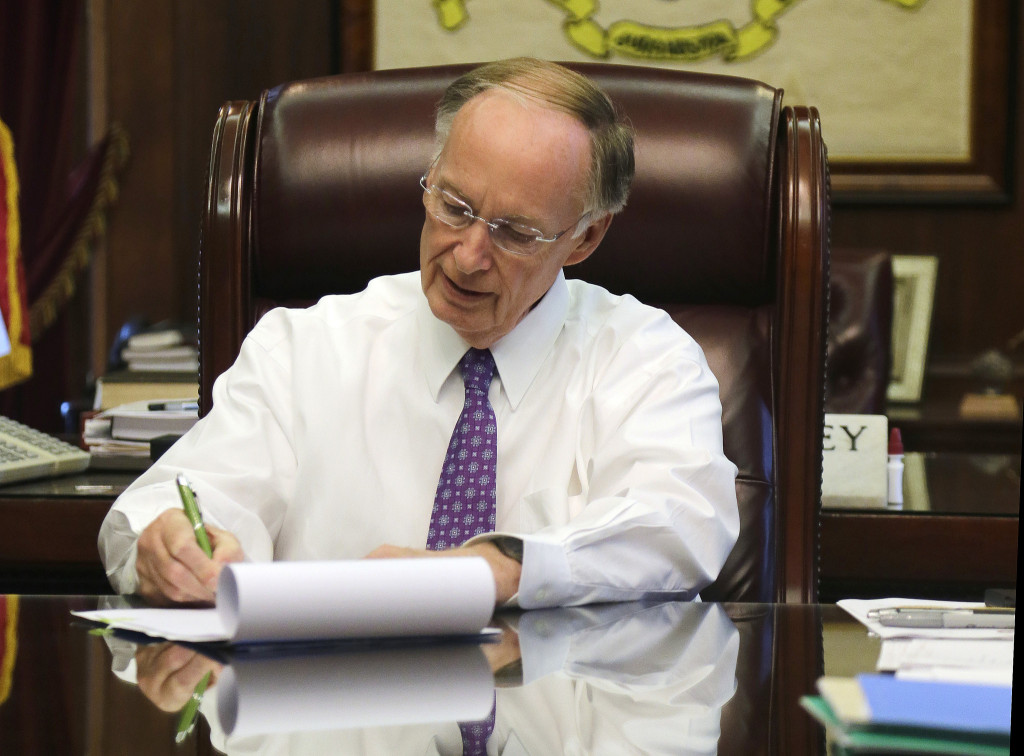
The Alabama State Board of Education confirmed a list of appointed nominees on Tuesday for the state’s new charter school commission. Gov. Robert Bentley, who is president of the board but rarely attends meetings, made a surprise appearance. He said he attended after it became clear the board couldn’t make a quorum without him. “This was put in legislation and we need to get the board in place and so I felt like we needed a quorum so I came over to make a quorum and chair the meeting,” he said. Earlier this month, the board angered members of the Alabama Legislature by refusing to confirm the commission, which is designated with hearing appeals of charter school applications rejected on the local level. Earlier this year, Bentley and the Legislature approved a plan to allow charter schools. According to the law, the commission is appointed by the governor, lieutenant governor, House speaker and Senate president pro tem. The nominees then must be confirmed by the state board. The delay had prompted Republican Rep. Terri Collins of Decatur to introduce a bill that would cut the state board out of the confirmation process. Several board members who contested the first confirmation vote were absent on Tuesday because of funerals or illnesses. “I think they need a place,” Bentley said of the board. “They need a board that people can apply to and bring their grievances to, so I think a board being in place is important and I think it is good for the process.” Hours later, Collins withdrew her bill from the House calendar. State Superintendent Tommy Bice said the board will serve the commission as administrative support. “I know there are some members that may have differing opinions and that’s why we have a board,” he said. “Everybody’s not expected to show up and have the same opinion, so it was voted on today, it’s done now, we have the commission and we look forward to working with them.” Bice said the majority of the state’s charter school structure will not involve the commission, but because the BOE oversees K-12 education it’s important for it to stay involved in the process. “I mean, at the end of the day, the implementation, of the charter bill law rests with the state department of education,” he said. “We’re putting together the regulations; we’re putting together the implementation procedures, all those things associated with it, even with this commission.” Board member Ella Bell, who said she was absent for the funeral of her longtime friend and campaign manager, said she was glad the governor attended. “They are his people,” Bell said. One of the board members who voted was Mary Scott Hunter. Hunter said she’s heard other states also have had early difficulties in creating charter schools, but expects future votes will be “more normalized.” “I certainly can see why it was filed,” she said of the bill Collins sponsored. “It was filed as an insurance policy against this board not getting the vote that it needed. But now this board has gotten the vote that it needed, in the normal course, and has shown that it can get this done.” Republished with permission of The Associated Press.
