
US submits extradition request for WikiLeaks founder Julian Assange
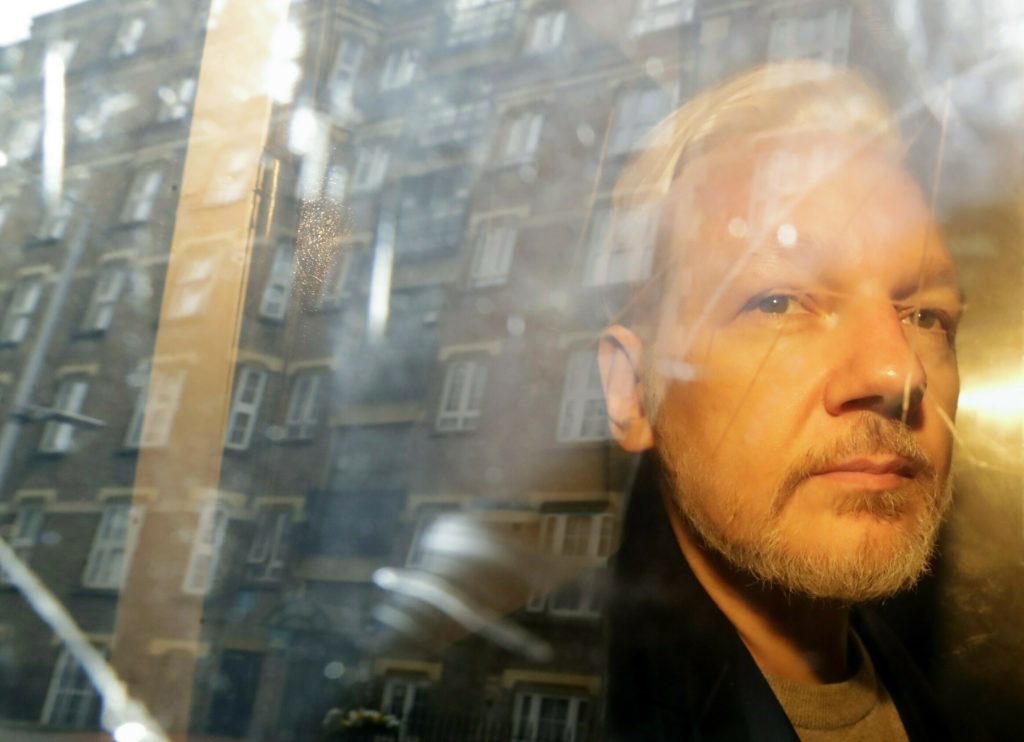
The United States government has formally submitted an extradition request to the United Kingdom for WikiLeaks founder Julian Assange, a Justice Department official said Tuesday. Assange faces an 18-count indictment that accuses him of soliciting and publishing classified information and of conspiring with former Army private Chelsea Manning to crack a Defense Department computer password. That indictment, which includes Espionage Act charges, was issued by the Justice Department last month and is pending in federal court in Alexandria, Virginia. The extradition request had been expected ever since U.S. authorities first announced a criminal case against Assange. Justice Department spokesman Marc Raimondi said it was submitted to the United Kingdom. The 47-year-old Assange was evicted on April 11 from the Ecuadorian Embassy in London, where he had been holed up since 2012 after Ecuador granted him political asylum. He was arrested by British police and is currently serving a 50-week sentence for jumping bail. Sweden also seeks him for questioning about an alleged rape, which Assange has denied. Assange was initially charged with a single computer crime violation on allegations that he worked with Manning to crack a government password. Some legal experts have said the additional Espionage Act charges might slow or complicate the extradition process to the extent the United Kingdom views them as political offenses and therefore exempt from extradition. Manning, who spent seven years in a military prison for delivering a trove of classified information to Assange before having her sentence commuted by then-President Barack Obama, has been jailed for civil contempt in Virginia after refusing to testify before a grand jury investigating WikiLeaks. By Eric Tucker Associated Press. Follow Eric Tucker on Twitter at https://www.twitter.com/etuckerAP Republished with the permission of the Associated Press.
Barack Obama commutes 330 drug sentences on last day as president
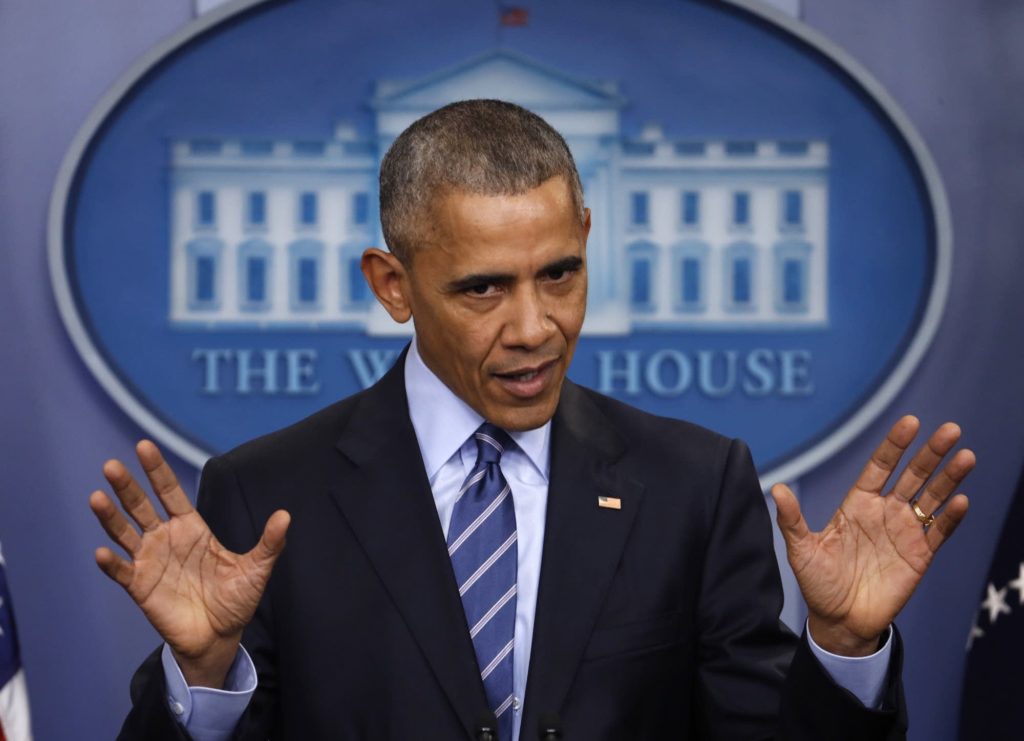
In a last major act as president, Barack Obama cut short the sentences of 330 federal inmates convicted of drug crimes on Thursday, bringing his bid to correct what he’s called a systematic injustice to a climactic close. With his final offer of clemency, Obama brought his total number of commutations granted to 1,715, more than any other president in U.S. history, the White House said. During his presidency Obama ordered free 568 inmates who had been sentenced to life in prison. “He wanted to do it. He wanted the opportunity to look at as many as he could to provide relief,” Neil Eggleston, Obama’s White House counsel, said in an interview in his West Wing office. “He saw the injustice of the sentences that were imposed in many situations, and he has a strong view that people deserve as second chance.” For Obama, it was the last time he planned to exercise his presidential powers in any significant way. At noon on Friday, Obama will stand with President-elect Donald Trump as his successor is sworn in and Obama’s chapter in history comes to an end. Even as Obama issued the commutations, the White House had been mostly cleared out to make way for Trump. In between carrying out their last duties, the few remaining staffers were packing up belongings as photos of Obama were taken down from the walls of the West Wing corridors. The final batch of commutations — more in a single day than on any other day in U.S. history — was the culmination of Obama’s second-term effort to try to remedy the consequences of decades of onerous sentencing requirements that he said had imprisoned thousands of drug offenders for too long. Obama repeatedly called on Congress to pass a broader criminal justice fix, but lawmakers never acted. For Bernard Smith, it’s a long-awaited chance to start over after 13 years away from his wife and children. Smith was working at a restaurant in Maryland in 2002 when his brother asked him to obtain marijuana for a drug deal. Though it was his brother who obtained the crack cocaine that the brothers then sold along with the marijuana to undercover officers, Smith was charged with the cocaine offense, too. His 22-year sentence was far longer than his brother’s, owing to what the court called Smith’s “extensive criminal history” prior to the drug bust. Smith still had 10 years on his sentence when he was notified Thursday that the president, on his last day in office, was giving him another chance. “He’s looking to turn his life around,” said Michelle Curth, his attorney. “He’s a good person who, like so many people, got involved in something he’s been punished for already.” Curth said that Smith had learned his lesson and owned up to his crime — he asked for a commutation, she noted, not a pardon, which would have erased the original conviction. She said Smith hopes to get licensed in heating and air conditioning maintenance and has lined up family members to help with his adjustment. But freedom for Smith is still two years away. Rather than release him immediately, Obama directed that he be set free in January 2019 — two years after Obama has left office — and only if Smith enrolls in a residential drug treatment program. To be eligible for a commutation under Obama’s initiative, inmates had to have behaved well in prison and already served 10 years, although some exceptions to the 10-year rule were granted. They also had to be considered nonviolent offenders, although many were charged with firearms violations in relation to their drug crimes. Obama personally reviewed the case of every inmate who received a commutation, often poring over case files in the evenings or calling his attorneys into his office to discuss specifics. Although a backlog of cases remains as Obama leaves office, his administration reviewed all applications that came in by an end-of-August deadline, officials said. Eggleston said Obama had been particularly motivated to grant clemency to inmates who had turned themselves around in prison. He said one inmate had trained and obtained a commercial driver’s license through a prison program, despite having a life sentence that all but assured he’d never get to use it. “The ones who really stuck home for the president and me are the ones who got their GED, they worked, they took courses in anger management, they took courses in getting over drug abuse issues, they remained in contract with their families,” Eggleston said. Obama has long called for phasing out strict sentences for drug offenses, arguing they lead to excessive punishment and incarceration rates unseen in other developed countries. With Obama’s support, the Justice Department in recent years directed prosecutors to rein in the use of harsh mandatory minimums. Earlier in the week, Obama commuted most of the rest of convicted leaker Chelsea Manning‘s sentence, arguing the Army intelligence analyst had shown remorse and already served a long sentence. Yet Obama will leave office without granting commutations or pardons to other prominent offenders who had sought clemency, including accused Army deserter Sgt. Bowe Bergdahl and former Illinois Gov. Rod Blagojevich. He also declined to pardon former National Security Agency contractor Edward Snowden. Republish with permission of The Associated Press.
With clemency for Chelsea Manning, attention turns to WikiLeaks head
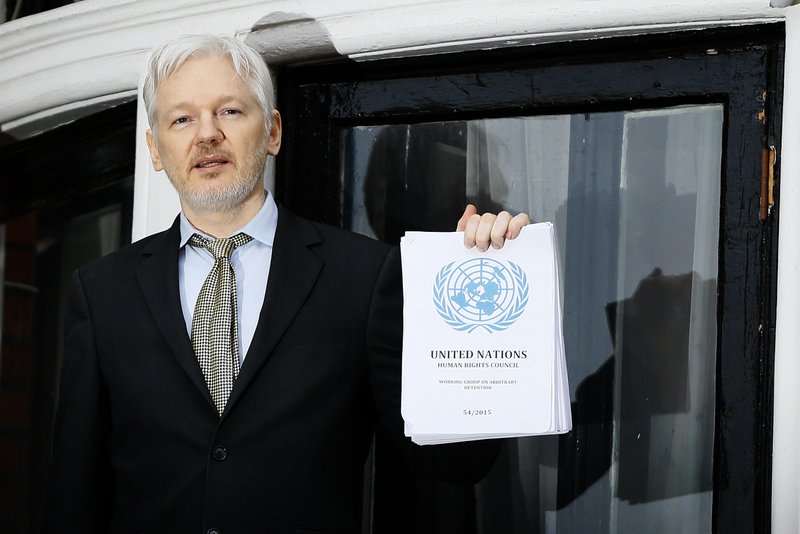
President Barack Obama‘s decision Tuesday to commute Chelsea Manning‘s sentence brought fresh attention to another figure involved in the Army leaker’s case: Julian Assange. On Twitter last week, Assange’s anti-secrecy site WikiLeaks posted, “If Obama grants Manning clemency Assange will agree to US extradition despite clear unconstitutionality of DoJ case.” Obama’s move will test the promise. The president commuted Manning’s 35-year sentence, freeing her in May, nearly three decades early. Manning has acknowledged leaking a trove of diplomatic cables and national security documents to WikiLeaks in 2010. In a statement, Assange called Manning “a hero, whose bravery should be applauded.” Assange went on to demand that the U.S. government “should immediately end its war on whistleblowers and publishers, such as WikiLeaks and myself,” but he made no mention of the Twitter pledge. His lawyer said he has been pressing the Justice Department for updates on an investigation concerning WikiLeaks. Assange has been holed up for more than four years at the Ecuadorian Embassy in London. He has refused to meet prosecutors in Sweden, where he remains wanted on an allegation of rape, fearing he would be extradited to the U.S. to face espionage charges if he leaves the embassy. The Justice Department has never announced any indictment of Assange, and it’s not clear that any charges have been brought under seal. The department, in refusing to turn over investigative documents sought by Manning under the Freedom of Information Act, has acknowledged that the FBI is continuing to investigate the publication of national security information on WikiLeaks arising from Manning’s disclosures. “That investigation concerns potential violations of federal criminal laws, in the form of serious threats to the national security, and the investigation continues today,” Justice Department lawyers wrote in a court filing last year. “From the terms of her request, it is clear that Manning seeks to obtain documents concerning that investigation. Separately, the FBI is also investigating Russian meddling through hacking in the U.S. presidential election. Hacked emails from top Democratic officials and Hillary Clinton campaign officials were posted on WikiLeaks in the final weeks of the presidential race. With the commutation coming just days before Obama leaves office, any decision on whether to charge or seek to extradite Assange will now fall to the Trump administration. In a statement Tuesday, a lawyer for Assange did not address whether Assange intended to come to the U.S. “For many months, I have asked the DOJ to clarify Mr. Assange’s status. I hope it will soon,” Assange’s lawyer, Barry Pollack, said in the statement. “The Department of Justice should not pursue any charges against Mr. Assange based on his publication of truthful information and should close its criminal investigation of him immediately.” Another Assange lawyer, Melinda Taylor, suggested he wouldn’t go back on his word. “Everything that he has said he’s standing by,” she said in a brief telephone conversation with The Associated Press. Republished with permission of The Associated Press.
Pressure on Barack Obama to grant last-minute pardons, commutations
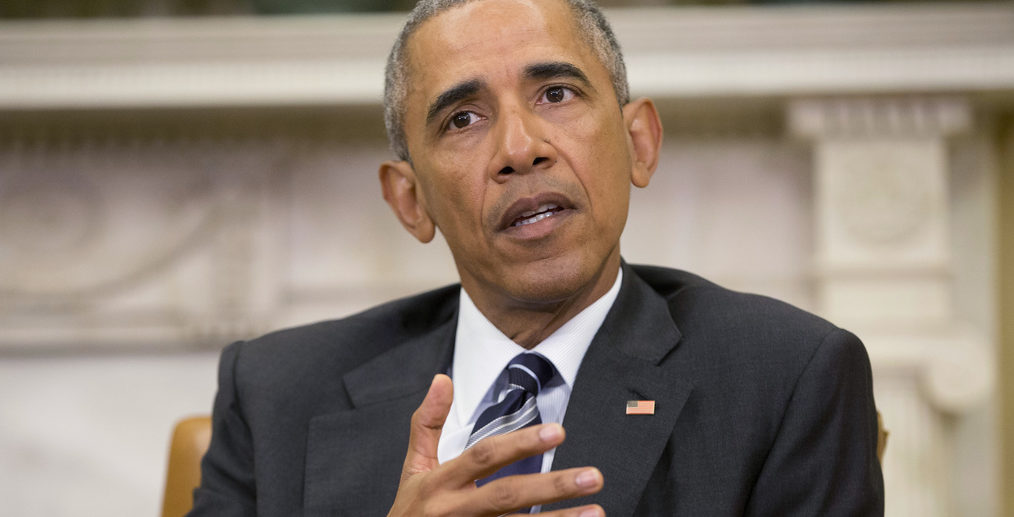
Under increasing pressure to free convicts as a last act, President Barack Obama is planning at least one more batch of pardons and commutations before leaving office in two weeks, but don’t expect many famous offenders to make the list. The list of bold names appealing to Obama for compassion in his final weeks includes accused leaker Chelsea Manning, former Illinois Gov. Rod Blagojevich, Army Sgt. Bowe Bergdahl, and supporters of Edward Snowden, to name a few. White House officials say Obama’s final commutations are expected to remain focused on the nonviolent drug offenders he’s tried to help during his second term. “The process that I put in place is not going to vary” at the end, Obama said in August. He said he’d make the calls “based on the merits, as opposed to political considerations.” In the past, presidents have made a splash with clemency on their way out. Former President Bill Clinton ignited a major controversy with a last-minute pardon for fugitive financier Marc Rich, the ex-husband of a major Democratic fundraiser. But Obama has viewed clemency as a tool to promote policy goals, not to “clean out the barn” on his way out, said the officials, who spoke on condition of anonymity because they weren’t authorized to publicly discuss internal White House deliberations. Presidents have two clemency options: commutations, which reduce sentences being served but don’t erase convictions, and pardons, which generally restore civil rights, such as voting, often after a sentence has been served. Earlier in his presidency, Obama was unsatisfied with the cases he was receiving, officials said, and so in a 2014 initiative the Justice Department created specific criteria focusing on nonviolent individuals such as drug offenders who have served 10 years and, if convicted under today’s more lenient sentencing guidelines, would have received shorter sentences. Obama has granted 1,176 commutations and 148 pardons – fewer pardons than some presidents, but more commutations than any other, the White House said. His goal in taking on the commutations project was to spur action in Congress on a criminal justice overhaul. That seemed initially promising, but the momentum petered out. “It’s politically risky. You commute somebody and they commit a crime, and the politics of it are tough,” Obama has said. Some Obama commutation recipients have had firearms violations related to their drug crimes. A few were unrelated to Obama’s criminal justice push but received clemency as part of diplomatic deals with Iran and Cuba. The more recent batches have included some that met the spirit, but not the precise letter of the criteria, such as people who have not served a full 10 years. Mary Price of the advocacy group Families against Mandatory Minimums said Obama’s commutations had increased awareness about decades-long sentences for drug crimes. “I think that that’s very positive,” Price said, though she added she would have liked even more. But Obama has also been criticized for being too lenient, including by President-elect Donald Trump, who has accused the president of putting “bad dudes” on the street and warned Americans, “Sleep tight, folks.” Steve Cook, president of the National Association of Assistant United States Attorneys, faulted Obama for feeding the perception that federal prisons are “full of low-level, nonviolent offenders.” He said Obama was eroding prison’s deterrent effect by granting clemency to people with multiple felony convictions and firearms charges. “When you grant somebody like that clemency, you’re sending a message to the entire drug trafficking world,” Cook said. There will be a backlog of applicants when Obama leaves office, officials said, just as a backlog awaited Obama. But most whose cases won’t be resolved are people convicted of serious crimes like murder. Rather than expend limited resources issuing formal denials, the administration focused on approving those eligible under Obama’s guidelines. A look at the higher-profile cases vying for last-minute clemency: SNOWDEN The former National Security Agency contractor took secret documents and leaked them, revealing massive post-9/11 domestic surveillance programs in the U.S. government. He fled to Hong Kong, then Russia, to avoid prosecution, and a recent congressional report said Snowden remains in contact with Russian intelligence services. Snowden hasn’t formally petitioned for a pardon, the Justice Department said, but his supporters have been seeking one. Obama takes a dim view of Snowden. He told the German newspaper Der Spiegel last month he was disinclined to consider a pardon request until Snowden returns to the U.S. to face charges. His attorney, Ben Wizner, said the focus was on persuading Obama for a pardon through a global grassroots campaign rather than making legal arguments to the Justice Department. — BLAGOJEVICH The former Illinois governor has petitioned Obama for a commutation of his 14-year sentence, being served at a prison in Colorado. But it’s unlikely that Obama would grant it, particularly given Blagojevich’s involvement in an effort to trade an appointment to Obama’s former Senate seat for campaign cash. — MANNING The ACLU and LGBT groups have lobbied Obama to commute Manning’s sentence. The transgender soldier leaked classified government and military documents to WikiLeaks, and has since tried to commit suicide at least twice. Manning is serving a 35-year sentence at Fort Leavenworth in Kansas. – BERGDAHL The U.S. Army sergeant could garner some sympathy from Obama, given that an Army Sanity Board Evaluation concluded that Bergdahl suffered from schizotypal personality disorder when he left his post in Afghanistan in 2009. Obama hasn’t commented in detail on Bergdahl, who has said he left his post to alert higher-ups to problems with his unit and faces desertion and misbehavior charges. Bergdahl was captured and held by the Taliban and its allies for five years. Two soldiers who went searching were seriously wounded. Obama exchanged Bergdahl in 2014 for five Taliban prisoners. Because of his military involvement, both the Justice Department and Defense Department must evaluate Bergdahl’s pardon request. Republished with permission of the Associated Press.
