
Ronda M. Walker: Breast cancer awareness and the fight of my life
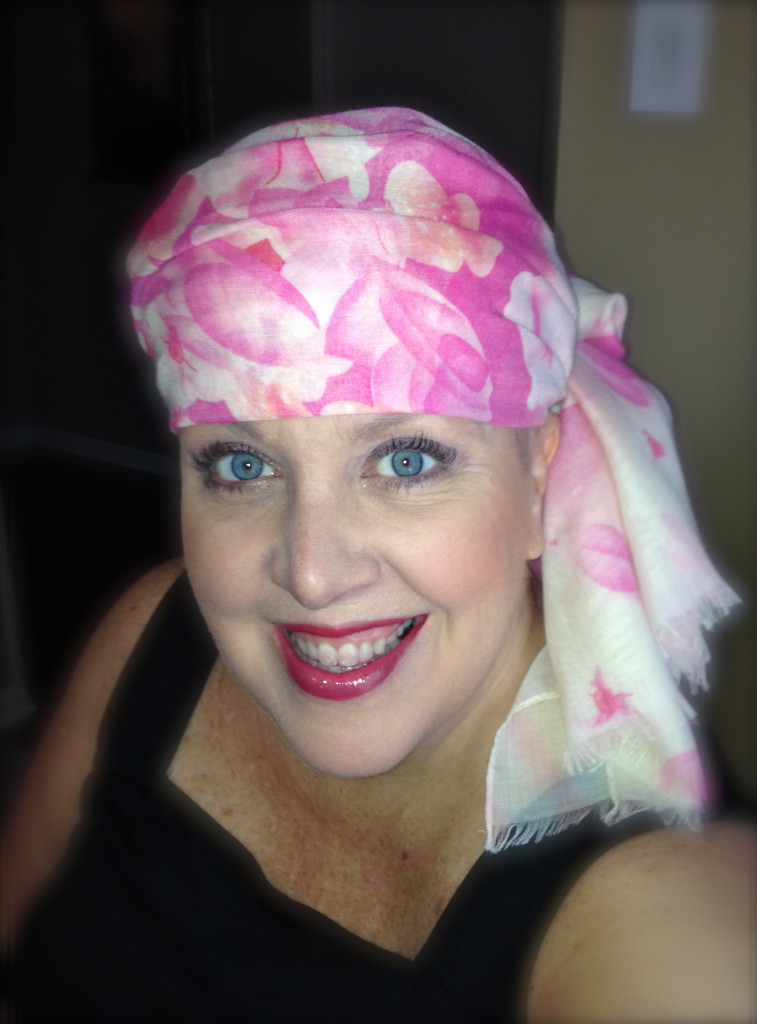
A friend suggested I write an article on breast cancer awareness for the month of October. That made sense to me and seemed simple enough since I am in the midst of the fight of my life against stage 3-breast cancer. I grabbed my laptop and pounded out paragraph after paragraph only to delete them all. I have learned so much this past year about breast cancer, my mind is full, but for some reason the article would not come together. The problem: the misnomer of awareness. October became breast cancer awareness month in 1985 – thirty years ago – so it stands to reason we should all know a lot about the disease, right? Wrong! Wearing pink doesn’t make you aware of the reality of breast cancer any more than wearing a jersey makes you a football player. As I sit here in the midst of my breast cancer fight, I am astounded at all I did not know about breast cancer this time last year. By mid-October last year I was tired of seeing all of the pink, I was tired of hearing about mammograms, I was ready to move on to November. Little did I know at the time breast cancer was growing like wildfire in my body, spreading into my lymphatic system, ready to kill me. I was 42 years old when I was diagnosed and in spite of the thirty yearlong awareness push I actually knew very little about breast cancer. From someone who has been in the game – who had her butt singed by the fires of hell and lived to tell about it – please let me make you a little more aware about breast cancer. First, a lot of women will be diagnosed with breast cancer, roughly 1 in 8. That means many of you reading this article will one day be told you have the disease or your wife, sister, mother, or daughter will get the dreaded news. Also, this is not a disease that just hits older women. I was forty-two when I was diagnosed and I can name a dozen women in my circle of friends who were younger than me when they were diagnosed. Early detection of the disease can make the difference between life and death, so if you value your life do not put off your annual mammogram and do some self-checking between doctor visits. About 40,000 women in American will die from breast cancer this year, and mammograms and early detection are critical. Mammograms will not prevent cancer, but early detection can mean the different between life and death. Next, be aware that all breast cancer is not created equal. There are many different types of breast cancer, some much worse than others. And as with any cancer, there are several different stages at which breast cancer might be identified. So when someone tries to encourage me by saying, “I am a 20 year breast cancer survivor.” My first question to them is, “Tell me about your diagnosis.” If you find your breast cancer early and it is small and contained your chances at a long, healthy life are very good. However, if you are diagnosed, like I was, with a later stage cancer the prognosis is not always as cheery. Moreover, there are terms associated with breast cancer that perhaps you have never heard like triple negative, inflammatory, and estrogen receptor that change your course of treatment as well as your long-term prognosis. So please be aware that while all breast cancer is scary to deal with, all breast cancer is definitely not created equal. Yesterday I saw an old friend and she said to me, “So, all your cancer is gone now, that is wonderful!” And I have to admit that is what most people think, that doctors can make all the cancer go away with aggressive treatment. Please be aware – doctors can NEVER tell you that you are CANCER FREE! That is a pie in the sky myth that might help some people move on with their lives but it just ain’t true. Once you have endured cancer treatment a positron emission tomography (PET) scan will be done to determine if there is any apparent cancer remaining in your body. Please note the word apparent – no scan can see one single cancer cell lurking in the deepest recesses of your body. While you might not have any apparent cancer, you might very well have one little cancer cell hanging out, waiting to meet up with some friends and form a nice, big malignant tumor. So when your friend announces they are finished with treatment and received a good report from the PET scan that does not mean they are literally cancer free. It is not over for them, ever. Of course since all cancer is not created equal, if they just had a small, contained tumor the odds that they no longer have any cancer cells in their body are good. But even if they experience the best possible results from treatment, the reality is cancer could return any minute – and that is the terrifying reality they have to live with the rest of their lives. One person said to me, “If you have to have cancer, breast cancer is the best one to get.” Seriously? It is the second leading cancer killer in women behind lung cancer. If you are fortunate enough to survive the disease, you get to spend the rest of your life disfigured. In my case badly disfigured. Some people seem to think breasts are disposable since they serve no life-sustaining function like our heart, lungs, or kidneys. Please, be aware that having your breasts amputated brings with it a lifetime of physical and emotional pain that eclipses in one day the level of pain most people experience in the course of their entire lives. Don’t let the cheery pink commercialized month of October fool you; breast cancer is a harsh, debilitating killer.
Ronda M. Walker: Honoring womanhood, politics with strength, compassion
When I was told I have stage 3 breast cancer this past December, I decided to make my diagnosis and treatment public. I am, after all, a public servant and I have spent most of the past 20 years working in the public sphere. It was my hope that discussing my cancer would encourage, educate, and help others. What I didn’t expect is that others would encourage, educate, and help me. As a member of the Montgomery County Commission, I am no stranger to speaking with the news media. However, it was a new experience telling them about my health issues. My first interviews came Dec. 29, after a commission meeting. Right after Christmas, the video frame even included a Christmas tree in the background. I talked about my diagnosis and treatment plan through a haze of fear and uncertainty from the shock of my diagnosis. I felt like none of the words I spoke could be real. At 42, I could not be talking about my cancer; it simply could not be happening. Only 12 days before my family and I were preparing for Christmas. My husband and I have four children – ages 6 to 16 – and we were busy with baking, wrapping, and decorating, unaware of the coming trial. We enjoyed the everyday pleasures of family and friends. We had no expectations of biopsies and body scans. Everything changed, though, when I discovered a lump in my right breast. I knew immediately something was very wrong and spent an agonizing weekend before I could see a doctor. The tests were positive, and suddenly I found myself in front of a camera saying, “I have cancer.” I consider myself a public servant, not a politician. Politics is a tough, oftentimes ugly business that can mire us in negativity. Politics can be filled with trickery, deception, and distrust while a public servant puts the needs of their constituents above their own and doesn’t seek personal advancement at the expense of the whole. Being a woman in politics adds another dimension to the challenge. I’m the first woman on the Montgomery County Commission in more than 14 years. Politics is a man’s game and has the tendency to be tough on women. Ironically, women in politics have a tendency to be tough on other women in politics and as women, we are typically our own toughest critics. We are piled on at every turn. The past few months, though, I found that in the toughest times, it’s the women in my life who rally around and offer support. Almost immediately after those first interviews aired friends and strangers alike contacted me. I received telephone calls, letters, and emails that overwhelmed me with their encouragement and hope. Suddenly none of us were Republicans or Democrats, liberals or conservatives, public school or private school, stay-at-home or working moms. We were defined not by the issues that divide us, but by our humanity. That humanity helped me through my darkest hours. An army of women at the ready gathered to help me any way necessary. They researched for me, sat with me at medical appointments, brought meals for my family, ran errands when I was too sick to leave the house. Those women drove my kids to school, took them out to eat, and let them play at their homes when I was too weak to take care of them. Those women prayed over me, spoke words of truth to me, and encouraged me. We should cling to that model of love and support, and move out of the valley onto the mountaintop. When we get to know someone in a personal way, when we stand with them in the tough times, then when the disagreements come in the public sphere we can disagree with respect and understanding. When my course of treatment is over, my health is restored, and I am not consumed with chemotherapy but with public service, I will not forget the support I received in the valley. When once again issues are being debated, frustrations are high, disagreements are public I will cling to the experience of sympathy, patience, and love I had in the valley. I will no longer sweat the small stuff. I will appreciate people — not processes, politics, or platitudes — but people. I will honor my womanhood by being tough, wise, and compassionate. Woman, how divine your mission, Here upon our natal sod; Keep on, keep the young heart open Always to the breath of God! All true trophies of the ages Are from mother-love impearled, For the hand that rocks the cradle Is the hand that rules the world.
