
Mo Brooks calls for Anthony Fauci’s termination in midst of controversial email release
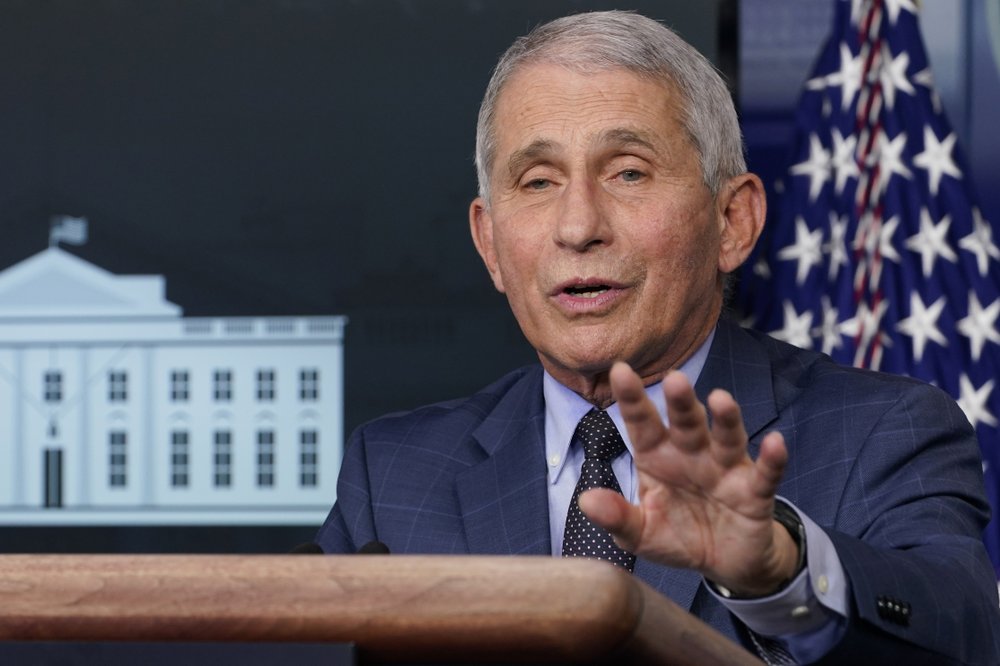
Dr. Anthony Fauci, arguably America’s most well-recognized health official in the battle against COVID-19, assumed a central role in political controversy following a newly released slough of last year’s emails, giving rise to concerns about COVID-19’s origin and the controversial scientific research U.S taxpayers have funded. Yesterday, Congressman Mo Brooks (AL-05) joined several of his colleagues in a news conference to discuss auditing the correspondence and financial statements of Dr. Fauci. Fauci is no stranger to the spotlight, as the immunologist was one of the world’s most frequently-cited scientists across all scientific journals from 1983 to 2002, in addition to the world’s 10th most-cited HIV/AIDS researcher from 1996-2006. He has advised seven Presidents and was awarded a Presidential Medal of Freedom by President George H.W. Bush in 2008 for his efforts on an AIDS relief program. Serving as director of the National Institute of Allergy and Infectious Diseases (NIAID) since 1984, Fauci is perhaps more widely recognized for leading the nation’s COVID-19 response as a White House coronavirus advisor during the Trump Administration. He continues to lead the nation’s pandemic response during his current role as chief medical advisor in the Biden Administration. However, Fauci’s consistently shifting narratives throughout the pandemic, in addition to frequent opposition towards President Donald Trump’s leadership, resulted in a sizable number of public critics, many of which included Trump White House officials. Peter Navarro, a Harvard-trained economist and China hawk who served as a top trade and economic policy advisor to President Trump, publicly criticized Dr. Fauci in a USA Today op-ed, outlining the many instances Fauci was mistaken during the pandemic. USA Today promptly attached a remorseful precursor to the article; an apologetic note addressed to readers for publishing any criticism of Fauci. One of the most notable examples Navarro specifies is the predictive memos he sent in January and February 2020, which grimly anticipated COVID-19 to be a deadly and impactful global pandemic. Senior officials shrugged off these warnings, including Fauci, due to Navarro’s hawkish views on China. “The lack of immune protection or an existing cure or vaccine would leave Americans defenseless in the case of a full-blown coronavirus outbreak on US soil,” Navarro’s January 29 memo to the National Security Council states. “The lack of protection elevates the risk of the coronavirus evolving into a full-blown pandemic, imperiling the lives of millions of Americans.” Weeks after Navarro’s warning was sent out, Fauci assured the media just how worried the American people should be about the pandemic when he expressed, “The danger of getting coronavirus now is just minusculely low,” Fauci stated. “As of today, on the 17th of February, the risk is really relatively low.” Since then, public criticism of Fauci continues to escalate as 3,000 pages of his emails from March and April 2020 were obtained under the Freedom of Information Act (FOIA) following a lawsuit filed by taxpayer watchdog group, the White Coast Waste Project. “Taxpayers have a right to know what the NIH knew about how its money was being spent at the Wuhan animal lab, and what NIH knew about a potential lab leak in late 2019 and early 2020,” stated Justin Goodman, vice president of advocacy and public policy at the White Coat Waste Project. “Transparency and accountability at home and abroad are critical in the quest to identify the origin of the COVID-19 pandemic in order to prevent another outbreak.” Fauci’s obtained emails point to the fact that he was indeed warned of the possibility that COVID-19 was engineered, a theory he remained adamantly opposed to throughout the pandemic. Kristian Andersen, the head of a viral genomics lab at Scripps Research in La Jolla, CA, emailed Fauci in February 2020 entertaining the possibility of COVID-19’s lab-based origin, “The unusual features of the virus make up a really small part of the genome (<0.1%) so one has to look really closely at all the sequences to see that some of the features (potentially) look engineered.” This week, Anderson addressed his involvement in these recently released emails, assuring that his newfound research discourages any lab-based scenarios while also claiming it is scientifically impossible to determine the origins of the pandemic, “As we stated in our article last March, it is currently impossible to prove or disprove specific hypotheses of SARS-CoV-2 origin.” Additionally, these emails raise questions surrounding the type of research U.S. taxpayers are funding. Under Fauci’s four-decade-long leadership, the NAIAD resides within the National Institute of Health (NIH), which allocates 80% of its federal funds to scientific research, including grants to foreign organizations. Fauci swore under oath that no taxpayer funds were used to fund research in Wuhan. However, in a later congressional hearing, he stated that the NIH earmarked $600,000 to study coronaviruses in Wuhan. NIH Director Dr. Francis Collins confirmed that $3.7 million in federal funds were sent to EcoHealth Alliance, a global nonprofit, of which $600,000 went to the Wuhan Institute of Virology (WIV). Fauci’s emails show a message received from the President of EcoHealth Alliance, Peter Daszak, thanking him for rejecting any lab-leak theories in April 2020. Daszak wrote to Fauci, “I just wanted to say a personal thank you on behalf of our staff and collaborators, for publicly standing up and stating that the scientific evidence supports a natural origin for COVID-19 from a bat-to-human spillover, not a lab release from the Wuhan Institute of Virology.” Daszak adds, “Your comments are brave, and coming from your trusted voice, will help dispel the myths being spun around the virus’ origins.” These concerns have led Congressional Republicans, including House Minority Leader Kevin McCarthy (R-CA), to call for Fauci’s dismissal from his role as NIAID director. Yesterday, Congressman Mo Brooks joined GOP lawmakers in a press conference to announce his support of the Fire Fauci Act. The bill would bring Dr. Fauci’s taxpayer salary to $0 and will require the Senate to confirm another individual to fill his position. “Dr. Fauci is consistent in just one thing and that is inconsistency,” Brooks said. “Why
Alabama leads nation in eliminating Chinese Communist Party influence in higher education

Lawmakers hailing from both sides of the aisle in Washington are shifting their focus to an increasingly relevant threat towards national security and academic freedom: Confucius Institutes. Funded by the Chinese Communist Party (CCP), these institutes have expanded to over 67 individual university campuses nationwide, with an additional 500 Confucius Classrooms at K-12 schools. Ambiguously labeled as cultural centers, Confucius Institutes have simultaneously proven themselves to be a vehicle of China’s political agenda through propaganda and intelligence gathering. Within these classrooms, historical events are only permitted to be discussed through a rosy lens towards the Chinese government, while documented events such as the 1989 Tiananmen Square protests, or the current human rights abuses against the Uyghurs, are prohibited from the entirety of classroom discourse. During a U.S. Senate Intelligence Committee hearing, Federal Bureau of Investigation (FBI) Director Christopher Wray confirmed that the FBI has observed China use “nontraditional collectors, especially in the academic setting” to engage in espionage and will continue to take “investigative steps” at Confucius Institutes. Additionally, the U.S. Department of State designated Confucius Institutes as “an entity advancing Beijing’s global propaganda and malign influence campaign on U.S. campuses and K-12 classrooms.” The state of Alabama has hosted two Confucius Institutes in its history; with established institutes at Alabama A&M University, Auburn University at Montgomery, and Troy University. Alabama A&M University’s Confucius Institute successfully closed in April 2021 after receiving notification of a potential loss of eligibility for federal funds. Other key actors in the state who advocated for the closure of Confucius Institutes include groups such as the College Republican Federation of Alabama as well as legislators Congressman Mo Brooks and State Representative Tommy Hanes (R-Bryant). Congressman Mo Brooks, a member of Alabama’s congressional delegation, was one of the initial Washington lawmakers to bring attention to the influence of Confucius Institutes. Brooks has served as an original cosponsor for the Higher Education Transparency Act, the Transparency for Confucius Institutes Act, the Foreign Influence Transparency Act, in addition to bipartisan effort, the Concerns Over Nations Funding University Campus Institutes in the United States (CONFUCIUS) Act. While the state of Alabama has made national headway in approaching the closure of Confucius Institutes within its state, not all of Alabama’s leading figures are zealous to join the national movement to limit foreign influence in the U.S. education system. Alabama House Bill 9 and Senate Bill 280, respectively, intended to cease funding of Confucius Institutes and were both opposed by Chair of the House Education Policy Committee, Terri Collins (R-Decatur), and Senator Jim McClendon. It was later revealed that Senator McClendon embarked on a 2015 Confucius Institute-sponsored trip to China. A number of former Alabama legislators, including a Troy University board of trustees member, also participated in the same Confucius Institute-sponsored international trip. Troy University continues to defend its relationship with its Confucius Institutes in a written statement, “Troy University’s association with the Confucius Institute has been positive, and we have seen no evidence of undue political influence from the Chinese government nor has there been any evidence of intellectual theft.” Time will tell if the state of Alabama will continue to lead the nation in defending national security and preserving academic freedom through the closure of the state’s last remaining Confucius Institute at Troy University.
Dan Sutter: Should we sue China over COVID?

Dan Sutter discusses the viability of lawsuits against China over the coronavirus.
Donald Trump busts another norm; GOP responds with silence, support
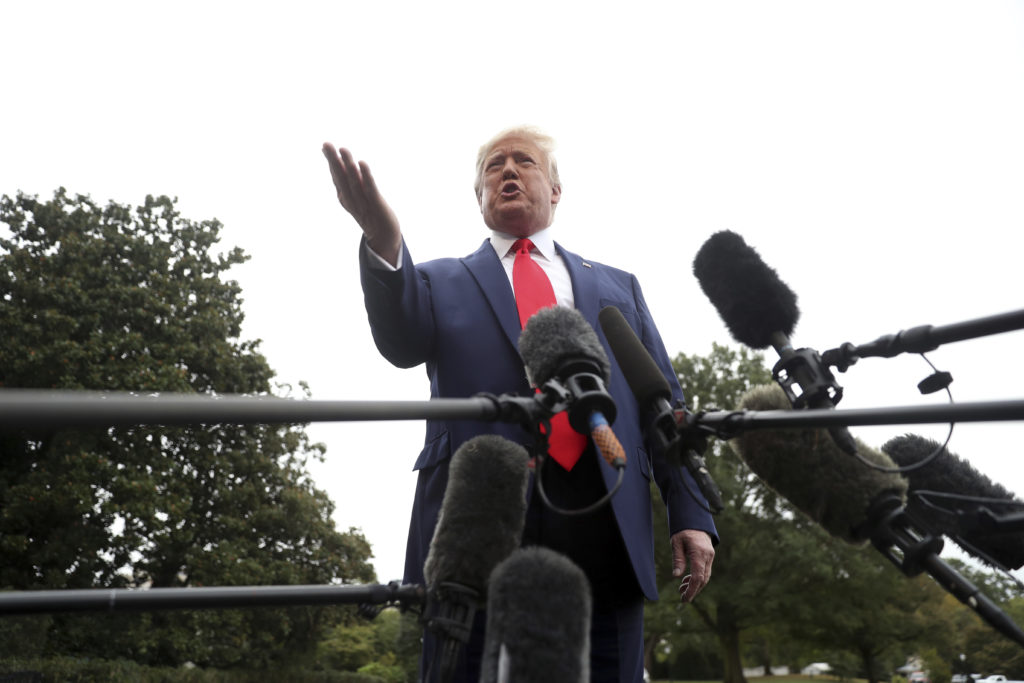
Republican leaders are reacting in two ways to President Donald Trump’s public call for another foreign government, China, to investigate his political rival: silence and support. Several House and Senate leaders stayed mum Thursday as Trump escalated the controversy that has fueled an impeachment inquiry and plowed through another norm of American politics. Foreign interference in elections has long been viewed as a threat to U.S. sovereignty and the integrity of democracy, and soliciting foreign help in an election is illegal. But Trump found support in his willingness to openly challenge that convention. Vice President Mike Pence made clear he backed the president and believes he is raising “appropriate” issues. Other allies agreed. “I don’t think there’s anything improper about doing that,” GOP Sen. Ron Johnson, chairman of the Homeland Security Committee, said of Trump’s call on China to investigate the business dealings of Hunter Biden, the son of leading Democratic presidential candidate Joe Biden. The responses followed a familiar pattern in the age of Trump. As the president broke another political barrier, his party leaders made no public effort to rein him in. Critics have argued that reaction has only emboldened the president, while doing lasting damage to the party and the presidency. Trump allies argue the president’s rule-breaking rhetoric is not as important as his policies, which they support. But the silence this time also reflects a sharper dilemma for Republicans. As Democrats pursue an impeachment investigation , Republicans have been struggling with how best to shield themselves _ and the unpredictable president who may decide their political fortunes _ from the steady drip of new revelations. With little guidance from the White House, lawmakers have tried to say as little as possible, blame Democrats or express vague optimism about the investigative process. Trump’s remarks Thursday demonstrated the limits of that strategy. Standing outside the White House, Trump defended himself against allegations that he privately pressured Ukraine to investigate the Bidens by inviting a geopolitical rival to launch a probe. “China should start an investigation into the Bidens,” Trump said after being asked about trade negotiations with the country. Shortly afterward, speaking at an event in Arizona, Pence argued that the Bidens’ ties to Ukraine are of interest to the American people. “There are legitimate questions that ought to be asked. We will continue to ask them because the American people have a right to know whether or not the vice president of the United States or his family profited from his position,” he said. One of the party’s most vulnerable senators, Arizona’s Martha McSally, stood at Pence’s side at the stop in Scottsdale. McSally has blasted Democrats for launching an impeachment investigation focused on Trump’s pressure on Ukraine, but has not commented on the whistleblower report and the loose transcript of the phone call that prompted the probe. Her office had no comment about whether she thought Trump’s statement Thursday was appropriate. In North Carolina, Sen. Thom Tillis, whom Democrats hope to topple in 2020, also stood by the president. Tillis has said he remains unconvinced that the evidence revealed so far exceeds the threshold necessary for impeachment. “We’ll see what comes out of their impeachment inquiry. They’re not drawing up articles of impeachment yet,” Tillis told The Associated Press in an interview Monday. “What I’ve said is if they’re basing this entire process on a now public, unredacted transcript and the whistleblower complaint, certainly that doesn’t rise to a level of impeachment, in my opinion.” Asked about his reaction to the public statements Thursday, Tillis’ office responded with a statement: “Democrats and the mainstream media are using anything and everything to justify impeaching the president and removing him from office.” At a town hall meeting in western Iowa, Sen. Joni Ernst was asked about Trump’s Ukraine call and request for foreign intervention. “We’re going to move onto another question, but what I would say is we can’t determine that yet,” Ernst said. She said the Senate Intelligence Committee would evaluate it. Senate Majority Leader Mitch McConnell’s office did not respond to a request for comment. Sen. Chuck Grassley of Iowa, chairman of the powerful finance committee, also declined to comment, but his office pointed to the senator’s August request for the Trump administration to investigate Hunter Biden’s business dealings in China. The office of Sen. Cory Gardner of Colorado, widely considered the most vulnerable Republican senator, issued a statement that didn’t reference Trump’s request of China. “The Senate Intelligence Committee is a serious and respected body that is looking into this in a bipartisan fashion,” the statement said. The offices of several other senators up for reelection next year alongside the president, including Sen. Susan Collins of Maine, also did not respond. House Speaker Nancy Pelosi, a Democrat, tweeted, “Once again, @realDonaldTrump has called on a foreign country to interfere in our elections – just the latest example of him putting his personal political gain ahead of defending the integrity of our elections.”House Democrats are investigating Trump’s July 25 call to Ukraine President Volodymyr Zelenskiy, in which Trump pressed the newly elected leader to look into the Biden family.Hunter Biden served on the board of a Ukrainian gas company at the same time his father was leading the Obama administration’s diplomatic dealings with Kyiv. Though the timing raised concerns among anti-corruption advocates, there has been no evidence of wrongdoing by either the former vice president or his son. Notably, the office of Utah Sen. Mitt Romney, who had called reports of Trump’s requests “troubling” last week, referred to that statement in saying he had no additional comment Thursday. Still, at almost the same time as Trump’s comments, House Minority Leader Kevin McCarthy called on Pelosi to end the impeachment inquiry, saying it’s unclear whether it would be fair to Trump. “Anything less than a thorough, transparent and fair process would represent a supreme insult to our Constitution and the millions of Americans who rely on their voices being heard,” he wrote. By Nicholas Riccardi and
Gulf Coast ports fear tariffs could reduce ship traffic and jobs
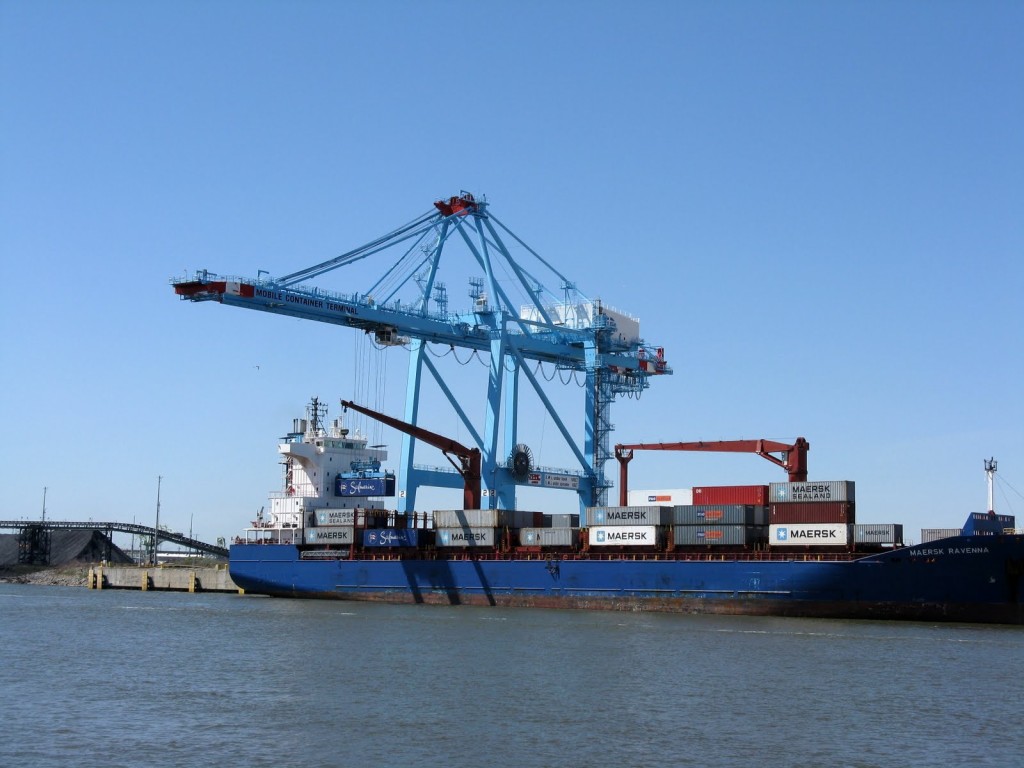
Ports and ground terminals in nearly every state handle goods that are now or will likely soon be covered by import tariffs. Port executives worry that this could mean a slowdown in shipping that would have ripple effects on truckers and others whose jobs depend on trade. The Associated Press analyzed government data and found that from the West Coast to the Great Lakes and the Gulf of Mexico, at least 10 percent of imports at many ports could face new tariffs if President Donald Trump’s proposals take full effect. Since March, the U.S. has applied new tariffs of up to 25 percent on nearly $85 billion worth of steel and aluminum and various Chinese products, mostly goods used in manufacturing. Trump said in a recent tweet, “Tariffs are working big time.” He has argued that the tariffs will help protect American workers and force U.S. trading partners to change rules that the president insists are unfair to the United States. In New Orleans, port officials say a tariff-related drop in shipments is real, not merely a forecast. Steel imports there have declined more than 25 percent from a year ago, according to the port’s chief commercial officer, Robert Landry. The port is scouting for other commodities it can import. But expectations appear to be low. “In our business, steel is the ideal commodity,” Landry said. “It’s big, it’s heavy, we charge by the ton so it pays well. You never find anything that pays as well as steel does.” The port of Milwaukee imports steel from Europe and ships out agricultural products from the Midwest. Steel imports haven’t dropped yet because they are under long-term contracts, said the port director, Adam Schlicht. But there has been “an almost immediate halt” in outbound shipments of corn because of retaliatory duties imposed by the European Union on American products. Much of the corn, he said, “is just staying in silos. They are filled to the brim.” Many other ports have been humming along and even enjoyed an unexpected bump in imports during June and July as U.S. businesses moved up orders to ship before the new tariffs took effect. That started with manufacturing goods and is now spreading to retail items for back-to-school and Christmas. “Some of my retail customers are forward-shipping the best they can to offset proposed tariffs,” says Peter Schneider, executive vice president of T.G.S. Transportation, a trucking company in Fresno, California. Port officials were encouraged by this week’s announcement that the United States and Mexico had reached a preliminary agreement to replace the North American Free Trade Agreement, hoping it might lead to reduced trade barriers. Canada’s participation in any new deal to replace NAFTA, though, remains a major question mark. The port officials continue to worry, though, that Trump will make good on a plan to expand tariffs to an additional $200 billion in Chinese imports — a list that includes fish and other foods, furniture, carpets, tires, rain jackets and hundreds of additional items. Tariffs would make those items costlier in the United States. And if Americans buy fewer of those goods, it would likely lead to fewer container ships steaming into U.S. ports. The impact will be felt keenly at West Coast ports like Los Angeles and Long Beach. Los Angeles Mayor Eric Garcetti, relying on information from his port officials, said his port — the biggest in the United States — could suffer a 20 percent drop in volume if the additional $200 billion in tariffs are imposed against Chinese goods. Jock O’Connell, an economist in California who studies trade, said he doubts a downturn would be so severe — that would match the slump that accompanied the global recession of 2008 — “but we will see a definite impact.” Here are some of the key findings from the AP analysis: — U.S. tariffs will cover goods that are imported at more than 250 seaports, airports and ground terminals in 48 states. — At 18 of 43 customs districts — including those representing ports around Los Angeles, San Francisco, New Orleans and Houston — at least 10 percent of their total import value could be covered by new tariffs if all Trump’s proposals take effect. — Retaliatory duties by China and other countries cover $27 billion in U.S. exports. Eugene Seroka, executive director of the Los Angeles port, worries that “if tariffs make it too expensive to import, there will be an impact on jobs.” Seroka and others don’t expect layoffs on the docks. Union longshoremen — whose average pay last year on the West Coast was $163,000, according to the Pacific Maritime Association, which negotiates for the ports — often have contract provisions ensuring that they are paid even if there’s no work. And there are fewer of them than there were a few decades ago because the advent of shipping containers has reduced the need for people on the docks. Dwayne Boudreaux, an International Longshoremen’s Association official in Louisiana, said, though, that his stevedores are handling about 10 percent less steel from Japan because of the new tariffs. “We don’t think it’s going to (get) worse,” he said. But, he added, “who knows — that could change from the next press conference.” The impact might be greater on truck drivers and warehouse workers. Fewer will be needed, according to O’Connell. Many drivers who deliver shipping containers from the dock to warehouses are independents contracted by trucking companies, and they don’t get paid if there is nothing to haul. Some might leave the profession, said Weston LaBar, CEO of the Harbor Trucking Association in Long Beach, California. “It’s hard to retain drivers,” he said. “If we don’t have work for those drivers, we’re worried they will leave for some other segment of the trucking business or go into another business, like construction.” Less shipping means less revenue for the ports — something that could limit their ability to pay for expansion and improvement projects, according to Kurt Nagle, president of the
U.S. braces for possible cyberattacks after Iran sanctions
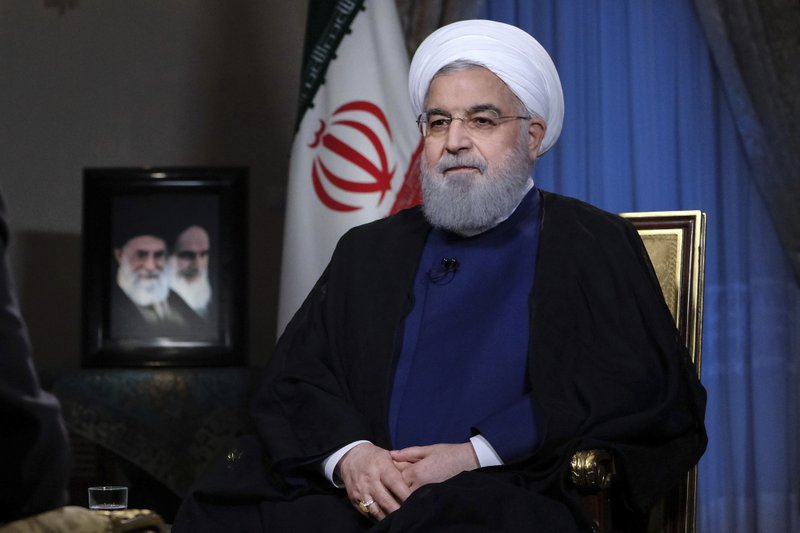
The U.S. is bracing for cyberattacks Iran could launch in retaliation for the re-imposition of sanctions this week by President Donald Trump, cybersecurity and intelligence experts say. Concern over that cyber threat has been rising since May, when Trump pulled out of the 2015 nuclear deal, under which the U.S. and other world powers eased economic sanctions in exchange for curbs on Iran’s nuclear program. The experts say the threat would intensify following Washington’s move Tuesday to re-impose economic restrictions on Tehran. “While we have no specific threats, we have seen an increase in chatter related to Iranian threat activity over the past several weeks,” said Priscilla Moriuchi, director of strategic threat development at Recorded Future, a global real-time cyber threat intelligence company. The Massachusetts-based company predicted back in May that the U.S. withdrawal from the nuclear agreement would provoke a cyber response from the Iranian government within two to four months. U.S. intelligence agencies have singled out Iran as one of the main foreign cyber threats facing America, along with Russia, China and North Korea. A wave of attacks that U.S. authorities blamed on Iran between 2012 and 2014 targeted banks and caused tens of millions of dollars in damage. They also targeted but failed to penetrate critical infrastructure. Iran denies using its cyber capabilities for offensive purposes, and accuses the U.S. of targeting Iran. Several years ago, the top-secret Stuxnet computer virus destroyed centrifuges involved in Iran’s contested nuclear program. Stuxnet, which is widely believed to be an American and Israeli creation, caused thousands of centrifuges at Iran’s Natanz nuclear facility to spin themselves to destruction at the height of the West’s fears over Iran’s program. “The United States has been the most aggressive country in the world in offensive cyber activity and publicly boasted about attacking targets across the world,” said Alireza Miryousefi, spokesman for Iran’s diplomatic mission at the United Nations, contending that Iran’s cyber capabilities are “exclusively for defensive purposes.” Gen. Qassem Soleimani, who heads the elite Quds Force of Iran’s hard-line paramilitary Revolutionary Guard, has sounded more ominous, warning late last month about Iran’s capabilities in “asymmetric war,” a veiled reference to nontraditional warfare that could include cyber attacks. The Trump administration says it re-imposed sanctions on Iran to prevent its aggression — denying it the funds it needs to finance terrorism, its missile program and forces in conflicts in Yemen and Syria. The sanctions restarted Tuesday target U.S. dollar financial transactions, Iran’s automotive sector and the purchase of commercial planes and metals, including gold. Even stronger sanctions targeting Iran’s oil sector and central bank are to be re-imposed in early November. European leaders have expressed deep regret about the U.S. actions. They hit Iran at a time when its unemployment is rising, the country’s currency has collapsed and demonstrators are taking to the streets to protest social issues and labor unrest. Norm Roule, former Iran manager for the office of the Director of National Intelligence, said he thinks Tehran will muster its cyber forces in response. “I think there is a good chance Iran will use cyber, probably not an attack that is so destructive that it would fragment its remaining relationship with Europe, but I just don’t think the Iranians will think there is much cost to doing this,” Roule said. “And it’s a good way to show their capacity to inflict economic cost against the United States.” “Iran’s cyber activities against the world have been the most consequential, costly and aggressive in the history of the internet, more so than Russia. … The Iranians are destructive cyber operators,” Roule said, adding that Iranian hackers have, at times, impersonated Israeli and Western cyber security firm websites to harvest log-in information. The office of Director of National Intelligence Dan Coats declined to comment Tuesday on the likelihood that Iran will answer the sanctions with cyber operations against the U.S. When the U.S. pulled out of the nuclear deal, the FBI issued a warning saying that hackers in Iran “could potentially use a range of computer network operations — from scanning networks for potential vulnerabilities to data-deletion attacks — against U.S.-based networks in response to the U.S. government’s withdrawal” from the nuclear pact. Accenture Security, a global consulting, managing and technology company, also warned Tuesday that the new sanctions would “likely to push that country to intensify state-sponsored cyber threat activities,” particularly if Iran fails to keep its European counterparts committed to the nuclear pact. Josh Ray, the firm’s managing director for cyber defense, said it hasn’t seen any evidence that Iran has launched any new cyber operations, but he said Iran has the capability to do it and has historically operated in a retaliatory manner. “This still remains a highly capable, espionage-related type threat,” Ray said. “Organizations need to take this threat seriously. They need to understand how their business could potentially be impacted.” Recorded Future’s Moriuchi anticipated that businesses most at risk were those victimized in Iranian cyberattacks between 2012 and 2014 — they include banks and financial services, government departments, critical infrastructure providers, and oil and energy. Those cyberattacks cost nearly 50 financial institutions tens of millions of dollars. The repeated attacks disabled bank websites and kept hundreds of thousands of customers from accessing their online accounts. U.S. prosecutors indicted several Iranians, alleging they worked at the behest of the Iranian government. One defendant allegedly targeted the computer systems of the Bowman Dam in Rye, New York. No access was gained, but prosecutors said the breach underscored the potential vulnerabilities of the nation’s critical infrastructure. In March, the Justice Department also announced charges against nine Iranians accused of working at the behest of the Islamic Revolutionary Guard Corps to steal large quantities of academic data from hundreds of universities in the United States and abroad as well as email accounts belonging to employees of government agencies and private companies. Republished with the permission of the Associated Press.
New U.S. slap against China: Tighter curbs on tech investment
Already threatened by escalating U.S. taxes on its goods, China is about to find it much harder to invest in U.S. companies or to buy American technology in such cutting-edge areas as robotics, artificial intelligence and virtual reality. President Donald Trump is expected as early as this week to sign legislation to tighten the U.S. government’s scrutiny of foreign investments and exports of sensitive technology. The law, which Congress passed in a rare show of unity among Republicans and Democrats, doesn’t single out China. But there’s no doubt the intended target is Beijing. The Trump administration has accused China of using predatory tactics to steal American technology. “As a policy signal, it speaks with a very loud voice,” said Harry Clark, head of the international trade practice at the law firm Orrick. “Leading decision makers and Congress are very concerned about technology transfer to China.” The Trump administration has already imposed tariffs on $34 billion in Chinese exports, is preparing taxes on a further $16 billion and has threatened to target an additional $200 billion of Beijing’s exports and maybe still more. As part of the same punitive campaign, Trump had initially ordered the Treasury Department to draft investment restrictions aimed specifically at China. But in late June, Trump decided instead to back Congress’ effort to tighten existing investment restrictions and export controls on all countries, rather than China alone. The new law strengthens reviews of foreign investment by the existing Committee on Foreign Investment in the United States, or CFIUS, which is led by Treasury Secretary Steven Mnuchin. The committee can now review any investments that grant foreigners access to a U.S. company’s high-tech trade secrets. Before the change, such reviews were done only when a foreigner gained control of a company. The new law also gives the committee oversight of real estate deals that are deemed to pose a national security risk by putting foreigners in “close proximity” to government offices and military bases. The legislation will also crack down on deals that appear structured to evade such oversight. Congress is also directing the committee to go beyond specific cases to identify patterns in foreign investment — if, for example, Chinese companies are acquiring a specific technology — and to work with U.S. allies that share its concerns about Beijing’s high-tech ambitions. “Treasury can now share information,” said Rod Hunter, a partner at the Baker McKenzie law firm and a former White House economic adviser. “They used to have to do all kinds of backflips and workarounds with allied governments to deal with this sort of issue.” The new law also strengthens the Commerce Department’s oversight of high-tech exports. Government agencies will identify sensitive “emerging and foundational technologies” that will be subject to tougher export controls. Hunter said he thought the stricter oversight of high-tech exports could potentially impose a bigger impact on China than the tariffs the Trump administration has imposed on Beijing’s exports to the United States. Still, the new measures could burden U.S. companies that will find it harder to attract Chinese investment or to share with Chinese partners or customers technology that the U.S. government might deem sensitive. “It could be that we’re pushing American tech firms out of China,” said Derek Scissors, China specialist at the conservative American Enterprise Institute. The crackdown reflects a sharp reversal in U.S. attitudes toward Chinese investment. From virtually nothing in 2000, Chinese direct investment in the United States (including new plants and offices and acquisitions of American companies) reached a record $46 billion in 2016, according to the Rhodium Group research firm. Chinese investors sank money into U.S. companies involved in artificial intelligence, robotics and blockchain technology, which is used to do business in cryptocurrencies. U.S. policymakers began to worry about what the Chinese were up to, especially after leaders in Beijing made their ambitions clear: They intend to nurture homegrown Chinese companies that will contend for global dominance in such fields as electric cars, robotics and medical devices. In March, the Office of the U.S. Trade Representative reported that Chinese investors were using money provided by Beijing to outbid private companies and pay above-market rates for technology and talent. And last year, a Defense Department report sounded the alarm about China obtaining technology that could have military uses. “The line demarcating products designed and used for commercial versus military purposes is blurring,” said the report from the Pentagon’s Defense Innovation Unit Experimental. It noted that virtual-reality gaming was becoming as sophisticated as what the armed forces use for battlefield simulations and that facial recognition technology used in social media can track terrorists. Even before the new law, U.S. reviews of Chinese investments were becoming stricter. In January, the government effectively blocked the acquisition of the Dallas-based money transfer service MoneyGram by the Chinese firm Ant Financial. Its concern was that the deal would give China access to the financial records of millions of Americans, including members of the military. The result has been a deepfreeze in direct Chinese investment in the United States: It tumbled 36 percent last year to $29 billion. In the first half of this year, such investment dropped to its lowest level in seven years — $1.8 billion — down 90 percent from the first six months of 2017, according to Rhodium Group. Republished with the permission of the Associated Press.
The Latest: Donald Trump reinstates many sanctions on Iran
The Latest on U.S. sanctions on Iran (all times local): 11:05 a.m. President Donald Trump is signing an executive order reimposing many sanctions on Iran, three months after pulling out of the Iran nuclear deal. He says the U.S. policy is to levy “maximum economic pressure” on the country. In a statement Monday, Trump restated his opinion that the 2015 international accord to freeze Iran’s nuclear program in return for lifting sanctions was a “horrible, one-sided deal.” He says it left the Iranian government flush with cash to use to fuel conflict in the Middle East. Trump says the U.S. is urging all nations “to make clear that the Iranian regime faces a choice: either change its threatening, destabilizing behavior and reintegrate with the global economy, or continue down a path of economic isolation.” Trump warned that those that don’t wind down their ties to the Iranian economy “risk severe consequences” under the reimposed sanctions. 10:30 a.m. A senior administration official says the United States is “not particularly concerned” by EU efforts to protect European firms from the re-imposition of sanctions on Iran. The official was not authorized to discuss the matter by name and spoke Monday on condition of anonymity. The European Union issued a “blocking statute” Monday to protect European businesses from the impact of sanctions set to return Monday at midnight. The official says the U.S. will use the sanctions aggressively and cited Iran’s severe economic downturn this year as evidence the sanctions would prove to be effective despite opposition from the EU, China and Russia. 7:35 a.m. European foreign ministers say they “deeply regret” the re-imposition of U.S. sanctions on Iran. A statement Monday by European Union foreign policy chief Federica Mogherini and foreign ministers of France, Germany and the United Kingdom insisted that the 2015 Iran nuclear deal “is working and delivering on its goal” of limiting Iran’s nuclear program. President Donald Trump withdrew the U.S. from the deal, which had lifted international sanctions in exchange for Iran agreeing to restrictions on its nuclear program. U.N. inspectors said Iran was complying with the deal, but Trump argued that it didn’t do enough. But the European ministers said the Iran deal is “crucial for the security of Europe, the region and the entire world.” The first set of reinstated U.S. sanctions goes into effect Monday. Those target Iran’s automotive sector as well as gold and other metals. 12:31 a.m. Secretary of State Mike Pompeo says the renewed sanctions against Iran are an important pillar in U.S. policy toward the Tehran government. Pompeo says the sanctions will be rigorously enforced and remain in place until the Iranian government radically changes course. Those sanctions go back in place on Monday. Pompeo told reporters on his way home from a three-nation trip to South East Asia that the Trump administration is open to looking beyond sanctions but adds that would “require enormous change” from Tehran. He said President Donald Trump is intent on getting Iran to “behave like a normal country.” U.S. sanctions had been eased by the Obama administration under the terms of the landmark 2015 Iran nuclear deal. Trump decided in May to withdraw from the accord. Republished with the permission of the Associated Press.
Donald Trump accuses China of using ‘vicious’ trade tactics
President Donald Trump on Wednesday accused China of “vicious” tactics on trade as he prepared for tough negotiations with European leaders in an escalating trade battle among world powers. Trump tweeted that China was specifically targeting U.S. farmers with retaliatory tariffs because “they know I love & respect” them. His defense came after his administration announced a plan to provide $12 billion in emergency relief for farmers who have been slammed by the president’s trade disputes with China and other countries. Addressing the China trade relationship, Trump wrote on Twitter, “They are being vicious in what will be their failed attempt. We were being nice – until now!” The president was meeting at the White House later Wednesday with European Commission President Jean-Claude Juncker and other European officials as their trade dispute threatens to spread to automobile production. Trump has placed tariffs on imported steel and aluminum, saying they pose a threat to U.S. national security, an argument that the European Union and Canada rejects. He has also threatened to slap tariffs on imported cars, trucks and auto parts, potentially targeting imports that last year totaled $335 billion. The European Union has warned that it will retaliate with tariffs on products worth $20 billion if Trump puts duties on cars and auto parts from Europe. On Tuesday, Trump suggested in a tweet that “both the U.S. and the E.U. drop all Tariffs, Barriers and Subsidies! That would finally be called Free Market and Fair Trade! Hope they do it, we are ready – but they won’t!” The Trump administration has imposed tariffs on $34 billion in Chinese goods in a dispute over Beijing’s high-tech industrial policies. China has struck back with duties on soybeans and pork, affecting Midwest farmers in a region of the country that supported the president in his 2016 campaign. Trump has threatened to place penalty taxes on up to $500 billion in products imported from China, a move that would dramatically ratchet up the stakes in the trade dispute involving the globe’s biggest economies. The moves have been unsettling to lawmakers with districts dependent upon manufacturers and farmers affected by the retaliatory tariffs. The Agriculture Department said it would tap an existing program to provide $12 billion in direct payments to farmers and ranchers hurt by foreign retaliation to Trump’s tariffs and other assistance, such as the purchase of excess crops. With congressional elections coming soon, the government action underscored administration concern about damage to U.S. farmers from Trump’s trade tariffs and the potential for losing House and Senate seats in the Midwest and elsewhere. The administration said the program was just temporary. “This is a short-term solution that will give President Trump and his administration the time to work on long-term trade deals,” said Agriculture Secretary Sonny Perdue as administration officials argued that the plan was not a “bailout” of the nation’s farmers. But that provided little solace to rank-and-file Republicans, who said the tariffs are simply taxes and warned the action would open a Pandora’s box for other sectors of the economy. “I want to know what we’re going to say to the automobile manufacturers and the petrochemical manufacturers and all the other people who are being hurt by tariffs,” said Sen. John Kennedy, R-La. “You’ve got to treat everybody the same.” Sen. Pat Toomey, R-Pa., said the Agriculture Department was “trying to put a Band-aid on a self-inflicted wound. The administration clobbers farmers with an unnecessary trade war then attempts to assuage them with taxpayer handouts. This bailout compounds bad policy with more bad policy.” Trump pushed back against critics of his plan on Wednesday, telling them to “be cool” because “the end result will be worth it!” On Twitter, Trump said people “snipping at your heels during a negotiation” will only delay the process. He wrote: “Negotiations are going really well, be cool. The end result will be worth it!” The program is expected to start taking effect around Labor Day. Officials said the direct payments could help producers of soybeans, which have been hit hard by retaliation to the Trump tariffs, along with sorghum, corn, wheat, cotton, dairy and farmers raising hogs. The food purchased from farmers would include some types of fruits, nuts, rice, legumes, dairy products, beef and pork, officials said. Agriculture officials said they would not need congressional approval and the money would come through the Commodity Credit Corporation, a wing of the department that addresses agricultural prices. The officials said payments couldn’t be calculated until after harvests come in. Brad Karmen, the USDA’s assistant deputy administrator for farm programs, noted that the wheat harvest is already in, so wheat farmers could get payments sooner than other growers. Soybeans are likely to be the largest sector affected by the programs. Soybean prices have plunged 18 percent in the past two months. The Agriculture Department predicted before the trade fights that U.S. farm income would drop this year to $60 billion, or half the $120 billion of five years ago. Mark Martinson, who raises crops and cattle in north-central North Dakota and is president of the U.S. Durum Growers Association, said the $12 billion figure “sounds huge” but there are many farmers in need. “I don’t think this will cover us for a very long time — and it might not even buy me a tank of diesel. I think it will only put out the fire a little bit.” Republished with permission from the Associated Press.
Trade rocks already unstable U.S., China relations
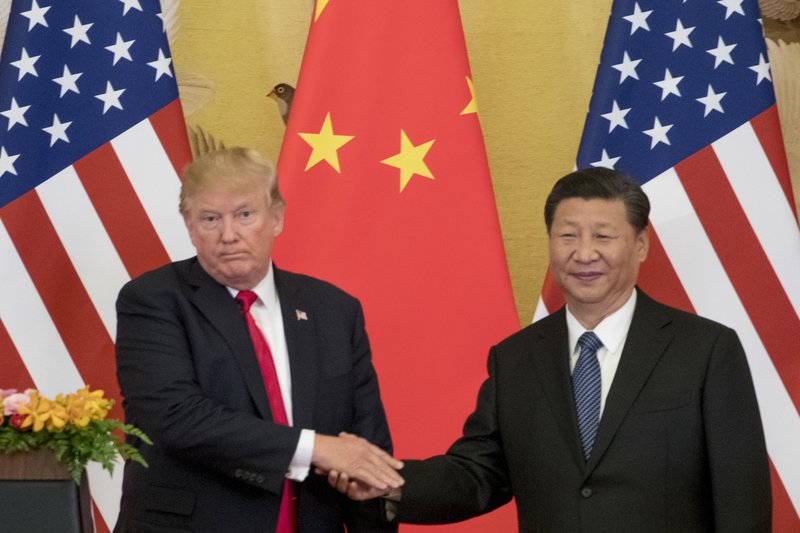
President Donald Trump’s trade battle with China will exacerbate relations with Beijing that are already fraying on several fronts as the U.S. takes a more confrontational stance and an increasingly powerful China stands its ground. The gloves came off Friday as the world’s two largest economies imposed tariffs on billions of dollars of each other’s goods amid a spiraling dispute over technology. It comes at a time when Washington needs China’s help in ending its nuclear standoff with North Korea. Trump’s much-vaunted personal rapport with Chinese President Xi Jinping, whom he hosted at his Mar-a-Lago resort three months after taking office, won’t help patch up differences, experts and former officials say. “The notion that there’s a personal relationship which will somehow supersede China’s strategic interests and the well-being of the Communist Party — including its ability to manage its own economy consistent with its political interests — is absurd,” said Daniel Russel, top U.S. diplomat for East Asia under President Barack Obama. “There’s no scenario in which an affectionate relationship, real or imagined, is going to stay Xi’s hand,” Russel said. Troubles in the bilateral relationship go beyond trade. China has chafed about the scope of U.S. relations with Taiwan; U.S. complaints about its construction of military outposts on islands in the South China Sea; tougher screening of Chinese investment in the U.S.; visa restrictions; and accusations that it’s the main source of opioids. If not new, these are now deepening sources of tension between Washington and Beijing. Even as Trump has sought to cultivate his relationship with the increasingly dominant Chinese leader, his administration has chosen to confront an increasingly defiant China on pretty much all them. It also identified China, along with Russia, as a threat in the most recent U.S. National Security Strategy. In response, Beijing is hanging tough. “China has made it abundantly clear that it will never surrender to blackmail or coercion,” Chinese state news agency Xinhua said Friday. To what extent the trade tensions bleed into other aspects of the U.S.-China relationship, which has retained a mostly upward trajectory since the normalization of ties four decades ago, remains to be seen. But Mike Pillsbury, director of the Center for Chinese Strategy at the Hudson Institute, said U.S.-China relations are headed into “uncharted waters.” Recently returned from a visit to China, Pillsbury said he was told by government officials and businessmen that they were confused about what the Trump administration wanted them to do to get the U.S. to ease the trade tensions. They threatened to back off assisting the U.S. nuclear talks with North Korea. “They explicitly said that,” according to Pillsbury, who has written three books on China and has advised the Trump administration. “They said we will help you (the U.S.) less with North Korea if you start a trade war with us on July 6. Pretty clear, huh?” China has, in fact, already distanced itself somewhat from its significant cooperation with the U.S. on North Korea. After supporting tough U.N. sanctions and scaling back trade with the North after it ramped up nuclear and missile tests last year, Beijing has eased restrictions on its neighbor. That shift began after Trump in March abruptly decided to hold a summit with Kim Jong Un. Once again, China has again focused on rekindling its traditional alliance with Pyongyang — Xi has met Kim three times this year. Abraham Denmark, a former senior U.S. defense official on Asia, said China has welcomed Trump’s sudden shift from confrontation to diplomacy with North Korea and also his decision to halt large-scale military exercises with close U.S. ally South Korea. Yet China also views what happens with North Korea through the lens of the geopolitical rivalry between the U.S. and China, he said. North Korea long served as a buffer against America’s expanding its reach in Northeast Asia to China’s border. “If the U.S. is going to engage in a trade war, which is very troubling for China, politically, it’s going to reduce their willingness to cooperate on North Korea,” he said. Denmark, who is now director of the Asia program at the Wilson Center think tank, warned of a broader deterioration in relations, as Trump pursues more aggressive policies toward Beijing, and China stakes out a position as world player unwilling to be pushed around. “China under Xi Jinping has been more aggressive in its pursuit of its interests. I expect we’re going to see more tensions across the board: in trade, the South China Sea, Taiwan, Korea,” Denmark said. “These are all part of the same story, which is that China is feeling more confident and powerful, and more willing to accept friction and tension in the pursuit of its interests.” On recent trip to China, Defense Secretary Jim Mattis did some damage mitigation, talking up the importance of military cooperation despite his earlier decision to withdraw an invite for China to participate in a U.S.-led multinational naval exercise over its activities in the disputed South China Sea. Xi struck a similar note, calling military ties a “model component of our overall bilateral relations.” That may help to ward off the possibilities of unintended conflict between the two militaries, but it will not prevent a growing rift on other issues. The United States accuses China of using predatory tactics in a push to supplant American technological dominance. The tactics include forcing U.S. companies to hand over technology in exchange for access to the Chinese market, as well as outright cyber-theft. Trump’s tariffs are meant to pressure Beijing to reform its trade policies. On Friday, the Trump administration imposed tariffs on $34 billion worth of Chinese products. Within hours, China retaliated with taxes on an equal amount of U.S. products, including soybeans, pork and electric cars. Russel said that ultimately the Trump administration’s issuing of demands of China on trade and other issues could harden attitudes inside the country, weakening the hands of reformers and strengthening nationalists who vilify the United States. “The net effect of
Kay Ivey says Alabama could lose up to 4,000 jobs due to tariffs
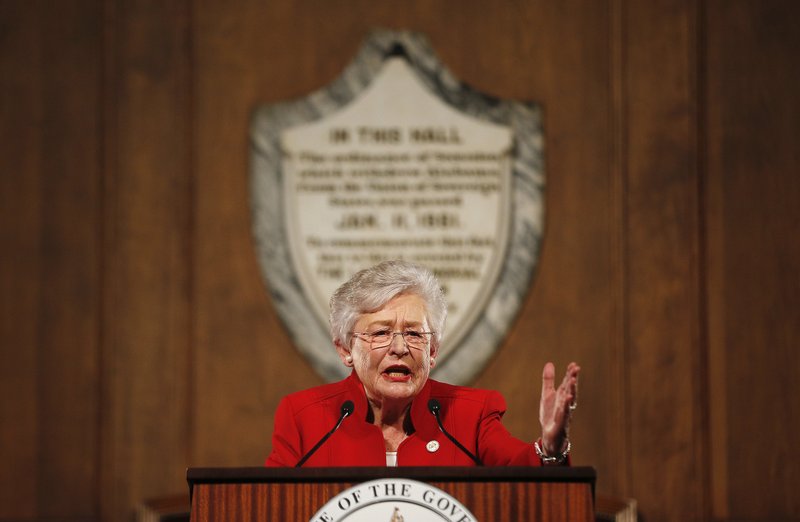
Last week, Alabama governor Kay Ivey released a statement saying the Trump Administration’s new tariffs will cause harm to the Yellowhammer State’s economy. Taking it a step further, she contacted U.S. Secretary of Commerce Wilbur Ross and several members of the Alabama congressional delegation expressing her concerns. “Import tariffs, and any retaliatory tariffs on American made goods, will harm Alabama, the companies that have invested billions of dollars in our state, and the thousands of households which are dependent upon those companies for a good-paying job,” Ivey said in a statement. “I strongly oppose any efforts that may harm those companies that employ thousands of Alabamians and contribute billions to our economy. I am committed to protecting Alabama jobs and consumers, the world over, who are proud to purchase products made in Alabama.” In her letter to Ross, Ivey touted Alabama’s record year in 2017 citing the nearly $3 billion in automotive-related investments, the announcement of a new Mazda-Toyota plant, and the more than 57,000 Alabamians who are already employed by the sates manufacturing sector. “In 2017, Alabama produced almost one million cars and light trucks and 1.7 million engines. However, Alabama’s success relies on access to foreign markets and imports of certain automotive components that become part of the vehicles produced in our state,” Ivey’s letter read. “Last year, Alabama reached a record high of $21.7 billion in exports. Our top export category was automotive, accounting for $10.9 billion of those exports. The largest importers of Alabama made goods and services were Canada, China, Germany, Mexico and Japan – all countries which may be forced to reciprocate in response to any new import tariffs.” Ivey ended her letter to Ross by saying that tariffs places on imported materials used for car manufacturing, and tariffs placed on the state’s exported vehicles would increase costs and cause a high number of Alabamians to lose their jobs. “Estimates show that a ten percent decrease in Alabama-made vehicle exports could result in the loss of approximately 4,000 jobs in Alabama,” the letter continued. “Such a loss would be devastating to thousands of families across our state. These are Alabama families who are dependent on the income from working in these facilities.” “As Governor of the Great State of Alabama, I strongly oppose any efforts that may harm those companies that employ thousands of Alabamians and contribute billions to our economy. I respectfully ask that you not recommend to President Trump the levying of trade tariffs on automobiles and automotive parts.”
In tit-for-tat, Donald Trump threatens more tariffs against China
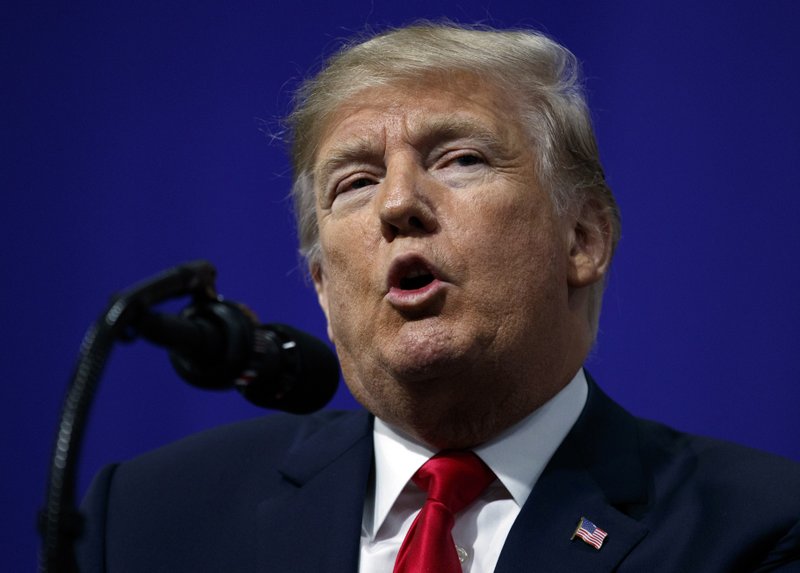
President Donald Trump has directed the U.S. Trade Representative to prepare new tariffs on $200 billion in Chinese imports as the two nations move closer to a potential trade war. The tariffs, which Trump wants set at a 10 percent rate, would be the latest round of punitive measures in an escalating dispute over the large trade imbalance between the two countries. Trump recently ordered tariffs on $50 billion in Chinese goods in retaliation for intellectual property theft. The tariffs were quickly matched by China on U.S. exports, a move that drew the president’s ire. “China apparently has no intention of changing its unfair practices related to the acquisition of American intellectual property and technology,” Trump said in a statement Monday announcing the new action. “Rather than altering those practices, it is now threatening United States companies, workers, and farmers who have done nothing wrong.” Trump added: “These tariffs will go into effect if China refuses to change its practices, and also if it insists on going forward with the new tariffs that it has recently announced.” China’s Commerce Ministry on Tuesday criticized the latest threat of tariffs, saying it was an “act of extreme pressure and blackmail that deviates from the consensus reached by both parties after many negotiations, and is a disappointment to the international community.” “If the U.S. becomes irrational and issues this list, China will have no choice but to adopt strong countermeasures of the same amount and quality,” the ministry statement said. Trump said that if China responds to this fresh round of tariffs, then he will move to counter “by pursuing additional tariffs on another $200 billion of goods.” It wasn’t immediately clear when the new tariffs could be put in place, as the trade office has yet to identify the Chinese goods to be penalized or conduct a legal review. The first round of penalties announced by both nations is set to take effect July 6. The intellectual property sanctions were the latest in a spate of protectionist measures unveiled by Trump in recent months that included tariffs on steel and aluminum imports to the U.S. and a tough rhetoric on trade negotiations from North America to Asia. The escalation in the dispute with China may also serve as a warning to other trading partners with whom Trump has been feuding, including Canada and the European Union. The move quickly drew praise from former Trump senior adviser Steve Bannon, who told The Associated Press: “President Trump told China and the world tonight that America will not back down when it comes to economic aggression.” But Wall Street has viewed the escalating trade tensions with wariness, fearful they could strangle the economic growth achieved during Trump’s watch. Gary Cohn, Trump’s former top economic adviser, said last week that a “tariff battle” could result in price inflation and consumer debt — “historic ingredients for an economic slowdown.” Trump’s comments came hours after the top U.S. diplomat accused China of engaging in “predatory economics 101” and an “unprecedented level of larceny” of intellectual property. Secretary of State Mike Pompeo made the remarks at the Detroit Economic Club as global markets reacted to trade tensions between the U.S. and China. He said China’s recent claims of “openness and globalization” are “a joke.” He added that China is a “predatory economic government” that is “long overdue in being tackled,” matters that include IP theft and Chinese steel and aluminum flooding the U.S. market. “Everyone knows … China is the main perpetrator,” he said. “It’s an unprecedented level of larceny.” “Just ask yourself: Would China have allowed America to do to it what China has done to America?” he said later. “This is predatory economics 101.” Asked to comment on Pompeo’s remarks, the Chinese foreign ministry in Beijing said in a regular briefing with reporters that the U.S. had lost credibility as a free trader. “We don’t want a trade war, but we’re not afraid of a trade war,” ministry spokesman Geng Shuang said. Pompeo raised the trade issue directly with China last week, when he met in Beijing with President Xi Jinping and others. “I reminded him that’s not fair competition,” Pompeo said. Trump had announced a 25 percent tariff on up to $50 billion in Chinese imports. China is retaliating by raising import duties on $34 billion worth of American goods, including soybeans, electric cars and whiskey. Trump also has slapped tariffs on steel and aluminum imports from Canada, Mexico and European allies. Pompeo on Monday described U.S. actions as “economic diplomacy,” which, when done right, strengthens national security and international alliances, he added. “We use American power, economic might and influence as a tool of economic policy,” he said. “We do our best to call out unfair economic behaviors as well.” In a statement, Trump says he has an “excellent relationship” with Xi, “but the United States will no longer be taken advantage of on trade by China and other countries in the world.” Republished with the permission of the Associated Press.
