
Blake Dowling: Consumers can avoid feeling the ‘email Bern’ by hackers

Debbie Wasserman Schultz got to “Feel the Bern” in the form of a hostile crowd of Florida delegates at the Democratic National Committee. Why were these Bern Victims so fired up? The email scandal of course, which led to Schultz’s resignation. The pro-Clinton digital documentation that was revealed in this breach and scandal is a mess. There are several old school rules of thumb that my grandparent’s used to use which were “make sure to get it in writing” and “make sure to not put that in writing.” You should have the same approach to writing emails. “I don’t care if anyone reads this ever.” If it’s not that, delete. Emails can be sent/forwarded to the wrong people, handed over to the courts, watched by the National Security Agency, and for Debbie and the gang at the DNC, hacked. The DNC realized something was wrong going back as far as April. They brought in a professional security firm to analyze their network; they found a breach, blocked it, but it was too late. The bad guys had been inside their world for a year, and they had already taken everything they wanted. It is suspected that a nation state was behind the hack (Russian-backed cybercrime syndicate – Guccifer 2.0 is suspected), and I was asked by the Orlando Sentinel this week how you stop something like that? (See my Q & A with Paul Owens later this week.) The short answer is; you don’t. If you have the resources to build nuclear weapons and fly in space, you can pile up enough code, hackers, hardware and software to perpetuate a successful cyber threat against anyone. Like Bill Clinton and the intern, it’s going to happen eventually. What you need to be thinking about is how to minimize the threat. Your password is your front line of defense. To those of you that have a password that is a variation of the word password or a word that can be found in the dictionary. FAIL. Those rules from information technology experts have been read over and over: use a number, a capital letter, and a symbol in every password gives you some security. There are software programs designed to auto-hack passwords, and by following these protocols, you might just stop a threat in its tracks. The most common attacks are Trojans, Phishing schemes, denial of service (DOS) attacks, Ransomware/Malware (Cryptolocker), and password attacks/brute force attacks. In conjunction with a strong password, put your email somewhere smart. Don’t use a free hosting service for email. There are a dozen examples of free email, but I will minimize my risk of a nasty letter in the mail and not call them by name. You get what you pay for, both in life and email. Use a cloud platform with a “Tier 4” data center. Tier 4 is defined as critical servers and computer systems in a Data Center, with fully redundant subsystems (cooling, power, network links, storage, etc.) and compartmentalized security zones controlled by biometric access control methods. If you have your email on a local server, make sure a state of the art firewall is deployed, and in all cases have up to date hardware with the latest patches, as well as anti-virus and antispam solutions in place. Lastly, if an attack, breach or theft occurs, have a solid backup of your email and data in place. The Russians, Chinese, the 14 people in North Korea with internet access and the wacko next door could all be potential cyber criminals. You can buy kits on the dark web to become a cybercriminal in about seven minutes. So keep thinking defensively, to that end, another way to keep the bad guys out is “two-factor authentication.” This is a method of confirming a user’s identity by utilizing a combination of two different components. These components may be something that the user knows, something that the user possesses or something that is inseparable from the user. An example from everyday life is the withdrawing of money from an ATM. You have to have a bank card (something that the user possesses, 1 factor) and a PIN (personal identification number, 2 factor) allows the transaction to be carried out. The same goes to logging into a commercial site, when they text you a code to enter. Criminals are not getting dumber, but the average American is; see the Pokémon Go craze if you need further evidence. So when it comes to email, keep your eyes wide-open, and security top of mind. Be safe out there. ___ Blake Dowling is chief business development officer at Aegis Business Technologies. His technology columns are published by several organizations. Contact him at dowlingb@aegisbiztech.com or at www.aegisbiztech.com.
Steven Kurlander: Donald Trump “phenomenon” defines new age of American ShockReality politics
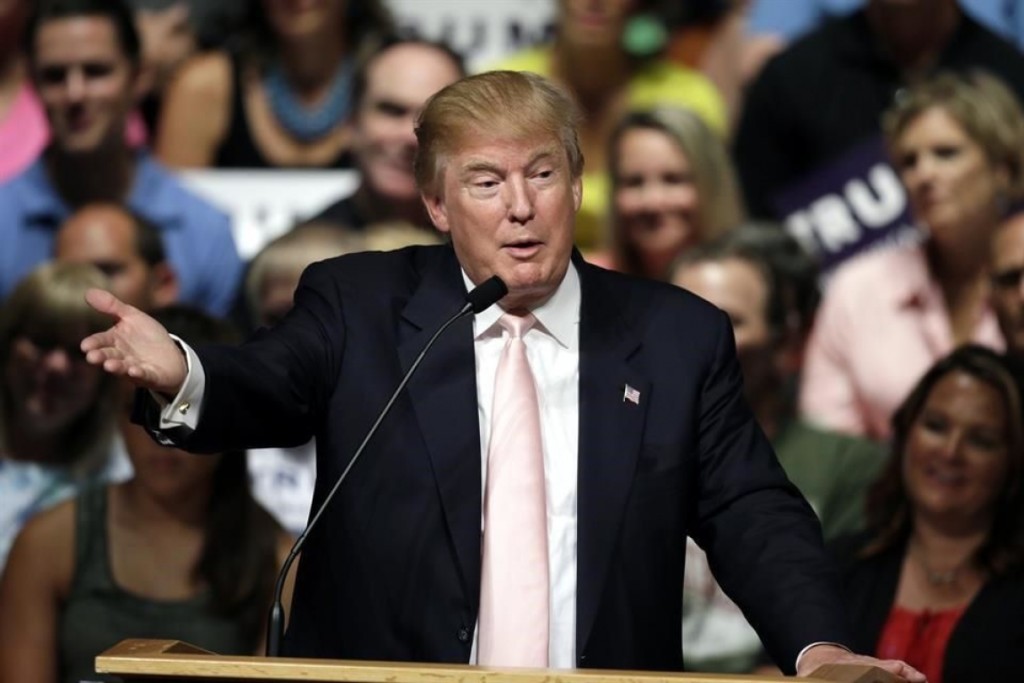
Whether you love him or hate him (I don’t think there’s an in-between), you have to admit Donald Trump has established his personal brand and fortune throughout the years by being extremely brash, creative, and smart: all with a very flippant attitude. Whether you like him or not, you have to admit that first in real estate, then reality TV, and now in politics, Trump has led the way in redefining the conventional and in turn achieving power, success, notoriety, power, and wealth. Now with Trump’s run for the White House, he is redefining American politics in terms of translating his brash, contentious style into what may be an unbeatable methodology of capturing the hearts and minds of disgruntled American voters. Trump has never been afraid to say what’s on the tip of his tongue. In the past, this propensity to attack, detract, and offend has lessened his intellectual credibility by defining his vision as Kardashian reality star style banter. But now his push-the-limit style converted into political rhetoric in a serious run for the White House, is playing well to many voters. He can berate Mexicans and Chinese, call John McCain a fake hero, be accused of raping his ex-wife and consorting with the mob, and even be described as uncharitable in his giving. Right now, he’s more than Ronald Reagan teflon, he’s kryptonite. Whether they are Republican, Democrat or a growing number of independent voters, American voters are tired most living paycheck to paycheck with no hope of digging out of debt. They are frustrated with a lackluster economy, ineffective governance in both Washington and state capitals, and continuous undeclared war. Most importantly, no matter where they stand in the political spectrum, the electorate is fed up with traditional mainstream politics, and even fringe Tea Party and leftist politics, too. In his ShockReality manner, Trump is spouting off truisms that Americans are feeling, but won’t enunciate on their own. If you believe the polls, Trump’s ShockReality messaging is playing well with the Republican base,. with him leaping ahead in a crowded pack of GOP hopefuls. No matter what he says, Americans now used to years of watching reality TV, want more from him, even demand more, with really no severe consequences to his popularity in a fast 24-7 news cycle that keeps moving on to the next sound bite. Some, though, say it’s one thing to practice ShockReality politics, it’s another to get down to the basics of backing up acerbic banter with hard policy. A major criticism, which shows signs of being out of touch with the true state of American politics, says he needs to come up with solutions and not just lash out about systemic problems in 2015 America. In recognizing his success so far in his messaging, David A. Fahrenthold in The Washington Post wrote: “But, so far, he’s missing something basic: a policy platform. A formal list of Trump’s ideas for America.” Here’s the game changer that Trump recognizes and no one else wants to admit: Americans don’t need or demand a policy platform for a presidential candidate to earn their vote. They just want some serious change, no matter how it comes. They want instead, a president, or any politician, who is sympathetic to their many frustrations and fearless enough to say what they feel, what they want, and want they need. It’s simple: They want a great America again. And Trump’s ShockReality political style works better than the Tea Party rhetoric precisely because it is not chained down in inflexible ideology. Instead, it stimulates a hope that President Obama correctly identified and ran on in 2008, but failed, like George W. Bush before him to deliver during his term in office. Donald Trump, and even now Joe Biden too with his own style of shooting off his mouth, is about to change American presidential politics for good. Calling Trump’s ShockReality messaging a phenomenon, and discounting his 2016 run, in our age of disdain is not only a mistake, but a lack of vision of the future of American politics. Steven Kurlander blogs at Kurly’s Kommentary (stevenkurlander.com) and writes for Context Florida and The Huffington Post and can be found on Twitter @Kurlykomments. He lives in Monticello, N.Y.
