Governor will host a ceremonial bill signing for legislation passed during 2023 Regular Session
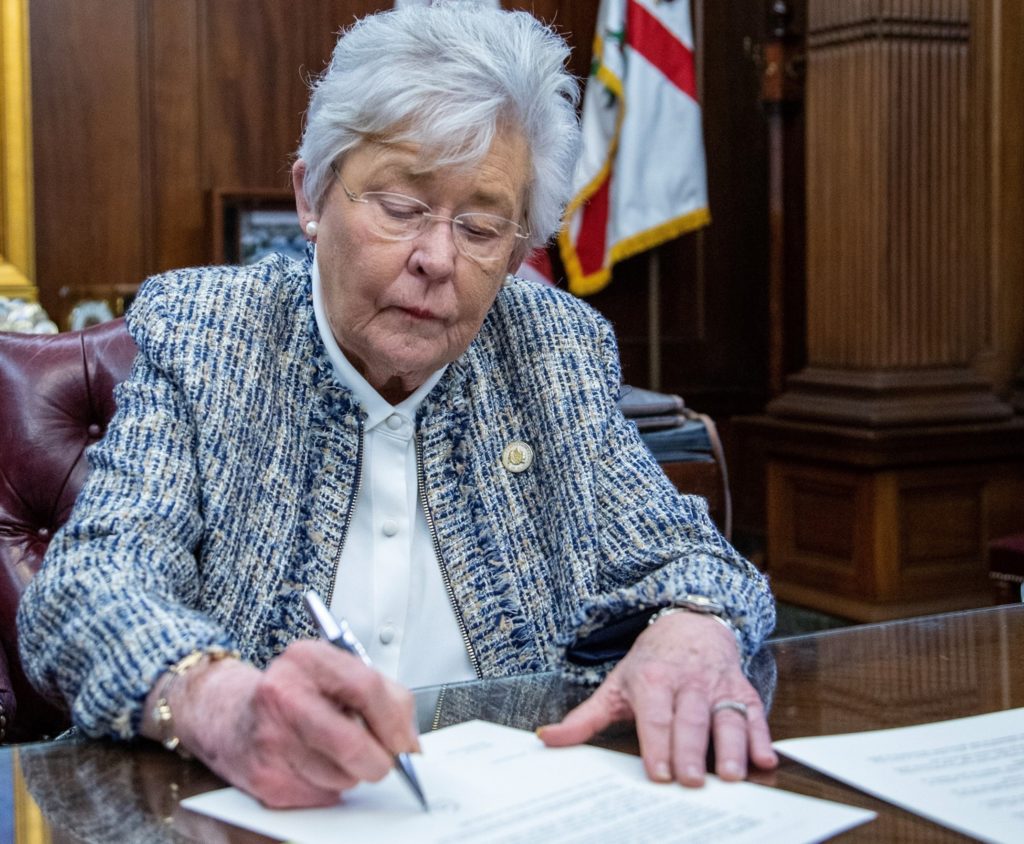
On Tuesday, Alabama Governor Kay Ivey will host a series of bill-signing ceremonies to celebrate the passage of several pieces of legislation that addressed concerns facing the state of Alabama. Ivey will sign several bills, including reform of the state’s adoption laws. House Bill 101 (HB 101) is sponsored by State Representative Ginny Shaver and State Senator Arthur Orr. This bill streamlines the state’s adoption process and updates the current adoption law language. (Act 2023-092). “Alabama has consistently set state records for adoptions and placed thousands of children in loving, forever homes,” said Gov. Ivey. “Currently, we have more than 5,000 children in the foster care system, and with this modernized and streamlined process now in place, we have positioned Alabama on even firmer footing and will be able to provide more of our children with the life they deserve.” House Bill 66 (HB66) by Rep. Joe Lovvorn and Sen. Andrew Jones allows certain firefighters, law enforcement officers, and correctional officers, covered under the ERS or TRS, to purchase hazardous duty time for prior service. (Act 2023-101). HB66 removes the time limitations for Tier I firefighters, law enforcement officers, and correctional officers covered under the Employees’ Retirement System or the Teachers’ Retirement System to purchase eligible service credit prior to January 1, 2003. House Bill 164 (HB164) by Rep. Andy Whitt and Sen. Jay Hovey requires high school students to complete a personal financial literacy and money management course before graduation. (Act 2023-179). “I have got story after story from thirty years of banking experience of young people who did not have a checking account,” said Whitt. “They go to convenience stores and check cashing places to get their paychecks cashed. One young fellow was working two hours a week just to be able to get his check cashed each week.” Senate Bill 131 (SB 131) by Sen. Vivian Figures and Rep. Steve Clouse. This bill transfers the regulation of preneed funeral contracts from the Department of Insurance to the Alabama Board of Funeral Services. (Act 2023-094). The Alabama Preneed Funeral and Cemetery Act of 2023 transfers the existing Preneed Funeral and Cemetery Act and the regulation of preneed contracts from the Commissioner and Department of Insurance to the Alabama Board of Funeral Service. It authorizes the Department of Insurance to temporarily transfer certain funds to the board to defray costs associated with the administration and operation of the Alabama Preneed Funeral and Cemetery Act of 2023; Senate Bill 28 (SB28) by Sen. Tim Melson and Rep. Randy Wood would expand the scope of practice of podiatry to include treatment of the foot and ankle. (Act 2023-106). Podiatrists in most states are already allowed to treat disorders of the ankle. This expansion of the scope of practice to come in line with national standards was long overdue. Senate Bill 104 (SB 104) by Sen. Chris Elliott and Rep. David Faulkner revises the current Dram Shop Act by addressing liability for providers of alcohol if a recipient injures a third party. (Act 2023-025) . Before this, only three insurance carriers would insure restaurants and bars from lawsuits due to the liability. This will make it harder for plaintiffs’ attorneys to prove a case against the establishment that sold the alcohol. House Bill 56 (HB56) by Rep. Frances Holk-Jones and Sen. Linda Coleman-Madison will expand the scope of practice for licensees of the Alabama Board of Social Work Examiners. (Act 2023-100). This will allow specially trained social workers with master’s degrees to diagnose mental illnesses. House Bill 62 (HB 62) by Rep. Ben Robbins and Sen. Keith Kelley will extend the amount of time that nonprofit veterans’ organizations have to comply with state and local building codes when acquiring a former armory building. (Act 2023-175). This bill primarily deals with an armory in Sylacauga owned by the American Legion and used by the Alabama National Guard. When the National Guard shut down its presence, it transferred back to the American Legion. The NG never updated the building during its tenure, so it lacks the sprinkler system needed to comply with state building code requirements. Tuesday will be day 24 of the 2023 Alabama Regular Legislative session. Kay Ivey has been governor since 2017. To connect with the author of this story or to comment, email brandonmreporter@gmail.com.
Twelve more bills to watch introduced in the legislative session

The 2023 Alabama Regular Legislative Session is almost half over. Tuesday will be legislative day 14. To this point, State Legislators have introduced 618 bills in the current legislative session. Alabama Today has been monitoring bills as they are introduced. Here are twelve of the most recently introduced bills to watch. House Bill 370 (HB370) is sponsored by Representative John Rogers. According to the synopsis, HB370 “would require the Alabama State Law Enforcement Agency to establish and maintain a database that includes a list of individuals with communication disabilities or disabilities that can impair communications, to be available to law enforcement officers. This bill would require the Alabama Department of Public Health to develop a form for individuals to voluntarily register for inclusion in the database.” Senate Bill 237 (SB237) is sponsored by Senator Tom Butler. According to the synopsis, “Under existing law, the Alabama Memorial Preservation Act of 2017 prohibits architecturally significant buildings, memorial buildings, memorial streets, and monuments that are located on public property and have been so situated for 40 or more years from being relocated, removed, altered, renamed, or otherwise disturbed unless the Committee on Alabama Monument Protection grants a waiver, and provides penalties for violations. This bill would require a controlling governmental entity that replaces a memorial building to maintain the original name or erect a marker memorializing the name. This bill would provide that a petition for waiver is deemed denied if the Committee on Alabama Monument Protection fails to act on an application for waiver within 90 days. This bill would revise the penalties for violations and would authorize the Attorney General to commence a civil action. This bill would also require the Alabama State Council on the Arts to oversee the design, construction, and installation of a replica of the Saturn 1B Rocket, previously located at the I-65 Ardmore Welcome Center in Elkmont, Alabama, at the most northern I-65 rest stop in the state.” House Bill 364 (HB364) is sponsored by State Rep. Steve Hurst. HB364 would require a public K-12 school or a local board of education to accept cash and any other form of payment of its choosing for admission to school-sponsored sporting events that are open to the public. Some venues have gone to credit card payments only during the COVID-19 pandemic. House Bill 354 (HB354) is sponsored by State Rep. Mack Butler. HB354 “would provide that classroom instruction or discussions related to gender identity or sexual orientation may not be provided to public school students in kindergarten through eighth grade or to public school students in a manner that is not age or developmentally appropriate. This bill would require the State Board of Education to adopt procedures for notifying a student’s parent if there is a change in the student’s services or monitoring relating to the student’s mental, emotional, or physical health and would prohibit local boards of education from adopting policies to the contrary. This bill would require each local board of education, at the beginning of each school year, to notify parents of the health care services available to students and allow parents to opt their child out of any health care service.” Senate Bill 224 (SB224) is sponsored by Sen. Vivian Figures. According to the synopsis, “Under existing law, the crime of transmitting obscene material to a child by computer is a Class B felony. This bill would clarify that for the purpose of this crime, a child is a person who is under 16 years of age. Under existing law, a person commits the crime of distributing a private image if he or she knowingly posts, emails, texts, transmits, or otherwise distributes a private image with the intent to harass, threaten, coerce, or intimidate the person depicted in certain circumstances. This bill would clarify that a criminal proceeding for a violation of distributing a private image could be brought in any county in which any part of the crime took place, in the county of residence of the victim, or any county where the image was received. Also, under existing law, a violation of incest is a Class C felony. This bill would provide that a violation of incest when the victim is under 16 years of age is a Class A felony. Also, under existing law, a person may not be convicted of the crime of incest or of an attempt to commit incest unless there is corroborated testimony. This bill would remove the requirement of corroborated testimony.” Senate Bill 234 (SB234) is a state constitutional amendment by Sen. Merika Coleman. SB234 would end the state’s four percent sales tax on groceries but would replace the lost revenue by ending the state’s allowing income taxpayers to deduct their federal income tax. A family of four who spends $110 a week on groceries would save $229 on the reduced sales tax on groceries. With a typical household taxable income of $54,062, they pay $4,726 in federal income taxes. Currently, they would deduct that from their state-taxable income. If SB234 passes and they lose that deduction, they would pay $281 in additional Alabama income taxes. In this example, that family would pay $52 more in taxes. A low-income family or a retired couple with no investment income would come out ahead by not having to pay the grocery tax. A high-income family will pay more taxes in this scenario if SB234 becomes law. Senate Bill 232 (SB232) is sponsored by Sen. Chris Elliott. SB232 would authorize peer-to-peer car-sharing programs, which are business platforms that connect vehicle owners with drivers, to enable the sharing of vehicles for financial consideration in this state. House Bill 342 (HB342) is sponsored by Rep. Susan Dubose. The bill states, “Under existing law, the State Superintendent of Education is authorized to issue professional educator certificates to qualified individuals who complete an alternative teacher preparation program offered by an approved alternative teacher education preparation organization. This bill would provide additional requirements for programs to provide alternative certifications for educators.” House Bill 339 (HB339) is sponsored by Rep. Chris Pringle. The bill states, “Under existing law, the second or runoff
Senate Committee advances bill to limit local governments ability to drive up the cost of housing construction

The 2023 Alabama Regular Legislative Session is underway. The Alabama Senate County and Municipal Government Committee advanced legislation on Tuesday to prevent county and local governments from passing ordinances or altering their building codes to require options that would raise the cost of housing construction in their communities. Senate Bill 40 (SB40) is sponsored by State Sen. Chris Elliot – who chairs the Committee. Under existing law, municipal and county governing bodies may adopt and enforce local building codes governing the construction of residential structures. This bill would provide that a municipal or county governing body, or any agency thereof, may not directly or indirectly adopt or enforce any ordinance, rule, bylaw, order, or local building code provision that would require, in the construction of a residential structure, certain latent features, including wiring, plumbing, gas tubing, or framing which features would not be operational at the time of completion. Elliot explained that the legislation would prevent a local government from requiring things like solar panels or electric ranges rather than gas ones, “Driving up the cost of construction.” At Elliott’s request, the bill was amended to create an exception for safety equipment. Sen. Merika Coleman expressed concerns that “Local officials are elected and are closer to the community.” A spokesman for the Alabama League of Municipalities said, “We understand what the homebuilders are trying to do. Affordable housing is a major issue.” “If the homeowner wants to put solar panels on a home, I want them to have the option to do that, but I do not want them to be forced to do that,” Elliott said. Adding solar panels to a home can add between $10,000 and $35,000 to the cost of construction, depending on labor costs and the system that is installed. Sen. Linda Coleman-Madison said that Alabama Power charges homeowners with solar panels a fee just for having them. SB40 received a favorable report from the committee in a ten to zero unanimous vote. The entire State Senate announced that they will gavel in on Wednesday at 3:00 p.m. for Day 3 of the 2023 Alabama Regular Legislative Session. Since the full Senate took this bill in reports from the committee on Tuesday, it could consider this bill on the Senate floor Wednesday. If SB40 passes, it would still have to go to the Alabama House for its consideration. There is a maximum of thirty days in an Alabama regular legislative session. To connect with the author of this story or to comment, email brandonmreporter@gmail.com.
Alabama Senate Committee amends ARPA funding bill
The Alabama Senate Finance and Taxation General Fund Committee met on Wednesday morning to consider the American Rescue Plan Act appropriation bill passed by the House on Tuesday. The Committee voted to give the legislation a favorable report but only after amending how the sewer and water funds are distributed. House Bill 1 (HB1) is sponsored by State Rep. Rex Reynolds, who chairs the House Ways and Means General Fund Committee. The legislation appropriates the second $1,060,000,000 that the state received from the federal government through the controversial ARPA Act – all of which are paid for through federal deficit spending. State Sen. Greg Albritton chairs the Senate Finance and Taxation General Fund Committee. Albritton shared two documents with the members of the Committee. The first was an email from the Alabama Department of Environmental Management (ADEM) outlining where the first round of ARPA money for water and sewer projects has been allocated. “This data is also available online,” Chairman Albritton said. “The second is the MOA (Memorandum of Understanding) between the Department of Finance and ADEM on the distribution of that money.” “HB1 is the ARPA document,” Albritton said. “It passed the House 101 to 3.” Sen. Chris Elliott presented an amendment to HB1. Elliott explained that his amendment further defines the use of the water and sewer projects portion of the ARPA funds to include stormwater projects. The amendment also sets aside up to $100 million for the water and sewer projects to require matching grants of up to 35% and includes changes to the formula to factor in for growing communities. “It allows this money to be used for stormwater infrastructure,” Elliott explained. “It further stretches this money out by requiring matching grants from local communities.” $395 million of the ARPA will go to water and sewer projects. ADEM will award the projects to water and sewer systems that apply for the funds. State Sen. Linda Coleman Madison said, “I had an amendment to add, but your amendment includes that. What is the difference between the two amendments?” Albritton said, “It includes that and goes further to delineate that a portion of the money requires a 35% match.” The Elliott amendment was adopted by a 15 to 0 vote. “I know Sen Coleman Madison calls me Senator No,” said Sen. Sam Givhan. “It’s better, but it’s still not there yet.” HB received final passage by the Committee, with 12 members voting in favor and three members, including Givan, voting to abstain. The full Senate can now consider the legislation as early as Thursday. If the legislation passes the Senate with the Elliott amendment, it would have to go back to the Alabama House of Representatives for them to consider the changes. The Alabama Legislature is currently in its First Special Session. It is hoped that the body will be able to resume the 2023 Alabama Regular Session on Tuesday, March 21. To connect with the author of this story or to comment, email brandonmreporter@gmail.com.
ADEM has authorized water and sewage projects in 63 of the 67 counties

On Tuesday, the Joint Legislative Committee on American Rescue Plan Act State Funds met in Montgomery for oversight hearings on the progress of spending the first billion dollars of federal funds for COVID relief. Much of that money is being spent on water and sewer projects. Lance LeFleur is the Director of the Alabama Department of Environmental Management (ADEM). ADEM has been tasked with awarding those funds to water and sewer utilities. LeFleur said water projects have been approved for 63 of the 67 counties, and those other four counties have projects that will be in the next round of projects. LeFleur said that ADEM has $1.6 billion in funding available through 2026 and $3 billion in requests. “We have approximately $1.4 billion in projects that do not have a source of funding at this time,” LeFleur told Legislators. “We do have a website: Alabamawaterprojects.com.” “We have 600 systems in the state,” LeFleur explained. “Some systems have submitted multiple projects. Many of these are combination water and sewer systems.” LeFleur said that ADEM is considering every single project. All of the funding came through principal forgiveness or it came through a grant. “Under ARPA, the most dire needs were provided by grants,” LeFleur explained. State Sen. Greg Albritton chairs the oversight committee. “This is a lot of construction. Is there a contractor available to do all of this?” Albritton asked. “The simple answer is no,” LeFleur answered. “There are supply chain problems. We were faster at getting these awards out than any other state.” “In this process, it is important that we have proper oversight,” LeFleur explained. “We require a professional engineer to do the plant analysis, and then we check on the professional engineer to make sure that he did things right. Our engineers are very experienced. We make sure that the engineering on the front end is done properly. On the financial system, we require that each of these systems have an audit. We have to know the true financial picture of each of these systems. We have made the commitments at a very rapid pace compared to the rest of the nation. It is in the hands of the individual systems to get the final engineering done.” Lafleur continued, “We are not going to put any system in financial distress, but if they have the resources to contribute, it is important that they do that so we can get the most out of this money.” LeFleur said that for the poorest systems whose rates were already as high as their neighbors, the state would pick up 100% of the cost. If the system can afford matching dollars, ADEM requires them to provide those funds. Part of this financial evaluation of the systems is to examine the water and sewer rates charged by the systems. “They have to have rates that are consistent with the systems around them,” LeFleur said. “We have some systems that have not raised rates in a generation.” “Payment will only be made until after we have certified and made sure that the payments have been made,” LeFleur explained. “The funds will cover the costs of the engineers and the audits. We know that some systems have not had the funds to do audits in several years.” State Sen. Chris Elliott expressed his displeasure with how these awards are being prioritized. “My concern is and has been and continues to be that in the fastest growing county in the state that sees 8000 new people a year that represents 48% of the population growth in the entire state, that (State Senate) district received no funding, received zero projects – that is not acceptable,” Elliott said. LeFleur responded, “We do have one project in your county. Is that your district?” “That is not in my district. That is in the chairman’s district,” Elliott said. “And your problem with that is?” Chairman Albritton said. “Past growth is available for funding future growth is not available for funds,” LeFleur said. “Their systems (in Baldwin County) have the ability to fund growth.” “We have sewage overflows into Mobile Bay on a regular basis. We have sewage overflows in rivers and streams on a regular basis,” Elliott said. “Not allocating any resources into my district is very shortsighted.” Elliott threatened to filibuster future Senate meetings if his concerns are not addressed. Kirk Fulford is the head of the fiscal division of Alabama’s Legislative Services Agency (LSA). “Alabama was appropriated $2.12 billion,” Fulford said. Just over half of that money has been appropriated, Fulford explained. The Legislature will appropriate the second tranche of that money after it returns on March 7 for the 2023 Regular Legislative Session. Fulford said the Legislature had appropriated $222 million for water and sewer projects. The state has spent $400 million on two mega prisons under construction in Elmore and Escambia Counties. $80 million was spent on relief of Alabama hospitals, and another $80 million went to the state’s nursing homes. $51 million has been appropriated for broadband infrastructure projects. The state also qualified for additional dollars under ARPA and the CARES Act. “You used $277 million for broadband infrastructure thus far,” Fulford told legislators. The Alabama Department of Economic and Community Affairs (ADECA) is tasked with awarding those funds. Most of the ARPA funds have to be spent by December 31, 2026, or must be returned to the federal treasury. To connect with the author of this story or to comment, email brandonmreporter@gmail.com.
Katie Britt urges lawmakers to protect workers against vaccine mandates
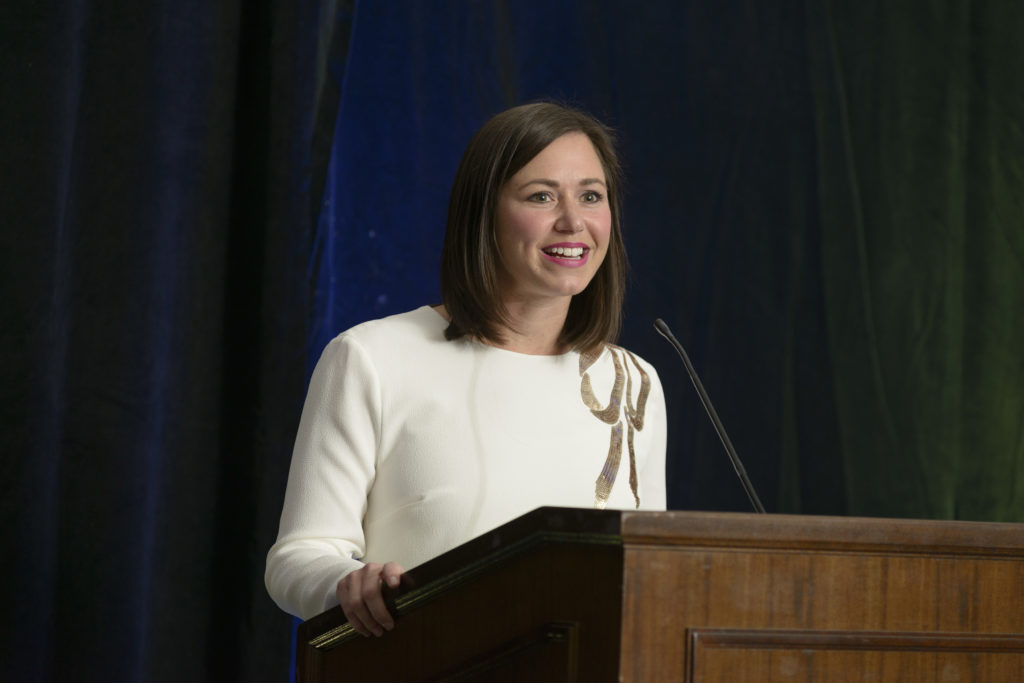
U.S. Senate candidate Katie Britt is urging Alabama Legislators to protect workers against the Biden administration’s vaccine mandates. It was announced today that Americans who work at companies with 100 or more employees will need to be fully vaccinated against COVID-19 by January 4 or get tested for the virus weekly. The Alabama Senate passed two anti-vaccine discrimination bills earlier this week, and the Alabama House of Representatives will see those bills on Thursday, Yellowhammer News reported. Senate Bill 9 and Senate Bill 15 are two of several bills the GOP-led legislature filed during the special session. Senate Bill 9 will provide workers the ability to claim exemption from the vaccine mandate. Senate Bill 15 will authorize the attorney general to pursue civil action against violators of the state’s ban on vaccine passports. The bill also requires parental consent for minors to get the COVID-19 vaccine. Chris Elliot, who authored Senate Bill 9, told the Alabama Daily News, “We’re trying to make this as easy as possible for the rank-and-file employees that don’t have a law degree or don’t want to go out and hire an attorney to be able to claim their exemption without an undue burden.” Britt, former chief executive of the Business Council of Alabama (BCA), is publicly disagreeing with her former employer. BCA is against Senate Bill 9, arguing that it puts employers in a “no-win position” by forcing them to comply with conflicting state and federal laws. Robin Stone, the BCA’s interim executive director, stated, “This legislation would prevent Alabama employers from making their own personnel decisions and place that authority in the hands of state government.” Britt stated, “Joe Biden’s tyrannical mandate threatens the livelihood of countless Alabamians and the freedom of every American. This vast overreach and coercion is not a solution to a problem; it only causes problems. Real leadership would find a way to simultaneously protect the lives of Americans while preserving their jobs and safeguarding their freedoms.” Senate Bills 9 and 15 now move to the full House for a vote.