
Amazon staff reject union in Alabama, lean toward it in NYC
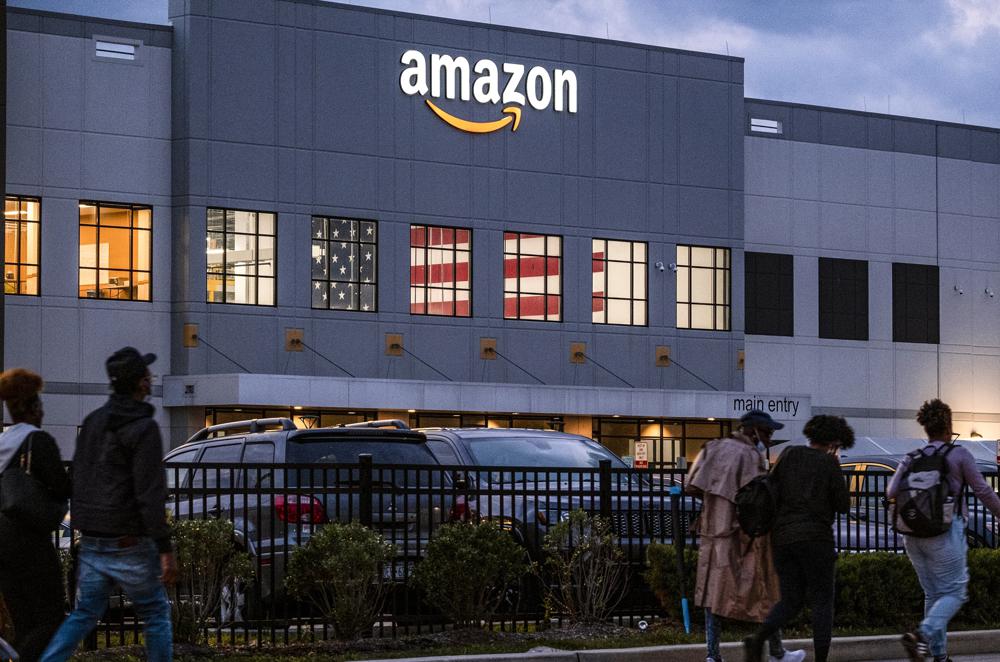
Amazon workers in Alabama appear to have rejected a union bid in a tight race, according to early results on Thursday. But outstanding challenged votes could change the outcome. In New York, union supporters have the edge in a count that will continue Friday morning. Warehouse workers in Bessemer, Alabama, voted 993 to 875 against forming a union. The National Labor Relations Board, which oversees the election, said that 416 challenged votes could potentially overturn that result. A hearing to go through the challenged ballots will occur in the next few days. Meanwhile, in a separate union election in Staten Island, New York, the nascent Amazon Labor Union is leading by more than 350 votes out of about 2,670 tallied. The close election in Bessemer marks a sharp contrast to last year when Amazon workers overwhelmingly rejected the union. “This is just the beginning, and we will continue to fight,” said Stuart Appelbaum, president of the Retail, Wholesale, and Department Store Union, which is organizing the union drive in Bessemer, at a Thursday press conference. “Regardless of the final outcome, workers have shown what is possible. They have helped ignite a movement.” Appelbaum said RWDSU will be filing objections to how Amazon handled the election but declined to be specific. He also took the opportunity to lash out at current labor laws, which he believes are rigged against unions and in favor of corporations. “It should not be so difficult to organize a union in the United States,” he said. If a majority of Amazon workers voted yes in either Bessemer or Staten Island, it would mark the first successful U.S. organizing effort in the company’s history. Organizers have faced an uphill battle against the nation’s second-largest private employer, which is making every effort to keep unions out. In New York, the ALU has led the charge to form a union along with Chris Smalls, a fired Amazon employee who now heads the fledging group. Turnout for the in-person election was unclear, but Smalls was hopeful of victory. “To be leading in Day One and be up a couple hundred against a trillion-dollar company, this is the best feeling in the world,” Smalls said after the conclusion of Thursday’s counting. While Smalls’ attention has been focused on securing victory in New York, similar efforts in Alabama also weighed heavily. “I’m not too sure what’s going in Alabama right now, but I know that the sky’s the limit if you can organize any warehouse,” he said, noting that the vote in Alabama could well end up differently. “I hope that they’re successful. I don’t know what’s going on yet, but we know we show our support and solidarity with them.” The warehouse in Staten Island employs more than 8,300 workers who pack and ship supplies to customers based mostly in the Northeast. A labor win there was considered difficult, but organizers believe their grassroots approach is more relatable to workers and could help them overcome where established unions have failed in the past. John Logan, director of Labor and Employment Studies at San Francisco State University, said the early vote counts in New York has been “shocking.” ALU has no backing from an established union and is powered by former and current warehouse workers. The group had also filed for a union election after getting support from about 30% of the facility’s workforce, a much lower percentage than what unions usually seek. “I don’t think that many people thought that the Amazon Labor Union had much of a chance of winning at all,” Logan said. “And I think we’re likely to see more of those (approaches) going forward.” Though RWDSU is currently lagging behind with challenged ballots outstanding, Logan said that the election was also remarkable because the union has made a good effort narrowing its margin from last year’s election. After a crushing defeat last year, when a majority of workers voted against forming a union, RWDSU is hoping for a different outcome in the Bessemer election, in which mail-in ballots were sent to 6,100 workers in early February. Federal labor officials scrapped the results of the first election there and ordered a re-do after ruling Amazon tainted the election process. The RWDSU said the election there had a turnout rate of about 39% this year, much smaller than last year. Appelbaum blamed the low numbers on high turnover — he believes thousands of people who worked for Amazon in January and were on the official list to be eligible to vote either quit or were fired. He also believes that an in-person election, which the RWDSU had asked for, would have made a difference. Amazon has pushed back hard in both elections. The retail giant held mandatory meetings, where workers were told unions are a bad idea. The company also launched an anti-union website targeting workers and placed English and Spanish posters across the Staten Island facility, urging them to reject the union. In Bessemer, Amazon has made some changes but still kept a controversial U.S. Postal Service mailbox that was key in the NLRB’s decision to invalidate last year’s vote. Both labor fights faced unique challenges. Alabama, for instance, is a right-to-work state that prohibits a company and a union from signing a contract that requires workers to pay dues to the union that represents them. The mostly Black workforce at the Amazon facility, which opened in 2020, mirrors the Bessemer population of more than 70% Black residents, according to the latest U.S. Census data. Pro-union workers say they want better working conditions, longer breaks, and higher wages. Regular full-time employees at the Bessemer facility earn at least $15.80 an hour, higher than the estimated $14.55 per hour on average in the city. That figure is based on an analysis of the U.S. Census Bureau’s annual median household income for Bessemer of $30,284, which could include more than one worker. The ALU said they don’t have a demographic breakdown of the warehouse workers on Staten Island, and Amazon declined to provide the information to The
Amazon tries to stave off union drive on two fronts
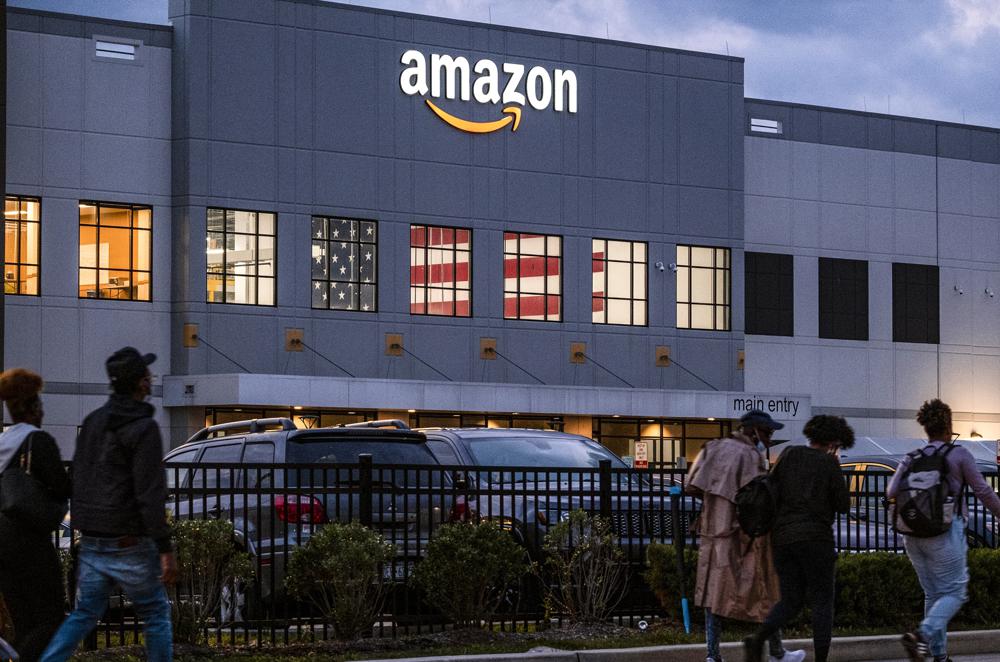
Amazon is gearing up for its toughest labor fight yet, with two separate union elections coming to a head as soon as next week that could provide further momentum to the recent wave of organizing efforts across the country. Warehouse workers in Staten Island, New York, and Bessemer, Alabama, will determine whether or not they want to form a union. If a majority votes yes at either location, it would mark the first successful U.S. organizing effort in Amazon history. Rejection would notch another victory for the country’s second-largest employer in keeping unions at bay. Here’s what the elections will look like in Bessemer and Staten Island: THE VOTING Last April, workers in Bessemer overwhelmingly voted against a union bid, providing a bitter defeat for a labor movement that had already been declining in influence but making some gains during the pandemic. Federal labor officials later scrapped the results and ordered a re-do, ruling Amazon tainted the election process. Ballots for the second election were mailed to 6,100 employees in early February. The counting process is expected to start on Monday and could last for several days. Meanwhile, Amazon workers in the Staten Island warehouse began in-person voting Friday in their first union election. The facility is one of Amazon’s largest in New York City with more than 8,300 employees. Voting will wrap up Wednesday, with the counting expected to begin shortly thereafter. UNION SUPPORT The Retail, Wholesale and Department Store Union is once again spearheading the drive at the Alabama facility. More than 150 organizers from the union, as well as from roughly 20 other labor groups were on the ground since last summer — a bigger push than in the first election — to galvanize support. Vaccines made it easier during the ongoing pandemic to knock on workers’ doors and also visit barbershops, stores, and other places to distribute flyers and chat with residents. Pulling off a win could still be tough. There’s high turnover at the facility, making it difficult to build momentum. At the same time, organizers estimate about half of current workers were eligible to vote in the last election, offering the RWDSU a chance to tap new workers who may be more amenable to a union. In Staten Island, Amazon workers are currently organizing under the independent Amazon Labor Union led by Chris Smalls, a former employee who says he was fired after leading a protest over the warehouse’s working conditions in the early days of the pandemic. (Amazon said he violated COVID-19 safety protocols.) The nascent union seeks to negotiate higher wages, more paid time off and other benefits for workers, 100 of which sit on its worker committee. Some of them have been wearing shirts and masks with the group’s logo during work shifts. Others have been handing out pro-union fliers after work and encouraging their co-workers to unionize. NEW YORK VS. ALABAMA The union landscape in Alabama is starkly different from New York. Last year, union members accounted for 22.2% of wage and salary workers in New York, ranked only behind Hawaii, according to the Bureau of Labor Statistics. That’s more than double the national average of 10.3%. In Alabama, it’s 5.9%. Alabama is also a right-to-work state, which prohibits a company and a union from signing a contract that requires workers to pay dues to the union that represents them. Pro-labor experts say many may feel intimidated by companies that could undermine the unionized shop. New York is not a right-to-work state, and Amazon is attempting to use that to its advantage. The company is telling workers it could fire them should they unionize but fail to pay union dues. But that requirement is not an across-the-board mandate for non-right-to-work states and is something that is negotiated during union contracts, said Jennifer Sherer, senior state policy coordinator at the left-leaning Economic Policy Institute. THE WORKERS The mostly Black workforce at the Alabama facility, which opened in 2020, mirrors the Bessemer population of more than 70% Black residents, according to the latest U.S. Census data. There’s little public transportation, so many of the Amazon workers drive to the facility from as far away as metro Montgomery, nearly 100 miles to the south. Pro-union workers say they want better working conditions, longer breaks, and higher wages. Regular full-time employees at the Bessemer facility earn at least $15.80 an hour, higher than the estimated $14.55 per hour on average in the city. That figure is based on an analysis of the U.S. Census Bureau’s annual median household income for Bessemer of $30,284, which could include more than one worker. At Amazon’s Staten Island facility, which opened in 2018, workers earn a minimum hourly wage just over $18, much lower than the estimated $41 per hour average for the borough, according to a similar U.S. Census Bureau analysis of Staten Island’s $85,381 median household income. Workers from across the New York metro area trek long distances to get to the company’s warehouse, many times alternating between the subway, a ferry, and 40-minute long public bus rides. The ALU said it doesn’t have a demographic breakdown of the warehouse workers in Staten Island and Amazon declined to provide the information to The Associated Press, citing the union vote. But internal records leaked to The New York Times from 2019 showed more than 60% of the hourly associates at the facility were Black or Latino, while most of managers were white or Asian. AMAZON’S STRATEGY Amazon sees unions as a threat to its business model built on speedy deliveries to customers. “As a company, we don’t think unions are the best answer for our employees,” an Amazon spokesperson said in a emailed statement. “Our focus remains on working directly with our team to continue making Amazon a great place to work.” The online retail giant continues to hammer the message that it offers benefits such as health care, 401(k) plans, and a prepaid college tuition program to help grow workers’ careers. It launched a website for workers at both warehouses that casts doubt on the benefit of unions and
