
Parker Snider: How Christ’s resurrection makes politics better
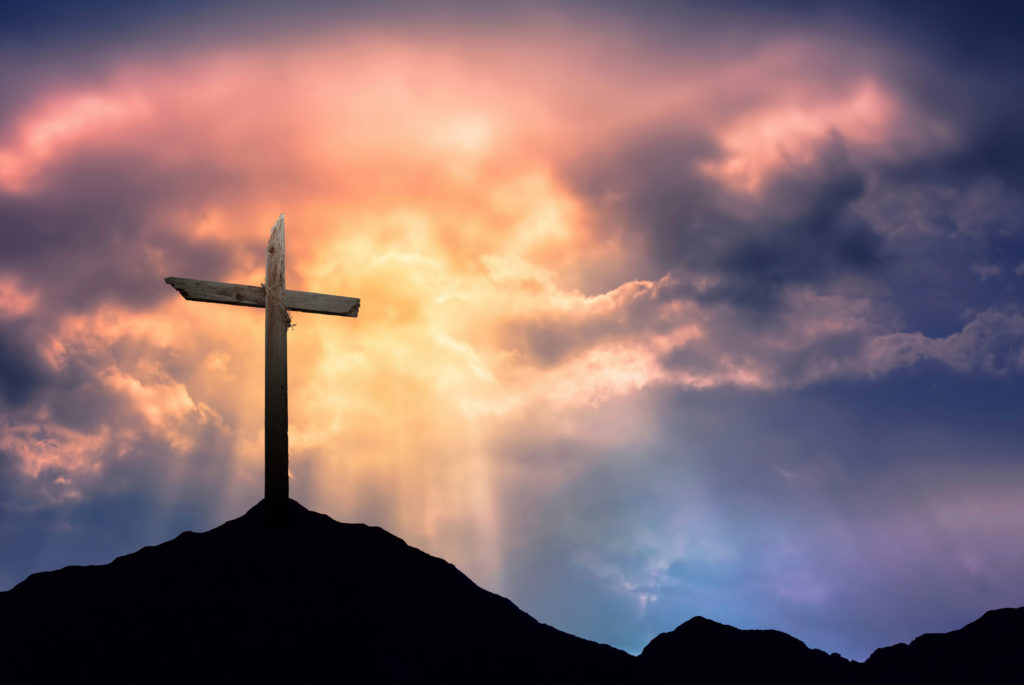
“He is not here; He has risen!” These are perhaps the most consequential words ever spoken. A man who three days earlier had been violently beaten, hung upon a cross, and buried lifeless in a tomb, is alive again! The reality behind these words—a risen Savior who had borne the sins of the world – prompted the disciples of Jesus to spend their lives spreading this news, Perpetua to die for her faith at the hand of the Romans and, more recently, Jim Elliot to take the still unknown Gospel to the Auca people of Ecuador. Christian heroes from years gone by voluntarily endured suffering, persecution, and death because the Resurrection changed one essential aspect of their being: their hope. The death and resurrection of Jesus, along with His subsequent appearance to more than five hundred witnesses, instills a confidence among believers that there is more than just this world. This confidence, this hope in Christ and the Resurrection, makes politics so much better. We can trust that, no matter who is in charge and what policies are being proposed in Washington or Montgomery, God will have His way. In times like these, this is a relief. Now this doesn’t mean that we can’t fight—we can and we do. It just means that when we fight, we must do so without manipulating facts, exaggerating outcomes, or fear-mongering. The other way, the “by any means necessary” approach, simply doesn’t align with the eternal hope we have as Christians. Since our hope is not in the government or political power, we are free to reject indefensible candidates on our own side, even if doing so might cost us political power. We are free to genuinely listen to those with different opinions, even if they challenge our own, and to praise goodness and truth, no matter the source. Furthermore, we can promote good policy honestly and in a way that is, as the Apostle Paul put it, “above reproach”. When we defend indefensible candidates, reject the validity of those experiences different from our own, scream “Liar!” every time a specific politician opens his or her mouth, or manipulate facts to create a certain narrative, we indicate that our ultimate goal is worldly power. Christians—we must do politics differently. Our faith in the Resurrection gifts us with knowing the ending – that one day all will be made well and we will praise Him for eternity. This knowledge of the future, however, is a luxury that non-Christians do not enjoy. They fight, sometimes “by any means necessary”, as if this world is all there is because, as far as they know, it is. As Christians, we can fight for policies we believe in—and we can fight hard—but, ultimately, our hope is not in politics. It is in the resurrection of Christ and the truth that death, the singular most worried about, written about, and fought against aspect of the human condition, is but a victory to us. This Easter weekend remember, rest, and act confidently in a hope greater than political power in this world—the finished work of Christ. ••• Parker Snider is Policy Relations Manager at the Alabama Policy Institute (API). API is an independent, nonpartisan, nonprofit research and educational organization dedicated to strengthening free enterprise, defending limited government, and championing strong families. If you would like to speak with the author, please e-mail communications@alabamapolicy.org or call (205) 870-9900.
Over 200 million Christians facing severe persecution worldwide, Robert Aderholt reacts
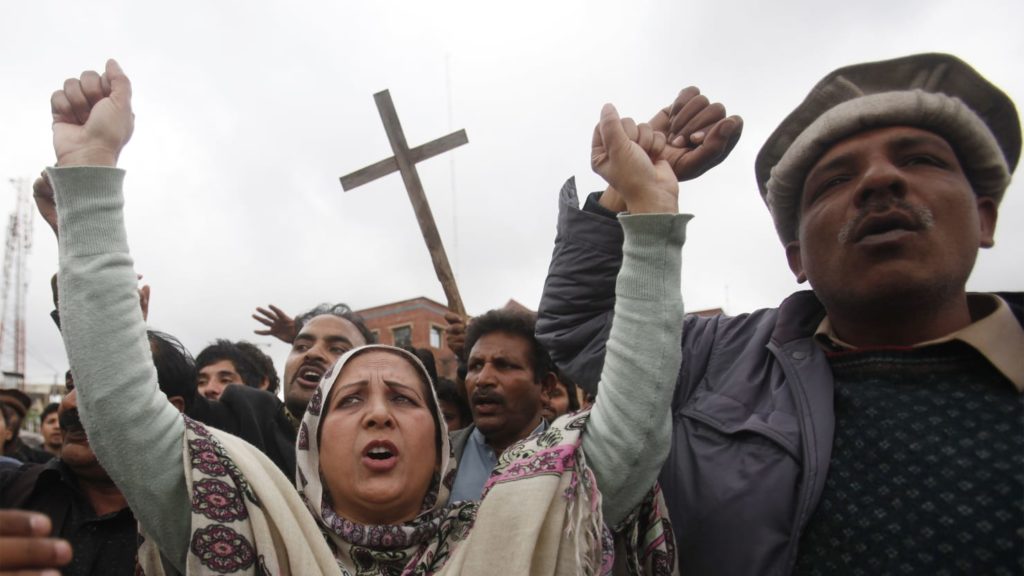
Roughly 215 million Christians are being persecuted due to their faith, according to a new report released by the Open Doors USA — that’s one in 12 Christians worldwide. The president and CEO of Open Doors, David Curry unveiled the 2018 World Wide List (WWL) of the top 50 “most dangerous” countries to worship Jesus at the National Press Club Wednesday in Washington, D.C. Each year, the WWL provides a searing glimpse into the 50 places around the world where it costs the most to be a Christian. In some countries, familial and social pressure make it terribly difficult to follow Jesus, while in other places, faith in Christ is threatened by daily risk of violence and physical oppression. Alabama 4th District U.S. Rep. Robert Aderholt attended the event and said the news from the report was not good. “Sadly, the news from the event was not good. The number of Christians who are facing persecution around the world is increasing,” said Aderholt. “North Korea continues to be at the top of the list of countries where Christians are persecuted and strictly prohibited from openly worshipping. The following is a list of the top ten countries where Christians are persecuted: North Korea, Afghanistan, Somalia, Sudan, Pakistan, Eritrea, Libya, Iraq, Yemen, and Iran.” Aderholt shared many of the most vulnerable of those persecuted are women. “The Open Doors report highlighted that women are particularly singled out and abused for their faith,” Aderholt added. “There were reports of 2,260 women who were raped, sexually harassed or forced into marriages through threats of death. It’s believed this number is greatly under reported. I should also point out this is an issue that women, men and children all face around the world. “We cannot turn a blind eye to this evil and the United States must continue to hold our friends – and our enemies – accountable. I will continue to discuss these issues with my colleagues in Congress to help ensure that the Administration has all the tools it needs from those of us in Congress who understand the severity of this issue.”
AG Steve Marshall leads fight to keep cross at Pensacola park
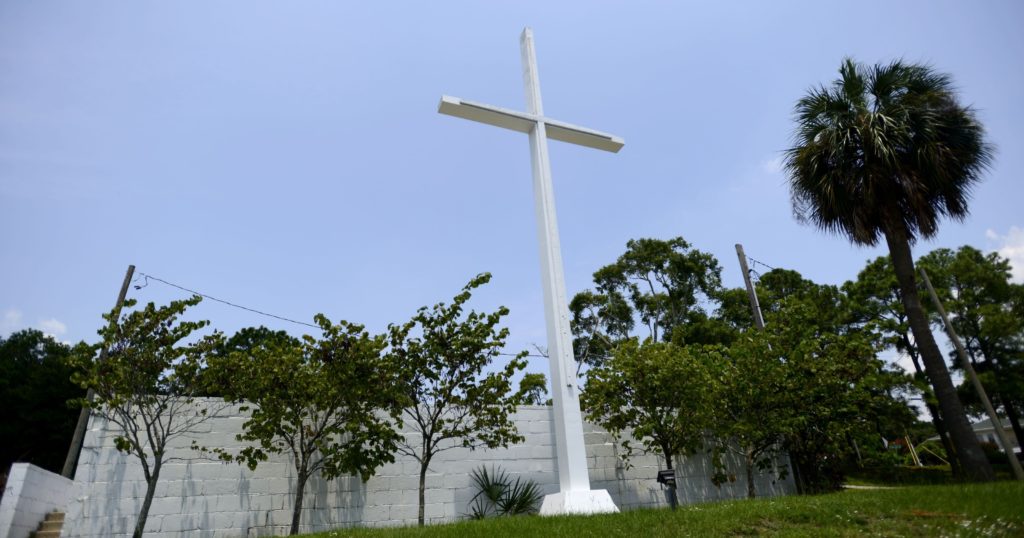
Alabama Attorney General Steve Marshall on Tuesday led a coalition of 14 state attorneys general in filing a friend of the court brief supporting the City of Pensacola, Florida’s, right to keep a historic cross on display in a public park. Marshall’s filing was in response to the well-known Bayview Cross in a Pensacola public park that was ordered to be taken down this summer following a controversial ruling where a federal judge decided in favor of a group of people who sued the city who claimed the cross is offensive. In June, federal judge Roger Vinson wrote a 23-page order explaining why he, reluctantly, ruled for the cross to be removed. “After about 75 years, the Bayview Cross can no longer stand as a permanent fixture on city-owned property,” Vinson wrote in his ruling. “I am aware that there is a lot of support in Pensacola to keep the cross as is, and I understand and respect that point of view. But, the law is the law.” He added, “Count me among those who hope the Supreme Court will one day revisit and reconsider its Establishment Clause jurisprudence, but my duty is to enforce the law as it now stands.” The City of Pensacola has since appealed the decision. Marshall’s brief was filed with the 11th U.S. Circuit Court of Appeals in support of the appeal. “The large cross in Pensacola’s Bayview Park is a local landmark dating back more than seven decades,” said Marshall. “The cross is woven into the fabric of Pensacola’s history and its presence in a public park does not violate the First Amendment’s prohibition of the establishment of religion, as opponents have claimed. To continue down the road of the lower court’s reasoning would open the door to challenges of religious symbols on thousands of monuments and memorials on public property across the country.” The 34-foot-tall white concrete cross has stood in the popular Bayview park since 1969, The city spends roughly $233 a year, which comes out to about 0.03 percent of the city’s annual maintenance budget to keep it cleaned, painted, and illuminated at night. On Wednesday, Pensacola Mayor Ashton Hayward wrote an op-ed in the Washington Examiner explaining, the cross has “become a community gathering place, an integral part of my town’s fabric, a symbol to our local citizens — religious and non-religious — of our proud history of coming together during hard times.” According to a press release, Marshall’s brief in the case asserts that the lower federal court ruling against the display of the cross ignores legal precedent protecting the display of historical monuments, including religious symbols, on public property. “States, counties, and municipalities have historically included, or allowed private parties to include, religious texts and symbols on monuments and other displays on public property. The amici States have an interest in maintaining that practice, consistent with a proper understanding of the Establishment Clause,” the brief stated. Alabama was joined by Florida, Georgia, Indiana, Kansas, Louisiana, Missouri, Nebraska, Nevada, North Dakota, Ohio, Oklahoma, South Carolina and Utah in filing the brief.
Donald Trump inaugural to include prayers from prosperity preachers
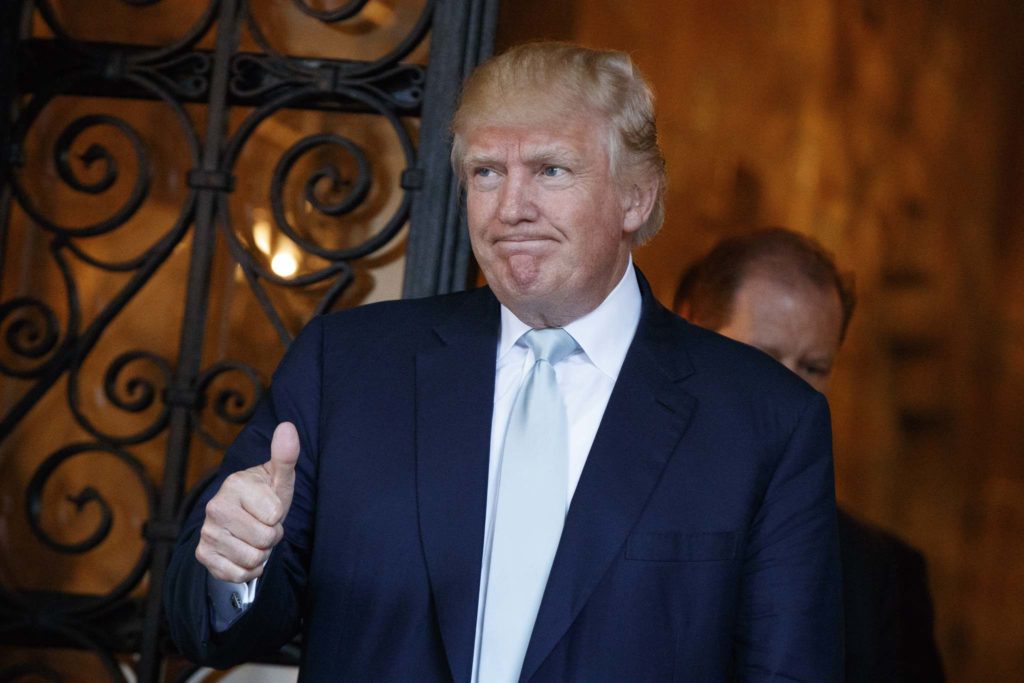
Two preachers who teach that God will make the faithful rich are among the religious leaders chosen to offer prayers at President-elect Donald Trump‘s swearing-in, the inaugural committee said Wednesday. Prosperity gospel preachers Paula White, a friend of Trump’s, and Bishop Wayne T. Jackson, whose Detroit church hosted the Republican in September, will be among six faith leaders selected to participate in the Jan. 20 inauguration. It will be the first time preachers who spread the prosperity gospel will be included in the ceremony. While the faith movement is widely popular, many Christians consider it heretical. Ministers in the tradition often hold up their own wealth as evidence their teachings work. Trump had campaigned in part on his record as a wealthy real estate developer and businessman. The Senate Finance Committee had investigated White and five other prosperity preachers over their spending, but the inquiry ended in 2011 with no penalty for the televangelists. White said in a statement that she will pray to God at the inaugural “that He would richly bless our extraordinary home, the United States of America.” Anthony Pinn, a Rice University religious studies professor, described the prosperity gospel “as a way to religiously rationalize material acquisition.” He said participating in the inaugural gives the preachers a new kind of prominence. “You’ve got millions of people who will see them perform,” Pinn said. “There’s a tremendous amount of benefit that goes along with that.” The four other religious leaders included in the inaugural are the Rev. Franklin Graham, son of the evangelist Billy Graham; Roman Catholic Cardinal Timothy Dolan of New York; the Rev. Samuel Rodriguez, head of the National Hispanic Christian Leadership Conference, an evangelical group; and the Rabbi Marvin Hier, founder of the Simon Wiesenthal Center, which conducts education about the Holocaust and speaks out against anti-Semitism and bias. The Wiesenthal Center had previously criticized Trump, accusing him of casting suspicion on all Muslims in his remarks on terrorism. Hier said in a phone interview Wednesday that while he would continue to speak out against bigotry, he supports Trump’s approach to Israel. “I’m not in the camp of those who say we are now into the dark ages. I think the opposite – that America’s best years are ahead of it,” Hier said. Graham, who rallied Christian voters around the country this year over the issue of appointees to the U.S. Supreme Court, has credited God for Trump’s win over Hillary Clinton. Rodriguez, who had criticized Trump for his promises to deport millions of people in the country illegally, said Wednesday, “I have enjoyed getting to know President-elect Trump and his team.” Rodriguez called participating in the inaugural “a patriotic honor” and “a sacred duty.” Dolan said in a statement he will be reading from Scripture at the inaugural and will ask God to “inspire and guide our new president.” Republished with permission of the Associated Press.
Mike Pence’s critical role: Donald Trump’s emissary to evangelicals
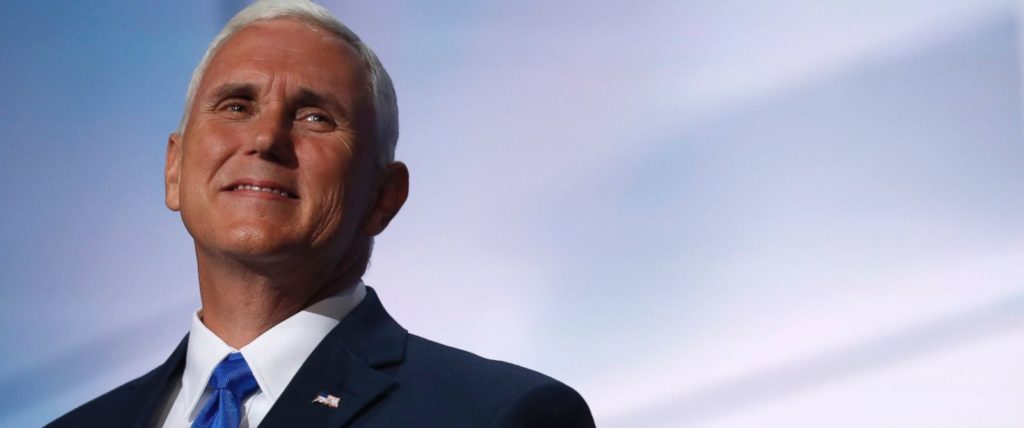
Mike Pence musters all of his Midwestern earnestness as he describes Donald Trump as “a man of faith.” He says the Republican nominee is “a man I’ve prayed with and gotten to know on a personal level.” The description, in an interview with The Associated Press, stands in sharp relief to Trump’s public profile over much of his career: a twice-divorced former playboy who has boasted of his sexual exploits, flaunted his wealth, used crass insults and made sweeping generalizations about whole races. Getting tens of millions of white evangelicals to accept Pence’s portrait of Trump is critical to Republican hopes for capturing the White House. It’s not a question of whether Trump will win more of the white evangelical vote than rival Hillary Clinton. He will. But Trump needs to win that vote by overwhelming margins and with a high turnout. Slight changes in loyalty could decide the outcomes in critical states including North Carolina, Florida, Ohio, Pennsylvania and Virginia. So Pence, the vice presidential nominee, is on a mission across America’s Bible Belt to persuade evangelicals to put their faith in Trump. Raised Catholic but now a protestant evangelical, Pence is the ideal emissary. While Trump has wavered on abortion and same-sex marriage, Pence’s conservative credentials are impeccable. And while Trump has been shaky on religion, Pence’s evangelical beliefs and political persona are deeply intertwined. His signature line: “I’m a Christian, a conservative and a Republican – in that order.” Pence’s language and mannerism are familiar to Christians who call themselves “born again.” The Indiana governor quotes Biblical passages freely and was at ease telling Colorado pastors last week of his college conversion, recalling that he was “overwhelmed with gratitude” that “Jesus had died for all the sins of the world, (and) somewhere in there he died for me.” Republicans hope that gives him credibility as Pence insists Trump is a “good man who will make a great president.” “Evangelicals have to be convinced that you’re at least a good person, even if you aren’t all-in on the lifestyle,” says Tim O’Donnell, a 64-year-old independent in Colorado Springs, Colorado, who came to hear Pence at a recent round-table with church leaders. O’Donnell said he remains unsure about whether can vote for Trump. Most evangelicals, he explained, “aren’t going to vote for Hillary,” but some “just aren’t comfortable voting for Trump either.” White evangelicals cast about a quarter of 2012 ballots. Nearly 8 in 10 of them voted for Republican Mitt Romney over President Barack Obama. A recent AP-Gfk poll showed Trump garnering about 7 in 10 white evangelicals, with the rest split between Clinton and Libertarian Gary Johnson. Trump has attempted some outreach to black evangelicals, an overwhelmingly Democratic group, as well. Trump aides point to their candidate’s strong showing among white evangelicals on his way to the Republican nomination. Trump has backing from many evangelical leaders, including Jerry Falwell Jr., president of Liberty University, the nation’s most high-profile evangelical college. But the Republican nominee has been criticized by others. Some Southern Baptist Convention leaders dislike his opposition to admitting Syrian refugees to the United States. And Pence’s schedule, heavy in recent weeks with visits to churches and social conservative groups, suggests the Trump campaign knows it has work to do. Trump and Pence emphasize the policy promises Republicans typically offer white evangelicals: Supreme Court justices and other federal judges who oppose same-sex marriage and abortion rights, an expansion of “school choice,” and unyielding support for Israel in the Middle East. Trump has added a new incentive, pledging to strike down a federal prohibition on churches engaging in explicit political activity. Trump is a Presbyterian who says he “loves my church” and tells of being influenced by the famous pastor and author Norman Vincent Peale. But he raised eyebrows last year at an Iowa forum year when he said he’d never explicitly sought God’s forgiveness. He’ll only occasionally read scriptural passage from notes – and in January, drew mockery for reading from “Two Corinthians,” rather than “Second Corinthians.” Pence says the distinctions are merely stylistic. “I think it’s fairly obvious to people that we express ourselves differently,” Pence told AP. “Our experiences are different. But I think we come from the same place.” Pence said he believes “people hear (Trump’s) sincerity” and “his commitment to the causes they cherish,” and that will be enough. The Rev. Mark Harris of Charlotte, North Carolina’s First Baptist Church says Pence’s consistency should give evangelicals confidence. Harris, who previously supported Mike Huckabee and then Texas Sen. Ted Cruz before backing Trump, adds another factor: preventing a Clinton victory. “We wish we had somebody that checked all the boxes, who fits the profile,” Harris said. He said evangelicals would like to see someone who can get something done, “even if he “isn’t the greatest spiritual leader.” Still, that hasn’t convinced Michael Farris, a leading national advocate of the home-schooling movement and a Trump critic. Farris welcomed Pence recently to the Home School Legal Defense Association’s national convention in North Carolina. Pence told AP he privately made his case to Farris. But afterward, Farris reaffirmed on his Facebook page that he won’t endorse Trump. Following the presidential debate Monday, Farris ratcheted up his argument. Trump, he posted, “should step aside and let Mike Pence take on Hillary.” Republished with permission of The Associated Press.
Running mate Mike Pence: Conservative but not angry about it
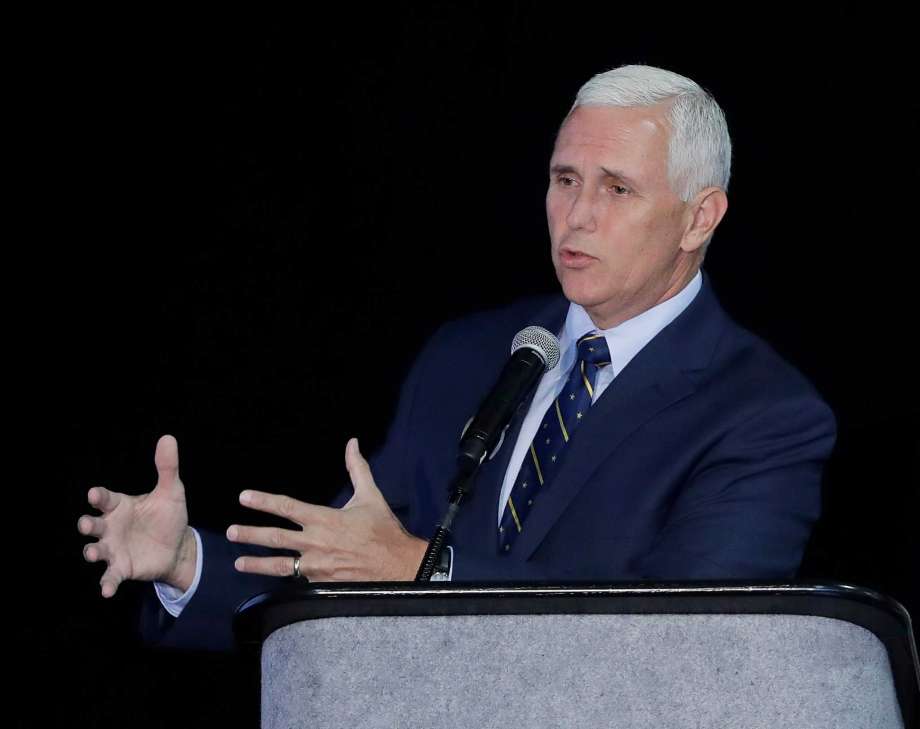
As a conservative talk-radio host in the 1990s, Mike Pence described himself as “Rush Limbaugh on decaf.” Two decades later, Pence is the unflappable conservative governor of Indiana who’s being plucked by Republican presidential contender Donald Trump as his running mate. Where Trump is impulsive, Pence is cool-headed. Where Trump makes conservatives suspicious, Pence has credibility. And where Trump struggles to draw evangelical Christians, Pence is well-regarded by them. A favorite quote highlights how Pence might smooth some of the sharp corners of the Trump campaign and its supporters. “I’m a conservative,” Pence says. “But I’m not angry about it.” The former congressman also is a proven fundraiser with close ties to billionaire industrialists David and Charles Koch and their network of wealthy donors, many of whom have been dismissive of Trump. “One thing you can say about Mike Pence is he’s got a very calm, steady demeanor that in some ways is a little Reaganesque,” said Christine Mathews, a Republican pollster for former Indiana Gov. Mitch Daniels. “He’s a counterbalance to Trump in that way.” Trump announced on Twitter Friday morning that he’s selected Pence as his running mate, capping a wild 24 hours of speculation interrupted by the truck attack in Nice, France, that left scores dead. Not so long ago, their relationship was a little awkward. Trump met privately with Pence before Indiana’s primaries, seeking his endorsement. Instead, Pence, under pressure from national conservatives, tepidly endorsed Trump’s rival, Texas Sen. Ted Cruz, while still lavishing praise on Trump. Trump won that primary. Before the night was over, Cruz had quit the race. For Pence, a former six-term congressman, Trump’s selection offers a return to national politics after his embrace as governor of conservative social issues sidelined his own presidential ambitions. Pence describes himself as “a Christian, a conservative and a Republican, in that order.” In 2015 he provoked a national backlash after signing a law that critics said would have allowed businesses to deny service to gay people for religious reasons. Even some Indiana Republicans have questioned his decisions, suggesting Pence has at times seemed more interested in appealing to national conservatives than doing what’s best for the state. Pence’s support of the state’s religious objections law led to a revolt from the business community, which joined gay rights advocates in successfully pushing for changes to the law. Raised in Columbus, Indiana, in an Irish-Catholic family, Pence revered the Kennedys growing up and has said he voted for Jimmy Carter in 1980. He later identified as an evangelical Christian and was inspired to join the Republican Party by former President Ronald Reagan, whose “happy warrior” rhetorical style Pence has since tried to emulate. After attending Hanover College, Pence graduated from Indiana University Law School in 1986. He met his wife, Karen, around the same time and twice unsuccessfully ran for Congress before taking a job at Indiana Policy Review, a conservative think-tank. In a 1991 essay titled “Confessions of a Negative Campaigner,” Pence swore off harsh political tactics he used in “one of the most divisive and negative campaigns in Indiana’s modern congressional history” while calling for “basic human decency.” “That means your First Amendment rights end at the tip of your opponent’s nose — even in the matter of political rhetoric,” Pence wrote, though he backtracked in the face of a difficult re-election campaign in Indiana. In Congress, Pence sponsored a few bills that became law as amendments in other legislation. But he built a national following among conservatives for his willingness to buck his own party after opposing President George W. Bush‘s Medicare expansion and the No Child Left Behind education overhaul. During the early years of President Barack Obama‘s administration, Pence helped lead the opposition to the Democrat’s agenda. “He has a particularly strong talent, a gift if you will, for being able to stick to principle while making his political opponents or those who disagree with him feel like they are being heard and respected,” said Ryan Streeter, a former Pence aide and George W. Bush staffer who is now a public affairs professor at the University of Texas. Pence’s congressional experience is one trait that Trump, who has never held public office, wanted in a running mate. Marc Short, a former Pence aide and top Koch brothers operative, elaborated: “He’s worked with (House Speaker) Paul Ryan. He’s worked with the team in House leadership. He’s somebody who has deep relationships in the evangelical movement, and he’s somebody who has foreign affairs experience.” Pence’s one term as governor has drawn mixed reaction, and he has managed to alienate moderate Republicans over social issues. Groups threatened boycotts over last year’s religious objections law and late-night television hosts mocked the policy, leading lawmakers to approve changes. This year Pence clashed with the local Catholic archdiocese by opposing the settlement of Syrian refugees in Indianapolis. Pence was also slammed for the planned 2015 launch of “JustIN,” a state-operated news service that was ditched after critics panned it as “Pravda on the Plains.” But he has also presided over Indiana’s improving economy and plummeting unemployment rate, which Republicans credit to the state’s low taxes, limited regulation and pro-business climate. Republished with permission of the Associated Press.
Mike Rogers: We must support Israel
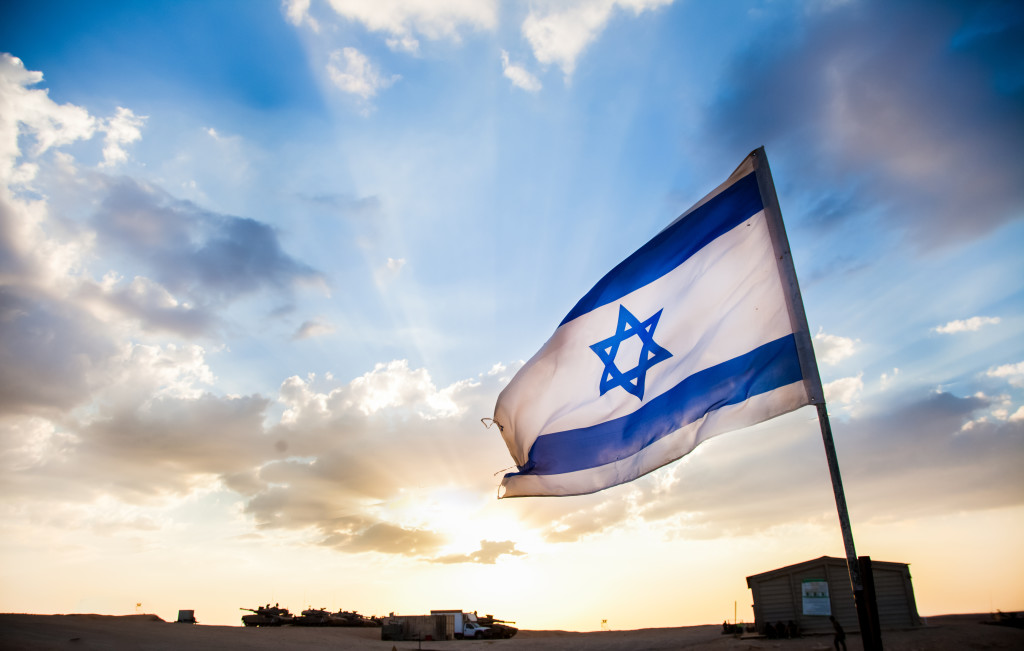
As both an American and a Christian, I believe in defending freedom – especially when it comes to Israel. It is critical the U.S. stands up for Israel, supporting our greatest ally in the conflicted Middle East. Israel’s national security should be a top concern since we are linked to them culturally, politically and historically. The Obama Administration’s relationship with Israel over the past seven years has been strained close to the breaking point. President Obama has neglected Israel and left them without many of the resources they need. This is evident by Prime Minister Benjamin Netanyahu canceling his trip to the U.S. earlier this month. Rather than President Obama’s position of apologizing for American values, I believe we should actively stand strong with Israel and protect her interests. Those interests are especially in jeopardy because of Obama’s highly questionable deal with Iran. When talking to folks across East Alabama, the importance of Israel is one issue I consistently hear about for religious, historic and defense-related reasons. I am working hard to make sure that this important issue remains a priority in Washington. As Chairman of the House Armed Services Strategic Forces subcommittee, I have the great honor to directly work with Israel on their defense capabilities. This subcommittee amongst other things oversees the U.S. Missile Defense Agency, which leads our cooperative development efforts, co-production and procurement programs with Israel. For instance, I have worked closely on their Iron Dome short-range rocket defense system. This system serves as one of Israel’s main defenses against hostile rocket and mortar attacks along with several other missile systems. I am also proud to note that Alabama will take part in helping protect Israel as production of Iron Dome parts will take place in our great state. Earlier this week, I was given the opportunity to speak on two panels at the AIPAC Policy Conference—the largest conference for policy minds and Members of Congress to discuss ideas solely focused on improving relations between the United States and Israel. The focus of my remarks at the conference centered on U.S.-Israel missile defense cooperation and that our strong relationship with Israel should never be in question. • • • Mike Rogers is a member of U.S. Congress representing Alabama’s 3rd Congressional District.
Pope on Donald Trump: Anyone who wants border walls isn’t Christian

Asked about Donald Trump‘s views on immigration, Pope Francis said Thursday that anyone who wants to build a wall along the U.S.-Mexican border isn’t Christian. Trump, a leading U.S. Republican presidential candidate, has promised to build a wall along the Mexican border from Texas to California and expel 11 million people who are in the country illegally if elected president. The Pope’s comments en route home from Mexico came hours after he prayed at the Mexico-U.S. border for people who died trying to reach the United States. “A person who thinks only about building walls, wherever they may be, and not building bridges, is not Christian,” Francis said. “This is not in the Gospel.” Not having heard Trump’s border plans independently, Francis said he’d “give him the benefit of the doubt.” But he added: “I’d just say that this man is not Christian if he said it this way.” Texas Sen. Ted Cruz, another Republican presidential contender, has also supported building a border wall, and joked that he will make Trump pay for it. Trump, a Presbyterian, last week criticized Francis’ plans to pray at the border. He said the move was ill-informed and showed Francis to be a political figure being exploited by the Mexican government. “I don’t think he understands the danger of the open border that we have with Mexico,” Trump said in an interview with Fox News. “I think Mexico got him to do it because they want to keep the border just the way it is. They’re making a fortune, and we’re losing.” Asked if he felt he was being used as a pawn of Mexico, Francis said he didn’t know. “I leave that judgment to you, the people.” But he seemed quite pleased to hear that Trump had called him a “political” figure, noting that Aristotle had described the human being as a “political animal.” Republished with permission of the Associated Press.
6 Republican 2016 hopefuls woo faithful at Texas megachurch
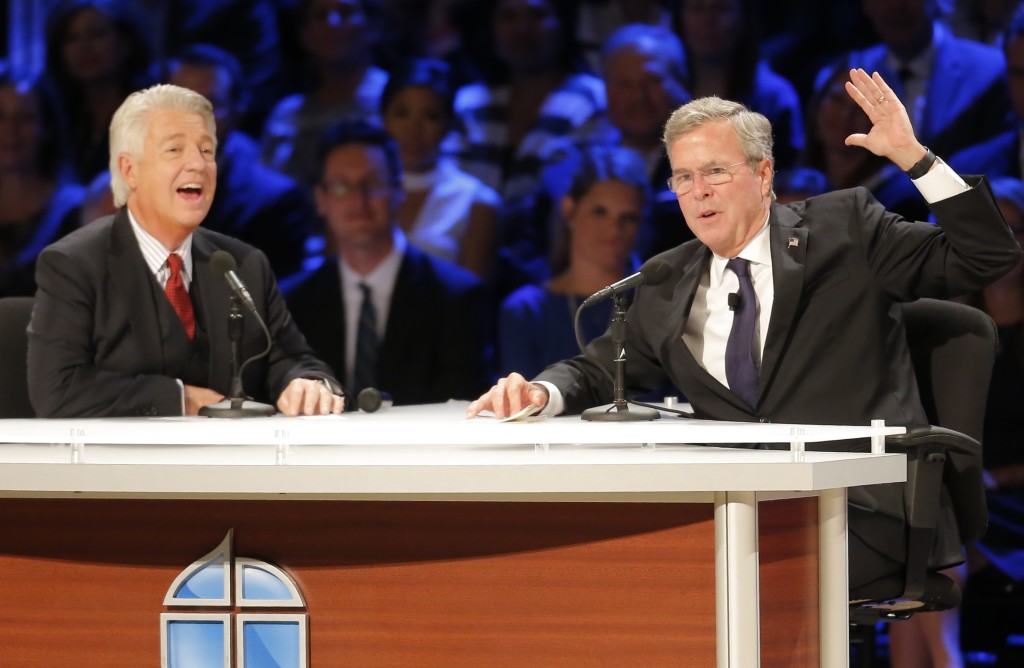
A half-dozen Republican presidential hopefuls worked to woo thousands of evangelicals at a Texas megachurch in suburban Dallas on Sunday, declaring their unwavering support for “religious liberty” even after the U.S. Supreme Court legalized gay marriage and their defense of life in abortion cases and beyond. Some of those making personal appeals – Sen. Ted Cruz, retired neurosurgeon Ben Carson, former Sen. Rick Santorum of Pennsylvania and former Arkansas Gov. Mike Huckabee – are already darlings of Christian conservatives. Former Florida Gov. Jeb Bush and ex Hewlett-Packard CEO Carly Fiorina, meanwhile, might like to be. But the four-plus-hour event before what organizers said was a crowd of 7,000 at the Prestonwood Baptist Church in Plano underscored the importance of the religious right, as well as the potentially pivotal role Texas’ earlier-than-usual primary could play in the 2016 race. Prestonwood claims nearly 40,000 members over multiple Dallas-area campuses. “I’m trying to separate church and politics, but Hillary Clinton said people of faith, ‘Just have to get over it,’” Bush said. “That’s just wrong.” Not attending was GOP front-runner Donald Trump. “Everyone was invited to come but we believe the right people are in the room today,” said Pastor Jack Graham, who interviewed all the candidates about the importance of faith in their lives. He identified those gathered as evangelicals whom he called “Christians who believe the Bible.” Santorum subsequently declared himself an “evangelical Catholic.” Responding to questions about his church’s nonprofit status perhaps being violated because the event was political, Graham said that Democratic presidential hopefuls were also invited — but didn’t appear. Carson declared, “It’s time for us to bring God back to our country,” bringing the crowd to its feet despite his self-admitted “calm demeanor that people mistake as softness.” “It’s not softness; it’s just the ability to look at things from multiple perspectives without getting angry about it,” Carson clarified, saying God gave him the ability to do so. Cruz said faith in America “was under assault,” prompting some in the sprawling, stadium-style sanctuary to bellow “Yes!” He pointed to the Supreme Court ruling on gay marriage, and to businesses that he said had faced boycotts because they opposed same-sex weddings on religious grounds. “I believe that 2016 is going to be a religious-liberty election,” Cruz said to raucous applause. “As these threats grow darker and darker and darker, they are waking people up here in Texas and all across this country.” Fiorina was more subdued, saying her faith was once “a little abstract” since “I came to think of God as a CEO of a big enterprise. He was in charge, but he couldn’t possibly know every little detail.” But, she told the faithful, she later discovered that “each one of us can have a personal relationship with Jesus Christ.” “God knows what’s going on in our lives,” she said, “and that personal relationship saw me through many hard times.” All candidates decried abortion. But Bush highlighted what he called his record of “defense of life” while governor, reminding the crowd that he intervened in the case of Terri Schiavo, a brain-damaged Florida woman at the center of a protracted court fight over having her feeding tube removed. “I didn’t talk about it,” Bush said. “I got to act.” Grassroots groups in Tea Party-dominated Texas largely have shunned Bush in favor of insurgent candidates like Cruz or Trump, but Bush has courted Christian conservatives at many events across the country organized by the Faith and Freedom Coalition, which also helped put together Sunday’s gathering. Bush spoke last and some streamed for the exits as he took the stage — after sitting through hours of candidates and intermissions featuring gospel music and a choir rendition of “America the Beautiful.” The Plano forum also offered presidential hopefuls a chance to make inroads in Texas, the country’s largest conservative state. Officials moved the presidential primary up from May to March 1, and Texas is now set to be the largest of 13 states voting on “Super Tuesday.” Bush was born in the oil-patch town of Midland, his brother George W. was Texas governor before he was president and his father, George H.W., lives in Houston. Graham declared, “Welcome to Bush country.” Bush smiled and replied, “Is that named after my brother or my dad?” Reprinted with permission of The Associated Press.
Jeb Bush: Stronger ‘Christian voice’ needed in world
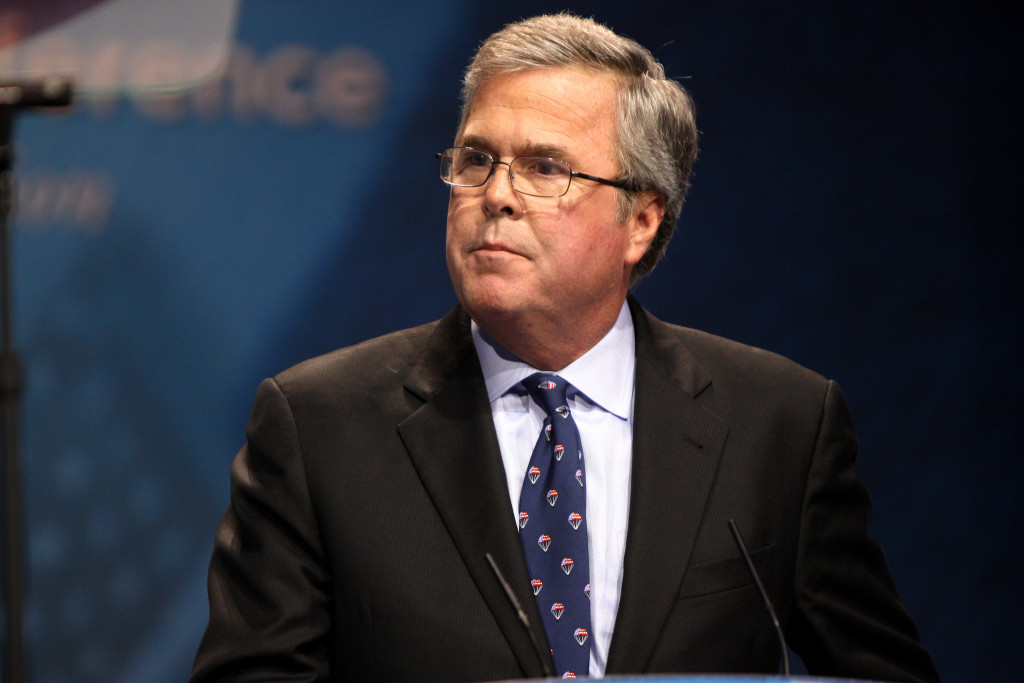
Former Florida Gov. Jeb Bush on Saturday condemned the Obama administration’s use of “coercive federal power” to limit religious freedom as he courted Christian conservatives at a Liberty University commencement ahead of a likely presidential run. Charging that “the Christian voice” isn’t heard enough in the world, the Republican White House prospect lashed out at the Democratic president’s administration for “demanding obedience in complete disregard of religious conscience.” “The present administration is supporting the use of coercive federal power. What should be easy calls in favor of religious freedom have instead become an aggressive stance against it,” Bush told an estimated 34,000 gathered for a graduation ceremony. “Somebody here is being small-minded and intolerant, and it sure isn’t the nuns, ministers, and laymen and women who ask only to live and practice their faith,” he said. Bush was speaking inside a packed football stadium at Liberty University, an institution founded by the late conservative culture warrior, Rev. Jerry Falwell. Bush, a converted Catholic, is preparing to enter a Republican primary contest that includes Republican competitors considered far more popular with the GOP’s religious right. Texas Sen. Ted Cruz formally announced his presidential campaign at Liberty University last month. Former Arkansas Gov. Mike Huckabee, a Baptist pastor, Louisiana Gov. Bobby Jindal and former Texas Gov. Rick Perry have all made their Christian faith a centerpiece of prospective campaigns. All have aggressively condemned Obama’s health care overhaul which requires some religion-affiliated organizations to provide health insurance for employees that includes birth control. The measure is among several examples of what Republicans charge is Obama’s attack on religious liberty. “How strange, in our own time, to hear Christianity spoken of as some sort of backward and oppressive force,” Bush said. “Your generation is bringing the Christian voice to where it always is needed, and sometimes isn’t heard enough.” Despite nagging questions about Bush’s conservative credentials, Liberty University president Jerry Falwell Jr. noted that Bush was considered a hero among social conservatives as Florida governor. He fought to keep Michael Schiavo from removing the feeding tube from his brain-damaged wife, Terri. Leaders in the anti-abortion movement still praise Bush today. And in a reminder that his path to the presidency depends upon moderate and independents perhaps as much as conservatives, Bush concluded his remarks with a message for non-Christians. “In my experience, at least, you generally find the same good instincts, fair-mindedness, and easygoing spirit among Americans of every type – including, of course, the many who belong to no church at all,” he said. Democrats were paying close attention to Bush’s remarks. “Jeb Bush will not win over any Virginia voters with his close-minded pandering to the right wing,” said Morgan Finkelstein, spokesman for the Democratic Party of Virginia. “By supporting the Indiana discrimination law and attacking women’s reproductive rights, Bush places himself firmly at odds with Virginia values.” Republished with permission of the Associated Press.
Ronda Walker: “We are the change this world needs, God through us!”
In 1952 the U.S. Congress passed legislation to set aside a National Day of Prayer, no particular day was designated, individuals were simply encouraged to pray for the nation on a day other than Sunday. During the Reagan administration, the National Day of Prayer was established as the first Thursday in May. Thursday marked the 64th anniversary of the National Day of Prayer. The city and county of Montgomery recognized the day with a community wide prayer breakfast. A crowd of several hundred gathered at the Activity Center on Dexter Avenue in downtown Montgomery for a time of prayer organized by His Vessel Ministry. The crowd included individuals with titles such as governor, justice, mayor, commissioner, and sheriff. But there were also those who enjoy the title of pastor, bishop, priest, Sunday school teacher, choir director, neighbor, and friend. Individuals from across the area, from all walks of life, gathered with one purpose: to lift prayer and praise to God. Pastor Kyle Searcy of the Fresh Anointing House of Worship encouraged the crowd to praise God first and foremost, in every situation and circumstance. Jesus himself modeled the concept of praise by beginning The Model Prayer with words of praise to the hallowed name of God. Prayers were said for our state and nation, for our military, for our firefighters and law enforcement officers, and for our elected officials. The time of worship concluded with Alabama Gov. Robert Bentley, Montgomery County Commission Chairman Elton Dean, and Montgomery Mayor Todd Strange reading the first three chapters of Genesis to start a reading of the Bible that will continue the next three days at the Capitol. God is great, greatly to be praised and that was evident at the Prayer Breakfast. But will it be evident tomorrow? As we awaken and are immediately bombarded with negativity from our television, radio, and everyday conversations will we remember the true source of peace and power? Or will we continue to look to the world for answers. If only we had better leadership. If only we had more money. If only our schools were better. If only we didn’t have crime. If only there were no drugs, poverty, homelessness. If only. But what does God say? He tells us that in this world we will always have tribulation, but he has overcome the world. He doesn’t waste his time wishing if only, instead he looks to the Christians for the change this world needs. In Chronicles, God says, “If my people, who are called by my name, will humble themselves and pray and seek my face and turn from their wicked ways, then I will hear from heaven, and I will forgive their sin and will heal their land.” God’s people are the answer, but too often we allow ourselves to become the problem. Instead of shaking our fists wishing others would change, we must get on our faces in daily prayer and praise. We are the remnant: We are the change this world needs, God through us! Ronda M. Walker is a Montgomery County commissioner.
Here’s an idea: Get the government out of marriage all together

With the recent challenge to the Alabama law defining marriage between a man and a woman, and judicial actions throughout the nation that threaten other states’ laws on marriage, there has been a lot of discussion about same-sex marriage in recent days. This has me thinking there has to be a solution that doesn’t prolong this fight for years to come. The question most talked about is “Can states constitutionally define marriage without denying due process to same-sex couples?” I’d like to pose another question: “Why is the government in the marriage business anyway?” Two thoughts shape my ultimate conclusion that the current fight to redefine marriage is based on a dated concept that the government should even be involved in marriages. First, I agree with the fundamental principle that marriage is a covenant based on one’s faith or religion. Which is why I believe that if a same-sex couple can find a church, minister or clergyman to officiate a service and recognize their unions as a marriage, who is to say it’s not. Christians from different denominations are split on the issue but since when is the government the arbitrator for matters of faith? The government has no business in religious matters — either forcing mandates on them, such as requiring religious schools or hospitals to provide services they’re fundamentally opposed to — or defining them, such as in the case of marriage. In the fight for marriage equality I think we need to establish what it is couples are really fighting over. You can’t change the hearts and minds of those who don’t support your decision to make a lifelong commitment to one another by law. Voters and legislatures throughout the nation have passed marriage laws. I don’t believe these actions were fueled by hate or fear, as many proponents of same-sex marriage will tell you. I believe that this subject is so complex the reasons that range from religious beliefs or tradition to personal preference. In 2008, I supported and voted for the ban on same-sex marriages in the state of Florida based on religious beliefs. The amendment passed with almost 62 percent of the vote. Are 62 percent of Floridians full of hate? No. Am I? No. Statistics are showing that time and social integration of what has, up until recent decades, been considered non-traditional lifestyles have changed public perception of same-sex relationships. Yet the laws continue to be pushed for a ban on marriages. Taking the marriage debate off the table, I believe, would go even further to healing what is a fractured nation. Acknowledging you can’t change hearts and minds by law, what can you change by law? We can determine what rights and obligations the government currently has related to marriage and transition from the use of the word marriage to calling these unions what they are — which is a very specific type of legal contract. This particular contract has complicated implications on tax liability, assumed risks for decision making, emergency notifications and access, and much more, I realize. But maybe in starting over we can even look at the basics of what is covered and why and have a fresh start. Any two consenting adults can enter into a contract at any other time, so let’s remove the barriers to this particular contract and allow people to live their lives. In summary: Have the government recognize legal contracts for all couples the same way and churches recognize marriages. Practice some good old-fashioned common sense and common courtesy and carry on. Let’s focus on building stronger communities together regardless of sexual orientation. Let us take one more thing from the government and return it to the people and the church. This column appeared first on AL.com. Apryl Marie Fogel is a new Alabama resident who works as a conservative political activist.
