
Mike Bloomberg struggles to respond to politics of #MeToo era
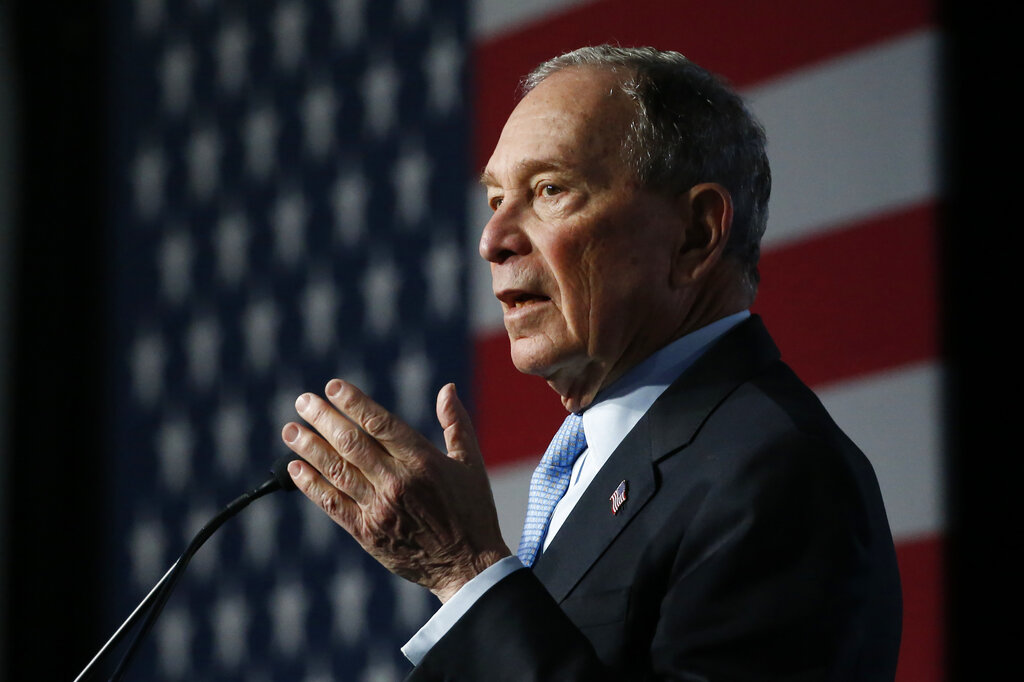
Mike Bloomberg was caught flat-footed during much of Wednesday night’s debate.
Senate Democrats: Living out ‘If you give a mouse a cookie’

Since the day President Donald Trump won the election, Democrats have openly flaunted the fact they would do everything they could to derail his presidency, his agenda and essentially anything they could related to him. Chants of “Not my president” could be heard on the streets of D.C. throughout the inauguration and haven’t stopped since. They have shown given any opening whatsoever they will do whatever they can to stop progress and to tarnish anyone associated with the President. Even Senate confirmations for critical agencies have sat around for much longer than in previous administrations. And we’ve watched Trump repeatedly be blamed for policies in existence before he took office. His staff has been accosted out in public. His cabinet officials have been personally and professionally vilified. Everything including his wife’s shoes and recovery time from a medical procedure has come under fire. I thought we’d seen it all until the Brett Kavanaugh confirmation hearings began. When Democrats realized they couldn’t stop the appointment based on his merits, they set out to derail his confirmation by attempting to ruin his character. The twists and turns of the last several weeks are going to have ever lasting consequences as Senator Lindsey Graham passionately said, “This is going to destroy the ability of good people to come forward because of this crap.” The number of holes and inconsistencies in Dr. Christine Blasey Ford‘s accusations from the day they came has out raised red flags for even the most casual observer. That said, Senate Democrats called for another hearing to address the concerns, when they got that they then screamed for an FBI investigation. And then they got that, and now they’re saying that it’s still not enough. They want more time. They want more witnesses. They want more. It reminds me of a book I read to my children, “If you give a mouse a cookie.” The fact is this isn’t about the accusations anymore and if you had any doubt about that Senator Cory Booker was so kind as to finally say so yesterday. Enough already looking at the evidence senators have all that they need to vote plus some. As a voter in Alabama, I call on Senator Doug Jones and the others to reject the partisan gamesmanship that has torn apart more than this nomination process and to confirm Kavanaugh. Top four facts for senators to consider: Not only are there no witnesses, the people Ford claimed were there deny such an event. The holes in Ford’s memory. While not remembering specifics of an event from 35 years ago is in itself surprising the number of holes are in fact. Front door questions. Kavanaugh’s history and testimony and that of those who support him. Senate Democrats have done a great disservice to our nation and to women by using the accusations against Kavanaugh as a prop in their political theater. I hope that the backlash is swift and firm not just with the upcoming elections, but also with Kavanaugh being confirmed.
Pivotal GOP senators hit Donald Trump for mocking Brett Kavanaugh accuser
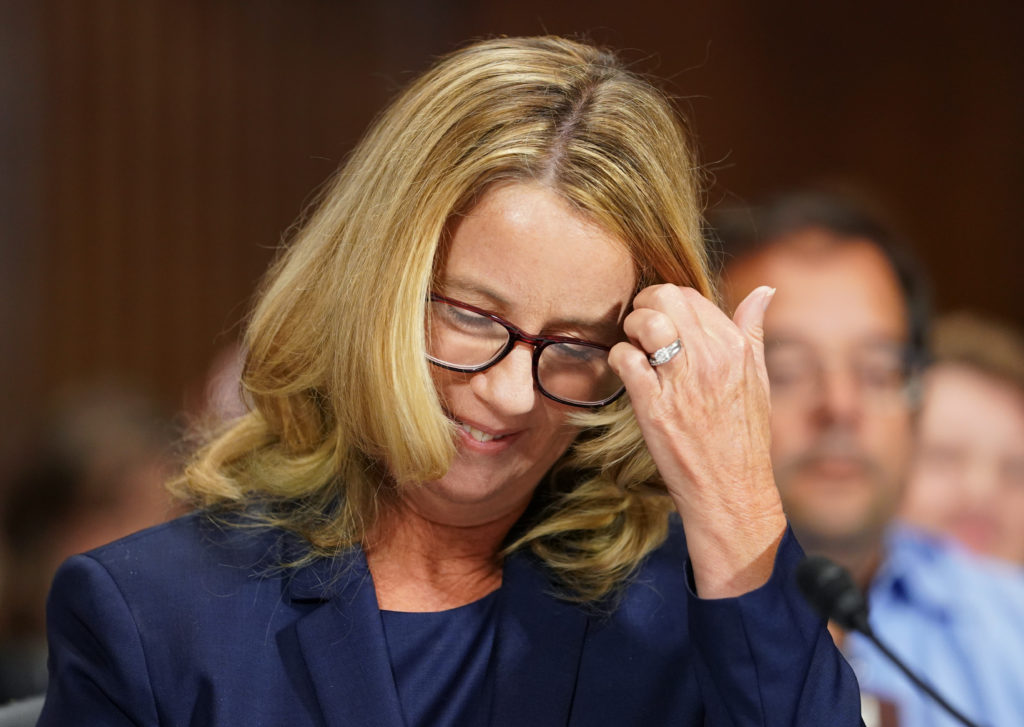
Two wavering Republican senators lambasted President Donald Trump on Wednesday for mocking a woman who has claimed Brett Kavanaugh sexually assaulted her in the 1980s, underscoring the risks of assailing Kavanaugh’s three accusers as Senate support teeters for the Supreme Court nominee. The blowback to Trump’s scoffing at Christine Blasey Ford came as lawmakers awaited results of a revived FBI background check, expected imminently, on accusations of sexual misconduct by Kavanaugh in high school and college. Senate Majority Leader Mitch McConnell, R-Ky., has said the chamber will vote on Kavanaugh later this week, and the conservative jurist’s fate is in the hands of a handful of undecided GOP and Democratic senators. At a political rally in Mississippi Tuesday night, Trump mimicked Ford’s responses at a Senate Judiciary Committee hearing last week at which she recounted Kavanaugh’s alleged attack on her when both were in high school. The audience laughed as Trump, at times inaccurately, recounted what he described as holes in her testimony. “I had one beer — that’s the only thing I remember,” Trump said. On NBC’s “Today” show Wednesday, Sen. Jeff Flake, R-Ariz., said that ridiculing “something this sensitive at a political rally is just not right.” Flake added, “I wish he hadn’t done it. It’s kind of appalling.” Separately, Sen. Susan Collins, R-Maine, told reporters, “The president’s comments were just plain wrong.” Trump’s comments about Ford reflected a growing frustration among some in the White House, and by the president, that her story has not received the same level of scrutiny as Kavanaugh’s, said a person close to the process who was not authorized to speak publicly. As he flew aboard Air Force One to the Mississippi rally, Trump was also enraged by stories in The New York Times about Kavanaugh’s high school and college years and alleging tax avoidance efforts by the president and his family, according to a person familiar with the situation who spoke on the condition of anonymity. White House counselor Kellyanne Conway on Wednesday echoed the president’s newly aggressive approach. She said Ford has “been treated like a Fabergé egg by all of us, beginning with me and the president.” She said Trump was merely “pointing out factual inconsistencies.” “Have a vote on the man,” Conway said of Kavanaugh. “Vote him up or down.” Trump’s criticism of Ford seems to reflect the sentiments of some of his conservative supporters. But it raises questions about how such words will affect five senators — all moderates — whose votes on Kavanaugh will be decisive. Besides Flake and Collins, Republican Lisa Murkowski of Alaska and Democrats Joe Manchin of West Virginia and Heidi Heitkamp of North Dakota have yet to declare their positions on Kavanaugh. Flake has clashed repeatedly with Trump over his behavior and is retiring at year’s end. Collins has criticized Trump at times as well but not as often as Flake. McConnell told reporters Tuesday that “I can tell you with certainty” that the FBI report will be finished and the Senate will vote this week, though he didn’t specify when. Senators are preparing to vote on Kavanaugh as soon as this weekend — and prepared for it to be a close. Vice President Mike Pence, who would be brought in to break a tie, is due to campaign Monday in Texas for both Sen. Ted Cruz and Rep. Pete Sessions, but officials with both campaigns braced for changes. Democrats contend the investigation has not been expanded to sufficient potential witnesses. Senate Minority Leader Chuck Schumer, D-N.Y., has said he wants senators to receive an FBI briefing on its findings at least 24 hours before the chamber takes its first procedural vote on Kavanaugh, but Republicans have given no sign of assenting to that. The FBI has finished an interview with Chris Garrett, a high school friend of Kavanaugh. Ford said she “went out with” Garrett for a few months in high school. Garrett’s lawyer, William Sullivan, said Garrett has voluntarily cooperated with the FBI’s reopened background check, but he declined to comment further. Garrett is at the least fifth person known to have been interviewed since last Friday, when the White House directed the FBI to look again into the allegations. Others interviewed include Mark Judge, who Ford has said was in the bedroom where, she says, a drunken Kavanaugh sexually attacked her at a 1982 high school gathering. Also interviewed were two other people Ford said were present but in a different room: Patrick “P.J.” Smyth and Leland Keyser. Judge, Smyth and Keyser say they don’t recall the incident described by Ford. Kavanaugh has denied the accusations by Ford, by Deborah Ramirez, who says he exposed himself to her during a college party, and by Julie Swetnick, who has alleged she was victimized at a party attended by Kavanaugh and his friends. Besides Trump, Senate Republicans also began to aim credibility questions at Ford. In a letter Tuesday night, the chairman of the Senate Judiciary Committee pressed Ford to turn over more information to support her claim and accused her lawyers of “withholding material evidence.” Sen. Chuck Grassley repeated his request for notes from Ford’s therapy sessions, details of her communications with The Washington Post and any recordings of her taking a lie detector test. The senator said he was requesting the recordings because the committee has obtained a letter that “raises specific concerns” about the reliability of Ford’s polygraph test. In the statement, a man who says he is Ford’s former boyfriend says he saw Ford, a psychology professor, coach a friend on how to be less nervous during a polygraph examination. If true, the claim could contradict testimony Ford gave last week, when she told senators she had never given tips or advice to anyone taking a lie detector test. A representative of Ford’s legal team had no immediate comment. Republished with permission from the Associated Press.
Brett Kavanaugh’s ‘revenge’ theory spotlights past with Clintons
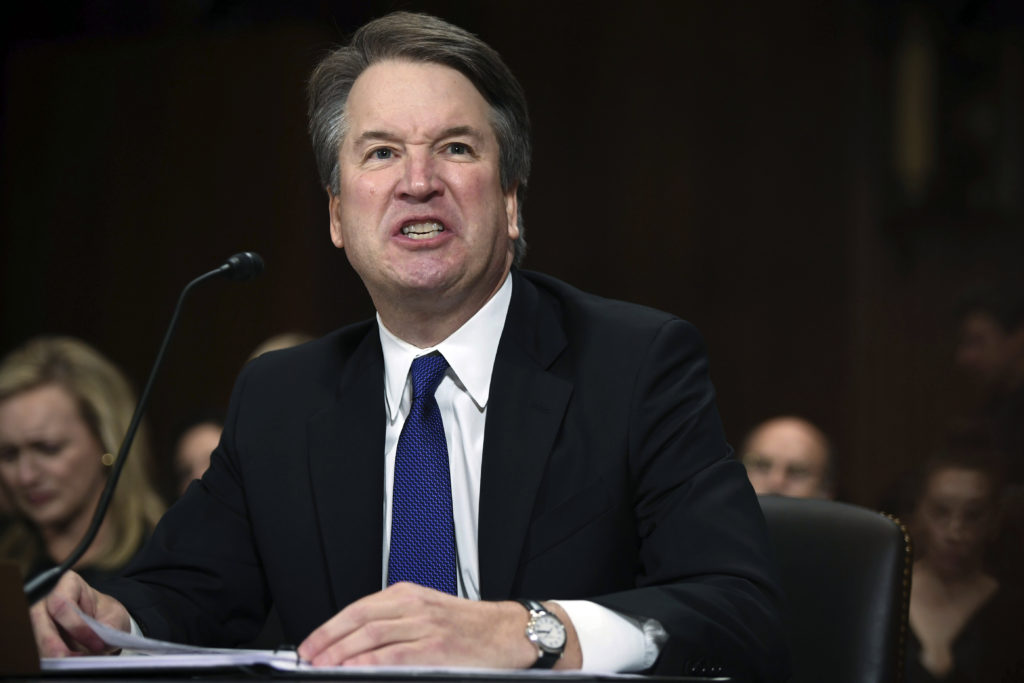
To some, Brett Kavanaugh is clearing his name. To others, he’s veering into conspiracy theory. But in blaming “revenge on behalf of the Clintons” for the sexual misconduct allegations against him, the Supreme Court nominee is drawing new attention to his time on the Kenneth Starr team investigating Bill Clinton. And in doing so, he’s shown he can deliver a Trump-like broadside against detractors even if it casts him in a potentially partisan light. As a young lawyer, Kavanaugh played a key role on Starr’s team investigating sexual misconduct by then-President Bill Clinton, helping to shape one of the most salacious chapters in modern political history. Kavanaugh spent a good part of the mid-1990s jetting back and forth to Little Rock, Arkansas, digging into the Clintons’ background, according to documents that were made public as part of his nomination to the Supreme Court. It was Kavanaugh who pushed Starr to ask Clinton, in graphic detail, about the nature of his sexual relationship with White House intern Monica Lewinsky. In a memo from 1998, Kavanaugh wrote that Starr should ask Clinton whether he engaged in phone sex and specific sexual acts with her. Starr took Kavanaugh’s advice. His resulting report ultimately presented evidence that Clinton, in denying the affair, lied under oath. The report became the grounds for Clinton’s impeachment. Now it’s Kavanaugh who is facing sexual misconduct allegations, including from Christine Blasey Ford, who said he groped her at a party when they were teens and tried to remove her clothes. And it’s Kavanaugh who was pushed to speak publicly in personal, painful detail. In his testimony to the Senate Judiciary Committee, Kavanaugh forcefully denied ever sexually assaulting Ford or anyone else. In an emotional statement, he put the blame for the accusations against him partly on the Clintons. “This whole two-week effort has been a calculated and orchestrated political hit,” Kavanaugh testified. The 53-year-old said it was being fueled by “pent-up anger” over President Donald Trump’s 2016 election victory and outside groups stoking fear about his judicial record. He also said it was revenge on behalf of the Clintons. The “revenge” line has reverberated this week as senators await the results of an FBI background check investigation into sexual misconduct allegations against Kavanaugh. Democrats have called the comment a breathtaking breach of judicial impartiality that should be disqualifying on its own, while Republicans have defended the tenor of his remarks, saying he had every right to be upset. GOP Sen. Orrin Hatch of Utah calls it “righteous anger.” Democratic Sen. Dick Durbin of Illinois, who was in Congress during Clinton’s impeachment, acknowledged Tuesday that Kavanaugh’s “lock-her-up grace note may be appealing to some.” But, he said, “it speaks volumes about this judge and how he would serve.” At an event Tuesday, Hillary Clinton scoffed, “Boy, I’ll tell you, they give us a lot of credit.” Clinton tried to run the logic of Kavanaugh’s claim during an event hosted by The Atlantic. “It would’ve had to have happened 36 years ago,” she said, “and that seems a stretch, even for the vast right-wing conspiracy stories about me.” At last week’s hearing, Democratic senators on the dais were stunned. “Is it your testimony — that the motivation of the courageous woman who sat where you did just a short time ago was revenge on behalf of a left-wing conspiracy or the Clintons?” asked Sen. Richard Blumenthal, D-Conn. Others welcomed Kavanaugh taking a page from the playbook of the man who nominated him, President Donald Trump. It wasn’t quite a “Lock her up!” Trump rally cry, but Kavanaugh’s allies appreciated a hard-hitting defense of his own name and character that name-checked the Clintons. Sen. Lindsey Graham, R-S.C. backed him up. “Would you say you’ve been through hell?” Graham asked the judge. “I’ve been through hell and then some,” Kavanaugh testified. While Kavanaugh’s role in the Starr investigation is a part of the appellate court judge’s resume that may have received short shrift during days of confirmation hearings, plenty of players from that era remain central to today’s confirmation fight. Graham had been a chief House prosecutor during Clinton’s impeachment trial. Other senators on the dais straddle both eras. Clinton has been making media rounds. Starr has recently published a new book about his experience. A former top aide to Clinton’s 2016 presidential campaign, Brian Fallon, leads the outside group Demand Justice that Kavanaugh was likely referring to in his outburst. Fallon said Tuesday that Kavanaugh’s “unhinged, partisan rant last week is just another reason he is not fit for a lifetime appointment on the Supreme Court.” Democrats had tried to portray Kavanaugh as a partisan warrior from the moment he was nominated, but failed to gain much traction with it. But the Clintons’ revenge theory revealed a different side of Kavanaugh that won’t be forgotten if he makes it to the high court. Julian Zelizer, a professor of history at Princeton University, said Kavanaugh “has been fighting the Republican war since the 1990s.” “He revealed a great deal about who he is and what drives him,” he said. Republished with permission from the Associated Press.
‘A scary time’: Donald Trump taps fears of #Metoo run amok
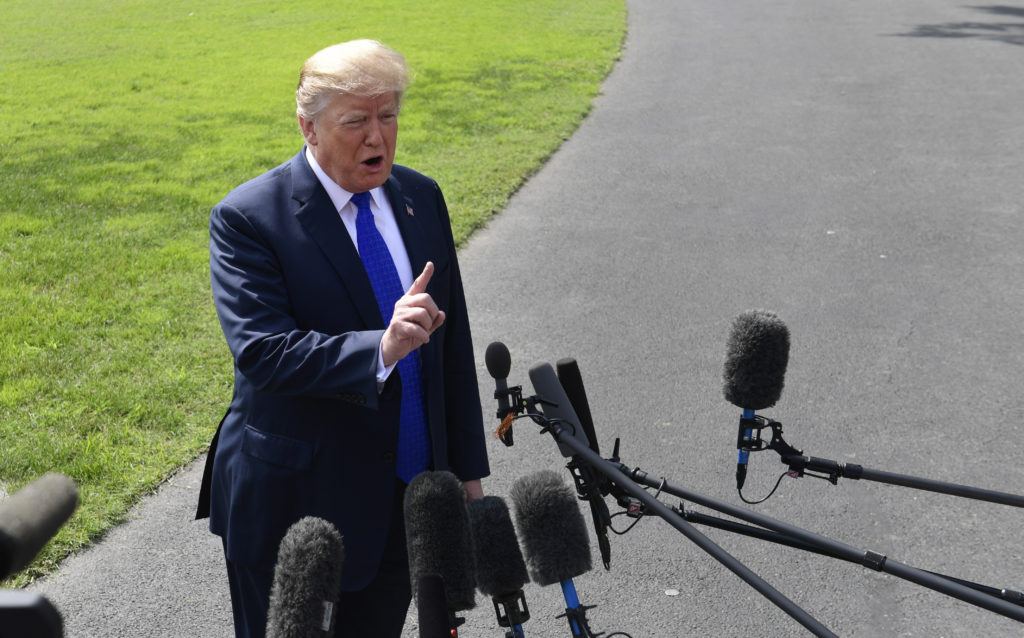
Men of America, be afraid. This could happen to you. That’s the alarm President Donald Trump and his GOP allies are increasingly sounding as they try to defend their Supreme Court nominee from sexual assault allegations. The three-decade-old accusation facing Brett Kavanaugh is not only false, they argue, but an example of the #MeToo movement gone too far in its call to believe the women — and not the men. It’s a message that looks to channel the frustration and anxieties of the party’s bedrock voters — white men — just weeks before an election. This is “a scary time,” Trump said Tuesday. “It’s a very scary time for young men in America when you can be guilty of something that you may not be guilty of. You can be somebody that was perfect your entire life and somebody could accuse you of something … and you’re automatically guilty.” At a campaign rally later in Mississippi, Trump pretended to be a son asking his mother how to respond to such an accusation. “It’s a damn sad situation,” Trump said. Trump also mocked one of Kavanaugh’s accusers, Christine Blasey Ford, for her Senate testimony last week. He imitated Ford responding “I don’t know” and “I don’t remember” to questions about her claim that Kavanaugh sexually assaulted her more than 30 years ago. “And a man’s life is in tatters,” Trump said. Trump’s comments came as Republicans stare down a challenging midterm election and need to motivate their most reliable voters. All signs suggest Democratic women are energized by opposition to Trump’s presidency. The primary season yielded record numbers of female candidates. Kavanaugh’s confirmation battle and the national soul-searching over sexual consent it has provoked threaten only to further motivate liberal female voters, leaving Republicans searching for a counterweight. In his warning, Trump echoed some of his allies. Rep. Steve King of Iowa said “if Kavanaugh is not confirmed, every man is subject to seeing their life’s work and their reputation destroyed by an unsubstantiated allegation.” Sen. John Kennedy of Louisiana declared: “This is no country for creepy old men. Or young men. Or middle-aged men. But this is no country at all.” And Trump’s oldest son, Donald Trump Jr., told the Daily Mail this week: “I’ve got boys, and I’ve got girls. And when I see what’s going on right now, it’s scary,” adding that right now he fears more for his sons. The rising frustration came as the Kavanaugh confirmation process played out before the country, with Kavanaugh and Ford appearing before the Senate Judiciary Committee last week to discuss her accusation. Kavanaugh’s confirmation continues to hang in the balance as the FBI investigates the allegation, which Kavanaugh has forcefully denied. With the midterm elections just weeks away, Republicans risk losing the House and possibly the Senate as they face an energized Democratic party — particularly educated, suburban women and minorities — and a wave of GOP retirements, as well as the president’s sagging approval ratings and the tide of controversy around his White House. Trump’s GOP badly needs to motivate men, especially the white, working-class men who fueled the president’s political rise, experts say. Trump’s electoral strategy has long revolved around the argument that men “are somehow victims or they’re losing out to other people or they’re unfairly persecuted in an age of political correctness,” said Julian Zelizer, a political historian at Princeton University. The November elections are “all about turnout, enthusiasm and motivation,” which Democrats have shown they have. “The question is: How can Trump or the Republicans counterbalance that? And this is the way that can do that,” Zelizer said. “It’s another way to shore up his base.” Indeed, a Quinnipiac University poll released Monday found a gaping gender gap when it comes to support for Kavanaugh’s nomination. The poll found 55 percent of women do not believe the Senate should confirm him, versus just 40 percent of men. And 52 percent of men believe Kavanagh has been treated unfairly, versus just 43 percent of women. “The disparity is stunning,” said Jim Malloy, assistant director of the Quinnipiac University Poll. “You usually don’t see this kind of divide between men and women on seminal, important issues.” Polls show Republicans are more likely to be skeptical of the #MeToo movement, which has spurred women to come forward with their stories of sexual assault and harassment, and to believe it has gone too far. Republicans argue the Kavanaugh debate will drive enthusiasm among men and women. Barry Bennett, a former senior Trump campaign adviser, accused Democrats of “hijacking the #MeToo movement,” and argued the way Kavanaugh has been treated is driving Republican enthusiasm with men and women. “The one thing we’re seeing across is the country is (Republicans) are really energized. They’ve been woken up because of what’s happening to Brett,” he said. “If we play this smart, there maybe will not be a blue wave.” Indeed, the Republican National Committee said it has seen a surge in donations over the last week, with Sunday marking the committee’s largest online fundraising day ever, according to an RNC official. The person, who spoke on condition of anonymity because the person wasn’t authorized to publicly reveal the figures, also said the party had logged 1,000 new small-dollar donors that day who had never previously given to the committee. But Democratic strategist Jim Manley questioned the strategy. “I think they’re playing a dangerous game with this overt play to generate enthusiasm from their white, male base. As far as I can tell they already have those folks,” he said. “My bet is that this will just make Trump and the Republican Party even more radioactive with women voters.” Republished with permission from the Associated Press.
FBI interviews accuser; Yale friend remembers heavy drinker
FBI agents on Sunday interviewed one of the three women who have accused Supreme Court nominee Brett Kavanaugh of sexual misconduct as Republicans and Democrats quarreled over whether the bureau would have enough time and freedom to conduct a thorough investigation before a high-stakes vote on his nomination to the nation’s highest court. The White House insisted it was not “micromanaging” the new one-week review of Kavanaugh’s background but some Democratic lawmakers claimed the White House was keeping investigators from interviewing certain witnesses. President Donald Trump, for his part, tweeted that no matter how much time and discretion the FBI was given, “it will never be enough” for Democrats trying to keep Kavanaugh off the bench. And even as the FBI explored the past allegations that have surfaced against Kavanaugh, another Yale classmate came forward to accuse the federal appellate judge of being untruthful in his testimony to the Senate Judiciary Committee about the extent of his drinking in college. In speaking to FBI agents, Deborah Ramirez detailed her allegation that Kavanaugh exposed himself to her at a party in the early 1980s when they were students at Yale University, according to a person familiar with the matter who was not authorized to publicly discuss details of a confidential investigation. Kavanaugh has denied Ramirez’s allegation. The person familiar with Ramirez’s questioning, who spoke to The Associated Press on condition of anonymity, said she also provided investigators with the names of others who she said could corroborate her account. But Christine Blasey Ford, a California professor who says Kavanaugh sexually assaulted her when they were teenagers, has not been contacted by the FBI since Trump on Friday ordered the agency to take another look at the nominee’s background, according to a member of Ford’s team. Kavanaugh has denied assaulting Ford. In a statement released Sunday, a Yale classmate of Kavanaugh’s said he is “deeply troubled by what has been a blatant mischaracterization by Brett himself of his drinking at Yale.” Charles “Chad” Ludington, who now teaches at North Carolina State University, said he was friend of Kavanaugh’s at Yale and that Kavanaugh was “a frequent drinker, and a heavy drinker.” “On many occasions I heard Brett slur his words and saw him staggering from alcohol consumption, not all of which was beer. When Brett got drunk, he was often belligerent and aggressive,” Ludington said. While saying that youthful drinking should not condemn a person for life, Ludington said he was concerned about Kavanaugh’s statements under oath before the Senate Judiciary Committee. Speaking to the issue of the scope of the FBI’s investigation, White House press secretary Sarah Huckabee Sanders said White House counsel Don McGahn, who is managing Kavanaugh’s nomination, “has allowed the Senate to dictate what these terms look like, and what the scope of the investigation is.” “The White House isn’t intervening. We’re not micromanaging this process. It’s a Senate process. It has been from the beginning, and we’re letting the Senate continue to dictate what the terms look like,” Sanders said. White House counselor Kellyanne Conway said the investigation will be “limited in scope” and “will not be a fishing expedition. The FBI is not tasked to do that.” Senate Judiciary Committee member Jeff Flake, R-Ariz., requested an investigation last Friday — after he and other Republicans on the panel voted along strict party lines in favor of Kavanaugh’s confirmation — as a condition for his own subsequent vote to put Kavanaugh on the Supreme Court. Another committee member, Sen. Lindsey Graham, R-S.C., said Sunday that testimony would be taken from Ramirez and Kavanaugh’s high school friend Mark Judge, who has been named by two of three women accusing Kavanaugh of sexual misconduct. “I think that will be the scope of it. And that should be the scope of it,” Graham said. Sen. Dianne Feinstein of California, the top Democrat on the Judiciary Committee, called on the White House and the FBI to provide the written directive regarding the investigation’s scope. In a letter Sunday, she also asked for updates on any expansion of the original directive. Sen. Susan Collins said Sunday she is confident in the investigation and “that the FBI will follow up on any leads that result from the interviews.” The Maine Republican supports the new FBI investigation and is among a few Republican and Democratic senators who have not announced a position on Kavanaugh. Republicans control 51 seats in the closely divided 100-member Senate and cannot afford to lose more than one vote on confirmation. Collins and Flake spoke throughout the weekend. Senate Republicans discussed the contours of the investigation with the White House late Friday, according to a person familiar with the call who was not authorized to discuss it publicly. Senate Majority Leader Mitch McConnell, R-Ky., had gathered Judiciary Committee Republicans in his office earlier. At that time, the scope of the investigation was requested by Flake, Collins and Sen. Lisa Murkowski of Alaska, said McConnell’s spokesman Don Stewart. Murkowski is not on the committee, but also has not announced how she will vote on Kavanaugh’s confirmation. Republicans later called the White House to discuss the scope of the probe, the person said. McConnell’s office declined to elaborate Sunday on which allegations would be investigated, reiterating only that it would focus on “current credible allegations.” Stewart said the investigation’s scope “was set” by the three GOP senators Friday and “has not changed.” But Democratic Sen. Mazie Hirono of Hawaii, a Judiciary Committee member, doubted how credible the investigation will be given the time limit. “That’s bad enough, but then to limit the FBI as to the scope and who they’re going to question, that – that really – I wanted to use the word farce, but that’s not the kind of investigation that all of us are expecting the FBI to conduct,” she said. Trump initially opposed such an investigation as allegations began mounting but relented and ordered one on Friday. He later said the FBI has “free rein.” “They’re going
Brett Kavanaugh gains key GOP senator ahead of crucial vote
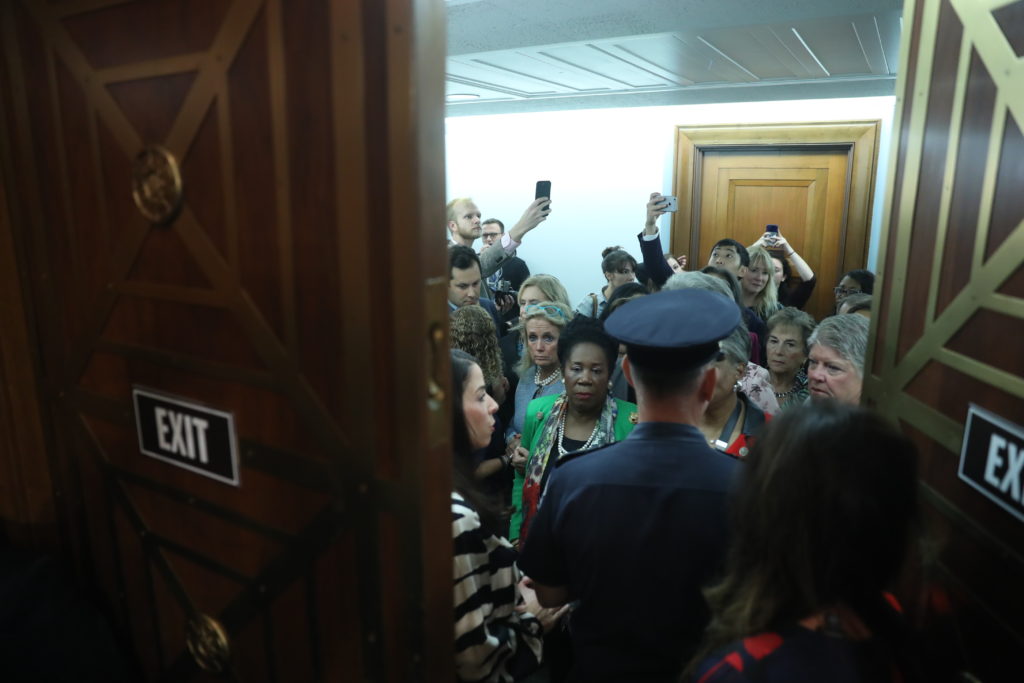
Supreme Court nominee Brett Kavanaugh gained the support of a key Republican senator Friday, virtually ensuring his nomination will advance to the full Senate a day after he adamantly denied sexually assaulting Christine Blasey Ford, who insisted she’s “100 percent” certain he did. Moments before the panel convened, Arizona Sen. Jeff Flake, a member of the committee, announced he would vote to confirm Kavanaugh, who he said was entitled to the “presumption of innocence … absent corroborating evidence.” “While some may argue that a different standard should apply regarding the Senate’s advice and consent responsibilities, I believe that the Constitution’s provisions of fairness and due process apply here as well,” Flake said. “I will vote to confirm Judge Kavanaugh.” The committee scheduled an afternoon vote on whether to recommend Kavanaugh’s nomination to the full Senate. After the vote was scheduled, several Democratic members of the panel walked out. Meanwhile, there were signs the remarkable testimony before the panel — in which Kavanaugh angrily declared his innocence and Ford calmly recounted the moment in which she says he attacked her — had registered negatively with two organizations whose support Kavanaugh had earlier received. The American Bar Association, which previously gave Kavanaugh its highest rating of “well qualified,” asked senators to delay all votes on him until the FBI can do a full background check on the assault claims — something President Donald Trump has refused to order. White House spokeswoman Sarah Huckabee Sanders said to reporters Friday that Kavanaugh has already “been through six separate background investigations by the FBI.” Late Thursday, the magazine of the Jesuit religious order in the United States withdrew its endorsement of Kavanaugh, saying the nomination was no longer in the interests of the country and “should be withdrawn.” “If Senate Republicans proceed with his nomination, they will be prioritizing policy aims over a woman’s report of an assault,” the America magazine editors wrote. “Were he to be confirmed without this allegation being firmly disproved, it would hang over his future decisions on the Supreme Court for decades and further divide the country.” Kavanaugh has repeatedly cited his Roman Catholic faith and his years as a student at the Jesuit-run Georgetown Prep school in Maryland. Meanwhile, former President George W. Bush has been advocating for Kavanaugh with wavering senators in recent days, according to a person familiar with Bush’s outreach who wasn’t authorized to speak publicly. The White House said it was also engaging with wavering GOP senators but provided few details. Trump is publicly standing by his nominee. “His testimony was powerful, honest and riveting,” he tweeted late Thursday. “The Senate must vote!” Thursday’s testimony appeared to have only sharpened the partisan divide over Trump’s nominee. Republicans praised Ford’s bravery in coming forward, but many of them said her account won’t affect their support for Kavanaugh. At the daylong session Thursday, Ford and Kavanaugh both said the event and the public controversy that has erupted 36 years later had altered their lives forever and for the worse — perhaps the only thing they agreed on during a long day of testimony that was a study in contrasts of tone as well as substance. Telling her story in person for the first time, Ford, a California psychology professor, quietly told the nation and the Senate Judiciary Committee her long-held secret of the alleged assault in locked room at a gathering of friends when she was just 15. The memory — and Kavanaugh’s laughter during the act — was “locked” in her brain, she said: “100 percent.” Hours later, Kavanaugh angrily denied it, alternating a loud, defiant tone with near tears as he addressed the Senate Judiciary Committee. “You have replaced ‘advice and consent’ with ‘search and destroy,” he said, referring to the Constitution’s charge to senators’ duties in confirming high officials. Trump’s tweet later used the same “search and destroy” language. Repeatedly Democrats asked Kavanaugh to call for an FBI investigation into the claims. He did not. “I welcome whatever the committee wants to do,” he said. Committee Chairman Chuck Grassley, R-Iowa, has repeatedly declined as well. Republicans are reluctant for several reasons, including the likelihood that further investigations could push a vote past the November elections that may switch Senate control back to the Democrats and make consideration of any Trump nominee more difficult. Across more than 10 hours, the senators heard from only the two witnesses. Ford delivered her testimony with steady, deliberate certitude. She admitted gaps in her memory as she choked back tears and said she “believed he was going to rape me.” Kavanaugh entered the hearing room fuming and ready to fight, as he angrily denied the charges from Ford and other women accusing him of misconduct, barked back at senators and dismissed some questions with a flippant “whatever.” “You may defeat me in the final vote, but you’ll never get me to quit, never,” he said. Trump nominated the conservative jurist in what was supposed to be an election year capstone to the GOP agenda, locking in the court’s majority for years to come. Instead the nomination that Republicans were rushing for a vote now hangs precariously after one of the most emotionally charged hearings Capitol Hill has ever seen. Coming amid a national reckoning over sexual misconduct at the top of powerful institutions, it exposed continued divisions over justice, fairness and who should be believed. And coming weeks before elections, it ensured that debate would play into the fight for control of Congress. Wearing a blue suit as Anita Hill did more two decades ago when she testified about sexual misconduct by Clarence Thomas, Ford described what she says was a harrowing assault in the summer of 1982: How an inebriated Kavanaugh and another teen, Mark Judge, locked her in a room at a house party as Kavanaugh was grinding and groping her. She said he put his hand over her mouth to muffle her screams. “I believed he was going to rape me,” she testified, referring to
1 hearing, 2 witnesses, vastly different takeaways
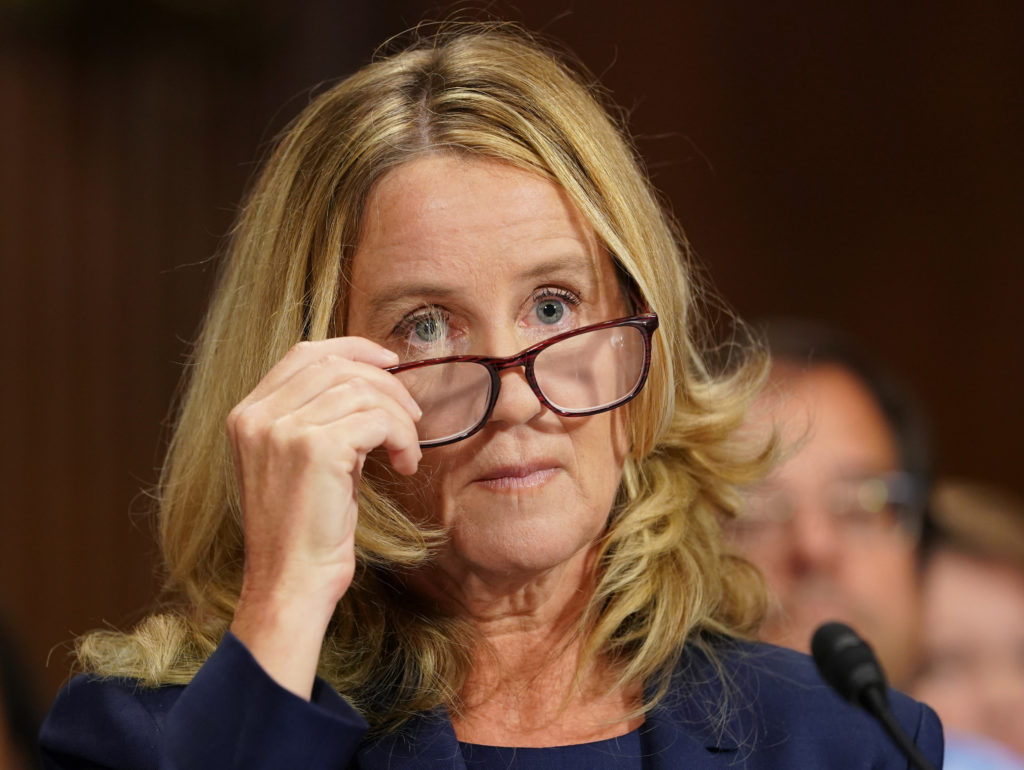
It was one hearing, with just two witnesses. But, in an era of political polarization and yawning cultural divides, Americans came away having heard very different things. Millions of men and women listened to nervous-but-composed college professor Christine Blasey Ford tell the Senate Judiciary Committee on Thursday that she was “100 percent” certain that Supreme Court nominee Brett Kavanaugh sexually assaulted her when they were teenagers, and they lauded her credibility and courage in speaking out. Others saw a woman with a spotty memory who failed to prove Kavanaugh was her abuser, and believed the judge as he repeatedly choked up and vigorously defended himself. “The allegation of misconduct is completely inconsistent with the rest of my life,” he said. Americans followed the hours of testimony from their homes, in their cars, in offices and in classrooms. Wherever they were, though, it seemed most responded through the prism of their own politics, and personal experiences. Few people interviewed by The Associated Press seemed to have had their minds changed by anything they heard. Heather Lake of Omaha, a stay-at-home mother of four and registered Democrat, said she went into the hearings believing Ford, and that the professor’s testimony only solidified her belief. “Just seeing how vulnerable she is, it strikes me how cruel all the attacks on her have been,” said Lake, 38, who was sexually assaulted in her teens. “This is why women keep their sexual assaults to themselves.” But Connie Cook Saunders, a 52-year-old fitness director for a San Diego athletic club who considers herself a moderate Republican, wasn’t swayed by Ford’s appearance. “I personally feel like it’s a witch hunt,” she said. “It’s political. If it happened to her I am sorry, but it doesn’t make sense to bring it up now.” The hearing was to be the culmination of a Supreme Court nomination process that will determine the political bent of the court for decades, and quite likely decide issues such as the legality of abortion and gay marriage in the United States. It took place in a week when “America’s Dad,” Bill Cosby, was declared a sexual predator and sentenced to jail, and at a time when the U.S. president himself has battled multiple accusations of sexual misconduct. The major backdrop was the #MeToo movement, in which women across the country have brought down powerful men they accused of sexually assaulting or harassing them. Ford’s detailed testimony brought many to tears in the wood-paneled hearing room and beyond as she described being locked in a bedroom as a 15-year-old by two drunk boys whom she identified as Kavanaugh and his friend Mark Judge. She said Kavanaugh groped her, tried to take off her clothes and covered her mouth to keep her from screaming. “Both Brett and Mark were drunkenly laughing during the attack,” she said, adding that she eventually escaped to a bathroom. In fact, she said, her most indelible memory was the “uproarious laughter,” the two boys “having fun at my expense.” She was “terrified” to testify, she said, but did so because “I believe it is my civic duty to tell you what happened to me while Brett Kavanaugh and I were in high school.” Kavanaugh began his own testimony on a note of barely contained fury. He labeled Ford’s accusation and two other allegations that have followed as “smears,” ”character assassination” and part of a “calculated and orchestrated political hit” fueled by a hatred of President Donald Trump and funded by left-wing opposition groups. He repeatedly fought to control his tears as he talked about how the allegation has destroyed his family. “The truth is that I have never sexually assaulted anyone — not in high school, not in college, not ever,” he said. His supporters focused on what Ford could not remember. How is it possible, they wondered, that she didn’t recall the exact address where the assault took place or how she got to and from the house? Mary Ann Almeida, who said she was raped as a 14-year-old, thought Ford came across as untruthful. “When you’re a true victim, you remember where it happened,” said Almeida, now 60, who watched the hearing from her home in southeastern Kentucky. “You know who was in the room, you also remember every single detail.” But it was Kavanaugh whom Jalon Alexander, a 25-year-old Democrat and law student at the University of Pittsburgh, did not find credible. “The more I listened to him, there was nothing he said that made me doubt Dr. Ford’s accusation,” Alexander said. “What makes him so special that we’re willing to undermine the integrity and legitimacy of the court?” In San Diego, Republican strategist Jennifer Jacobs was struck by Ford’s sincerity. But she also was moved by Kavanaugh. “Clearly this is a passionate man,” she said. “He’s not some crazed barbarian.” She added her “heart was breaking” for his wife and children. But Jen Bradshaw in Quincy, Illinois, who was texting with a girlfriend as they watched Kavanaugh’s opening statement, was shocked at his angry demeanor. “Can you imagine if Dr. Ford had shown even a hint of that much anger or openly cried?” said the 36-year-old mother of two. She also wondered: “If this is him sober and angry, what is he like after one too many beers?” At Yale, Kavanaugh’s alma mater, student Samantha Peltz was troubled by what she called the partisan nature of the judge’s remarks. “It’s quite surprising to see him behave in such a partisan manner as someone being considered to be elevated to the highest court in the land,” she said. Another viewer, sympathetic to Kavanaugh, saw the hearing as an attack on a successful white man. “He’s on trial for being basically a white conservative who went to an elite school,” said Mike Glasoe of West Fargo, North Dakota, who considers himself independent politically and said he has voted for both Democrats and Republicans. But in Raleigh, North Carolina, artist and retired state employee Penney De Pas called it
Doug Jones says he will vote ‘no’ on Brett Kavanaugh
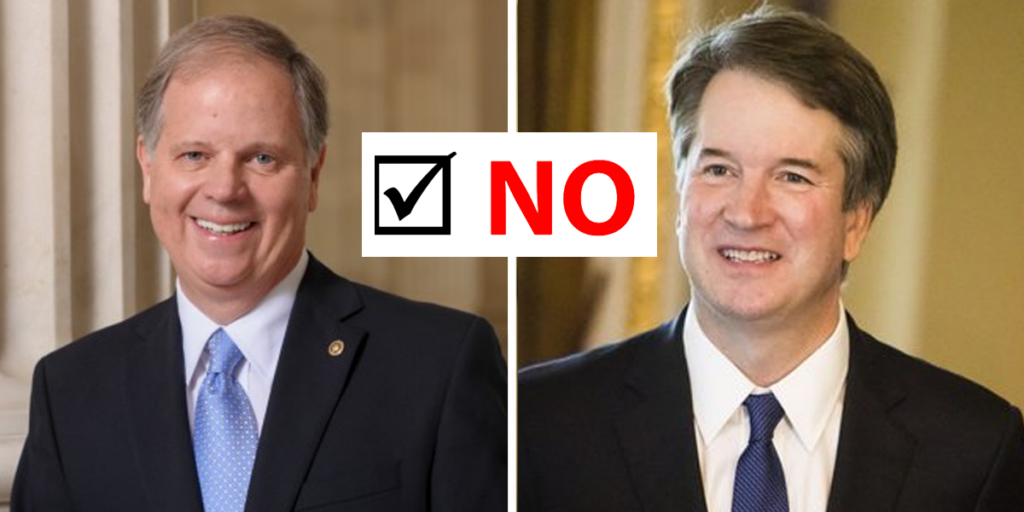
U.S. Sen. Doug Jones confirmed in a statement Thursday night he will vote against the nomination of Brett Kavanaugh to the U.S. Supreme Court Jones called the testimony of Kavanaugh’s accuser, Dr. Christine Blasey Ford, “credible” in his explanation. “The Kavanaugh nomination process has been flawed from the beginning and incomplete at the end. Dr. Ford was credible and courageous and I am concerned about the message our vote will be sending to our sons and daughters, as well as victims of sexual assault. I will be voting no,” Jones said. Jones further explained his reasoning on Twitter, saying he was going to be on the “right side of history:” I have called for: —Complete disclosure of all documents —Subpoena Mark Judge —Postpone the vote Dr. Ford was credible & courageous. What message will we send to our daughters & sons, let alone sexual assault victims? The message I will send is this—I vote no. #RightSideofHistory I have called for: —Complete disclosure of all documents —Subpoena Mark Judge —Postpone the vote Dr. Ford was credible & courageous. What message will we send to our daughters & sons, let alone sexual assault victims? The message I will send is this—I vote no. #RightSideofHistory — Doug Jones (@DougJones) September 28, 2018 News broke Wednesday before the hearing that Jones, despite remaining publicly undecided, was expected “to be firmly in the ‘no’ column” in terms of whether or not he’d vote in favor of confirming Kavanaugh by Democratic Leadership. Last week Jones tweeted that the Senate ought to “hit the pause button” on vote to confirm Kavanaugh following accusations that Kavanaugh sexually assaulting a women during their teenage years. Ford, a psychology professor in Northern California, said Kavanaugh tried to “attack [her]and remove [her] clothing” during a party when both of them were high school students in Maryland in the early 80s. Jones tweeted, “We cannot rush to move forward under this cloud.” Since that time two more women have made accusations against Kavanaugh. Kavanaugh continues to call the allegations “completely false.”
Angry Brett Kavanaugh denies Christine Blasey Ford accusation, sees ‘disgrace’
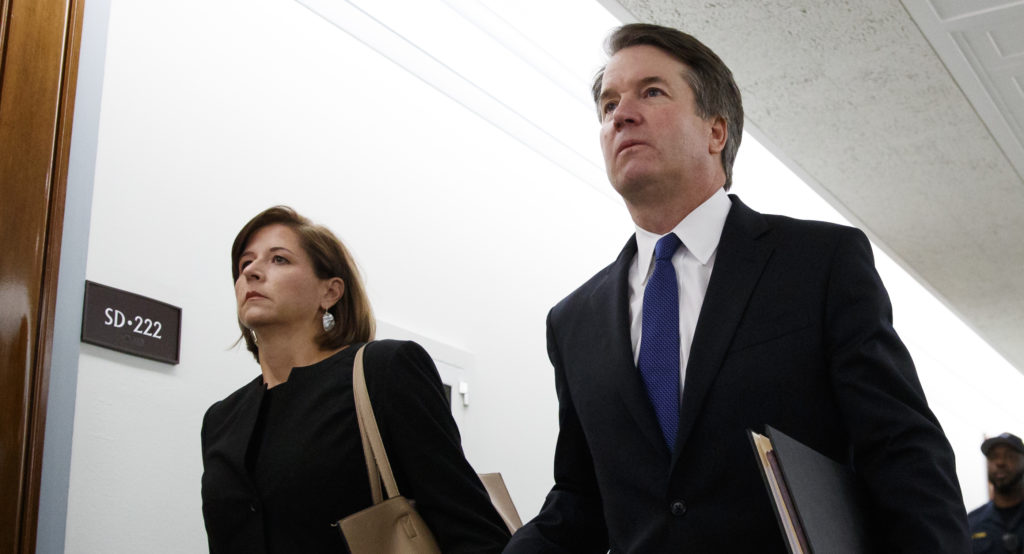
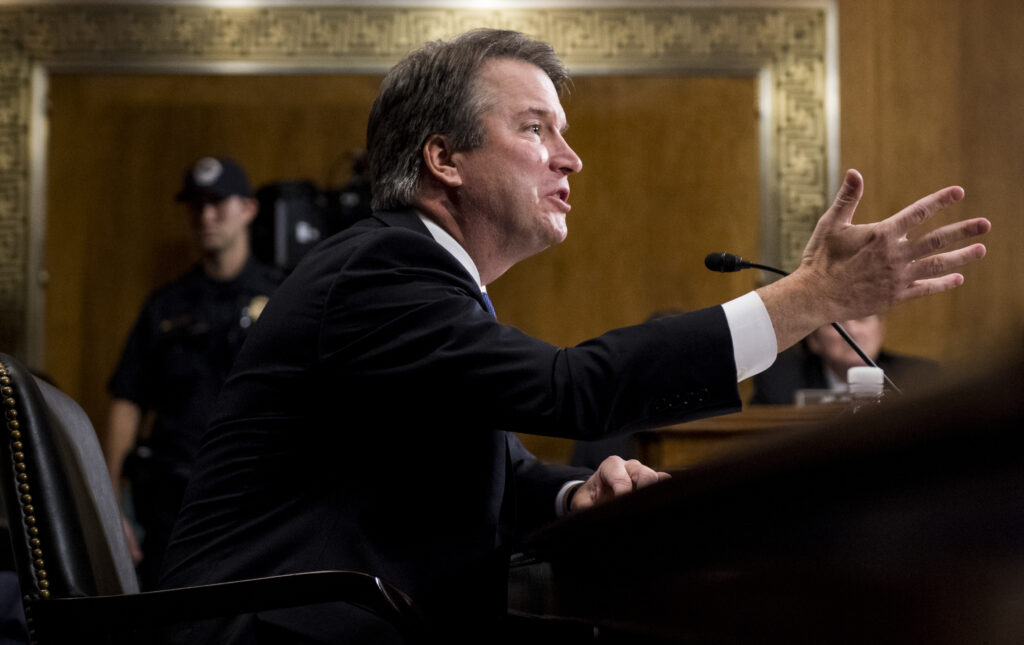
Emotionally battling to rescue his Supreme Court nomination, a beleaguered Brett Kavanaugh fought back Thursday against allegations that he’d sexually assaulted Christine Blasey Ford when both were high school students, telling Congress that allegations by her and others have “totally and permanently destroyed” his family and his reputation. In a loud voice, the conservative jurist told the Senate Judiciary Committee that his confirmation process had become “a national disgrace.” “You have replaced ‘advice and consent’ with ‘search and destroy,’” he said. Kavanaugh denied Ford’s allegation that he’d trapped her on a bed in a locked room during a gathering of friends when they were teenagers, saying, “I have never done this to her or to anyone.” With his support among Senate Republicans in question, he also said he would not step side. “You may defeat me in the final vote, but you’ll never get me to quit, never.” Behind him in the audience, his wife, Ashley, sat looking stricken. He himself was close to tears when he mentioned his mother and daughter and, later, his father. Republished with permission from the Associated Press.
High drama as Brett Kavanaugh, Christine Blasey Ford hearing underway
In a clash along a polarized nation’s political and cultural fault lines, the Senate Judiciary Committee began its historic hearing Thursday in which Brett Kavanaugh hoped to salvage his Supreme Court nomination by fending off allegations by Christine Blasey Ford that he’d molested her when both were in high school. Ford sat impassively at the witness table as committee chairman Chuck Grassley of Iowa began his opening remarks, defending the Republicans’ handling of the confirmation proceedings so far. Kavanaugh and Ford were the only witnesses invited to testify before the panel of 11 Republicans — all men — and 10 Democrats. But the conservative jurist is facing allegations of sexual misconduct from other women as well, forcing Republican leaders to struggle to keep support for him from eroding. The committee was to hear first from Christine Blasey Ford, a California psychology professor who accuses him of attempting to rape her when they were teens. Republicans have derided Ford’s allegation as part of a smear campaign and a Democratic plot to sink Kavanaugh’s nomination. But after more allegations have emerged, some GOP senators have allowed that much is riding on his performance. Even President Donald Trump, who nominated Kavanaugh and fiercely defends him, said he was “open to changing my mind.” “I want to watch, I want to see,” he said at a news conference Wednesday in New York. Kavanaugh, a federal appeals court judge who has long been eyed for the Supreme Court, has repeatedly denied all the allegations, saying he’d never heard of the latest accuser and calling her accusations “ridiculous and from the Twilight Zone.” His teetering grasp on winning confirmation was evident when Sen. Susan Collins, R-Maine, expressed concern, in a private meeting with senators Wednesday, about the third accuser, according to a person with knowledge of the gathering. Republicans control the Senate 51-49 and can lose only one vote for Kavanaugh to prevail if all Democrats vote “no.” Collins is among the few senators who’ve not made clear how they’ll vote. Collins walked into that meeting carrying a copy of Julie Swetnick‘s signed declaration, which included new accusations of sexual misconduct against Kavanaugh and his high school friend Mark Judge. Collins said senators should hear from Judge. After being told Judge has said he doesn’t want to appear before the committee, Collins reminded her colleagues that the Senate has subpoena power, according to a person who was not authorized to discuss the matter publicly and spoke on condition of anonymity. The hearing was the first time the country saw the 51-year-old Ford beyond the grainy photo that has been flashed on television in the 10 days since she came forward with her contention. In testimony released beforehand, she said she was appearing only because she felt it was her duty, was frankly “terrified” and has been the target of vile harassment and even death threats. “It is not my responsibility to determine whether Mr. Kavanaugh deserves to sit on the Supreme Court,” she was to tell the senators. “My responsibility is to tell the truth.” Republicans are pushing to seat Kavanaugh before the November midterms, when Senate control could fall to the Democrats and a replacement Trump nominee could have even greater difficulty. Kavanaugh’s ascendance to the high court could help lock in a conservative majority for a generation, shaping dozens of rulings on abortion, regulation, the environment and more. Republicans also risk rejection by female voters in November if they are seen as not fully respecting women and their allegations. In a sworn statement, Swetnick said she witnessed Kavanaugh “consistently engage in excessive drinking and inappropriate contact of a sexual nature with women in the early 1980s.” Her attorney, Michael Avenatti, who also represents a porn actress who is suing Trump, provided her sworn declaration to the Judiciary panel. Meanwhile, the lawyer for Deborah Ramirez, who says Kavanaugh exposed himself to her at a party when they attended Yale University, raised her profile in a round of television interviews. Moments before committee chairman Grassley gaveled his panel into session, Ramirez tweeted her support for Ford: “They want us to feel alone and isolated but I’m there wrapping my arms around you and I hope you feel the people of this nation wrapping their arms around all of us.” Republicans largely expressed confidence in Kavanaugh, emerging from a closed-door lunch with Vice President Mike Pence Wednesday to say the nominee remained on track for confirmation. Senate Majority Leader Mitch McConnell, R-Ky., has said all week that Republicans will turn to a committee vote on Kavanaugh after the hearing. They hope for a roll call by the full Senate early next week with the aim of getting him on the court as its new term begins. Yet Collins’ unease was not the only suggestions of creeping doubt among Republicans. Asked whether there were signs of Republicans wavering in their support of Kavanaugh in their lunch, Sen. John Thune, the third-ranking Republican, paused briefly before saying “no.” In the hearing, Democrats planned to ask Kavanaugh if he’d be willing to undergo FBI questioning about the various claims — a request Republicans oppose — and press him about his drinking and behavior as a teenager. Questions for Ford were expected to be aimed at giving her a chance to explain herself. Republicans have hired an outside attorney, Phoenix prosecutor Rachel Mitchell, to handle much of their questioning. Thus, they will avoid having their all-male contingent interrogating Ford about the details of what she describes as a harrowing assault. Democratic questioners will include two senators widely seen as potential presidential candidates in 2020: Kamala Harris of California and Cory Booker of New Jersey, who aggressively challenged Kavanaugh during the judge’s earlier confirmation hearing. Ford planned to tell the committee that, one night in the summer of 1982, a drunken Kavanaugh forced her down on a bed, “groped me and tried to take off my clothes,” then clamped his hand over her mouth when she tried to scream before she
Make-or-break Senate hearing day for Brett Kavanaugh, accuser
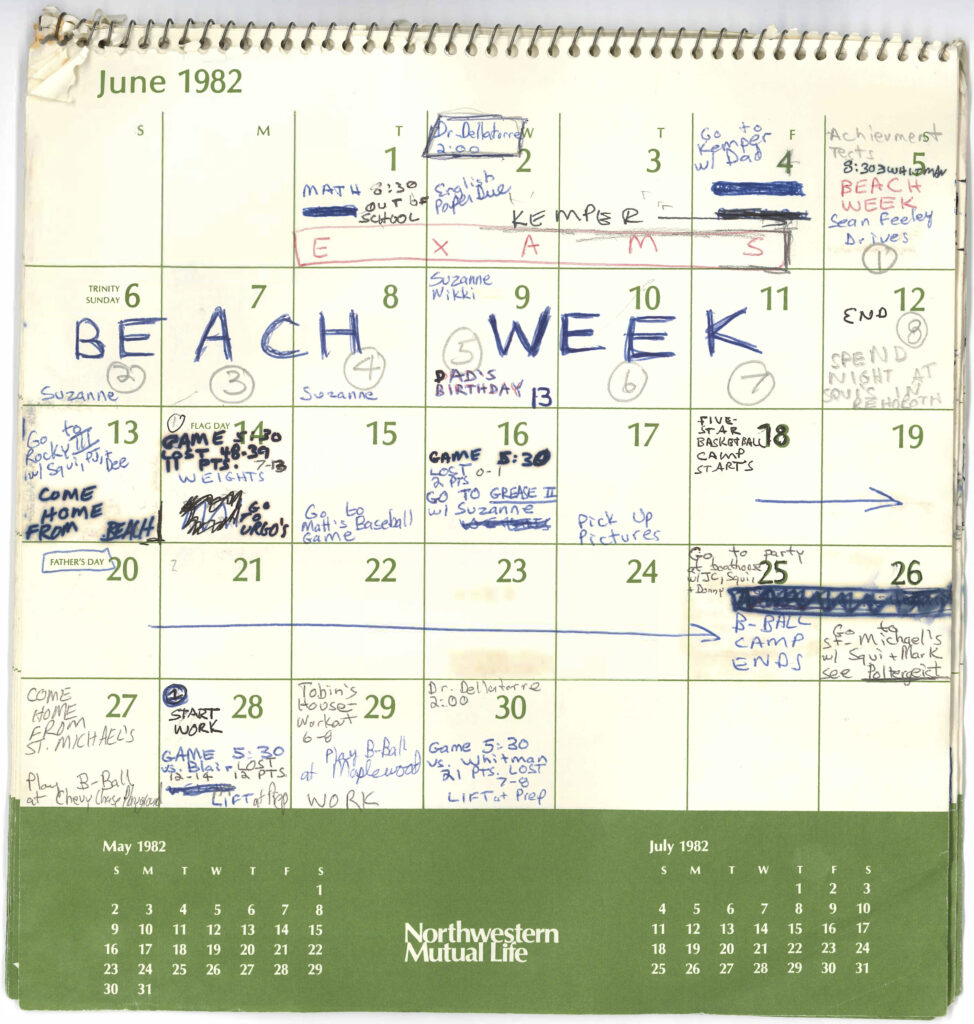
With high drama in the making, Supreme Court nominee Brett Kavanaugh emphatically fended off new accusations of sexual misconduct Wednesday and headed into a charged public Senate hearing that could determine whether Republicans can salvage his nomination and enshrine a high court conservative majority. The Senate Judiciary Committee — 11 Republicans, all men, and 10 Democrats — was to hear from just two witnesses on Thursday: Kavanaugh, a federal appeals court judge who has long been eyed for the Supreme Court, and Christine Blasey Ford, a California psychology professor who accuses him of attempting to rape her when they were teens. Republicans have derided her allegation as part of a smear campaign and a Democratic plot to sink Kavanaugh’s nomination. But after more allegations have emerged, some GOP senators have allowed that much is riding on Kavanaugh’s performance. Even President Donald Trump, who nominated Kavanaugh and fiercely defends him, said he was “open to changing my mind.” “I want to watch, I want to see,” he said at a news conference in New York. Kavanaugh himself has repeatedly denied all the allegations, saying he’d never even heard of the latest accuser and calling her accusations “ridiculous and from the Twilight Zone.” The hearing will be the first time the country sees and hears from the 51-year-old Ford beyond the grainy photo that has been flashed on television in the 10 days since she came forward with her contention. In testimony released in advance of the hearing, she said she was appearing only because she felt it was her duty, was frankly “terrified” and has been the target of vile harassment and even death threats. “It is not my responsibility to determine whether Mr. Kavanaugh deserves to sit on the Supreme Court,” she was to tell the senators. “My responsibility is to tell the truth.” The stakes for both political parties — and the country — are high. Republicans are pushing to seat Kavanaugh before the November midterms, when Senate control could fall to the Democrats and a replacement Trump nominee could have even greater difficulty. Kavanaugh’s ascendance to the high court could help lock in a conservative majority for a generation, shaping dozens of rulings on abortion, regulation, the environment and more. But Republicans also risk rejection by female voters in November if they are seen as not fully respecting women and their allegations. In the hours before the hearing, Republicans were rocked by the new accusation from a third woman, Julie Swetnick. In a sworn statement, she said she witnessed Kavanaugh “consistently engage in excessive drinking and inappropriate contact of a sexual nature with women in the early 1980s.” Her attorney, Michael Avenatti, who also represents a porn actress who is suing Trump, provided her sworn declaration to the Judiciary Committee. Meanwhile, the lawyer for Deborah Ramirez, who says Kavanaugh exposed himself to her at a party when they attended Yale University, raised her profile in a round of television interviews. Transcripts of private interviews with committee investigators, released late Wednesday, show they also asked Kavanaugh about two other previously undisclosed accusations received by Senate offices. One came in an anonymous letter sent to Sen. Cory Gardner‘s office describing an incident in a bar in 1998, when Kavanaugh was working for the independent counsel investigating President Bill Clinton. The other accused Kavanaugh of sexual misconduct in college. Kavanaugh denied them both. Republicans largely expressed confidence in Kavanaugh ahead of the hearing, emerging from a closed-door lunch with Vice President Mike Pence to say the nominee remains on track for confirmation. Senate Majority Leader Mitch McConnell all week has said Republicans will turn to a committee vote on Kavanaugh after the hearing. They hope for a roll call by the full Senate — where they have a scant 51-49 majority — early next week with the aim of getting him on the court as its new term begins. But at least a hint of doubt has crept in. Asked whether there were signs of Republicans wavering in their support of Kavanaugh in their lunch, Sen. John Thune, the third-ranking Republican, paused briefly before saying “no.” In the hearing, Democrats plan to ask Kavanaugh if he’d be willing to undergo FBI questioning about the various claims — a request Republicans oppose— and press him about his drinking and behavior as a teenager. One goal is to emphasize inconsistencies in his statements so far and make him appear nervous, said a Democratic aide who described the plan on condition of anonymity because he wasn’t authorized to discuss it publicly. Questions for Ford will be aimed at giving her a chance to explain herself. That includes describing why it took her so long to publicly discuss the alleged incident and how it’s affected her life, the aide said Ford will testify first at the hearing, which starts at 10 a.m. and at her request is being held in a small, wood-paneled hearing room that seats only a few dozen spectators. Republicans have hired an outside attorney, Phoenix prosecutor Rachel Mitchell, to handle much of their questioning. Thus, they will avoid having their all-male contingent interrogating Ford about the details of what she describes as a harrowing assault. Democratic questioners will include two senators widely seen as potential presidential candidates in 2020: Kamala Harris of California and Cory Booker of New Jersey, who aggressively challenged Kavanaugh during the judge’s earlier confirmation hearing. Ford plans to tell the committee that, one night in the summer of 1982, a drunken Kavanaugh forced her down on a bed, “groped me and tried to take off my clothes,” then clamped his hand over her mouth when she tried to scream before she was able to escape. “I believed he was going to rape me,” she will say, according to her prepared testimony. Kavanaugh is being challenged on multiple fronts by his accusers, former classmates and college friends. They say the good-guy image he projects in public bears little relation to the hard-partying behavior they witnessed when he
