
House committee advances legislation to send parents to jail if their child brings a gun to school

On Wednesday, the House Judiciary Committee voted to advance controversial legislation that would hold parents criminally responsible if their child brings their gun onto a school campus, even if the weapon is not used in any sort of criminal mischief. House Bill 123 (HB123) is sponsored by State Rep. Barbara Drummond. “This bill does not violate anyone’s Second Amendment right,” Drummond told the committee. “This is a bill that makes parents responsible.” State Rep. Tim Wadsworth asked, “A parent can be charged with a crime?” “Yes, if that weapon is not reasonably secured,” said Drummond. Drummond explained that “reasonably secured” could “be a trigger lock, in a lockbox, or a gun safe,” but is not defined exclusively by those means. Rep. Shane Stringer asked, “Can we do a bill that says if a weapon is used.” Drummond responded, “I don’t want to wake up tomorrow and see that weapon was used on a school. There is a responsibility to being a parent.” Drummond explained that the gun would have to belong to the parent or guardian. The committee approved an amendment to change the penalty from a Class D felony to a Class A misdemeanor. Rep. David Faulkner asked if the parent would be criminally liable if the child brought the gun to school, even if the gun was determined to be “reasonably secured” with a trigger lock. “If it is brought to school with a trigger lock, it would be ‘reasonably secured,’” under this bill, Drummond answered. Rep. David Standridge said, “I represent a rural district where hunting is popular.” Standridge explained that his area had had an incident where a student went hunting after school and forgot to take the rifle out of his truck, so they went to school the next day with the rifle still in the gun rack. Standridge asked if this bill would apply to an incident like that. “This is 17 and under,” Drummond replied. “That older student who is going hunting this would not address this.” Stringer asked, “How would this affect other people in the household?” “This is germane only to the parents,” Drummond said. “There is a ton of guns that are being confiscated on school campuses.” Wadsworth asked, “What if it was a grandparent?” Drummond answered, “This applies to parent or guardian.” “Most grandparents who look after their grandchildren do not get legal guardianship,” Wadsworth said. State Rep. Christopher England said, “What you are doing is not a foreign concept to the law. In juvenile court, we charge parents with contributing to the delinquency of a minor. All we are talking about is responsible gun owners. If you are a responsible gun owner you should not have a problem with this bill.” A total of three amendments were added to the bill in committee. HB123 received a favorable report in a close vote. The bill can be considered by the full House of Representatives as early as Thursday. Thursday will be day 10 of the 2023 Alabama Regular Legislative Session. To connect with the author of this story or to comment, email brandonmreporter@gmail.com.
Alabama House passes bill to cut back ‘good time’ incentives for inmates
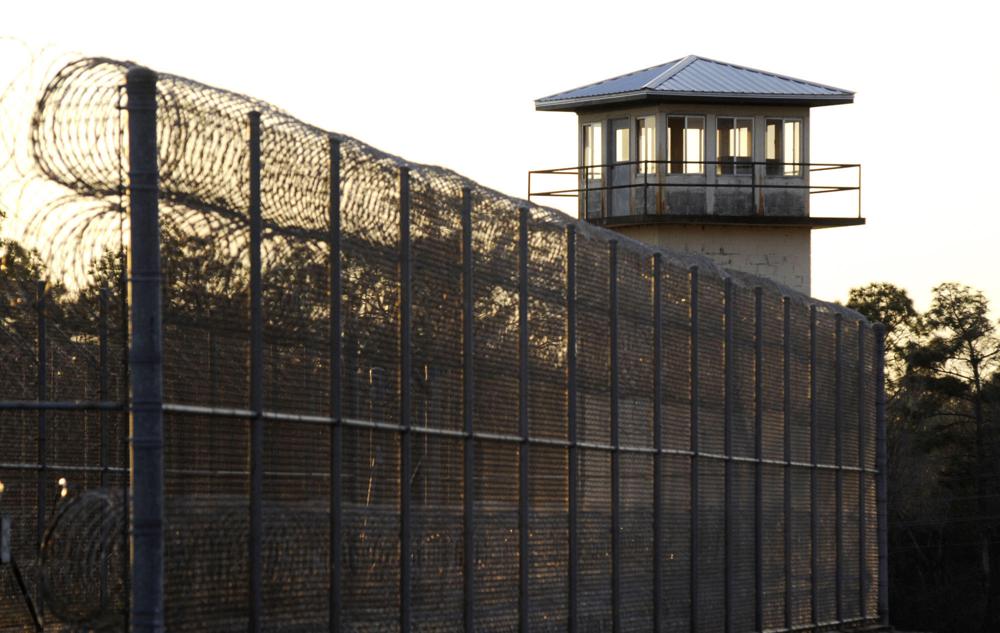
On Tuesday, the Alabama House of Representatives voted to pass legislation that would decrease the amount of time inmates of Alabama’s prisons can get reduced from their sentences for good behavior while incarcerated. It also further limits which prisoners are eligible for good time incentives. Senate Bill 1 (SB1) – the Deputy Brad Johnson Act – is sponsored by State Sen. April Weaver. The legislation was carried in the House by State Rep. Russell Bedsole. SB1 is titled in remembrance of Bibb County Sheriff’s Deputy Brad Johnson – who was gunned down by a dangerous felon released by the Alabama Department of Corrections (ADOC) on good time. Bedsole – a Shelby County Deputy – said that passage of SB1 would make Alabama communities safer. “We know that we can’t totally solve crime in our communities. Just incarceration alone is not the answer.” SB1 reduces the number of reductions in sentences served that a prisoner can earn for good behavior, further limits the number of prisoners eligible for good time incentives, and requires ADOC to make reports on the application of good time incentives. “The reporting will come back to the legislature,” Bedsole explained. “We are not putting a mandate on them to go out and buy new reporting software.” House Minority Leader Anthony Daniels said that the abuses in the system occurred during the previous ADOC leadership. “It is not fair to hold the current leadership responsible for the failings of the past leadership,” Daniels said. State Rep. Phillip Pettus told Bedsole, “I appreciate what you have done on this. I hope that we don’t have another picture up here of another law enforcement officer up here.” State Rep. John Rogers called the bill “Overkill.” Rogers said the real problem is the lack of rehabilitation of prisoners in ADOC custody. “You have countries all over the world that rehabilitate prisoners, but we do not do it here in Alabama,” Rogers said. “Why would you punish the entire system? I hope that you pull this bill.” “You have got one guard for every 200 prisoners,” Rogers said. “We have had four women get pregnant in prison in a women’s prison. How does a woman get pregnant in all women’s prison?” “We need new prisons, but you have to have money to pay guards a decent wage,” Rogers said. Bedsole said, “Did you know that a person who commits a murder in prison can still get good time?” Rep. Christopher England said, “For 100 and some years, Democrats controlled the Legislature. You know one thing that Democrats absolutely screwed up? Prisons and justice. Then Republicans got in there. For six years, we created class D felonies – everybody doesn’t like that now – Community corrections, drug courts, and we worked on releasing prisoners. You know what happened? Crime went down, and the number of prisoners went down. We had a horrible tragedy happen in Marshall County (the Jimmy Spencer slayings of three people while on parole). In November 2019, we reformed the parole system. Now we aren’t letting anybody out. The new Republicans that are here have completely unraveled how we deal with prisons. The prison population has also skyrocketed. You know what also happened: crime skyrocketed. Now it has gotten to the opposite extreme where we don’t let anybody out. The parole board is only giving parole to ten percent of prisoners eligible for parole.” “You know what else has happened – crime has gone up,” England said. “We need all the space and resources we can get, and we are wasting it on people who are no danger to the community.” England said that releasing prisoners on parole where they are under supervision is better than waiting for the end of their sentence and then releasing them with no supervision requirements. “Over 90% of the people that go into the prison system get out,” England said. “Would you rather them get out with supervision or with no supervision?” Rep. A.J. McCampbell said, “As a former law enforcement officer, we recognize that every day we are putting our lives on the line. I hate what happened to Officer Johnson. I really do.” “We have got a lot of calamity and failure of our whole (prison) system,” McCampbell continued. “We don’t have any real solutions.” “It is unreal how many people have been denied,” McCampbell said. “Parole is supposed to be at a time where we have an opportunity to look at people while they are out in the community.” “The mistreatment that they receive in these institutions dehumanizes these people,” said Rep. Mary Moore. Bedsole said that SB1, “Revises our good time statute that has been in place since 1980. We are changing the amount of good time days we are offering. We are lowering them.” After a lengthy debate, the House of Representatives passed SB1. As it has already passed the Senate, it now has gone to the Governor’s office for her consideration. According to the synopsis, SB1 would, “Reduce the amount of correctional incentive time a prisoner receives; to require a prisoner to remain in a certain classification for a longer period of time before moving up to a higher classification; to provide for additional circumstances in which a prisoner may be required to forfeit his or her correctional incentive time; and to require the Department of Corrections to provide annual reports to the Legislature, the Governor, and the Attorney General regarding correctional incentive time. Thursday will be day 10 of the 2023 Alabama Regular Legislative Session. The Alabama Constitution limits the Legislature to no more than thirty legislative days during a regular session. To connect with the author of this story or to comment, email brandonmreporter@gmail.com.
House Committee advances bill to combat youth gang violence
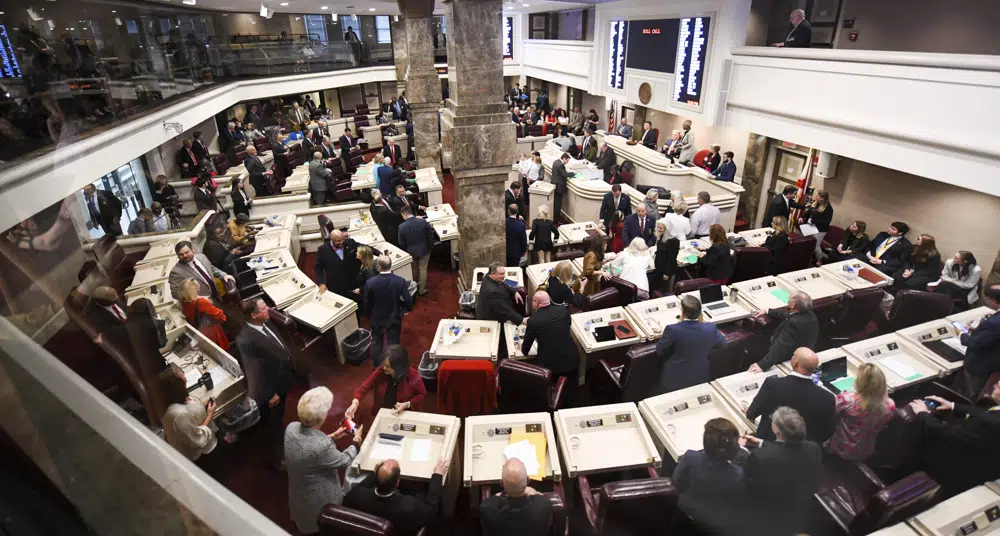
On Wednesday, the Alabama House Judiciary Committee voted to advance legislation that would prosecute 16-year-olds as adults if they are found to be affiliated with a gang. House Bill 191 (HB191) was sponsored by State Representative Allen Treadaway. “I was asked to carry HB191 by the Alabama Attorney General’s (Steve Marshall) office and with good reason,” Treadaway said. Treadaway is retired as a deputy Birmingham police chief. “I spent 31 years in law enforcement, and this is alarming,” Treadaway of the growing gang violence problem in Birmingham, Mobile, Montgomery, and communities across Alabama. “If we don’t do something with the type of behavior this bill is trying to address, we are going to have a lot more innocent victims,” Treadaway warned. “We have had innocent victims who have been hurt and are dying all across the state.” The Alabama Gang Prevention Act provides penalty enhancements for felonies committed to further the interests of a gang, attaches a minimum sentence to any use of a firearm to promote the gang, and certifies individuals aged 16 and older as adults when charged with gang-related offenses under the Act. Treadaway presented a letter from sheriffs and police chiefs across Alabama supporting HB191. “Just about every sheriff and police chief has signed on to this,” Treadaway said. Rep. Christopher England spoke in opposition to the bill. “Do we not have any other answer other than locking people up?” England said. “The more people we put in prison, the less space we have for the people that really need to be there.” “We have the same problem in Tuscaloosa,” England said. “There is another answer out there other than put them in jail for as long as possible.” Rep. Ontario Tillman said, “We are going to lock up a kid because he is associated with a gang member or law enforcement thinks he is.” Tillman made a motion to send HB191 to a subcommittee. Rep. Jim Hill chairs the House Judiciary Committee. “The NOs have it,” Hill said after a voice vote. Rep. Penny McClammy said, “Why is the first thing we think about is tougher punishment, but we never address the problem.” McClammy suggested that the state should develop some sort of a program for those kids who are in and out of trouble. “Unfortunately, there are individuals that fall through the cracks and commit very violent crime,” Treadaway said. “They have been afforded every opportunity. Unfortunately, those people are hell-bent on killing people.” “I care more about the victims,” Treadaway said. “We better have a place to put them, or there is going to be another victim. Look at the folks left behind by the violence. It leaves children without a father or a mother.” State Rep. David Faulkner made a motion to give HB191 a favorable report. The motion passed. HB191 received a favorable report. The House could consider HB191 as soon as Thursday. According to the synopsis, “This bill would identify gang members. This bill would enhance penalties for any criminal activity that benefits, promotes, or furthers the interest of a gang. The bill would establish mandatory consecutive penalties for any individual who knowingly possesses, uses, or carries a firearm during the commission of any act intended to benefit, promote, or further the interest of a gang. Under existing law, juveniles 16 years of age or older are tried as adults for certain crimes. This bill would require any juvenile 16 or older to be tried as an adult for any gang-related criminal activity.” Senate Bill 143 (SB143) is the Senate version of the same bill. SB143 is sponsored by Sen. Will Barfoot. Thursday will be day 10 of the 2023 Alabama Regular Legislative Session. To connect with the author of this story or to comment, email brandonmreporter@gmail.com.
Alvin Holmes dies at 81; had served decades in Alabama House
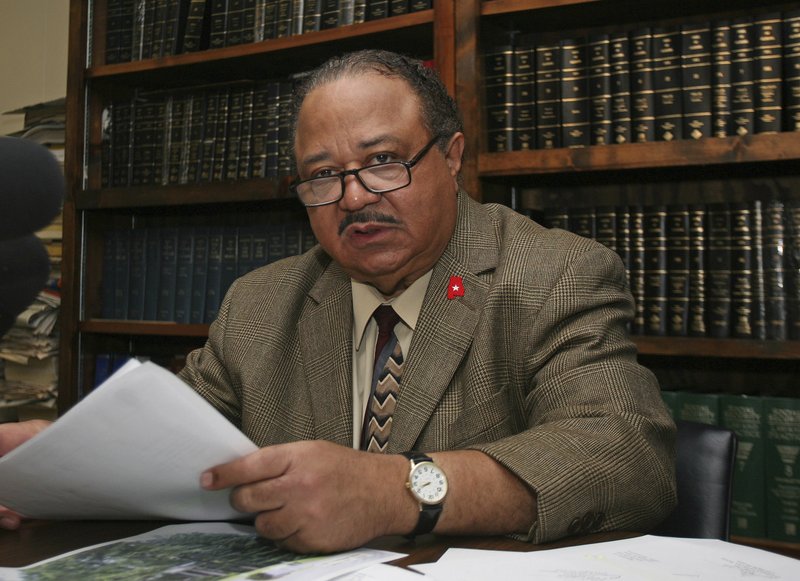
Former state Rep. Alvin Holmes, who had been the longest-serving member of the Alabama House of Representatives before his 2018 defeat, has died. He was 81. Alabama House of Representatives spokesman Clay Redden confirmed Holmes’ death Saturday. Holmes, one of the first African Americans elected to the Alabama Legislature after the civil rights era, was for decades a fixture at the Statehouse. His political career included battles over issues ranging from removing Jim Crow language from the state Constitution to taking the Confederate flag off of the Alabama Capitol. With his trademark outspokenness, he had panache for humorous, and sometimes controversial, moments. Holmes was first elected to the House of Representatives in 1974, just four years after African Americans — who hadn’t served since Reconstruction — returned to the Legislature. “I came to the Statehouse out of the civil rights movement. I said I wanted to go up there and make a change,” Holmes said after his defeat in 2018. Holmes had said the accomplishments he was most proud of included establishing Martin Luther King Day as a state holiday and pushing for the hiring of African Americans for professional positions at the Alabama Legislature. He was among lawmakers who fought to take the Confederate battle flag off the Alabama Capitol’s dome where it had formerly flown as a symbol of Southern defiance to integration. He sponsored a constitutional amendment to remove an interracial marriage ban from the Alabama Constitution and unsuccessfully fought for years to get sexual orientation included in the state hate crime statute. House Speaker Mac McCutcheon said Holmes was a champion for civil rights and for all taxpayers. “He took stands to ensure African Americans were treated fairly and that tax dollars were spent wisely. Representatives Holmes could be forceful at times and give no ground on issues he was passionate about, but no one ever questioned his sincerity. I was proud to call him a friend,” McCutcheon said. The short, mustached Holmes had a flair for humor and bluntness at the House microphone, a skill he said he knowingly deployed at times to draw attention to issues. Once, during a floor debate, Holmes pulled out a wad of cash and said he would give $700 to anyone who showed him Bible verses specifying that marriage is between only a man and a woman. The challenge prompted a flood of calls into the statehouse switchboard. “What’s wrong with the beer we got? I mean the beer we got drinks pretty good don’t it.” he also once asked during a debate on a bill, promoted by beer enthusiasts, to allow the sale of higher alcohol content brews. Rep. Christopher England, who also serves as chairman of the Alabama Democratic Party, said Holmes was a great Democrat and a fighter. “He stood on the frontlines of the fight for civil rights and was willing to sacrifice everything in his fight for justice for all. …. Alabama has lost a giant, whose wit, intelligence, fearlessness, selfless determination, and leadership will be sorely missed.” Republished with the permission of the Associated Press.
Representative Chris England elected new Alabama Democratic chair; infighting continues
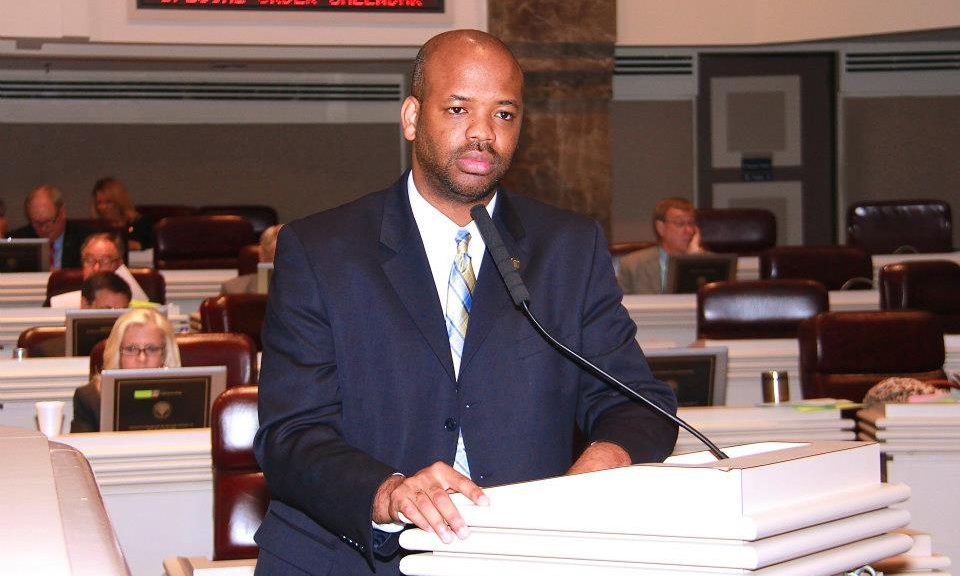
An Alabama state representative was elected chair of the Alabama Democratic Party on Saturday after months of in-house bickering about the party’s leadership. But the election may not settle the ongoing battle between two factions of the party over governance and leadership, as the previously elected chair said she would not step down. Rep. Christopher England, of Tuscaloosa, received 104 of 171 ballots cast at the meeting of the State Democratic Executive Committee, the state party’s governing body, The Montgomery Advertiser reported. “Elected officials had to stand in the gap and create the platform the party did not have,” England said before the vote. “You’ve seen me stand for the issues that matter to us.” The vote came after the approximately 175 members of the SDEC voted 172 to 0 to remove Chair Nancy Worley and Vice-Chair Randy Kelley. After the vote, Worley said she was reelected in 2018 and she intends to continue leading the party. “The true SDEC members did not elect two new officers in our places today,” Worley said in a statement. “Randy and I look forward to continuing our leadership roles.” But the meeting represented a win for a group of Democrats opposed to Worley, who has chaired the state Democratic Party since 2013, and the Democratic National Committee, which ordered the state party in February to hold new elections and revise its bylaws to provide greater diversity on the SDEC. England, 43, a city attorney for Tuscaloosa, has served in the Alabama Legislature since 2006. He has been at the forefront of attempts to change the leadership and direction of the party and pledged before the vote to work to “leave no stone unturned” in rebuilding the party. He promised to rebuild local county organizations and staff up the state party. “As we kick the old folks out, the new folks are coming in,” he said. “We want to seize on that energy. We’re going to raise money, money like you’ve never seen.” Former Rep. Patricia Todd, Democrat-Birmingham, was elected vice-chair. Worley has previously accused the DNC of sending contradictory instructions and of trying to dilute the strength of African American voters in the party. The DNC said Worley missed deadlines and was nonresponsive to instructions. Without the orders implemented, the DNC refused to ratify the state’s delegate selection plan and warned that inaction by the state party could prevent Alabama from being seated at next year’s Democratic National Convention. That would effectively invalidate votes cast in next March’s Democratic presidential primary. A group of SDEC members, backed by U.S. Sen. Doug Jones, drafted a new set of bylaws that were approved by the DNC in September. The members then got a majority of the SDEC to vote to hold a meeting to ratify those bylaws on Oct. 5. At that meeting, the members set leadership elections for Nov. 2. Worley proceeded with her own meeting on Oct. 12, which ratified a second set of bylaws — not approved by the DNC — and set elections for Nov. 16. On Wednesday, Worley and Kelly sued to stop the meeting of the Democrats. Montgomery Circuit Judge Greg Griffin blocked the meeting in a decision late Friday, ruling that it would cause “chaos and confusion.” But the Alabama Supreme Court stayed the order about two hours later, allowing the gathering to proceed. The new party bylaws preserve the Minority Caucus to nominate African Americans to the SDEC. But they also create new caucuses to nominate Hispanics, Asians, Native Americans, LGBTQ individuals, youth and those with disabilities. Approximately 68 people were seated from the youth, Hispanic, Native American and Asian/Pacific Islander caucuses on Saturday. Information from: Montgomery Advertiser, https://www.montgomeryadvertiser.com. Republished with the permission of the Associated Press.
Senate committee greenlights Ten Commandments for display on school, state property
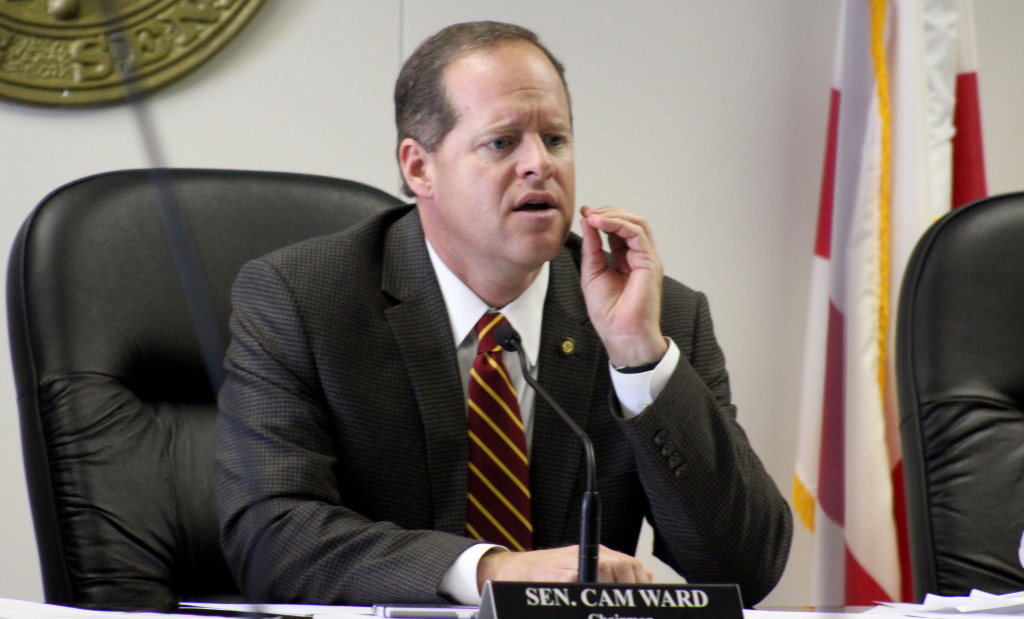
With little discussion, the Senate Judiciary Committee gave a favorable report to SB97 from Sen. Gerald Dial (R-Lineville) allowing the Ten Commandments to be displayed on state property and at public schools. Committee chairman Sen. Cam Ward (R-Alabaster) noted that the bill has passed out of committee several times over the years and always stalls in one of the legislative bodies. Sen. Linda Coleman-Madison (D-Fairfield) lodged the only opposition to the bill. “Whatever happened to the separation of church and state?” she questioned. Despite the limited opposition, the bill was OK’d within seconds of being brought up.
