
Florida judge who approved FBI warrant for raid on Mar-a-Lago was assigned to Donald Trump lawsuit against Clintons
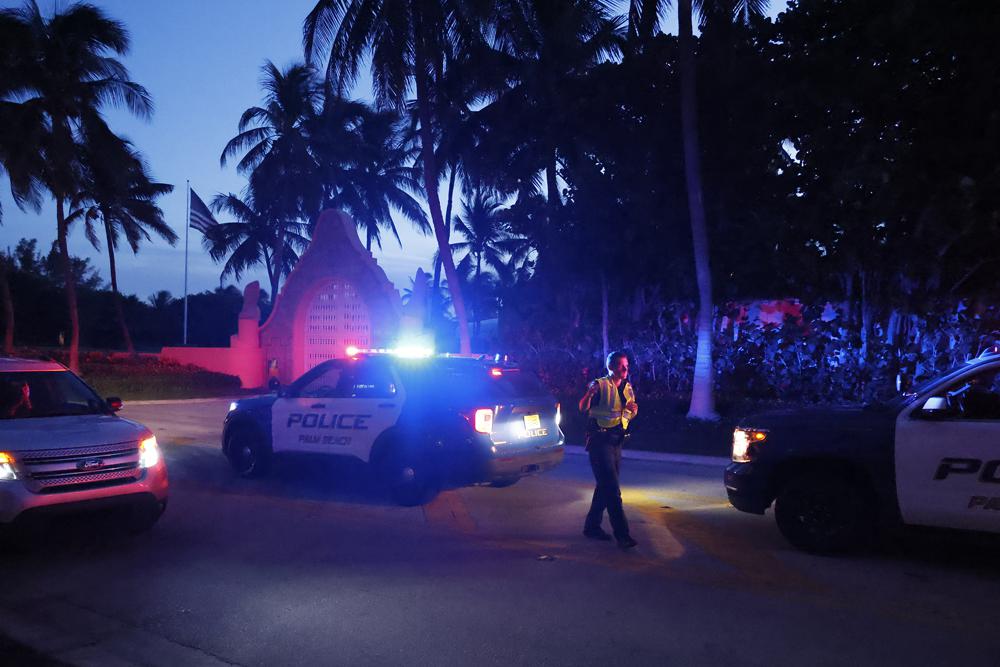
Magistrate Judge Bruce Reinhart, the Florida judge who approved the warrant for the FBI raid of former president Donald Trump’s Mar-a-Lago estate, was formerly assigned to oversee a lawsuit in which Trump sued Hillary Clinton. He also previously represented former convicted sex offender Jeffrey Epstein’s employees in a sex trafficking case. In the case of Trump v. Clinton, Trump sued Hillary Clinton on March 24, 2022. He also sued the Democratic National Committee, Perkins Coie, LLC, Michael Sussmann, Marc Elias, Debbie Wasserman Schultz, Charles Halliday Dolan Jr., Jakes Sullivan, John Podesta, Fusion GPS, Nellie Ohr, Bruce Ohr, Christopher Steele, Igor Danchenko, James Comey, Peter Strzok, Lisa Page, Andrew McCabe, and many others. The lawsuit alleges that Clinton “and her cohorts … maliciously conspired to weave a false narrative that their Republican opponent [Trump] was colluding with a hostile foreign sovereignty.” The scheme included “falsifying evidence, deceiving law enforcement, and exploiting access to highly sensitive data sources,” and was “conceived, coordinated and carried out by top-level officials at the Clinton Campaign and the DNC.” Reinhart was assigned to the case on April 6, 2022, after the previous magistrate judge, Ryon McCabe, was recused. On April 15, Reinhart conducted a scheduling conference in the case, according to court documents obtained by The Center Square. He oversaw scheduling of a June 2 status conference on May 4 and 31 and oversaw the actual conference. Reinhart also signed another order on June 14, setting another status conference for July 6, but by June 22 Reinhart canceled the conference and recused himself. Less than two months later, on Monday, August 9, he signed a warrant for the FBI to raid Trump’s Mar-a-Lago estate over an alleged dispute over White House documents. The search warrant remains under seal, and Trump’s attorney has told news outlets that they don’t know what the probable cause was to justify issuing the warrant, also maintaining Trump’s innocence and that he didn’t commit a crime. Many officials have called for the warrant to be unsealed, including U.S. Sen. Ted Cruz, R-Texas. U.S. Sen. Marco Rubio, R-Florida, has called for a congressional investigation into the raid, also saying the FBI’s tactics were like those of a third-world dictatorship. Rubio said, “the Justice Department under Joe Biden decided to raid … the home of the former president who might … be running against him … This is what happens in places like Nicaragua where last year every single person who ran against Daniel Ortega for president, every single person that put their name on the ballot, was arrested and is still in jail. That’s what you see in places like Nicaragua. We’ve never seen that before in America. You can try and diminish it, but that’s exactly what happened.” Gov. Ron DeSantis said the raid was a “weaponization of federal agencies against the Regime’s political opponents.” The White House has declined to comment on the raid, saying it was not made aware of it before it took place. The document dispute stems from a disagreement over which documents in Trump’s possession are presidential records or not. Under the Presidential Records Act, some records in question should have been transferred to the National Archives in January 2021 when Trump left office, the institution said in a statement at the time. Instead, Reinhart authorized the FBI to execute the search warrant at Mar-a-Lago, which Trump said was “prosecutorial misconduct.” According to a report by the New York Post, Reinhart previously represented several of convicted pedophile Jeffrey Epstein’s employees in a sex trafficking investigation. His ties to Epstein’s employees was first reported on by the Miami Herald, with whom he confirmed that clients were Epstein’s pilots, his scheduler, Sarah Kellen, and a woman Nadia Marcinkova. Reinhart also donated to Barack Obama’s 2008 presidential campaign, according to the Post. Prior to becoming a magistrate judge in 2018, he spent ten years in private practice, according to Bloomberg News. He previously worked as an assistant U.S. attorney for the Southern District of Florida. According to Law.com, the Palm Beach Federal Court removed Reinhart’s contact information from the court’s website Tuesday. Republished with the permission of The Center Square.
Where did Donald Trump’s claim of an FBI mole come from?

President Donald Trump and his supporters are circulating an explosive theory: The FBI, they say, may have planted a mole, or “spy,” inside the 2016 campaign to bring him down. The unverified allegation has lit up conservative media and earned space on Trump’s Twitter feed just as special counsel Robert Mueller enters his second year in the Russia probe. But where did the allegation come from? The AP takes a look at what we know so far and how Trump has used similar claims in the past to try to discredit the Russia investigation. The ‘Wiretap’ Trump and his supporters have long floated the idea of an opposing “deep state” at the Justice Department and the FBI, including allegations that President Barack Obama ordered wiretaps on his phones during the election. The Justice Department denied such a wiretap, and House intelligence committee Chairman Devin Nunes, an ardent Trump supporter, later confirmed that an Obama-ordered wiretap never existed. But like many conspiracy theories, it appeared to grow out of a less sensational truth: U.S. surveillance on foreign officials — a common practice in the world of spycraft — likely picked up what’s called “incidental” communications with Americans in Trump’s orbit. That included former national security adviser Michael Flynn’s discussions with Russia’s ambassador to the U.S. during the presidential transition. The Mole At issue now isn’t a wiretap, but the identity of a top-secret FBI informant who allegedly helped investigators on the Russia probe. Trump and his lawyer, Rudy Giuliani, say they suspect the FBI planted someone inside the campaign as a setup. “Reports are there was indeed at least one FBI representative implanted, for political purposes, into my campaign for president,” Trump tweeted early Friday. “It took place very early on, and long before the phony Russia Hoax became a ‘hot’ Fake News story. If true – all time biggest political scandal!” This claim actually isn’t new for Trump supporters either. But it seemed to find new life after news reports confirmed the existence of a confidential source in the Russia investigation. The conservative National Review suggested the puzzle pieces all point toward a mole, attracting Trump’s attention. “If so, this is bigger than Watergate!” Trump tweeted. What We Know Last August, Glenn Simpson of Fusion GPS, who compiled opposition research on Trump, told a Senate panel that former British spy Christopher Steele relied on an “internal Trump campaign source” to compile his now-famous Trump dossier. A person familiar with Simpson’s testimony told the AP at the time that he did not mean to suggest the FBI had a direct source of information from within the Trump campaign. Then last week, The Washington Post reported on the existence of a U.S. citizen who had provided intelligence to the CIA and FBI in the Russia probe. The source had become of particular interest to Nunes, whose committee was quick to dismiss any allegations of collusion between Trump associates and Russia. According to the Post, the Justice Department clashed with Nunes and refused his request for specific details on the person. On Wednesday, The New York Times seemed to lend credence to the idea by reporting that “at least one government informant” met several times with former Trump campaign advisers George Papadopoulos and Carter Page. On Friday, the Times expanded its description, saying the informant is an American academic who teaches in Britain and was sent by the FBI to talk to Papadopoulos and Page because they were suspected of having “suspicious contacts” linked to Russia. What We Don’t Know A person who provides information to investigators wasn’t necessarily planted by authorities. The person could have been someone already working with Trump’s campaign before they agreed to provide information. Or it could be someone who wasn’t affiliated with the campaign and just interacted with people around it. The FBI and Mueller have been extraordinarily tight-lipped about the investigation, providing few public clues to what sources they are relying on or where the probe is headed. Trump and his lawyer, Giuliani, acknowledge they don’t have the answers either. But that hasn’t stopped them from floating the mole theory as a way of undercutting Mueller’s work as an attempt by liberals to bring down the president. Giuliani said in a Friday interview on CNN’s “New Day” that he doesn’t know for sure what happened — and the president doesn’t either. But “for a long time, we’ve been told that there’s been some kind of infiltration,” he said. Republished with the permission of the Associated Press.
Cyprus businessman suing BuzzFeed for unproven Donald Trump dossier
A businessman based in Cyprus is suing the BuzzFeed online media outlet for defamation over its publication of an unproven dossier on President Donald Trump‘s purported activities involving Russia and allegations of Russian interference during last year’s U.S. election. The businessman, Aleksej Gubarev, claims he and his companies were falsely linked in the dossier to the Russia-backed computer hacking of Democratic Party figures. Gubarev, 36, is seeking unspecified damages from BuzzFeed and its top editor, Ben Smith, for the lawsuit’s libel and slander claims. BuzzFeed’s lawyers, meanwhile, say the case should be tossed out of Miami federal court due to lack of jurisdiction or at least transferred to New York, where the company’s main offices are located. The most recent filing by Gubarev’s attorneys Monday appeared to mock BuzzFeed’s editorial style by titling the document this way: “Six Ways BuzzFeed Has Misled The Court (Number Two Will Amaze You) … And A Picture Of A Kitten.” The 35-page dossier, compiled by former British spy Christopher Steele, was circulating among multiple news outlets during the 2016 election. It contains unproven allegations of coordination between Trump’s advisers and Russians on hacking the emails of prominent Democrats and makes unverified claims about sexual activities. On Jan. 10, BuzzFeed published the dossier in full, noting at the time that much of its content had not been verified. The Associated Press has not authenticated its claims. Trump himself has described the lurid dossier as “phony allegations” concocted by his political opponents. In one paragraph, the dossier claims that Gubarev and his companies, XBT Holdings and Webzilla Inc., “had been using botnets and porn traffic to transmit viruses, plant bugs, steal data and conduct ‘altering operations’ against the Democratic Party leadership” at the behest of Russian entities, according to court documents filed by his lawyers. “Not a single portion of this statement, as it applies to Mr. Gubarev, XBT or Webzilla, has any basis in fact whatsoever,” his attorneys wrote in a filing dated Monday. Since the dossier’s publication, they added, Gubarev “has found his personal and professional reputation in tatters” and his wife has been subjected to online harassment. XBT operates 37,000 computer servers around the world, about 40 percent of them in Dallas, the document says. In his lawsuit, Gubarev is described as a “venture capitalist and tech expert” who moved from his native Russia to Cyprus in 2002. Gubarev is not involved in politics and has no connections with the Russian government, the document says. In a March 14 filing, BuzzFeed’s attorneys contend the case has no place in a Florida court because neither BuzzFeed nor Gubarev’s companies have a strong presence in the state. They want the case dismissed or moved to New York, where BuzzFeed’s headquarters are located. “On the most fundamental level, this action has no meaningful connection to Florida,” the BuzzFeed lawyers wrote. “While the dossier itself continues to generate intense international interest, it is clear that this dispute about its publication has nothing to do with Florida.” Gubarev, however, contends that BuzzFeed regularly reports in and about Florida and that Webzilla has maintained a corporate presence and paid taxes in the state since 2009. The case, originally filed in February, is pending before Miami U.S. District Judge Ursula Ungaro. She could issue a ruling on the motion to either dismiss or transfer at any time. Republished with permission of The Associated Press.
