
Chuck Sykes takes over as President of the Association of Fish and Wildlife Agencies
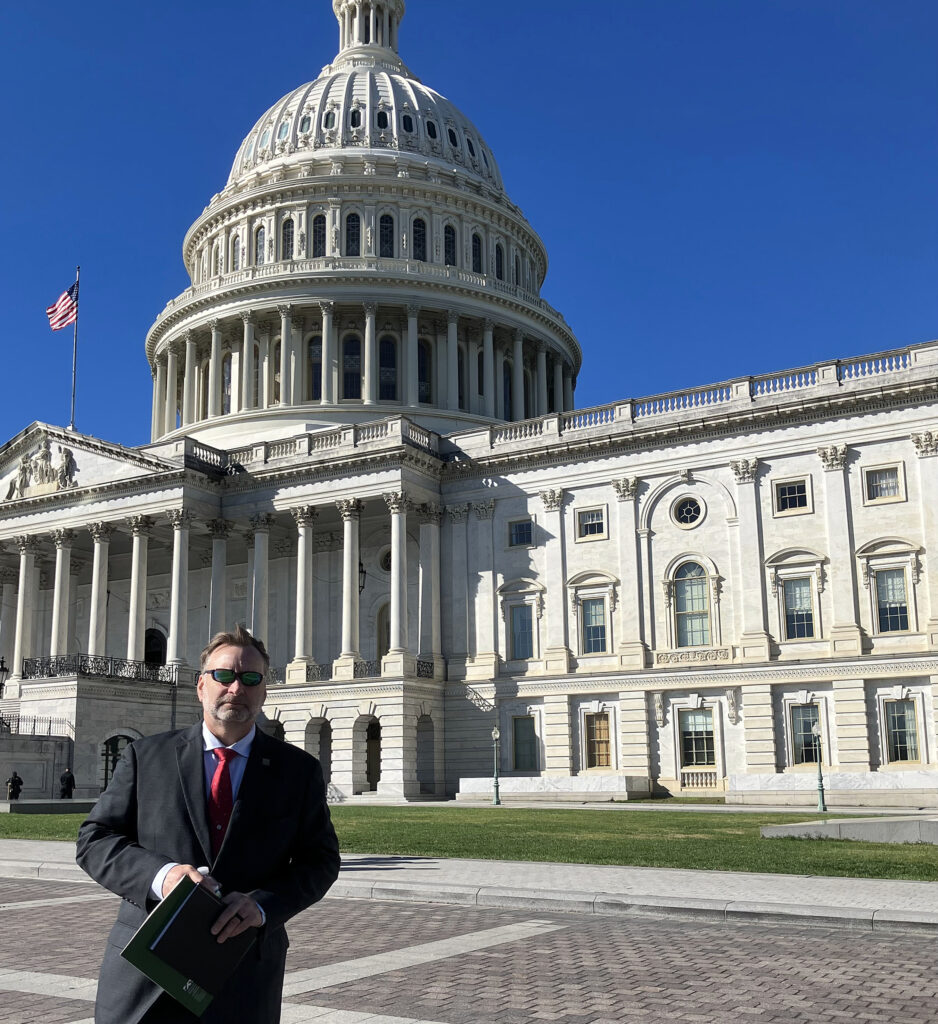
On Friday, the Alabama Department of Conservation and Natural Resources (ADCNR) announced that Alabama’s Chuck Sykes also serves as the Association of Fish and Wildlife Agencies (AFWA) President. Sykes is the Director of ADCNR’s Wildlife and Freshwater Fisheries Division (WFF). Ron Regan is the Executive Director of the Association of Fish and Wildlife Agencies (AFWA). Regan announced that Sykes will spend the next year leading the AFWA. “AFWA basically exists to make sure the rights and privileges and jurisdictional responsibilities of state fish and wildlife agencies are upheld, and no harm is done through federal legislation, rulemaking or policy,” Regan said. “When possible, we advocate for funding and other authority to help states do their work better. It’s interesting to note that the provinces and territories of Canada are also members of the association. That’s why we had our annual meeting in Calgary, Canada, just a couple of months ago when Chuck became president. Sykes has been in office since September and will serve a year. State fish and wildlife managers are responsible for protecting both game species and non-game species. “It’s a big deal,” Sykes said. “There’s a lot going on from one end of our country to the other and the territories and Canadian provinces. AFWA looks out for all of it. One of our top priorities right now is trying to find alternative sources of funding to work on nongame species and help states fulfill their obligations for their state wildlife action plans. We can’t use Pittman-Robertson or Dingell-Johnson (legislation) dollars that hunters, fishermen, and sports shooters are paying for on nongame species. One of the biggest deficits states have is money to spend on nongame species.” The AFWA was formed in 1902 to represent fish and wildlife agencies in all U.S. states and territories and Canadian provinces. “Our mission is basically to look out for the states,” Regan said. “We’re all about making sure the states have the resources to do their jobs and they don’t get compromised by some new federal program that takes away Chuck’s authority to manage species within the borders of Alabama.” Chris Blankenship is the Commissioner of ADCNR. “I’m happy for Chuck and his potential impacts around the country,” said Commissioner Blankenship. “He has brought a good common-sense approach to managing wildlife in Alabama and has done some progressive things here. I’m excited he has the opportunity to take that to other parts of the country and help them make the same strides we’ve made here in Alabama.” AFWA operates with just 26 employees and a $5 million budget. “We rely on our leaders, like our president, to make decisions, guide directions, and set tone,” Regan said. “There is virtually nothing that is major or substantive when it comes to a national issue like chronic wasting disease (CWD) or avian influenza or endangered species that we don’t run through our president. So, he has a very significant role to play in shaping the tone, tenor, and content on what we say on any national issue. Of course, he helps establish priorities.” Sykes said that six years ago a blue-ribbon panel of state agency directors and NGO leaders convened and determined that executing the state wildlife action plans to ensure species diversity would take more than a billion dollars a year. States came very close to gaining some relief on that funding when the Recovering America’s Wildlife Act (RAWA) was advanced in Congress. “In the original bill that almost passed last year, Alabama would have received a bigger apportionment than funds from Pittman-Robertson and Dingell-Johnson combined,” Sykes said. “It was like $25 million that would have come to Alabama. It got kicked out of the Omnibus package at the 11th hour last year. It may be reintroduced right after the first of the year.” Sykes recently addressed AFWA’s western state members in Henderson, Nevada. Working to pass that legislation is one priority that he is working on. “When the U.S. Fish and Wildlife Service is looking at rules that impact everybody, including Alabama, I’m there at the table,” Sykes said. “With the RAWA bill, I am behind the scenes, meeting with congressional staff who are drawing this up to make sure Alabama’s concerns are at the forefront. It’s a lot of work, a lot of travel, and a lot of conference calls. Most people in Alabama don’t know and may not care, but what I’m doing for them through this could be monumental.” The state wildlife management agencies’ mission heavily depends on citizens purchasing hunting and fishing licenses. To connect with the author of this story or to comment, email brandonmreporter@gmail.com.
State receives $143,000 from the National Wild Turkey Federation for wildlife management
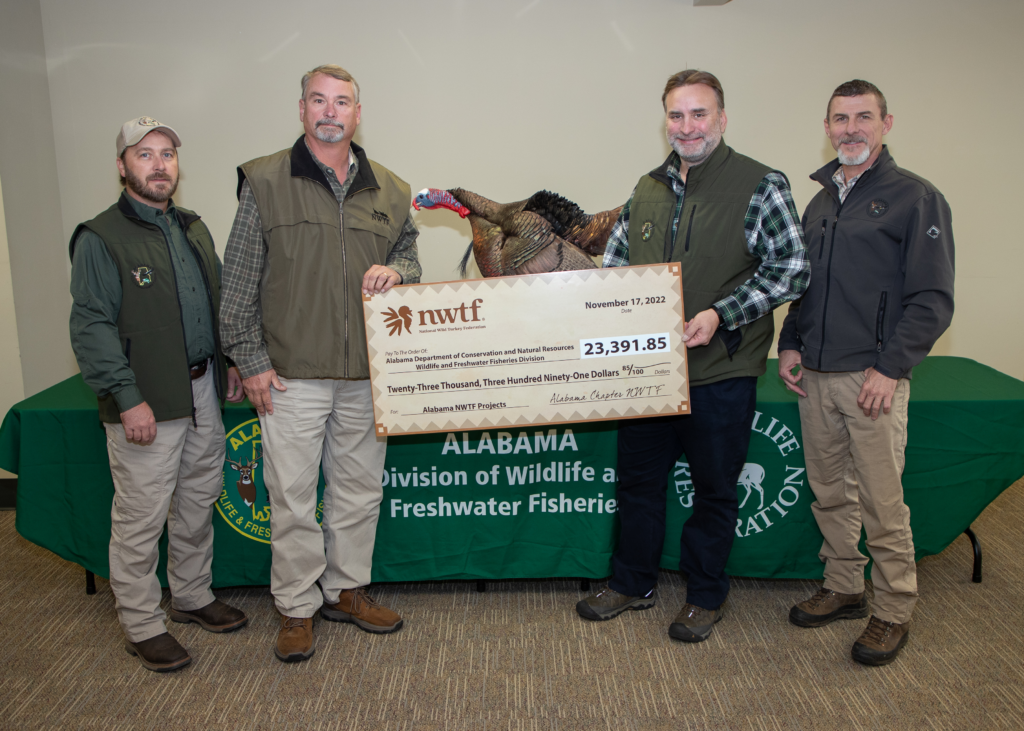
The Alabama Chapter of the National Wild Turkey Federation (NWTF) recently allocated more than $143,000 in Hunting Heritage Super Funds and Tag Funds for wild turkey projects in Alabama. “We are proud to partner with the Alabama Department of Conservation and Natural Resources (ADCNR) on the conservation of wild turkey in Alabama,” said Craig Harris, Alabama NWTF Chapter President. “Working together, we can ensure this important natural resource is available to future generations of Alabamians.” “We thank NWTF and the Alabama Chapter Board of Directors for helping to support the conservation of wild turkey in Alabama,” said Chris Blankenship, ADCNR Commissioner. “With their assistance, we will continue working to ensure the future of this resource for generations to come.” $35,392 was donated to the Wildlife and Freshwater Fisheries Division (WFF) of the Alabama Department of Conservation and Natural Resources (ADCNR) to fund projects, including wildlife habitat management and the publication of the annual wild turkey report, ‘Full Fans & Sharp Spurs.’ $107,655 was approved for other turkey projects statewide. That funding allows the state to draw down $786,712 in matching funds provided by other conservation partners available to positively impact approximately 126,000 acres statewide through the enhancement of turkey habitat. The funding also supports efforts to increase access to hunting opportunities and investigate why we are experiencing wild turkey declines in parts of the state. Most of the funding donated to WFF will be used on Wildlife Management Areas (WMA) and Special Opportunity Areas (SOA) throughout the state to support habitat management and other wild turkey programs. Some of the donation will also be used to purchase much-needed wildlife habitat management equipment. “More than $23,000 of this generous donation offers us access to federal matching dollars, which makes the donation go even further,” said Chuck Sykes, WFF Director. “Since federal matching dollars play such a major role in how our division is funded, contributions like this are extremely important.” The WFF is primarily funded by money generated through the sale of hunting and fishing licenses. That money is then matched on a nearly three-to-one ratio by the U.S. Fish and Wildlife Service through funds allocated to Alabama from the Pittman-Robertson Act. WFF does not receive any appropriation from the state’s General Fund. In addition to the monetary donation, the Alabama NWTF chapter provides financial support for prescribed burn projects that help manage quality habitat in public hunting areas, costs associated with public hunting land acquisitions, the Adult Mentored Hunting Program, the Archery in the Schools State Championship, and the Becoming an Outdoors-Woman program. Five species of wild turkeys are native to North America, and wild turkeys live in all 67 Alabama counties. The eastern wild turkey is found throughout forested habitats in Alabama, from the Appalachian Mountains in the north to the Mobile-Tensaw Delta swamps in the south. The NWTF estimates that there are 300,000 wild turkeys living in the state of Alabama, which puts the state somewhere in the top seven states nationally for wild turkey population. Alabama Department of Conservation and Natural Resources promotes wise stewardship, management, and enjoyment of Alabama’s natural resources through four divisions: Marine Resources, State Lands, State Parks, and Wildlife and Freshwater Fisheries. To connect with the author of this story, or to comment, email brandonmreporter@gmail.com.
State officials warn of deer found with Chronic Wasting Disease in NW Alabama
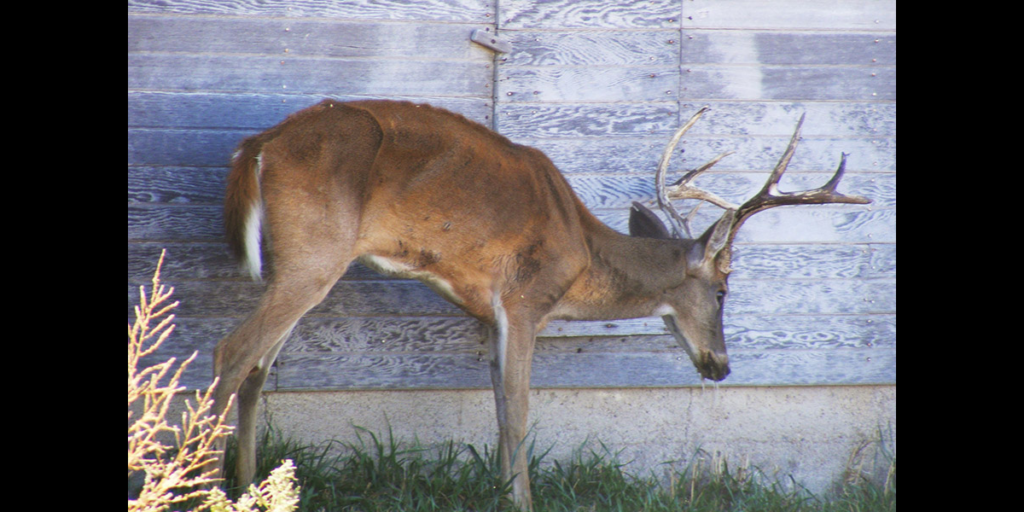
The Florida Fish and Wildlife Conservation Commission announced it recently found Chronic Wasting Disease (CWD) in a hunter harvested deer in northwestern Alabama. This is the first case of CWD detected in Alabama’s deer herd and the first time it has been detected in a state that borders Florida. According to the report, CWD is a brain and central nervous disease that is always fatal to deer; it has not been detected in Florida. The disease causes altered behavior due to microscopic changes made to the brain of affected animals. An animal may carry the disease for years without outward indication. The FWC is asking for people who plan to hunt deer, elk, moose, caribou, or other members of the deer family outside of Florida to be vigilant in helping reduce the risk of CWD spreading into Florida. Chris Blankenship, Commissioner of the Alabama Department of Conservation and Natural Resources (ADCNR), stated, “CWD was first detected in Tennessee and Mississippi in 2018 and has been moving slowly toward Alabama. The Department has implemented multiple proactive regulations to combat the spread into Alabama. Compliance from the public on those measures helped delay the spread into the state for several years.” Additionally, Blankenship encouraged hunters to be aware of the zones they are hunting in so that the disease isn’t spread further. Transporting deer carcasses out of the management zone can potentially spread CWD to currently unaffected areas. There are new rules that took effect July 2021 that prohibit importing or possessing whole carcasses or high-risk parts of all species of the deer family originating from any place outside of Florida. Under the new rules people may only import into Florida: De-boned meat Finished taxidermy mounts Clean hides and antlers Skulls, skull caps, and teeth if all soft tissue has been removed The only exception to this rule is deer harvested from a property in Georgia or Alabama that is bisected by the Florida state line AND under the same ownership may be imported into Florida. Chuck Sykes, Director of ADCNR’s Wildlife and Freshwater Fisheries Division, stated, “The new regulation is intended to increase the opportunities for hunters to supply samples for CWD testing. We need hunters to continue to hunt and submit deer heads for testing. These additional samples will help us better determine the extent of the disease in this area.”
