
Joe Henderson: Hillary Clinton, Citizens United and ‘never-ending’ thirst for cash
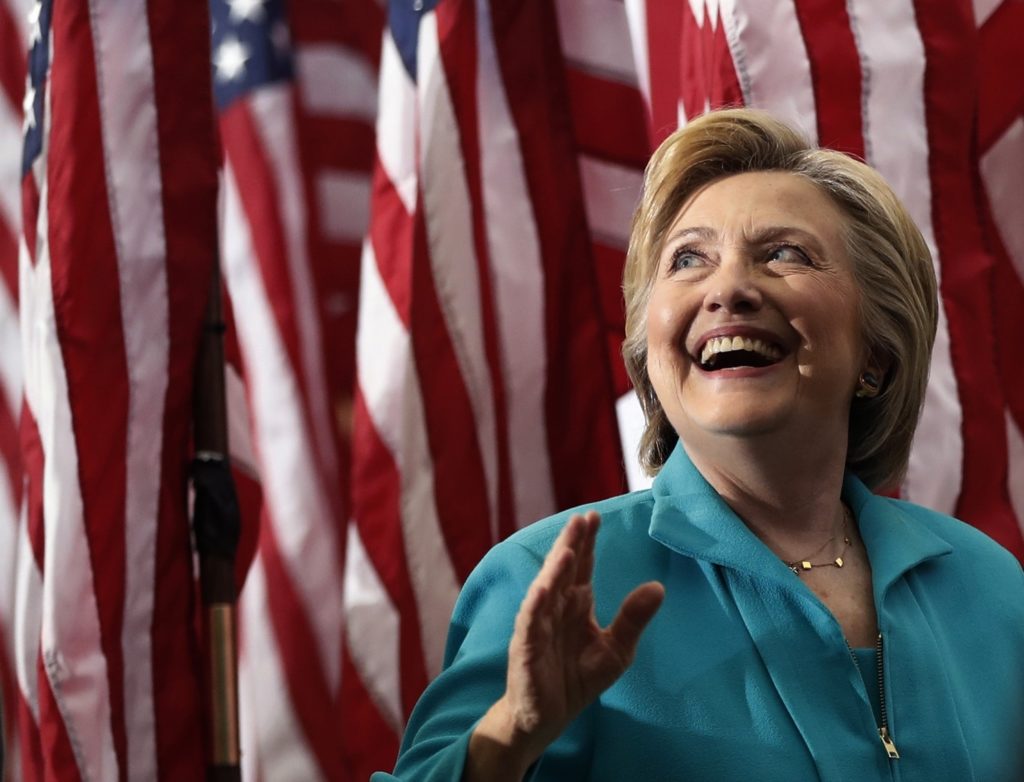
One of the themes of Hillary Clinton’s campaign for the presidency has been her opposition to Citizens United. From the podium, she preaches that she doesn’t like the idea of the wealthy few using their money to buy influence over policies that determine the future for the rest of us. She says he wants to overturn that controversial ruling by the U.S. Supreme Court that has allowed our politics to be bartered out to the uber rich. Well, OK. She says all that, but then The Washington Post reported Sunday that her campaign raised $1.14 billion by the end of September. More than a fifth of that came from just 100 donors. The top five donors, the Post reported, included two hedge fund managers and one venture capitalist. Combined, they have contributed one out of every $17 Clinton raised. And as you read on SaintPetersBlog.com, Hillary will be in Florida Tuesday for what has been billed as “the largest fundraising event” in Florida’s history. Got $100,000 laying around? Donate it, and you can take part in a special host reception with HRC For a mere $5,000, you get dinner and reception. With two weeks to go and Hillary way out in front of Donald Trump in the polls, this might seem like the political equivalent of running up the score on an overmatched opponent. The bigger question is, how much is enough to quench Clinton’s never-ending thirst for money? And the biggest question is, what does that money buy? Look, the news business has allowed me to get to know some really rich people, and they have one thing in common: When they invest this kind of money, they expect something in return. Just follow the trail of breadcrumbs or, in this case, the dollar bills and see where it leads. Trump’s donors are the same way, of course, so let’s not pretend Clinton’s voracious appetite for dollars is unique. But whether he actually believes his words or not, Trump has made a good case with the “quid pro quo” label he has tried to stick on Clinton. Trump rose to the Republican nomination on the winds of disgusted Americans who feel locked out of the political process by the wealthy. They believe the game is rigged against them. That same theme inspired Bernie Sanders’ campaign. That attitude isn’t likely to change after the election. Clinton’s supporters squirm a little uncomfortably when the subject is money. No one is being naïve, though. It takes a lot of cash to run a national campaign. She is running for president of the most powerful nation on earth, not a seat on the county commission or school board. The great Bobby Bowden once said of a freshman player who leaped into his arms on the sideline during an over-exuberant moment, “Recruiting season is over. He’s got to stop calling me Bobby.” Hillary Clinton is recruiting America now, and by most accounts, she is doing such a good job that even Trump’s closest surrogates concede she is likely to win. But next Jan. 20, when we start calling her Madam President instead of Hillary and it comes time to make good on her posturing against Wall Street and Citizens United, the big players will be in the background, expecting the return on their investments. What then? Too often in politics, the answer is that you get what you pay for. ___ Joe Henderson has had a 45-year career in newspapers, including the last nearly 42 years at The Tampa Tribune. He covered a large variety of things, primarily in sports but also including hard news. The two intertwined in the decade-long search to bring Major League Baseball to the area. Henderson was also City Hall reporter for two years and covered all sides of the sales tax issue that ultimately led to the construction of Raymond James Stadium. He served as a full-time sports columnist for about 10 years before moving to the metro news columnist for the last 4 ½ years. Henderson has numerous local, state and national writing awards. He has been married to his wife, Elaine, for nearly 35 years and has two grown sons – Ben and Patrick.
Martin Dyckman: Supreme Court nominees no reason to elect Donald Trump
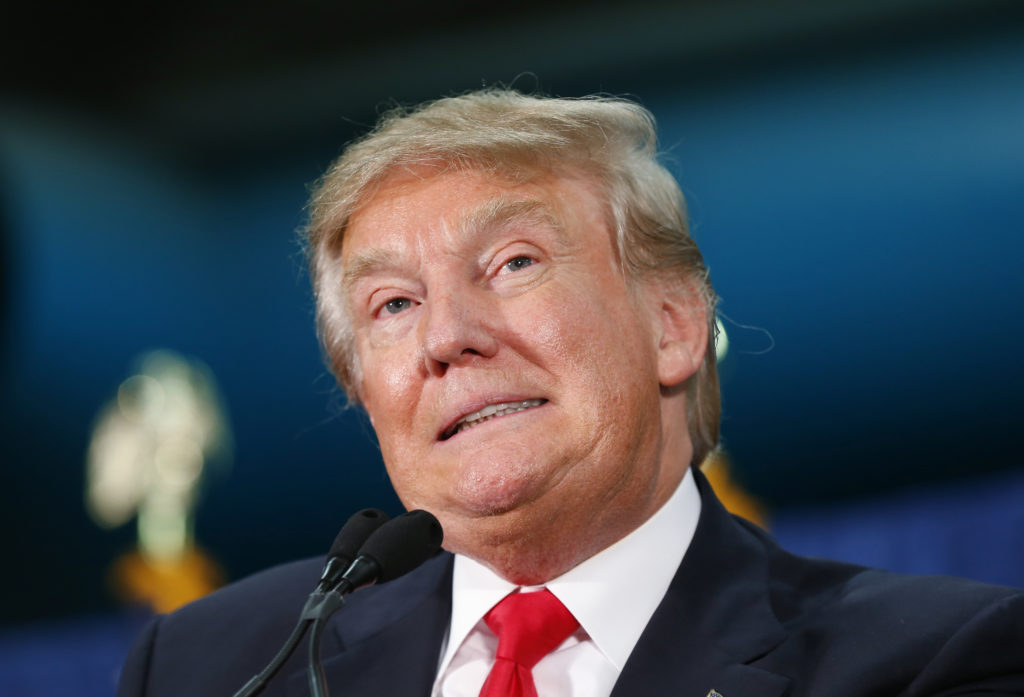
Some Republicans to whom Donald Trump is the skunk at their garden party would have you elect him president nevertheless. Mark Sanford is one. When last heard of, he was the governor of South Carolina, canoodling with a mistress in Argentina while his office pretended that he was hiking the Appalachian Trail. Now he’s a congressman, and he had an op-ed in The New York Times last week (Aug. 14) strongly criticizing Trump for refusing to release his tax returns. Trump’s obstinacy “will have consequences,” Sanford said. It “would hurt transparency in our democratic process, and particularly in how voters evaluate the men and women vying to be our leaders. “Whether he wins or loses, that is something our country cannot afford.” Hear, hear. But Sanford also hedged his bets. “I am a conservative Republican who, though I have no stomach for his personal style and his penchant for regularly demeaning others, intends to support my party’s nominee because of the importance of filling the existing vacancy on the Supreme Court, and others that might open in the next four years,” he wrote. There you have it. To Sanford, keeping Hillary Clinton from appointing new justices is worth letting everything else go to hell. The government, the country, maybe the world and certainly the court. Trump might even nominate his conspicuous Florida cheerleader Pam Bondi. Sanford isn’t the only Republican who has sold out for fear of a liberalized Supreme Court. That’s probably a factor with Paul Ryan, Mitch McConnell and John McCain too. Independents and die-hard Hillary-hating Democrats need to pay attention. If they don’t vote for her, they could have themselves to blame for making the Supreme Court a right-wing rat hole for another generation. Republicans want a court that would uphold their state-by-state voter suppression schemes, shut its eyes to maliciously partisan gerrymandering, and make it impossible rather than merely difficult to sue people like Trump for consumer fraud, environmental pollution and other white collar crimes. The Citizens United atrocity would continue to leave Congress in the grip of the Koch brothers and their allied oligarchs. Clinton vows to appoint justices who would repeal that monumentally bad Supreme Court decision. Trump doesn’t make that promise. He does, however, assure the religious right that his justices would repeal Roe v. Wade. Exacting such commitments from future judges is another of those developments the Founders didn’t anticipate. They had the idealistic, if naive, view that integrity and competence would govern who got appointed. But we have to take the world as it is, and there’s no shortage of capable lawyers who have declared that Citizens United was wrongly decided. Four of the justices at the time said so too. The court has a history of renouncing prior decisions as wrongly decided or simply no longer applicable. It trashed two precedents in Citizens United. Although Justice Anthony Kennedy’s majority opinion more or less rationalized that full disclosure would restrain corporate election spending, that hasn’t happened. Dark money by the billions is sinking the ship of state. And in South Dakota, the Kochtopus is fiercely fighting a ballot initiative that would require public disclosure of donors to advocacy campaigns, create a state ethics commission and provide public financing of political campaigns. Fortunately, there are Republicans who disagree that the court is reason enough to sacrifice everything else. John Yoo and Jeremy Rabkin, law professors in California, are two of them. Writing in the Los Angeles Times Aug. 14, they described the dangerous world we live in and warned that a Trump presidency “invites a cascade of global crises.” Moreover, they argued, conservatives should not take Trump’s word that he would appoint suitable justices or that the Senate would confirm them. “Even if Trump were to win in November, it is in the legislative and executive branches that conservatives will have to win their most important battles,” they wrote. “Does Trump look like the man to lead them?” Yoo’s opposition is really noteworthy. He was the deputy attorney general in the George W. Bush administration who wrote the notorious memos condoning extreme methods of interrogating terrorism suspects, including waterboarding. That’s a form of torture that Trump is salivating to resume. If even Yoo can’t stomach Trump, what does that tell us? ___ Martin Dyckman is a retired associate editor of the newspaper now known as the Tampa Bay Times. He lives in suburban Asheville, North Carolina.
Watchdog group files complaint in shadowy Marco Rubio super PAC gift
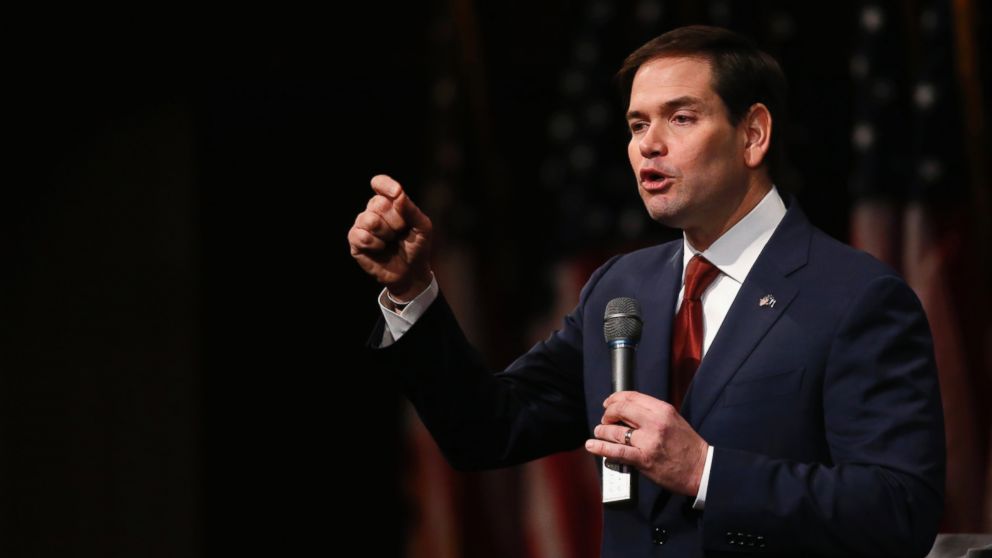
An election watchdog organization filed a complaint Friday with the Federal Election Commission over a $500,000 donation to a super political action committee aiding Marco Rubio from a mystery firm headed by a New York investor. Efforts by good government groups to stem the use of shadowy corporate entities to channel large political donations have been long stymied by the FEC’s internal political paralysis. The complaint from the Citizens for Responsibility and Ethics in Washington, or CREW, seeks an investigation into IGX LLC for masking the donation and to determine whether the Conservative Solutions PAC was aware of the origins of the contribution. The actual donor, Andrew Duncan, of Brooklyn, New York, acknowledged to The Associated Press earlier this month that he had routed his contribution through IGX, a business entity registered last year in Delaware. Noah Bookbinder, CREW’s executive director, the group filed its complaint because “you’re not allowed to use a corporation as a pass-through to hide donations.” He said IGX’s lack of business activity “makes it appear that it was being used as a pass-through.” The CREW complaint cites FEC regulations prohibiting donations “in the name of another person and knowingly permitting one’s name to be used to effect a contribution in the name of another person.” CREW says that if the IGX donation was “knowing and willful,” the matter should be referred to the Justice Department for investigation. Duncan and spokesmen for the super PAC and the FEC did not immediately respond to requests for comment from the AP. Large political donations masked behind limited liability companies have become increasingly common with the rise of super PACS. Donors are obligated under federal law to identify the source of the gifts but are allowed to shield them through corporate entities. In many cases, donors’ identities have been exposed by media or political organizations, but the FEC has yet to rule on recent complaints because the agency’s Democratic and Republican-leaning commissioners remain deadlocked. The agency’s six commissioners are divided evenly between Democratic and Republican appointees and have repeatedly split in recent years along party lines, prompting the FEC’s chairwoman, Ann M. Ravel, to publicly vent frustration last year about its inaction. “We’re very concerned about the stalemate at the FEC, but we feel we have an obligation to take the steps necessary to get action,” Bookbinder said. He said that bringing attention to the issue of masked donors “creates a political cost to donors and campaigns that violate the rules.” Election watchdog groups have filed a spate of FEC complaints about masked donors since the rise of super PACs. The Supreme Court ruling in 2011 in the Citizens United case allows nearly unfettered contributions from corporations and labor unions to political committees. One good government group, the Campaign Legal Center, has filed five complaints. Among them is a 2012 request for a closer look into the use of two Tennessee “straw companies” that channeled $12 million in donations to a super PAC run by the conservative organization, FreedomWorks of America. The money was spent on congressional races. The FEC has yet to rule on the 3-year-old complaint. “It’s infuriating that the FEC hasn’t acted on these cases,” said Paul S. Ryan, deputy executive director of the Campaign Legal Center. In the IGX LLC case, Duncan conceded that he was the source of the money after the AP found a similar $2,700 donation he had made to Rubio’s campaign under his own name and IGX. Duncan, an activist on behalf of human rights in China, told the AP he supported Rubio’s stance on China but was worried about reprisals. Duncan’s corporate shield was one of several that cropped up in federal contribution filings last month. Billionaire Frank VanderSloot of Idaho also gave $175,000 to Conservative Solutions through two LLCs. And a $125,000 donation was made to a super PAC supporting Republican Iowa Gov. John Kasich from HJK LLC, an entity registered to a firm headed by Peter S. Kalikow, the former publisher of the New York Post. Republished with permission of the Associated Press.
Bob Sparks: Another Antonin Scalia is not in the cards, no matter who appoints justice

The already heated political rhetoric about replacing the late Justice Antonin Scalia on the U.S. Supreme Court is a sad spectacle. It is unseemly. Some shared their relief that Scalia was dead via social media. Most showed far more class. Before Scalia’s body had even left the morgue in Texas, the politics of replacing him took center stage, literally. It was the opening topic at Saturday’s GOP debate in South Carolina. Republicans, of course, want another Scalia and are therefore advocating for a Republican president to fill the seat. Democrats, of course, want just the opposite and demand hearings on President Barack Obama’s impending nomination. While I would personally agree with Republicans on the desire to have another brilliant originalist on the court, there will not be another Scalia anytime soon. No matter who is appointed, Democrats can take comfort in that reality. Many of those supporting Justice Scalia did so mostly because he ruled according to their political or personal view of the issue. On the other hand, he infuriated his detractors by being on the “wrong” side of a legal issue and by the pointed way he told them why they were wrong. Scalia made it fun for some non-lawyers, including this writer, to read his opinions. Concurring opinions could sometimes be as entertaining as his scathing dissents. While his writings were enlightening, listening to him outline his view on the role of the judicial branch was another source of education. During his first term, Gov. Jeb Bush brought Scalia to Tallahassee to address the senior leadership of his Capitol staff and agencies. It was one of the most enlightening and educational hours many of us ever spent. The tributes, both kind and grudging, coming his way refer to him as a “conservative jurist.” That description is too simplistic to capture just who Antonin Scalia was. Anyone who truly listened to him describe the roles of all three branches of government as enshrined within the Constitution, came away with a better understanding of the genius of the founders. Those reading his opinions know just how difficult it is to label him merely as a conservative. At the same time, he did openly admit to being a social conservative An “originalist,” meaning one who takes the Constitution by the true meaning of the founders, is the only true legal pigeonhole in which Justice Scalia belonged. He railed against the Supreme Court, or any court, for creating new federal power that was not specifically granted in the Constitution. He thought courts were not empowered to assign new rights by decree. Such power, he believed, should remain with voters and legislatures, unless they ran afoul of the governing document. For example, Scalia joined with the majority to basically unleash more money into politics through the Citizens United decision. He believed the First Amendment prohibited legislatures from placing limits on a constitutionally protected activity (“speech”) as it was defined. That decision enrages liberals to this day. He also joined with the majority in another case where burning the American flag was given a green light. Such activity is protected free speech. “If it were up to me, I would have thrown this bearded, sandal-wearing flag burner into jail,” Scalia said later during a speech. “But it was not up to me.” The Constitution, in that case, won out over personal preference. Conservatives found that case very hard to swallow. Though not part of the decision, Scalia was known to have abhorred Roe v. Wade because it created a right not specified in the Constitution. His views gave Scalia opponents other sources of talking points to use against him during speeches and rallies. Scalia also held the view that using the equal protection clause to protect a fetus was not covered by the Constitution. “You don’t count pregnant women twice,” he said during a 60 Minutes profile in 2008. The Constitution, Scalia believed, is not the living, breathing document others believe it is. Some labeled him a Neanderthal for such thinking. He clearly recognized that society changes, but the remedy was basic. Voters can demand, and legislatures can pass, laws applicable to contemporary times. Courts, he rightly believed, were not lawmakers. Scalia will be missed by those who admired him for his intellect and his sense of humor. Liberal colleagues such as Ruth Bader Ginsberg and Elena Kagan are among them. Those listening to recordings of the Bush v. Gore arguments in 2000 may recall the difficulty Florida attorney Joe Klock had when assigning the wrong name to a justice more than once. Scalia showed his wit as he prepared to ask Klock a question. “Mr. Klock? I’m Scalia,” he deadpanned. Yes, he was. *** Bob Sparks is a business and political consultant and former chief spokesperson for the Florida Attorney General.
Supreme Court vacancy is tangible test for 2016 candidates
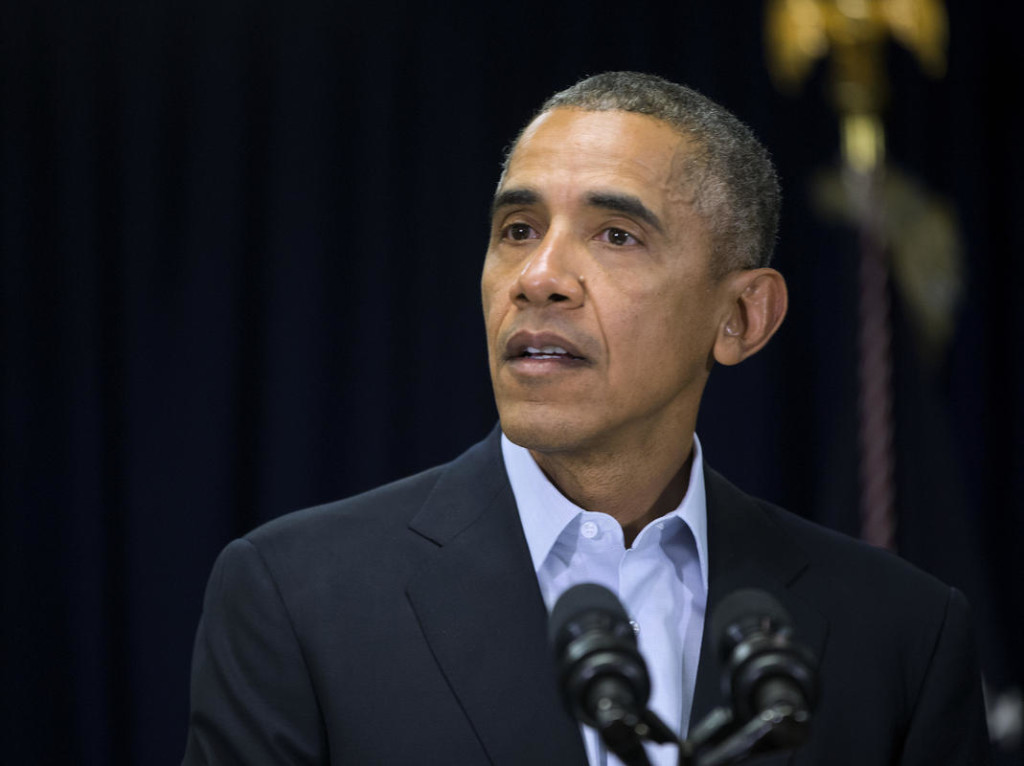
The presidential election just got real. The unexpected death of Supreme Court Justice Antonin Scalia — and the immediate declaration from Republicans that the next president should nominate his replacement — adds even more weight to the decision voters will make in November’s general election. For months, the candidates have espoused theoretical, sometimes vague, policy proposals. Now, the prospect of President Barack Obama‘s successor nominating a Supreme Court justice immediately after taking office offers a more tangible way for voters to evaluate the contenders. Candidates in both parties moved quickly to reframe the election as a referendum on the high court’s future. “Two branches of government hang in the balance, not just the presidency, but the Supreme Court,” Texas Sen. Ted Cruz said in the latest GOP debate, held in South Carolina just hours after word filtered out Saturday about Scalia’s death in Texas. “If we get this wrong, if we nominate the wrong candidate, the Second Amendment, life, marriage, religious liberty, every one of those hangs in the balance.” Democrat Hillary Clinton painted a similarly stark scenario. “If any of us needed a reminder of just how important it is to take back the United States Senate and hold onto the White House, just look at the Supreme Court,” Clinton said. Clinton has said she would have “a bunch of litmus tests” for potential nominees, including a belief that the Citizens United ruling clearing the way for super political action committees and unlimited campaign contributions should be overturned. She also said the court’s makeup is crucial to preserving abortion rights and the legality of gay marriage nationwide. Bernie Sanders, who is challenging Clinton for the Democratic nomination, has raised opposition to Citizens United as a requirement for any Supreme Court nominees. Scalia, a hero of conservatives during his nearly 30 years on the Supreme Court, was found dead Saturday at a resort ranch in Texas. The court now is divided between four liberal and four typically conservative justices, putting the ideological tilt up for grabs. Obama pledged to nominate a replacement in “due time,” even after Senate Majority Leader Mitch McConnell, R-Ky., said that responsibility should fall to the winner of the 2016 election. Obama could try to ram a nominee through the Senate this year, taking a high court vacancy off the next president’s immediate to-do list. Even if that were to happen, a confirmation vote probably would be months away, leaving the Supreme Court in the center of the campaign during the nomination process. With three other justices over the age of 75, the next president could have other vacancies during his or her tenure, even if Obama fills Scalia’s seat. It’s unclear how the new focus on the Supreme Court might affect voters’ decisions in an election that has seen surprising and unconventional candidates such as Donald Trump and Sanders challenge their parties’ establishments. Previous political thunderbolts that were supposed to push voters toward more traditional candidates, such as last fall’s terrorist attacks in Paris and California, passed without any negative impact on Trump and Sanders. In fact, Sanders has strengthened since then, with the economic-focused Vermont senator handily defeating Clinton in the New Hampshire primary and finishing a close second in the Iowa caucuses. Trying to counter Sanders’ momentum, Clinton has urged voters to consider which candidate is most electable in November. With the balance of the Supreme Court now potentially on the line, Clinton and her allies are certain to increase their warnings about the risk of sending a self-declared democratic socialist to face a Republican in the fall. “For any Democrat thinking about casting a protest vote for Sen. Sanders, this should serve as a wake-up call for what’s exactly at stake,” said Jim Manley, a former aide to top Democratic senators. Among Republicans, Marco Rubio, Jeb Bush and John Kasich are casting themselves as candidates who could appeal to swing voters in the general election and put the GOP in position to guide the next court nominations. But that could open them up to questions from Republican primary voters about the ideological purity of their judicial choices. Cruz is using the potential vacancy to build on his long-standing argument that Republicans should select a nominee with the most conservative credentials. An uncompromising conservative since arriving in the Senate, Cruz vowed to put “principled constitutionalists” on the Supreme Court. He contends Trump could not be trusted to do the same. “Donald Trump is president, he will appoint liberals,” said Cruz, noting the billionaire’s past support for Democratic politicians. Trump was alone among the candidates is naming specific justices he would consider nominating. He singled out Diane Sykes and William Pryor, federal judges appointed by former President George W. Bush. During Saturday’s debate, Kasich bemoaned that Washington and presidential candidates had “run so fast into politics” following Scalia’s death. But if anything, the speed at which politics did take over portends a furious fight to come over which candidate gets to put his or her imprint on the court. Republished with permission of the Associated Press.
U.S. Senate hopeful Jonathan McConnell releases first TV ad
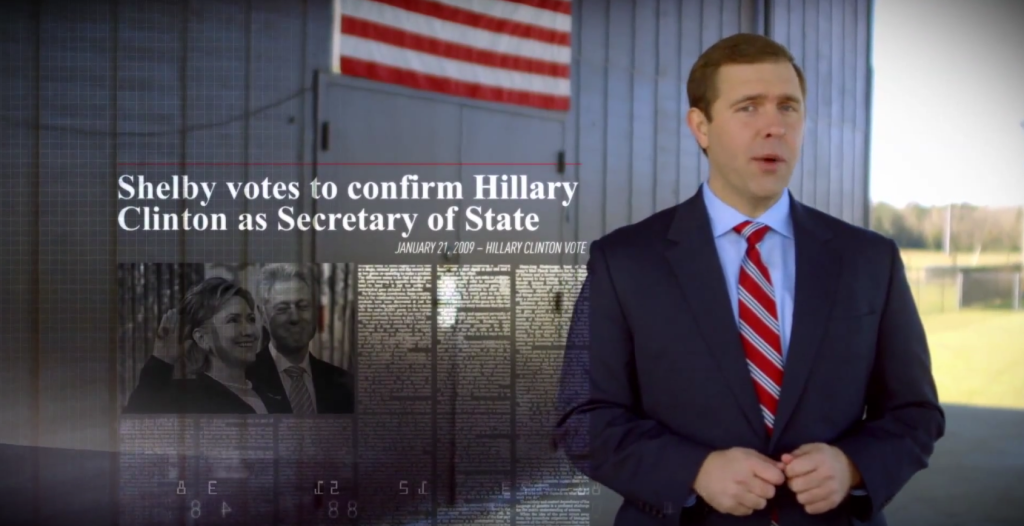
Election 2016 is in full-swing in the Yellowhammer State and U.S. Senate hopeful, Republican Jonathan McConnell released his first TV ad of the season Tuesday morning. The ad, which will air on both broadcast and cable networks statewide, emphasizes what McConnell says are the core differences between himself and his opponent, five-term incumbent U.S. Sen. Richard Shelby. “Washington politicians have failed to lead, leaving significant security risks both domestically and internationally,” McConnell said. “The rise of ISIS, the tragedies in Benghazi, and the spread of radical Islam can be attributed to the failures of career-minded politicians like Richard Shelby.” The commercial hits the airwaves in the wake of a fundraising uptick following two major endorsements from Special Operations Speaks and Citizens United just last week. “After the last 37 years of Shelby’s politics as usual, the people of Alabama are ready to be represented by a principled conservative,” McConnell said. “The culture of politics in Washington has failed us and left America unsafe. .. It’s time to send in a Marine.” Watch the ad below:
Jonathan McConnell nabs endorsement of Citizens United PAC for Senate run
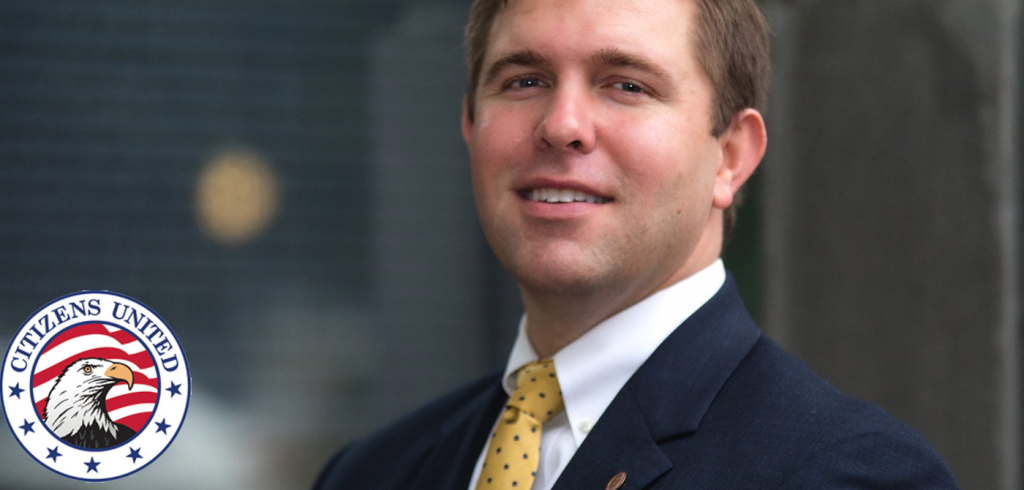
Taking on 29-year incumbent U.S. Sen. Richard Shelby in the Republican primary this March, Marine Corps Iraq War veteran and small-business owner Jonathan McConnell landed a major endorsement Thursday from Citizens United Political Victory Fund (CUPVF), the PAC affiliated with Citizens United. “Citizens United Political Victory Fund is proud to support true conservative candidate Jonathan McConnell against career Washington politician Richard Shelby”, said Citizens United President David N. Bossie. “As a conservative change agent, Captain McConnell will be a breath of fresh air in a United States Senate that is full of stale ideas and outdated big-spending politicians.” In the endorsement, there were obvious jabs at Senator Shelby, who has been in Washington over 37 years, between his current Senate gig and a previous position in the U.S. House of Representatives. Bossie continued, “Over the 37 years Richard Shelby has been in Washington, he has gleefully presided over the out of control federal spending habits that has resulted in our $19 trillion national debt. America needs a new generation of conservative leaders like Jonathan McConnell who will join Senator Ted Cruz and others in challenging the failed status quo in Washington. Big spending politicians no longer have a place in the U.S. Senate because there is no more money to spend. It’s time for Richard Shelby to go.” “It’s this mindset of indifference by entrenched career politicians that so desperately needs to be swept from office in Washington. All Alabamians who are Donald Trump, Ted Cruz, or Ben Carson voters should also pull the lever for fellow-change agent Jonathan McConnell in the rapidly approaching primary election on March 1st,” Bossie concluded. CUPVF has also contributed $5,000 to McConnell’s primary campaign.
Cash-rich super PACs prolong flagging presidential campaigns
Jeb Bush‘s recent cancellation of advertising plans in Iowa and South Carolina was yet another cost-saving step for a down-in-the-polls presidential campaign that had already thinned its staff. If not for his flush super PAC, the Republican might be gone from the contest by now. That group, Right to Rise, has burned through half of its $103 million — which still leaves it with about as much cash as John McCain spent during the entire 2008 GOP nominating contest. In the 2016 race, money isn’t buying love from voters. It is, however, buying some candidates more time. Less than a month before voting begins, the Republican field is still thick with a dozen presidential hopefuls. Super PACs are one reason why. Like Bush, Chris Christie and John Kasich are leaning heavily on these outside groups to communicate with voters. Nearly 96 percent of the money for Bush, Kasich and Christie commercials has come not from their official campaigns, but from their supportive super PACs, according to advertising tracker Kantar Media’s CMAG. This is the second presidential campaign since super political action committees burst on the scene after the Supreme Court’s Citizens United decision. The 2010 case made it clear that donors can contribute unlimited amounts of money to groups supporting specific candidates, so long as the candidates don’t directly control the spending. That means that at any given time a wealthy admirer of a candidate can write a huge check to a super PAC to help keep that person in front of voters, through commercials and mailings. Some super PACs, including one for Carly Fiorina, even have campaign-like voter outreach efforts such as door-knocking and publicizing events that feature the candidate. Those super PAC investments work as an incentive against a candidate giving up too soon, however dim the prospects. While super PACs have dumped buckets of money into politics, they’ve also helped ensure a more competitive democratic process, said Bradley Smith, a former federal elections commissioner who advocates for looser fundraising restrictions. “The complaint used to be that the candidates would fold up before anyone even voted,” said Smith, founder and chairman of the Center for Competitive Politics. “It’s not a bad thing that’s not the case anymore.” One of the first presidential hopefuls to take advantage of the post-Citizens United campaign finance landscape was Newt Gingrich, the former House speaker who sought the 2012 GOP nomination. Las Vegas casino billionaire Sheldon Adelson put up $20 million of his family’s money to back his longtime friend Gingrich. That money paid for TV ads when the candidate couldn’t afford his own, helping him stay afloat through third-to-vote South Carolina, which he won. Rick Santorum was in a similar position, benefiting from Wyoming investor Foster Friess’s super PAC assistance until his candidacy took flight after a surprising Iowa win. “There’s no question that a super PAC gives you the ability to sustain the appearance of a campaign even if you can no longer raise money,” Gingrich told AP. Both eventually lost to Mitt Romney, who dominated traditional campaign fundraising and also had a big-money super PAC helping out. Gingrich said the 2016 race differs from 2012 in several crucial ways. “That was one guy with a bunch of money versus the rest of us, and now it’s a bunch of guys with a bunch of money,” he said. At the same time, a celebrity businessman and political newcomer has shown that “money may not matter as much,” Gingrich said. Donald Trump‘s campaign only recently made its first TV ad, putting up $2 million to air it this week in Iowa and New Hampshire. He has dominated the GOP contest without spending much campaign money, and without major help from super PACs — which he has decried as “disgusting.” Bush, a former Florida governor, is in roughly the opposite position: His super PAC Right to Rise has pumped more than $50 million into its advertising campaign, yet he remains in the single digits in most preference polls. The group is pressing ahead. It has booked at least $24 million more in ads over the next nine weeks in 10 states, including early voting Iowa, New Hampshire and South Carolina, CMAG shows. Over the weekend, Bush’s official campaign cuts its South Carolina advertising plan by half and pulled its Iowa ad reservations altogether, an Associated Press analysis of the CMAG data found. Kasich, governor of Ohio, just began airing his first television ad on Tuesday, according to the campaign. But his super PACs have been busy for months. They’ve showered New Hampshire viewers with almost $10 million worth of commercials and this week told federal regulators they’re buying more ad time and distributing pro-Kasich — and anti-Christie — literature to voters. Republished with permission of the Associated Press.
Jac VerSteeg: Picture Donald Trump at the head of an army

The 2016 presidential race hasn’t had any official votes yet. But as things are shaping up for two candidates with Florida ties – Jeb Bush and Donald Trump – the contest already has bearing on at least two constitutional issues. They are whether contributing money to candidates is a form of protected free speech; and whether the president, as commander-in-chief, can usurp Congress’ constitutional power to declare war. The specific situations that raise these issues are, first, the fact that Bush’s immense campaign fund – he and his allies reportedly already have spent $100 million on advertising – has not vaulted Jeb to a preeminent position in the polls. Second, Trump’s provocative macho military and immigration proposals have led an increasing number of critics to label him a fascist with no regard for constitutional constraints on executive power. How would commander-in-chief Trump wield military power? Most other candidates also take an aggressive military stance. Will Congress, which has been meek or inactive on this front for more than a decade, reassert its proper authority? Jeb’s embarrassing poll numbers routinely show him at 5 percent or less, or about 20 points behind Trump. If Bush’s actual election results fulfill those dismal predictions, he unquestioningly will have done his party one very big favor. He will have provided evidence to counter the mostly Democratic critics of the Supreme Court’s Citizens United ruling, which basically held that money is speech and super PACS can spend as much as they like. Jeb’s debacle is shaping up to provide overwhelming proof that money does not always corrupt the democratic process. True, there are all kinds of counter arguments. Trump, with his flair for attracting free media coverage, is a unique candidate. And it is likely that any post mortem of spending in 2016 elections across the board – including the House and Senate and state and local elections – would show a clear connection between spending and electoral success. But Bush and his supporters have spent so much money in such a high-profile race that it will be Exhibit No. 1 in any debate about overturning Citizens United. An interesting related question is, of course, why hasn’t spending gobs of money translated into success for Bush? The “product,” the pitch or both are faulty. However, a major factor has to be Trump’s rhetoric and its appeal to a large and motivated segment of the GOP base. Trump’s speaking style, the outrageous content of his proposals – ban all Muslims, Mexicans are rapists, etc. – his encouragement of supporters in his audiences to physically intimidate protesters, all have encouraged commentators and cartoonists to compare him to Hitler and Mussolini. Members of Congress should be looking at Trump and asking themselves what would he do as commander-in-chief? In fact, they should already have been acting to regain control over what President Barack Obama has done as commander-in-chief. Obama got America involved in Libya, which led to Benghazi. He is incrementally increasing the U.S. military’s involvement in and around Syria and has ordered thousands of air strikes against Islamic extremists. Congress, which according the constitution has sole authority to declare war, has refused through all of this to debate and approve updated authority for the president to prosecute a “war” against ISIS. That’s a shocking dereliction of duty, and it significantly affects Florida, which has a leading military presence. The cowardly motive for inaction is clear. Congress does not want to stop the president from making war, but it also does not want to approve or guide his actions. Because Congress wants to avoid blame, Congress avoids action. That could be disastrous no matter who is elected president in 2016. Pundits say Trump has no chance of being elected. They also said he would fade by now. He hasn’t. Congress should imagine him at the head of the Army, Navy, Air Force and Marines. That should scare Congress into action. Jac Wilder VerSteeg is a columnist for The South Florida Sun Sentinel, former deputy editorial page editor for The Palm Beach Post and former editor of Context Florida.
Super PACs dole out cash, whether candidates like it or not
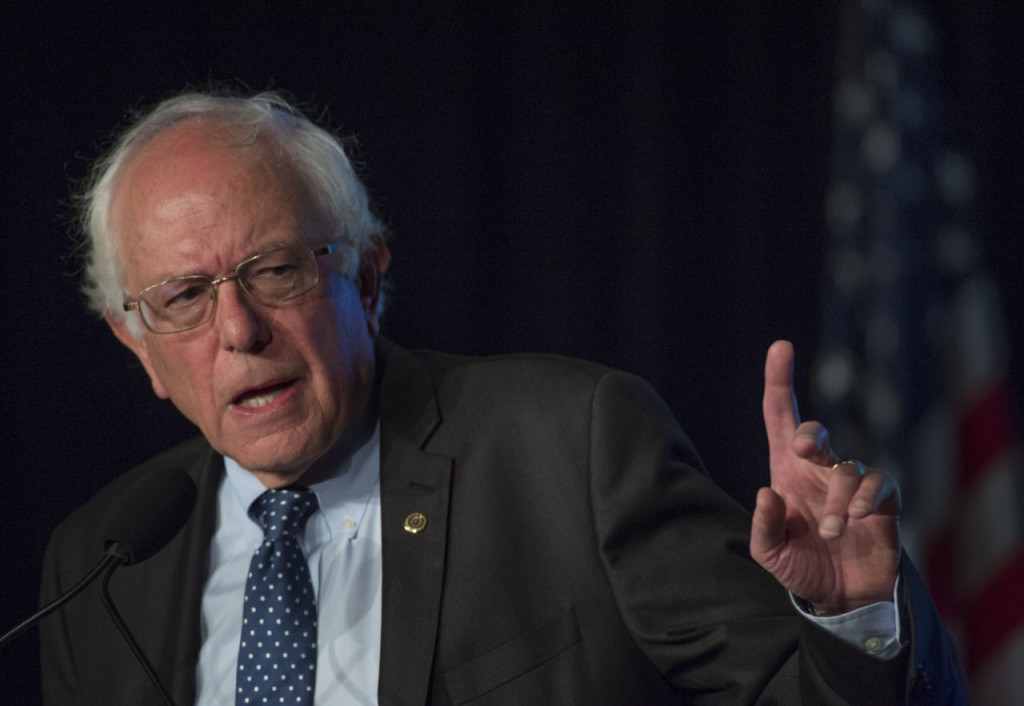
Donald Trump calls them a “crooked business.” Bernie Sanders says they’re “corrupt” organizations “buying elections.” But the barrage of insults hasn’t stopped the political groups known as super PACs and their donors from showing the two presidential candidates some love — no matter how loudly they may rail against their very existence. “I’m not going to be deterred just by that alone,” said Joshua Grossman, president of Progressive Kick, of Sanders’ anti-super PAC message. His liberal super PAC, funded by donors who have written checks as large as $250,000, has endorsed Sanders and is planning to spend money helping to elect him. Unlike formal campaigns for president, super PACs are allowed by law to accept donations of any size. That fact makes them a juicy political target for populist candidates such as Trump and Sanders. Yet already, a super PAC allied with a nurses’ union that endorsed Sanders over Democratic front-runner Hillary Clinton in August has put more than $600,000 into pro-Sanders digital and print ads in the important early primary states of Iowa, New Hampshire, South Carolina and Nevada. Billboards put up by the super PAC, National Nurses United for Patient Protection, proclaim: “Politics As Usual Won’t Guarantee Healthcare For All. Bernie Will.” The union is only able to spend that kind of money because of the 2010 Supreme Court ruling known as Citizens United, a decision that ultimately led to the creation of super PACs. Sanders has decried it as corrosive to democracy. That ruling also enabled unions to start spending member dues on political advertising in federal elections. Since that time, the nurses’ union has moved $3.4 million in dues into its super PAC, according to records filed with the Federal Election Commission. The group hasn’t raised money from anyone else. “Anti-labor folks might say that these unions are extorting money from their dues-paying members to use on politics, whether those members like it or not,” said Paul S. Ryan, senior counsel at the Campaign Legal Center in Washington, which advocates for stricter campaign finance rules. RoseAnn DeMoro, the union’s executive director, said the super PAC has helped other candidates in previous elections and is assisting Sanders’ bid because “we’ve never seen a better messenger” for causes important to the union’s members, citing as an example his plan to expand Medicare. “We are hoping to do as much as we can for him,” she said. “The nurses are extremely happy with what we’ve done with their money. He’s a vehicle for our voice. We laugh quietly among ourselves and say, ‘Bernie stole our issues.’” The nurses’ early endorsement was seen as a political victory for Sanders, who filmed a five-minute video thanking the group’s 185,000 members for their support. Nearly three months later, Sanders and his aides defended the group as “good” big money, drawing a contrast with the wealthy corporate donors he frequently vilifies on the campaign trail. “They are nurses and they are fighting for the health care of their people,” Sanders said in an interview last week on CNN. “They are doing what they think is appropriate. I do not have a super PAC.” Sanders has sought to distinguish himself from Clinton on the issue of big money. While both say they’d like to limit money in politics by rolling back the Citizens United court ruling, Clinton deployed close aides to a super PAC that aims to at least triple the $80 million it raised to support President Barack Obama‘s re-election. That group, Priorities USA, already has a half-dozen $1 million contributors. Sanders has not authorized any similar effort. In fact, in June, Sanders’ campaign attorney sent a cease-and-desist letter to a strategist who set up a “pro-Sanders” super PAC going by several names, including Bet on Bernie and Americans Socially United. Cary Lee Peterson, the man who set up the group, has credit and legal problems in several states, an investigation by the Center for Public Integrity found. A campaign finance report the group filed seven weeks late showed it was $50,000 in debt as of the end of June. The group is continuing to solicit money online. On the other side of the aisle, Trump accuses his opponents of being controlled by the super PACs backing their bids — even calling some “puppets” of their donors. But super PACs can’t seem to quit Trump. At one point his campaign identified nine that appeared to be raising money in the name of helping him. One, called Patriots for Trump, purchased Iowa and New Hampshire voter contact information as recently as late October, FEC records show. Trump himself attended a several events for a group called Make America Great Again — his slogan. In October, The Washington Post reported on ties between the leader of Make America Great Again and Trump’s own aides. Soon after, Trump asked the group to shut down, and they appeared to do so. At the same time, his campaign sent cease-and-desist letters to other supposedly pro-Trump super PACs, and he ramped up his anti-super-PAC rhetoric. Many seem to have stopped raising money. One group, called Let’s Trump Politics, remains operational — at least online. It formed in late September, according to the FEC, and hasn’t yet had to file any fundraising information. The group’s website includes a headline about how “Republicans support political outsiders” — and a disclaimer that its mission is “in no way a direct relation to Donald Trump or his 2016 presidential campaign.” Republished with permission of the Associated Press.
Martin Dyckman: Winner-take-all winner could be Trump

Our next president may well owe the office to arrogant billionaires or be one himself. Meanwhile, The New York Times reports that fewer than 400 families account for nearly half the $388-million already invested in that election still more than a year away. Did America shed blood to be rid of monarchy only to have it come to this? And yet the vast moral and political corruption unleashed by the U.S. Supreme Court’s confusion of free spending with free speech is only one of four ways in which government of the people, for the people and by the people has gone off the track. Voting districts in nearly every state are drawn by the party in power to control the outcomes. The elections themselves are monopolized by two increasingly polarized political parties, excluding the increasing numbers of citizens who want nothing to do with either of them. The elections, whether primary or general, can be won with much less than majorities by unpopular candidates who would not be the second choices of most voters. Florida is powerless to control the money. That will take a constitutional amendment or the election of a president who would insist that his or her Supreme Court nominees agree that the Buckley and Citizens United cases were wrongly decided. Florida has made inroads on the gerrymandering through the adoption of the Fair Districts initiatives five years ago and the state Supreme Court’s willingness to enforce them. But that fortunate condition is imperiled by the next four court appointments, which will be controlled by Rick Scott‘s nominating commission. Time is running very short for people who believe in judicial independence to do something about that. The “All Voters Vote” initiative petitions now circulating would break the shared monopoly of the Republicans and Democrats by allowing everyone to vote in an open primary that could nominate two candidates of the same party — or of no party — for state offices and Congress. That’s good for the growing number of voters who claim no party — presently 27 percent — or who identify with the Greens and other minor parties. To that extent, it would be a significant improvement for everyone. Jim Smith, the former Florida secretary of state and a supporter of the initiative, acknowledges that it hasn’t done much to change the lineup of elected officials in Louisiana and California, the other two open-primary states. He is right, however, in saying that it has “changed the conversation — and it’s a conversation that a broader spectrum of voters want to hear candidates talk about.” Republican candidates in districts with sizable Democratic minorities would have to think twice about toeing the Tea Party line. Democratic candidates in safely blue districts would need to court Republican votes for the first time. But “Top Two” is still vulnerable to the winner-take-all weakness. In 1991, a 12-candidate field in Louisiana’s open primary left voters with a dismal runoff choice: former Gov. Edwin Edwards, whose corruption was flagrant, or David Duke, a former Ku Klux Klan grand wizard and an avowed Nazi. There were bumper stickers saying, “Elect the crook — it’s important,” and so the voters did. Edwards went to federal prison in 2002. That same year, 16 candidates sought the French presidency. Nearly everyone assumed there would be a runoff between a conservative, Jacques Chirac, whose ethics were as suspect as Edwards’, and the prime minister, Socialist Lionel Jospin. Chirac ran first, as expected, with 19.8 percent of the vote. But Jospin was edged out of the running by Jean Marie le Pen of the far right National Front, an ultranationalist party. Although nearly two-thirds of the voters had preferred other candidates, their final options were, as in Louisiana, between two obviously unappealing politicians: a suspected crook and a presumed fascist. (Chirac won.) There’s a way to avoid such dismal outcomes. It’s called ranked-choice voting, a task that computer science makes simple. To see how simple — and have some fun — go to this website: www.fairvote.org. There are links on the page to exercises where you can cast rank-ordered votes for political parties and for the Republican and Democratic presidential candidates. Here’s how the presidential game played out for me and for other participants on Monday. In the Republican poll, Donald Trump led the first round, but with only 18 percent. Bobby Jindal ran last and was eliminated. The second-choice votes of his supporters were distributed. There were 15 more rounds, all conducted instantly by computer. Marco Rubio fell out in the 12th and Jeb Bush in the 13th. In the 16th and last round, Trump finally gave way to Rand Paul, who won the nomination with 51.28 percent support. Bernie Sanders led the Democrats with 46 percent. Hillary Clinton ran third, trailing Joe Biden, who isn’t an announced candidate. Martin O’Malley ran last, with 6 percent, and the second choices of his supporters were counted. Clinton was gone in the fourth round. In the sixth and final, Sanders’s support increased to 51.9 percent and he became the nominee. These results are hardly scientific and not necessarily predictive. The samples were small and self-selected. Anyone could vote in either race, and the biases were obviously liberal. But they’re interesting nonetheless. The two “nominees,” Paul and Sanders, project more authenticity than nearly all the others. As for Trump, he piled up more second-choice votes than everyone except Paul. If the Republican Party of Florida still insists on a March 15 winner-take-all primary, which will be well after many of the trailing and financially poorer candidates have dropped out, Trump could easily win it all. Martin Dyckman is a retired associate editor of the St. Petersburg Times. He lives in Western North Carolina.
In South Carolina, a Republican scramble to stand-out
Republicans making their pitch to be the party’s 2016 presidential nominee aimed to out-do each other Saturday in arguing that President Barack Obama is a failed leader. But hitting Obama with the usual critiques – from his 2010 health care overhaul to allegations of missteps on foreign policy to the rise in the national debt during his time in office – also made it hard for the gaggle of White House aspirants to stand out during a forum in South Carolina hosted by the conservative group Citizens United. Wisconsin Gov. Scott Walker tried by touting his ability to beat whomever is nominated by the Democratic Party, reminding activists that he won three statewide elections in four years in a state twice carried by Obama. “The last time a Republican carried the state for president was 1984,” he said. “That’s a tough state.” He even took the crowd back to his decision to run for county executive in heavily Democratic Milwaukee County. “Never ever had there been a Republican in that spot before,” he said. Carly Fiorina, the former Hewlett-Packard CEO, continued her tactic of going straight at Hillary Rodham Clinton, the Democratic favorite for 2016. “She is not trustworthy, and she does not have a record of accomplishment,” Fiorina said. In an interview before his turn on stage, Louisiana Gov. Bobby Jindal pointed to his work on policy, saying he’s the only potential candidate in the field who has “spent the last 18 months coming up with detailed ideas on health care, on foreign policy, on energy.” Once on stage, Jindal spent considerable time touting his credentials as a social conservative, including his pushback against criticism from some in the business community over “religious liberty” laws that have become a flashpoint in the national debate over same-sex marriage. “Don’t even waste your breath trying to bully the governor of Louisiana,” Jindal said, repeating what he said was his message to corporate leaders. Rick Santorum, who won the Iowa caucuses in 2012 before fizzling out against eventual nominee Mitt Romney, warned that Republicans eager to retake the White House after Obama’s two terms in office must stay focused on reaching working-class voters. “We have to be a pro-worker party,” he said. “We have to be the party for a rising tide lifting all boats. There are millions and millions of Americans who have holes in those boats.” Florida Sen. Marco Rubio took a hard line on foreign policy, saying the nation must get tougher with terrorists. Adapting a line from the movie “Taken,” he said: “We will look for you. We will find you. And we will kill you.” Texas Sen. Ted Cruz trumpeted his unapologetic approach on Capitol Hill, where he helped engineer a partial government shutdown in 2013. And he told activists that they should compare his style with his rivals, all of whom insist they are conservative. “Have you had anyone up here today say, `I’m an establishment moderate who stands for nothing?’” he said. “So how do you tell the difference? The scriptures tell us, `You shall know them by their fruits.” That means, he said, asking candidates, “You say you believe these principles. When have you fought for them?” Former Texas Gov. Rick Perry let loose a series of broadsides at Obama and his policies, drawing cheers from the crowd for a withering critique that covered immigration, the Affordable Care Act, the Islamic State militant group and the federal budget. His bottom line: “We’ve seen gross incompetence. We’re here to declare that we’re not going to take it anymore.” Ben Carson, the retired neurosurgeon who, like Fiorina, announced his candidacy earlier this week, is running as the outsider. “I’m not a politician,” he said. “That’s what sets me apart.” Those not in South Carolina on Saturday included former Florida Gov. Jeb Bush, who delivered the commencement address at Liberty University in Virginia; Kentucky Sen. Rand Paul, who was campaigning in northern California; and former Arkansas Gov. Mike Huckabee, who was in South Carolina on Friday. Citizens United President David Bossie dismissed the idea that the large number of GOP candidates muddled their messages and called the wide field an advantage. “These men and women all believe in American exceptionalism,” Bossie said. He added that along with criticizing Obama, Republicans should focus their ire on Clinton – a point on which many in the crowd agreed. “Any one of them would be better than the disaster we’ve got now,” said Gary Gunderson of Abbeville, South Carolina. His wife, Margaret, chimed in: “Or Hillary.” Republished with permission of the Associated Press.
