
Judge blocks citizenship question from 2020 Census
A federal judge in New York on Tuesday ruled against the Trump administration’s decision to add a citizenship question to the 2020 census. The question to be added was, “Is this person a citizen of the United States?” U.S. households have not been asked such a question on the census since 1950. But, U.S. District Judge Jesse Furman said the decision to include such a citizenship question was “unlawful,” writing that “(Commerce Secretary Wilbur Ross‘) decision to add a citizenship question to the 2020 Census — even if it did not violate the Constitution itself — was unlawful for a multitude of independent reasons and must be set aside.” “Most blatantly, Secretary Ross ignored, and violated, a statute that requires him, in circumstances like those here, to collect data through the acquisition and use of ‘administrative records’ instead of through ‘direct inquiries’ on a survey such as the census,” Furman wrote. “Additionally, Secretary Ross’s decision to add a citizenship question was ‘arbitrary and capricious’ on its own terms: He failed to consider several important aspects of the problem; alternately ignored, cherry-picked, or badly misconstrued the evidence in the record before him; acted irrationally both in light of that evidence and his own stated decisional criteria; and failed to justify significant departures from past policies and practices ― a veritable smorgasbord of classic, clear-cut APA violations,” he continued. Democrats worried including the question would discourage immigrants from participating in the survey, thereby diluting representation for states that tend to vote Democratic and robbing many communities of federal dollars. Alabama and the census In May 2018, Alabama 5th District U.S. Rep. Mo Brooks and Alabama Attorney General Steve Marshall have filed a lawsuit against the federal government over what they said was the Census Bureau‘s “unlawful” decision to include of illegal immigrants in census data “used to determine the apportionment of the U.S. House of Representatives and the Electoral College.” Marshall says the move will cause Alabama to lose a seat in the U.S. House of Representatives as well as a vote in the Electoral College. “If the U.S. Census Bureau follows through with its plan to include illegal aliens in the 2020 census for purposes of apportionment, Alabama will lose both a seat in the U.S. House of Representative and a vote in the Electoral College,” explained Marshall. “Alabama’s loss will be another state’s gain, as states with a growing illegal alien population will be the beneficiary of this reapportionment. I have joined with Congressman Mo Brooks in filing suit against the federal government to stop the inclusion of illegal aliens in the census’s apportionment population. The Constitution does not permit the dilution of our legal residents’ right to equal representation in this manner.” The Trump administration is expected to appeal the ruling.
Supreme Court limits ability to strip citizenship from immigrants
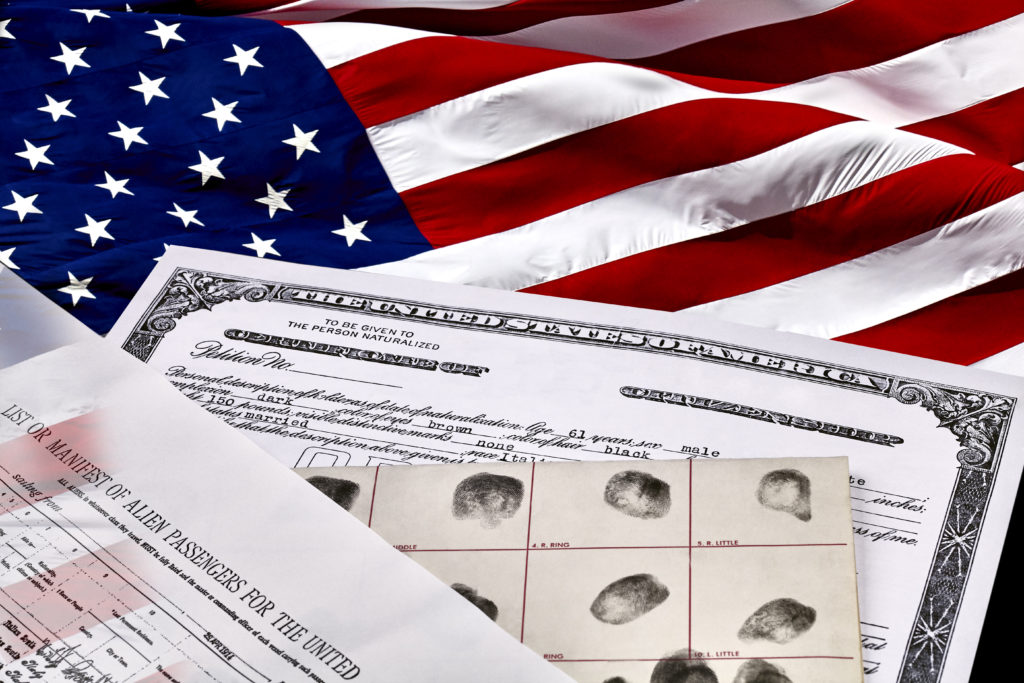
The Supreme Court on Thursday limited the government’s ability to strip U.S. citizenship from immigrants for lying during the naturalization process. The justices ruled unanimously in favor of an ethnic Serb from Bosnia who lied about her husband’s military service. Justice Elena Kagan wrote for the court that false statements can lead to the revocation of citizenship only if they “played some role in her naturalization.” The court rejected the position taken by the Trump administration that even minor lies can lead to loss of citizenship. The woman, Divna Maslenjak, and her family were granted refugee status in 1999 and settled near Akron, Ohio, in 2000. She became a citizen in 2007. She initially told immigration officials her husband had not served in the Bosnian Serb military. That was a lie, she later conceded, and lower courts upheld a criminal conviction against her. The conviction automatically revoked her citizenship, and she and her husband were deported in October. Maslenjak was convicted by a jury that was told even an inconsequential lie was enough for a guilty verdict. The high court returned the case to the 6th U.S. Circuit Court of Appeals in Cincinnati to determine whether Maslenjak’s false statements made a difference in the decision to grant her citizenship in the first place. The case is Maslenjak v. U.S., 16-309. Republished with permission of The Associated Press.
Donald Trump’s rise is driving immigrants to become citizens
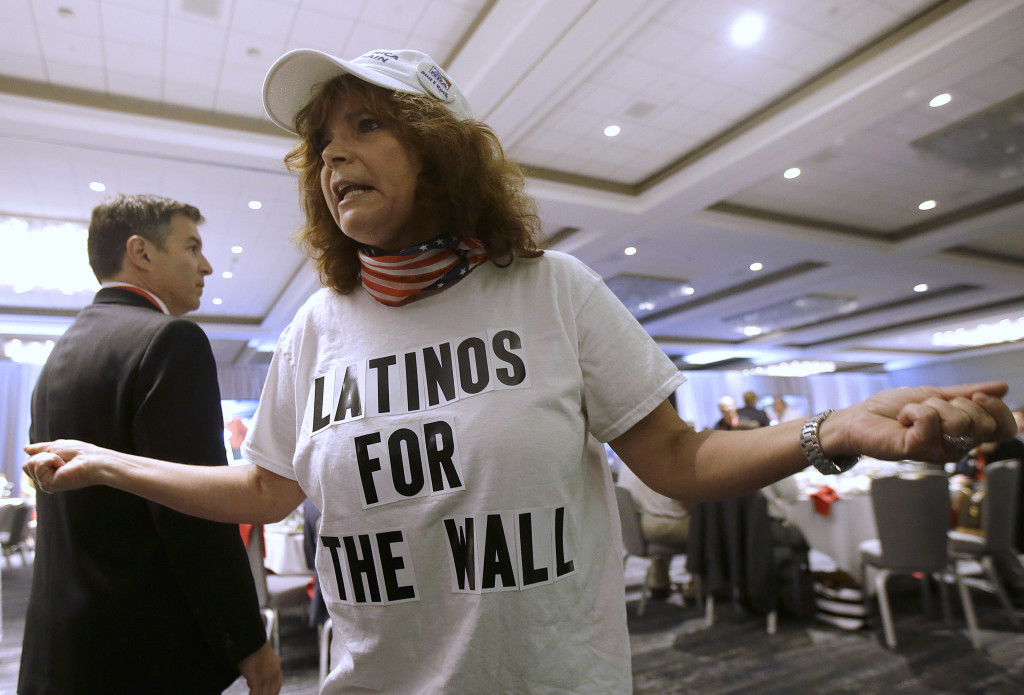
On a recent Saturday morning in South Florida, 50-year-old Edgar Ospina stood in a long line of immigrants to take the first step to become an American. Ospina has spent almost half his life in the U.S. after emigrating from his native Colombia, becoming eligible for citizenship in 1990. But with Donald Trump becoming a more likely presidential nominee by the day, Ospina decided to wait no more, rushing the paperwork required to become a citizen. “Trump is dividing us as a country,” said Ospina, owner of a small flooring and kitchen remodeling company. “He’s so negative about immigrants. We’ve got to speak up.” Nationwide, immigrants like Ospina are among tens of thousands applying for naturalization in a year when immigration has taken center stage in the presidential campaign, especially in the race for the Republican nomination. Trump, the GOP front-runner, has pledged to deport the estimated 11 million people living in the U.S. illegally. He’s also vowed to bar Muslims from entering the country and threatened to cut off remittances that Mexican immigrants in the U.S. send back home. And he’s called for building a border wall – among other proposals to deal with unlawful immigration, saying the federal government has failed to protect the border from people and drugs illegally entering the country. That rhetoric, immigrant advocates and lawmakers say, is driving many foreign-born residents to seek citizenship. “There is fear of a Trump presidency,” said Maria Ponce of iAmerica Action, a Washington-based immigrant rights group that is teaming up with other organizations to help those seeking citizenship – part of a national campaign called “Stand Up To Hate.” They’ve sponsored naturalization workshops from Washington state to Nebraska and Massachusetts. Nationwide, naturalization applications are up 14 percent in the last six months of 2015 compared with the same period in 2014, according to the government. And the pool of future U.S. citizens is large. Nearly 9 million legal permanent residents, or green-card holders, are eligible to become Americans. Of those, about 4 million are Hispanic. Rep. Luis Gutiérrez, D-Ill., was featured in a public service announcement encouraging immigrants to become citizens so they can vote in November. He mocked Trump’s slogan, suggesting it was really: “Make America Hate Again.” “We’ve seen it in the past and we are seeing it again many times over this year,” he said. “When immigrant communities feel they are under attack they react with a large number of eligible immigrants becoming citizens and a large number of eligible citizens becoming voters.” Erica Bernal of the National Association of Latino Elected Officials said the tenor of the presidential campaign is galvanizing Latino immigrants. She said today’s movement is reminiscent of the 1990s when Latinos in California rose up against Proposition 187, which sought to deny government services to those in the state illegally. The courts overturned it. Her group and several local ones in Los Angeles recently launched a regional campaign to encourage Latino immigrants to become citizens. About 775,000 legal immigrants in the L.A. area are eligible for citizenship. To qualify, immigrants must have been in the country five years, complete a 21-page application, get fingerprinted, pass a civics and English exam and pay almost $700 in fees. Ivan Parra, citizenship coordinator with the Florida Immigrant Coalition said immigrants laugh when he asks why they want to become Americans. “‘You know why,’ they say, ‘I want to vote against racism and hate,’” said Parra. He says immigrants this year are “desperate to be part of the political process.” Maria Cristina Giraldo, originally from Colombia and already a U.S. citizen, said she is so fearful of Trump becoming president that she brought five relatives to a naturalization workshop in South Florida. “Trump is anti-immigrant,” said Giraldo, who works cleaning houses. “I don’t know if it’s because he’s such a brute in his speeches or that he isn’t careful in what he’s saying, but he’s very nasty toward Hispanics.” Her sister, Gladys Ceballos of Hollywood, Florida, agreed. She’s trying for the second time to become a citizen after failing to pass the English exam. She says she’s not fearful of Trump, but she doesn’t trust him. John Haughton, 66, a Jamaican immigrant, said: “Trump is a man who would say one thing today and may modify his views tomorrow.” “I want my voice heard,” said Haughton, a legal permanent resident since 2008. Seung Baik, 43, who was born in South Korea and brought to the U.S. as a teenager, said he too believes Trump is too divisive. “It took me a little longer to become a citizen because I didn’t want to apply and treat this as a membership to something, like joining a club,” said Baik, a church pastor. “The world and this nation are changing, and my vote matters.” Baik said he won’t be registering as a Democrat or Republican but remains independent. He’s undecided about whom he will vote for in his first presidential election as a U.S. citizen, but “it won’t be Donald Trump.” Republished with permission of the Associated Press.
Ted Cruz downplays Trump raising concerns over Canadian birth
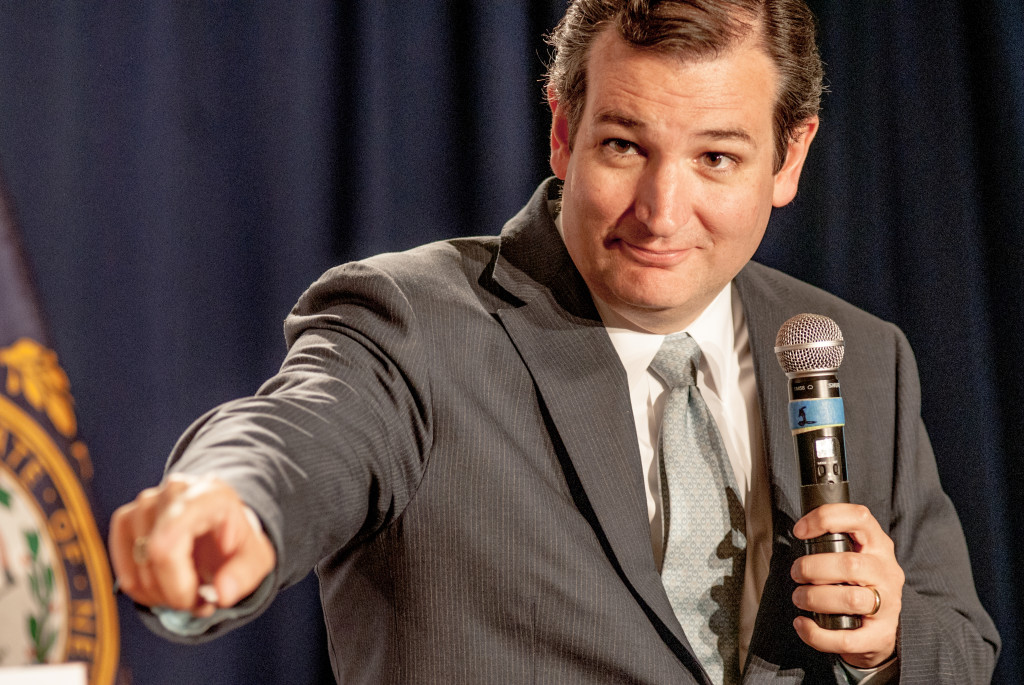
Ted Cruz tried to make a joke Tuesday out of Republican presidential rival Donald Trump raising questions about whether the Texas senator’s birth in Canada could be a liability if he becomes the GOP’s nominee. Trump told The Washington Post in an interview Tuesday that Cruz’s Canadian birthplace and his holding a double passport was a “very precarious” issue that “a lot of people are talking about.” Trump has ramped up his attacks on Cruz since the Texas senator sprinted ahead of the billionaire businessman in some opinion surveys in early-voting Iowa. Cruz, in response to questions about Trump’s comments, said the best way to respond was to laugh it off and “move on to the issues that matter.” He first reacted on Twitter, posting a link to a video from the 1970s television show “Happy Days” showing the character Fonzie water skiing over a shark. The moment, known as “jumping the shark,” has come to refer to the use of a gimmick to halt the decline of a television show or other effort. “What the American people are interested in is not bickering and back and forth,” Cruz told reporters before a town hall in Sioux Center that drew hundreds of people. Cruz was concluding the second day of a six-day swing through Iowa before the Feb. 1 caucuses, while Trump was holding a rally in New Hampshire. The U.S. Constitution says only a “natural born Citizen” may be president. Legal scholars, however, generally agree the description covers foreign-born children of U.S. parents. Cruz was born in Calgary, Alberta, in 1970 while his parents were working in the oil business there. His mother, Eleanor, is from Delaware, while his father, Rafael, is a Cuban who became a U.S. citizen in 2005. Cruz has said that because his mother is a citizen by birth, he is also one. Under U.S. law, anyone born to a U.S. citizen is granted citizenship no matter where the birth takes place. Cruz renounced his Canadian citizenship in 2014, amid speculation he was preparing for a presidential run, less than a year after he released his birth certificate. But that didn’t stop Trump from raising the issue Tuesday. “Republicans are going to have to ask themselves the question: ‘Do we want a candidate who could be tied up in court for two years?’ That’d be a big problem,” Trump said in The Washington Post interview. “It’d be a very precarious one for Republicans because he’d be running and the courts may take a long time to make a decision. You don’t want to be running and have that kind of thing over your head.” Trump was one of the loudest voices questioning whether President Obama was born in Kenya and thus not eligible to be U.S. president. Obama is an American citizen born in Honolulu; his father was Kenyan, his mother American. Previous foreign-born Americans — notably Republicans John McCain and George Romney — have run for president with some mention, but no serious challenges, of their eligibility. The comments mark a reversal for Trump, who in September downplayed Cruz’s birthplace in an interview with ABC. “I hear it was checked out by every attorney and every which way and I understand Ted is in fine shape,” he told the network then. But Trump has been ratcheting up his attacks on Cruz in recent weeks. Trump first unleashed a verbal assault on Cruz in December at an event in Des Moines where he questioned Cruz’s evangelical faith. “I do like Ted Cruz, but not a lot of evangelicals come out of Cuba,” he said of the country where Cruz’s father, an evangelical preacher, was born. Republished with permission of the Associated Press.
