
Kay Ivey participates in groundbreaking ceremony for restoration of Historic Brown Chapel AME Church
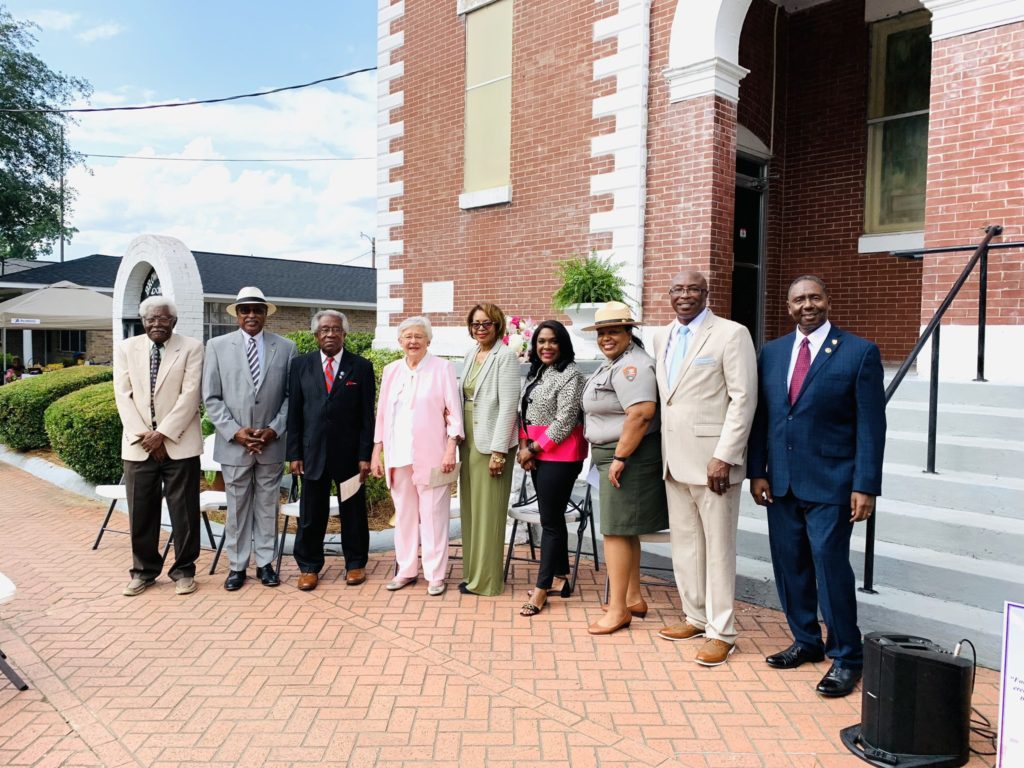
Last Wednesday, Governor Kay Ivey participated in a groundbreaking ceremony for the Restoration Project of the Brown Chapel AME Church in Selma, AL. Built in 1908, Brown Chapel will receive a $1.3 million grant from the National Park Service for the church’s restorations and repairs, including electrical work, roof work, and cupola repairs. The church serves as a historic Civil Rights landmark, originally gaining notoriety for its role in “Bloody Sunday,” which served as a catalyst for the Voting Rights Act of 1965. A recent press release from the Office of Governor Kay Ivey stated, “In the 1960s, the Brown Chapel AME Church became widely-known during the Voting Rights Movement for the “Bloody Sunday” confrontation and the subsequent march from the church to the state capitol in Montgomery. In March 1998, Brown Chapel AME Church was awarded the distinctive status of a National Historic Landmark for its significant participation in the struggle for equality and justice for all people.” On Twitter, she commented, “It was truly an honor to join Brown Chapel AME Church for the groundbreaking of their $1.3 million restoration project. This National Historic Landmark church’s legacy with the Civil Rights Movement will on for future generations.” It was truly an honor to join Brown Chapel AME Church for the groundbreaking of their $1.3 million restoration project. This National Historic Landmark church’s legacy with the Civil Rights Movement will live on for future generations. #alpolitics pic.twitter.com/4UVhdtYVvY — Governor Kay Ivey (@GovernorKayIvey) June 23, 2021 Ivey reflected on Selma’s rich history in the fight for Civil Rights during her speech last week, “These new renovations will add to the significance of this historic landmark and continue to showcase the deep-rooted history of the civil rights movement and the city of Selma.” Congresswoman Terri Sewell, Selma Mayor James Perkins, and former Alabama GOP Chair Terry Lathan, among other state leaders, were also in attendance at the ceremony. Sewell recalled attending the church in her youth with her family and thanked the National Park Service during her speech at the ceremony. “It’s always good to be back in Selma,” Sewell expressed. “This $1.3 million grant from the National Park Service will do is to ensure that America’s story lives on, that we who are members of this great church are not alone in preserving it because this church is a part of America’s history.” Rep. Sewell stated on Twitter, “Brown Chapel AME has always symbolized the rich history of the Civil Rights Movement and remains critical to understanding where our nation stands today. This $1.3 million grant ensures that it will be preserved not only in our hearts, but also in American History.” Brown Chapel AME has always symbolized the rich history of the Civil Rights Movement and remains critical to understanding where our nation stands today. This $1.3 million grant ensures that it will be preserved not only in our hearts, but also in American History. pic.twitter.com/rwvCTsdXQp — Rep. Terri A. Sewell (@RepTerriSewell) June 23, 2021
Terri Sewell: Remembering our beloved John Lewis
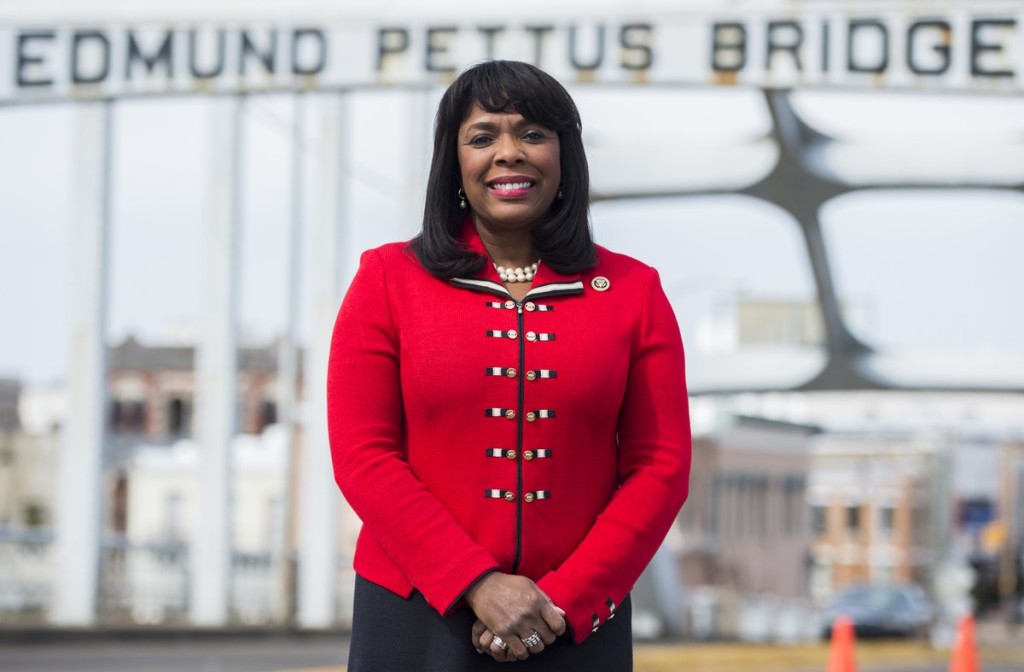
This past week has been one of the hardest weeks of my life. The loss of Congressman John Lewis, a Civil Rights hero, a dedicated public servant and true patriot, cannot be overstated. John devoted his life to this country which he loved so much. Born one of ten children to sharecroppers in Alabama’s rural Black Belt, John had a vision for our country, and he was willing to risk everything for the realization of his vision. John’s call was divine. Though he was beaten and bloodied on the Edmund Pettus Bridge; though he was arrested over forty times; and though he encountered the vile vitriol of racism, he never gave up. He never stopped getting into good trouble. As a daughter of Selma, John was always a larger than life figure – someone whose story I knew like the back of my hand. As a little girl, singing in the Children’s Choir at Brown Chapel AME, my home church and the safe haven where John and so many others sought shelter on Bloody Sunday, I could never have imagined that one day I would have the extraordinary honor of calling Congressman Lewis my colleague, mentor, or most importantly, my friend. John, “the Boy from Troy” paved the way for this “Girl from Selma” to walk the halls of Congress and taught me so much of what it means to be an effective legislator—how to fight the good fight and stay persistent in the face of seemingly insurmountable odds. I will forever be grateful for the time John invested in me, for his unwavering support and for his unconditional love. Yesterday, I had the opportunity to speak on the floor of the U.S. House of Representatives about the legacy of Congressman Lewis and the importance of upholding his legacy by passing the renamed “John Lewis Voting Rights Advancement Act” through both chambers of Congress. A full transcript of those remarks is copied below, and the link may be found here. Though it is with a heavy heart, we must continue onward, knowing that John would have wanted us to continue fighting the good fight. He dedicated his life to voting rights, and I promise that I will continue to fight for voting rights, just like John would have wanted. May we honor his legacy and pass the John Lewis Voting Rights Advancement Act, ensuring equal access to the ballot box for all Americans. Congresswoman Terri A. Sewell is in her fifth term representing Alabama’s 7th Congressional District. She is one of the first women elected to Congress from Alabama in her own right and is the first black woman to ever serve in the Alabama Congressional delegation.
Court challenge ahead for Donald Trump’s district drawing order
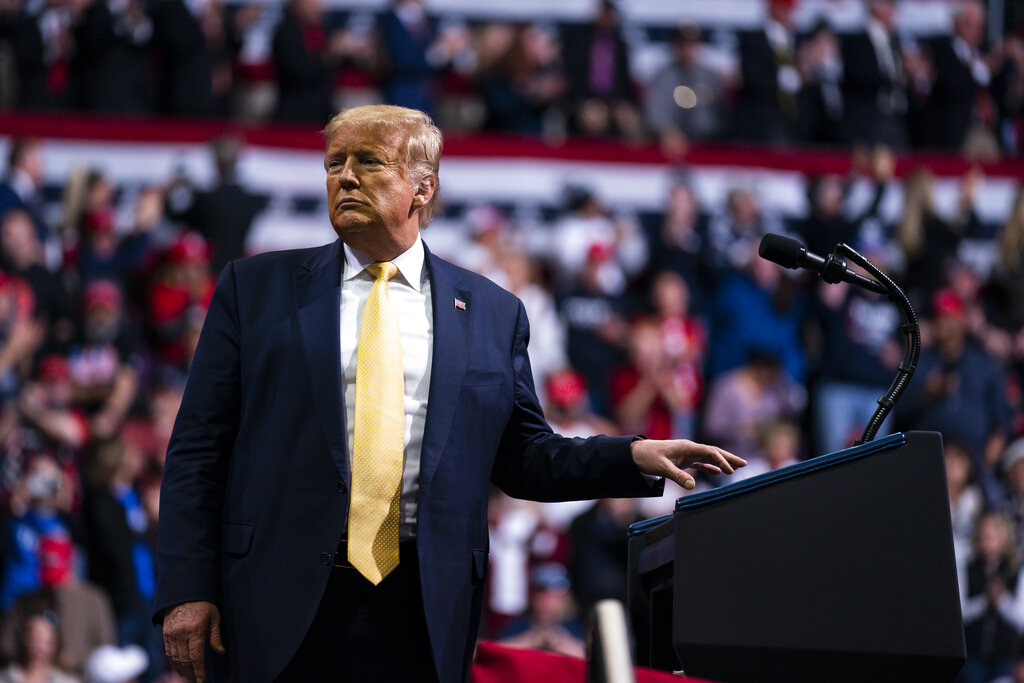
Civil rights groups on Wednesday gave notice in court of their intent to squelch an effort by President Donald Trump to bar people in the U.S. illegally from being included in the head count when congressional districts are redrawn. Civil rights groups already challenging an order Trump issued last year directing the U.S. Census Bureau to gather citizenship data from administrative records made a request in federal court to expand their complaint to include the new directive Trump issued Tuesday. A federal judge in Maryland granted the civil rights groups’ request during a hearing held by telephone Wednesday. “Just when you thought everything was settled yesterday, a new order comes out that makes things unsettled,” U.S. District Judge Paula Xinis said. The civil rights groups’ original lawsuit challenged an administrative order that Trump issued last year after the Supreme Court blocked his administration’s effort to add a citizenship question to the 2020 census form. Opponents feared a citizenship question would suppress participation by undocumented immigrants and minorities. Trump’s order last year directed the Census Bureau to gather citizenship data from the administrative records of federal and state agencies. Gathering the citizenship data would give the states the option to design districts using voter-age citizen numbers instead of the total population, Trump said in the order. The lawsuit filed in Maryland by civil rights groups claimed the citizenship data gathering was motivated by “a racially discriminatory scheme” to reduce the political power of Latinos and increase the representation of non-Latino whites. The administrative data also was often inaccurate, they said. Attorneys for the U.S. government had asked the judge to dismiss the Maryland lawsuit. Xinis said Wednesday that she had been inclined to do so because there was no way of knowing whether state legislatures would use the citizenship data when redrawing legislative districts, which would raise questions about whether the plaintiffs had what is known as “standing” to make their challenge, and some states would have to change their laws to do so. But Trump’s newest order “really changes the landscape,” she said. “The first executive order is tied to the second executive order,” Xinis said. “The second executive order is buttoning up some of the concerns we all had as far as standing.” Civil rights groups on Tuesday denounced Trump’s new order as unconstitutional, though it isn’t the only effort to exclude undocumented immigrants from the apportionment process. In Alabama, state officials and Republican U.S. Rep. Mo Brooks are suing the Census Bureau to exclude people in the country illegally from being counted when determining congressional seats for each state. A federal judge in that case on Tuesday asked attorneys to file briefs on the impact that Trump’s new order would have on the case. The Census Bureau currently is in the middle of its once-a-decade head count that determines the distribution of $1.5 trillion in federal spending and how many congressional seats each state gets in a process known as apportionment. More than 62% of the nation’s households have already responded, and census takers last week started knocking on the doors of homes whose residents haven’t yet responded. The bureau this week mailed out 34.3 million postcards to households reminding them to answer the census questionnaire. The House Committee on Oversight and Reform on Wednesday asked Commerce Department Secretary Wilbur Ross, Census Bureau Director Steven Dillingham and Census Bureau chief scientist John Abowd to testify about Trump’s new order next week at an emergency hearing. “This action directly violates the Constitution and the laws passed by Congress, and it appears to be a blatant attempt to politicize the 2020 Census, depress participation, and undermine its accuracy,” Democratic U.S. Rep. Carolyn Maloney, who chairs the committee, said in invitation letters to the officials. Republished with the permission of the Associated Press.
U.S. civil rights advocate Juanita Abernathy dies at 88
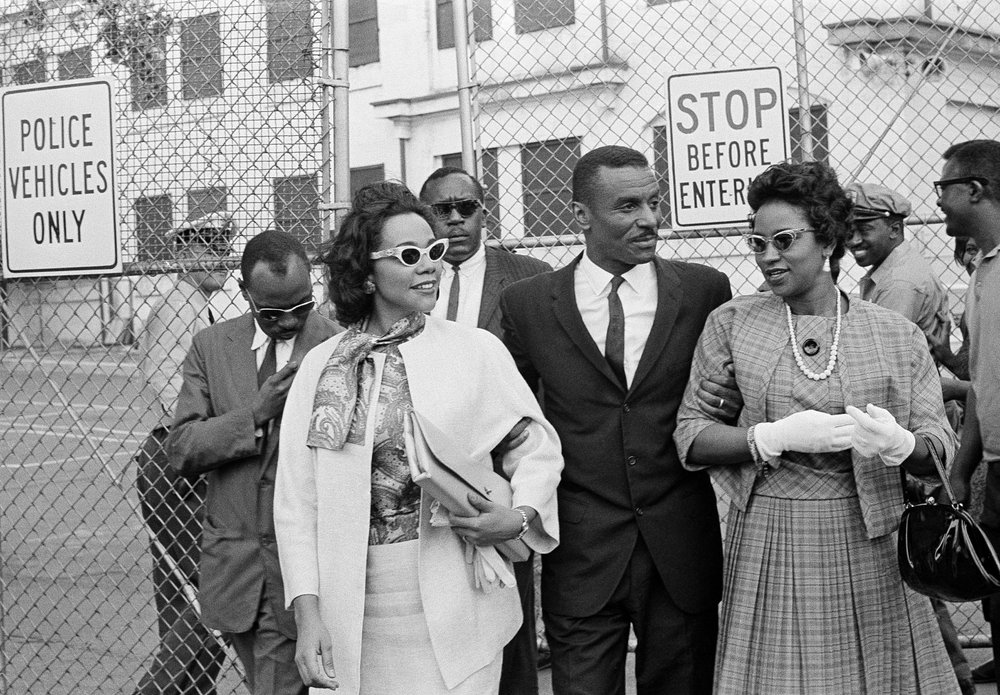
Juanita Abernathy, who wrote the business plan for the 1955 Montgomery Bus Boycott and took other influential steps in helping to build the American civil rights movement, died Thursday. She was 88. Family spokesman James Peterson confirmed Abernathy died at Piedmont Hospital in Atlanta following complications from a stroke. In a statement, Peterson said Abernathy died surrounded by her three children and four grandchildren. The widow of the Rev. Dr. Ralph Abernathy, Juanita Abernathy worked alongside him and the Rev. Martin Luther King Jr. and others for the right to vote. She also taught voter education classes, housed Freedom Riders and marched on Washington, D.C., in 1963 seeking passage of what became the Civil Rights Act. Abernathy also was a national sales director for Mary Kay Cosmetics. Abernathy, of Uniontown, Alabama, was the youngest of eight children. She was educated at Selma University Prep School, earned a Bachelor of Science degree in business education from Tennessee State University. For 16 years, Abernathy served on the Board of Directors of the Metropolitan Atlanta Rapid Transit Authority. She also served on the board of the Fulton County Development Authority and on the Board of Directors for Introducing Youth to American Infrastructure. Abernathy was the recipient of numerous awards and honors, including the Martin Luther King Jr. Civil and Human Rights Award from the National Education Association. Survivors include her children, Juandalynn Abernathy, Donzaleigh Abernathy and Kwame Abernathy and grandchildren, Ralph Abernathy IV, Christiana Abernathy, Micah Abernathy and Soeren-Niklas Haderup. Funeral arrangements are pending. Republished with the permission of the Associated Press.
Bipartisan congressional delegation tours Alabama civil rights site
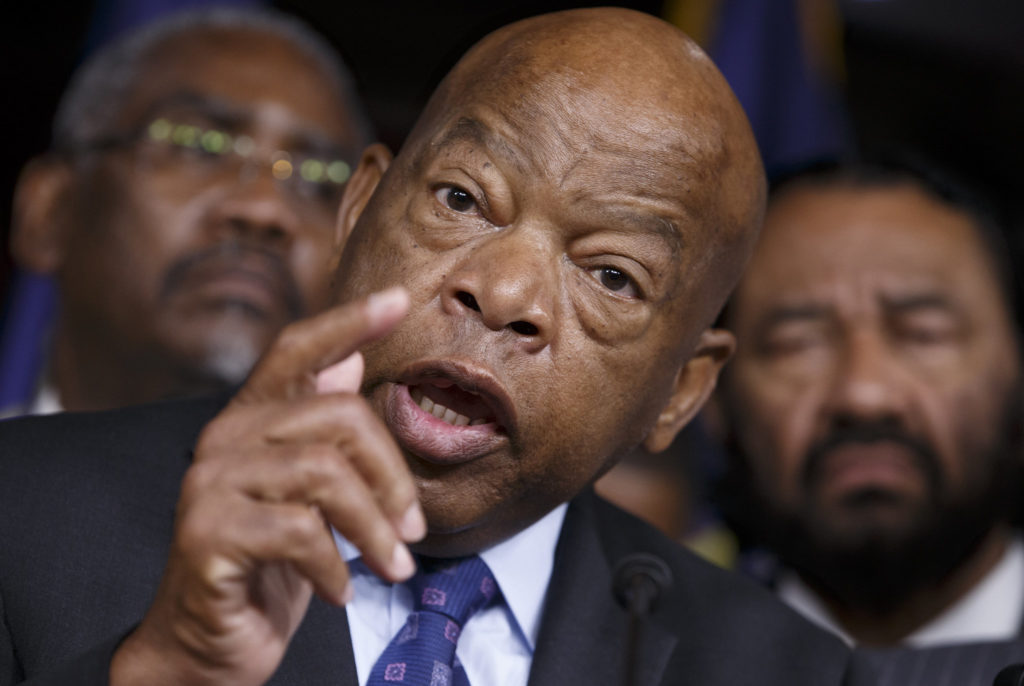
A bipartisan delegation of U.S. Congress members visited Birmingham on Friday as part of a three-day tour of the state’s civil rights history. The 2019 Congressional Civil Rights Pilgrimage is organized by the nonprofit Faith and Politics Institute, which offers tours, retreats, forums and reflection groups to members of Congress and their staffs. Since 1998, Rep. John Lewis (D-Ga.) has led close to 300 members of the U.S. House and Senate, as well as Presidents Barack Obama and George W. Bush in 2015, through Alabama each spring. This year, 45 members of Congress made the trip. This year’s pilgrimage includes stops in Birmingham, Montgomery and Selma. In addition to Lewis, honorary co-hosts include Sen. Doug Jones of Alabama as well as Rep. Martha Roby and Rep. Terri Sewell. Rep. Bradley Byrne is also part of this year’s group. “This is a bipartisan delegation of Democrats and Republicans, and they say there is no civility in Washington. We are here to prove that wrong,” Sewell said. “What I love about Faith & Politics is it’s an opportunity for us to shed the R and the D, the blue and the red … for pink, for colors of unity,” she said, alluding to the jacket she was wearing. A native of Selma, Sewell said it’s an honor to visit places important in civil rights history with Lewis, who led the Bloody Sunday march in her hometown as a 25-year-old alongside the Rev. Hosea Williams. Lewis was also one of the 13 original Freedom Riders working to integrate transportation in the South and spoke at 1963’s March on Washington. “I think it’s so important that we not only acknowledge our history, but we have to pay it forward as well, to really come together and get to know each other as we travel through time with our distinguished colleague John Lewis,” Sewell said. “To have an opportunity to walk in the footsteps of John Lewis with John Lewis is an honor.” On Friday, the delegation visited 16th Street Baptist Church, where they were greeted by Pastor Arthur Price and the Carleton Reese Memorial Unity Choir singing “This Little Light of Mine.” Students from Montgomery Public Schools and the Alabama Shakespeare Festival performed parts of “Four Little Girls,” which portrays the lives of 16th Street Baptist Church bombing victims Denise McNair, Carole Robertson, Cynthia D. Morris Wesley and Addie Mae Collins before that tragic day in September 1963 and imagines the impact they would have made in the world if their lives hadn’t been cut short. “You’re speaking truth,” Lewis told the students after the production. “You’re making it real. I remember coming to this church after the bombing and standing outside.” Jones, a former U.S. district attorney, discussed prosecuting two of the men, Thomas Edwin Blanton Jr. and Bobby Frank Cherry, decades later for their roles in the bombing. On Saturday, the delegation visits Selma, where the group will walk across the Edmund Pettus Bridge and visit the Selma Interpretive Center and Brown Chapel AME Church. That afternoon, they will tour Dexter Avenue King Memorial Church in Montgomery, the Southern Poverty Law Center Civil Rights Memorial, the Rosa Parks Museum and Alabama State Capitol. The pilgrimage finishes Sunday with a service at First Baptist Church Montgomery. Republished with permission from Alabama NewsCenter. Alabama Today Editors Note: We encourage you to visit the original post Alabama NewsCenter to see all of the photos and video of this important tour as covered by Justin Averette.
Doug Jones, Terri Sewell, Martha Roby join forces to lead Congressional Civil Rights Pilgrimage
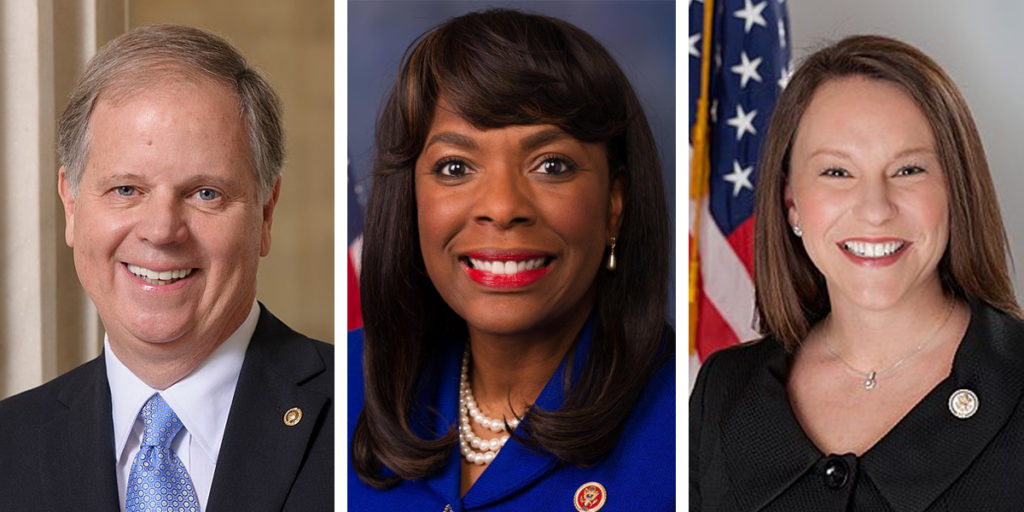
Members of the Alabama delegation are putting their politics aside and joining forces to lead a bipartisan congressional delegation of nearly 50 members from the U.S. House and U.S. Senate on the 2019 Congressional Civil Rights Pilgrimage. U.S. Sen. Doug Jones (D-AL), U.S. Representatives Terri Sewell (D-AL) and Martha Roby (R-AL) are co-hosting the annual event put on by the Faith and Politics Institute (FPI) along with civil rights icon U.S. Representative John Lewis (D-GA). “The annual civil rights pilgrimage is a valuable opportunity to turn toward this painful chapter in our history, rather than away from it,” said Jones. “By reflecting on the sacrifices and injustices of that time, we can better apply their lessons to our daily lives. We are seeing a resurgence of the kind of dangerous rhetoric that inspired hate and violence in our past and undermined the values we hold dear. To honor those who bravely fought and bled in the pursuit of equality, we must continue to shine a light on their actions and stand up against those who would once again use hate as a tool to divide us.” The theme of this year’s pilgrimage is “Finding Hope from History.” The bipartisan congressional delegation will experience sites where history was changed by the nonviolent protest of brave foot soldiers who marched for civil rights and will visit historic civil rights landmarks such as Birmingham’s 16th St. Baptist Church, Montgomery’s Dexter Baptist Church, and Selma’s Edmund Pettus Bridge. The delegation will engage members of Congress on the events that changed the course of American history and seek to apply those lessons to the challenges of the day. Sewell is hoping this year’s pilgrimage will do just that. “As Alabama’s first Black Congresswoman, I know I stand on the shoulders of so many giants who courageously fought, bled and died to make our society more just and inclusive for all,” explained Sewell. “I hope this Pilgrimage will help us reflect on all that we can do – individually and collectively – to advance justice and equality in our nation.” The Civil Rights Pilgrimage will also bring members of Congress to The Legacy Museum and National Memorial for Peace and Justice in Montgomery to learn about the history of domestic slavery and lynching in the United States. Opened in 2018, The National Memorial for Peace and Justice is “the nation’s first memorial dedicated to the legacy of enslaved black people, people terrorized by lynching, African Americans humiliated by racial segregation and Jim Crow and people of color burdened with contemporary presumptions of guilt and police violence.” Roby, whose district includes the National Memorial for Peace and Justice says she hopes her colleagues will “immerse themselves in the history” of Alabama. “Each year, this event serves as a unique opportunity for lawmakers to immerse themselves in the history of my home state and to better understand its place in the American Civil Rights Movement,” added Roby. “I encourage this year’s participants to share their experiences and Alabama’s stories with residents of their home states so that all Americans can take part in building a legacy of hope, faith, and justice for generations to come. Together, we will shape a brighter future.” This year’s pilgrimage to Alabama will take place March 1 – 3.
Civil rights group did the right thing with Angela Y. Davis
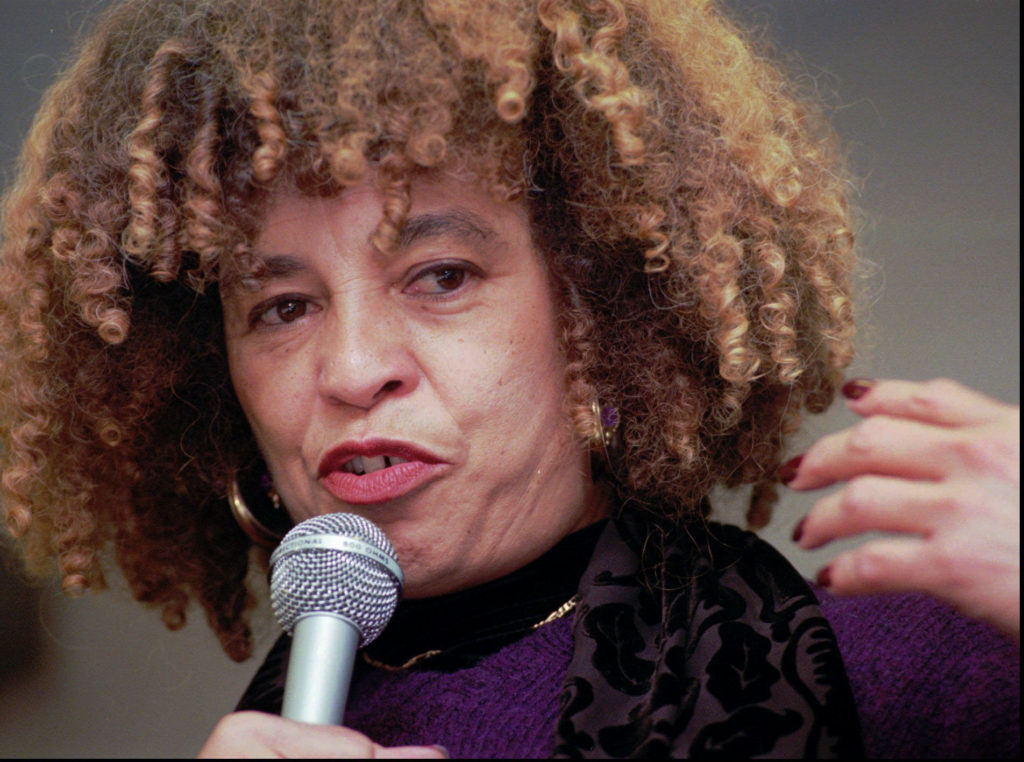
If you asked me before this week who Angela Y. Davis is I wouldn’t have been able to tell you. In light of the attention she’s received over the last several days, because of the decision by the Birmingham Civil Rights Institute (BCRI) to rescind their offer to honor her this year, I decided to become more familiar with her work and their decision. I’ve read numerous speeches, news articles quoting her and have purchased and skimmed through two of her books. It is with that background I’m absolutely confident the Institute did the right thing by reconsidering their initial offer to recognize her work. While some of the work Angela Davis has done is laudable, one shouldn’t cherry-pick just those things and ignore her record on the whole. A record that includes ties, which she herself celebrates, with notable terrorists and those who would seek to see Israel handed over to the Palestinian people. Hate and bigotry are serious issues, but to focus on the plight of African American communities while furthering the plight of another group (in Davis’ case the Jewish community), you are doing no one favors. Someone dropped the ball at the BCRI by not properly vetting Davis’s full history, speeches and current activism prior to choosing her for the award. That said, had they turned a blind eye to the concerns of the Jewish community and others after the announcement their troubles would have been compounded by still choosing to honor her.
Trump administration’s use of biological definition of gender leaves some upset
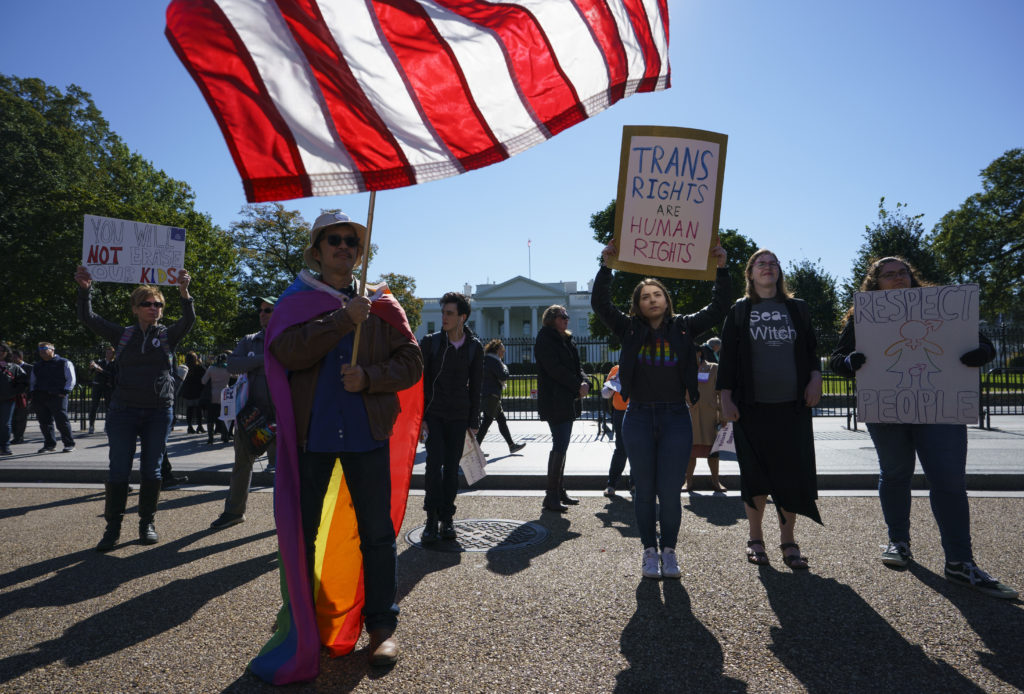
LGBT leaders across the U.S. reacted with fury Monday to a report that the Trump administration is considering adoption of a new definition of gender that would effectively deny federal recognition and civil rights protections to transgender Americans. “I feel very threatened, but I am absolutely resolute,” Mara Keisling, executive director of the National Center for Transgender Rights, said at a news conference convened by more than a dozen activist leaders. “We will stand up and be resilient, and we will be here long after this administration is in the trash heap.” The activist leaders, speaking amid posters reading “#Won’tBeErased“, later addressed a protest rally outside the White House. On Sunday, The New York Times reported that the Department of Health and Human Services was circulating a memo proposing that gender be defined as an immutable biological condition determined by a person’s sex organs at birth. The proposal would define sex as either male or female, and any dispute about one’s sex would have to be clarified through genetic testing, according to the Times’ account of the memo. President Donald Trump addressed the matter briefly as he left the White House for a political trip to Houston, but left unclear how his administration plans to proceed. “We have a lot of different concepts right now,” Trump said. “They have a lot of different things happening with respect to transgender right now — you know that as well as I do — and we’re looking at it very seriously.” Trump added: “I’m protecting everybody.” The Cabinet agency had acknowledged months ago that it was working to rewrite a federal rule that bars discrimination in health care based on “gender identity.” It cited a Texas-based federal judge’s opinion that the original rule went too far in concluding that discrimination based on gender identity is a form of sex discrimination, which is forbidden by civil rights laws. The department said Monday it would not comment on “alleged leaked documents.” It did release a statement from Roger Severino, head of its Office for Civil Rights, saying his agency was reviewing the issue while abiding by the 2016 ruling from the Texas-based federal judge, Reed O’Connor. LGBT activists, who pledged legal challenges if the reported memo leads to official policy, said several other courts had issued rulings contrary to O’Connor’s. “For years, courts across the country have recognized that discriminating against someone because they are transgender is a form of sex discrimination, full stop,” said Diana Flynn, Lambda Legal’s litigation director. “If this administration wants to try and turn back the clock by moving ahead with its own legally frivolous and scientifically unsupportable definition of sex, we will be there to meet that challenge.” Shannon Minter, a transgender attorney with the National Center for Lesbian Rights, called the reported plan a “cynical political ploy to sow discord and energize a right-wing base” before the Nov. 6 election. UCLA legal scholar Jocelyn Samuels, who ran the HHS civil rights office in the Obama administration, said the Trump administration would be going beyond established law if it adopted the policy in the memo. “What they are saying is you do not get to decide your sex; it is the government that will decide your sex,” said Samuels. For LGBT-rights leaders, it’s the administration’s latest attack on transgender Americans. Among the others are an attempt to ban them from military service; a memo from Attorney General Jeff Sessions concluding that civil rights laws don’t protect transgender people from discrimination on the job; and the scrapping of Obama-era guidance encouraging school officials to let transgender students use school bathrooms that matched their gender identities. Omar Gonzalez-Pagan, a lawyer with Lambda Legal, said the proposed rule change appears to still be undergoing White House review. It would need to be signed off by the departments of Justice, Labor and Education, which are also involved with civil rights enforcement. He said “the purpose of this rule is to erase transgender people from existence, to write them off from federal law, and to institute a definition that is contrary to case law, contrary to medical and scientific understanding, and contrary to the lived experience of transgender people.” While social mores enter into the debate, medical and scientific experts have long recognized a condition called “gender dysphoria” — discomfort or distress caused by a discrepancy between the gender that a person identifies as and the gender at birth. Consequences can include severe depression. Treatment can range from sex-reassignment surgery and hormones to people changing their outward appearance by adopting a different hairstyle or clothing. According to an estimate by the Williams Institute at the UCLA School of Law, there are about 1.4 million transgender adults in the United States. Republished with permission from the Associated Press.
Critics scrutinize Brett Kavanaugh’s civil rights views ahead of confirmation hearings
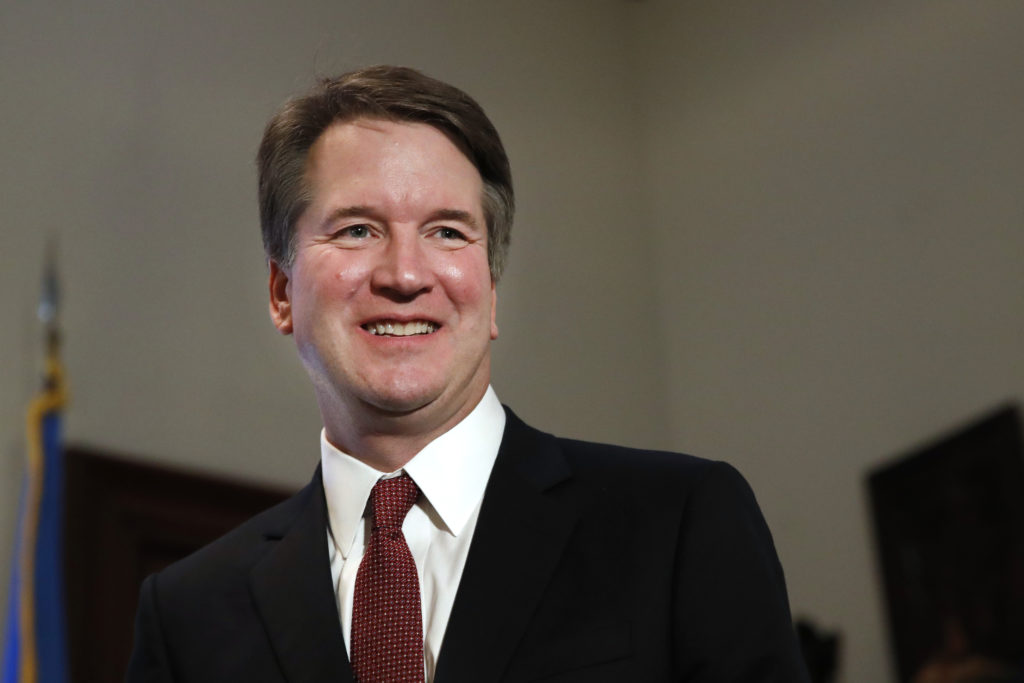
Brett Kavanaugh emailed his White House colleagues in June 2003 with an alert: The U.S. Supreme Court was about to release opinions on the University of Michigan’s use of race as a factor to admit students. It was an issue of great interest to his boss, President George W. Bush — who favored race-neutral admissions. Staff prepared a response anticipating the practice would be struck down, saying, “We must be ever mindful not to use means that create another wrong and thus perpetuate our divisions” in the pursuit of diversity. But the next day, justices released a 5-4 opinion written by Justice Sandra Day O’Connor upholding the university’s law school admissions policy, a disappointment that prompted then-Bush policy adviser Joel Kaplan to email Kavanaugh, then a White House attorney: “What’s going on???” In a separate 6-3 opinion, the court said race could be a factor in undergraduate admissions, but not the deciding factor. There is no evidence of a reply from Kavanaugh from his time in the White House counsel’s office. But as President Donald Trump‘s nominee to the Supreme Court, his views on affirmative action, along with voting rights and discrimination, are coming under intense scrutiny by civil rights organizations as the Senate Judiciary Committee prepares to begin confirmation hearings Tuesday. “We are confident that if he’s confirmed to the court, he would undermine the court’s integrity and would prove a grave threat to civil rights, racial justice and the marginalized communities that the Legal Defense Fund represents,” Janai Nelson, associate director-counsel of the NAACP Legal Defense Fund, said Thursday as the organization announced opposition to Kavanaugh’s nomination. Civil rights organizations that have been combing through Kavanaugh’s 300-plus decisions during 12 years as a federal appeals court judge in Washington, D.C., his work as a lawyer and his time inside Bush’s White House say there are red flags. He co-wrote a brief as a private attorney in a case involving native Hawaiians that they fear signals his personal opposition to affirmative action, and he wrote the appellate court opinion upholding South Carolina’s voter ID law. Kavanaugh’s record also includes opinions that civil rights advocates would praise in other candidates, including that a single utterance of a racial epithet toward a black employee — a word Kavanaugh said was “probably the most offensive word in English” — could create a hostile work environment under federal law, and a suggestion that federal courts should make it clear that discriminatory actions by employers violate the Civil Rights Act. That contrasting record underscores the challenge facing groups that already opposed Kavanaugh because he was on a list of potential nominees put forward by the conservative Federalist Society and Heritage Foundation, essentially certifying them as appropriately conservative for Trump. The president has vowed to move the high court to the right while replacing retired Justice Anthony Kennedy. The White House had no comment for this story but referred The Associated Press to a former Kavanaugh law clerk, an African-American, who said Kavanaugh is attuned to civil rights and racial justice issues. Luke McCloud, who clerked for Kavanaugh from 2013 to 2014 and is now in private practice, praised Kavanaugh’s efforts to recruit and mentor minority lawyers, saying Kavanaugh “acknowledges the history and current reality of race in this country and takes it into account as he can within the confines of his role as a judge.” Kavanaugh’s keen interest in affirmative action is evident in the released White House emails. Although he appeared careful to withhold his own opinion, he clearly was interested in Bush’s anti-affirmative action views, often emailing and receiving articles and opinion pieces on the issue. In private practice earlier, Kavanaugh wrote a brief along with failed Supreme Court nominee Robert Bork challenging a law banning non-native Hawaiians from voting in Office of Hawaiian Affairs elections. He also wrote an opinion piece for The Wall Street Journal sharply criticizing the policy, but during confirmation hearings for the appeals court post, he said he wrote the piece to advance his client’s position and refused to say whether he agreed. The case involved a $300 million public trust fund set up by Congress to compensate ancestors of native Hawaiians whose land and cultural heritage were taken by the U.S. The state said only blood relatives could vote in board of trustees elections, while Kavanaugh challenged that as discriminatory to non-indigenous residents. The U.S. Supreme Court ruled in 2000 that the law amounted to racial discrimination. Kavanaugh’s brief and other comments around the case indicate that he thinks government will ultimately end up race-blind, which “could signal where his own thinking is” on affirmative action, said Vanita Gupta, president and CEO of The Leadership Conference on Civil and Human Rights, who also opposes Kavanaugh. “His record is deeply disturbing … but there is a lot we don’t know.” Opponents point to other issues that trouble them, especially his 2012 ruling on South Carolina’s voter ID law. Kavanaugh said the statute was legal because those who had difficulty getting a photo ID still could vote by signing an affidavit. The law had been blocked by the Justice Department, which sided with those who said such laws make it more difficult for minorities to vote and are pushed by conservatives to dampen minority turnout. But Kavanaugh also delayed the law’s implementation to give voters who lacked ID’s time to get them, acknowledging that most were black, and writing: “There is too much of a risk to African-American voters for us to roll the dice.” Critics also question his record on employment discrimination, citing an appellate court case in which Kavanaugh disagreed with the majority of judges, who said that a black woman fired from a job as House of Representatives deputy budget director could pursue claims of racial discrimination and retaliation in federal court. “We’re mostly concerned about whether Judge Kavanaugh, if confirmed, would approach civil rights issues with the appropriate understanding and respect for the history of racial discrimination in this country,” said Thomas
Texas Congressman cites Alabama civil rights events as he defends NFL players taking a knee
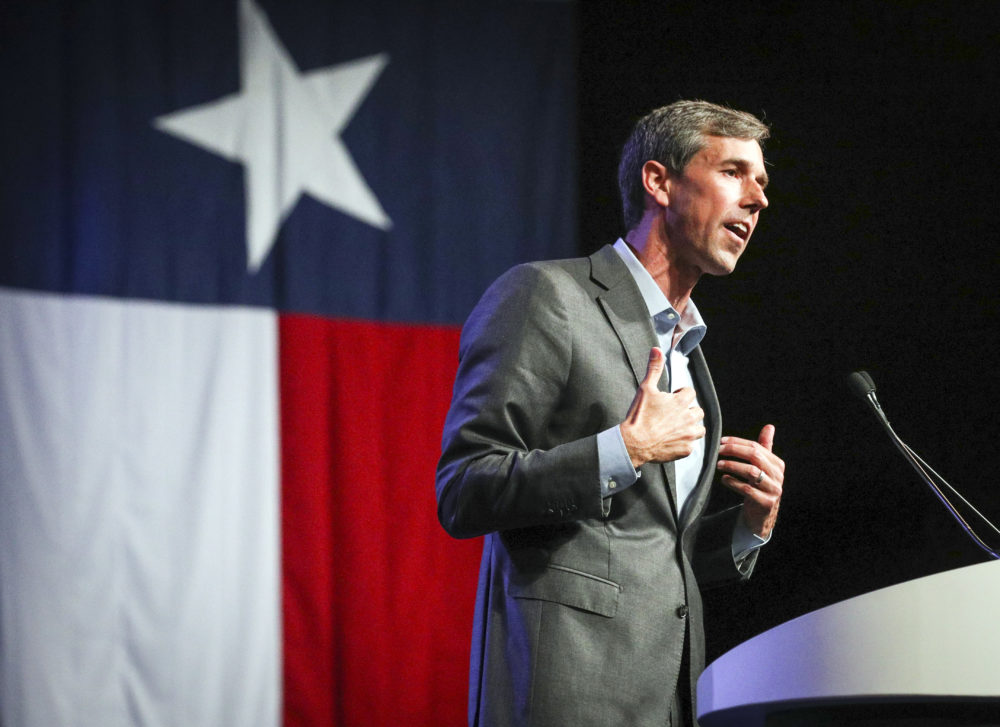
The internet is abuzz with a video of Democratic U.S. Rep. from Texas, Beto O’Rourke, who’s invoking Alabama civil rights history in his quest to unseat Republican U.S. Sen. Ted Cruz. During a town hall meeting in Houston last week, O’Rourke was asked by an attendee whether he thought NFL players who choose take a knee during the national anthem are disrespecting the U.S. military and American people. “My short answer is no, I don’t think it’s disrespectful,” O’Rourke answered. “Here is my longer answer – but I’m gonna try to make sure I get this right, because I think it’s a really important question. And reasonable people can disagree on this issue. Let’s begin there, and it makes them no less American to come down on a different conclusion on this issue. Right? You can feel as the young man does, you can feel as I do, you are every bit as American all the same.” O’Rourke went on to reference the 1963 Ku Klux Klan bombing of the 16th Street Baptist Church in Birmingham, Ala. that killed the girls. Along with the March 7, 1965 march across Edmund Pettus Bridge in Selma, Ala. When a group of roughly 525 African American protesters planned to cross the bridge on their civil rights march to Montgomery to demand the right to vote. At the bridge they where they were met by more than 50 state troopers and a few dozen men on horseback. When the demonstrators refused to turn back, they were brutally beaten, leaving at least 17 hospitalized, and 40 others injured. “Those who died in Philadelphia, Mississippi, for the crime of trying to be a man, trying to be a woman in this country, the young girls who died in the church bombing. Those who were beaten within an inch of their life crossing the Edmund Pettus Bridge in Selma, Alabama with John Lewis,” O’Rourke detailed referencing several other historical civil rights challenges Americans faced. O’Rourke went on to say he thinks NFL games are essentially a great, nonviolent platform for players to protest police brutality and injustice during the national anthem. “Non-violently, peacefully, while the eyes of this country are watching these games, they take a knee to bring our attention and focus to this problem to ensure that we fix it,” O’Rourke concluded. Read his full response below: My short answer is no, I don’t think it’s disrespectful. Here’s my longer answer, but I’m going to try to make sure I make that I get this right because I think it’s a really important question. And reasonable people can disagree on this issue, let’s begin there. And it makes them no less American to come down on a different conclusion on this issue, right? You can feel as the young man [who asked the question] does, you can feel as I do, you’re every bit as American, all the same. But I’m reminded – someone mentioned reading the Taylor Branch book … ‘Parting the Waters: [America] in the King Years’. And when you read that book and find out what Dr. King and this non-violent, peaceful movement to secure better – ’cause they didn’t get full – civil rights for their fellow Americans, the challenges that they face. Those who died in Philadelphia, Mississippi, for the crime of trying to be a man, trying to be a woman in this country, the young girls who died in the church bombing. Those who were beaten within an inch of their life crossing the Edmund Pettus Bridge in Selma, Alabama with John Lewis, those were punched in the face, spat on, dragged out by their collar at the Woolworth lunch counter for sitting with white people at that same lunch counter in the same country where their fathers may have bled the same blood on the battlefields of Omaha Beach or Okinawa or anywhere that anyone ever served this country. The freedoms we have were purchased not just by those in uniform, and they definitely were. But also by those who took their lives into their hands riding those Greyhound buses, the Freedom Riders in the Deep South in the 1960s who knew full well that they would be arrested, and they were, serving time in the Mississippi State Penitentiary. Rosa Parks, getting from the back of the bus to the front of the bus. Peaceful non-violent protests including taking a knee at a football game to point out that black men, unarmed, black teenagers, unarmed and black children, unarmed, are being killed at a frightening level right now including by members of law enforcement without accountability and without justice. And this problem – as grave as it is – is not going to fix itself. And they’re frustrated, frankly, with people like me and those in positions of public trust and power, who have been unable to resolve this or bring justice for what has been done and to stop it from continuing to happen in this country. So non-violent, peacefully, while the eyes of this country are watching these games, they take a knee to bring our attention and our focus to this problem to ensure that we fix it.
Randall Woodfin writes Pennsylvania mayor over ‘misrepresentation’ of 1963 protests
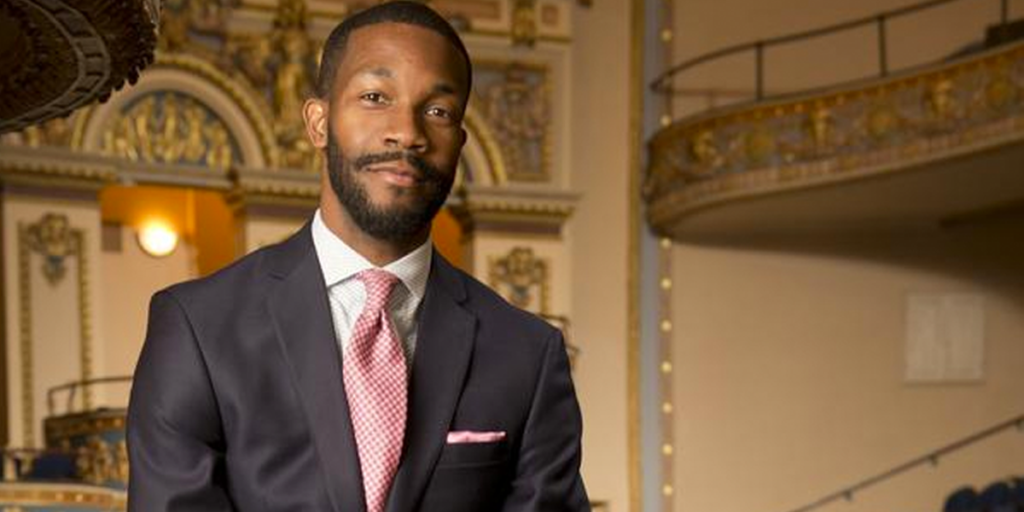
Birmingham Mayor Randall Woodfin penned a letter to Arnold, Pa. Mayor Karen Peconi on Thursday expressing his concerns over what he called her “deliberate misrepresentation” of the 1963 civil rights demonstrations in Birmingham. Peconi came under fire after her controversial Facebook post during the public protests in Pittsburgh following the death of Antwon Rose — a 17 year-old African-American man shot and killed by a police officer in Pittsburgh in June. The officer has since been charged with criminal homicide and awaits trial. According to TRIB live, Peconi posted a video of protestors being knocked down by water cannons during the during the civil rights demonstrations in Birmingham and suggested that law enforcement use the same method on the Antwon Rose protestors. Saying “I’m posting this so the authorities everywhere sees this… I agree with Tom.. bring the hoses,” The Root reported. “They don’t care about Pgh. none of them work now.. That’s how they can do this at 7am…. very sad.” After learning of Peconi’s comments, Woodfin wrote an open letter her in an effort to encourage “constructive reflection,” on her part. “I am writing as the mayor of Birmingham, Alabama, because you posted and commented on a photograph taken during the civil rights demonstrations that took place in our city in 1963, in a way that completely misrepresented the purpose and meaning of those historic events,” Woodfin wrote. “Those demonstrations — and the oppressive manner in which our city government of the time chose to respond to them — raised the consciousness of Americans to the injustices being protested. They brought about the end of segregation in Birmingham and played a large role in paving the way for the Civil Rights Act of 1964 and the Voting Rights Act of 1965.” “Today, we in Birmingham take tremendous pride in our city’s role in advancing the causes of justice and equality for all Americans,” Woodfin continued. “And, even as we recognize the distance our nation, more than a half-century later, still has to travel along that road, we take pride in Birmingham’s progress and our ongoing emergence as a city of growth and opportunity for all. We honor our past and proudly and actively commemorate the history that was made in our streets — but our eyes and our actions are fixed firmly on the future.” You can read Woodfin’s full letter here. Peconi apologized for her actions in a statement, saying “I love this community. I would do anything for the people here. I don’t take my position as Mayor lightly and deeply regret the comments I made on Facebook. It was never my intention to offend anyone, and for those who I offended I am sincerely sorry,” according to Trib Live.
Doug Jones introduces bill to open civil rights cold case files, written by HS students
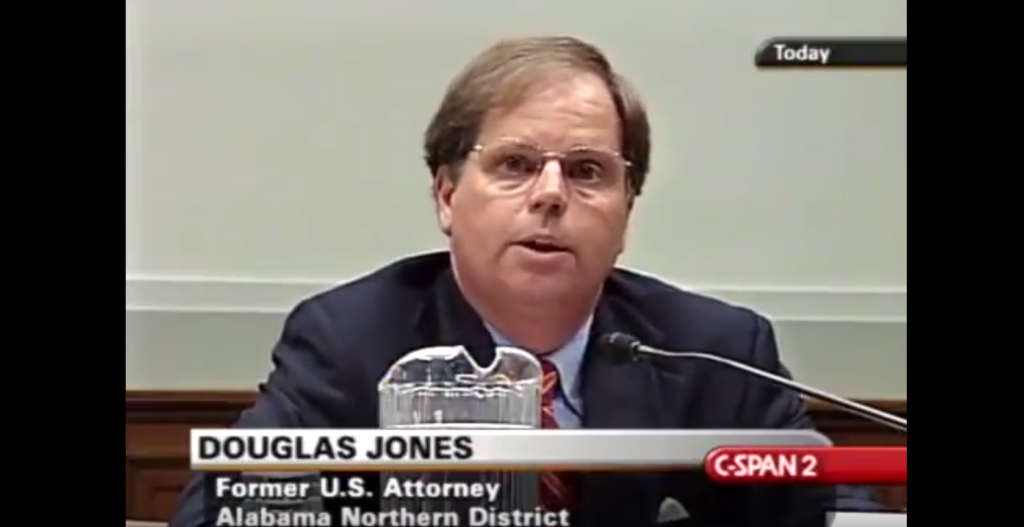
Alabama U.S. Sen. Doug Jones introduced a bill on Tuesday that would mandate the release of government records related to unsolved civil rights cases — a bill written by a group of high school students. Jones worked with a group of students from Hightstown High School in Hightstown, N.J., and their civics and government teacher, Stuart Wexler in drafting and introducing the bill the students first envisioned in their Advanced Placement U.S. Government classroom. Jones says the legislation is necessary because the Freedom of Information Act (FOIA), as implemented, has prevented the timely and adequate disclosure of executive branch records, and congressional records are not subject to public disclosure under FOIA. FOIA documents are also notoriously redacted beyond practical use. The bill, the Civil Rights Cold Case Records Collection Act of 2018, if passed, remedies this problem by requiring the National Archives and Records Administration to create a collection of government documents related to civil rights cold cases and to make those documents available to the public. For Jones, the issue is personal Prior to his time in the Senate, Jones, a former prosecutor, is best known for prosecuting Ku Klux Klansmen responsible for killing four black girls in the 1963 bombing of the 1963 Sixteenth Street Baptist Church in Birmingham as a U.S. attorney. “Having prosecuted two civil rights cold cases in Alabama, I know firsthand the importance of having every available piece of information at your disposal,” Jones said. “This bill will ensure public access to records relating to these cases and will expand the universe of people who can help investigate these crimes, including journalists, historians, private investigators, local law enforcement, and others.” Jones continued, “We might not solve every one of these cold cases, but my hope is that this legislation will help us find some long-overdue healing and understanding of the truth in the more than 100 unsolved civil rights criminal cases that exist today.” In 2007, Jones testified to the House Judiciary Committee in support of the Emmett Till Unsolved Civil Rights Crimes Act that established a special initiative in the U.S. Department of Justice to investigate civil rights cold cases. He spoke about the difficulty of prosecuting these cases so many years after the crimes were committed and pointed to the importance of sharing information in order to find the truth. Jones is not the only one who believes in the importance of his bill. Hank Klibanoff, Director, Georgia Civil Rights Cold Cases Project at Emory University, says if passed it would “have on thousands of families.” “It is hard to overstate the positive impact that Sen. Doug Jones’s proposed Civil Rights Cold Case Records Collection Act would have on thousands of families who, 40 to 60 years later, have no idea how a father, grandfather, aunt or brother came to a violent death in the modern civil rights era,” said Klibanoff. “As a journalist and historian who relies on government-held records in these civil rights cold cases, it’s important to know that our purposes are simple: To learn the truth, to seek justice where there may be a living perpetrator, to tell the untold stories, and to bring closure to families of victims, and find opportunities for racial reconciliation.” The details The Civil Rights Cold Case Records Collection Act of 2018 will: Require the National Archives and Records Administration (NARA) to establish a collection of cold case records about unsolved criminal civil rights cases that government offices must publicly disclose in the collection without redaction or withholding. Establish a Civil Rights Cold Case Records Review Board as an independent agency of impartial private citizens to facilitate the review, transmission to NARA, and public disclosure of government records related to such cases. Read a detailed overview of the legislation here. Watch Jones testify before the House Judiciary Committee in 2007:
