
Alabama to observe Confederate Memorial Day
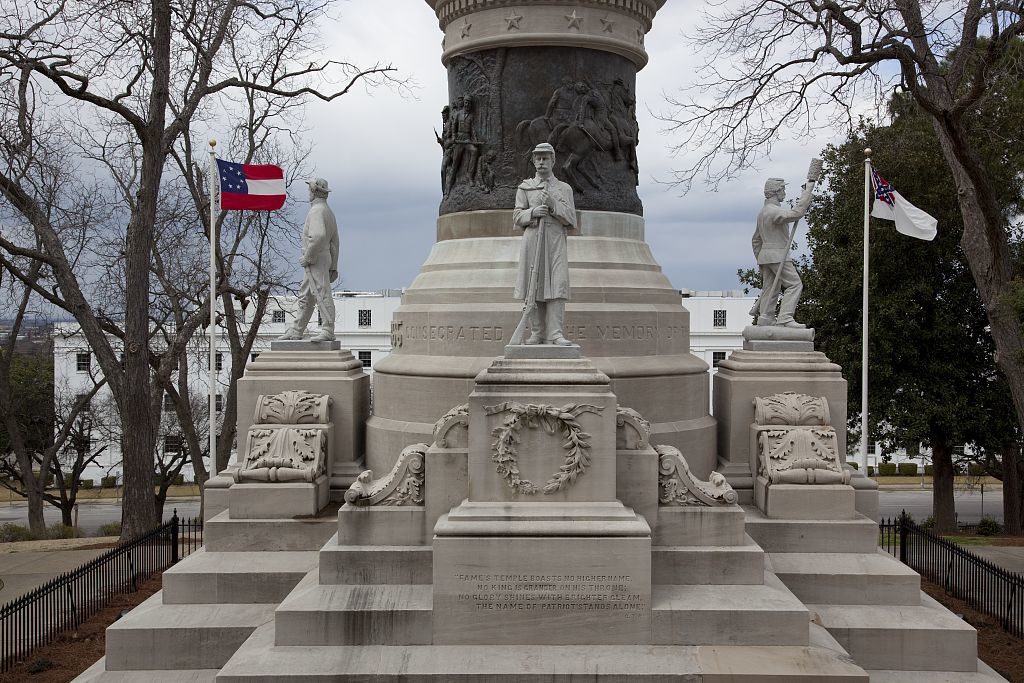
State government offices are closing Monday in Alabama for Confederate Memorial Day. Alabama has an official state holiday commemorating Confederate soldiers killed in the Civil War. It is observed on the fourth Monday in April. A group holds an annual commemoration on the grounds of the Alabama Capitol. Participants typically dress in Confederate costumes and pay tribute to ancestors who died fighting for the South. An organization called Faith in Action is also planning a Monday event to urge the state to rethink the appropriateness of the holiday. Georgia used to mark the holiday, but removed the Confederate reference in 2015. Republished with the permission of the Associated Press.
We’re still fighting, more than 150 years after Appomattox
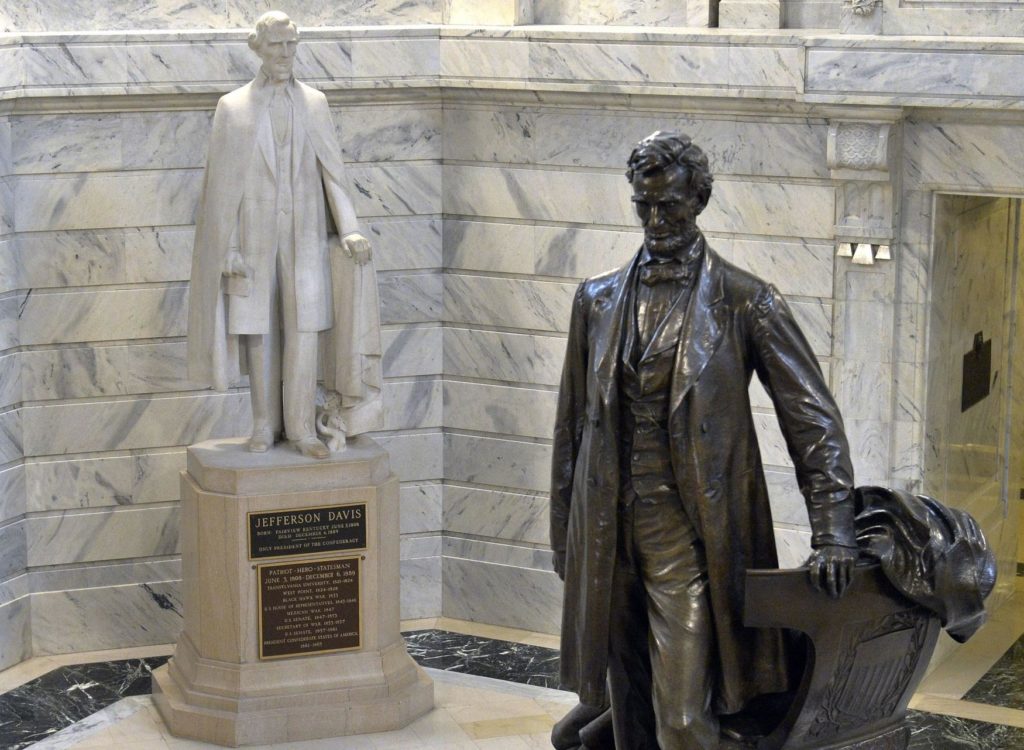
When the Civil War was over, when the dead were buried and the union was reunited, it came time to tell tales and write history. In reunion gatherings and living rooms alike, differing versions of the causes of the conflict became as hardened as sunbaked Georgia clay. More than a century and a half later, those dueling narratives are with us still. Did 620,000 die, as Northerners would have it, in a noble quest to save the union and end slavery — the nation’s horrific original sin? Or was the “War Between the States” a gallant crusade to limit federal power, with slavery playing a lesser part, as Southerners insisted? Who was worthy of honor — Abraham Lincoln and Ulysses S. Grant, or Jefferson Davis and Robert E. Lee? After all this time, it could be argued that it doesn’t matter, but the blood that was shed over a statue of Lee in Charlottesville, Virginia, is powerful evidence that it does. The national dispute over the fate of stone and bronze monuments begs this larger question: How does one country with two histories move forward? The answer, some say, is by seizing a rare chance to build a shared history through small steps. “This is a moment to acknowledge the incredible change that we have seen among American people when they look at their past,” said Peter Carmichael, a history professor at Gettysburg College. “They’re not trying to sweep things under the rug. There are no saints and there are no sinners back in 1861. Everyone was to blame, except for the slaves.” ___ Other countries have dealt more forthrightly with the aftermath of horrific violence or oppression. After apartheid’s end, South African leaders formed the Commission of Truth and Reconciliation to promote national unity in the early 1990s. Rwanda’s community courts investigated the slaughter of as many as 1 million people in 1994. Post-World War II Germany outlawed Nazism and its symbols. Sanford Levinson, a University of Texas at Austin law professor, said such commissions generally focus on terrorist activity by nationalist governments, killings and torture immediately after they happen to hold oppressors accountable. The United States could examine aspects of the Civil War, such as military prisons, the massacre of black soldiers or slavery itself, he said. But, “it would turn inevitably into historians testifying,” he said. “There aren’t concrete individuals who are going to come up and say ‘yes, I did this and I really beg your apology.’ All those people are dead.” Americans also would need to reach genuine consensus that the Civil War should be confronted, a willingness to dredge up repressed memories and someone to lead the effort, he said. Academics and others told The Associated Press the road to avoiding a more divisive future may be lined with discussions rather than shouting matches; more complete history lessons; local, rather than state or national action; and a renewed focus on individuals who fought and were impacted by the war, including the deprivations they endured. The drafting of men for the war, desertions in the Confederate and Union armies, political disagreements and dissent are among things not well represented in the memories of the conflict, especially not through monuments, said Stephen Rockenbach, history professor at Virginia State University. Americans can draw on primary sources, including writings of people who lived during that time period and their diaries to understand different viewpoints. “The danger occurs when you only look at one aspect, one person, one battle, even one time frame,” he said. Historians often don’t reach consensus on interpretations of the past and the general public can’t be expected to, either, Rockenbach said. “How then do we convey this huge experience that all kinds of Americans went through in meaningful way?” he said. “Statues do not do a very good job of doing that on their own.” Joe Zuniga, a 60-year-old school teacher in Rio Rancho, New Mexico, wants to see Confederate statues in museums or part of historical sites or battlefields so that visitors have the context they need to understand what happened. “We are talking about history,” said the self-described conservative. “We don’t have to have it on top of a building overlooking the city with the idea of it being glorified. But, nonetheless, it is history. Whatever is in a person’s heart can be there. It doesn’t have to be replicated by granite or marble.” Carmichael, the Gettysburg College professor, said some of the problems of today could be addressed by doing a better job of explaining the war and how it affected a group that generally was ignored by both sides after Appomattox Courthouse: black Americans. Rather than simply tearing down statues, interpretive markers should be used at Confederate monuments to show the systematic oppression of black people through lynching, the denial of voting rights, and segregation, he said. That way, Americans can understand that the system of slavery destroyed by the Civil War didn’t create equality but instead ushered in Jim Crow laws. Reconciliation won’t happen in the immediate aftermath of Charlottesville, he said. The best change might be through local efforts where people who know each other can hash things out. “The more it’s done from far away, the more I think it’s likely to provoke resentment and anger, and not lead to anything wonderfully productive,” he said. ___ Civil War veterans reunited on battlefields for years after the fight. But today, organizations composed of descendants of the armies that battled from 1861 to 1865 have few dealings with each other or conversations on a broad level. The head of the Sons of Union Veterans of the Civil War, Mark Day, said opening a shared dialogue about the nation’s history might be a good start. “We’re Americans. We have an ability to hold different opinions and share different opinions,” said Day, the national commander. “I think it’s a national thing that we maybe have to talk to each other.” Thomas V. Strain Jr. is Day’s Southern equivalent, commander-in-chief of
How Robert E. Lee went from hero to racist icon
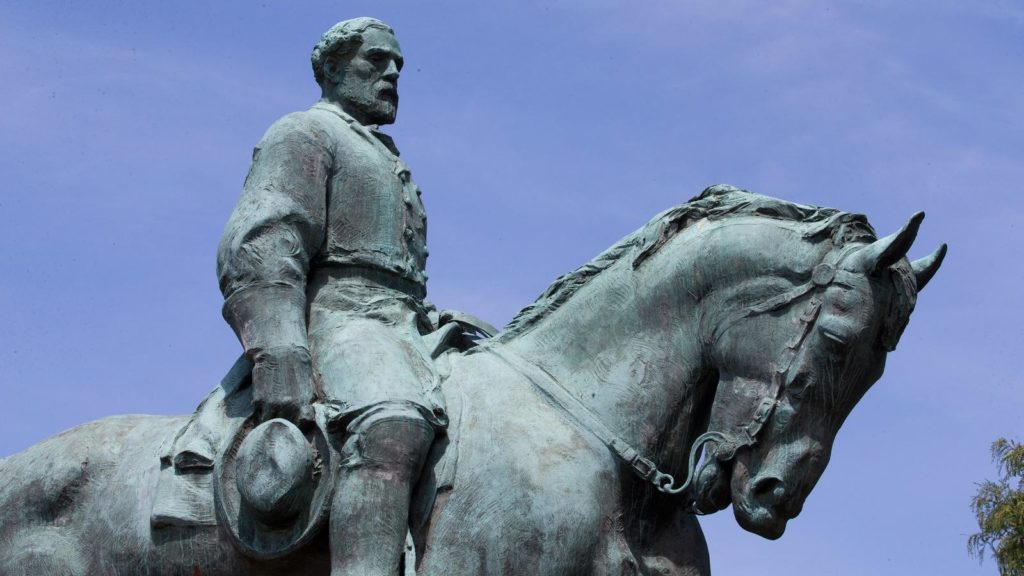
Confederate Army Gen. Robert E. Lee was vilified during the Civil War only to become a heroic symbol of the South’s “Lost Cause” — and eventually a racist icon. His transformation, at the center of the recent violence in Charlottesville, Virginia, reflects the changing moods in the United States around race, mythology and national reconciliation, historians say. Lee monuments, memorials and schools in his name erected at the turn of the 20th Century are now facing scrutiny amid a demographically changing nation. But who was Robert E. Lee beyond the myth? Why are there memorials in his honor in the first place? ___ THE SOLDIER A son of American Revolutionary War hero Henry “Light-Horse Harry” Lee, Robert E. Lee graduated second in his class at West Point and distinguished himself in various battles during the U.S.-Mexico War. As tensions heated around southern secession, Lee’s former mentor, Gen. Winfield Scott, offered him a post to lead the Union’s forces against the South. Lee declined, citing his reservations about fighting against his home state of Virginia. Lee accepted a leadership role in the Confederate forces although he had little experience leading troops. He struggled but eventually became a general in the Confederate Army, winning battles largely because of incompetent Union Gen. George McClellan. He would win other important battles against other Union’s generals, but he was often stalled. He was famously defeated at Gettysburg by Union Maj. Gen. George Meade. Historians say Lee’s massed infantry assault across a wide plain was a gross miscalculation in the era of the rifle. A few weeks after becoming the general in chief of the armies of the Confederate states, Lee surrendered to Union Gen. Ulysses S. Grant at Appomattox Court House in Virginia on April 9, 1865. ___ THE SLAVE OWNER A career army officer, Lee didn’t have much wealth, but he inherited a few slaves from his mother. Still, Lee married into one of the wealthiest slave-holding families in Virginia — the Custis family of Arlington and descendants of Martha Washington. When Lee’s father-in-law died, he took leave from the U.S. Army to run the struggling estate and met resistance from slaves expecting to be freed. Documents show Lee was a cruel figure with his slaves and encouraged his overseers to severely beat slaves captured after trying to escape. One slave said Lee was one of the meanest men she had ever met. In a 1856 letter, Lee wrote that slavery is “a moral & political evil.” But Lee also wrote in the same letter that God would be the one responsible for emancipation and blacks were better off in the U.S. than Africa. ___ THE LOST CAUSE ICON After the Civil War, Lee resisted efforts to build Confederate monuments in his honor and instead wanted the nation to move on from the Civil War. After his death, Southerners adopted “The Lost Cause” revisionist narrative about the Civil War and placed Lee as its central figure. The Last Cause argued the South knew it was fighting a losing war and decided to fight it anyway on principle. It also tried to argue that the war was not about slavery but high constitutional ideals. As The Lost Cause narrative grew in popularity, proponents pushed to memorialize Lee, ignoring his deficiencies as a general and his role as a slave owner. Lee monuments went up in the 1920s just as the Ku Klux Klan was experiencing a resurgence and new Jim Crow segregation laws were adopted. The Robert E. Lee statue in Charlottesville, Virginia, went up in 1924. A year later, the U.S. Congress voted to use federal funds to restore the Lee mansion in the Arlington National Cemetery. The U.S. Mint issued a coin in his honor, and Lee has been on five postage stamps. No other Union figure besides President Abraham Lincoln has similar honors. ___ A NEW MEMORY A generation after the civil rights movement, black and Latino residents began pressuring elected officials to dismantle Lee and other Confederate memorials in places like New Orleans, Houston and South Carolina. The removals partly were based on violent acts committed white supremacists using Confederate imagery and historians questioning the legitimacy of The Lost Cause. A Gen. Robert E. Lee statue was removed from Lee Circle in New Orleans as the last of four monuments to Confederate-era figures to be removed under a 2015 City Council vote. The Houston Independent School District also voted in 2016 to rename Robert E. Lee High School, a school with a large Latino population, as Margaret Long Wisdom High School. Earlier this year, the Charlottesville, Virginia, City Council voted to remove its Lee statue from a city park, sparking a lawsuit from opponents of the move. The debate also drew opposition from white supremacists and neo-Nazis who revered Lee and the Confederacy. The opposition resulted in rallies to defend Lee statues this weekend that resulted in at least three deaths. Republished with permission of The Associated Press.
Donald Trump on Civil War: Why couldn’t they have worked that out?

The U.S. president had a historical question: Why did America’s Civil War happen? “Why could that one not have been worked out?” Remarks by Donald Trump, aired Monday, showed presidential uncertainty about the origin and necessity of the Civil War, a defining event in U.S. history with slavery at its core. Trump also declared that President Andrew Jackson was angry about “what was happening” with regard to the war, which started 16 years after his death, and could have stopped it if still in office. Trump, who has at times shown a shaky grasp of U.S. history, questioned why issues couldn’t have been settled to prevent the war that followed the secession of 11 Southern states from the Union and brought death to more than 600,000 Americans, North and South. “People don’t realize, you know, the Civil War, if you think about it, why?” Trump said in an interview with The Washington Examiner that also aired on Sirius XM radio. “People don’t ask that question, but why was there the Civil War? Why could that one not have been worked out?” In fact, the causes of the Civil War are frequently discussed, from middle school classrooms to university lecture halls and in countless books. Immigrants seeking to become naturalized are sometimes asked to name a cause of the war in their citizenship tests . Fierce disagreement over the future of slavery was a driving force behind the war, but economic issues and disputes over state rights were also factors. “Slavery was the root cause of the Civil War. It was not the only cause, but it was the underlying cause,” said Eric Foner, a Columbia University history professor and a leading expert on the war. “As a historian, I would prefer the president had a better handle on American history.” Trump’s comments about the war came after he lauded Jackson, the populist president whom he and his staff have cited as a role model. He suggested that if Jackson had been president “a little later, you wouldn’t have had the Civil War.” “He was really angry that he saw what was happening with regard to the Civil War. He said, ‘There’s no reason for this,’” Trump continued. Jackson died in 1845. The Civil War began in 1861. Late Monday, after a day of incredulous news coverage, Trump took to Twitter to amplify his message and seemingly stress that he did in fact know when Jackson died, writing: “President Andrew Jackson, who died 16 years before the Civil War started, saw it coming and was angry. Would never have let it happen!” Jackson was a slave-holding plantation owner. Some historians do credit him with preserving the full Union when South Carolina threatened to secede in the 1830s over an individual state’s ability to void federal tariffs. But that controversy, known as the “Nullification Crisis,” was not about slavery, and the eventual compromise that preserved states’ rights did little to alter the nation’s path to the War Between the States. “Even Andrew Jackson, were he alive, could not have solved the problem,” Foner said. “The situation in 1861 was far more dire than in the 1830s during the Nullification Crisis.” The Civil War was decades in the making, stemming from disputes between the North and South about slavery and whether the union or the individual states had more power. The question over the expansion of slavery into new Western territories simmered for decades and Southern leaders threatened secession if anti-slavery candidate Abraham Lincoln was elected in 1860. After Lincoln won without carrying a single Southern state, Southern leaders believed their rights were imperiled and seceded, forming the Confederate States of America. War erupted soon afterward as the North fought to keep the nation together. The conflict lasted four years. The White House did not respond to requests for an explanation of Trump’s reasoning. His comments on the Civil War drew swift criticism from some civil rights groups and Democrats, including Rep. Barbara Lee of California who tweeted “President Trump doesn’t understand the Civil War. It’s because my ancestors and millions of others were enslaved.” This is far from the first time that Trump expressed a muddled view on American history. Trump, during an African-American history month event, seemed to imply that the 19th century abolitionist Frederick Douglass was still alive. Trump said in February that Douglass “is an example of somebody who’s done an amazing job and is getting recognized more and more, I notice.” While justifying his argument for a border wall with Mexico, Trump said last week that human trafficking is “a problem that’s probably worse than any time in the history of this world,” a claim that seemed to omit the African slave trade. Trump, prompted by his chief strategist Steve Bannon, embraced the legacy of Jackson soon after his election. The White House has eagerly drawn parallels between the two men, particularly between Trump’s success with working-class voters and how Jackson fashioned himself as a champion of the common man against a political system that favored the rich and powerful. Trump paid tribute to Jackson, known as “Old Hickory,” by visiting Jackson’s grave in Tennessee in March. Republished with permission of The Associated Press.
New Orleans takes down white supremacist monument

A monument to a deadly white-supremacist uprising in 1874 was removed under cover of darkness by workers in masks and bulletproof vests Monday as New Orleans joined the movement to take down symbols of the Confederacy and the Jim Crow South. The Liberty Place monument, a 35-foot granite obelisk that pays tribute to whites who tried to topple a biracial Reconstruction government installed in New Orleans after the Civil War, was taken away on a truck in pieces before daybreak after a few hours of work. In the coming days, the city will also remove three statues of Confederate Gens. Robert E. Lee and P.G.T. Beauregard and Confederate President Jefferson Davis, now that legal challenges have been overcome. The removal of the obelisk was carried out early in the morning because of death threats and fears of disruption from supporters of the monuments. The workers wore military-style helmets and had scarves over their faces. Police were on hand, with officers watching from atop a hotel parking garage. “The statue was put up to honor the killing of police officers by white supremacists,” Landrieu said. “Of the four that we will move, this statue is perhaps the most blatant affront to the values that make America and New Orleans strong today.” Citing safety concerns, the mayor would not disclose exactly when the other monuments would be taken down, except to say that it will be done at night to avoid trouble. He said the monuments will be put in storage until an appropriate place to display them is determined. Nationally, the debate over Confederate symbols has flared since nine black parishioners were shot to death by an avowed racist at a church in Charleston, South Carolina, in 2015. South Carolina removed the Confederate flag from its statehouse grounds in the weeks after, and several Southern cities have since considered removing monuments. The University of Mississippi took down its state flag because it includes the Confederate emblem. New Orleans is a mostly black city of nearly 390,000. The majority-black City Council voted 6-1 in 2015 to take the monuments down, but legal battles held up action. Landrieu, a white Democrat, proposed the monuments’ removal and rode to victory twice with overwhelming support from the city’s black residents. Opponents of the memorials say they are offensive artifacts honoring the region’s racist past. Others say the monuments are part of history and should be preserved. Robert Bonner, a 63-year-old Civil War re-enactor, was there to protest the monument’s removal. “I think it’s a terrible thing,” he said. “When you start removing the history of the city, you start losing money. You start losing where you came from and where you’ve been.” The Monumental Task Committee, which sued to preserve the memorials, condemned the middle-of-the-night removal as “atrocious government.” The Liberty Place monument was erected in 1891 to commemorate the failed uprising by the Crescent City White League. Sixteen White Leaguers, 13 members of the white and black Metropolitan police force and six bystanders were among those killed in the bloody battle down Canal Street. President Ulysses Grant sent federal troops to take the city back three days later. However, the White League grew in power in New Orleans after the battle, with its members and allies taking over the city and state government after Reconstruction. An inscription added in 1932 said the Yankees withdrew federal troops and “recognized white supremacy in the South” after the uprising. In 1993, those words were covered by a granite slab with a new inscription, saying the obelisk honors “Americans on both sides” who died and that the conflict “should teach us lessons for the future.” New Orleans removed the memorial from busy Canal Street during a paving project in 1989 and didn’t put it back up until the city was sued. Even then, it was consigned to an obscure spot on a side street. Landrieu said the memorials don’t represent his city as it approaches its 300th anniversary next year. Removing the monuments is “not about blame,” the mayor said. Rather, he said, it’s about “showing the whole world that we as a city and as people are able to acknowledge, understand, reconcile and — most importantly — choose a better future, making straight what has been crooked and right what has been wrong.” Republished with permission of The Associated Press.
Alabama Civil War museum takes steps to better protect its artifacts
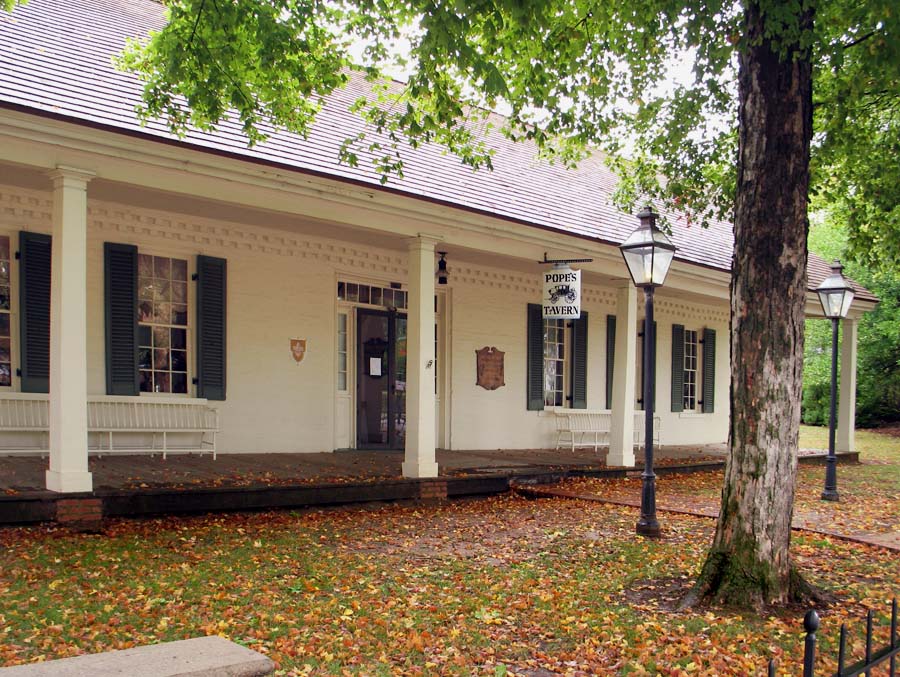
A northwest Alabama museum that houses Civil War relics is taking steps to preserve them from extreme temperatures. The TimesDaily reports that the Pope’s Tavern museum plans to install a heating and air conditioning unit to control the climate of its upstairs areas. The former inn, stage coach stop and Civil War hospital has not had a climate controlled environment to help preserve many of its artifacts. Curator Wayne Higgins says that puts much of its collection — especially pieces made of cloth or paper — at risk of damage. Republished with permission of the Associated Press.
