
With clemency for Chelsea Manning, attention turns to WikiLeaks head
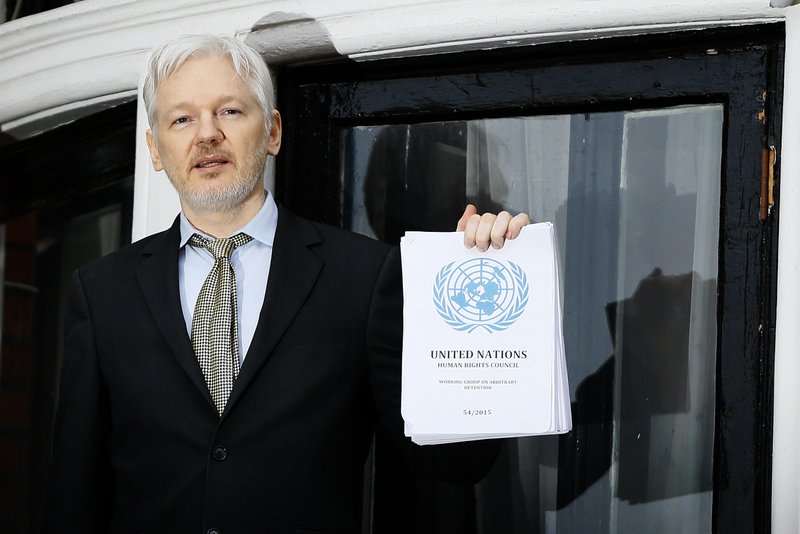
President Barack Obama‘s decision Tuesday to commute Chelsea Manning‘s sentence brought fresh attention to another figure involved in the Army leaker’s case: Julian Assange. On Twitter last week, Assange’s anti-secrecy site WikiLeaks posted, “If Obama grants Manning clemency Assange will agree to US extradition despite clear unconstitutionality of DoJ case.” Obama’s move will test the promise. The president commuted Manning’s 35-year sentence, freeing her in May, nearly three decades early. Manning has acknowledged leaking a trove of diplomatic cables and national security documents to WikiLeaks in 2010. In a statement, Assange called Manning “a hero, whose bravery should be applauded.” Assange went on to demand that the U.S. government “should immediately end its war on whistleblowers and publishers, such as WikiLeaks and myself,” but he made no mention of the Twitter pledge. His lawyer said he has been pressing the Justice Department for updates on an investigation concerning WikiLeaks. Assange has been holed up for more than four years at the Ecuadorian Embassy in London. He has refused to meet prosecutors in Sweden, where he remains wanted on an allegation of rape, fearing he would be extradited to the U.S. to face espionage charges if he leaves the embassy. The Justice Department has never announced any indictment of Assange, and it’s not clear that any charges have been brought under seal. The department, in refusing to turn over investigative documents sought by Manning under the Freedom of Information Act, has acknowledged that the FBI is continuing to investigate the publication of national security information on WikiLeaks arising from Manning’s disclosures. “That investigation concerns potential violations of federal criminal laws, in the form of serious threats to the national security, and the investigation continues today,” Justice Department lawyers wrote in a court filing last year. “From the terms of her request, it is clear that Manning seeks to obtain documents concerning that investigation. Separately, the FBI is also investigating Russian meddling through hacking in the U.S. presidential election. Hacked emails from top Democratic officials and Hillary Clinton campaign officials were posted on WikiLeaks in the final weeks of the presidential race. With the commutation coming just days before Obama leaves office, any decision on whether to charge or seek to extradite Assange will now fall to the Trump administration. In a statement Tuesday, a lawyer for Assange did not address whether Assange intended to come to the U.S. “For many months, I have asked the DOJ to clarify Mr. Assange’s status. I hope it will soon,” Assange’s lawyer, Barry Pollack, said in the statement. “The Department of Justice should not pursue any charges against Mr. Assange based on his publication of truthful information and should close its criminal investigation of him immediately.” Another Assange lawyer, Melinda Taylor, suggested he wouldn’t go back on his word. “Everything that he has said he’s standing by,” she said in a brief telephone conversation with The Associated Press. Republished with permission of The Associated Press.
Barack Obama pardons 78, shortens the sentence for 153
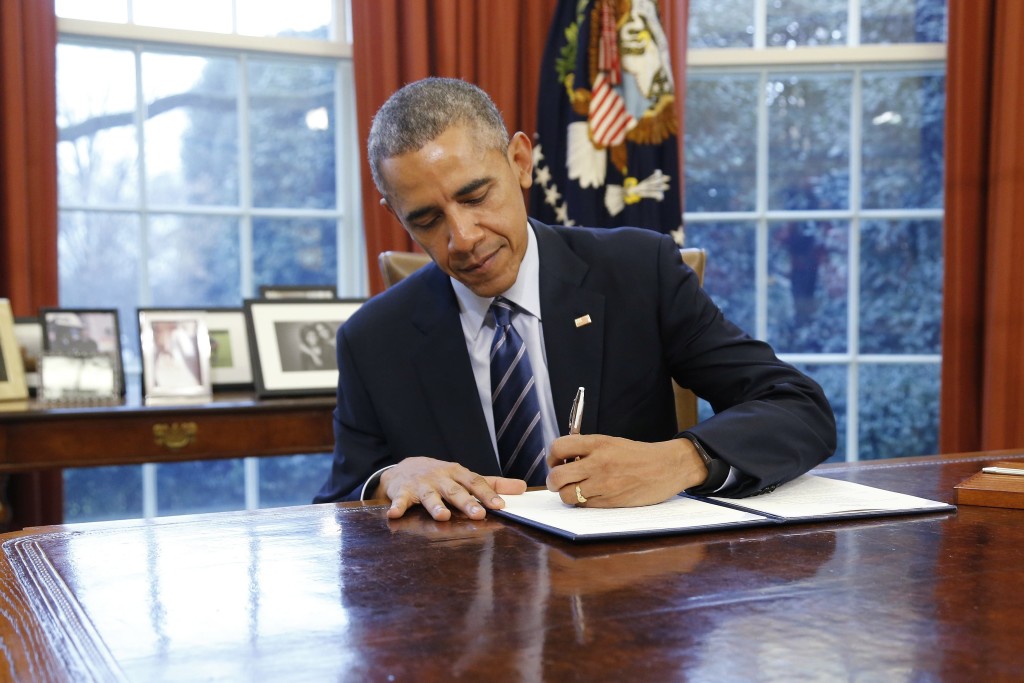
President Barack Obama has pardoned 78 people and shortened the sentence of 153 others convicted of federal crimes, the greatest number of individual clemencies in a single day by any president, the White House said Monday. Obama has been granting commutations at rapid-fire pace in his final months in office, but he has focused primarily on shortening sentences of those convicted of drug offenses rather than giving pardons. A pardon amounts to forgiveness of a crime that removes restrictions on the right to vote, hold state or local office, or sit on a jury. The pardon also lessens the stigma arising from the conviction. The pardons issued Monday were for a wide range of offenses, such as possession of counterfeit currency, felon in possession of a firearm and involuntary manslaughter. One Tennessee man was pardoned after being dismissed from the military in 1990 for conduct unbecoming an officer (shoplifting.) Neil Eggleston, Obama’s White House counsel, said Obama has now pardoned a total of 148 people during his presidency. He has also shortened the sentences of 1,176 people, including 395 serving life sentences. Eggleston said each clemency recipient’s story is unique, but a common thread of rehabilitation underlies all of them. Pardon recipients have shown they have led a productive and law-abiding post-conviction life, including by contributing to the community in a meaningful way, he said. Commutation recipients have made the most of his or her time in prison by participating in educational courses, vocational training, and drug treatment, he said. Not all of those receiving commutations will be set free right away. Some will see their sentences end in 2017 or 2018 – long after Obama leaves office – and in some cases on the condition they participate in drug treatment programs. “These are the stories that demonstrate the successes that can be achieved by both individuals and society in a nation of second chances,” Eggleston said. The commutations were announced as Obama vacations in Hawaii during the holidays. Obama leaves office falling short in efforts to overhaul the nation’s criminal justice system. Congress could not reach agreement on legislation that would lead to shorter sentences for some. Pointing to a prison population that has increase from 500,000 in 1980 to about 2.2 million today, the administration had argued that thousands of people were serving sentences disproportionate to their crimes and that the financial toll of incarcerating them increased financial strains for the government. Eggleston said he expects Obama to issue more commutations and pardons before he leaves office. He called clemency a tool of last resort and said “only Congress can achieve the broader reforms needed to ensure over the long run that our criminal justice system operates more fairly and effectively.” The pace of commutations generated criticism on the campaign trail earlier this year with President-elect Donald Trump warning voters that their safety could be at risk because of Obama’s move to set prisoners free ahead of schedule. “Some of these people are bad dudes,” Trump said in October after another batch of Obama commutations. The Drug Policy Alliance, which has supported Obama’s efforts, said it was worried going into the next administration. “We need the president to pick up the pace of commutations before he leaves office,” said Michael Collins, a deputy director at the alliance. Republished with permission of The Associated Press.
Barack Obama flexes clemency powers, shortens sentences for 102 more federal inmates
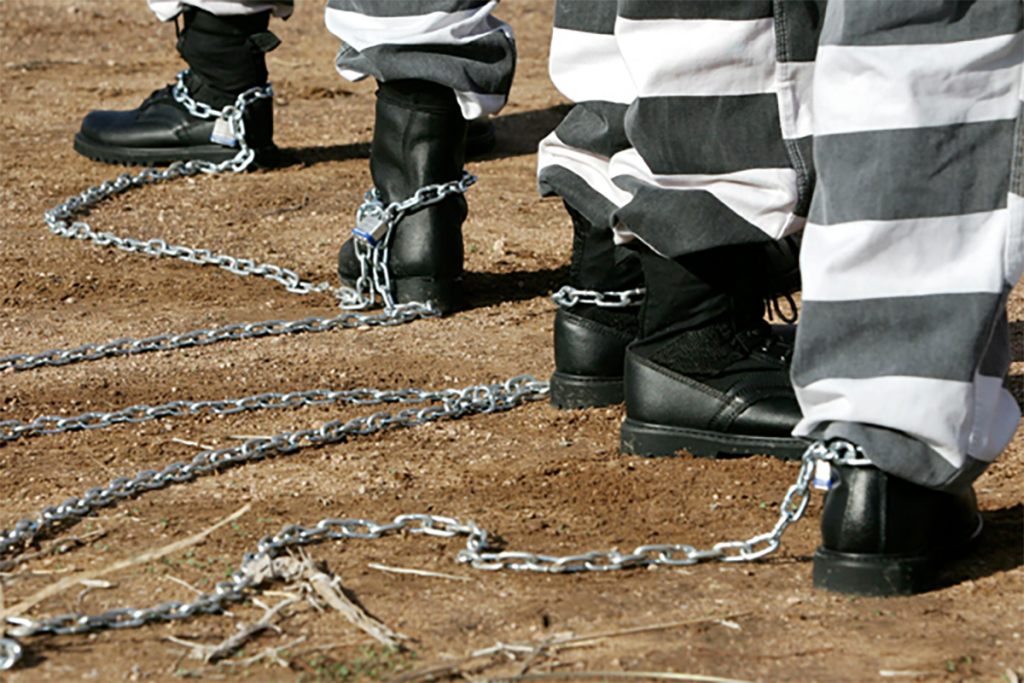
President Barack Obama offered 102 federal inmates the chance to leave prison early, wielding his clemency powers Thursday as part of his end-of-term push to spur action on criminal justice reform. The latest round of commutations brings to 774 the number of sentences Obama has shortened, including 590 this year. The White House said it’s more than the previous 11 presidents put together. Thirty-four of the new recipients had been serving life sentences. Almost all the prisoners had been convicted of nonviolent crimes related to cocaine, methamphetamine or other drugs, although some were also serving time for firearms violations in connection to drug trafficking, possession or sales. Almost all are men, though they represent a diverse cross-section of the country geographically. “The vast majority of today’s grants were for individuals serving unduly harsh sentences for drug-related crimes under outdated sentencing laws,” said Neil Eggleston, Obama’s White House counsel. He said Obama would continue considering clemency applications throughout the remaining months of his presidency. Still, Obama’s order doesn’t set all the prisoners free right away. Many of those receiving commutations won’t see their sentences end until October 2018, long into the next president’s term. Arlana Doris Moore, of Grand Falls, Texas, had been serving a life sentence plus 10 years of supervised release after being convicted of conspiracy to manufacture methamphetamine and possession of chemicals used to make the drug. Moore’s sentence will now expire in late 2018, on the condition that she enrolls in a residential drug treatment program. Obama’s bid to lessen the burden on nonviolent offenders reflects his long-stated view that decades of onerous sentencing requirements put tens of thousands behind bars for far too long. Obama has used the aggressive pace of his commutations to increase pressure on Congress to pass a broader fix while using his executive powers to address individual cases where possible. Yet Obama’s calls for greater clemency have occasionally drawn criticism from opponents who say he’s too soft on crime. Donald Trump, the Republican presidential nominee, has warned Americans that their safety could be at risk because of Obama’s move to set prisoners free ahead of schedule. Though both parties in Congress have called for a criminal justice overhaul, momentum has mostly petered out, creating dim prospects for a legislative breakthrough during Obama’s final months. The inability of Republicans and Democrats in Congress to find consensus even on an issue they agree needs fixing reflects the charged political climate of the election year. Obama has been calling for years for phasing out strict sentences for drug offenses, arguing they lead to excessive punishment and incarceration rates unseen in other developed countries. With Obama’s support, the Justice Department in recent years directed prosecutors to rein in the use of harsh mandatory minimums. The Obama administration has also expanded criteria for inmates applying for clemency, prioritizing nonviolent offenders who have behaved well in prison, aren’t closely tied to gangs and would have received shorter sentences if they had been convicted a few years later. Republished with permission of the Associated Press.
