
Americans offer hope, prayer in assessing Donald Trump’s 100 days

They are young and old: a high school student who can’t yet vote, a Vietnam vet who did so proudly. They hail from all corners of the United States and very different walks of life: a “downhome boy” from Kentucky, a third-generation Mexican-American from Texas, a stay-at-home mom in Pennsylvania, an Iranian immigrant in Los Angeles. Some oppose Donald Trump and all that he stands for, while others voted enthusiastically for him. Now, they are critiquing him. One hundred days into Trump’s presidency, The Associated Press returned to some of the everyday people interviewed these past months to ask them to write a letter to the president, evaluating the job he’s done so far and looking ahead to the months to come. One supporter tells the president he “might have fallen a little short” — on Obamacare, in particular — but he signs off “with hope.” A refugee implores Trump to “make America more friendly,” but finds optimism in the president’s reaction to this month’s chemical attack in Syria: “I hope this is a turning point.” A Trump objector calls his biggest accomplishment “waking up the public to fight.” She offers this advice: “Make decisions with your heart. It will give you wisdom.” ___ FROM RURAL AMERICA, A SUPPORTER SEES HOPE IN TRUMP’S PRESIDENCY Alan Halsey, 31, is a self-described “downhome boy” from Campton, Kentucky, who along with his wife owns and operates The Swift Creek Courier, a weekly newspaper, and Halsey’s Country Store, “a small business that is a chunk of 1950 set down in 2017.” He says he works seven days a week to try to provide for his family, but is struggling and tired of government regulation and red tape. He wrote: ” … I supported you quite strongly in the 2016 election, even to the point of hanging one of your signs on the front door of my business. I particularly related to your foreign policy of ‘America First,’ and your promise to bring business back to the United States. So far, I believe you’re heading in the right direction on that front, and I find a glimmer of hope in the future of the American economy. “Overall, I think you might have fallen a little short on your first 100 days, but I don’t put a lot of weight into a time frame that small. Provided you serve two terms, 100 days is about 4 percent of that. I still feel that something needs to be done with the Affordable Care Act, although I’m not certain exactly what. … I know many ACA recipients that visit a doctor more than once a week, while those that purchase their own insurance wait until a visit to a doctor is imperative to their survival. There must be a middle to that scenario. …” He signed his letter: “With Hope.” ___ CANCER SURVIVOR WORRIES OVER TRUMP’S PROPOSED BUDGET CUTS, BUT PRAYS FOR HIM Rebecca Esparza, 45, is a freelance writer in Corpus Christi, Texas, who didn’t vote for Trump. A cancer survivor, Esparza fears proposed budget cuts targeting the nation’s premier medical research institution, the National Institutes of Health, will hurt Americans who battle illness. She wrote: “. I cannot say I’m proud of your work so far. However, I have respect for the Office of the President, even if I disagree with your political aspirations. … I could write a dissertation on the many ways I disagree with your political ideals. I’m a third-generation Mexican-American, born and raised in South Texas. Your disdain for Mexico, its descendants and immigrants in general troubles me. Your plan to dismantle the Affordable Care Act, leaving millions of Americans with no other health insurance options, leaves me anguished. “But what distresses me most is your plan to cut nearly $6 billion in funding from the National Institutes of Health (NIH). On Thanksgiving Day in 2001, at age 30, I was diagnosed with ovarian cancer. … Cancer research saved my life. … The cuts you are proposing are disconcerting not only for cancer survivors, but for millions of Americans suffering from many types of chronic and rare diseases. … “I’ll be praying for you, President Trump. … I pray you will carefully consider how your decisions have life or death consequences for hard-working Americans.” Read more about Esparza. ___ ONE-TIME OBAMA VOTER FEELS PRIDE IN TRUMP’S WORK Laverne Jones Gore, 60, owns an executive leadership development company in Cleveland and voted for Trump after previously supporting Barack Obama. Gore calls herself a “middle-class American who happens to be black” and says she felt uncomfortable voicing her opinion during the Obama years, but Trump has “made me proud to be an American again.” Part of a military family — her deceased husband was a Marine and a son graduated from West Point — Gore’s one hesitation these past 100 days is over Trump’s airstrike in Syria. She wrote: ” … Mr. President you have absolutely met my expectations. I actually believe you have shown a strength that I had not given to you, and I am surprised by your willingness to meet head on the challenges and resistance within your governing bodies. I don’t believe you have been afforded an opportunity to really show us what you have to offer in the form of leadership of our nation. “I have no issue with you as it relates to ‘Russians.’ I personally believe most of it was contrived. I have no issue with you as it relates to immigration. I think the issues were in need of control. … I have some reservations about your use of Twitter, but I understand the difficulty you have getting your intended message out. “Yes, you surprised me with the Syria strike and I am not certain how I feel about another war or thought of war. I am still contemplating your action and observing the responses to come from the world theatre as they absorb your full intent.” ___ ‘YOUR SIGNATURE CRUSHED MY FAMILY’ Marjan Vayghan, 32, an artist and writer
Donald Trump and Hillary Clinton turn to battleground states in the South
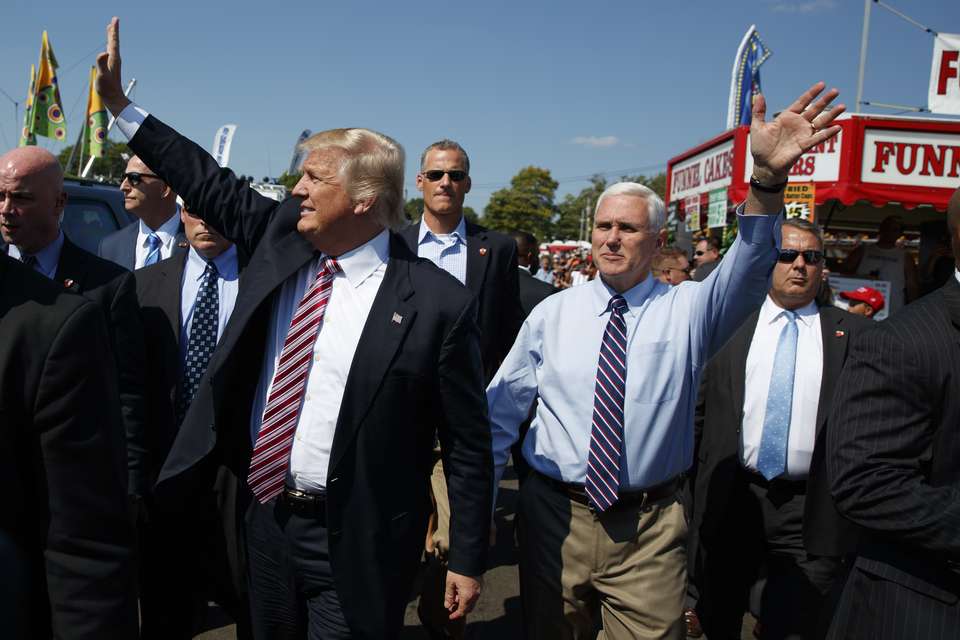
With Labor Day behind them, Donald Trump and Hillary Clinton are pushing ahead in top presidential battlegrounds in the South. Trump, the Republican nominee, is set to campaign in Virginia and North Carolina on Tuesday, two critical states in his path to the presidency. Clinton, the Democrat, is campaigning in Florida in search of an advantage in the nation’s largest swing state. A Clinton victory in Florida would make it virtually impossible for Trump to overcome her advantage in the race for 270 electoral votes. The day before in swing state Ohio, Trump softened his stance on immigration while Clinton blasted Russia for suspected tampering in the U.S. electoral process. In a rare news conference aboard her new campaign plane, Clinton said she is concerned about “credible reports about Russian government interference in our elections.” “We are going to have to take those threats and attacks seriously,” Clinton told reporters traveling with her from Ohio to Illinois. Clinton’s comments follow reports that the Russian government may have been involved in the hacking of Democratic National Committee emails just days before the party’s national convention. The emails, later revealed by WikiLeaks, showed some DNC officials favoring Clinton over her primary opponent, Bernie Sanders — who has since endorsed Clinton for president. She said Russian President Vladimir Putin appears “quite satisfied with himself” and said Trump “has generally parroted what is a Putin-Kremlin line.” Meanwhile, Trump extended a rare invitation to journalists to accompany him on his private plane from Cleveland to Youngstown, Ohio. The billionaire businessman appeared to shy away from his hard-line vow to block “amnesty” for immigrants in the country illegally. Any immigrants who want full citizenship must return to their countries of origin and get in line, he told reporters — but he would not rule out a pathway to legal status for the millions living in the U.S. illegally, as he did in a long-awaited policy speech last week. “We’re going to make that decision into the future,” Trump said. Clinton powered through a coughing fit at a Labor Day festival at a Cleveland park, sharply criticizing Trump’s recent trip to Mexico as “an embarrassing international incident.” Unwilling to allow Trump to modify his immigration stances, she said his address later that night in Arizona amounted to a “doubling down on his absurd plan to send a deportation force to round up 16 million people.” “He can try to fool voters into thinking somehow he’s not as harsh and inhumane as he seems, but it’s too late,” Clinton said. The former secretary of state flatly said “No,” when asked in an ABC News interview whether she’d be willing to accept the Mexican president’s invitation to visit the country, as Trump did last week. “I’m going to continue to focus on what we’re doing to create jobs here at home,” Clinton said. Earlier in the day, Trump attacked Clinton’s energy level, noting she hasn’t followed his aggressive traveling schedule and questioning whether she had the stamina to help bring jobs back to America. “She doesn’t have the energy to bring ’em back. You need energy, man,” Trump told reporters. He added, “She didn’t have the energy to go to Louisiana. And she didn’t have the energy to go to Mexico.” Clinton’s 25-minute question-and-answer session was her first extensive availability with reporters since early December. Beyond Russia, she answered questions about the ongoing controversy surrounding her use of a private email server while secretary of state, which Trump has used to cast doubt over her ability to protect classified information. “I take classification seriously,” she said. While Labor Day has traditionally been the kickoff to the fall campaign, both Clinton and Trump have been locked in an intense back-and-forth throughout the summer. The start of full-fledged campaigning opens a pivotal month, culminating in the first presidential debate Sept. 26 at Hofstra University in Hempstead, New York. Polls show Trump trailing Clinton in a series of must-win battleground states, meaning the debates could be his best chance at reorienting the race. Trump told reporters he does plan to take part in all three presidential debates, joking that only a “hurricane” or “natural disaster” would prevent him from attending. Republished with permission of the Associated Press.
Hillary Clinton looks to steal Donald Trump thunder with VP pick

Hillary Clinton moved closer to introducing her running mate, snatching attention from newly crowned Republican nominee Donald Trump just hours after he closed out his convention with a fiery and foreboding turn at the podium. Crews were still sweeping confetti from the GOP convention hall floor, as the Clinton campaign signaled an announcement was coming soon. In a tweet Friday morning, her campaign urged supporters to text the campaign to get the first word. Virginia Sen. Tim Kaine had emerged as the leading contender, according to Democrats familiar with Clinton’s search. The news could quickly steal Trump’s thunder. In a 75-minute speech Thursday night, Trump made forceful promises to be the champion of disaffected Americans, capping his convention on a high note for the party, not a moment too soon after shows of disharmony and assorted flubs before the four-day closer. Speaking to “the forgotten men and women of our country,” the people who “work hard but no longer have a voice,” he declared: “I am your voice.” With that, he summed up both the paradox and the power of his campaign — a billionaire who made common cause with struggling Americans alienated from the system, or at least a portion of them. The speech was strikingly dark for a celebratory event and almost entirely lacking in policy details. Trump pledged as president to restore a sense of public safety, strictly curb immigration and save the nation from Clinton’s record of “death, destruction, terrorism and weakness.” “I have joined the political arena so that the powerful can no longer beat up on people that cannot defend themselves,” Trump said. He shouted throughout as he read off a teleprompter, showing few flashes of humor or even smiles. Democrats offered a different assessment, with Clinton campaign chairman John Podesta arguing that Trump “offered no real solutions to help working families get ahead or to keep our country safe, just more prejudice and paranoia. America is better than this. America is better than Donald Trump.” Clinton opens a two-day campaign swing Friday in Florida and is expected to introduce her running mate either at a Friday afternoon rally at the state fairgrounds in Tampa or on Saturday at Florida International University in Miami. Kaine, 58, appeared to be the favorite for her choice, according to two Democrats, who both cautioned that Clinton has not made a decision and could change direction. In Cleveland, Trump’s acceptance of the Republican nomination capped his improbable takeover of the GOP, a party that plunges into the general election united in opposition to Clinton but still torn over Trump. Underscoring his unorthodox candidacy, Trump reasserted the hard-line immigration policies that fired up conservatives in the primary but broke with many in his party by expressing support for gays and lesbians. Ever the showman, he fed off the energy of the crowd, stepping back to soak in applause and joining the delegates as they chanted, “U-S-A.” It was an altogether smoother — and more scripted — chapter in a footloose convention shocked a night earlier by Ted Cruz’s prime-time speech, a pointed non-endorsement of the nominee by the Texas senator who finished second in the race and came to Cleveland harboring grievances — and future presidential ambitions. During their convention, Republicans were relentless and often raw in demonizing Clinton. As fired-up supporters at Trump’s acceptance speech broke out in their oft-used refrain of “Lock her up,” the nominee waved them off, and instead declared, “Let’s defeat her in November.” Yet he also accused her of “terrible, terrible crimes.” “This is the legacy of Hillary Clinton: death, destruction, terrorism and weakness,” he said. “But Hillary Clinton’s legacy does not have to be America’s legacy.” In a direct appeal to Americans shaken by a summer of violence at home and around the world, Trump promised that if he takes office in January, “safety will be restored.” He also said young people in predominantly black cities “have as much of a right to live out their dreams as any other child in America.” And he vowed to protect gays and lesbians from violence and oppression, a pledge that was greeted with applause from the crowd. “As a Republican, it is so nice to hear you cheering for what I just said,” he responded. The Democratic convention in Philadelphia, which starts Monday, is expected to be a more orderly affair. Clinton is, if anything, disciplined. Kaine has been active in the Senate on foreign relations and military affairs and built a reputation for working with both parties as Virginia’s governor and mayor of Richmond. “I’m glad the waiting game is nearly over,” Kaine said Thursday. Agriculture Secretary Tom Vilsack, a longtime friend of Hillary and Bill Clinton, is still in the mix, according to one of the two Democrats. Both Democrats are familiar with the selection process and spoke on the condition of anonymity because they were not authorized to discuss it publicly. Kaine’s selection would not be without complication. Liberals have expressed wariness of Kaine for his support of putting the Trans-Pacific Partnership trade agreement on a “fast track” to approval, which both Clinton and primary rival Bernie Sanders oppose. They also note that Kaine recently signed onto a letter asking for less burdensome regulation of regional banks. Republished with permission of the Associated Press.
Former rivals, military leaders, actors to take stage at RNC

Former presidential candidates Ted Cruz, Chris Christie, Scott Walker and Marco Rubio — the latter by video link — are among those set to speak at the Republican National Convention in Cleveland. Military leaders, members of Congress, actors, faith leaders and family members of presumptive presidential nominee Donald Trump are also set to speak in what the Republican National Committee calls “an unconventional lineup” that will challenge the status quo and press for Trump’s agenda. Speaker highlights at the four-day convention, which begins Monday at the Quicken Loans Arena. MONDAY Theme: Make America Safe Again Headliners: Trump’s wife, Melania; Lt. Gen. (ret.) Michael Flynn, U.S. Army; Sen. Joni Ernst, R-Iowa; and Rep. Ryan Zinke, R-Mont. Others: Willie Robertson, star of “Duck Dynasty”; former Texas Gov. Rick Perry; Marcus Luttrell, retired U.S. Navy SEAL; Scott Baio, actor; Pat Smith, mother of Sean Smith, killed in the 2012 attacks in Benghazi, Libya; Mark “Oz” Geist, member of a security team that fought in Benghazi; John Tiegen, member of Benghazi security team and co-author of the book “13 Hours,” an account of the attacks; Kent Terry and Kelly Terry-Willis, siblings of Brian Terry, a Border Patrol agent whose shooting death revealed the botched “Fast and Furious” gun-smuggling operation; Antonio Sabato Jr., actor; Mary Ann Mendoza, Sabine Durden and Jamiel Shaw, immigration reform advocates; Rep. Michael McCaul, R-Texas; David Clarke, sheriff of Milwaukee County, Wis.; Rep. Sean Duffy, R-Wis.; Rachel Campos-Duffy, LIBRE Initiative for Hispanic economic empowerment; Darryl Glenn, Senate candidate in Colorado; Sen. Tom Cotton, R-Ark.; Karen Vaughn, mother of a U.S. Navy SEAL killed in Afghanistan; Sen. Jeff Sessions, R-Ala.; former New York Mayor Rudy Giuliani; and Jason Beardsley of Concerned Veterans for America. ___ TUESDAY Theme: Make America Work Again Headliners: Tiffany Trump, candidate’s daughter; Kerry Woolard, general manager, Trump Winery in Virginia; Donald Trump Jr.; Sen. Shelley Moore Capito, R-W.Va.; former GOP presidential candidate Ben Carson; and actress Kimberlin Brown. Others: Sharon Day, co-chairwoman of Republican National Committee; Dana White, president, Ultimate Fighting Championship; Arkansas Gov. Asa Hutchinson; Arkansas Attorney General Leslie Rutledge; former U.S. Attorney General Michael Mukasey; Andy Wist, founder of Standard Waterproofing Co.; Sen. Ron Johnson, R-Wis.; Chris Cox, executive director, NRA Institute for Legislative Action; golfer Natalie Gulbis; Senate Majority Leader Mitch McConnell, R-Ky.; House Speaker Paul Ryan, R-Wis.; House Majority Leader Kevin McCarthy, R-Calif.; New Jersey Gov. Chris Christie. ___ WEDNESDAY Theme: Make America First Again Headliners: Former presidential candidates Ted Cruz and Marco Rubio; Eric Trump, son of the candidate; former House Speaker Newt Gingrich; and Indiana Gov. Mike Pence, Trump’s pick to be vice president. Others: radio host Laura Ingraham; Phil Ruffin, businessman with interests in real estate, lodging, manufacturing and energy; Florida Attorney General Pam Bondi; retired astronaut Eileen Collins; Michelle Van Etten, small business owner; Kentucky state Sen. Ralph Alvarado Jr.; Darrell Scott, senior pastor and co-founder of New Spirit Revival Center Ministries, Cleveland; Harold Hamm, oil executive; Wisconsin Gov. Scott Walker; Lynne Patton, vice president, Eric Trump Foundation; Sen. Marco Rubio, R-Fla. (by video); Sen. Ted Cruz, R-Texas; Callista Gingrich, wife of Newt Gingrich. ___ THURSDAY Theme: Make America One Again Headliners: Peter Thiel, co-founder PayPal; Tom Barrack, CEO of Colony Capital; Ivanka Trump, daughter of the candidate; and Donald Trump, GOP nominee for president. Others: Brock Mealer, motivational speaker; Rep. Marsha Blackburn, R-Tenn.; Oklahoma Gov. Mary Fallin; Dr. Lisa Shin, owner of Los Alamos Family Eyecare in New Mexico; RNC Chairman Reince Priebus; Jerry Falwell Jr., president of Liberty University and evangelical leader. Republished with permission of the Associated Press.
Hillary Clinton airing thousands of positive ads while Donald Trump silent
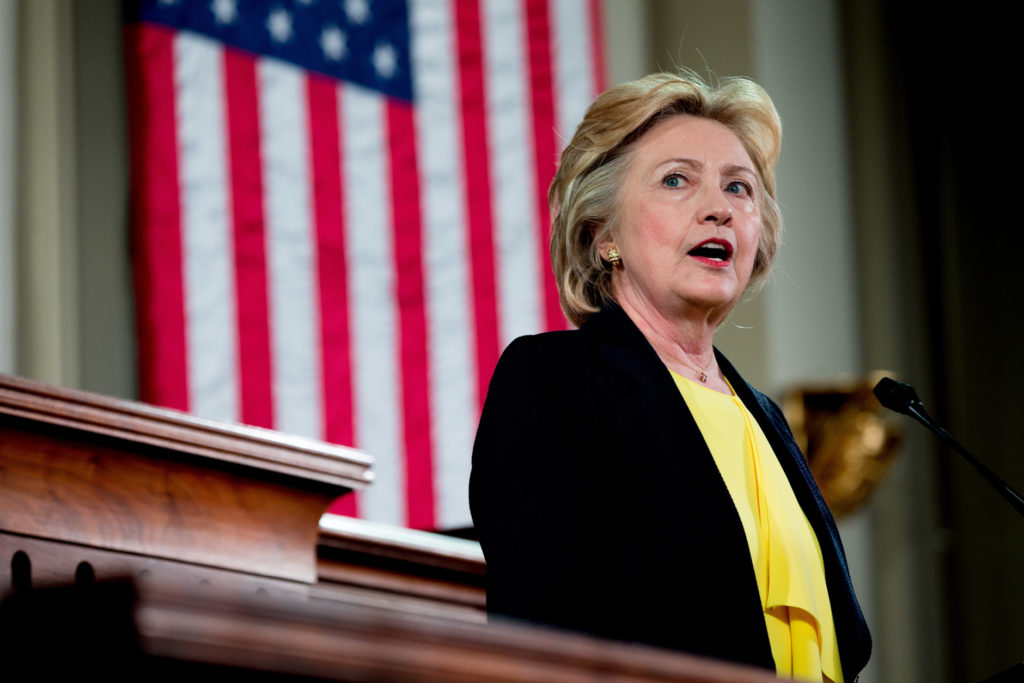
It would take almost 14 days of eyes glued to the television to watch all the feel-good Hillary Clinton ads that have aired since the general election campaign began last month. Meanwhile, anyone flipping through the channels looking for positive ads about Donald Trump would be disappointed: He hasn’t yet put up a spot appealing to November voters, and groups supporting him have been similarly silent. The lopsided commercial airwaves show the presidential candidates have drastically different views of the importance of traditional political campaigning. Trump says he sees little need for advertising at this stage. Instead, he has been banking on free media coverage propelled by his celebrity appeal. As a consequence, Trump has largely ceded control over what the voting public is hearing about him. Clinton’s large batch of biographical ads has given her an opportunity to directly influence views about her image. Up next is what amounts to an hour-long infomercial Thursday night in Cleveland, as Trump accepts his party’s nomination during a speech that will be televised widely in prime time. Clinton has the same perk the following week from the Democratic convention in Philadelphia. After that, Trump’s campaign has said he may begin advertising. That would be a dramatic change. While Trump has aired zero ads, Clinton has been piping thousands of commercials into the homes of swing-state voters in places like Florida, Ohio, North Carolina and Virginia. Specific Florida markets such as Orlando, Tampa and Fort Myers have been favored targets, as well as Denver, for Clinton’s ads. Since June 8, the day after she claimed the Democratic nomination, Clinton has put at least 30,700 commercials on broadcast TV, an Associated Press review of Kantar Media’s campaign advertising data shows. The majority highlight her work as first lady to expand health care for children. “For Hillary, it’s always been about kids,” a narrator says in an ad called “Quiet Moments,” which has run more than any other, some 11,400 times as of this week. A 60-second spot called “Always” seems to spell out the reason for her ads. “She would grow up to be one of the most recognizable women in the world,” a narrator says. “But less well-known are the causes that have been at the center of her life.” The commercial rolls through milestones in her life, beginning with black-and-white footage of her toddling down steps. The few ads paid for by Trump supporters bash Clinton rather than make the case for him. For example, a National Rifle Association ad urges people to vote for Trump by flashing his name for four seconds at the end of a 30-second spot. But the narrator says nothing about him — and doesn’t even utter his name. Clinton’s campaign released a new ad this week that shows children watching television as Trump makes some of his most inflammatory comments, including him saying, “And you can tell them to go (bleep) themselves.” The commercial asks, “Our children are watching. What example will we set for them?” That follows two Clinton campaign ads that mock him for watching TV shows for military advice and consulting with himself for policy strategy. The pro-Clinton super PAC Priorities USA is also airing thousands of spots calling Trump “too dangerous for America.” Political advertising strategists are torn over whether the lack of positive Trump ads matters. “You never want to be in the position of being outshouted by your opponent,” said Russ Schriefer, a senior adviser to Mitt Romney in the 2012 presidential race. He and others said the crush of unanswered summertime Democratic advertising hardened voters’ opinions of Romney as an uncaring businessman. Both Trump and Clinton are historically disliked by voters, according to recent AP-GfK surveys, making upbeat, biographical ads particularly important, Schriefer said. “Someone needs to inject favorability into the bloodstream of the electorate,” he said. “Since she is doing that in a vacuum, her ads will work better.” Yet Fred Davis, a Republican ad-maker not involved in the 2016 campaign, argues this race has unique features that dampen the impact of ads. “They are perhaps the best-known presidential final contenders in our lifetime,” he said. “So the value of bio ads suddenly drops. This would imply Hillary wasting her moolah; Trump playing it smart.” Trump’s team was similarly dismissive of ads early in the primaries. He eventually did put up ads — including some traditional “who I am” ones similar in tone to those from Clinton and previous presidential contenders. Those offer clues of what Trump might say in his general election ads. In one of his softest commercials, his son Donald Trump Jr. speaks to the camera with a row of family photos behind him. “Growing up, my brother, sister and I had to really know what we were talking about before bringing him any kind of a proposal,” he says. The elder Trump is shown kissing and hugging kids, as his son adds, “He may be a little less tough on his grandchildren right now, but it’s that toughness that I want renegotiating trade deals with China and Mexico.” He concludes: “My father will make an incredible president.” Republished with permission of the Associated Press.
Cleveland, a fractured city, an apt place for GOP convention
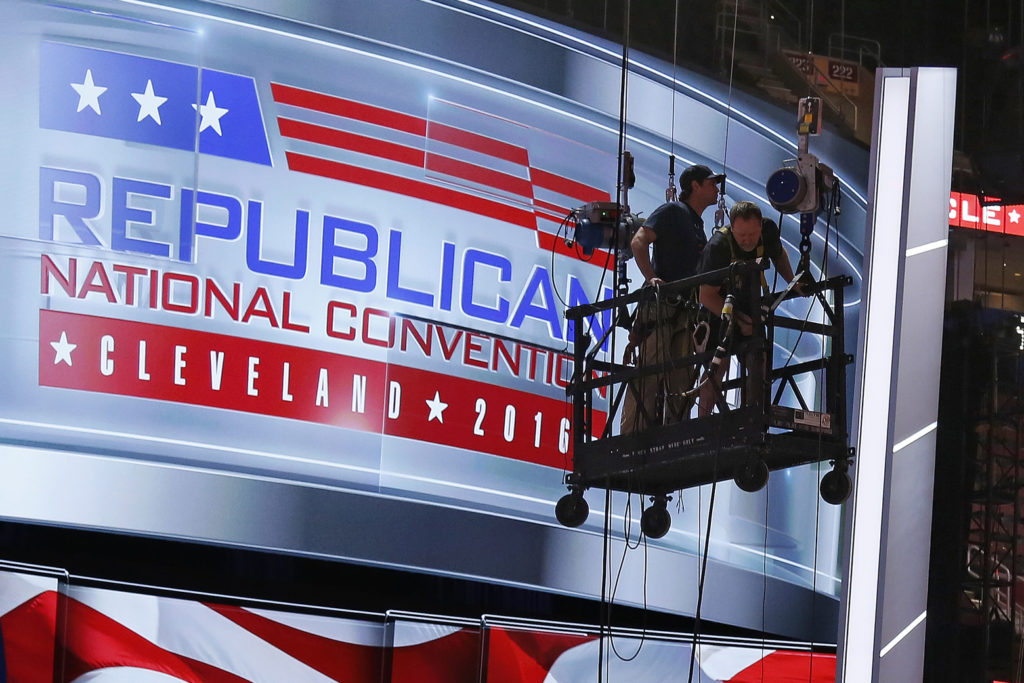
Donald Trump‘s effort to unite a splintered Republican Party around his candidacy is about to take center stage in a city that is itself deeply fractured. Once an industrial powerhouse, Cleveland is one of the poorest and most segregated big cities in America. Two out of five people live below the poverty line, second only to Detroit. Infant mortality rates in its bleakest neighborhoods are worse than in some Third World countries. The city’s mostly blighted east side is almost entirely black, the slightly more prosperous west side more mixed. And there’s deep distrust between the black community and police, in part because of police shootings such as the killing of 12-year-old Tamir Rice and a U.S. Justice Department report that found a pattern of excessive force and civil rights violations by the department. Yet there are also islands of prosperity, created in part by a wave of college-educated young people moving into downtown neighborhoods, a trend that has reshaped the city’s image and helped attract the Republican National Convention, which will be held July 18-21. “It’s a city full of neighborhoods and a city full of divides,” said John Grabowski, a local historian. ___ This is the place that in the 1970s — when the city was in default and a quarter of its population was moving out — embraced the slogan “Cleveland: You Gotta Be Tough.” Tough is a good way to describe Cleveland’s east side, where blacks from the South filled industrial jobs and settled during and after World War II. It’s now marked by high crime and abandoned factories. Over half the children live in poverty. Chris Brown, a 41-year-old black man and lifelong Clevelander, admits he was part of the problem in his younger days. “I was a thug, almost. On a highway going nowhere fast,” he said. Caught selling drugs, he went to prison for three years. Afterward, getting by was a struggle until he started working at a commercial laundry four years ago. Funded by civic leaders, foundations and local institutions, the laundry is part of a wider mission to stabilize east side neighborhoods by creating jobs. Built inside a former torpedo factory, it employs about 40 people, most of whom have done time in prison, and operates as a worker-owned cooperative. The employees can use their wages to buy a piece of the company and get a split of the profits. Brown took advantage of its loan program to buy his first house on the east side, where 1 in 5 homes is vacant. “Where we come from, there ain’t many guys like that,” Brown said. Those behind the cooperative, which also operates a greenhouse and a renewable-energy business, aren’t selling it as a solution to pervasive unemployment. But it’s a bright spot in an area desperately needing something positive, said plant manager Claudia Oates. “It shows we work, we believe in work,” she said. The convention will mean more hotel sheets for the laundry to wash, but apart from that, Brown said, the money the event will bring into the city won’t show up where he lives. “I don’t know many black people who’ve got anything to do with convention,” he said. “Nobody else I know is getting a job or money from the convention.” ___ Downtown is where delegates will spend their money at souvenir shops and sidewalk cafes. It’s also where millennials are moving into renovated warehouse apartments and new condominiums. Once a ghost town at night, it’s now home to 14,000 people. In the two years since the GOP awarded the convention, vacant downtown storefronts have been filled with new businesses, and the Public Square underwent a $50 million renovation. Health care and high-tech jobs are drawing young people, stabilizing the city’s population at about 388,000 after a peak of over 900,000 in the 1950s. “Cleveland’s got a long way to go. I’m not going to sugarcoat it,” said Bill Mangano, a white man who bought a downtown apartment after growing up in the city’s western suburbs. “We’re never going to be New York or Chicago, but we can carve out our own place.” Peter Karman, a 27-year-old white man, left behind a two-hour commute in San Diego for a job within walking distance. “All of my family and friends asked, why Cleveland?” he said. Here, he said, he can afford a lifestyle not possible in California, living in a downtown warehouse overlooking the Cuyahoga River. ___ The crooked river that caught fire during the 1950s and ’60s from industrial pollution sparked an environmental movement resulting in the federal Clean Water Act. But in Cleveland it was the city’s racial boundary for many generations. Blacks stayed east of the river and out of the white neighborhoods to the west, fearing unwelcome stares and police harassment. Kevin Conwell, a black city councilman, remembers his parents warning him 40 years ago not to cross certain streets or risk having the police haul him back home. “People my age still tell kids not to go over there,” he said. “How do you break down that gap?” To this day, many of the east side neighborhoods are at least 90 percent black, according to census data. But over the past 15 years, more blacks are moving to areas once off-limits, creating neighborhoods that are more racially diverse yet still poor. Overall, blacks make up about 53 percent of the city’s residents, whites 37 percent, Hispanics 10 percent. What’s holding back the neighborhoods now, Conwell said, are companies and unions that won’t hire minorities and lenders that won’t offer them home loans. “When you’re not working, you tear your neighborhood apart,” he said. “That’s your great divide.” Republished with permission of the Associated Press.
Large number of GOP senators skipping Donald Trump’s convention
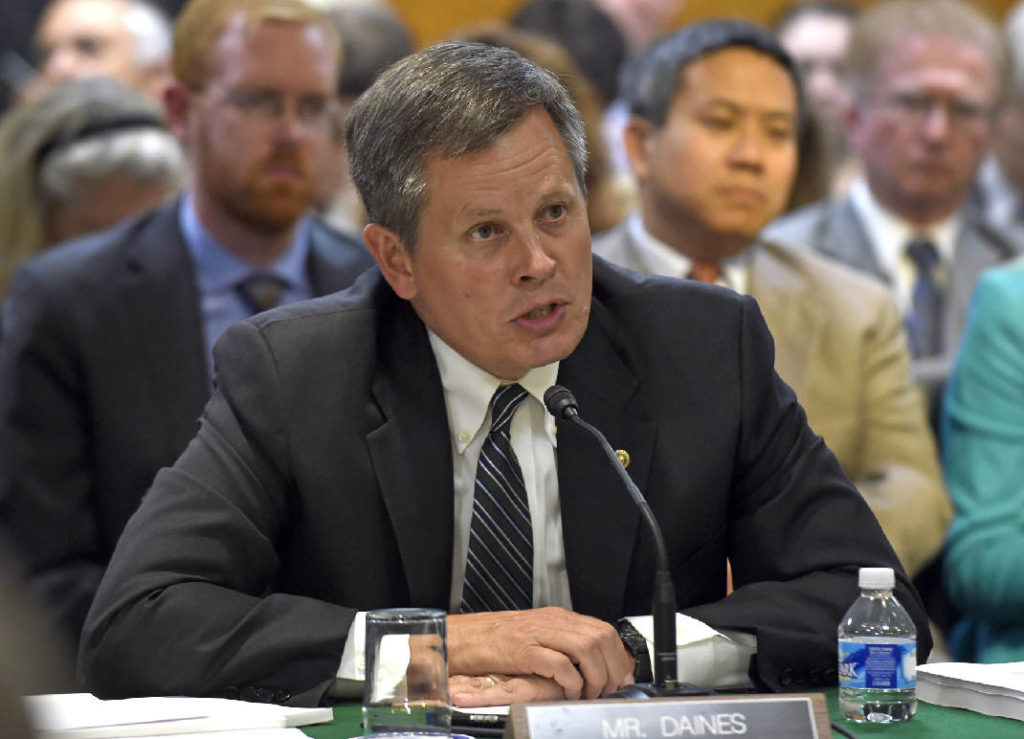
Sen. Steve Daines of Montana will be fly-fishing with his wife. Sen. Jeff Flake of Arizona said he has to mow his lawn (yes, he has one even in Arizona). Sen. Lisa Murkowski of Alaska will be traveling her state by bush plane. And Sen. John McCain of Arizona will be visiting the Grand Canyon, and joked that his friend Sen. Lindsey Graham of South Carolina would be coming along and might even fall in (just kidding, an aide later clarified). All are among the GOP senators who will be skipping next week’s convention in Cleveland where Donald Trump will claim the Republican Party presidential nomination. A majority of Republican senators do plan to attend, and it’s not unusual for lawmakers to skip their party’s convention, especially if they’re up for re-election and need to spend time campaigning. But the level of rank-and-file congressional defections from this year’s Republican convention is unusually high. Perhaps that’s unsurprising, given the GOP establishment’s well-documented discomfort with the man who stands on the cusp of becoming their presidential standard-bearer. But in the halls of the Capitol this week, some senators seemed to visibly squirm when asked about their convention plans. Sen. John Thune of South Dakota, a member of the party leadership, gave a lengthy series of responses to questions earlier this week that ultimately left his plans unclear. “I think it’s going to be a different and unique convention experience. You know I’ve been to a number of them in the past, and this year is different, and we’ll see how it goes,” Thune said. “For most people they go because it’s the Republican convention, and it’s our party’s effort in a presidential election year to talk about what we’re for and what we’re about. So that will go on.” The next day, Thune said he was still “firming up” his plans. Confronted for months with uncomfortable questions about Trump, some senators can still seem aggrieved to get asked about the presumptive nominee, and uncomfortable giving an answer. But at this late date, just days from when the convention will start on Monday, nearly all have at least decided whether or not they’re going to Cleveland. Nearly all, but not quite all. “I’m not sure yet,” Idaho Sen. Jim Risch said Wednesday, adding there are “other things going on and I’ve got to weigh where I can do the most good.” Of the Senate also-rans in the White House chase, only Sen. Ted Cruz of Texas will attend the convention and deliver a speech. Sens. Marco Rubio of Florida, Rand Paul of Kentucky and Graham are skipping the event. For the nearly two dozen GOP senators up for re-election this year, the considerations are particularly sensitive, and that’s especially true for the handful of vulnerable Republican senators in swing states. They must weigh sharing a convention hall with a nominee whose comments have offended women, minorities and others who can decide general elections. There are also concerns that given the “Never Trump” sentiments still nursed by some delegates, the convention could go off the rails and turn into a chaotic spectacle. But few senators were interested in wading into such considerations on the record. “No,” Sen. Roy Blunt of Missouri said tersely when asked if he was staying away from the convention out of a desire to distance himself from Trump. Murkowski said she had only a month to visit the remotest areas of Alaska by plane before her Aug. 16 primary. “For me, this was an easy choice” and “nothing to do” with Trump, Murkowski said. Sen. Ron Johnson of Wisconsin, one of the most vulnerable members, said he could not go to Cleveland because “I’ve got to spend as much time in Wisconsin as possible.” As for his views on Trump, Johnson said: “I support all of the areas of agreement … I’m supporting him. Let’s put it this way, I will not vote for Hillary Clinton.” Even Sen. Rob Portman of Ohio, a vulnerable senator whose state is playing host to the convention, said he will only be dropping into the convention hall from time to time, but not delivering a speech or staying to watch speeches from others. Instead, he’ll be spending his time on his own campaign events in and around Cleveland, including building a Habitat for Humanity home and holding a kayaking charity fundraiser, “Paddling with Patriots on the Cuyahoga River.” “I’m not going to have much time to listen to ’em because I’ll be out and about,” Portman said of the convention speakers. ___ Republished with permission of the Associated Press.
Faced with likely Donald Trump coronation, some GOP delegates quit

Running out of options to voice displeasure with presumptive Republican presidential nominee Donald Trump, some delegates who oppose him have flirted with a movement to try to upend next week’s GOP convention in Cleveland. Others simply won’t go. Among those who gave up their seats is Rhode Island delegate Dawson Hodgson, a former state senator and 2014 candidate for attorney general, who resigned as a delegate because he wants no part in nominating Trump. Hodgson said Trump “espouses views that are antithetical to American values of freedom and democracy” and is dividing the country along race and class lines. “I wouldn’t condone it or participate in it or enable his actions in any way whatsoever,” he said. He’s not the only one to voice his distaste by staying home. In Ohio, Republican state Sen. Shannon Jones resigned from her convention spot, telling The Cincinnati Enquirer she didn’t want to participate in a process that would lead to Trump’s nomination. In Wisconsin, longtime Republican activist Michael Grebe, a close ally of Gov. Scott Walker and political mentor to U.S. House Speaker Paul Ryan, also withdrew. Their resignations are a sign of the dissatisfaction among some established Republican activists about Trump’s candidacy and the effect it could have on down-ballot Republican races in November. But they are unlikely to make a difference in the convention’s outcome. Finishing nearly 40 percentage points higher than his closest rival, Trump did so well among Rhode Island’s GOP voters in the April 26 primary that most of the state’s delegates are die-hard supporters who were elected to represent him. Rhode Island is sending 19 GOP delegates to the convention. Twelve are bound to vote for Trump in the first ballot of the convention, and are likely to do so even if anti-Trump activists succeed in getting the rules changed. Hodgson was elected as one of five delegates representing Ohio Gov. John Kasich. He’s been replaced by an alternate Kasich delegate, Christine Misto, who said she expects to vote for Kasich on the first ballot but is willing to support Trump as the nominee. Only one of Rhode Island’s remaining GOP delegates, Woonsocket attorney Thomas Dickinson, has publicly aligned himself with the anti-Trump movement, but as a Kasich delegate his involvement doesn’t change Trump’s majority support. Anti-Trump activists have been reaching out to delegates in hopes of finding an alternative to nominating Trump, but Rhode Island Republican Party Chairman Brandon Bell said it’s time to move on and support Trump against his likely Democratic opponent, Hillary Clinton. “This is done. This is the coronation. It’s time to celebrate,” Bell said. Republished with permission of the Associated Press.
Stunned Donald Trump foes face diminished options at GOP convention

Still shaken by Donald Trump‘s triumph, Republican and conservative foes of the billionaire can still cause headaches for the party’s presumptive presidential nominee at this summer’s GOP convention. But their options are shrinking by the day. With Trump’s last two rivals — Texas Sen. Ted Cruz and Ohio Gov. John Kasich — abandoning their campaigns, there’s no remaining talk of snatching the nomination away from him with a contested, multi-ballot battle when Republican delegates gather in Cleveland. Instead, anti-Trump forces are trying to figure out how to use this July’s GOP meetings to keep him from reshaping the party and its guiding principles, perhaps with fights over the platform or even his vice presidential pick. Many expect Trump to build momentum as the convention nears, narrowing his opponents’ options. Even so, here’s what may be in store: ___ IT’S OVER? WHAT NOW? Trump’s foes concede he’s likely to arrive in Cleveland exceeding the 1,237 delegates needed to become the nominee. Yet many are still reeling from the contest’s unexpected finale last week and are just starting to think about what they could do at the convention that would be productive. “There’s going to be a lot of thinking, a lot of praying and a lot talking between all of us,” said Kay Godwin, a Cruz delegate from Blackshear, Georgia. “I wish I could give you an answer right now but I think if I did, it would be out of emotion.” “There are probably some who hope Trump will stick his foot in his mouth or some scandal will come out and that they’ll be able to rally everybody at that point, but at this point there’s really nothing they can do” to block his nomination, said Jason Osborne, a GOP consultant. ___ CONTAINING THE DAMAGE Many Trump opponents see the Republican platform, the party’s statement of ideals and policy goals, as a place for a stand in Cleveland. The convention’s 2,472 delegates must approve the platform before formally anointing the presidential nominee. All — including those chosen to support Trump — can vote however they want on the platform. Many conservatives say they will use that vote to keep Trump from reshaping GOP dogma against abortion, for free trade and on other issues. While it seems likely Trump would prevail, a showdown could be an embarrassment he’d seek to avoid by not pushing divisive changes. “If the party walks away from any of its clearly cut social, family values issues, it will be an issue,” said Tony Perkins, president of the conservative Family Research Council and GOP delegate from Louisiana. “We’re not just going to fall in line because he’s the nominee.” Trump has said he would seek to include exceptions for rape and incest to the GOP platform’s opposition to abortion. He’s also flouted the party platform by repeatedly criticizing trade deals and calling NATO obsolete. “We’d want to make sure the platform is protected from Donald Trump,” said Rory Cooper, senior adviser for the Never Trump political committee. Trump aides did not return messages seeking comment on his views about the platform. ___ A RUNNING MATE Trump has said he’d like a vice presidential candidate with government experience. Yet, as with the platform, delegates can vote as they please in choosing Trump’s running mate. Some opponents suggest they may challenge his choice, either as a protest or to try forcing him to make a different selection. Recent GOP conventions have formally approved vice presidential candidates by acclamation and no roll call. But if delegates make enough of a fuss, a roll call with plenty of votes for a rival vice presidential candidate is possible. “He’ll probably pick somebody, and that person is not going to have the automatic ratification status that’s been traditional,” said Roger Stauter, a Cruz delegate from Madison, Wisconsin, who said he would never support Trump. Others said the convention would likely defer to Trump’s thinking about a strategically smart choice. “He could pick somebody we’d all get pretty excited about,” said Shane Goettle, a Cruz delegate from North Dakota. Conservative talk show host Erick Erickson, a Trump opponent, said he expected delegates to accede to Trump’s selection, saying that by July, “the phases of depression and anger” will subside as Republicans accept “their coming defeat.” ___ MUST-WATCH TV? Many expect Trump — star of his own TV reality shows “The Apprentice” and “Celebrity Apprentice” — to run a more watchable convention than usual. Beth Myers, GOP presidential candidate Mitt Romney‘s campaign manager in 2012, was not a Trump supporter during the primaries. But she said Trump knows TV and expects his convention to outshine the Democrats’ in stagecraft and draw millions more viewers than usual. “My guess is that the Republican convention will not be a chaotic, contested convention,” she said. “Rather, it will be a production of Trump, Inc., and it will be pretty good live television.” Some of that glitz may not be by choice. Many Republican bigwigs are expected to shun the convention and avoid giving primetime speeches on Trump’s behalf. Republished with permission of the Associated Press.
Darryl Paulson: Donald Trump the demagogue: Have you no sense of decency?

(First of three parts) With Donald Trump‘s victory in Indiana and the withdrawal of his last two opponents, he is assured a first ballot victory at the July convention in Cleveland. The good news is that there will be no riots as Trump threatened with a deadlocked convention. The bad news is that Donald Trump is the Republican presidential nominee. Lincoln must be spinning in his grave. On June 9, 1954, Joseph Welch was testifying before the Army/McCarthy Hearings in Washington. Welch was chief counsel for the U.S. Army while that branch of the service was under investigation for communist activities before Sen. Joe McCarthy‘s Senate Permanent Subcommittee on Investigations. During the hearings, McCarthy attacked Fred Fisher, an attorney in Welch’s law firm. While a student at Harvard, Fisher had joined the Lawyers Guild, identified by the FBI as a communist-front organization. Fisher had notified Welch of his “youthful indiscretion,” and did not participate in the hearings. Nevertheless, McCarthy persisted in his attacks. Welch asked McCarthy not to “assassinate this lad further, Senator.” McCarthy continued his assault on Fisher. Welch interrupted and berated McCarthy. “You’ve done enough. Have you no sense of decency, sir, at long last? Have you left no sense of decency?” Welch’s confrontation with McCarthy attracted national attention. It was the beginning of the end for McCarthy and McCarthyism. Within three years, McCarthyism was dead and so was the senator. Has Trumpism now replaced McCarthyism? Right before the Indiana primary, Trump went on Fox and Friends and attacked Rafael Cruz, the father of Ted Cruz. Trump accused the elder Cruz of being involved with Lee Harvey Oswald in the assassination of President John F. Kennedy. Trump told Fox viewers that “this was reported and nobody talks about it.” Who reported the story? The National Enquirer, long known for its exposés on Hollywood starlets and their Martian babies. David Peeker, the CEO of the Enquirer, is a Friend of Trump and has endorsed his candidacy. The Enquirer previously ran a story accusing Cruz of having affairs with five women. McCarthy and Trump both destroy lives based on little or no evidence and a lot of lies. As long as their goal is advanced, it matters not what happens to the wrongly accused. New York Times columnist David Brooks has called Trump the “most dishonest person to run for high office in our lifetime.” Trump is “oblivious to accuracy.” In a position that demands the highest level of maturity, we are left with a childish man lacking a moral compass. Here are a baker’s dozen of reasons why Trump is unqualified to be president: Trump has called for “a total and complete shutdown of Muslims entering the U.S.” Forget that means 1.2 billion individuals and that it violates both U.S. and international law. Trump accuses Mexican illegals as “bringing drugs. They’re bringing crime. They’re rapists.” Trump wants to deport all 11 million illegals, but offers no plan on how to do it. Trump’s proposal to eliminate ISIS is very simple, and I mean that in the worse way possible. Trump says he would “bomb the shit out of them.” Now, that’s a plan. Carly Fiorina has an “ugly face! Would anyone vote for that?” Megyn Kelly asks a tough question of Trump and he accuses her of being unbalanced due to her period. Trump accuses Ben Carson of being “pathological” and, thus, unfit to be president. He stretches Carson’s youthful temper tantrums by comparing it to child molesters. Child molesters are “pathological” and “you don’t cure a child molester.” Trump attacks John McCain as not being a war hero because his plane was shot down over North Vietnam. “I like people who weren’t captured.” When asked to renounce the endorsement of longtime Klansman David Duke, Trump responded that he doesn’t know anything about Duke. Strange. In 2000, Trump wrote an opinion piece for The New York Times saying he was leaving the Republican Party because of its ties to Duke. Trump frequently asks participants at his rallies to raise their right arm and pledge allegiance to him. The salute reminded many of salutes to Adolf Hitler when he controlled Germany. Der Spiegel, a German magazine, called Trump “the world’s most dangerous man,” and the leader of a “hate-filled movement.” Trump encourages torture against terrorists and the killing of families of terrorists. Both would violate U.S. and international law. At his rallies, Trump spoke of wanting “to punch protesters in the face.” After a Black Lives Matter protester was assaulted, Trump said, “Maybe he should have been roughed up.” Trump’s language seeks to divide Americans rather than unite them. Trump talks about “you” and “we” needing to attack the dangerous “them.” His opponents are branded as “stupid,” “weak,” or “losers.” Trump often attacks people and then denies doing so. He said he would never “call Megyn Kelly a bimbo because that would be politically incorrect.” He called her a bimbo and then said he would never do it. Trump consistently distorts the truth, changes positions and lies. PolitiFact called Trump’s collection of misstatements the “lie of the year.” It found that 76 percent of the 77 Trump statements were False, Mostly False or Pants on Fire. Trump is the first and only presidential candidate to defend the size of his penis in a debate. I wish reason would be sufficient to sway individuals from supporting Trump, but I know that reason seldom succeeds. Like in most mass movements, Trump’s supporters will deny that Trump ever said or did the things he has done. They will rally to his defense. Trump is not fit to be president. The sooner Americans realize this, the sooner we can end this national nightmare that is Donald Trump. Part II on Monday: Democracy and Demagogues will examine why demagogues so frequently emerge in democracies. *** Darryl Paulson is Emeritus Professor of Government at USF St. Petersburg.
Democratic advertising blitz awaits Donald Trump
Long before Donald Trump swatted away his Republican presidential rivals, his likely Democratic opponent and her allies began laying traps for him. Priorities USA, the lead super PAC backing Hillary Clinton, has already reserved $91 million in television advertising that will start next month and continue through Election Day. In addition, Clinton’s campaign and Priorities USA have both debuted online videos that cast Trump in a negative light — a preview of what voters will see on TV over the next six months. So far, Priorities USA is the only group on either side that has rolled out such an ambitious advertising plan geared toward the general election. The group’s leaders say they’re trying to avoid what they see as the core mistake made by Trump’s Republican rivals — not pushing hard enough against him until it was too late. “There’s a reason that we have a head start,” said Justin Barasky, a Priorities USA spokesman, “and it’s that we’ve taken Donald Trump seriously all along, unlike the Republicans.” The group’s ad strategy will test what has been a hallmark of Trump’s GOP primary rise: his ability to withstand — even thrive in the face of — tens of millions of dollars in attack ads. An Associated Press review of Priorities USA’s TV buys, collected by Kantar Media’s Campaign Media Analysis Group, reveals a formidable 22-week advertising blitz through what the group considers key battleground states: Colorado, Florida, Iowa, Nevada, New Hampshire, Ohio and Virginia. In those states, Priorities USA will start ads in major metropolitan areas, then broaden its outreach to smaller cities as the November election approaches. The group will also start ads on satellite TV in September. According to the CMAG data, Priorities USA plans to spend about $4 million a week through most of June. The group then slows spending through July, taking off the weeks of the Republican and Democratic conventions, when widespread television coverage essentially provides free media time for the candidates. Priorities USA returns to the airwaves in August and begins unloading $60 million in ads between September and Election Day. The week of the election, Priorities USA plans to spend about $8 million in the seven battleground states. The heaviest concentration is in Florida, where the group has reserved $23 million in time, mostly in Orlando and in Tampa. The group also plans to spend about $19.5 million in the traditional presidential bellwether state of Ohio. More than half is for Cleveland, Akron and Columbus. There’s no substantive GOP counterweight to the pro-Clinton effort — partly because Trump has repeatedly trashed big donors and called the outside groups that can raise unlimited money from them “corrupt.” As the presumptive GOP nominee, Trump is now beginning his outreach to donors. But even if he fully embraces outside help, he’s far behind: One super PAC backing him, Great America, was almost $700,000 in debt at the end of March. Another group that was a major player in the 2012 race, American Crossroads, is still “evaluating what our specific role will be,” said spokesman Ian Prior. Television ads are only one part of Priorities USA’s strategy. It is putting at least $35 million into online advertising between June and Election Day, Barasky said. Those ads will largely aim to drive up turnout among core Democratic groups: African-Americans, Hispanics, women and younger voters, Barasky said. Trump is already getting a taste of what some these ads will say. On Thursday, Priorities USA overlaid audio of Trump talking about “unifying” the Republican Party with images of violence that has erupted inside and outside of his massive rallies. “I think we’re going to win in November,” Trump says at the end. “NOPE,” reads text on the screen. “Vote for Hillary Clinton.” That follows an online video the Clinton campaign put out Wednesday that features clips of prominent Republicans, including his former rivals, bashing Trump in every possible way. “He needs therapy,” says former Florida Gov. Jeb Bush at the end of the spot. Republished with permission of the Associated Press.
Donald Trump has a ‘plan B’ for convention – outside help
Donald Trump has a Plan B if he’s faced with a contested convention, and it involves the sort of outside groups that he’s called “corrupt.” While the billionaire businessman might lock up the Republican presidential nomination in the next five weeks of voting, he and his allies are simultaneously undertaking a parallel effort in case he falls short. Outside groups, including one led by longtime Trump political ally Roger Stone, and a loose collection of colorful supporters such as “Bikers for Trump” are organizing ahead of the July convention in Cleveland. They’re soliciting money to pay for their transportation and housing, and they’re already trying to influence the mood of the convention with a social media campaign saying that anything short of a Trump nomination would be “stealing.” “Our principal focus right now is Cleveland,” Stone said of his group, called Stop the Steal. “We want to bring as large a contingent as possible to demonstrate the breadth of Trump’s appeal so that the party can see graphically what they’re going to lose if they hijack the nomination from him.” Stop the Steal and other groups are gaining steam even though Trump has insisted he wants no donor help for his bid and is beholden to no one. Super political action committees “are a disaster, by the way, folks,” Trump said at a Republican debate in March. “Very corrupt.” Stop the Steal is not technically a super PAC, but it operates under very similar rules. This past week, Trump’s lawyers sent the Federal Election Commission a letter renewing the campaign’s disavowal of groups using his “name, image, likeness, or slogans in connection with soliciting contributions.” All the groups planning Cleveland activities repeatedly use his name in their literature. Trump set the stage for what the outside groups are doing by making provocative comments about the complex way Republicans pick a nominee — “rigged,” he calls it. Voters weigh in, but each state has its own rules about what delegates go to the convention and how they must vote on a presidential candidate while they’re there. Stop the Steal and other Trump fans are pushing a similar message on social media and websites. “The big steal is in full swing,” one online letter says, calling unfriendly delegates “stooges.” The Stone-led Cleveland coalition includes We Will Walk, Bikers for Trump, Citizens for Trump and Women for Trump. Stone said the goal is to bring thousands of people to march peacefully in the streets. “We are prepared to bring the Republican Party down if they mess with Trump and try to take it away from him by doing the dirty tricks,” said Paul Nagy, a New Hampshire Republican. He runs We Will Walk, a group that has collected more than 41,000 online signatures of people who say Trump deserves the nomination. The public relations offensive is a counterpart to GOP rival Ted Cruz‘s carefully crafted, labor-intensive strategy of recruiting friendly delegates in hopes he can win if Trump falls short on the first ballot of voting. This weekend in Arizona, Cruz won another strategic victory over Trump, getting numerous friendly delegates elected to head to Cleveland while the Trump backers appeared to be virtually shut out. Those delegates are required to first vote for Trump at the convention because he won the state, but they could later switch their votes to Cruz. While Cruz is playing within the party’s rules, Trump’s claim that what Cruz is doing amounts to “stealing” resonates with voters. In mid-April, after Cruz swept Colorado’s elected delegates, stay-at-home mom Erin Behrens said she felt sick about what was happening to her candidate. So Stop the Steal helped her organize protests in the state. Stone and an ally, Greg Lewis, flew in to help Behrens answer email and arrange a rally. At the April 15 event in Denver, about 200 demonstrators waved banners that read “Banana Republicans” and chanted “Stop the Steal!” Behrens said in an interview last week that she’s continuing to organize Trump supporters in Colorado. “If there’s funny business and they make it clear they’re going to not give it to Trump, Stop the Steal Cleveland will be one thing,” she said. “But we will have protests, events across the United States. Count on it.” A good chunk of what the outside groups are doing now is fundraising. “Bottom line we need to raise $262,000 in the next two weeks,” Stop the Steal’s website says. “If you can’t make it to Cleveland will you help those who can? Will you send $500, $200 or even $100 to this crucial effort?” A different pro-Trump group, Great America PAC, also is raising money for a Cleveland effort. This one is led by William Doddridge, chief executive officer of the Jewelry Exchange. Its commercials warn that “party elites” will try to seize the nomination from Trump at the convention and suggest that people stop that from happening by calling an 800 number and giving money. It needs the help. The group’s latest fundraising report, covering through the end of March, shows it is more than $600,000 in debt. The super PAC can take unlimited contributions from individuals, corporations and unions. Trump’s lawyers have specifically asked it to cease operations. Stop the Steal isn’t a super PAC, the category of outside group that attracts the most ire from Trump, Stone said. But it’s a distinction without a difference. It is organized as a political nonprofit “527” group that files periodic disclosure reports about its donors and spending with the Internal Revenue Service rather than the Federal Election Commission. Like an FEC-monitored super PAC, a 527 can take unlimited amounts of money from individuals, corporations and unions. Republished with permission of the Associated Press.
