
Week 1: Cabinet picks contradict Donald Trump stands on some issues
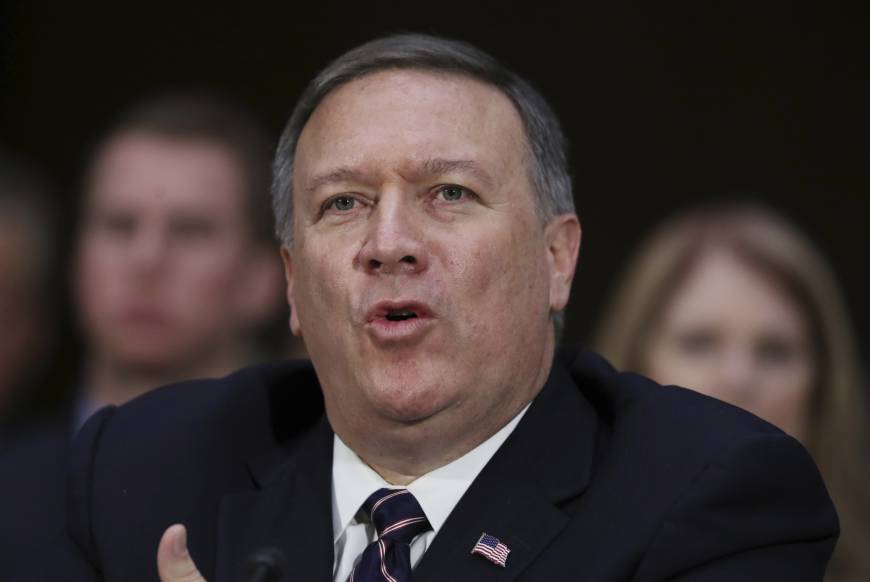
The lack of fireworks surrounding Senate consideration of President-elect Donald Trump‘s Cabinet picks may reflect a slew of statements his choices have made contradicting the billionaire businessman’s position on key issues. Trump acknowledged the differences early Friday, posting a message on his Twitter account saying: “All my Cabinet nominee are looking good and doing a great job. I want them to be themselves and express their own thoughts, not mine!” This week’s confirmation hearings produced an odd political chemistry where, for instance, one of the harshest examinations of a Trump Cabinet choice came from one of Trump’s fellow Republicans, presidential campaign rival Sen. Marco Rubio. Despite Democrats’ dismay over some of Trump’s selections, the hearings were relatively tranquil, with Democrats generally restrained even in quizzing the more contentious picks. The reason, according to a few Democrats: The nominees are proving more palatable than Trump himself. “As I meet members of the Cabinet I’m puzzled because many of them sound reasonable,” said Sen. Dick Durbin of Illinois, the No. 2 Senate Democrat. “Far more reasonable than their president.” That could change in weeks to come, because some of the most potentially explosive hearings are still pending, including the scrutiny of former Goldman Sachs partner Steven Mnuchin for Treasury secretary. Several of Trump’s Cabinet selections this week made statements this week contradicting policy stances espoused by their soon-to-be boss on issues ranging from Russia and NATO to climate change and Muslims. Sen. Jeff Sessions, picked for attorney general, said he’s against any outright ban on immigration by Muslims, in contrast to Trump’s onetime call to suspend admittance of Muslims until U.S. officials could learn more about nature of the threat of extremism. His secretary of state candidate, Rex Tillerson, took a relatively hard line on Washington’s dealings with Russia, even though Trump has been talking about improving relations between Washington and Moscow and held out for days before saying he accepted the intelligence community’s conclusion that Moscow meddled in the U.S. election process. Tillerson demurred, however, when one senator tried to lure him into calling President Vladimir Putin, whom he knows, a “war criminal,” although he emphasized support for NATO commitments that Trump had questioned. The secretary-of-state designate also said the United States should not back away from its efforts against nuclear proliferation, notwithstanding Trump’s suggestion earlier this year that some key U.S. allies like Japan and South Korea provide their own defense. Some of the toughest questioning of Tillerson came not from Democrats but from Rubio, who grilled the Exxon Mobil executive on human rights issues. As Mnuchin’s confirmation hearing approaches, Democrats have set up a website to solicit stories from the thousands of people whose homes were foreclosed on by OneWest Bank while he headed a group of investors who owned the bank. They hope to use Mnuchin’s nomination hearing to attack Trump’s populist appeal with working-class voters and cast themselves as defenders of the middle class. Thus far, though, Republicans are congratulating themselves for generally smooth sailing. And overall, the lack of drama may also be due to the decision by Democrats while in the Senate majority to lower the vote threshold for Cabinet nominees and others from 60 votes to 50, allowing Republicans to ensure approval as long as they can hold their 52-seat majority together. “The purpose of confirmation hearings is to examine the record and views of potential nominees and I think that’s what these hearings are doing,” said Sen. Ted Cruz, R-Texas. “I think it’s likely that all of the Cabinet nominees are going to be confirmed, I think the hearings have gone quite well this week.” A hearing Thursday for neurosurgeon Ben Carson to head the Department of Housing and Urban Development featured some pointed questioning from Massachusetts Sen. Elizabeth Warren, but also warm exchanges between Carson and other committee Democrats. Afterward Carson thanked the panel and said that it “was actually kind of fun.” Sessions was denied confirmation once before by the Senate, but that was three decades ago for a federal judgeship. This time around the Alabaman is a sitting senator and was treated gently, for the most part, by his colleagues, even when Democrats brought up the racial issues that brought him down him last time around. There was potential for drama as Sen. Cory Booker, D-N.J., broke with Senate tradition to testify against his colleague, but it came on the second day of the hearing after Sessions had finished testifying, so he was not even in the room. Tillerson had the rockiest outing thus far, with Rubio pressing him on Russia and Democratic Sen. Jeff Merkley of Oregon confronting him about climate change and other issues. With Rubio and others undecided on supporting Tillerson, his ultimate confirmation is in question. But even with Tillerson, Democrats seemed to pull their punches at times. “I don’t want to argue with you,” Sen. Tom Udall of New Mexico remarked at one point, seeming to speak for several colleagues. And it was practically bipartisan lovefests at the hearings for the choices for Central Intelligence Agency, Kansas Rep. Mike Pompeo; retired Gen. James Mattis for Defense; and retired Gen. John Kelly for Homeland Security. “Pompeo’s very popular, Mattis, Kelly — these are popular selections,” said Sen. John McCain, R-Ariz. The hearings seemed to underscore some emerging dynamics of Trump’s relations with Capitol Hill. Despite his highly unconventional approach, and his lack of Capitol Hill experience, many of his appointees and aides could have been selected by any other Republican, and the Senate is responding accordingly. And even where Trump’s surprising approach raises the potential for problems, congressional Republicans are working overtime to paper them over, not highlight them. “We are in complete sync,” House Speaker Paul Ryan, R-Wis., insisted Thursday in a discussion about a different topic, health care. That could change in weeks to come, as the Senate holds hearings on Mnuchin and other more divisive selections. These include conservative Rep. Tom Price for Health and Human Services; Oklahoma Attorney General Scott Pruitt,
Updates from the 1st presidential debate

The Latest on the first of three presidential debates between Democrat Hillary Clinton and Republican Donald Trump (all times EDT): 10:45 p.m. Both candidates concluded the first presidential debate by saying they will accept the outcome if the other wins. Hillary Clinton spoke directly to viewers and said, “It’s not about us, it’s about you.” Donald Trump initially dodged the same question, saying he would make a “seriously troubled” America “great again.” He added: “I’m going to be able to do it. I don’t believe Hillary Clinton will.” But Trump finished his answer by saying that if Clinton wins, “I will absolutely support her.” ___ 10:43 p.m. Hillary Clinton is punching back at Donald Trump’s assertions that she doesn’t have the “stamina” to be president. Trump has questioned whether Clinton has the physical fitness to be president and he repeated the criticism to her directly during the debate. Clinton’s response? Trump shouldn’t talk about stamina until he’s tried out the busy schedule she kept up as secretary of state. Trump didn’t answer moderator Lester Holt’s original question about his past comments that Clinton doesn’t have the “presidential look.” Clinton suggested the remarks were about gender, and she reminded the crowd of Trump’s past comments calling women “pigs” and other derogatory names. ___ 10:42 p.m. Donald Trump says NATO needs to “go into the Middle East with us” to combat the Islamic State group. And he is taking credit for NATO focusing resources on combating terrorism. In fact, the alliance agreed in July to contribute aircraft and conduct training in Iraq and has increased intelligence coordination there. And NATO set up an anti-terrorism program in 2004 — years before Trump criticized them as a presidential candidate. Earlier this year, Trump criticized NATO for not focusing on terrorism. He said that afterward, he saw an article reporting that NATO was opening a new, major anti-terrorism division. He said Tuesday that NATO’s action was “largely because of what I was saying, and my criticism of NATO.” ___ 10:40 p.m. Donald Trump is avoiding a specific declaration on how he would use nuclear weapons if he’s elected president. The Republican nominee said during the first presidential debate that he “would not do first strike” because “once the nuclear alternative happens, it’s over.” That statement suggests he would not authorize a nuclear attack unless the U.S. was struck first. But in the same answer Trump said he “can’t take anything off the table.” He mentioned adversary nations such as North Korea and Iran. President Barack Obama has considered changing existing policy to state clearly that the United States would not deploy nuclear weapons without first being attacked by nuclear weapons. But he met resistance and has elected not to make such a shift. ___ 10:38 p.m. Hillary Clinton is accusing Donald Trump of being too easily provoked to keep the United States from going to war — perhaps even one involving nuclear weapons. Trump says: “I have much better judgment than she does. I have much better temperament.” That drew laughs from some in the debate crowd, and prompted Clinton to exclaim: “Woo! OK!” Clinton then pivoted to policy, defending the U.S.-led war in Afghanistan. Clinton said Iran was “weeks away” from a nuclear bomb when she became secretary of state — and says the Obama administration thwarted that progress. She continued that Trump didn’t have “good judgment or the right temperament” because he could take the country to war over small issues, like being mocked on Twitter. ___ 10:35 p.m. Donald Trump is continuing to insist he opposed the Iraq War before the U.S. invasion despite evidence to the contrary. Trump says during the debate that he “did not support the war in Iraq,” calling that charge “mainstream media nonsense.” But there is no evidence Trump expressed public opposition to the war before the U.S. invaded. Trump was asked in September 2002 whether he supported a potential Iraq invasion in an interview with Howard Stern. Trump briefly hesitated, then responded: “Yeah, I guess so.” Presented with the comment during the debate, Trump responds: “I said very lightly, I don’t know, maybe, who knows.” He’s also telling reporters to call Fox News host Sean Hannity to confirm private conversations he said they had about the war. Hannity is a top Trump supporter. Clinton voted in favor of the invasion in 2002 while she was a New York senator. She has since said it was a mistake. ___ 10:27 p.m. Donald Trump is interrupting the moderator of the first presidential debate to insist he has the best temperament for the office. Trump repeatedly made the assertion after clashing with moderator Lester Holt over his early support for the Iraq War. Then he segued to his temperament. “I think my strongest asset by far is my temperament,” Trump said. “I know how to win.” Clinton and her allies have repeatedly hit Trump over his temper and inability to take criticism. ___ 10:23 p.m. Hillary Clinton says one key to fighting terrorism in the United States is working closely with Muslims living here. Clinton says Donald Trump has “consistently insulted Muslims abroad, Muslims at home.” She says Muslim people can provide information that law enforcement may not be able to obtain anyplace else. Both candidates were asked to explain how they would combat terrorism in the U.S. Clinton says her plan includes an intelligence surge to obtain “every scrap of information” and to “do everything we can to vacuum up intelligence from Europe, from the Middle East.” ___ 10:20 p.m. Hillary Clinton says defeating the Islamic State group and taking out its leaders would be a top priority as president. Clinton says she’s hopeful the Islamic State group would be pushed out of Iraq by the end of the year. She says the U.S. could then help its allies “squeeze” the terrorist group in Syria. Clinton says she would do everything possible to take out the group’s leaders, and make that one of her administration’s organizing principles
