
Prison reform bill faces more opposition in Senate committee
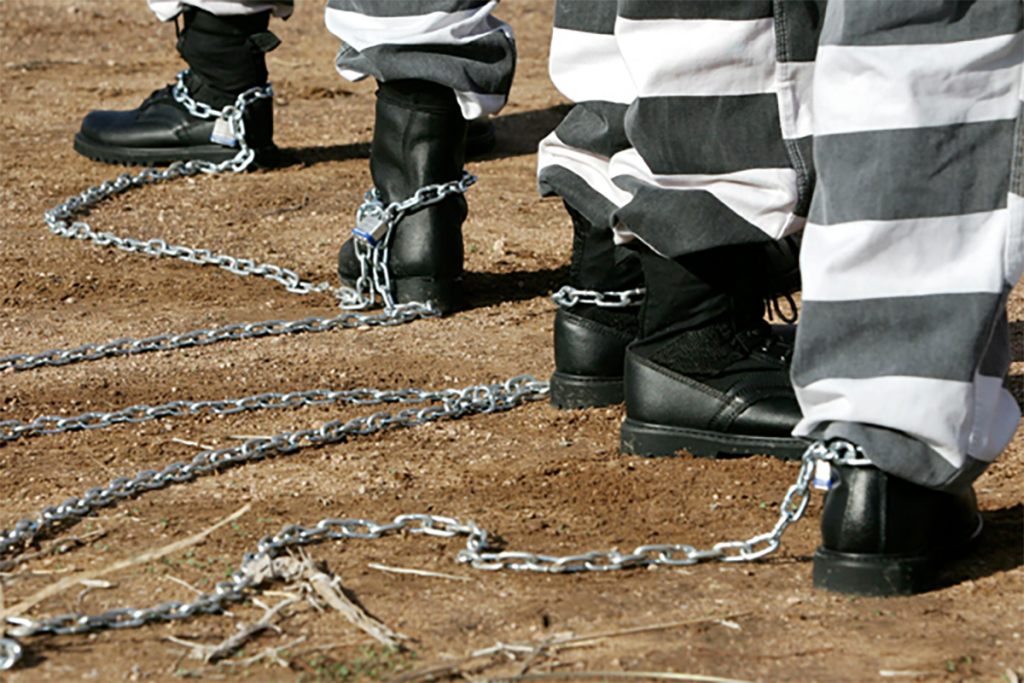
The Senate Committee on General Fund Finance and Taxation took up the Alabama Prison Transformation Initiative Act during a hearing Wednesday when, again, lawmakers were bombarded with opposition from state architects, engineers and contractors in regard to the bill’s design/build mandate. The bill faced much the same outcry when it went before a House committee last week. “It’s a good plan,” said Sen. Trip Pittman (R-Daphne), the Senate bill’s sponsor. “But there are people opposed to it.” As per the ideas laid out in the “State of the State” address by Gov. Robert Bentley, SB287 calls for the demolition of all but two of Alabama’s 16 prisons and provides $800 million in bonds to pay for the construction of four new facilities. Alabama Department of Corrections (ADOC) Commissioner Jefferson Dunn laid out the plan. “Over the last 40 or 50 years, every governor and every member of the legislature has always been faced with the issue of corrections,” Dunn said. “We are bringing forth a plan that we believe will address these longstanding problems.” Dunn noted that the planned move would free up more resources for rehabilitation and reentry, noting that more than 80 percent of prisoners will one day join the citizenry. The four facilities being constructed – one female prison with 1,200 beds and three male prisons with 4,000 beds a piece – will cut overtimes costs for the department, as well as costs related to transportation and healthcare. Along with the four to be constructed, two current facilities will be renovated. While most committee members noted support for the measure, concerns were vast and widespread. Many were interested in which facilities would be demolished and which would remain, as well as how the ADOC would come up with the roughly $50 million required to make the annual bond payments. Sen. William Beasley (D-Clayton) noted that three prisons are in his district and their removal would “devastate” the local economy. But the concerns of lawmakers weren’t the only ones voiced – in all, seven people stood to voice their opposition to the bill. While most were architects and contractors, concerned that the bill upends the traditional design/bid/build model. Clyde Marsh, Commissioner of the Alabama Department of Veterans Affairs (ADVA), voiced concern over the bill’s use of a one-mill tax currently reserved to fund the ADVA and the Department of Human Resources as collateral for the bonds. In the event that the ADOC was unable to make its payments, the tax would be diverted to make up those payments. Lawmakers took no vote on the bill and will appear before the committee again next week.
House committee hears debate over prison transformation bill
One of the hallmark ideas laid out in the “State of the State” address by Gov. Robert Bentley, a plan to demolish all but two of Alabama’s 16 prisons and replace them with four new facilities, went before the House Ways and Means General Fund Committee Wednesday. The Alabama Prison Transformation Initiative Act, HB313, provides for the sale of about $800 million in bonds for the construction of four super-prisons and the renovation of two facilities yet to be determined. The remaining 14 prisons would be demolished. During the committee hearing, it was revealed that these bonds are to be paid by the Alabama Department of Corrections (ADOC), which will pay a lease on the new facilities to the Alabama Corrections Institute Finance Authority (ACIFA). The rent paid to the ACIFA would then be used to pay off the bonds. In order to get a higher bond rating and, in turn, a lower interest rate, the state put up its 1 mill of property tax as collateral on the bonds. Those funds are currently used to help fund the Alabama Department of Veterans Affairs (ADVA). That raised the ire of ADVA Commissioner Clyde Marsh, who said the department wouldn’t be able to function without the money generated from the 1 mill tax. “We can’t do without that,” Marsh said, noting that the funds generated from the tax account for about $34 million in funding. “You’re putting veterans at risk if you do that.” State Finance Director Bill Newton clarified that the ADVA would still receive that money, it was simply “put up” as a way to acquire better rates from Wall Street. Despite that, Rep. John Knight (D-Montgomery) opposed using veterans’ funding as collateral and was joined in his disdain by Rep. Arnold Mooney (R-Birmingham). Mooney recommended offering up hard assets or land as collateral in place of the 1 mill tax, which Newton said he would explore. Additional concern over the bill came from a slew of architects, engineers and contractors who opposed language in the bill that they said would stifle competition and possibly put taxpayer dollars in jeopardy by allowing contractors to hire their own architects to oversee construction. The argument, as it was presented, notes that if contractors are able to hire their own architects or engineers, those workers will serve at the pleasure of the contractor and be less likely to make efforts to ensure the job is done correctly and efficiently. Rhonda Brownstein, Legal Director for the Southern Poverty Law Center, voiced concerns over building new prisons rather than passing further reforms to reduce the number of prisoners in Alabama’s prison system, noting that reforms passed last year have not even been allowed to play out yet. “Before we move forward with a plan to spend $1 billion, we should see how the current reforms work out,” Brownstein said. “We also need to engage in further reforms, deeper reforms, to get more people out of prison.” Brownstein’s comments drew the wrath of Rep. Connie Rowe (R-Jasper), who noted that the focus should be on attaining better conditions for those people already in prison, rather than finding ways to get people out of prison. “I would build several more prisons and lock a lot more people up,” Rowe said. Rep. Victor Gaston (R-Mobile) concurred saying, “We don’t lock up enough people.” ADOC Commissioner Jefferson Dunn discussed his department’s efforts in evaluating the state’s prison problems and instituting “effective, evidence-based” methods for improving conditions for Alabama’s prisoners. Alabama currently ranks third in the country for most people incarcerated. “A prison is much like a small city with a population that has to be cared for,” Dunn said. “To the extent that we can go from running 16 small cities to running six small cities, we will see significant savings from that alone.” Because public input was widespread, as well as questions and concerns from committee members, no vote was taken on the legislation and it will be taken up again in next week’s meeting.
