
Social Security checks getting big boost as inflation rises
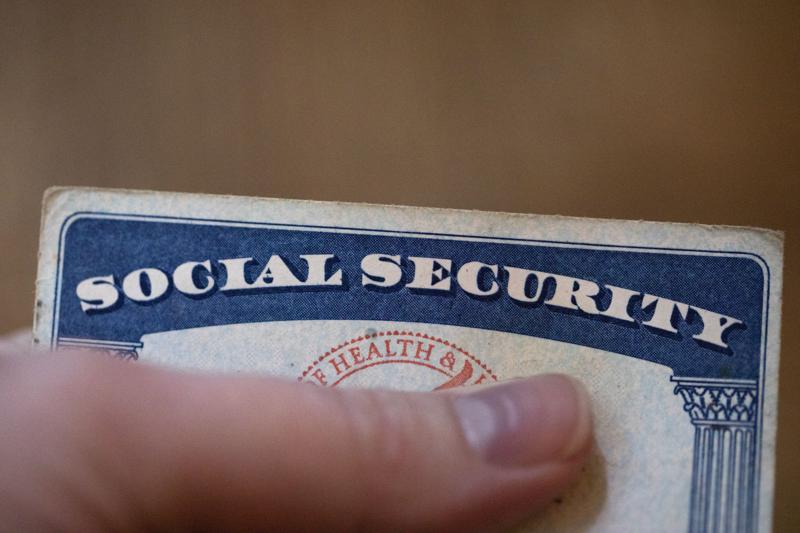
Millions of retirees on Social Security will get a 5.9% boost in benefits for 2022. The biggest cost-of-living adjustment in 39 years follows a burst in inflation as the economy struggles to shake off the drag of the coronavirus pandemic. The COLA, as it’s commonly called, amounts to an added $92 a month for the average retired worker, according to estimates Wednesday from the Social Security Administration. It’s an abrupt break from a long lull in inflation that saw cost-of-living adjustments averaging just 1.65% a year over the past 10 years. With the increase, the estimated average Social Security payment for a retired worker will be $1,657 a month next year. A typical couple’s benefits would rise by $154 to $2,753 per month. But that’s just to help make up for rising costs that recipients are already paying for food, gasoline, and other goods and services. “It goes pretty quickly,” retiree Cliff Rumsey said of the cost-of-living increases. After a career in sales for a leading steel manufacturer, Rumsey lives near Hilton Head Island, South Carolina. He cares at home for his wife of nearly 60 years, Judy, who has advanced Alzheimer’s disease. Since the coronavirus pandemic, Rumsey said he has also noted price increases for wages paid to caregivers who occasionally spell him and for personal care products for Judy. The COLA affects household budgets for about 1 in 5 Americans. That includes Social Security recipients, disabled veterans, and federal retirees, nearly 70 million people in all. For baby boomers who embarked on retirement within the past 15 years, it will be the biggest increase they’ve seen. Among them is Kitty Ruderman of Queens in New York City, who retired from a career as an executive assistant and has been collecting Social Security for about 10 years. “We wait to hear every year what the increase is going to be, and every year it’s been so insignificant,” she said. “This year, thank goodness, it will make a difference.” Ruderman says she times her grocery shopping to take advantage of midweek senior citizen discounts, but even so, price hikes have been “extreme.” She says she doesn’t think she can afford a medication that her doctor has recommended. AARP CEO Jo Ann Jenkins called the government payout increase “crucial for Social Security beneficiaries and their families as they try to keep up with rising costs.” Policymakers say the adjustment is a safeguard to protect Social Security benefits against the loss of purchasing power and not a pay bump for retirees. About half of seniors live in households where Social Security provides at least 50% of their income, and one-quarter rely on their monthly payment for all or nearly all their income. “You never want to minimize the importance of the COLA,” said retirement policy expert Charles Blahous, a former public trustee helping to oversee Social Security and Medicare finances. “What people are able to purchase is very profoundly affected by the number that comes out. We are talking the necessities of living in many cases.” This year’s Social Security trustees report amplified warnings about the long-range financial stability of the program. But there’s little talk about fixes in Congress, with lawmakers’ consumed by President Joe Biden’s massive domestic legislation and partisan machinations over the national debt. Social Security cannot be addressed through the budget reconciliation process Democrats are attempting to use to deliver Biden’s promises. Social Security’s turn will come, said Rep. John Larson, D-Conn., chairman of the House Social Security subcommittee and author of legislation to tackle shortfalls that would leave the program unable to pay full benefits in less than 15 years. His bill would raise payroll taxes while also changing the COLA formula to give more weight to health care expenses and other costs that weigh more heavily on the elderly. Larson said he intends to press ahead next year. “This one-time shot of COLA is not the antidote,” he said. Although Biden’s domestic package includes a major expansion of Medicare to cover dental, hearing, and vision care, Larson said he hears from constituents that seniors are feeling neglected by the Democrats. “In town halls and tele-town halls they’re saying, ‘We are really happy with what you did on the child tax credit, but what about us?’” Larson added. “In a midterm election, this is a very important constituency.” The COLA is only one part of the annual financial equation for seniors. An announcement about Medicare’s Part B premium they pay for outpatient care is expected soon. It’s usually an increase, so at least some of any Social Security raise gets eaten up by health care. The Part B premium is now $148.50 a month, and the Medicare trustees report estimated a $10 increase for 2022. Economist Marilyn Moon, who also served as public trustee for Social Security and Medicare, said she believes the current spurt of inflation will be temporary, due to highly unusual economic circumstances. “I would think there is going to be an increase this year that you won’t see reproduced in the future,” Moon said. But policymakers should not delay getting to work on retirement programs, she said. “We’re at a point in time where people don’t react to policy needs until there is a sense of desperation, and both Social Security and Medicare are programs that benefit from long-range planning rather short-range machinations,” she said. Social Security is financed by payroll taxes collected from workers and their employers. Each pays 6.2% on wages up to a cap, which is adjusted each year for inflation. Next year the maximum amount of earnings subject to Social Security payroll taxes will increase to $147,000. The financing scheme dates to the 1930s, the brainchild of President Franklin D. Roosevelt, who believed a payroll tax would foster among average Americans a sense of ownership that would protect the program from political interference. That argument still resonates. “Social Security is my lifeline,” said Ruderman, the New York retiree. “It’s what we’ve worked for.” Republished with the permission of the Associated Press.
3 percent pay raise for goes into effect for thousands of state employees

Thousands of state workers will see a three-percent pay raise on Monday thanks to the first cost-of-living raise Alabama state employees have seen in a decade going into effect. The raise is the result of a bill passed by the legislature and signed into law by Gov. Kay Ivey back in March. It gives Alabama’s 33,000 state employees a cost-of-living increase — the first across-the board increase since 2008. State Auditor Jim Zeigler is celebrating the “COLA” or cost of living adjustment day, that happens to coincide with the state of the fiscal year: Oct. 1, 2018. “October 1 is the three-percent cost of living adjustment in salary for state employees. It was done without a tax increase and without incurring debt – made possible by Alabama’s increasing economy and some efficiency measures,” said State Auditor Jim Zeigler. “COLA Day does not mean soft drinks. It means the first pay raise for employees in almost a decade. With better management, state employee pay can be raised more often. The need for raises will be greater as inflation is starting to enter this booming economy.”
State Senate approves cost-of-living raises for state employees

State employees would receive their first cost-of-living raise in ten years under a bill approved by the state Senate on Tuesday. Lawmakers approved a three percent pay raise 28-1. Sponsored by Prattville-Republican state Sen. Clyde Chambliss, SB185 would provide the cost-of-living increase for the fiscal year beginning October 1, 2018. Gov. Kay Ivey applauded the approval of the bill. “We depend on state employees every day – after a decade without a pay increase, it is time we honor their hard work and commitment with a sensible raise,” Ivey said in a statement. “State employees are vital to good government, and I appreciate the work they do for the people of Alabama each and every day. I commend sponsor Senator Clyde Chambliss, General Fund budget chairman Senator Tripp Pittman and the members of the Senate for adopting the full three percent raise I proposed. I urge the House to move quickly and follow the Senate’s lead.” The bill now goes to the Alabama House of Representatives for consideration.
Alabama Senate committee OKs state employee pay raise
Thousands of state workers could see pay raises in their futures under a the 2019 General Fund budget a legislative committee approved Wednesday. The Senate Finance and Taxation General Fund Committee approved SB178, which would go into effect Oct. 1, that gives Alabama’s 33,000 state employees a 3 percent cost-of-living increase — the first across-the board increase since 2008. The proposed budget also Provides a total increase of $80 million to the Alabama Department of Corrections (ADOC) to help improve staffing and the treatment of mental health in the state’s prison system; Adds $53.8 million to the Alabama Medicaid Agency; Provides funds to hire roughly 30 new state troopers. The spending bill, introduced by Montrose-Republican, State Sen. Trip Pittman now moves to the Senate floor.
Social Security recipients will see 2 percent boost in 2018

Millions of Social Security recipients and other retirees will get a 2 percent increase in benefits next year, the largest increase since 2012, thought it comes to only $25 a month for the average beneficiary. The cost-of-living adjustment, or COLA, affects benefits for more than 70 million U.S. residents, including Social Security recipients, disabled veterans and federal retirees. That’s about one in five Americans. The Social Security Administration announced the COLA Friday. By law, the COLA is based on a broad measure of consumer prices generated by the Bureau of Labor Statistics. Advocates for seniors claim the inflation index doesn’t accurately capture rising prices faced by seniors, especially for health care. “It doesn’t make your life any easier. It’s really made it tight,” said Barbara Bogart, who retired from a home health care company. “You have to be so careful to make it each month.” Bogart, 75, who lives near Indianapolis, said she gets less than $1,000 a month from Social Security, her only source of income. “I have all the normal costs that people have. I have groceries, gas for my car,” she said. “I have to be cautious.” Some conservatives argue that the inflation index is too generous because when prices go up, people change their buying habits and buy cheaper alternatives. Consumer prices went up only slightly in the past year despite a recent spike in gasoline prices after a series of hurricanes slowed oil production in the Gulf Coast, said Max Gulker, senior research fellow at the American Institute for Economic Research. “For the most part, there was a decline in energy prices for a lot of the year,” Gulker said. “But at the end of the year we saw that uptick in gas from the hurricanes.” The average monthly Social Security payment is $1,258, or about $15,000 a year. Congress enacted automatic annual increases for Social Security in 1975. Presidents often get blamed when increases are small or zero. But President Donald Trump has no power to boost the increase, unless he persuades Congress to change the law. In 2009, President Barack Obama persuaded Congress to approve one-time payments of $250 to Social Security recipients as part an economic stimulus package. Over the past eight years, the annual COLA has averaged just above 1 percent. In the previous decade, it averaged 3 percent. Multiple years of small or no COLA reduces the income of retirees for the rest of their lives, said Mary Johnson of The Senior Citizens League. “Think about the length of a retirement period. Eight years is about a third of a (healthy) retirement,” Johnson said. “It’s squeezing them. It’s causing them to dip into savings more quickly. The lifetime income that they were counting on just isn’t there.” The COLA is based on the Consumer Price Index for Urban Wage Earners and Clerical Workers, or CPI-W, a broad measure of consumer prices. It measures price changes for food, housing, clothing, transportation, energy, medical care, recreation and education. The cost of medical care has gone up by 1.5 percent over the past year, according to the September report released Friday. Housing prices are up by 2.8 percent while the cost of food and beverage has gone up by 1.2 percent. Gasoline prices are up 10 percent from a year ago, according to AAA, though they have dropped in the past month. The COLA is calculated using the average CPI-W for July, August and September, and comparing it to the same three months from the previous year. Social Security is financed by a 12.4 percent tax on wages, with half paid by workers and the other half paid by employers. Next year, the maximum amount of earnings subject to the Social Security tax will increase from $127,200 to $128,700. About 175 million workers pay Social Security taxes. Of those, about 12 million workers will pay more in taxes because of the increase in taxable wages, according to the Social Security Administration. Republished with permission from the Associated Press.
Social Security recipients to get tiny increase in benefits

Millions of Social Security recipients and federal retirees will get a 0.3 percent increase in monthly benefits next year, the fifth year in a row that older Americans will have to settle for historically low raises. There was no increase this year. Next year’s benefit hike will be small because inflation is low, driven in part by lower fuel prices. The federal government announced the cost-of-living adjustment, or COLA, Tuesday. By law, the COLA is based on a government measure of consumer prices. The COLA affects more than 70 million people – about 1 in 5 Americans. The average monthly Social Security payment is $1,238. That adds up to a monthly increase of less than $4 a month. More bad news for seniors: Medicare Part B premiums, which are usually deducted from Social Security payments, are expected to increase next year to the point in which they will probably wipe out the entire COLA. By law, increases in premiums for most Medicare recipients cannot exceed their Social Security COLA. That’s known as the “hold harmless” provision, and it protects the majority of Medicare recipients. However, new enrollees and high-income retirees are not covered by the hold harmless provision, so they could face higher Medicare premiums. Those premiums will be announced later this year. Millicent Graves, a retired veterinary technician, says Medicare and supplemental insurance premiums eat up nearly a third of her $929 monthly Social Security payment. And don’t tell the 72-year-old from Williamsburg, Virginia, that consumer prices aren’t going up. She says her insurance premiums went up by $46.50 this year, and her cable TV, internet and phone bill went up, too. “I just lose and lose and lose and lose,” Graves said. More than 60 million retirees, disabled workers, spouses and children get Social Security benefits. The COLA also affects benefits for about 4 million disabled veterans, 2.5 million federal retirees and their survivors, and more than 8 million people who get Supplemental Security Income, the disability program for the poor. Many people who get SSI also receive Social Security. Since 2008, the COLA has been above 2 percent only once, in 2011. It’s been zero three times. “This loss of anticipated retirement income compounds every year, causing people to spend through retirement savings far more quickly than planned,” said Mary Johnson of the Senior Citizens League. “Over the course of a 25- or 30-year retirement, it reduces anticipated Social Security income by tens of thousands of dollars.” By law, the cost-of-living adjustment is based on the Consumer Price Index for Urban Wage Earners and Clerical Workers, or CPI-W, a broad measure of consumer prices generated by the Bureau of Labor Statistics. It measures price changes for food, housing, clothing, transportation, energy, medical care, recreation and education. The COLA is calculated using the average CPI-W for July, August and September. If prices go up, benefits go up. If prices drop or stay flat, benefits stay the same. Gasoline prices have fallen by more than 6 percent over the past year, according to the September inflation report, while the cost of medical care has gone up by more than 5 percent. For seniors who don’t drive much, they don’t get the full benefit of low gas prices, said Max Gulker, a senior research fellow at the American Institute for Economic Research. Many seniors, however, spend more of their income on health care. Graves said she appreciates lower gas prices, but the higher medical costs are a problem. “I just have to rely more each month on cashing in investments,” Graves said. “I’m lucky I can do that.” Some advocates complain that the government’s measure of inflation doesn’t reflect the costs many older Americans face. They note that the index measures prices for urban wage earners, not retirees. “As prescription prices skyrocket and Medicare premiums and other health costs increase, many older Americans have understandable concerns,” said AARP CEO Jo Ann Jenkins. Vermont Sen. Bernie Sanders, who unsuccessfully ran for the Democratic nomination for president, said, “Seniors and disabled veterans need more help than a few extra dollars in their monthly checks. These are the people who built this country – our parents, our grandparents and our soldiers.” Sanders has been pushing to expand Social Security benefits for years. His opponent in the Democratic presidential primary, Hillary Clinton, has embraced the idea of expanded benefits for certain low-income retirees. Clinton would pay for it by raising taxes on “the highest-income Americans.” Social Security has been largely absent from the presidential campaign. Breaking with other Republicans, GOP nominee Donald Trump has pledged not to cut benefits. However, he has offered few specifics on how he would address Social Security’s long-term financial problems. Social Security is financed by a 12.4 percent tax on the first $118,500 of annual wages, with the worker paying half and the employer paying the other half. The amount of wages subject to the payroll tax will go up to $127,200 next year, the Social Security Administration said. About 173 million workers will pay Social Security taxes next year – about 12 million of them will face higher taxes because of the higher cap, the agency said. Republished with permission of the Associated Press.
