
College town probes halt on student housing projects
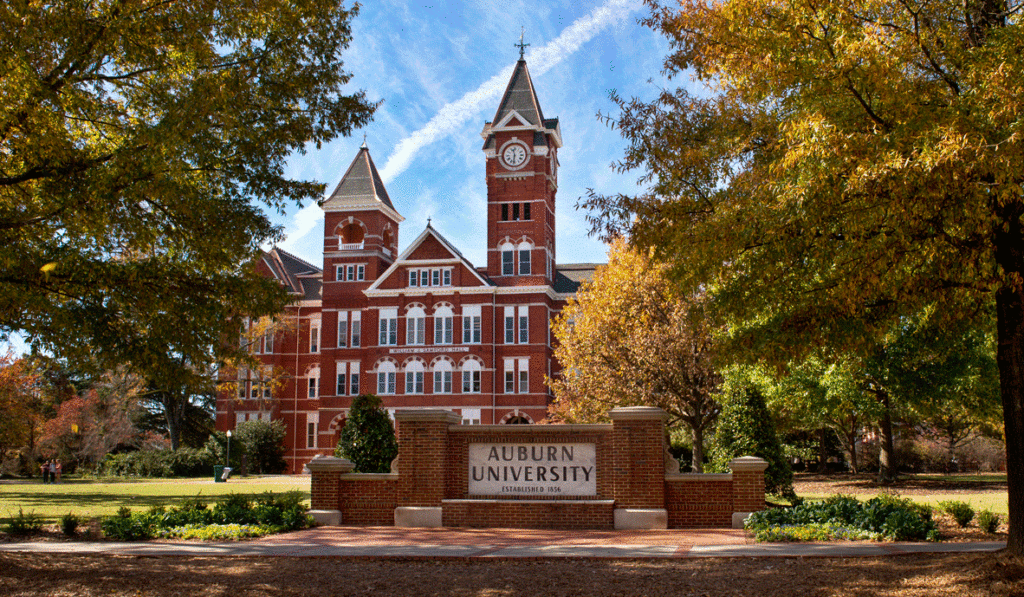
A college town in Alabama proposed temporarily halting construction on any new student housing developments in the city amid concerns the number of existing facilities exceeds the amount of students. Auburn Mayor Ron Anders proposed an ordinance at last week’s city council meeting that would halt new student housing developments for about 90 days to give leaders time to figure out a long-term solution, the Opelika-Auburn news reported on Friday. Ongoing complaints from residents and businesses about the rising number of student developments in the city prompted the council to form a task force about a year ago, the newspaper reported. Data from its efforts showed the number of beds in the city designed specifically for students is too high at approximately 37,000, Anders said. At the same time, Auburn University officials say the school is expected to maintain consistent undergraduate enrollment at about 25,000 students with no significant growth foretasted. The ordinance will be introduced at the council’s Dec. 17 meeting. Republished with the Permission of the Associated Press.
Daniel Sutter: Why go to college?

More than three million students will begin college this year, many pursuing degrees needed for high paying jobs. Amazingly, bachelor’s degrees open economic doors despite little evidence of significant learning in college. How can students who retain so little knowledge make so much money? A college degree can identify people who employers want to hire. A recent book by George Mason University economist Bryan Caplan provocatively titled The Case Against Education argues that this signaling explains much of the college earnings premium. The college earnings premium is real. According to the Bureau of Labor Statistics, in 2018 college grads earned 64 percent more than high school grads who never attended college, and 39 percent more than associate’s degree holders. College grads are also less likely to be unemployed, with a 2.2 percent unemployment rate, versus 4.1 percent for high school grads. The earnings and unemployment differentials have both persisted for years. Businesses require bachelor’s degrees for many jobs. Every time a business chooses college grads, they pay more. Profit-hungry businesses should not hire more expensive workers unless they create more value. Economics offers two theories for education’s value. The first, called human capital, contends that learning makes workers more productive. In the human capital story, the college curriculum must be directly valuable to employers. High paying degrees, like economics, must teach skills businesses value more. Alternatively, college degrees might allow students to signal characteristics which businesses desire; the content of degrees may be largely irrelevant. Life offers many examples of signaling. Romance and courting involve numerous signals, like engagement rings. A diamond is of little practical value, but signals the willingness to make a life-long commitment. What does college signal? Professor Caplan argues three main traits: intelligence, conscientiousness, and conformity. Businesses desire workers who are smart, able to learn challenging material, and willing to follow rules. Conformity is probably becoming more important, as businesses can no longer afford workers who tell off-color jokes or express racial, religious or sexual intolerance. Intelligence and ability to learn are valuable because the details of jobs differ greatly across employers. Employers must train workers to do a job their way. Employees must be willing to turn off their cell phones and pay attention. How important is human capital versus signaling? Discussions of higher education policy generally presume human capital theory. Yet Professor Caplan contends that the college premium is about 80 percent signaling and 20 percent human capital. The content of education clearly has some relevance; engineering firms will not hire inexpensive social work majors over expensive engineers because they prefer graduates already familiar with engineering. Professor Caplan presents a wealth of statistical evidence in support of signaling. Yet several puzzles demonstrate signaling’s importance. Perhaps most telling is the one mentioned above, the lack of evidence on long-term learning. Knowledge forgotten – of Shakespeare, calculus, or supply and demand – cannot be generating productivity. Furthermore, a student who is one or two classes short of a degree has acquired perhaps 95 percent of a degree’s human capital, but will face a significant salary penalty. And attending classes allows acquisition of knowledge without earning college credit, and has essentially no market value. Signaling creates value for the economy even if course content is largely irrelevant. College helps employers find the workers they want. Yes, four years of college is costly, but everyone wants high paying jobs and would likely lie during an interview. Whether higher education provides efficient signaling depends on whether an alternative can separate high and low quality potential workers at a lower cost. The potential exists for excessive and wasteful signaling. Completing high school used to separate one from the crowd. Arguably we now use college degrees as a signal instead of high school diplomas. Credential inflation is potentially costly. For parents of college students, signaling offers some solace. Even if Sally or Johnny seem to forget everything after the semester ends, passing forgettable classes can readily signal employers their willingness to learn a boring job. Daniel Sutter is the Charles G. Koch Professor of Economics with the Manuel H. Johnson Center for Political Economy at Troy University and host of Econversations on TrojanVision. The opinions expressed in this column are the author’s and do not necessarily reflect the views of Troy University.
These are the best colleges in Alabama, according to a new 2019 ranking
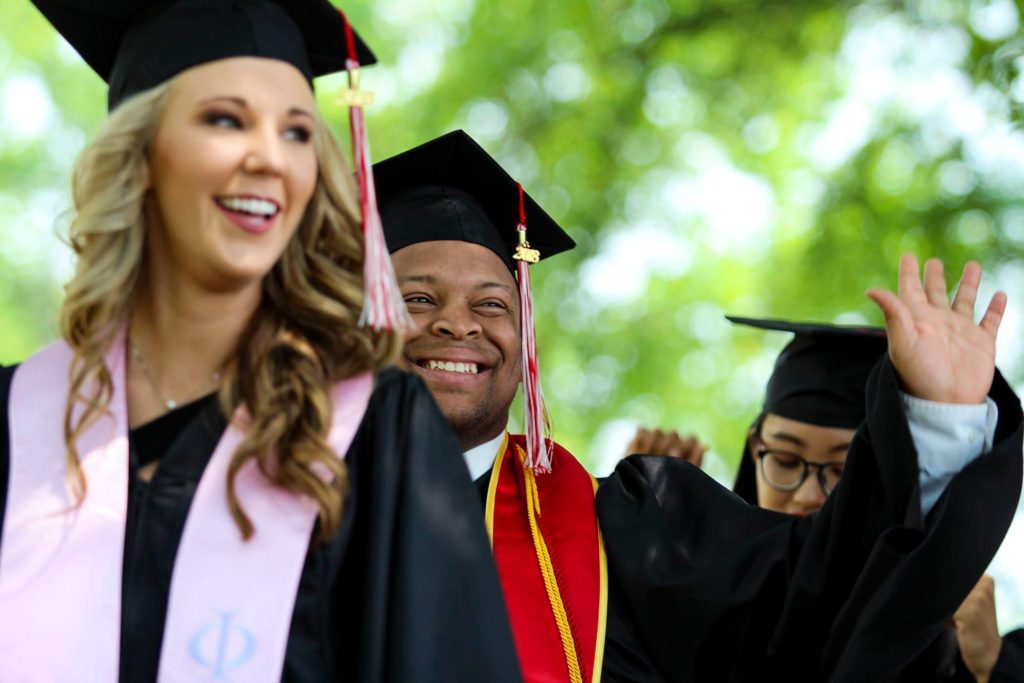
In a fierce global economy, a college degree can help secure employment and keep you ahead of the competition. And though success ultimately rests on students’ own determination and performance, the quality of the schools they choose can certainly have an impact. Which is why with the first “early decision” college-application deadline looming on Nov. 1 and tuition costs having more than doubled since the 1980s, personal-finance website WalletHub on Monday released its 2019’s Best College & University Rankings. In its 2019 roundup, WalletHub compared nearly 1,000 higher-education institutions in the U.S. based on 30 key measures grouped into seven categories, such as Student Selectivity, Cost & Financing and Career Outcomes. The data set ranges from student-faculty ratio to graduation rate to post-attendance median salary. Recognizing the challenge of predicting future outcomes, WalletHub’s Best Colleges ranking also analyzes post-attendance metrics — the student-loan default rate and the share of former students out-earning high school graduates, for instance — to show the value of the education students can expect to receive beyond their undergraduate studies. Top 10 colleges and universities in Alabama 1 University of West Alabama 6 Auburn University 2 University of Montevallo 7 Samford University 3 University of Alabama 8 Spring Hill College 4 University of Alabama-Huntsville 9 University of North Alabama 5 Birmingham-Southern College 10 Jacksonville State University With that in mind, here’s a closer look at the top three Alabama schools and how each performed in certain metrics: School snapshot: University of West Alabama (1 = best; 12 = average; 23 = worst) 1st: Admission Rate 5th: Net Cost 4th: Student-Faculty Ratio 5th: On-Campus Crime 1st: Gender & Racial Diversity 17th: Graduation Rate 11th: Post-Attendance Median Salary School snapshot: University of Montevallo (1 = best; 12 = average; 23 = worst) 13th: Admission Rate 11th: Net Cost 6th: Student-Faculty Ratio 7th: On-Campus Crime 13th: Gender & Racial Diversity 8th: Graduation Rate 17th: Post-Attendance Median Salary School snapshot: University of Alabama (1 = best; 12 = average; 23 = worst) 9th: Admission Rate 20th: Net Cost 23rd: Student-Faculty Ratio 9th: On-Campus Crime 15th: Gender & Racial Diversity 3rd: Graduation Rate 6th: Post-Attendance Median Salary Here’s a look at how Alabama schools compared to the rest of the country: Source: WalletHub
Daniel Sutter: Republicans and college
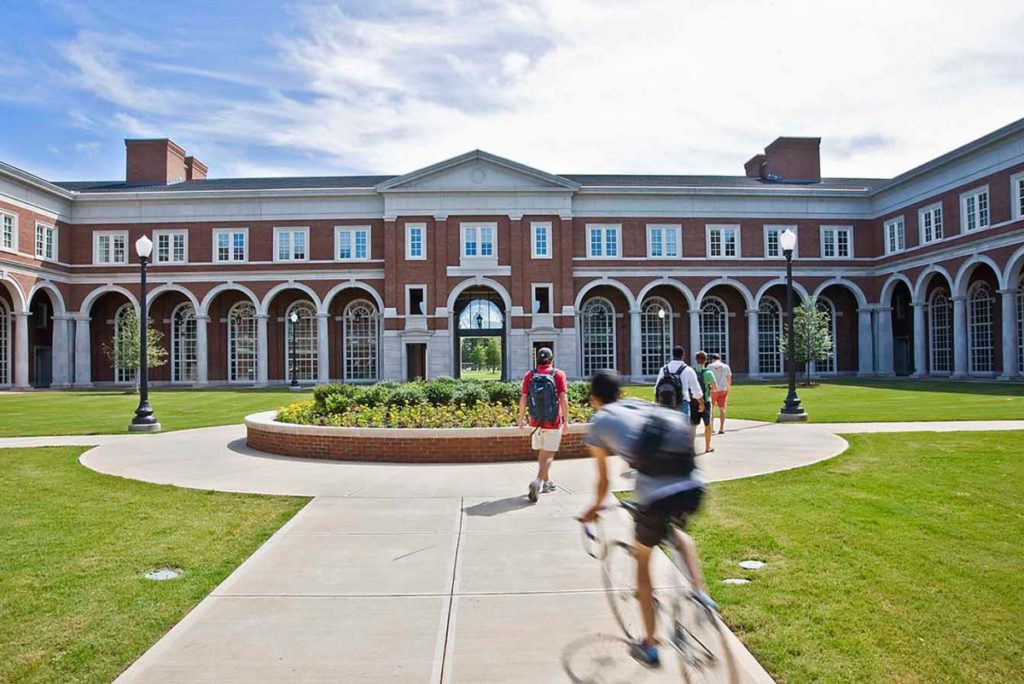
Republicans’ and Democrats’ attitudes toward higher education are seemingly diverging. Increasingly critical Republican attitudes will likely, in time, have policy consequences. An annual Pew Center survey found in 2015 that 54 percent of Republicans thought that higher education’s impact on the country was positive, versus 37 percent negative. This year these numbers flipped to 58 negative – 36 positive, with 65 percent negative among conservative Republicans. Democrats this year were at 72 percent positive, 19 percent negative. Republicans and Democrats further disagree on the value of college degrees. A recent Wall Street Journal poll found that Democrats agreed, 52 to 43 percent, that a four-year degree is worth the cost. By contrast, Republicans disagreed, 53 to 43 percent. Republican attitudes may already be affecting policy. The U.S. House recently proposed taxing the largest university endowments, treating graduate student tuition waivers as taxable income, and denying tax deductions for athletics seat licenses. The final tax bill is more favorable to universities, but the proposals represent a warning shot. Republicans’ antagonism toward my industry makes sense: they are mad at the preponderance of liberals among college professors, and at the liberal policy initiatives from universities. The domination of faculty positions by liberals and Democrats has been documented by numerous methods. The causes and consequences of this imbalance, however, are less clear. It is unclear, for example, if conservatives are simply less likely to want to be professors or face discrimination because of their views. We know from testimonials that conservatives sometimes face verbal abuse, and yet many liberal professors respect (although they might challenge) conservative students’ views. Whether biased readings or attempts at indoctrination change students’ views is uncertain. A liberal world view inevitably affects professors’ research. This is not an indictment, or excuse to ignore research you don’t agree with, but rather an observation on the research process. Social science research requires premises about the nature of human society. Here’s one concrete example. Economists typically judge economic performance against the satisfaction of market demand – do consumers get what they want? Yet other social scientists believe that continual advertising and our consumer culture manufacture these demands. Whether demand should be treated seriously affects our research. Can anything be done about the liberal dominance of college faculties, if it is indeed a problem? Donors and alumni can always attempt to place conditions on gifts, which administrators may or may not accept. As a matter of policy, the University of Colorado brings a conservative professor to campus each year to organize lectures and other activities to provide balance. The Iowa legislature considered a bill mandating using voter registration in faculty hiring. If the sociology department, for instance, had too many registered Democrats, they could only hire registered Republicans. I doubt that this would accomplish much, as some liberal sociologists would surely register as Republicans to secure set-aside positions. Instead of “affirmative action for conservatives,” perhaps we should embrace of a range of intentionally ideological curricula. Economist John Merrifield argues that the primary goal of K-12 education reform should be a diverse menu of options for parents and students. I agree, but why not extend this diversity to programs or even universities embodying conservative and liberal values and approaches? For example, scholars bitterly debate whether the core curriculum should cover the Great Books or “Western Canon.” Regardless of who is correct, many conservatives regard the Canon as fundamental. Some schools, mostly private colleges, still teach the Great Books. Alabama’s fourteen public four-year universities already offer a wide range of programs; the University of Montevallo, for example, is a public liberal arts college. Why not have one university dedicated to a conservative educational experience, and another dedicated to a liberal curriculum? While neither might provide balance within their programs, they would increase the range of options available at in-state tuition rates, while truthful disclosure should prevent enrollment by unsuspecting students. President Trump has attacked the liberal media bias and fake news. The recent House tax proposals, I think, provide warning that higher education may soon face similar attacks. Perhaps embracing and ensuring a range of ideological options will more effectively defuse the growing discontent. ••• Daniel Sutter is the Charles G. Koch Professor of Economics with the Manuel H. Johnson Center for Political Economy at Troy University and host of Econversations on TrojanVision. The opinions expressed in this column are the author’s and do not necessarily reflect the views of Troy University.
College application fees being waived for Alabama high school students
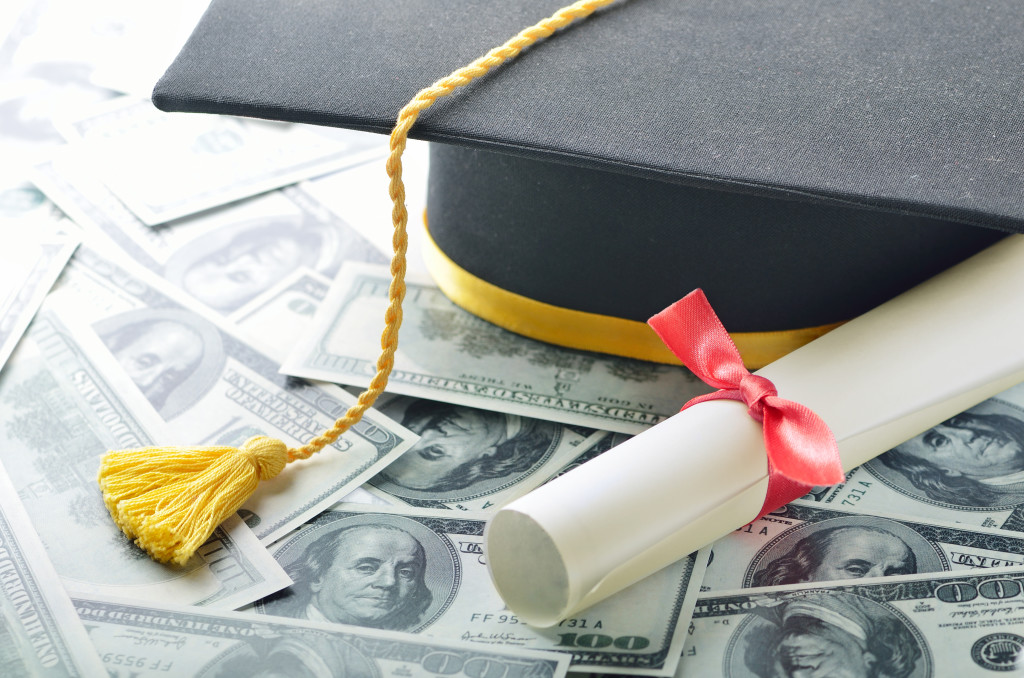
Applying to college can get expensive, fast. Between mandatory standardized tests, to campus visits, and pricey application fees — families can find themselves spending hundreds of dollars on college before a student has even enrolled for classes. But this week, Alabama seniors are getting a break on the whopping price-tag of higher education. Application fees are being waived as part of the state’s fifth annual Alabama College Application Week (ALCAC). From October 30 through November 3, seniors can apply to select state colleges and universities at no charge. The following colleges and universities have officially waived their application fees to allow Alabama students participating in ALCAC Week, to submit their applications to their institutions at no cost: Alabama A&M University Alabama State University (ASU) Alcorn State University – Mississippi Auburn University at Montgomery (AUM) Benedict College – South Carolina Berea College – Kentucky Bethune-Cookman College – Florida Claflin University – South Carolina Concordia College Dillard University – Louisiana Edward Waters College – Florida Fisk University – Tennessee Fortis College Georgia College – Georgia Hampton University – Virginia Jackson State University – Mississippi Jacksonville State University Judson College Marion Military Institute Miles College Mississippi Valley State – Mississippi Murray State University – Kentucky Norfolk State University – Virginia Selma University Springhill College Stillman College Talladega College The University of Montevallo The University of North Alabama (UNA) The University of Tennessee – Knoxville Troy University Tuskegee University University of Dayton – Ohio Western Kentucky University – Kentucky Xavier University of Louisiana ALCAC was started five years ago to increase the overall number of students in our state applying to, and ultimately enrolling in, postsecondary education. This year’s event will focus on increasing the number of young people, especially first-generation and low-income students, pursuing college degrees. “Students need every opportunity to reach their full potential – earning a college degree after high school graduation is a very rewarding way to accomplish this goal,” said Alabama College Application Campaign (ALCAC) Coordinator, Dr. Willietta Conner. During this celebration, many schools statewide will be hosting local college application fairs. Students will attend these events during the school day, and work-on and submit their final applications to colleges across the country. During last year’s event, more than 26,000 Alabama high school seniors applied to college. Almost 52,000 applications were submitted to colleges throughout the country. This year, more than 350 schools have already registered to participate. Last year 70 Alabama high schools had 100 percent of their senior class to apply to college. More schools this year are working hard to achieve this same goal during Alabama College Application Week.
Talladega College raises over $600k to play at Donald Trump’s inauguration
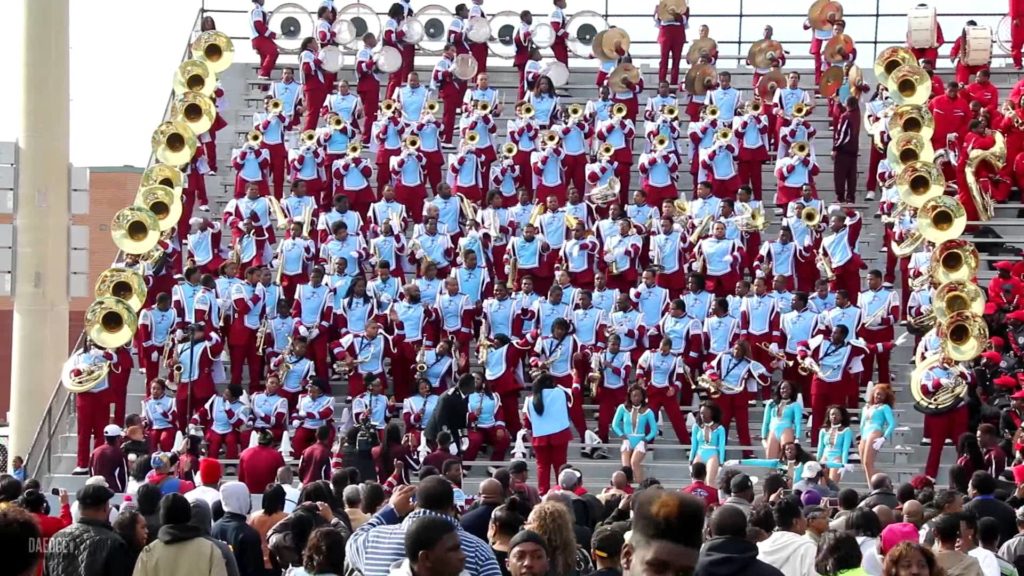
The Talladega College Marching Tornadoes band found themselves in the middle of a national controversy over its decision to perform at president-elect Donald Trump‘s inauguration on Friday. Since agreeing to participate, the historically black Alabama college found itself struggling to raise the $75,000 necessary to travel to D.C. and participate. Enter a hopeful solution: a GoFundMe campaign. Hoping to crowdsource the necessary funds, the small school took to the internet to meet the fundraising goal, and did they ever. In just 14 days, with the help of 10,690 individuals across the country, the school has raised $619,669. That’s over eight time the $75,000 goal. What put the college over the top? An appearance from school president Dr. Billy C. Hawkins on “The O’Reilly Factor” on Fox News last Thursday night. “Some alumni have come at me pretty hard; they don’t want the band to participate and say I am a disgrace to my race,” Hawkins told O’Reilly during the segment. “This is about the students having an opportunity to participate in this national ceremony.” Following Hawkins’ appearance and O’Reilly’s plea to his viewers to help make the trip possible money poured into the site in hopes of making the trip a reality for the roughly 230 band members. “Congratulations to The Marching Tornadoes and President Hawkins!,” commented a man who donated $100 on the page. “I look forward to seeing you on television Friday! Make Alabama proud!” In a Friday news conference, Hawkins called the response “probably the single-greatest fundraising effort” for the school. The band is still taking donations.
Alabama ranks among the states college grads are most likely to leave
What to do after college can be a daunting challenge for many graduates. Grads are faced with many major life decisions, like where they will land a job and what city they want to live in. In a recent study, The New York Times found many young people with college degrees — are leaving struggling regions of America for cities, specifically for cities in Southern and coastal states. And despite fitting both of those attributes, Alabama is actually losing college-educated workers to other nearby states. According to the Times, there are clear economic reasons for their choice. “Dense metro areas tend to produce more jobs and make workers more productive. Wages, for all kinds of workers, are also higher.” In the regional competition for the most skilled and most mobile workers in America, Alabama appears to be at a disadvantage leaving the local economy struggling to find skilled workers. Which is precisely why the state recently launched AlabamaWorks — an effort to transform the state’s workforce development efforts into one unified system, seamlessly linking employers looking for skilled workers with Alabamians seeking jobs or job training. “Keeping young college graduates would help alleviate the effects of globalization and technological change on these local economies,” said the Times.
Daniel Sutter: Tenure and the cost of college
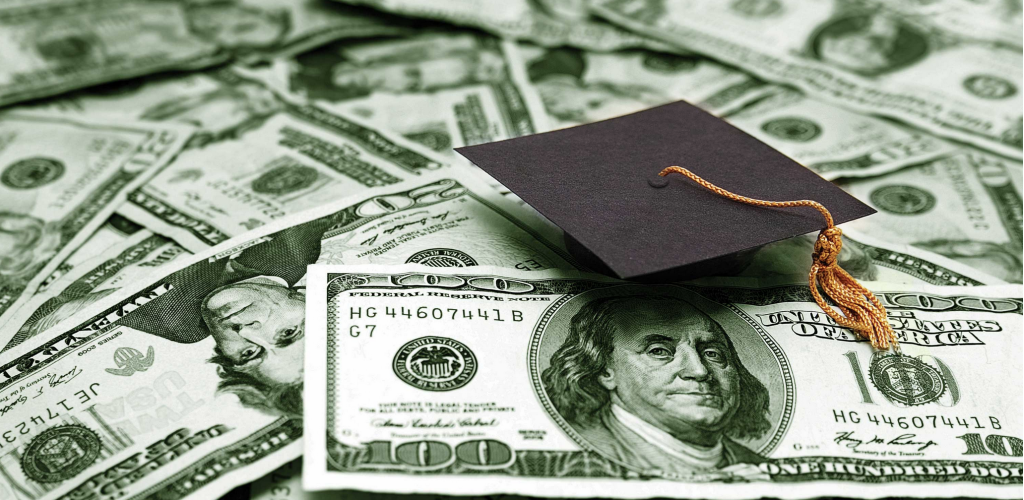
The cost of college has risen dramatically in recent decades. According to the College Board, the cost of attendance at public and private universities has increased 78% and 60% over the last two decades, adjusted for inflation. The Board’s net cost of attendance, which includes aid given by colleges to students, has increased somewhat less: 54% and 29% faster than inflation. College graduates earn substantially more than high school grads, 60% or more on average, making access an important component of economic opportunity. The potential that many Americans may be unable to attend college without taking on crushing debt has made higher education inflation an important policy issue. One of the unique elements of the professorial life is tenure, commonly viewed as guaranteeing lifetime employment. Many people presume that guaranteed employment makes professors lazy, which suggests that tenure may contribute to higher education inflation. A closer examination I think reveals otherwise. To begin, tenured faculty can legally be fired, as economists Ryan Amacher and Roger Meiners explain in their book Faulty Towers. The authors served as a university president and provost respectively, and offer the insights of economists and administrators. Tenure just increases the cost of firing a faculty member. Yet even terrible tenured faculty are rarely fired. Why is this? Amacher and Meiners argue that the non-profit organization of private and public universities explains this, and their point provides insight on the challenge of controlling the cost of college. Top administrators must spend money to fire tenured faculty, including legal expenses and typically a settlement with the faculty member. The costs of poor performance are less tangible and fall largely on students. Managers of for-profit businesses might spend money to avoid alienating customers and reducing future profit. Amacher and Meiners argue that without the bottom line of profit, university administrators will rarely bear this expense. Non-profit organization generally serves universities well, but leads to some waste. Tenure emerged about a century ago, while higher education inflation is a recent problem. Colleges kept tuition in check for decades with tenure. This suggests the influence of another factor, like federal government financing since 1965, but that is a topic for another day. Even though guaranteed employment might be presumed to result in slacking, most tenured professors work hard. Tenure ensures that a university reflects the values of faculty, since firing all the tenured faculty is too costly. Administrators must (at least sometimes) accommodate faculty demands. Faculty work hard, but on things that we value. Most faculty value the integrity of our courses and degree programs. Tenure helps faculty resist pressures for grade inflation and the watering down of the curriculum, one of the ways tenure benefits universities. Many faculty also value doing research, or writing books and papers with lengthy and incomprehensible titles. Faculty produce lots of research; by one count, English professors have written over 20,000 papers on Shakespeare. Reduced teaching loads give faculty time to do research, suggesting a possible link to cost. But the inflation-adjusted cost of instruction per student has increased only slightly in recent decades. Administration and student services are the components of spending that have been growing much faster than inflation. Furthermore, faculty research contributes to a university’s reputation and so is not a pure cost. A strong reputation raises the value of degrees, both on the job market and for admission to graduate school. The connection is imprecise, and because reputation is often based on the opinions of university administrators (themselves mostly former faculty), reputation based on research may be self-referential. Pursuing reforms unlikely to control higher education inflation has two costs. First, reforms almost always add to administrative costs, which are driving higher education inflation. Second, reformers could waste an opportunity to do something that would address the problem. Higher education inflation demands serious examination. But despite the appearance of waste, the connection between tenure and rising costs seems at best weak. Of course, as a tenured professor, I may be hopelessly biased on this issue. ••• Daniel Sutter is the Charles G. Koch Professor of Economics with the Manuel H. Johnson Center for Political Economy at Troy University and host of Econversations on TrojanVision.
New study spotlights ‘best value colleges’ in Alabama

College degrees are quickly becoming the new high school diploma, as in the minimum credential required to get even the most basic, entry-level job. But with rising college costs, where you choose to get that degree from can make a big difference. Which begs the question: where can you stretch your dollars the furthest to get the most bang for your buck at Alabama colleges? New York City financial technology company SmartAsset determined a Huntsville college that’s the greatest value in Alabama in 2016. According to SmartAsset’s 2016 Best Value Colleges list, the University of Alabama in Huntsville offers the best value in Alabama, out-ranking the 2015 leader Auburn University. SmartAsset looked at five factors to determine the best value colleges and universities: tuition, student living costs, scholarship and grant offerings, retention rate, and starting salary. To capture the true cost of attending a school, the rankings included tuition (using in-state tuition for public schools where applicable), student living costs (including room and board, books, supplies, transportation and other personal expenses), and the average scholarships and grants offered to students of the school. UAH ranked no.1 in 2016 because graduates land the highest average starting salary in the state ($53,000) for a tuition of $9,192, which is offset by an average of $6,800 in scholarships and grants. Graduates of Auburn, which fell to second this year, earn average starting salaries of $48,300 for in-state tuition of $9,852. Here’s a look at the top 10 best-value colleges in Alabama in 2016:
Daniel Sutter: Will public universities privatize?
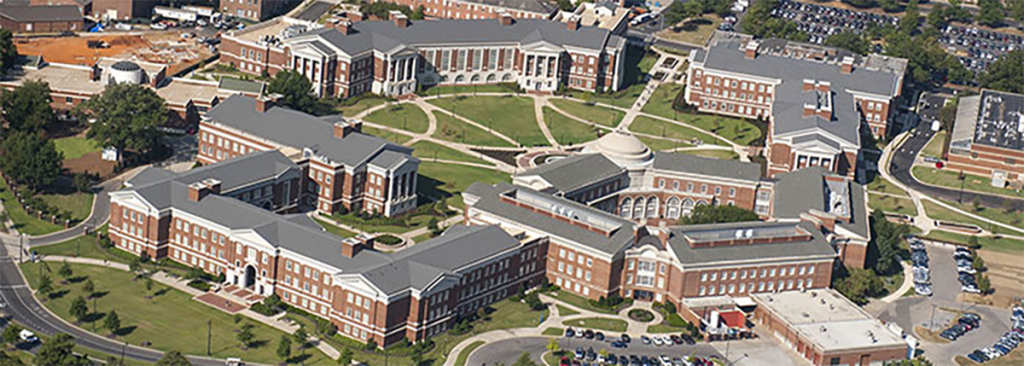
Many government services have been privatized over the past forty years, from whole enterprises like British Airways to simply contracting with private businesses for services like trash collection and operating cafeterias. My corner of the world, public universities, has witnessed only service privatization, but this may change. And in contrast with cases where conservative politicians have driven privatization, I suspect that a public university will decide to go private. Declining state appropriations for higher education represents the driving factor here. Speculation by higher education observers centers on three leading state universities, Michigan, Virginia, and Colorado, which currently receive 10% or less of their operating budgets from state appropriations. (To be clear, none of these universities have privatization plans today.) A university receiving 10% of its budget from the state would only have to cut costs by 5% and increase other revenues by 5% one time to take state funding to zero. I suspect that administrators can imagine how they might make such cuts and revenue increases. State appropriations to higher education have been falling as a share of government spending and university budgets for 50 years. For instance, the University of Michigan received 80% of its budget from the state in the 1950s. State appropriations fell from 46% to 36% of public university budgets nationally between 1977 and 1996. Appropriations have declined another 16% nationally since 2008 (25% here in Alabama), according to data from Illinois State University. State appropriations now provide less than 20% of the budgets of Troy University and the University of Alabama. Universities remain under state control despite diminishing financial support. For example, Governor Scott Walker and state legislators cut appropriations to the University of Wisconsin by $250 million this year, but also froze university tuition and revoked state law protection for faculty tenure. Eventually administrators and faculty at some state university will decide that state funding is not worth the control, and elected officials will jump at the chance to cut the remaining spending. Reduced state support has coincided with a rapid increase in tuition. Net tuition (posted tuition minus university scholarships and financial aid) at public universities has increased 54% faster than inflation over the past twenty years. State appropriations cannot be blamed for all of this, since net tuition has increased 29% faster than inflation at private universities. The relative quality of flagship state universities has also declined. Fifty years ago, Michigan, Virginia and Wisconsin, along with the Universities of California at Berkeley, Minnesota, Illinois, and North Carolina were among the nation’s top twenty universities. Only one public university made the U. S. News and World Report top twenty in 2014. Federal student aid and Medicaid have dramatically shaped state budgeting since 1965. Medicaid operates under a matching grant formula, under which states receive between $1 and $3 from the Federal government for every $1 they spend on Medicaid. But if states reduce spending on higher education and let tuition rise, many students will receive more Federal aid for students. Lawmakers can bring more federal dollars to their states by shifting appropriations from higher education to Medicaid. Over the last fifty years, Washington has asserted increasing control over state universities. Eligibility for Federal student aid requires compliance with U.S. Department of Education regulations and maintenance of regional accreditation. Any new tax dollars for higher education seem likely to come from Washington as well. President Obama’s free community college plan would rely on Federal dollars. Federal control, I think, is bad for higher education. Competition is the greatest force for ensuring performance, and state-run universities will naturally compete. North Dakota has increased higher education appropriations by 26% since 2008, using oil revenues to gain a competitive edge for the state’s universities. State control allows for experimentation and diversity, which is particularly valuable in scholarly fields. Our state universities have provided millions of people access to a quality education at an affordable price. But state lawmakers providing less funding while insisting on as much control as ever seems unsustainable. Our public universities appear destined to become “state” in name only. Daniel Sutter is the Charles G. Koch Professor of Economics with the Manuel H. Johnson Center for Political Economy at Troy University and host of Econversations on TrojanVision.
Hillary Clinton to propose $350 billion college affordability plan

Calling for a “new college compact,” Hillary Rodham Clinton on Monday will unveil a $350 billion plan aimed at making college more affordable and reducing the crushing burden of student debt. At a town hall meeting in New Hampshire, the state with the highest average student debt in the country, Clinton will propose steps to reduce the cost of four-year public schools, make two-year community colleges tuition-free and cut student loan interest rates, according to campaign aides. The college affordability plan, a main plank of her policy platform, is an effort to address a major financial stress for many American families and satisfy a central demand of the Democratic party’s liberal wing. The proposal centers on a $200 billion federal incentive system aimed at encouraging states to expand their investments in higher education and cut student costs. States that guarantee “no-loan” tuition at four-year public schools and free tuition at community colleges would be eligible to receive federal funds. But Clinton doesn’t go quite as far as some more liberal politicians and party activists, who’ve made “debt- free college” an early litmus test for the presidential primary field. In May, Vermont Sen. Bernie Sanders released his own plan that would eliminate tuition and fees for public universities. The $70 billion annual proposal would be funded by imposing a tax on transactions by hedge funds, investment houses and other Wall Street firms. While military veterans, lower-income students and those who complete a national service program, like AmeriCorps, would go to school for free in the Clinton plan, others would incur costs for their schooling and living expenses at four-year public universities. “For many students, it would translate into debt-free tuition,” said Carmel Martin, executive vice president for policy at the Center for American Progress, who advised Clinton on the plan. “It will depend on the student circumstances and the institution they are going to.” For most students, their families will still be expected to make a “realistic” contribution, say Clinton’s aides, and students will contribute wages from 10 hours of work per week. Those currently repaying loans would be able to refinance their outstanding debt at lower rates, a change Clinton’s aides say will save an average of $2,000 for 25 million borrowers over the life of the loan – an amount that’s equal to just about $17 month over a 10-year repayment period. She would also expand income-based repayment programs, allowing every student borrower to enroll in a plan that would cap their payments at 10 percent of their income with remaining debt forgiven after 20 years. Private universities with “modest endowments” that serve a higher percentage of low-income students, including historically black colleges, would also receive federal funds to help lower the costs of attendance and improve graduation rates. The cost of Clinton’s plan would be offset by capping itemized tax deductions for wealthy families at 28 percent, like those taken by high-income taxpayers for charitable contributions and mortgage interest. That proposal, which has long been included in President Barack Obama‘s annual budget, would raise more than $600 billion in the next decade, according to the Treasury Department. Clinton’s plan would likely face a steep climb in Congress: A $60 billion Obama administration initiative for free community college has gotten little traction. Even so, college affordability has emerged as a major issue on the presidential campaign trail, as families face the highest debt burden in generations. National student debt is near $1.3 trillion and the average price for in-state students at public four-year universities is 42 percent higher than it was a decade ago, according to the College Board. In almost every campaign stop, Clinton hears from students and families worried about paying for school. Her team conducted weeks of meetings with experts on the issue to develop the proposal, including policy staffers for liberal leader Sen. Elizabeth Warren, D-Mass. “There’s something wrong when students and their families have to go deeply into debt to be able to get the education and skills they need in order to make the best of their own lives,” she told students and teachers at Kirkland Community College in Monticello, Iowa, in April, shortly after announcing her campaign. Clinton aides believe their plan will help build enthusiasm for her candidacy with younger voters – whose support twice helped catapult Obama into the White House. The policy rollout is timed for when students return to college campuses. Clinton organizers plan to promote the plan at registration events and other gatherings kicking off the school year, according to a campaign aide, in an effort to galvanize college students. Republished with permission from the Associated Press.
Alabama business roundup: Headlines from across the state

Here’s a roundup of some of the weekend’s top business headlines from across the state: Alabama Newscenter: Business Facilities: Alabama ranks high for auto manufacturing, workforce development Alabama got high marks for “Automotive Manufacturing Strength” and AIDT, Alabama’s workforce development agency, ranked high among “Workforce Training Leaders” in Business Facilities magazine’s annual rankings report, released last week. Record output at Alabama’s three auto assembly plants underlined the state’s No. 2 ranking in the magazine’s “Auto Manufacturing Strength” category. Alabama and Tennessee swapped positions in the rankings from the previous year. “Alabama, this year’s No. 2, is throwing down a marker for a heavyweight rematch: the Crimson Tide rolled out nearly a million vehicles in 2014 for Mercedes, Honda and Hyundai, with Mercedes expanding at Tuscaloosa to introduce a new model,” Business Facilities noted in its ranking report. Alabama’s “world-class on-site training for advanced manufacturing,” is cited for a No. 2 ranking among “Workforce Training Leaders.” AIDT, which has trained 600,000 Alabamians since its founding in 1971, is a division of the Alabama Department of Commerce. “We’re proud of the efforts that these rankings represent,” Commerce Secretary Greg Canfield said. “But there is still much work to be done. With a new workforce incentive structure and a streamlining of resources, we’re poised for even greater things in Alabama.” Under Governor Robert Bentley’s leadership, Commerce is expanding its responsibilities in workforce development with key programs being consolidated within the department. AIDT remains the centerpiece of Alabama’s workforce development efforts. “It’s always nice when rankings come out and people outside of the state recognize the job you’re doing as an organization,” said Deputy Commerce Secretary for Workforce Development and AIDT Director Ed Castile said. “But it really says more about the people of Alabama who go through training and get those advanced skill jobs and make the products that people want. They truly are the best assets we have.” Alabama also ranked No. 6 among the states in the “Education: Tech Skill Leaders” category and No. 9 for “Lowest Industrial Electricity Rates.” Business Facilities has been ranking states annually for 11 years. Alabama Newscenter: Alabama shucks! Oyster means world for Gulf Coast farmers Alabama’s oyster reefs have historically harvested an average of one million pounds of oysters per year and have made it one of the top oyster producing states in the nation for more than a century. But changes to water temperature, environmental impacts, parasites and other issues have made the reefs unpredictable and, at times, unproductive. Oyster farming – with the help of the Auburn University Shellfish Laboratory – has emerged as a more controlled way of continuing Alabama’s oyster producing traditions. This video story put together by Joe York for the Southern Foodways Alliance based at the University of Mississippi’s Center for the Study of Southern Culture talks about how oysters have a strong future through farming in the state. “In 2009, not a single oyster farm operated on the Alabama coast. By 2015, there were eight oyster farming companies, all determined to prove that the world’s best oysters come from this Southern state. Lane Zirlott, of Murder Point Oyster Company, calls it an oyster revolution – one that focuses on presentation as much as taste, and enables hard-working families to make a consistent living on the Alabama waters,” York wrote in the introduction to the video. Officials want to see farming grow alongside increases in reef harvesting to boost oyster production in Alabama to new heights. Birmingham Business Journal: Blue Bell resumes ice cream production at Sylacauga plant Blue Bell Creameries on Wednesday confirmed that production has officially resumed at its Sylacauga facility as the company looks to move forward following a listeria scare that halted work across its footprint. The ice cream products are currently being added to the company’s inventory, but no date has been given as to when products will return to store shelves, according to a report from Fox 6. The company began trial runs at its Sylacauga plant in July, and over the last month, have continued until production was ready to return to a normal pace. A spokesman for the Alabama Department of Public Health, which has partnered with the company through the process, said Blue Bell has run tests at the Sylacauga plant and are free to produce and sell ice cream products. Blue Bell in April recalled all of its products after at least 10 people were diagnosed with listeria. Three of those infected died, according to the Centers for Disease Control and Prevention. The company closed its four locations in Alabama, Oklahoma and Texas for cleaning, in addition to saying the Blue Bell staff at all facilities would undergo training to emphasize aggressive cleaning methods. Blue Bell in May laid off more than a third of its workforce following the closing of the plants and furloughed an additional 1,400 workers. Birmingham Business Journal: Alabama among worst states for student loan debt A new report claims more than 11 percent of all student debt is currently in default – and Alabama is faring much worse than other states. That’s according to a new report by WalletHub, which ranked Alabama 44th overall on the list of the best states for student loan debt. The study took several factors into account, including average debt, student loan debt as a percentage of income, unemployment rate and percentage of student loans in default. The state scored the worst in unemployment for adults aged 25-34, coming in at 50th. Alabama ranked 44th for the percent of student loans in default and 39th for average student debt. WalletHub’s report said the best states were Utah (No. 1), Wyoming (No. 2) and North Dakota (No. 3). Yellowhammer News: High-tech European space company to launch manufacturing operation in Alabama Switzerland-based RUAG announced Friday that it will launch an Alabama manufacturing operation after forming a strategic partnership with United Launch Alliance, which produces rockets at a factory in Decatur. RUAG, one of Europe’s leading suppliers of products for the space industry, said the new Alabama
