
Where they stand: Jeb Bush on key topics of 2016 campaign

Former Florida Gov. Jeb Bush will run for the 2016 Republican presidential nomination, aides say, and plans to announce that June 15. Here’s where he stands on some of the issues likely to be debated in the campaign. Immigration Bush supports a system that would allow immigrants in the country illegally to stay, if they plead guilty to illegal entry, pay penalties and past-due taxes, learn English and perform community service. Bush views such a system as vital to accelerating economic growth in the U.S. He took grief from the right with his statement that people come to the U.S. illegally as an “act of love” for their families, but remains insistent that illegal immigration must be addressed in ways that accommodate many who are here. Foreign policy Bush says the U.S. “needs to regain its position militarily in Iraq to bring some order to the Iraqi military.” But what that means, exactly, is unclear. He hasn’t said whether he thinks the U.S. should add more troops. Bush opposed removing Cuba from the U.S. list of state sponsors of terrorism “before it changes its authoritarian ways and stops denying the Cuban people their basic human rights.” He criticized Congress for weakening post-Sept. 11 surveillance powers and disputed the argument those powers infringe on civil liberties. After stumbling over the question at first, Bush said he would not have ordered the 2003 invasion of Iraq, knowing now that the intelligence about its weapons capability was flawed. Budget and entitlement programs As Florida governor Bush cut taxes and the state government workforce and vetoed plenty of spending items in the state budget. As a White House contender, Bush says he would support raising the age to qualify for full Social Security benefits for future retirees, over time. He’s also praised a House Republican plan to partially privatize Social Security by letting people choose private accounts as an option to guaranteed Social Security benefits. He opposes tax increases but also has been against signing pledges to rule them out. Education Bush stands out as a supporter of Common Core education standards. He’s couched his position in milder terms recently as he has traveled to early-voting states where Republican support for the voluntary benchmarks are viewed as a federal mandate. Bush continues to urge states to adopt higher reading, math and language arts standards than they have, assessed with regular testing. But he doesn’t support additional testing or federal intervention in creation of the standards. Social issues Bush became a national figure with abortion opponents as governor when he intervened in the case of Terri Schiavo, a woman who had been kept alive in a vegetative state for 15 years by life support and whose husband wanted her feeding tubes removed. Bush ordered the feeding tubes reinserted only to be overruled by a federal court. Bush’s action was celebrated by anti-abortion groups as affirming the sanctity of life. As governor, Bush signed legislation requiring parental consent for abortions for minors. He opposes abortion rights except when women are victims of rape or incest, or when the woman’s life is endangered by continued pregnancy. He says he opposes gay marriage yet same-sex couples “making lifetime commitments to each other” deserve respect. Climate change Bush accepts the scientific premise that the climate is changing and calls examining the causes a priority. But he says: “I don’t think the science is clear on what percentage is man-made and what percentage is natural.” Those who say they know are guilty of “intellectual arrogance,” he says. He attributes the decline in U.S. carbon emissions to innovations in lower-carbon energy production by hydraulic fracking and horizontal oil and natural gas drilling. Republished with permission of The Associated Press.
Sponsors of Common Core repeal bill to regroup for 2016

With the 2015 legislative session coming to a close, sponsors of a bill to repeal Common Core are already starting to rally for the next session. At a press conference on Wednesday, Sen. Rusty Glover and Rep. Bob Fincher – both retired educators — expressed continued concerns over what they described as lack of local control over the state’s education curriculum. Senate Bill 101 abolishes the Common Core education standards in Alabama and grants control of education curricula to state and local education officials. In addition, the bill prohibits state agencies from implementing any other national education standard to replace Common Core. Sen. Glover said that the proponents of the bill had been outspent this session. “It’s just really sad that a lot of what you have to say has fallen on deaf ears because […] money folks that have so much influence have disrupted our efforts,” he said. Sen. Glover also aired concerns that the portion of the Alabama College and Career Ready Standards (ACCRS) that is designed by Alabama educators would be sacrificed to reach standardized test performance goals. “When they say that this is an Alabama standard, 85 percent is Common Core and just 15 percent is created by local and state school board authority,” said Sen. Glover. “It’s outrageous to think that people are actually taking in an Alabama standard when the 15 percent created by Alabamians is largely ignored. If there’s a standardized test, there’s a lot of pressure on the teacher to do very well on that test. So you know that that 15 percent of curriculum standards will be totally ignored.” According to State Board of Education member Stephanie Bell, the curriculum has taken a toll in Alabama classrooms over the last four years. “Common Core is not just about bad education, it’s about destroying the potential of our children,” said Bell. “We have already lost some of our best teachers […] Not just 5 or ten, but hundreds.” Last month, the Senate Committee on Education and Youth affairs gave a favorable report to Senate Bill 101. The sponsors, however, have said that getting enough votes to pass the bill out of either chamber would be a challenge. Rep. Fincher said the way forward in the next session would likely rely on support from newly-elected legislators. “Our leadership in the House is not with us, some of the older members are not with us, but I have been encouraged – very encouraged – with some of the new members in the House that were just elected,” said Rep. Fincher. “We have a lot of support among the freshman in the House. A lot of them have stepped forward and signed the bill to bring about the defeat of Common Core.” “I think we’ve made some headway this time,” said Rep. Fincher. “We have not gotten where we need to be, and those who suffer will not be us, it’ll be the children of this state.” Ann Eubank, co-chair of the Rainy Day Patriots and legislative chair of the Alabama Legislative Watchdogs, told Alabama Today that her group was not surprised by the outcome. “I was not surprised that they killed the bill to repeal Common Core again,” she said via email. “They have been jerking our chain for 4 years. It ends now, no more nice tea party ladies.” Emphasizing their intent moving forward she added, “A strong group in opposition to Common Core are setting up a PAC for the next election and no one who supports Common Core is safe from a tough fight. In addition, we will be launching a program to boycott those businesses that give money to the Business Council of Alabama (BCA) which supports the destruction of our children and our country.” Updated at 5:04 pm to add quote from Ann Eubank, co-chair of the Rainy Day Patriots and legislative chair of the Alabama Legislative Watchdogs.
Common Core opponents to rally Wednesday at Statehouse
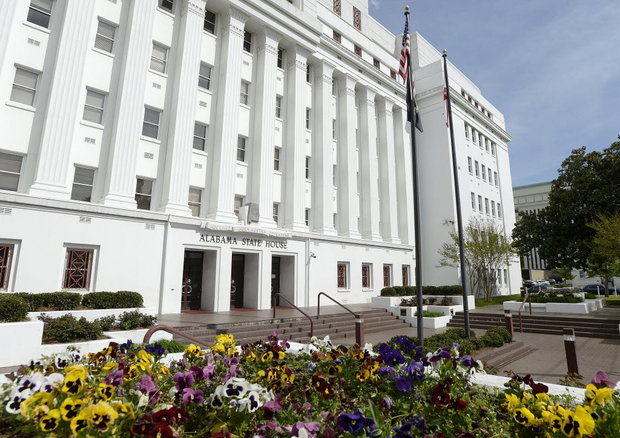
In an email to statewide grassroots leaders opposed to Common Core organizers announced that activists will rally Wednesday at the Statehouse. The group will hold a press conference and members have been encouraged to meet with their legislators one-on-one. The Senate is expected to vote on Senate Bill 101 on Tuesday and the group hopes if it is brought up it will pass. On Wednesday it will be looking to the House to take it up. Who: Various groups from cross the state Speakers: Sen. Rusty Glover, Rep. Bob Fincher, Stephanie Bell, Dr. John Killian, Troy Towns, Dr. Lou Campomenosi What: Asking the House to take up Senate Bill 101 When: 11 a.m. Wednesday Check back for updates on the event from group organizers as Tuesday progresses, and they are able to see whether Sen. Del Marsh allows the bill to come to a vote and the results of such a vote.
Ann Eubank: Looking for parents in Comprehensive Counseling plan

Thursday morning, I attended the AL School Board monthly work session where they presented the Alabama Comprehensive Counseling and Guidance Model for Alabama Public Schools. The “mission” of this program is to prepare every student academically, “socially” and “emotionally.” That sounds great on the surface. However, the question is “where are the parents in this plan?” The schools are implementing this plan with the attitude that they are better prepared to raise your child than you are. Schools are part of the government system where parental control is no longer viewed as the ultimate authority over their children. This is another tentacle of the Common Core/Alabama Plan 2020. The standards included in this program include data collection from K-12, follows to college and workforce, with or without parental consent. Ms Cindy Wiley, of Shelby County Schools, gave a very positive overview of the plan to the board without going into the possible negative impact on student and parent relationship. Are they overstepping the boundaries of the family? The entire board will vote on this plan at the June meeting. Those of us who object to the destruction of the family need to let our feelings be known. Call your Board Representative and voice your opinion. (334) 242-9950. Also call your Senator and tell them to vote for SB101 which repeals Common Core. Ann Eubank is co-chair of Rainy Day Patriots (Jefferson/Shelby County), and the legislative chair of the Alabama Legislative Watchdogs. Ann is a frequent visitor of the Statehouse and has bridged the gap between strong advocate and respected resource for members. She is also a member of the Alabamians United for Excellence in Education Taskforce and several other Stop Common Core groups.
Opt-Out movement accelerates amid Common Core testing
Thousands of students are opting out of new standardized tests aligned to the Common Core standards, defying the latest attempt by states to improve academic performance. This “opt-out” movement remains scattered but is growing fast in some parts of the country. Some superintendents in New York are reporting that 60 percent or even 70 percent of their students are refusing to sit for the exams. Some lawmakers, sensing a tipping point, are backing the parents and teachers who complain about standardized testing. Resistance could be costly: If fewer than 95 percent of a district’s students participate in tests aligned with Common Core standards, federal money could be withheld, although the U.S. Department of Education said that hasn’t happened. “It is a theoretical club administrators have used to coerce participation, but a club that is increasingly seen as a hollow threat,” said Bob Schaeffer with the National Center for Fair & Open Testing, which seeks to limit standardized testing. And so the movement grows: This past week in New York, tens of thousands of students sat out the first day of tests, with some districts reporting more than half of students opting out of the English test. Preliminary reports suggest an overall increase in opt-outs compared with last year, when about 49,000 students did not take English tests and about 67,000 skipped math tests, compared to about 1.1 million students who did take the tests in New York. Considerable resistance also has been reported in Maine, New Mexico, Oregon and Pennsylvania, and more is likely as many states administer the tests in public schools for the first time this spring. The defiance dismays people who think holding schools accountable for all their students’ continuing improvement is key to solving education problems. Assessing every student each year “gives educators and parents an idea of how the student is doing and ensures that schools are paying attention to traditionally underserved populations,” U.S. Department of Education spokeswoman Dorie Nolt said in an emailed statement. Opposition runs across the political spectrum. Some Republicans and Tea Party activists focus on the Common Core standards themselves, calling them a federal intrusion by President Barack Obama, even though they were developed by the National Governors Association and each state’s education leaders in the wake of President George W. Bush‘s No Child Left Behind program. The Obama administration has encouraged states to adopt Common Core standards through the federal grant program known as Race to the Top, and most have, but each state is free to develop its own tests. In California, home to the nation’s largest public school system and Democratic political leaders who strongly endorse Common Core standards, there have been no reports of widespread protests to the exams — perhaps because state officials have decided not to hold schools accountable for the first year’s results. But in deep-blue New York, resistance has been encouraged by the unions in response to Democratic Gov. Andrew Cuomo‘s efforts to make the test results count more in teacher evaluations. In Rockville Centre on Long Island, Superintendent William H. Johnson said 60 percent of his district’s third-through-eighth graders opted out. In the Buffalo suburb of West Seneca, nearly 70 percent didn’t take the state exam, Superintendent Mark Crawford said. “That tells me parents are deeply concerned about the use of the standardized tests their children are taking,” Crawford said. “If the opt-outs are great enough, at what point does somebody say this is absurd?” Nearly 15 percent of high school juniors in New Jersey opted out this year, while fewer than 5 percent of students in grades three through eight refused the tests, state education officials said. One reason: Juniors may be focusing instead on the SAT and AP tests that could determine their college futures. Much of the criticism focuses on the sheer number of tests now being applied in public schools: From pre-kindergarten through grade 12, students take an average of 113 standardized tests, according to a survey by the Council of the Great City Schools, which represents large urban districts. Of these, only 17 are mandated by the federal government, but the backlash that began when No Child Left Behind started to hold teachers, schools and districts strictly accountable for their students’ progress has only grown stronger since “Common Core” gave the criticism a common rallying cry. “There is a widespread sentiment among parents, students, teachers, administrators and local elected officials that enough is enough, that government mandated testing has taken over our schools,” Schaeffer said. Teachers now devote 30 percent of their work time on testing-related tasks, including preparing students, proctoring, and reviewing the results of standardized tests, the National Education Association says. The pressure to improve results year after year can be demoralizing and even criminalizing, say critics who point to the Atlanta test-cheating scandal, which led to the convictions 35 educators charged with altering exams to boost scores. “It seems like overkill,” said Meredith Barber, a psychologist from the Philadelphia suburb of Penn Valley who excused her daughter from this year’s tests. Close to 200 of her schoolmates also opted out in the Lower Merion School District, up from a dozen last year. “I’m sure we can figure out a way to assess schools rather than stressing out children and teachers and really making it unpleasant for teachers to teach,” said Barber, whose 10-year-old daughter, Gabrielle, will be in the cafeteria researching Edwardian history and the TV show Downton Abbey during the two weeks schools have set aside for the tests. Utah and California allow parents to refuse testing for any reason, while Arkansas and Texas prohibit opting out, according to a report by the Education Commission of the States. Most states are like Georgia, where no specific law clarifies the question, and lawmakers in some of these states want protect the right to opt out. Florida has another solution: Gov. Rick Scott signed a bill strictly limiting testing to 45 hours each school year. In Congress, meanwhile, lawmakers appear ready to give states
More students opt out of Common Core testing
Thousands of students are opting out of new standardized tests aligned to the Common Core standards, defying the latest attempt by states to improve academic performance. This “opt-out” movement remains scattered but is growing fast in some parts of the country. Some superintendents in New York are reporting that 60 percent or even 70 percent of their students are refusing to sit for the exams. Some lawmakers, sensing a tipping point, are backing the parents and teachers who complain about standardized testing. Resistance could be costly: If fewer than 95 percent of a district’s students participate in tests aligned with Common Core standards, federal money could be withheld, although the U.S. Department of Education said that hasn’t happened. “It is a theoretical club administrators have used to coerce participation, but a club that is increasingly seen as a hollow threat,” said Bob Schaeffer with the National Center for Fair & Open Testing, which seeks to limit standardized testing. And so the movement grows: This week in New York, tens of thousands of students sat out the first day of tests, with some districts reporting more than half of students opting out of the English test. Preliminary reports suggest an overall increase in opt-outs compared to last year, when about 49,000 students did not take English tests and about 67,000 skipped math tests, compared to about 1.1 million students who did take the tests in New York. Considerable resistance also has been reported in Maine, New Mexico, Oregon and Pennsylvania, and more is likely as many states administer the tests in public schools for the first time this spring. The defiance dismays people who believe holding schools accountable for all their students’ continuing improvement is key to solving education problems. Assessing every student each year “gives educators and parents an idea of how the student is doing and ensures that schools are paying attention to traditionally underserved populations,” U.S. Department of Education Spokeswoman Dorie Nolt said in an emailed statement. Opposition runs across the political spectrum. Some Republicans and Tea Party activists focus on the Common Core standards themselves, calling them a federal intrusion by President Barack Obama, even though they were developed by the National Governors Association and each state’s education leaders in the wake of President George W. Bush’s No Child Left Behind program. The Obama administration has encouraged states to adopt Common Core standards through the federal grant program known as Race to the Top, and most have, but each state is free to develop its own tests. In California, home to the nation’s largest public school system and Democratic political leaders who strongly endorse Common Core standards, there have been no reports of widespread protests to the exams — perhaps because state officials have decided not to hold schools accountable for the first year’s results. But in deep-blue New York, resistance has been encouraged by the unions in response to Democratic Gov. Andrew Cuomo’s efforts to make the test results count more in teacher evaluations. In Rockville Centre on Long Island, Superintendent William H. Johnson said 60 percent of his district’s third-through-eighth graders opted out. In the Buffalo suburb of West Seneca, nearly 70 percent didn’t take the state exam, Superintendent Mark Crawford said. “That tells me parents are deeply concerned about the use of the standardized tests their children are taking,” Crawford said. “If the opt-outs are great enough, at what point does somebody say this is absurd?” Nearly 15 percent of high school juniors in New Jersey opted out this year, while fewer than 5 percent of students in grades three through eight refused the tests, state education officials said. One reason: Juniors may be focusing instead on the SAT and AP tests that could determine their college futures. Much of the criticism focuses on the sheer number of tests now being applied in public schools: From pre-kindergarten through grade 12, students take an average of 113 standardized tests, according to a survey by the Council of the Great City Schools, which represents large urban districts. Of these, only 17 are mandated by the federal government, but the backlash that began when No Child Left Behind started to hold teachers, schools and districts strictly accountable for their students’ progress has only grown stronger since “Common Core” gave the criticism a common rallying cry. “There is a widespread sentiment among parents, students, teachers, administrators and local elected officials that enough is enough, that government mandated testing has taken over our schools,” Schaeffer said. Teachers now devote 30 percent of their work time on testing-related tasks, including preparing students, proctoring, and reviewing the results of standardized tests, the National Education Association says. The pressure to improve results year after year can be demoralizing and even criminalizing, say critics who point to the Atlanta test-cheating scandal, which led to the convictions 35 educators charged with altering exams to boost scores. “It seems like overkill,” said Meredith Barber, a psychologist from the Philadelphia suburb of Penn Valley who excused her daughter from this year’s tests. Close to 200 of her schoolmates also opted out in the Lower Merion School District, up from a dozen last year. “I’m sure we can figure out a way to assess schools rather than stressing out children and teachers and really making it unpleasant for teachers to teach,” said Barber, whose 10-year-old daughter, Gabrielle, will be in the cafeteria researching Edwardian history and the TV show “Downton Abbey” during the two weeks schools have set aside for the tests. Utah and California allow parents to refuse testing for any reason, while Arkansas and Texas prohibit opting out, according to a report by the Education Commission of the States. Most states are like Georgia, where no specific law clarifies the question, and lawmakers in some of these states want protect the right to opt out. Florida has another solution: Gov. Rick Scott signed a bill strictly limiting testing to 45 hours each school year. In Congress, meanwhile, lawmakers appear ready to give states more
Ann Eubank: Why the Senate should pass SB101 rejecting Common Core

One of the biggest frauds ever perpetrated on the American people is the Common Core State Standards Initiative. There could be nothing farther from the truth than the assertion that proponents constantly use “that it was state-led.” The standards actually were written by five people in a back room, led by David Coleman of Achieve, who has a degree in philosophy but no classroom experience. Instead of raising academic standards as it was touted to do, it was designed by statists inside the federal education bureaucracy to be one great big sociology experiment on our children. What accounts for Common Core Standards being accepted by 45 states are not actual facts that prove that they were “rigorous,” or that they led to “critical thinking,” but instead by a great deal of money from the Race to the Top Federal grants and wealthy private corporatists. Republican governors were suckered into adopting CCSS by the Department of Education dangling the proverbial carrot of money only if they agreed to 1) accept a common set of standards, 2) implement charter schools, and 3) set up a data collection system. At a time of severe financial crisis in many states, any money source was acceptable regardless of requirements. Very few states actually received money to help implement the standards. The main draw for the states was the illegal No Child Left Behind (NCLB) Waiver. The onerous NCLB annual yearly progress goals were due and a big percentage of states were going to be penalized millions of education dollars they could not afford. So, they signed on the bottom line, “sight unseen.” Most signed on before the standards were even written. The National Governors Association and the Council of Chief State School Officers own and have a copyright on the Common Core State Standards. Contrary to frequent statements that our state could change the standards to become “Alabama standards,” not much “modification” could be done to them. Each state was allowed a 15 percent addition to the standards. However, this 15 percent would not be tested on the required national assessments. After all, if each state’s standards varied 15 percent how could they be “common” to the entire nation? All across the United States the Common Core State Standards are a failure in both implementation and assessment. That has spawned stop Common Core groups in every state. Countless academics have speculated that it will slow learning by two years. I wonder, is that why President Barack Obama now wants two years of community college to be free? Are we just extending high school to recover the length of the time lost with the implementation of Common Core? There are now more than 20 states that have either passed, or are attempting to pass bills in their respective state legislatures to withdraw from the Common Core State Standards. Alabama is one of them. Our parents and teachers, who are brave enough to go against the culture of intimidation, are fighting for their children’s minds. Supporters commonly misrepresent the fact that parents support high academic standards and therefore they support Common Core. Parents do support high standards for our children; however, a majority of parents at this point do not support CCSSI. Standards and assessments drive the curriculum, materials and textbooks. Parents are often shocked at their content. They are appalled at what their children are learning in the classroom and the homework they are bringing home. That’s why it’s so important that the Alabama State Senate takes up and passes Senate Bill 101 repealing Common Core Standards in Alabama. The only way is for Republicans to return to their conservative roots and repeal the Common Core State Standards, and then put a stop to the Department of Education from interfering with the local control of education. That’s why I encourage everyone to write and call their state senator: Tell them they must pass Senate Bill 101 to repeal Common Core and restore common sense to education. Ann Eubank is co-chair of Rainy Day Patriots (Jefferson/Shelby County), and the legislative chair of the Alabama Legislative Watchdogs. Ann is a frequent visitor of the statehouse and has bridged the gap between strong advocate and respected resource for members. She is also a member of the Alabamians United for Excellence in Education Taskforce and several other Stop Common Core groups.
