
The 2023 Alabama Legislative Session has begun
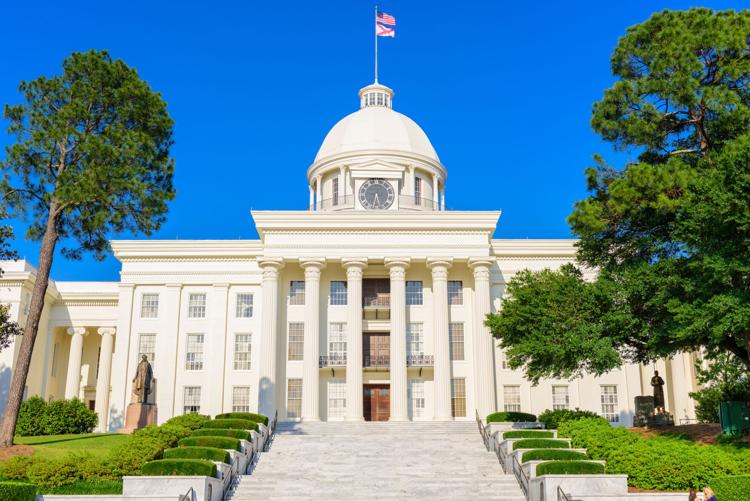
Tuesday, the Alabama State Legislature returned to Montgomery for the start of the 2024 Alabama Regular Legislative Session. The Alabama House of Representatives and the Alabama Senate gaveled in at noon for the first legislative day and then joined the governor that night for a joint session where she presented her state of the state address. Senate Pro Tem. Greg Reed told members of the Senate, “I appreciate you being willing to serve the people of Alabama.” “The sacrifices made by the family of those who serve is not insignificant,” Reed added, thanking the families of the 35 Senators for their sacrifices. The Senate opened the journal to introduce bills, selected a committee to inform the governor that the Senate was now in session, and passed a resolution in honor of March being Women’s History Month. The resolution “celebrates the contribution that Alabama women have made to American history.” The resolution honors a number of Alabama women, including Rosa Parks, Helen Keller, and Condoleezza Rice, for their contributions to the state as well as the governor. “Current governor Kay Ivey is the longest serving woman governor in history and the second after Lurleen Wallace.” State Sen. Rodger Smitherman said, “This resolution inspired me. That resolution is a cosmic picture of the state of Alabama. It does not matter whether you are Black or White. It was a cosmic picture of all the people of Alabama.” “That’s our state,” Smitherman said. “All of us, we represent the state. Look around this room. This is what our state looks like. I am looking forward to voting for this resolution with a smile on my face.” Senate Joint Resolution 4 passed unanimously. Senate Joint Resolution 5 honoring former U.S. Senator Richard Shelby for his decades of service to the state passed. State Sen. Gerald Allen sponsored this. A second resolution supporting the oil and gas exploration by Allen was held over and referred to the Rules Committee after State Sen. Bobby Singleton asked for more time to study it. Reed announced that the Senate needed to address statutory requirements at the start of the session. The Senate held a Legislative Council election and selected Sens. Clyde Chambliss, Steve Livingston, and Vivian Figures to represent the Senate on the Council. For the Committee on Public Accounts, the Senate elected Sens. Arthur Orr, Clay Scofield, and Jabo Waggoner. On the Sunset Committee, Sens. Garlan Gudger, Keith Kelley, and Figures were elected. Sens. Orr, Scofield, Waggoner, Figures, and Singleton were elected to the Senate Ethics and Conduct Committee. Ivey called a special session beginning on Wednesday for the Legislature to focus on appropriating over one billion dollars in American Rescue Plan Act funds that the federal government sent to the state of Alabama. “This evening, I am calling a Special Session of the Alabama Legislature to begin tomorrow so that we can urgently address these endeavors,” Ivey said. “We are, once again, tasked with allocating our taxpayers’ dollars that are part of the second round of the American Rescue Plan Act from Congress.” “This is not free money,” Ivey warned legislators. “And we must invest these one-time funds wisely. Last year, thanks to you, members of the Alabama Legislature, we put these dollars to work, meeting some of Alabama’s biggest challenges. I commit to the people of Alabama we will once again take a smart approach and put it towards major and needed endeavors like expanding broadband access, improving our water and sewer infrastructure, and investing in our health care – including telemedicine.” Tuesday was the first day of the 2023 Alabama Regular Legislative Session, but since Ivey has called a special session, the second legislative day of the regular session will not begin until Tuesday, March 21. The Alabama Constitution of 1901 limits the Legislature to just thirty legislative days in a regular session. Members worked on Tuesday, introducing their bills for the regular session. At the close of the day on Monday, 98 bills had been pre-filed ahead of the session. By the end of the day on Tuesday, that had grown to 174 bills. Reed explained to reporters that it takes a minimum of five legislative days for a bill to pass both Houses of the Legislature, so it will take the rest of this legislative week and next week for the ARPA appropriations bill to pass and go to Gov. Ivey for her signature. Once that is done, the special session can end, and the Legislature will be poised to remove the 2023 Alabama Regular Legislative Session. To connect with the author of this story or to comment, email brandonmreporter@gmail.com.
Innovate Alabama forms Council on Outdoor Recreation
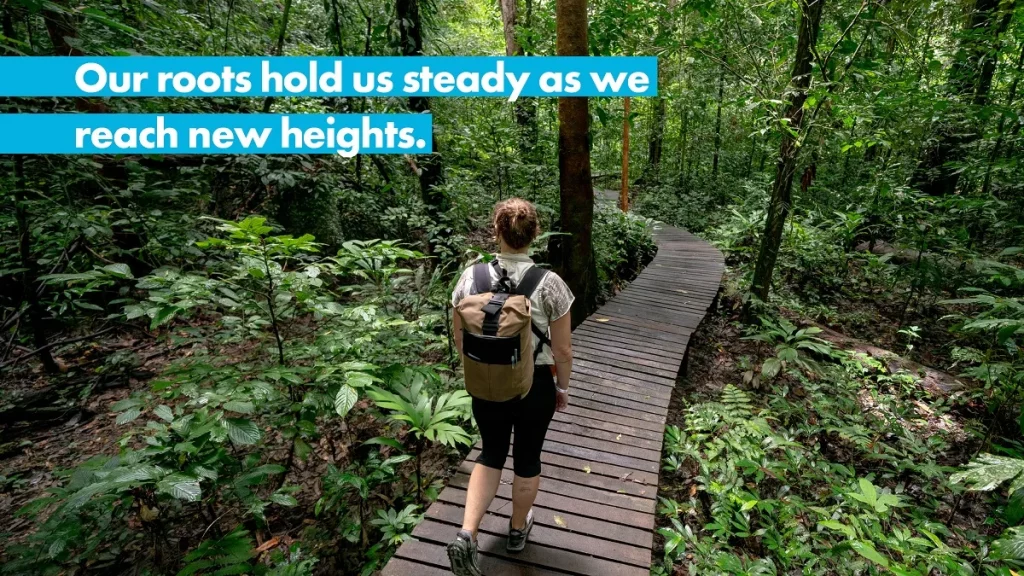
Alabama residents and visitors have long recognized and enjoyed the state’s natural resources, and a new group of leaders wants to leverage those same assets to help benefit and grow the state. Innovate Alabama has established the Council on Outdoor Recreation to advise the board of directors on strategies to achieve three primary goals: expand Alabama’s outdoor recreation industry, enhance the state’s attractiveness for a skilled workforce, and yield substantial returns for rural and urban communities for the enjoyment of current and future Alabamians. The council is supported by the Outdoor Recreation Advisory Roundtable, comprised of 19 stakeholders that represent diverse and comprehensive perspectives from various regions of the state and outdoor recreation fields. The roundtable, which met for the first time November 30, will provide recommendations for capitalizing on Alabama’s recreational assets as innovative economic development tools. “Made up of some of our state’s strongest outdoor recreation experts, the Outdoor Recreation Advisory Roundtable brings together centuries of combined knowledge in the outdoors to provide strategic recommendations on the application of outdoor recreation to enhance Alabamians’ quality of life and support economic development in rural and urban communities,” said Chris Blankenship, Alabama’s commissioner of Conservation and Natural Resources and the chair of the Council on Outdoor Recreation. “We are thrilled to welcome these advisory members who will ensure that all regions of the state and outdoor recreation sectors have a seat at the table as we develop these recommendations.” In 2021, Innovate Alabama joined forces with former U.S. Secretary of State and Alabama native Condoleezza Rice and Stanford University’s Hoover Institution to conduct extensive research into fostering a robust, inclusive economy in Alabama. The research, which culminated in a final report, highlighted the opportunity to leverage Alabama’s natural resources to help attract innovators and encourage them to grow roots in the state. Out of that research, the Council on Outdoor Recreation was formed. “A thriving business ecosystem is holistic,” said Kellie Clark, CEO of AppThink and a roundtable member. “It considers the interest, hobbies, and well-being of entrepreneurs and their families. People build businesses in Alabama, in part, because of our outdoor recreation assets and landscape diversity. Our natural resources – a true advantage that helps us continue to recruit and retain top talent – differentiates us from other innovation-forward states.” “As an outdoor enthusiast and innovation advocate, I am proud to serve alongside fellow subject matter experts who are all focused on creating inclusive, thoughtful solutions through the lens of outdoor recreation that will enrich our innovation ecosystem,” Clark said. Innovate Alabama is working to leverage the state’s broad array of outdoor assets, such as local and state parks, diverse landscapes, and other natural resources, in an effort to showcase and cultivate Alabama’s unique offerings. Advocates say greater investment in these assets, which make Alabama special, will lure and encourage entrepreneurs, both local and from other states, to put down roots in the state. “We are seeing great success by aligning innovation with our outdoor recreation efforts,” said John Kvach, executive director of Singing River Trail and a roundtable member. “Thanks to Alabama’s unique outdoor landscape and outdoor recreation assets, we have the potential to strengthen regional bonds between rural and urban communities to create a thriving statewide innovation ecosystem.” Members of the Council on Outdoor Recreation and the Outdoor Recreation Advisory Roundtable include: Council on Outdoor Recreation Outdoor Recreation Advisory Roundtable Republished with the permission of The Alabama NewsCenter.
Madeleine Albright, 1st female U.S. secretary of state, dies
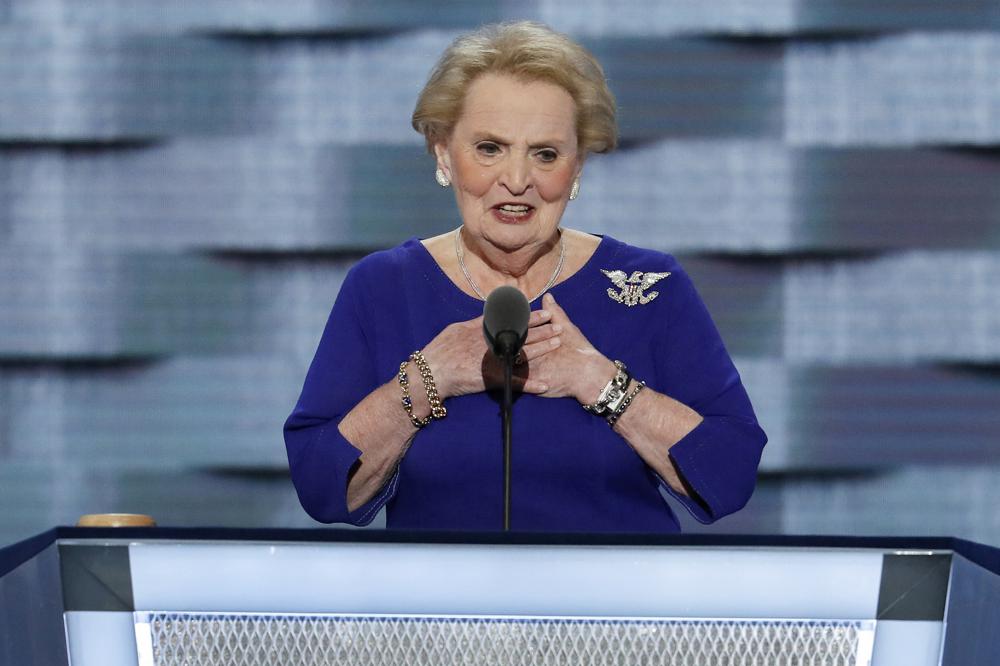
Madeleine Albright, a child refugee from Nazi- and then Soviet-dominated Eastern Europe who rose to become the first female secretary of state and a mentor to many current and former American statesmen and women, died Wednesday of cancer, her family said. She was 84. A lifelong Democrat who nonetheless worked to bring Republicans into her orbit, Albright was chosen in 1996 by President Bill Clinton to be America’s top diplomat, elevating her from U.S. ambassador to the United Nations, where she had been only the second woman to hold that job. As secretary of state, Albright was the highest-ranking woman in the history of the U.S. government. She was not in the line of succession to the presidency, however, because she was born in what was then Czechoslovakia. Still, she was universally admired for breaking a glass ceiling, even by her political detractors. “We have lost a loving mother, grandmother, sister, aunt, and friend,” her family said in a statement. President Joe Biden ordered flags at the White House and other federal buildings and grounds to be flown at half-staff until March 27. Outpourings of condolences came quickly. Biden said, “America had no more committed champion of democracy and human rights than Secretary Albright, who knew personally and wrote powerfully of the perils of autocracy.” “When I think of Madeleine,” Biden added, “I will always remember her fervent faith that ‘America is the indispensable nation.’” Secretary of State Antony Blinken said Albright was “a brilliant diplomat, a visionary leader, a courageous trailblazer, a dedicated mentor, and a great and good person who loved the U.S. deeply and devoted her life to serving it.” Clinton called her “one of the finest Secretaries of State, an outstanding U.N. Ambassador, a brilliant professor, and an extraordinary human being.” “And through it all,” Clinton added, “even until our last conversation just two weeks ago, she never lost her great sense of humor or her determination to go out with her boots on, supporting Ukraine in its fight to preserve freedom and democracy.” Former President George W. Bush said Albright “lived out the American dream and helped others realize it. … She served with distinction as a foreign-born foreign minister who understood firsthand the importance of free societies for peace in our world.” Linda Thomas-Greenfield, U.S. envoy to the United Nations, honored Albright as a “trailblazer and a luminary” in remarks on the General Assembly floor. In 2012, President Barack Obama awarded Albright the Medal of Freedom, the nation’s highest civilian honor, saying her life was an inspiration to all Americans. Albright remained outspoken through the years. After leaving office, she criticized Bush for using “the shock of force” rather than alliances to foster diplomacy and said Bush had driven away moderate Arab leaders and created the potential for a dangerous rift with European allies. As a refugee from Czechoslovakia who saw the horrors of both Nazi Germany and the Iron Curtain, she was not a dove, and she played a leading role in pressing for the Clinton administration to get militarily involved in the conflict in Kosovo. She also took a hard line on Cuba, famously saying at the United Nations that the Cuban shootdown of a civilian plane was not “cojones” but rather “cowardice.” Albright advised women “to act in a more confident manner” and “to ask questions when they occur and don’t wait to ask.” “It took me quite a long time to develop a voice, and now that I have it, I am not going to be silent,” she told HuffPost Living in 2010. When the Senate Foreign Relations Committee asked her in January 2007 whether she approved of Bush’s proposed “surge” in U.S. troops in bloodied Iraq, she responded: “I think we need a surge in diplomacy. We are viewed in the Middle East as a colonial power, and our motives are suspect.” Albright was an internationalist whose point of view was shaped in part by her background. Her family fled Czechoslovakia in 1939 as the Nazis took over their country, and she spent the war years in London. After the war, as the Soviet Union took over vast chunks of Eastern Europe, her father, a Czech diplomat, brought his family to the United States. As secretary of state, Albright played a key role in persuading Clinton to go to war against the Yugoslav leader Slobodan Milosevic over his treatment of Kosovar Albanians in 1999. As U.N. ambassador, she advocated a tough U.S. foreign policy, particularly in the case of Milosevic’s treatment of Bosnia and NATO’s intervention in Kosovo, was eventually dubbed “Madeleine’s War.” “My mindset is Munich,” she said frequently, referring to the German city where the Western allies abandoned her homeland to the Nazis. Albright helped win Senate ratification of NATO’s expansion and a treaty imposing international restrictions on chemical weapons. She led a successful fight to keep Egyptian diplomat Boutros Boutros-Ghali from a second term as secretary-general of the United Nations. He accused her of deception and posing as a friend. And she once exclaimed to Colin Powell, then chairman of the Joint Chiefs of Staff, who would later succeed her as secretary of state: “What’s the point of having this superb military you’re always talking about if we can’t use it?” Powell, who died last year, recalled in a memoir that Albright’s comment almost made him have an “aneurysm.” Despite her championing of diplomacy in the Middle East and a late Clinton-era foray to North Korea, which made her the highest-ranking U.S. official to visit the Stalinist state, Albright drew criticism for her support of sanctions against Iraq that many blame for humanitarian suffering in the country under Saddam Hussein. “I am an eternal optimist,” Albright said in 1998, amid an effort as secretary of state to promote peace in the Middle East. But she said getting Israel to pull back on the West Bank and the Palestinians to rout terrorists posed serious problems. Albright made limited progress at first in trying to expand the
Kay Ivey and Condoleezza Rice release Alabama Innovation Commission recommendations to boost innovation, entrepreneurship
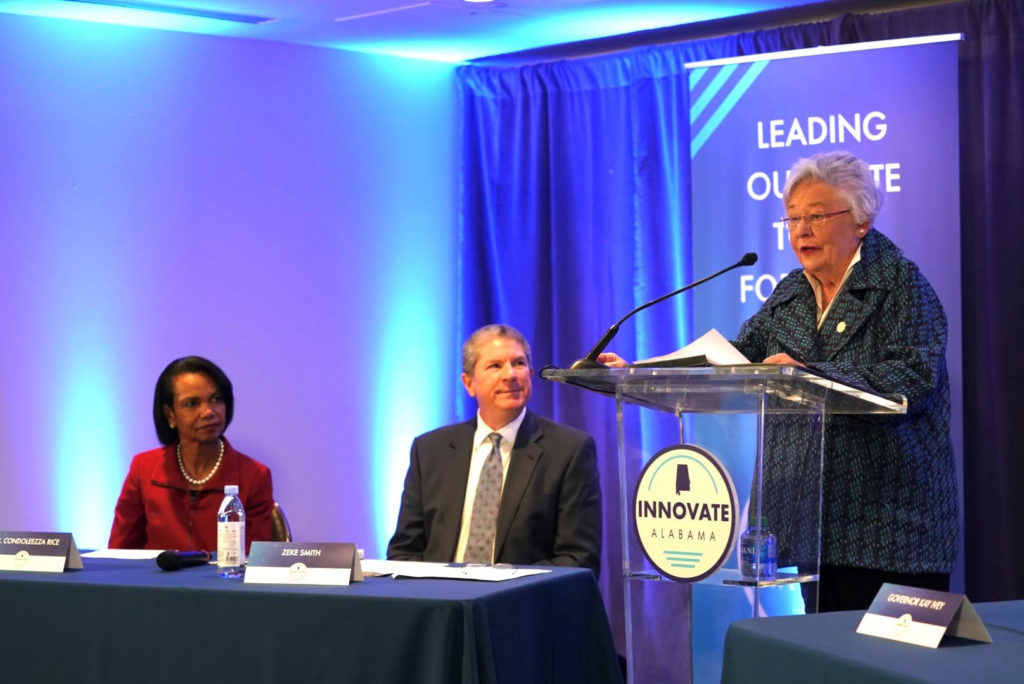
Governor Kay Ivey and Condoleezza Rice, 66th U.S. secretary of state and director of the Hoover Institution, joined state leaders on Tuesday to share the Alabama Innovation Commission’s policy recommendations and announce the Alabama Innovation Corporation board of directors. Governor Ivey established the commission and its advisory council in July 2020. “The Alabama Innovation Commission has done incredible work, and I’m excited to see how we as a state can implement smart policies that will foster innovation and develop a talented workforce for the future,” stated Governor Ivey. “I’m inspired by the promising growth for Alabama’s economy, and I look forward to working with the Alabama Legislature and the Alabama Innovation Corporation to help Alabama reach new heights.” Alabama Innovation Commission (Innovate Alabama) is the state’s first commission focused on entrepreneurship, technology, and innovation. The commission brings together private-sector experts and policymakers to develop forward-thinking policies that work to create a strong economy to help Alabama remain competitive in the 21st century. Ivey commented on Twitter, “Alabama. Where you can dream big, play hard, and live comfortably. We’re building a better state – a place where equitable opportunity exists. Now, we have a playbook to take us there.” The commission, led by Alabama Finance Director Bill Poole and state Sen. Greg Reed, includes a six-member advisory council of innovation leaders in Alabama and those outside the state who have strong ties to Alabama. The advisory council, led by Alabama Power Executive Vice President Zeke Smith, included innovation leaders from across the nation, and a partnership with Hoover Institution research scholars led by Director Rice, to support the commission’s work. “I’m proud to be a daughter of Alabama and believe that Alabama’s education, job training, and workforce development can be second to none. This state is poised for an even greater future here, and we are excited to be a part of that,” said Dr. Rice. “The Hoover Institution will continue to partner with the state and the Alabama Innovation Corporation to support this initiative as Alabama continues to push for strengthening its economy so life can be good for all Alabamians.” State Finance Director and Innovation Commission Chair Bill Poole added, “I’m proud of the commission’s work and know that its efforts will have a tremendous impact on our state. The ideas, recommendations, and strategies in this report give us a path forward for how Alabama can be a leader in the fields of innovation, technology, and research. I look forward to seeing partners from private, and public sectors continue working together through the Innovation Corporation to grow our economy.” Members of the Innovation Corporation board of directors are: Governor Kay Ivey (ex-officio) Alabama Speaker of the House Mac McCutcheon (ex-officio) Senate President Pro Tempore Greg Reed (ex-officio) House Minority Leader Anthony Daniels (ex-officio) Senator Minority Leader Bobby Singleton (ex-officio) Rich Bielen – President and CEO, Protective Life Corporation (at-large director) Dr. Michael Chambers – Assistant Vice President for Research Innovation, University of South Alabama (at-large director) Abe Harper – President, Harper Technologies (at-large director) David King – President, Dynetics (at-large director) Bill Poole – Director, Alabama Department of Finance (chairman) Britney Summerville – Founder, Birmingham Bound (at-large director) The policy recommendations and findings detailed five areas that address current challenges. Entrepreneurship and Access to Capital: Identifying and supporting opportunities to fuel entrepreneurial development at every stage of business growth. Talent Attraction and Retention: Recruiting and retaining a workforce with the skills, knowledge and credentials necessary to create innovation ecosystems throughout the state. Increasing Commercialization: Fostering an environment that increases commercialization activities, research and development efforts and supports the state’s economy as a whole. Bridging Digital and Economic Divides: Leveraging initiatives and resources that support growth throughout Alabama. Knowledge Economy: Developing a skilled workforce ready to meet the demands of the future. “These policy recommendations are a culmination of 18 months of hard work, time, and effort from a variety of different highly qualified individuals and organizations working together to chart a strong path forward for our state’s economy, and I couldn’t be any happier with the product that the commission was able to produce,” said Sen. Reed. “This report outlines a road map to spurring entrepreneurship, startup businesses, and innovation in our state, and I look forward to seeing the impact it will have on the future of Alabama.”
Former Secretary of State Condoleezza Rice testifies in fraud trial of Birmingham attorney
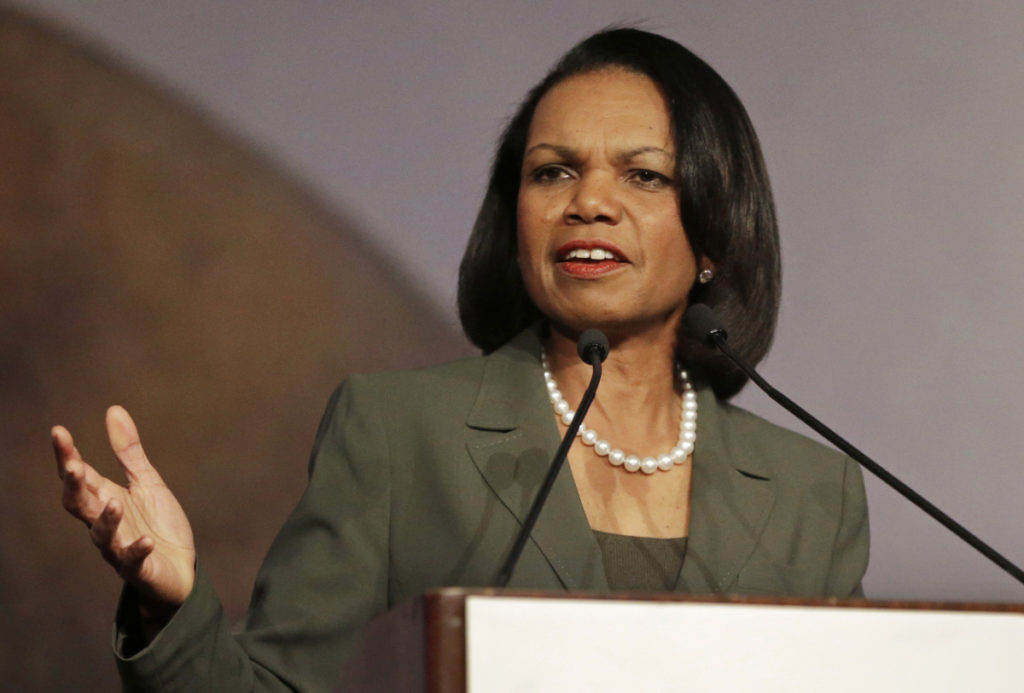
Former Secretary of State Condoleezza Rice told a jury Wednesday that she rejected a suggestion that she serve on the board of a company associated with two men on trial in an investment fraud case. Donald V. Watkins Sr., of Atlanta, and Donald V. Watkins Jr., of Birmingham, each face multiple counts of wire and bank fraud and one count of conspiracy. Rice was the first witness called in the trial — in which each man is representing himself. Prosecutors said Watkins Sr. told investors that Rice, an Alabama native, was considering investing in one of his companies, known as Masada. Al.com reports Rice met Watkins Sr. through friends who said she should look into Masada. Rice said she met twice in person and had two phone calls with him. But when he suggested she serve on Masada’s board of directors, Rice said she wasn’t interested. “I told him at that time I was just out of government, and I was looking at a lot of different possibilities,” she said. “I (was) unlikely to join boards.” Watkins Sr. then suggested a strategic advising position, Rice said. At one point he sent out a press release announcing her involvement. Rice said she emailed Watkins Sr. and told him she was not in a position to accept the role. “I couldn’t accept, and I couldn’t most certainly do a press release at that time,” she said. Rice said she hadn’t showed the proposed agreement to her lawyer or financial adviser, and liked to take ample time to agree to business ventures. “I was just uncomfortable with the fact that this seemed so urgent,” she said. “I didn’t think I could meet Mr. Watkins’ time-frame.” She also said she wanted no role when Watkins began talking about a venture involving purchase of the NFL’s Los Angeles Rams. “Please do not associate it with me in any way,” Rice told him via email. Emails displayed in court show in March 2009, Watkins Sr. wrote to others about job assignments he had planned for Rice. Rice said she has no recollection of ever being told about the assignments and she never authorized him to share her name and possible involvement in talks with others. Watkins Sr. asked Rice about their meeting at a Palo Alto, California restaurant. Watkins Sr. asked about the length of the meeting and if it lasted several hours. Rice replied, “Mr. Watkins I didn’t have two hours to spend with people at that time. Mr. Watkins, you were clearly recruiting me.” After June of that year, Rice said she never talked to Watkins Sr. about Masada again. Rice said she never met Watkins Jr. or directly communicated with him. Republished with permission from the Associated Press.
Condoleezza Rice: 10 things you need to know about the Birmingham-native
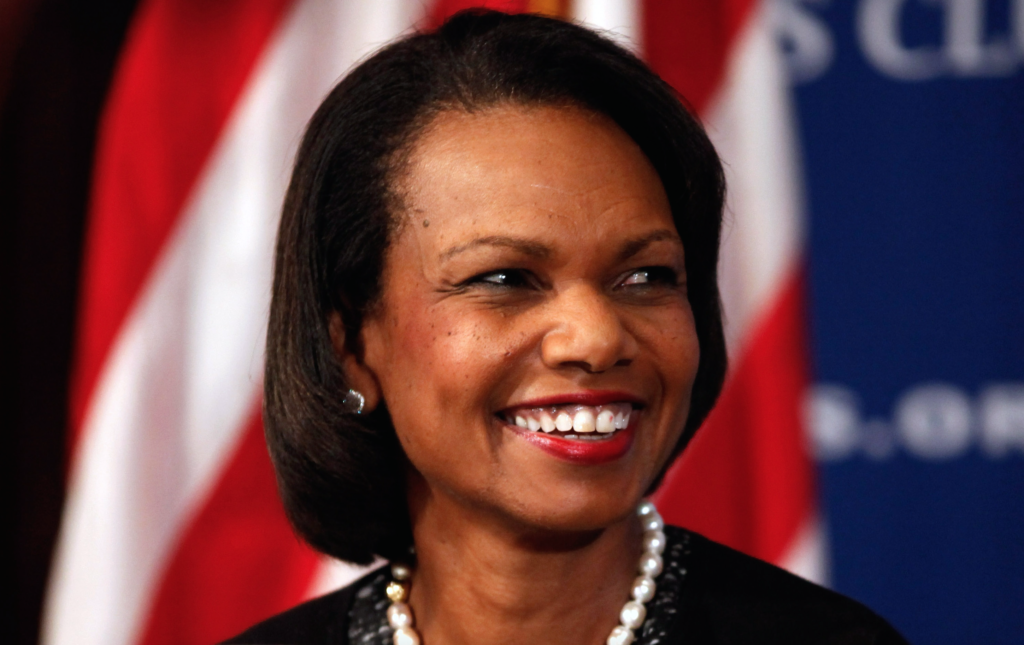
Twelve years ago Thursday, Birmingham-native Condoleezza Rice became one of the most influential women in the world of global politics, making history as the first African American woman to serve as Secretary of State. Nominated by former President George W. Bush, Rice first served as his national security advisor beginning in 2000. Her role became extremely important after the September 11, 2001, attacks on New York City and the Pentagon. She went on to become Secretary of State in 2005 for Bush’s second term. Throughout her tenure in the position, she played a crucial part in shaping the most aggressive U.S. foreign policy in modern history, with wars launched against both Afghanistan and Iraq. Here are ten things you may not have known about Rice: Rice was born on Nov. 14, 1954, in then-segregated Birmingham, Ala. as the only child of Angelena and John Wesley Rice, Jr. Her mother was a high school teacher while her father was a high school guidance counselor and Presbyterian minister. Her name is derived from the Italian con dolcezza, a musical term meaning to play “with sweetness.” As a child she wanted to be a concert pianist and thus, was the first black student to attend classes at the Birmingham Southern Conservatory of Music. A child prodigy, Rice skipped the first and seventh grades, graduating from high school at age 15. She graduated Phi Beta Kappa with a B.A. in political science at only 19 years old from the University of Denver, where she studied international relations with Josef Korbel, father of the first woman to become Secretary of State, Madeleine Albright. Rice received seven honorary doctorates between 1991 and 2004 from Morehouse College, the University of Alabama, and the University of Notre Dame to name a few, in addition to the Ph.D. she earned from the Graduate School of International Studies at the University of Denver. She’s currently the Denning Professor in Global Business and the Economy at the Stanford Graduate School of Business. Her dream job is to be commissioner of the National Football League. She’s currently the lone woman on the 12 member College Football Playoff selection committee. She is a Fellow of the American Academy of Arts and Sciences, an honorary society that recognizes achievement in the natural sciences, social sciences, arts, and humanities. Rice she helped Bush craft race-based preferences in university admission policies.
Condoleezza Rice endorses Jeff Sessions for AG
Former Secretary of State Condoleezza Rice is endorsing Alabama Sen. Jeff Sessions as President-elect Donald Trump’s attorney general pick. CNN first reported that Rice, an Alabama native who served under George W. Bush, sent a letter Monday to Sen. Chuck Grassley praising Sessions. Rice calls him a “friend” and someone she admired “greatly.” “He is a man who is committed to justice and knows that law and order are necessary to guarantee freedom and liberty,” she wrote. Rice also noted that Sessions had worked to improve the lives of Alabamians who suffered “prejudice and injustice against the descendants of slaves.” An endorsement from Rice, the first African-American female to serve as U.S. Secretary of State, could help Sessions considerably in his confirmation hearings, which begin Tuesday. Sessions, an early endorser of Trump, is likely to have an uphill battle due to old allegations of racism. Rice added that Sessions was instrumental in the effort to recognize Rosa Parks, one of her “personal heroes,” with the Congressional Gold Medal of Honor. “I know that Sen. Sessions will uphold the laws of our great country and will work to ensure that every person here in the United States is given the voice that is deserved.”
