
Alabama city takes step to move Confederate monument
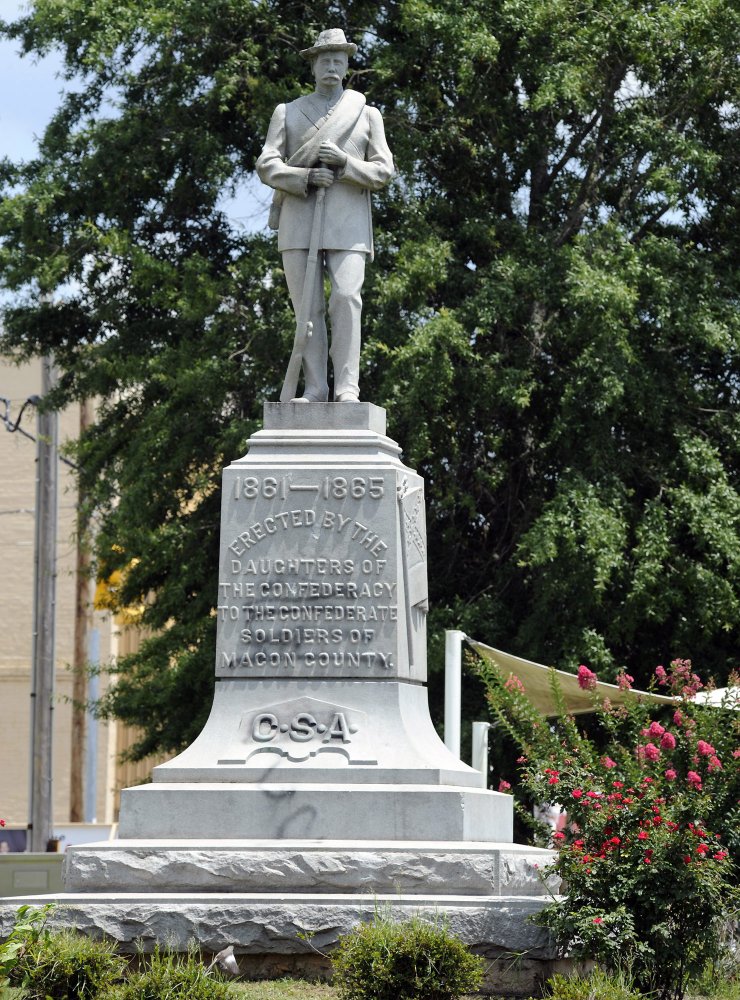
An Alabama city has taken a step toward removing a Confederate monument following weeks of pressure. The Florence City Council voted Tuesday to ask the state for permission to move the memorial from outside the Lauderdale County Courthouse, WHNT-TV reported. Other places have sought similar state waivers, which are required because of a law that imposes a $25,000 fine for disturbing such memorials. The city also asked county commissioners to relocate the monument as soon as possible. Dedicated in 1903 during a ceremony that included an overtly racist speech, the memorial was erected by Confederate descendants. It went up at a time many whites were advocating the “lost cause” version of history that played down slavery as a cause for the Civil War and emphasized the nobility of Confederate fighters. Demonstrators organized by a racial justice group, Project Say Something, have been protesting the monument for weeks during a national reckoning over race that followed the police killing of George Floyd in Minnesota. The monument, which features a Confederate statue atop a stone pedestal, would be moved to the Florence City Cemetery. Published with the permission of the Associated Press.
Confederate monument in Birmingham partially removed overnight
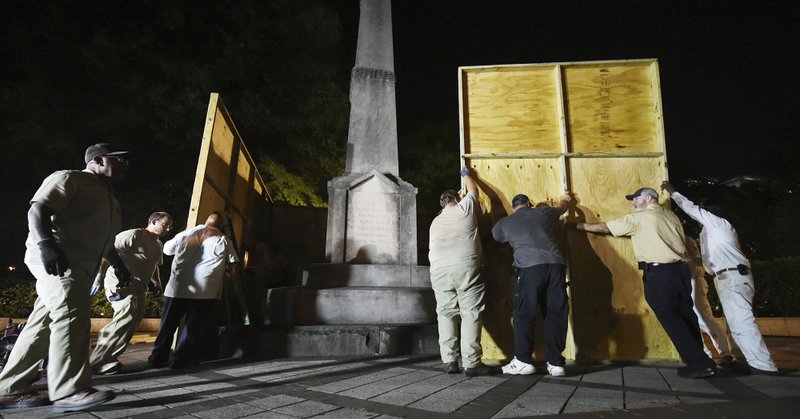
Crews were expected to return later Tuesday to finish removing the monument.
Protesters tear down Confederate monument, Bham Mayor Randall Woodfin vows to ‘finish the job’
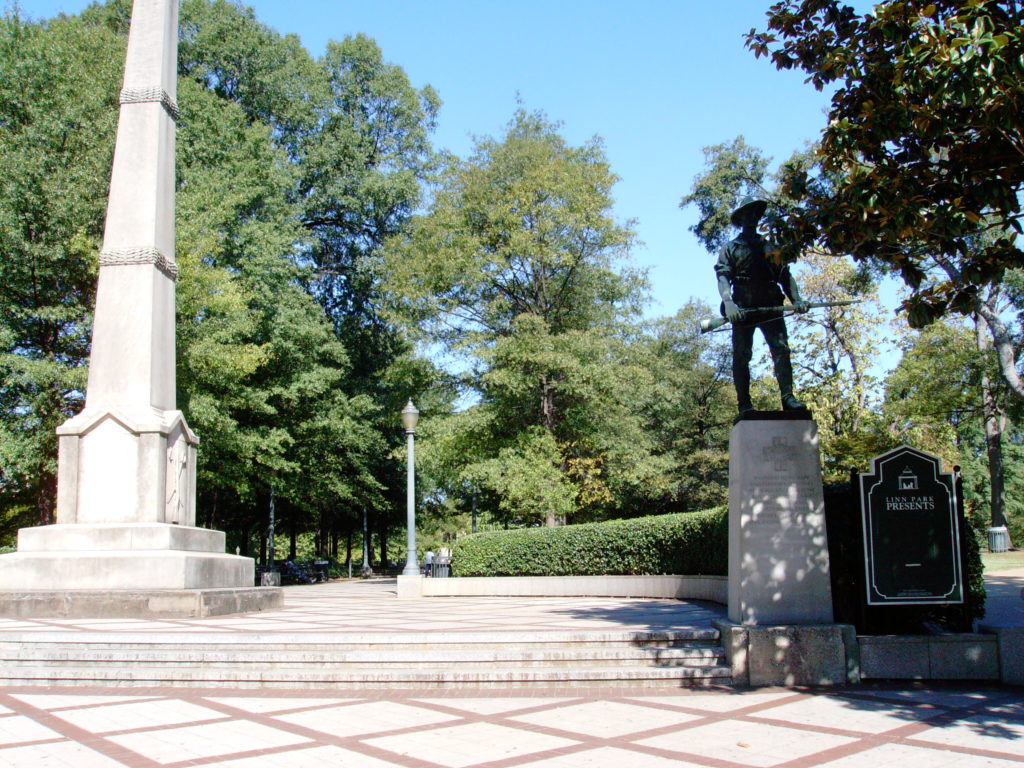
Birmingham, Ala. Mayor Randall Woodfin has promised to “finish the job” of tearing down a 115-year-old Confederate monument after protestors did their best to remove it themselves. Protestors who were demanding justice for the unnecessary death of George Floyd attempted to remove the monument Sunday night from Linn Park in Birmingham. Woodfin appeared at the park as protestors attempted to tear down the 52-foot-tall granite obelisk honoring Confederate veterans. He pleaded with them to go home before arrests began, telling the crowd, “Allow me to finish the job for you.” Woodfin’s promise is in direct violation to state law. The 2017 Alabama Memorial Preservation Act currently prohibits relocating, removing, altering or renaming public buildings, streets and memorials that have been standing for more than 40 years.
Birmingham Mayor criticizes Alabama law protecting Confederate monument
Woodfin made the comments the same day lawmakers debated a proposal to increase fines for violating the law.
Monument Protections Upheld by Alabama Supreme Court
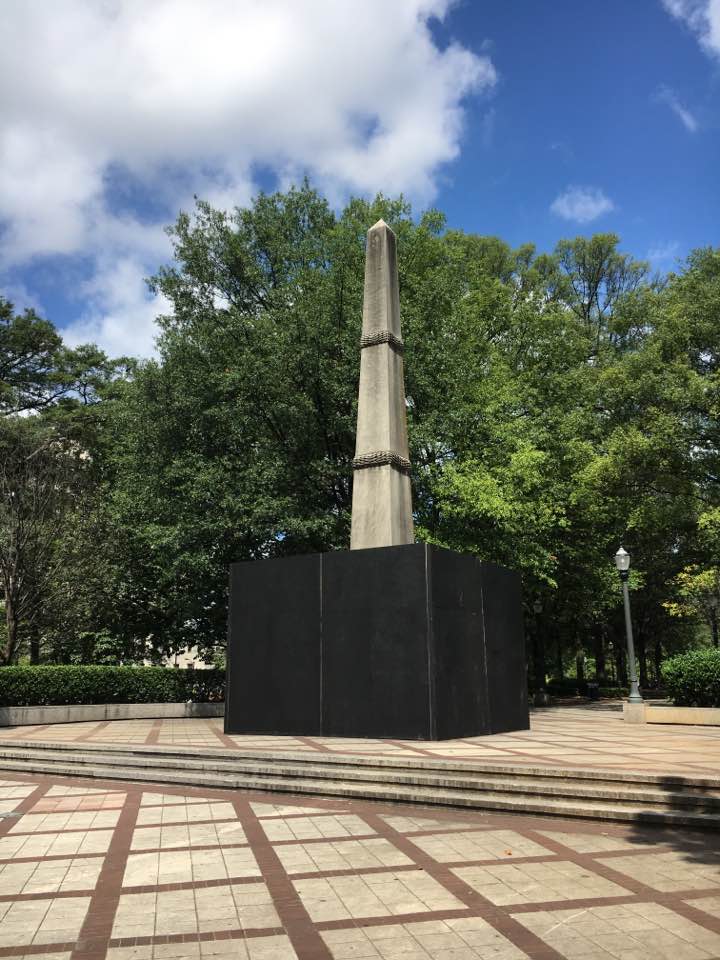
The Alabama Supreme Court overturned an earlier ruling concerning a Birmingham confederate monument by a Jefferson County judge.
Alabama Confederate statue law to stay in effect amid appeal
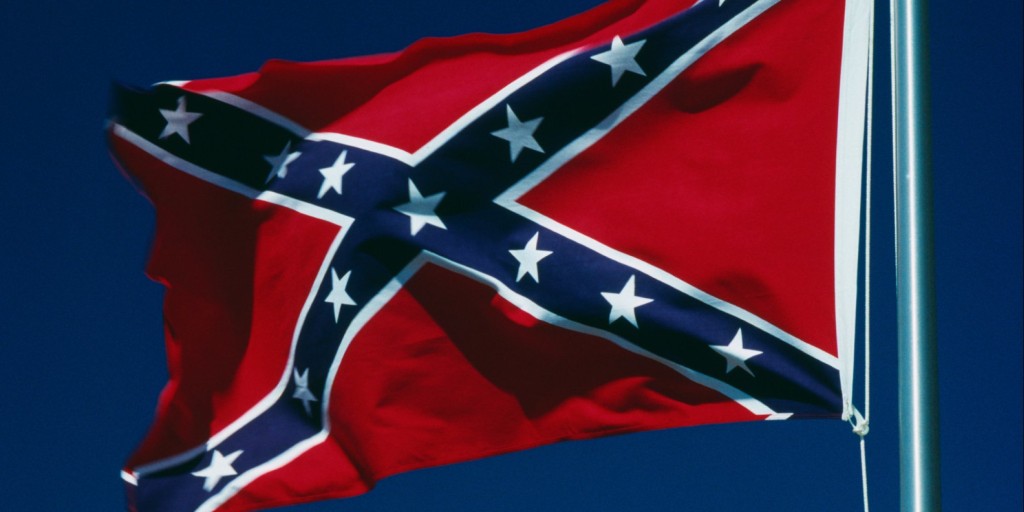
An Alabama law that prohibits cities from removing Confederate monuments will remain in effect while the state appeals a judge’s ruling that declared the statute constitutional, the Alabama Supreme Court ruled Friday. Justices granted the request of Attorney General Steve Marshall to stay a judge’s order striking down the law, Marshall’s office announced. “The Supreme Court’s stay allows the Alabama Memorial Preservation Act to remain in effect until the Supreme Court resolves this appeal over the act’s constitutionality,” Marshall said in a statement. Marshall said he believes a judge erred when he ruled the law unconstitutional. The 2017 Alabama Memorial Preservation Act prohibits relocating, removing, altering or renaming public buildings, streets and memorials that have been standing for more than 40 years. Cities can be fined for violations. Jefferson County Circuit Judge Michael Graffeo last month ruled that the law violates the free speech rights of local communities and declared it void. The state law doesn’t specifically mention Confederate monuments, but it was enacted as some Southern states and cities began removing such monuments and emblems. Alabama sued the city of Birmingham in 2017 after officials erected a wooden box that obscured the view of a 52-foot-tall (16-meter-tall) obelisk honoring Confederate veterans. In his order declaring the law unconstitutional, Graffeo said it was indisputable that most citizens in the majority black city are “repulsed” by the memorial. He rejected the state’s claims that lawmakers had the power to protect historical monuments statewide. Justices on Friday also agreed to stay any fines against Birmingham as the court case plays out over the law’s constitutionality. Republished with permission from the Associated Press.
Birmingham seeks to maintain Confederate monument ruling
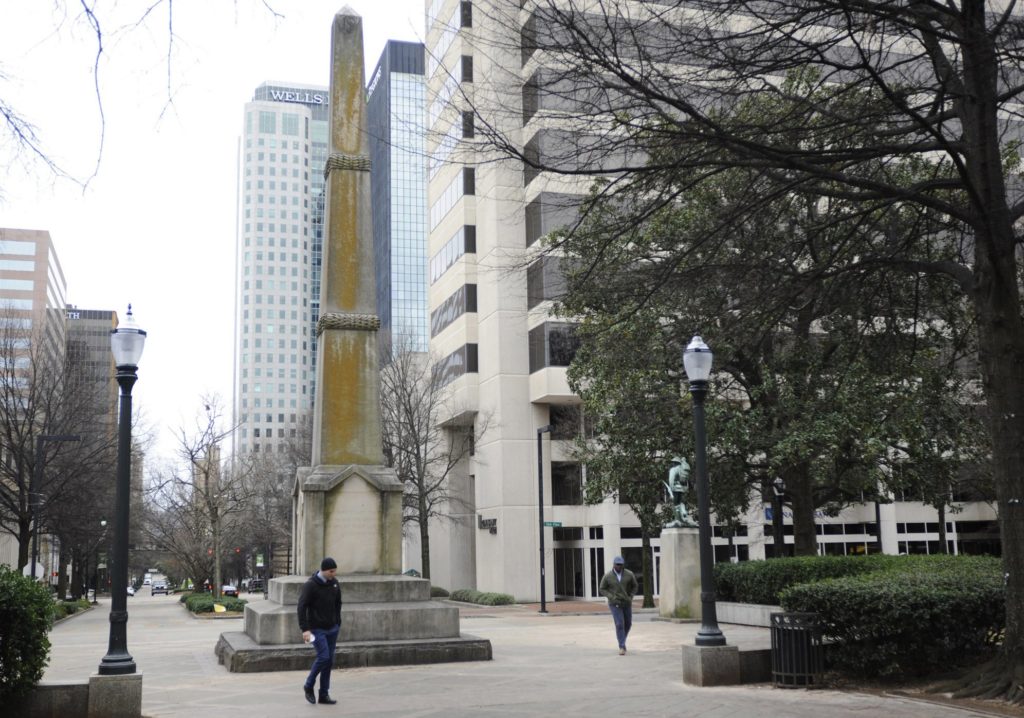
The city of Birmingham is asking a judge to maintain his ruling that overturned a state law protecting Confederate monuments. In a court filing last week, city attorneys opposed a motion by the state attorney general to stay the decision while Alabama appeals. A judge last month ruled a 2017 state law barring the removal or alteration of historical monuments violates the free speech rights of local communities. The state argued that staying the order would prevent cities from removing monuments while the state appeals. Birmingham lawyers said the city has made no suggestion that a Confederate monument would be removed during the appeal. Alabama sued the city of Birmingham in 2017 after officials erected a wooden box that obscured the view of a 52-foot-tall obelisk honoring Confederate veterans. Republished with permission from the Associated Press.
Judge rules Alabama Confederate monuments protection law is null and void
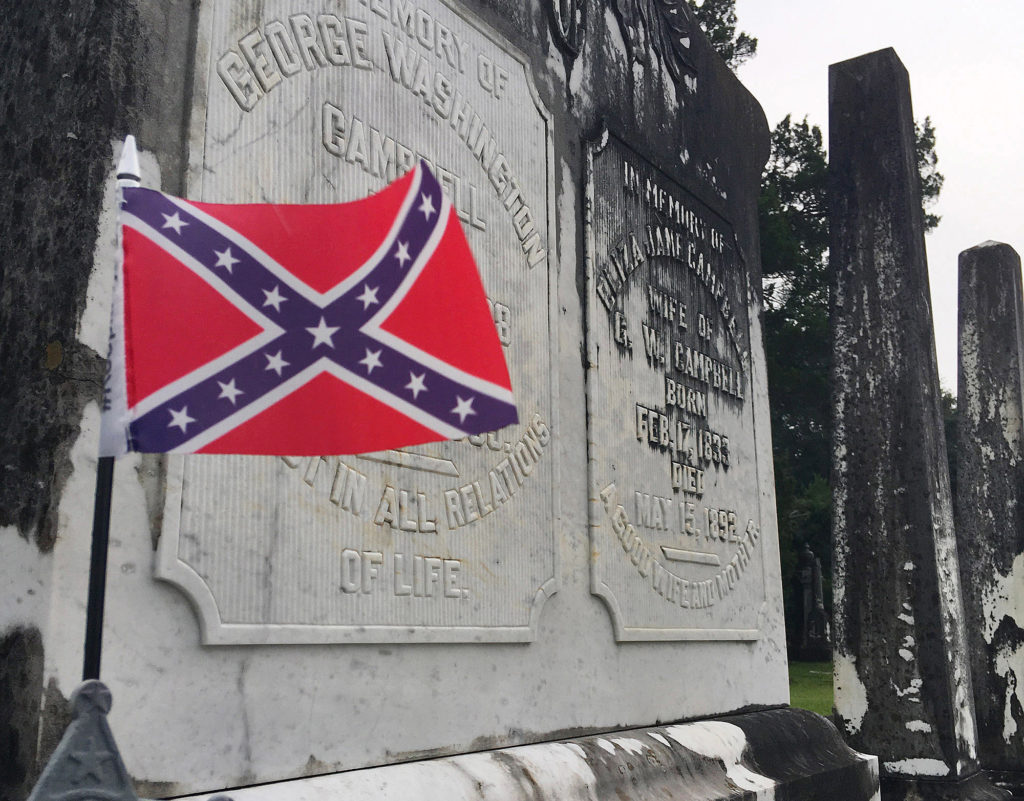
A judge has overturned an Alabama law that prevents the removal of Confederate monuments from public property. Late Monday, Jefferson County Circuit Judge Michael Graffeo issued a 10-page ruling that said the Alabama Memorial Preservation Act does not have any legal authority. “Just as the state could not force any particular citizen to post a pro-Confederacy sign in his or her front lawn, so too can the state not commandeer the city’s property for the state’s preferred message,” Graffeo wrote in his ruling. On May 25, 2017, Gov. Kay Ivey signed the act into law. It preserves all historical monuments on public property that have been in place for at least 40 years. “We can’t change or erase our history, but here in Alabama, we know something Washington doesn’t — to get where we’re going means understanding where we’ve been,” Ivey said in a campaign ad highlighting the law. Graffeo’s ruling follows a 2017 lawsuit filed by Alabama Attorney General Steve Marshall against the City of Birmingham and then-Mayor William Bell for violating the state law by constructing barriers to deliberately obscure a Confederate monument in the city’s downtown Linn Park. “In accordance with the law, my office has determined that by affixing tarps and placing plywood around the Linn Park Memorial such that it is hidden from view, the Defendants have ‘altered’ or ‘otherwise disturbed’ the memorial in violation of the letter and spirit of the Alabama Memorial Preservation Act,” said Marshall. “The City of Birmingham does not have the right to violate the law and leaves my office with no choice but to file suit.” “A city has a right to speak for itself, to say what it wishes, and to select the views that is wants to express,” Graffeo added. “The state acknowledges that the city is generally free to engage in government speech… but explains that the act withdraws from the city the right to engage in a particular expressive message. This explanation is impermissibly content-based… [the state] also cannot manipulate the city’s speech for the illegitimate purpose of favoring certain content of viewpoints.”
History shared but unreconciled in city’s Confederate statue
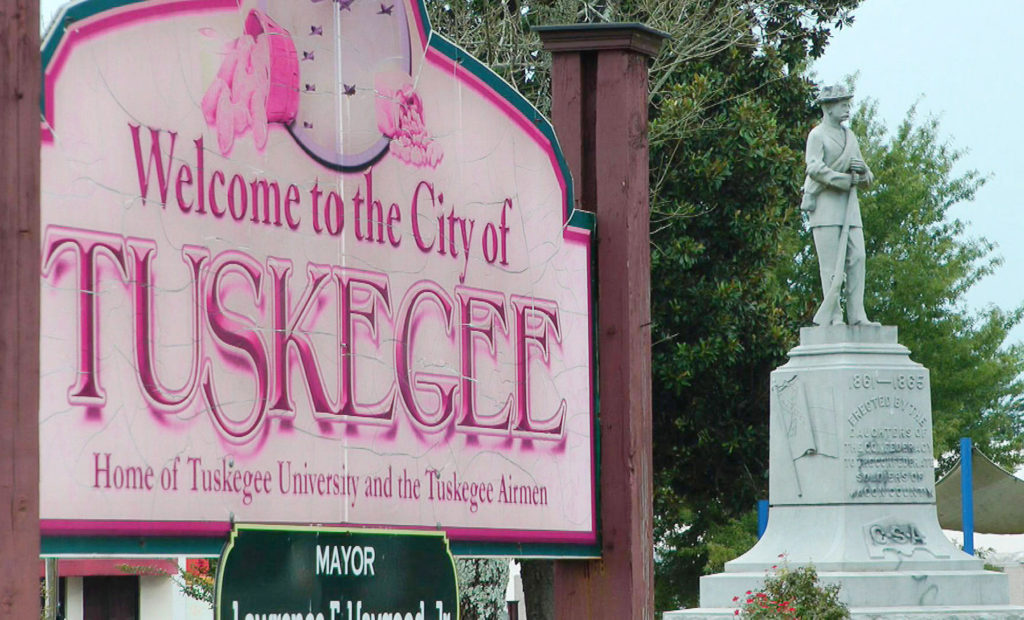
In 1906, when aging, white Confederate veterans of the Civil War and black ex-slaves still lived on the old plantations of the Deep South, two very different celebrations were afoot in this city known even then as a beacon of black empowerment. Tuskegee Institute, founded to educate Southern blacks whose families had lived in bondage for generations, was saluting its 25th anniversary. Meanwhile, area whites were preparing to dedicate a monument to rebel soldiers in a downtown park set aside exclusively for white people. Flash forward to today and that same Confederate monument still stands in the same park, both of them owned by a Confederate heritage group. They sit in the heart of a poor, black-controlled town of 9,800 people that’s less than 3 percent white. Students from what’s now Tuskegee University once tried and failed to tear down the old gray statue, which has since become a target for vandals. But critics who want it gone aren’t optimistic about removing it, even as similar monuments come down nationwide. “I think it would probably take a bomb to get it down,” said Dyann Robinson, president of the Tuskegee Historic Preservation Commission. The story of how such a monument could be erected and still remain in place a century later offers lessons in just how hard it can be to confront a shared history that still divides a nation. ___ In 1860, before the Civil War began, Census records show 1,020 white people owned 18,176 black people in Macon County, where Tuskegee sits. The enslaved were mostly kept uneducated. Schooling became nearly as big a need as food and shelter once the fighting stopped in 1865. Established by the Alabama Legislature through the joint work of a freed slave and a former slave owner, the Tuskegee Normal and Industrial Institute was founded in 1881, according to the school’s official history. Booker T. Washington built it into a leading institution for educating blacks. To this day, it remains a leading historically black university. By the time of Tuskegee’s 25th anniversary, Washington was widely acclaimed for advocating practical education, character building and hard work to lift blacks from the poverty of the postwar South. William Howard Taft, who would become U.S. president a few years later, attended the celebration; so did industrialist and donor Andrew Carnegie. Coverage of the anniversary festivities in The Tuskegee News, a white-owned newspaper, emphasized that blacks needed to get along with the whites who had near total control in the old Confederate states. “Every address from northerner, or southerner, and black gave forth the unmistakable tribute to the value, yea, the absolute necessity of the southern negro doing all in his power to merit the confidence and friendly cooperation of the southern white man …,” the paper reported on its front page. ___ Meanwhile, the United Daughters of the Confederacy, composed of female descendants of Confederate veterans, was erecting monuments glorifying the “lost cause” of the South all over the region in the early 1900s. The women of the Tuskegee chapter planned one for their town. They staged a musical performance and a chrysanthemum show to raise money for a Confederate statue, according to Tuskegee News accounts. Then, two months after the Tuskegee Institute anniversary, leaders of the white-controlled county government gave the United Daughters the main downtown square to serve as a “park for white people” around a memorial to Macon County’s Confederate veterans, city records show. The monument, which included the inscribed admonition to “honor the brave,” finally was dedicated on Oct. 6, 1909. The Montgomery Advertiser called the ceremony “one of the largest masses of white people ever before witnessed in Tuskegee.” Confederate flags waved and 13 young women were dressed in crimson and white to represent the Confederate states. Newspaper stories from the time don’t say whether any blacks attended the event, which included a parade through town, but they most certainly were around. Macon County was around 82 percent black at the time, Census records show, although Jim Crow laws kept whites in firm political control. The nation’s first black combat pilots, the Tuskegee Airmen, trained in the town in the 1940s, but not until the 1960s did the civil rights movement start changing political dynamics. ___ Blacks were first elected to office in Tuskegee in 1964, but whites still controlled most of Alabama. Frustrated after an all-white jury in another county acquitted a white man accused of murder in the shooting death of a civil rights worker, blacks took out their anger on the Confederate monument in 1966. A crowd described in news reports as Tuskegee students converged downtown after jurors acquitted white gas station attendant Marvin Segrest in the killing of black Navy veteran and civil rights worker Samuel L. Younge Jr., who was gunned down after asking to use a whites-only bathroom. It took only 70 minutes or so for jurors to side with Segrest. On a night when rocks flew through windows around the town square, demonstrators went after the Confederate monument. Simuel Schutz Jr., a friend of Younge who participated in the demonstration, said protesters attached a chain or rope to the monument in a bid to pull it down, but failed. “We didn’t have a vehicle to topple it that night and that’s why it’s still there,” said Schutz, 72, now a contractor in Trenton, New Jersey. But protesters did have spray paint. The next morning, the soldier atop the monument had a yellow stripe down its back with the words “black power” scrawled on the base in black paint. First elected mayor in 1972, Johnny Ford said he tried to have the monument relocated after taking office and again in 2015. Both efforts failed, as did a few similar attempts during the intervening years. “Whites oppose moving it and older blacks didn’t want to for fear of upsetting race relations,” said Ford, now out of office after serving more than three decades both as mayor and a state representative from the area. For some,
Campaign begins in Huntsville to remove Confederate monument
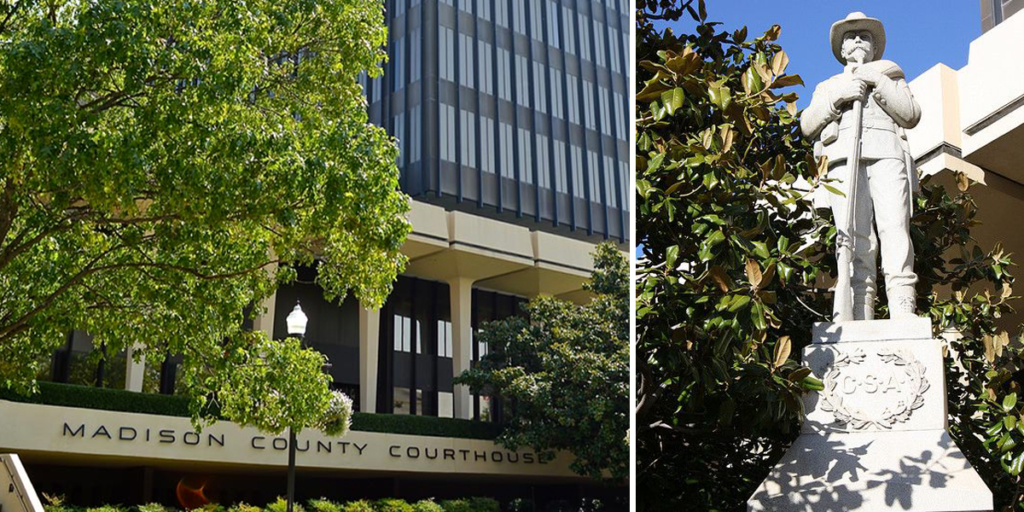
The weekend’s events — where violence broke out in Charlottesville, Va. during a demonstration by white nationalists and neo-Nazi groups opposed to the removal of a statue of Confederate Gen. Robert E. Lee — has prompted a national conversation on whether symbols of the Confederacy should be removed, and many monuments and statues have started to come down across the country. One of those monuments in question — the Confederate monument on the Madison County courthouse grounds in Huntsville, Ala. There, a local group is fighting for its removal. “This monument is in the center of downtown Huntsville, a forward-looking city with important ties to the federal government and two African-American colleges. Huntsville is proud to have been the first city in Alabama to integrate public schools and facilities. It’s completely unacceptable to honor ‘the principles which gave birth to the Confederate cause’ at the seat of our local government,” the Tennessee Valley Progressive Alliance (TVPA) wrote on their GoFundMe page where they’re working to raise funds in order to pay the $25,000 fine the state has set for those who violate the Memorial Preservation Act. The law, signed by Gov. Kay Ivey earlier this year, prevents the removal of historic statues more than 40 years old from public spaces. Under it , Alabama Attorney General Steve Marshall has the authority to fine the city $25,000 for each violation. Huntsville would be in violation of said law if the city removed the monument without Legislature approval. “Here is a small, concrete action you can take to join the fight against white supremacy right here in Madison County, AL,” TVPA wrote on their Facebook page linking to the GoFundMe campaign. At the time of publishing, they have raid $1,310 of their $2,000 goal.
AG Steve Marshall files suit against city of Birmingham, Mayor William Bell
Alabama Attorney General Steve Marshall announced Wednesday that his office has filed suit in Jefferson County Circuit Court against the City of Birmingham and Mayor William Bell for violating state law by constructing barriers to deliberately obscure a Confederate monument in the city’s downtown Linn Park. “In accordance with the law, my office has determined that by affixing tarps and placing plywood around the Linn Park Memorial such that it is hidden from view, the Defendants have ‘altered’ or ‘otherwise disturbed’ the memorial in violation of the letter and spirit of the Alabama Memorial Preservation Act,” said Marshall. “The City of Birmingham does not have the right to violate the law and leaves my office with no choice but to file suit.” The Alabama Memorial Preservation Act, was passed by state lawmakers earlier this year and signed into law by Gov. Kay Ivey. It prohibits the removal of historic statues more than 40 years old from public spaces. The Confederate monument in question in Linn Park was dedicated in 1905, and thus is protected by the law.
Birmingham Mayor William Bell orders city to cover up Confederate monument
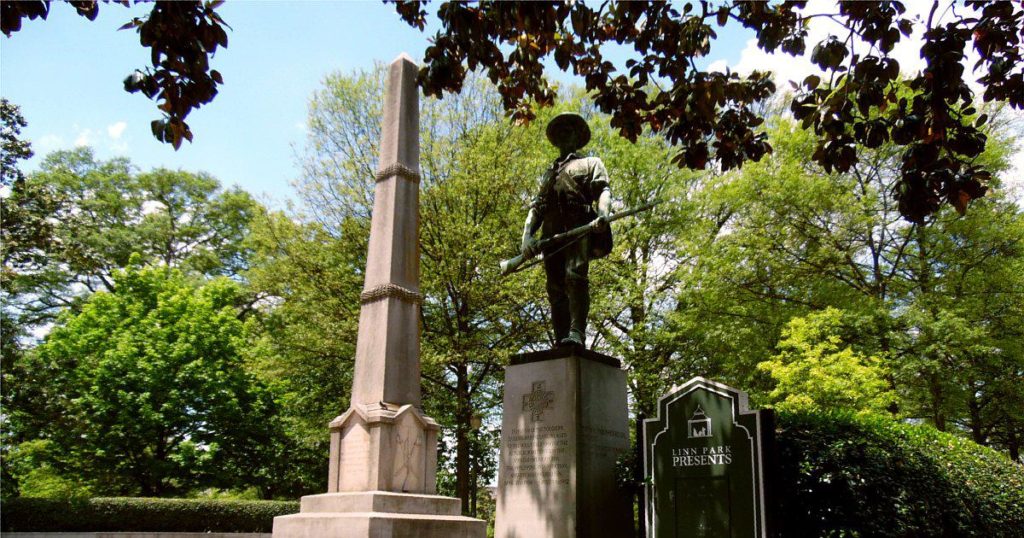
Less than a week after white nationalists rallied in Charlottesville, Va, in support of a monument to Robert E. Lee that ended in deadly violence, Birmingham city leaders moved to cover a Confederate monument that resides on the city’s public property. Mayor William Bell‘s decision to cover the monument in the downtown Linn Park. came quietly, without fanfare, as city workers installed a wooden structure Tuesday night just before 10 p.m. Earlier this year, Gov. Kay Ivey signed a bill into law preventing the removal of historic statues more than 40 years old from public spaces, making the removal of the confederate monument found in Birmingham’s Linn Park illegal. Under the new law, Alabama Attorney General Steve Marshall has the authority to fine the city $25,000 for each violation of the law. Which prompted the creation of a GoFundMe account by a group called “People of Birmingham” with a goal of $25,000 they plan to use to pay the state’s fine. Bell’s office says it’s looking at ways to challenge the state law restricting the Magic City’s authority to remove the monument, but in the meantime they plan to keep it covered.
