
Terri Sewell says she is ‘biased’ towards sorority sister Kamala Harris
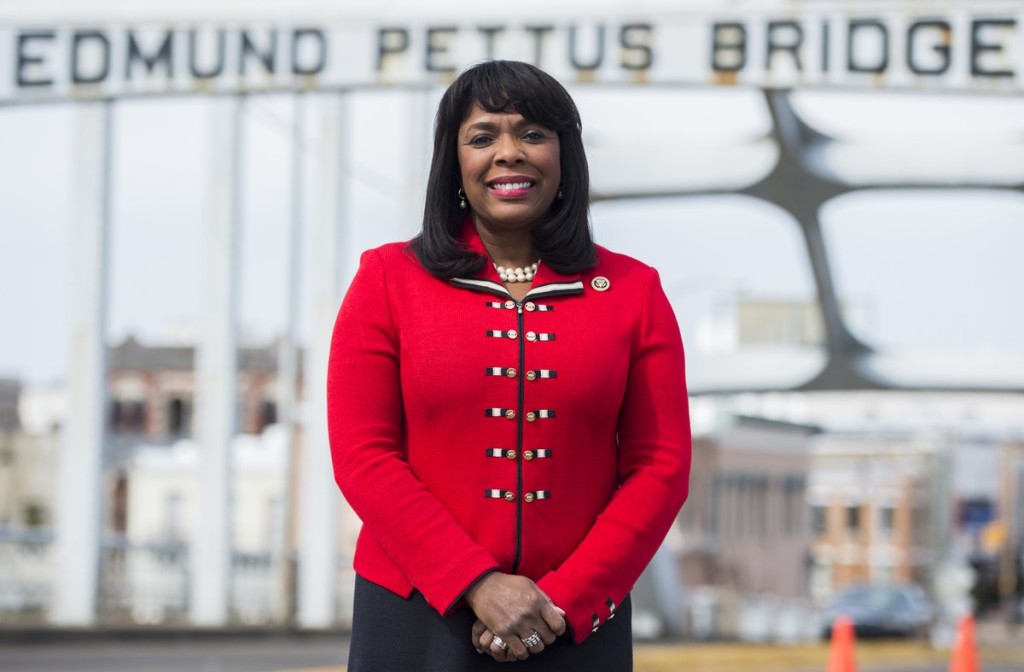
Hoping for support in their bid for the 2020 Democratic nomination, both New Jersey senator Cory Booker and Kamala Harris, a senator from California, have been campaigning heavily among the Congressional Black Caucus (CBC). Alabama 7th District U.S. Rep. Terri Sewell has admitted she is “biased” towards Harris, as they were both members of the same African-American sorority, Alpha Kappa Alpha, The Hill reports. However, she hasn’t ruled out supporting Booker. “I think it’s awesome we have so many amazing choices,” Sewell said. Last year, when Harris spoke at the 25th Annual Selma Bridge Crossing Jubilee commemorating the 53rd anniversary of the Selma-to-Montgomery March, she spoke of Sewell. She said that those who originally marched “laid the foundation so that John Lewis and Terri Sewell and Barbara Lee can serve in the United States Congress. To carry on the work.” Sewell, Alabama’s first black Congresswoman, has previously said that black women are crucial to Democratic success. When Senator Doug Jones won the special election in 2018, she told the Chicago Sun-Times that black women had been “the backbone of the Democratic Party for a long time and we’re finally getting our due, There were a whole bunch of people he doesn’t even know that did a whole bunch of work to help him get there.” Another “rising political star” bringing black women together is Stacey Abrams, who will be delivering the Democratic response to Donald Trump‘s upcoming State of the Union Address. Sewell shared her excitement about this choice on Facebook, saying “Stacey Abrams reflects our party’s shared values of equality and inclusion and is a brilliant choice to give the democratic response to the State of the Union.”
Hillary Clinton pushes back against ‘unprecedented’ new FBI review
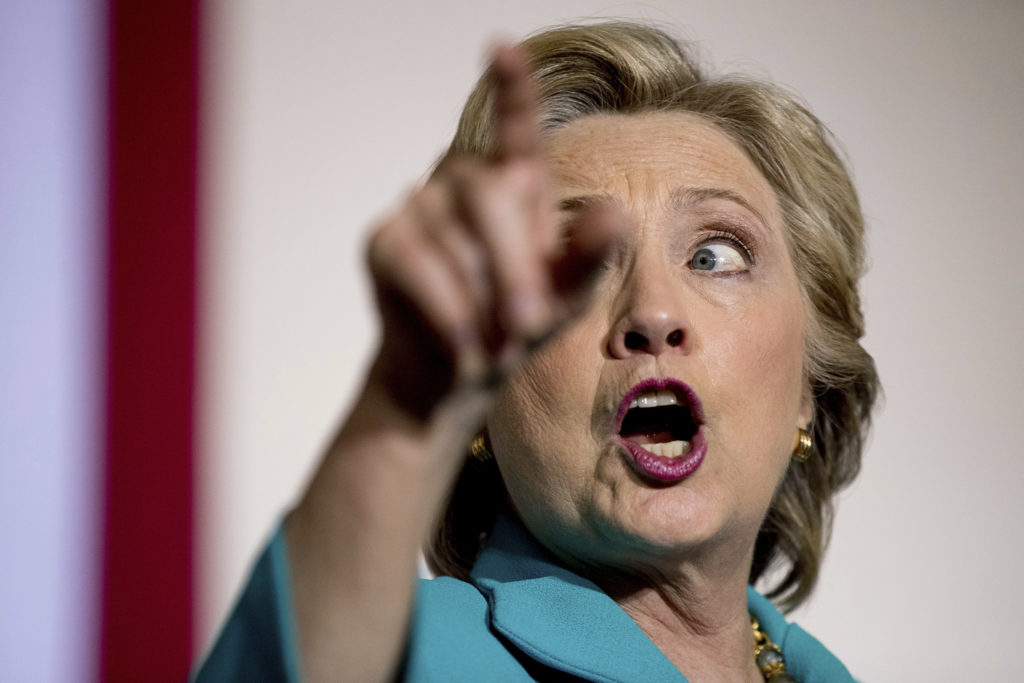
Hillary Clinton lashed out Saturday at the FBI’s handling of a new email review, leading a chorus of Democratic leaders who declared the bureau’s actions just days before the election “unprecedented” and “deeply troubling.” Emboldened Republican rival Donald Trump seized on the reignited email controversy, hoping to raise new doubts about Clinton’s trustworthiness. Rallying supporters in Florida, Clinton pressed FBI Director James Comey to put out the “full and complete facts” about the review into a cache of recently discovered emails. Clinton backers panned Comey’s letter to Congress about the new emails as severely lacking crucial details. “It is pretty strange to put something like that out with such little information right before an election,” Clinton said. She accused Trump of using the issue to confuse and mislead voters in the final leg of the campaign for the Nov. 8 election. The controversy over Clinton’s email practices at the State Department has dogged her for more than a year. The former secretary of state has often been reluctant to weigh in on the matter — and defensive when she’s been pushed to do so. But Clinton’s approach to this latest flare-up is markedly different, underscoring worries that the matter could damage her standing with voters in the election’s final days. Clinton advisers have been rallying Democratic lawmakers and other supporters to her defense, including members of the Congressional Black Caucus. Earlier Saturday, Clinton campaign chairman John Podesta said there was “no evidence of wrongdoing” in the new email review and “no indication this is even about Hillary.” But Comey, who enraged Republicans in the summer when he announced the FBI would not prosecute Clinton for her loose handling of official email, in fact said the new trove appeared to be “pertinent” to the Clinton email investigation. He did not explain how. A government official told The Associated Press on Saturday that the Justice Department had advised the FBI against telling Congress about the new developments in the Clinton investigation because of the potential fallout so close to the election. The official was not authorized to speak publicly about the matter and discussed it on condition of anonymity. Justice officials concluded the letter would be inconsistent with department policy that directs against investigative actions that could be seen as affecting an election or helping a particular candidate, the official said. Landing with a thud, the email issue again threatened to undermine an advantage built by Clinton, the Democratic nominee, over Trump and raised the possibility that the Republican might be able to seize late momentum. Trump told a crowd in Golden, Colorado, on Saturday that the FBI’s review of Clinton email practices raises “everybody’s deepest hope that justice, as last, can be properly delivered.” His crowd cheered Clinton’s email woes, which Trump has taken to calling the biggest political scandal since Watergate. The FBI is looking into whether there was classified information on a device belonging to Anthony Weiner, the disgraced ex-congressman who is separated from longtime Clinton aide Huma Abedin. Comey, in his letter to Congress on Friday, said the FBI had recently come upon new emails while pursuing an unrelated case and was reviewing whether they were classified. A person familiar with the investigation, who lacked authority to discuss the matter publicly and insisted on anonymity, said the device that appears to be at the center of the new review was not a computer Weiner shared with Abedin. As a result, it was not a device searched for work-related emails at the time of the initial investigation. The person said “this is news to (Abedin)” that her emails would be on a computer belonging to her husband. The person added that if the emails included those related to Abedin’s work with Clinton at the State Department, they are expected to be duplicates of what she had already turned over as part of the initial investigation. Trump mused aloud during his rally about whether Clinton was “going to keep Huma,” adding that Abedin has “been a problem.” He hurled insults at Weiner, warning again that the former congressman posed a national security risk because of his access to information through his estranged wife. Abedin, a close Clinton confidant who is a near constant presence in the campaign, was not traveling with Clinton on Saturday. New York Rep. Gregory Meeks suggested the FBI chief might be trying to sway the election and called for him to disclose what he knows. Clinton herself said of Comey: “Put it all out on the table.” Long term, the development all but ensured that, even should Clinton win the White House, she would celebrate a victory under a cloud of investigation. Comey, who was appointed in 2013 to a 10-year term as FBI director, would still be on the job if Clinton wins the White House. Congressional Republicans have already promised years of investigations into Clinton’s private email system. And that’s only one of the email-related episodes facing her in the campaign’s closing days. The tens of thousands of confidential emails from Clinton campaign insiders that were hacked — her campaign blames Russia — and then released by WikiLeaks have provided a steady stream of questions about her policy positions, personnel choices and ties with her husband’s extensive charitable network and post-presidential pursuits. In his letter to congressional leaders Friday, Comey wrote only that new emails have emerged, prompting the agency to “take appropriate investigative steps” to review information that appeared pertinent to its previously closed investigation into Clinton private email system. Clinton’s campaign is hoping the issue will fire up its base of voters who feel the secretary has been unfairly targeted in a litany of investigations, but it could also revive some Clinton fatigue. Given a political gift from the FBI, Trump’s challenge now becomes avoiding any big missteps that might overshadow Clinton’s troubles over the campaign’s final days. If history is a guide, that won’t be easy. Inside Trump’s Colorado rally, his supporters worried whether he could stick to his message
Alabama congressional delegates join bipartisan effort to boost HBCUs
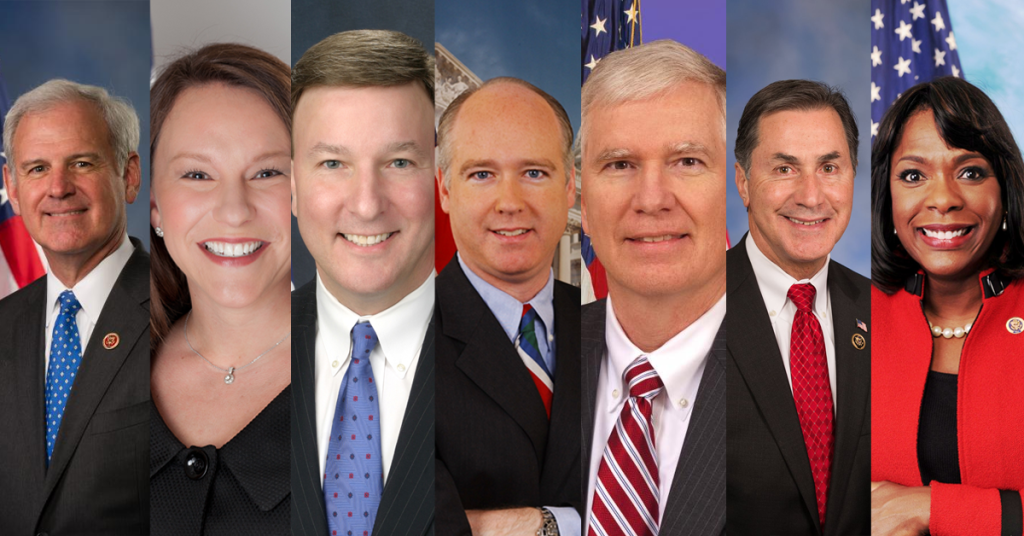
A new bipartisan effort will bring 37 members of Congress together to promote and protect the nation’s historically black colleges and universities (HBCUs). The Bipartisan Congressional HBCU Caucus will be led by Reps. Bradley Byrne of Alabama and Alma Adams of North Carolina; Rep. Terri Sewell of Alabama and Rep. Bennie Thompson of Mississippi will be vice chairs. In a press release issued Tuesday, Byrne said, “HBCUs deal with many of the same challenges as other higher education institutions, but they also face unique obstacles that demand special attention. Our nation’s HBCUs are evolving as they adapt to a changing workforce, and through this caucus, I look forward to helping guide the conversation about how we can best support our nation’s HBCUs.” More than 300,000 students attend 100 historically black colleges and universities each year. The institutions produce an estimated 25 percent of African-American graduates in the STEM fields – making them a key factor in meeting workforce demands for more skills in science and technology. However, the effort to bolster those institutions comes at a time when underfunding, institutional mismanagement, and lack of alumni support have taken their toll. Estimates put the six-year graduation rate for HBCUs at about 40 percent; the graduation rate at predominately white colleges is about 60 percent. “HBCUs still play a vital role in educating our youth, and the primary purpose of the Bipartisan Congressional HBCU Caucus is to help these storied institutions continue to flourish,” said Rep. Sewell in a statement Wednesday. “My district is home to some of the most prominent HBCUs in the country, and I am proud to join the Bipartisan Congressional HBCU Caucus as Vice Chair.” The Congressional Black Caucus has criticized President Obama’s relationship with HBCUs, arguing that his education policies would force many of the historic institutions into extinction. That criticism came to a head early this year when the Obama announced a program to provide free community college for any student who desired to attend, a move that some predicted would only undermine black colleges and universities. A prepared statement from Byrne’s office said the caucus members would “work to create a national dialogue, educating other Members of Congress and their staffs about the issues impacting HBCUs. The caucus will also work to draft meaningful bipartisan legislation to address the needs of HBCUs, and to support students and graduates of HBCUs by increasing access and career opportunities.”
