
Alabama Attorney General: Daily fantasy sports leagues are illegal gambling

Televisions, smartphones, and computers were flooded during the 2015-2016 football season with advertisements for a relatively new form of fantasy sports. Between FanDuel and DraftKings, sports fans across the country were inundated with commercials promising a fast-paced game with the potential for high payouts. But on Tuesday, Alabama Attorney General Luther Strange sent cease-and-desist letters to two Daily Fantasy Sports companies, after determining that paid daily fantasy sports contests constitute illegal gambling. In daily fantasy sports (DFS), participants pay to create a roster of players, then pit their roster against those of other participants. Whomever’s roster performs the best that day within a certain pool wins prize money through the site. “As Attorney General, it is my duty to uphold Alabama law, including the laws against illegal gambling,” said Strange in a news release Tuesday afternoon. “Daily fantasy sports operators claim that they operate legally under Alabama law. However, paid daily fantasy sports contests are in fact illegal gambling under Alabama law.” According to Alabama code section 13A-20-12, a person participates in gambling if he or she “stakes or risks something of value upon the outcome of a contest of chance or a future contingent event not under his control or influence, upon an agreement or understanding that he or someone else will receive something of value in the event of a certain outcome.” Gambling in Alabama is illegal, with a few exceptions including buying securities and commodities, insurance, and some grandfathered activities. DFS sites often contend they are games of skill, not of chance, and thus aren’t covered under most states’ gambling laws, but Strange contends this is not sufficient to keep them legal in Alabama. “There is, of course, a measure of skill involved in creating a fantasy roster,” wrote the AG’s office. “But in the end, contestants have no control over the performance of the players on their rosters. For example, a player could fall ill before a game, be injured in pre-game warm-ups, or miss a large portion of the game due to injury or equipment failure. All of these factors, and many more, are outside the control of a fantasy sports player. Thus, the results of paid daily fantasy sports contests depend to a large degree on chance.” Two bills currently stalled in committee, SB114 by Sen. Paul Sanford (R-Huntsville) and HB56 by Rep. Connie Rowe (R-Jasper) would each establish regulatory rules regarding fantasy sports games in the state. The bills would require contest operators to institute procedures for consumer protection, require audits of operators and provide penalties for those operating outside of the established regulations. Were they to be passed, the bills would undo Strange’s decision, making the industry immune from being considered a gambling operation in the state. AG Strange says Alabama is the twelfth state to declare DFS to be illegal.
Fantasy sports, gambling could be big business for state

A slate of bills aimed at loosening Alabama’s gambling laws and setting the state up to benefit from the lucrative gaming industry have been slowly winding their ways through the legislative chambers this Session, but none have gained any real traction in a Legislative Session marred in controversy over ill-fated budgets and sexually explicit recordings. Despite that, the bills keep coming, aimed at regulating untapped gaming revenues and opening the doors to a state lottery and even full-on casino gambling. The first high-profile lottery bill was announced only days before the start of the Legislative Session. Sen. Jim McClendon (R-Springville) and Rep. Alan Harper (R-Northport) introduced SB19 and HB13, respectively, that offer a constitutional amendment to allow a state lottery to be established. The bill makes no mention of how the proceeds from such a lottery would be spent, it only allows for residents to vote on whether a lottery should be operated in the state. Legislators would be tasked with figuring out how to set up and allocate the proceeds next year. The Harper-McClendon legislation has passed hurdles in their respective committees, but so far has not come up for discussion on either floor Rep. Craig Ford (D-Gadsden) has offered four bills aimed at establishing the Alabama Lottery Commission and distributing the proceeds from the operation. HB10 would establish the commission, as well as the Lottery Trust Fund where profits would be stashed to fund college scholarships for qualifying students. HB208 establishes the Alabama Gaming Commission, which would oversee pari-mutuel wagering at county-approved racetracks and levy taxes on some establishments. HB209 is the meat and potatoes of 10 and establishes all of the commissions, corporations and funds required to oversee the proposed state lottery and gaming endeavors. HB278 allows the governor to negotiate a compact with the Poarch Creek Indians, who are currently the only operation allowed to offer slot-machine gaming in the state. Like the Harper-McClendon bills, Ford’s bills have gone before their required committees but have gained no real traction. Sen. Trip Pittman (R-Daphne) has offered his own lottery bill, SB232, which would allow Alabama to participate in other multistate lotteries and compel the legislature to establish rules regarding the enterprise. Pittman’s legislation has gone before committee but has not yet come out on the other side. Rep. John Knight (D-Montgomery) has offered HB263, which would simply repeal Alabama’s prohibition on a state lottery. Knight’s legislation was directed to committee in February but, so far, has gone nowhere. And while lottery and pari-mutuel gambling has long been a centerpiece of Alabama’s political discourse, a newcomer has made its way into the fold. Two bills have been filed to regulate fantasy sports contests in the state, possibly setting the state up to be involved in what has quickly become a multibillion operation. SB114 from Sen. Paul Sanford (R-Huntsville) and HB56 from Rep. Connie Rowe (R-Jasper) would both establish regulatory rules regarding fantasy contests in the state. The bills would require contest operators to institute procedures for consumer protection, require audits of operators and provide penalties for those operating outside of the established regulations. Further, the bill makes the industry immune from being considered a gambling operation in the state. Both have seemingly stalled in committee. Despite the fact Alabama could benefit greatly from the revenue that these types of gaming operations would generate – Missouri is expecting to generate “several million” dollars off of fantasy contest regulation (an industry slated to rake in about $20 billion by 2020) and South Dakota has raised nearly $2.5 billion through its state lottery – state lawmakers appear poised to avoid a vote on the topic and let another year tick by with no good answers on how to generate much-needed funding. Being in the Bible Belt may be the biggest reason Alabamians have long opposed such gaming operations, but it doesn’t hurt that organizations that run gambling enterprises, such as the Poarch Creek Indians, have funneled money into anti-gambling candidates’ campaigns. The New York Times reported in 2014 that the group had covertly spent $350,000 to fund anti-gambling candidates. And that wasn’t the first time. In the late 1990’s, Christian Coalition Chairman Ralph Reed was caught up in a scandal with GOP lobbyist Jack Abramoff. The duo funneled $1.3 million from the Choctaw Tribe to the Alabama Christian Coalition. The move was made to hide that the money had come from Choctaw gaming interests and used to fight video poker and a proposed lottery in the state.
Alabama legislative preview: March 21 – March 25, 2016
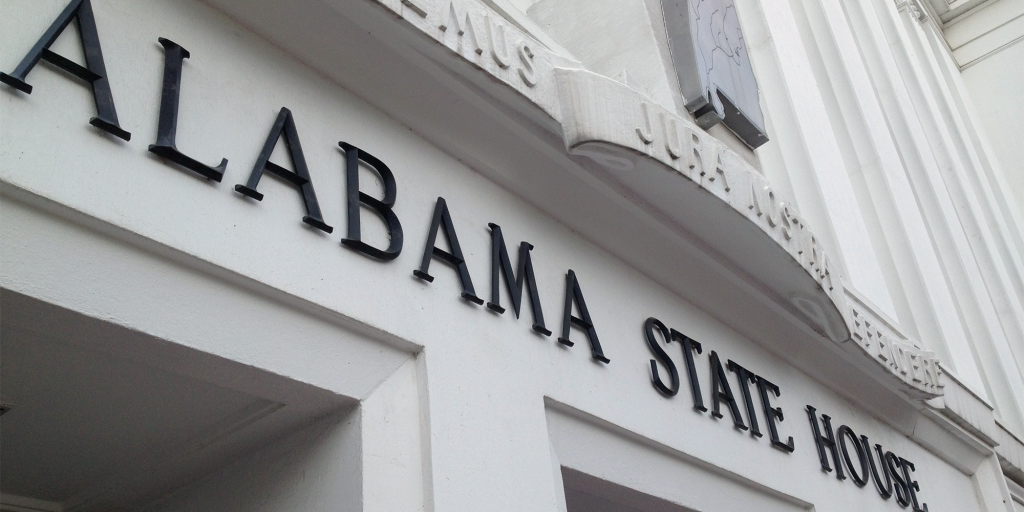
The Alabama House of Representatives will convene at 1 p.m. Tuesday, and the Senate an hour later, as state lawmakers gather for the 17th day of the regular session. This week, the Senate will take up SB89 from Sen. Arthur Orr (R-Decatur), which would require Alabama public school students to pass a civics test as a requirement for graduation. Orr’s legislation has been on the agenda for a while, but has likely been stalled due to a focus on more contentious issues. The body is also slated to take up SB148 from Sen. Jim McClendon (R-Springville), which would require all vehicle passengers to wear a safety belt, and SB114 from Sen. Paul Sanford (R-Huntsville), which would regulate fantasy contests and “exempt fantasy contests from certain criminal penalties associated with gambling activity.” The bill would increase spending by the Attorney General’s office, which would be responsible for overseeing such activities, by $1 million in the first year. Also on the Senate’s agenda this week are SB14 from Sen. Gerald Allen (R-Tuscaloosa), which would allow citizens to carry a firearm in their vehicle without a permit, and SB205 from Sanford, which would bar the Alabama Department of Human Resources from renewing health center licenses for an “abortion clinic or reproductive health center” within 2,000 feet of a school. In the House, lawmakers will take up HB46 from Rep. Alan Boothe (R-Troy), which would allow Alabama spirit makers to sell fifths for off-premise consumption. The body is also slated to debate HB13 from Rep. Alan Harper (R-Northport), which would allow citizens to vote on whether or not to allow a lottery in the state – the legislation provides no details on how proceeds from such an operation would be used, which is likely why it hasn’t been discussed thus far. HB218 from Rep. Dickie Drake (R-Leeds) is also on the agenda and would require that all elementary school students be instructed in cursive writing before the end of their third grade year. HB244 from Rep. Connie Rowe (R-Jasper) will also be taken up this week – the bill prohibits law enforcement from requiring victims of a sexual offense to take a polygraph examination. Committee hearings get underway Tuesday, though the vast majority take place on Wednesday, beginning with the Senate Judiciary Committee, which will take up SB237 from Sen. Quinton Ross (D-Montgomery). Ross’s legislation would make it unlawful for employers to request information regarding arrests and convictions on employment applications. The committee will also take up Sanford’s SB115, the Senate version of “Leni’s Law” from Rep. Mike Ball (R-Madison), which would decriminalize possession of the marijuana-based medicine cannibidiol. The Senate Committee on Constitution, Ethics and Elections will debate SB360 from Sen. Tom Whatley (R-Auburn), which would require voters to register as a Democrat or Republican before voting in a primary. Voters who do not will not be allowed to vote on party candidates, only on ballot measures and nonpartisan issues. The House Committee on Agriculture and Forestry will take up HB393 from Rep. Ken Johnson (R-Moulton), which would allow for the growing of industrial hemp in the state for use in a variety of products. The House Committee on Mobile County Legislation will mull over HB248 from Rep. Napoleon Bracy (D-Mobile), which would establish a $10.10 minimum wage in Mobile County. At the close of business this week, legislators will adjourn for spring break.
