GOPer: Rules change would prevent ‘dictatorial’ convention
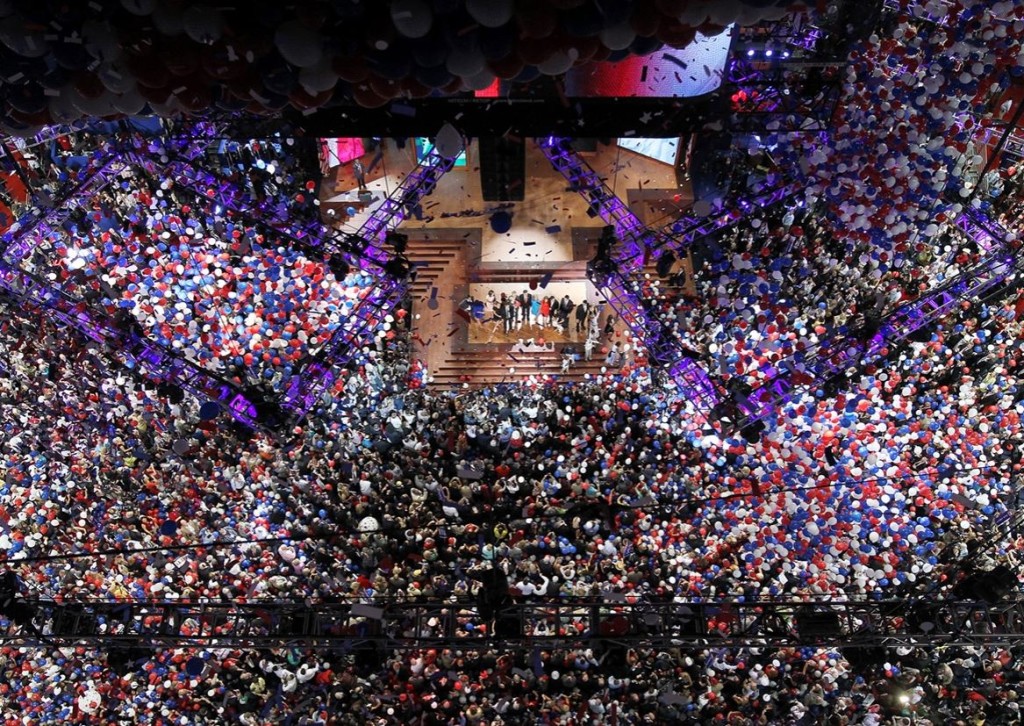
A member of the Republican National Committee trying to revamp GOP rules for nominating a presidential candidate says without the change, party leaders could exert “almost dictatorial power” at this July’s nominating convention. The criticisms by Solomon Yue, RNC committeeman from Oregon, were the latest broadside in an internal GOP battle over the rules that will help decide the party’s standard-bearer for the White House. The comments, included in an email he sent Monday that was obtained by The Associated Press, come two days before party leaders gather in Hollywood, Florida, to discuss whether to propose changing bylaws for the convention. The fight pits Yue and some allies against GOP Chairman Reince Priebus and other top party officials. It underscores the high stakes as the convention in Cleveland, Ohio, looms as the first in four decades that may begin without a presumptive presidential candidate. The RNC said Monday that Priebus will oppose any effort to change the convention’s rules at this week’s Florida RNC meeting. The RNC can recommend convention bylaws, but only the convention’s 2,472 delegates can adopt them. Priebus believes “the rules of the convention should be decided by the delegates elected by Republican grassroots voters,” the RNC said in a statement. With Priebus and other top party officials arrayed against him, Yue could face an uphill battle. Henry Barbour, RNC committeeman from Mississippi, said he sees little support for “a change three months before what would be the first open convention in 40 years. Nobody wants to look like they’re trying to give an advantage to one candidate or another.” Yue wants the convention to use Roberts Rules of Order, which would let delegates block the convention’s presiding officer from allowing the nomination of fresh candidates for president. GOP conventions have long used House of Representatives’ rules, which give the presiding officer more unfettered power to run each day’s session. “I believe in democracy and majority rule of the delegates and am concerned that almost dictatorial power the House rules give the chairman of the convention will lead to confusion, chaos, manipulation and revolt at the convention,” said Yue’s email, which he sent his 55 colleagues on the RNC’s rules committee. Yue wrote that Oregon Republicans want him to “stop the D.C. establishment from parachuting in their favorite candidate as a ‘fresh face’ into the convention.” He said the party is in “a period of mistrust.” House Speaker Paul Ryan, R-Wis., is expected to be the convention’s presiding officer. He has said he wouldn’t accept the presidential nomination, but others have held out hope that he or another fresh candidate could emerge as the candidate. Many in the party want businessman Donald Trump and Texas Sen. Ted Cruz, the leading contenders, and Ohio Gov. John Kasich, who trails, to be allowed to battle it out without facing a new rival who’s not run for president this year. In an interview, Yue declined to predict whether he would prevail when the GOP’s rules committee considers his proposal this week. He said if his plan is rejected, he will push for its approval by the full RNC and then at the July convention, where he said he believes the delegates will look more favorably at it. “The anger is from outside the party, the grassroots,” Yue said. “They don’t want to see the chairman of the convention get absolute power.” Republished with permission of the Associated Press.
GOP official rails over effort aimed at nomination rules
In an extraordinary display of internal discord, the chairman of the Republican Party’s rules committee accused top GOP officials Saturday of “a breach of our trust” by improperly trying to impede a proposed change in bylaws that would make it harder for party leaders to nominate a fresh candidate for president. Bruce Ash, RNC committeeman from Arizona, wrote the harshly worded email to the other 55 members of the GOP rules committee that he chairs. The confidential email, obtained by The Associated Press, was written days before party officials gather in Hollywood, Florida, for preliminary discussions about what rules the GOP will use at its presidential nominating convention this July. Ash wrote the note at a time when some top Republicans consider the party’s two leading presidential contenders, billionaire Donald Trump and Texas Sen. Ted Cruz, to be likely November election losers and have discussed how to replace them with alternatives at the summer convention in Cleveland, Ohio. It is possible that no contenders will have the 1,237 delegates needed to clinch the nomination at that gathering, which would produce the first GOP convention without a presumptive nominee since 1976. Trump has bitterly clashed with party leaders over rules that he claims have been rigged against him, a charge party leaders deny. Ash said he has “become troubled” during discussions with RNC Chairman Reince Priebus and other party officials that by not making the proposed change, GOP officials “could use their power to attempt to achieve a political result” at the nominating convention. He said the convention’s presiding officer could use existing rules to “unilaterally reopen nominations to allow a candidate to be nominated that is viewed as more acceptable, which is exactly what so many rank-and-file Republicans across America fear.” His email did not mention that House Speaker Paul Ryan, R-Wis., is expected to be presiding officer for much of the convention. Some opponents of Trump and Cruz have suggested that Ryan, his party’s 2012 vice presidential candidate, would be a preferable presidential nominee this year, but Ryan has said he doesn’t want to be tabbed. In an email sent hours later, RNC chief counsel John Ryder said the controversial amendment would, in fact, be included among the items given priority consideration when party officials discuss convention rules this week in Florida. But echoing the view of Priebus and some other Republicans on the party’s rules committee, Ryder added, “Major changes now are dangerous and not a good idea, in my humble opinion.” Many Republican leaders have said party officials should not change current convention rules for fear of being accused by the competing presidential candidates of tilting the bylaws to influence the outcome. They have noted that the final decisions on the rules will be made anyway by the convention’s 2,472 delegates, probably on July 18, the gathering’s first day. When Republicans meet in Florida next week to discuss their rules, Oregon RNC committeeman Solomon Yue wants to propose not running full convention meetings under the rules of the House of Representatives, a long tradition. Instead, Yue wants to use Roberts Rules of Order. Yue and others say under the Roberts rules, it would be easier for the convention’s delegates to vote to block an effort by the convention’s presiding officer to consider new nominees for president. Under House rules, the presiding officer has more power to make decisions about the proceedings. Ash said RNC officials have repeatedly asked him and Yue to withdraw Yue’s proposal or even to cancel this week’s GOP rules committee meeting. Ash said he refused. He said that last Thursday, Ryder “convened a rules committee whip call to strategize against and led the opposition to the Yue amendment at the chairman’s request.” He said during that call, RNC officials acknowledged that Yue’s amendment had been “pre-submitted” by a deadline that would give it priority treatment his week. But the next afternoon, Ash said, the RNC sent an email “incorrectly stating” that Yue’s proposed amendment had not been submitted in time to be included in the agenda for next week’s meeting. That would deprive it of priority consideration. “In view of the above, I consider this to be a breach of our trust,” Ash wrote. He added, “In light of this breach and an apparent unwillingness to conduct a proper debate on the amendment, is it prudent for the RNC to continue to give the extraordinary power of the House rules to the presiding officer of the convention, as opposed to the more transparent, democratic and majoritarian rules in Roberts?” Ryder wrote that party officials thought they were following Yue’s desire to circulate his amendment to delegates early next week, even though Yue submitted his proposal in time for the earlier “pre-submission deadline.” “Of course, we wouldn’t have left out Mr. Yue’s amendment from the notice if we thought he wanted it included,” Ryder wrote. Republished with permission of the Associated Press.
‘Tis the season for dreams of brokered political convention

‘Tis the season — no, not THAT season. It’s that point in the presidential election cycle when speculation starts swirling that the primaries won’t produce a clear winner and one of the parties’ big nominating conventions will dissolve in chaos. This time, it’s the Republican side of the race that’s looking particularly unsettled. After a crazy year in which Donald Trump‘s ability to stay on top in a supersized pack has repeatedly confounded the conventional wisdom, the what-if chatter is wilder and louder than usual. What if no one gets a majority of delegates in the primaries and caucuses? What if Trump leads the delegate count but party elites want to derail his route to the nomination? What if delegates to the Cleveland convention deadlock on multiple votes and then try to turn to someone completely new, perhaps House Speaker Paul Ryan?!? Ridiculous, says Ryan. Silly, says Republican Party Chairman Reince Priebus. “I don’t think that’s going to happen,” says Trump. Veteran politicos agree such scenarios are unlikely. The outlook will clarify once people start voting in February, they insist. But they also acknowledge that the chances of an unsettled outcome are higher than usual in the current unconventional political environment. Ben Ginsberg, the lawyer who was counsel for the Mitt Romney and George W. Bush presidential campaigns, says that because this GOP election cycle offers three lanes of candidates instead of two — a “Trump” lane in addition to the traditional “establishment” and “conservative” lanes — “it becomes more likely that no one will have a majority of delegates.” “The odds are still really small,” Ginsberg continues, then offers this caveat: “I did say on the day before the 2000 election that there would never be another presidential recount.” This from the man who went on to play a central role in the Florida recount at the heart of the Bush v. Gore battle for the presidency. The large field of GOP candidates and Trump’s wildcard candidacy aren’t the only factors at play in speculation that the 2016 primaries could end in uncertainty. The GOP in recent years has been shifting to a more proportional way of allocating delegates from each state than the old winner-take-all approach. And that means the momentum Romney achieved after winning a couple of big states in 2012 “is just not going to be as likely” this time, says Mark Stephenson, a Republican consultant who handled delegate strategy for Scott Walker‘s short-lived presidential campaign and worked on the Romney campaign in 2008. Even if the field of candidates has been winnowed to three or four after the first four states award 130 delegates in February, the winner in the big Super Tuesday round of voting on March 1 still might come up with just 300-400 delegates of the 600-plus to be awarded that day, says Stephenson. That’s a far cry from the 1,237 delegates needed to clinch the nomination. Stephenson agrees that a contested convention is unlikely, but says that between the unusual campaign dynamics at play this year and the proportional delegate allocation rules, “as people start playing with the math, it’s certainly an interesting exercise to come up with scenarios” under which nobody gets to a majority before the convention. This, then, is the time of joy for delegate geeks who love to nerd out on the fine print of presidential politics and speculate on the what-ifs of a divided convention. “We do this every four years,” says Joshua Putnam, a political science lecturer at the University of Georgia whose frontloading.blogspot.com wallows in the intricacies of the primaries. “We want it to happen just for the sheer excitement of it all,” Putnam says of a contested convention. “But the chances of it happening are pretty slim.” The idea of a brokered convention harks way back to when power brokers in smoke-filled rooms could twist arms and party bosses could steer their preferred candidate toward the nomination. More likely these days, if still a longshot, is a contested or deadlocked convention that opens without a presumptive nominee. The last time a Republican convention opened without a clear nominee was 1976, when Gerald Ford led in delegates but lacked a majority coming into the convention. There was plenty of drama as Ford beat back a challenge from Ronald Reagan and eked out the nomination on the first vote. You have to go all the way back to 1952 for a true brokered convention at which delegates turned to someone new. Democrats drafted Adlai Stevenson, who won on the third ballot. Putnam says a rule approved at the GOP convention in Tampa in 2012 could add intrigue in 2016. It requires a candidate to have a majority of delegates in eight states to win the nomination, up from the previous requirement of a plurality of delegates in five states. In a large field, this higher hurdle to the nomination could be daunting. But it’s also a temporary rule that the party can change if the outlook is muddled coming out of the last round of primaries in June. Talk that party elites might try to derail a Trump presidency at the convention runs into all sorts of pushback against the idea of disregarding the will of GOP voters. “I’m an ANTI-Trump guy, but if the GOP elites (of whom I might be one) attempt to smother the will of Republican primary voters, I will spring to Trump’s defense,” GOP consultant Rich Galen said in an email. As for the Paul Ryan scenario, the House speaker declares it “dumb speculation” that should stop. Of course, it was just two months ago that Ryan was pooh-poohing pleas that he become speaker after John Boehner resigned. Republished with permission of the Associated Press.