
Steve Flowers: Prison issue unresolved
There were two major issues not resolved during the just-completed regular legislative session. Gambling and prisons were left on the table and up in the air. It is foolish to not address a resolution to get some revenues for the state from gambling which currently exists in Alabama. However, it is not imperative that the problem be solved. The prison problem is another question. It has to be addressed. The federal courts will take over Alabama’s prisons and tell the governor and legislature what to do to alleviate the crisis. The federal courts will win that fight every day of the week. They will act and give the legislature the bill for the expenses. It is happening now in California, and the same scenario happened in Alabama five decades ago during the George Wallace versus Frank Johnson era. Judge Johnson prevailed and told Alabama what to do with prisons and sent them the bill. The legislature, governor, and U.S. Justice Department agree that Alabama has to have three new prisons to alleviate unconstitutional overcrowding. The governor proposed privatizing leasing three new men’s prisons. Governor Kay Ivey and the Alabama Department of Corrections proposed a lease project as the solution to replace many of Alabama’s aging overcrowded and understaffed prisons. In February, Ivey signed a 30-year lease agreement for two of the three new prisons unilaterally, without legislative authority or input. The national firm, Core Civic, was chosen to receive the lease agreement and to build new prisons in Elmore and Escambia counties. However, the privatization plan has been thwarted by the Private Prison Firm’s inability to garner financing. In May, Bloomberg News reported that all three banks that were to finance the venture were backing out completely. The lease plan expired on June 1. Therefore, the route that legislative leaders prefer is that the state owns the prisons and pass a bond issue to pay for them. Legislative leaders, primarily and importantly Finance Committee Chairmen Steve Clouse of Ozark and Arthur Orr of Decatur, believe that there needs to be a Special Session called by Governor Ivey to address the building of three new men’s prisons and floating a bond issue to pay for them with the state owning the prisons. Representative Clouse has brought up another valid reason for there to be a Special Session regarding prisons. The state received guidelines in the waning hours of the session from the Treasury Department on using the four billion dollars Alabama is expected to receive for state and local governments under the American Rescue Plan passed by Congress. The legislature will be the appropriator of that money. It may well could be used by the state for prisons. Another factor that will be on the table are the locations of the prisons. A change from the lease plan to a prison bond issue would probably alter the locations to land already owned by the Department of Corrections. This land is available and was actually purchased adjacent to the current prisons at the time new prisons were last built over three decades ago during the last Wallace Administration. This land around the prisons was purchased for future expansions. During the planning, a blue-ribbon study commission was hired to determine the best locations for the prisons. The commission suggested that they should be near the metropolitan areas of the state. Wallace looked at the proposal and said that looks good, but I think we will probably put those prisons in Barbour County. Gov. Wallace’s home county was Barbour. The bottom line is that the prison lease plan proposed by the governor is dead. The other given is that new prisons have to be built to address a myriad of problems that have been outlined in the Justice Department suit. This issue has to be addressed. Therefore, it looks imminent that at least two Special Sessions are in store for this year – one on reapportionment of legislative and congressional districts and one on prisons. We lost our oldest past governor, Gov. John Patterson, on June 5. Gov. Patterson passed away at his ancestral home at age 99, surrounded by his family. Patterson was governor from 1959-1963. He defeated Gov. Wallace in the 1958 Governor’s Race, which featured a field of 14 candidates. Patterson was attorney general of Alabama prior to being elected governor. See you next week. Steve Flowers is Alabama’s leading political columnist. His column appears in over 60 Alabama Newspapers. Steve served 16 years in the state legislature. Steve may be reached at www.steveflowers.us.
Jim Zeigler declares Kay Ivey prison plan dead and announces plan – ‘Operation Fresh Start’
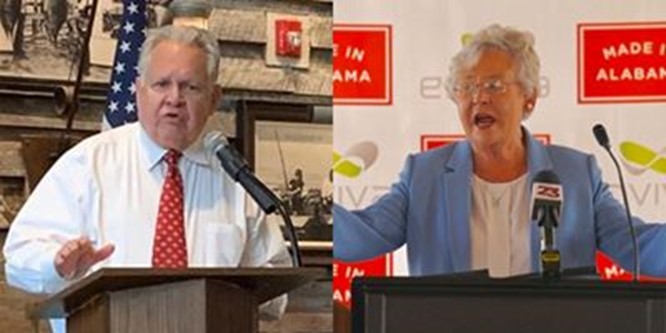
The deadline for investors to come aboard Gov. Kay Ivey’s prison lease plan passed June 1 with no takers. State Auditor Jim Zeigler, an opponent of the Ivey plan, says “the prison lease plan is dead, as it should be.” Zeigler spoke Tuesday night in Northport, Alabama, and announced his own “commonsense” plan. His “Operation Fresh Start” will be less than 1/3 the cost of the Ivey plan and will require approval of the Alabama legislature. He says he has sent the plan to the 140 legislators. Zeigler made this statement: “I believe that investors saw the fatal flaws in the Ivey plan and would not touch it with a 10-foot pole. The three underwriters for the plan withdrew — Barclays, KeyBank, and Stifel. Now, the contractual deadline for investors has passed. The Ivey plan is dead – as it should be. “The Ivey plan would have contracted with three consortiums of private businesses, two led by CoreCivic of Nashville. The contractors would have paid to build three super-prisons in Bibb, Elmore, and Escambia Counties of Alabama. Two of the contracts were signed by Ivey on Feb. 1 with the one in Bibb County pending. “The Ivey plan would have forced Alabama taxpayers to pay rents starting about $94 million a year and going up to about $106 million. At the end of 30 years, the state would own equity in the prisons of zero. No equity. That was a bad business plan. The Ivey plan did not address the problems in the prison system – the safety of staff and other inmates, overcrowding, mental health, suicide, recidivism, and inadequate job training. The plan merely threw $3.6 billion of taxpayer money into rented buildings,” Zeigler said. In Zeigler’s 10 point plan, the state would build only one new prison at this time using a legislatively-approved bond issue. He says bond costs are near record lows. “There is not a giant one-step cure-all for the prison problems. It will take a series of smaller, commonsense steps. That is what my plan is,” Zeigler said.
Jim Zeigler to announce ‘discount’ prison plan without leases
The deadline for investors to come aboard Gov. Kay Ivey’s prison lease plan is this Tuesday, June 1. State Auditor Jim Zeigler, an opponent of the plan, says “it appears investors will not sign on, and the plan will die a natural death Tuesday.” Zeigler will speak Tuesday night in Northport, Alabama and will announce his own “discount” plan. His “Operation Fresh Start” will be about 1/3 the cost of the Ivey plan and require approval of the Alabama legislature. Zeigler’s prison speech to the Alabama Republican Assembly is at 6 p.m. Tuesday at Front Porch Restaurant. 4421 Highway 43 N. Northport, Al. The public and media are invited. No ticket or RSVP is needed. He will release copies of his plan. The Alabama Republican Assembly calls itself “the Republican wing of the Republican party.” It will endorse candidates prior to the May 2022 Republican primary. The Republican party itself does not endorse candidates until after nominees are chosen by voters in the primary. Zeigler made this statement: “We believe that investors see the fatal flaws in this plan and will not touch it with a 10-foot pole. The three underwriters for the plan have withdrawn — Barclays, KeyBank and Stifel. The Ivey plan would contract with three consortiums of private businesses, two led by CoreCivic of Nashville. The contractors would pay to build three super-prisons in Bibb, Elmore and Escambia Counties of Alabama. Two of the contracts were signed Feb. 1 with the one in Bibb County pending. “The Ivey plan would force Alabama taxpayers to pay rents starting at $94 million a year and going up to $106 million. At the end of 30 years, the state would own equity in the prisons of zero. No equity. This is a bad business plan.” “The Ivey plan does not address the problems in the prison system – safety of staff and other inmates; overcrowding; mental health; suicide; recidivism; and inadequate job training. The plan merely throws over $3.6 billion of taxpayer money into rented buildings,” Zeigler concluded.
Underwriter withdraws from Alabama prison lease project
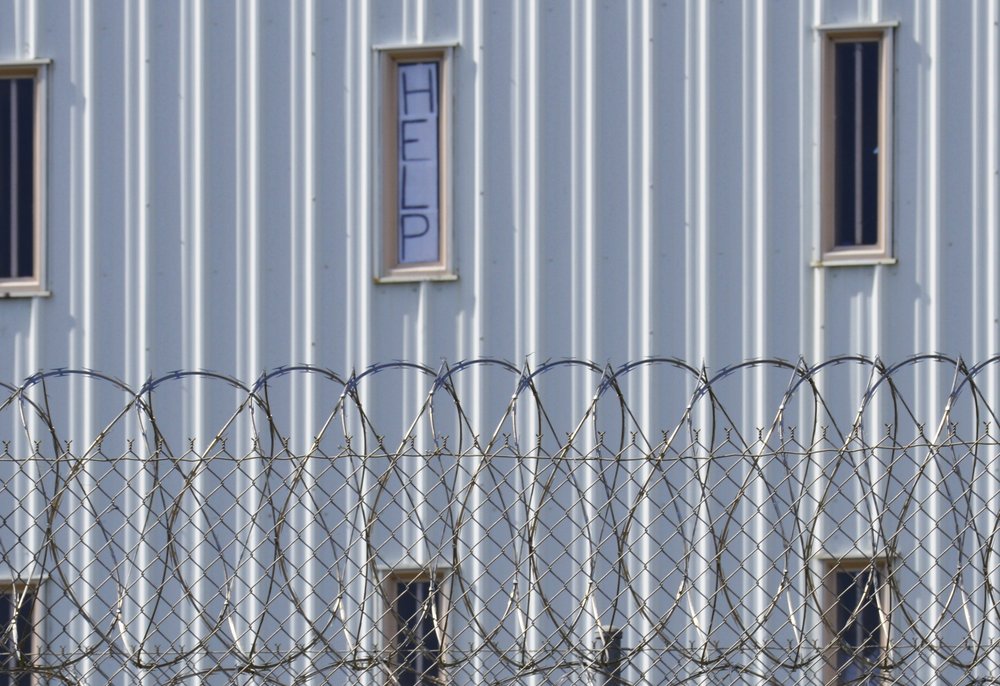
The underwriter for a project to build two prisons in Alabama announced that it is pulling out following criticism that it was breaking a promise not to get involved in for-profit prisons. Barclays confirmed that it would no longer be involved with CoreCivic’s construction of two prisons in Alabama that would be owned by the company but rented and operated by the Alabama Department of Corrections. The decision dealt a blow to the plan to lease the behemoth prisons, housing about 3,500 inmates each, though Alabama Gov. Kay Ivey’s office said the state is “moving forward” with the project. “We have advised our client that we are no longer participating in the transaction intended to provide financing for correctional facilities in the State of Alabama,” Barclays wrote in a statement to The Associated Press. “While our objective was to enable the State to improve its facilities, we recognize that this is a complex and important issue. In light of the feedback that we have heard, we will continue to review our policies.” Ivey agreed in February to lease two mammoth prisons as a partial solution to the state’s troubled correction system. The decision came over the objections of some legislators and advocates who warn that her $3 billion plan won’t resolve chronic violence and severe understaffing woes. The two 30-year lease agreements are with separate entities of CoreCivic, one of the nation’s largest private prison companies. The prisons are to be built in Tallassee and near Atmore. The governor’s office is negotiating with another company to build a prison in Bibb County. The governor said Monday that she is disappointed that Barclays Plc is no longer participating but said the state will continue to press forward. “The state is fully committed to this project and has put in place new options to advance this vital transaction in a timely and efficient manner,” Ivey said. Her office did not immediately elaborate on what those options are. Ivey has said new prisons are the cornerstone to improving the state’s troubled corrections system. “These new, state-of-the-art facilities will provide safer, more secure correctional environments that better accommodate inmate rehabilitation, enhance medical and mental health services, and improve the quality of life for all those who live and work in them,” Ivey said. The U.S. Department of Justice sued Alabama in December over prison conditions, saying the state is failing to protect male prisoners from inmate-on-inmate violence and excessive force at the hands of prison staff. A Justice Department’s 2019 report, which preceded the lawsuit, described a culture of violence across the state prisons for men with frequent rapes, beatings, and fatal stabbings at the hands of fellow prisoners and a management system that undercounts homicides and fails to protect prisoners even when warned. A federal judge has also ordered the state to overhaul prison mental health care and staffing after ruling the mental health system in state prisons to be “horrendously inadequate.” A group of advocacy organizations said paying such huge sums to CoreCivic won’t solve underlying problems of understaffing, violence, mismanagement, and overcrowding. They’re calling instead for solutions such as sentencing reform to ease crowding behind bars. Some lawmakers also have raised concerns about the cost of the project. “At this point, it should be obvious that @ALCorrections doesn’t have a clue how much this plan is going to cost. 3 billion was already too much. Now that financing is an issue, the price will only continue to increase. It’s time to get out of this deal,” state Rep. Chris England, D-Tuscaloosa, tweeted. CoreCivic in a statement criticized the people and groups who pushed Barclays to withdraw. “The reckless and irresponsible activists who claim to represent the interests of incarcerated people are in effect advocating for outdated facilities, less rehabilitation space, and potentially dangerous conditions for correctional staff and inmates alike,” the statement from CoreCivic read. Republished with the permission of the Associated Press.
Tennessee contractor forced to go outside U.S. to finance Kay Ivey’s prison lease contracts
British bank Barclay’s LPC will finance two prison lease contracts signed by Gov. Kay Ivey, according to Alabama State Auditor Jim Zeigler. Zeigler says Barclays agreed to raise $634 million toward the private construction of two prisons, one in Elmore County and one in Escambia County, Alabama. Ivey signed contracts Feb. 1 to lease the two prisons for 30 years and is expected to sign a third contract with a different firm for a prison in Brierfield, Alabama, in Bibb County. Zeigler, who is a vocal opponent of the prison lease plan, says promoters of the plan “were forced to go outside the United States because U.S. banks that do this type lending decided they would no longer finance the private prison business.” Two years ago, banking giants Bank of America, JPChase, and Wells Fargo announced they would no longer finance private prisons because of problems in the private prison business. Zeigler says the Ivey prison lease plan is “fatally flawed and is a 30-year mistake.” “State law limits this type of contract to one year. That means the state will have to renegotiate the one-year contract 29 times. That is a risky way to do business,” Zeigler said. “State taxpayers will be on the hook for rent payments starting at $94 million a year and going up to $106 million a year. The total rents paid over 30 years will be about $3.6 billion. At the end of that time, the state will own equity in the prisons of exactly zero. No equity will be built at all. The state would then have to start over with a new plan to pay for those then 30-year-old prisons. This is a 30-year mistake,” Zeigler said. Zeigler says the debt would be to a shell corporation totally owned by Tennessee private prison operator CoreCivic — Government Real Estate Solutions of Alabama Holdings LLC. The prisons would be built and maintained by CoreCivic, but the state of Alabama would pay the 30 years of rent plus all other expenses – staffing, food, medical, utilities, and all other expenses. Zeigler says the Alabama Department of Corrections has “overstepped its authority by agreeing to something that can be done only by the state legislature.” “The Department of Corrections has agreed to prioritize the prison lease payments above all other obligations. Only the state legislature can legally do that.” Zeigler says he has attorneys looking at the prison lease contracts and is considering challenging them in court. “The Ivey administration is moving forward daily with this flawed, costly plan. A court challenge appears to be the only way to block it,” Zeigler said.
Alabama governor leases CoreCivic prisons in $3 billion plan
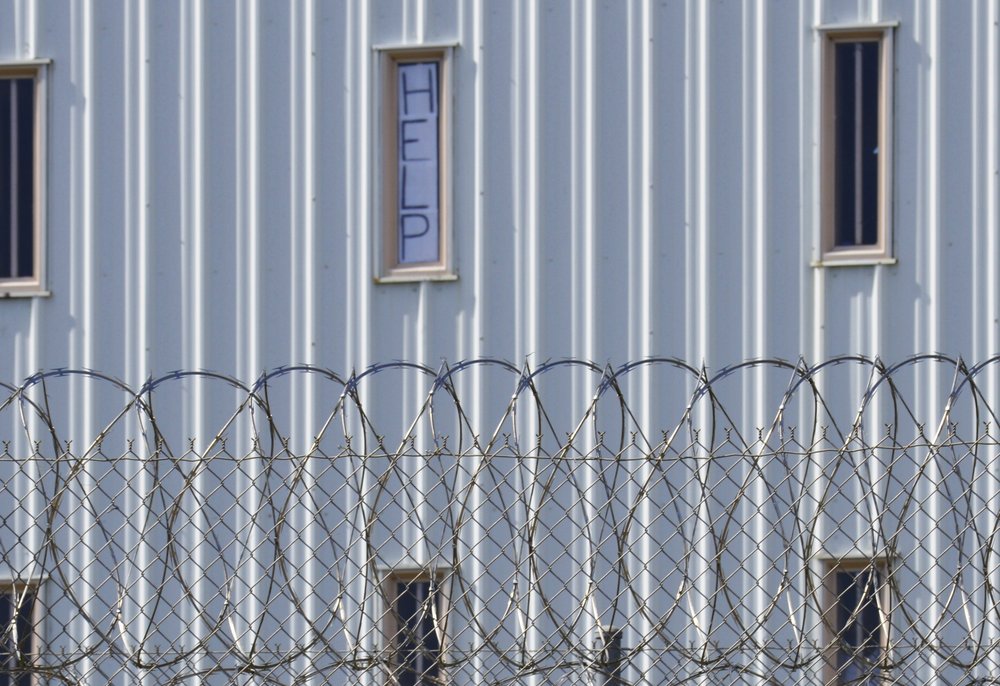
Gov. Kay Ivey agreed on Monday to lease two mammoth prisons as a partial solution to the state’s troubled correction system, over the objections of some legislators and advocates who warn that her $3 billion plan won’t resolve chronic violence and severe understaffing woes. The governor signed two 30-year lease agreements with separate entities of CoreCivic, one of the nation’s largest private prison companies. The prisons will be built in Tallassee and near Atmore. The governor’s office is negotiating with another company to build a prison in Bibb County. While President Joe Biden has ordered the federal system to eliminate the use of private prisons, these facilities will only be built and owned by private companies. They’ll be operated by the state Department of Corrections and staffed by state workers. Together, the two prisons being built by CoreCivic will house 7,000 inmates. Ivey called the new prisons “the cornerstone” of improving the state’s troubled system, replacing aging prisons that are costly to maintain. Once all three prisons are built, they could properly house about half of Alabama’s current prison population. “Leasing and operating new, modern correctional facilities without raising taxes or incurring debt is without question the most fiscally responsible decision for our state, and the driving force behind our Alabama solution to an Alabama problem,” her statement said. “We are improving public safety, providing better living and working conditions, and accommodating inmate rehabilitation all while protecting the immediate and long-term interests of the taxpayers.” Some legislators and advocacy groups disagree, complaining about her plan’s cost and lack of transparency, and warning that new buildings alone won’t fix the problems. “Alabama is about to spend 3 billion dollars over 30 years on building new prisons that won’t fix the problems within our prison system,” tweeted Rep. Chris England, a Democrat from Tuscaloosa. “Also, as a reminder, after paying the money, at the end of 30 years, we won’t own either the buildings or the land they sit on.” The U.S. Department of Justice sued Alabama in December over prison conditions, saying the state is failing to protect male prisoners from inmate-on-inmate violence and excessive force at the hands of prison staff. Rep. Steve Clouse, who chairs the House budget committee, said he’s disappointed. Clouse said lawmakers expected the leases to cost about $88 million per year but information from Ivey’s office indicated the annual cost would rise from $94 million to $108 million, and total about $3 billion over 30 years. The governor’s office did not release financial details and said the total cost will become available “once financial close is achieved with CoreCivic.” Clouse said he had urged the governor to issue a bond so that Alabama could build and own the prisons. Previous legislation had failed amid political disagreements over closing existing prisons and the local jobs they provide. A group of advocacy organizations said paying such huge sums to CoreCivic won’t solve underlying problems of understaffing, violence, mismanagement, and overcrowding. They’re calling instead for solutions such as sentencing reform to ease crowding behind bars. “It is astounding that Governor Ivey is prioritizing fiscally irresponsible and devastating contracts for prisons that do not address our most urgent needs as Alabamians,” the American Civil Liberties Union of Alabama, Alabama Students Against Prisons, the Ordinary Peoples Society, and others wrote in a letter to lawmakers. Republished with the permission of the Associated Press.
Alabama’s prison construction plan inches forward
Alabama’s governor will ask four companies to submit bids for building three new state prisons, her office announced Tuesday, as the massive construction project inches forward Gov. Kay Ivey announced that four developer teams have qualified for the next stage of the bid process. Ivey’s press office said the firms are The GEO Group, Corvias, CoreCivic and Alabama Prison Transformation Partners. The firms were selected after submitting their qualifications for the project. Ivey announced a plan in February to build the new large regional prisons to replace most state prisons. The prisons would house about 3,000 inmates each and would extend over 700,000 square feet (65,000 square meters), according to earlier state bid documents. “The revitalization of prisons in Alabama is crucial, and this plan to improve the state’s infrastructure is a major step towards reduced recidivism and improved public safety,” Ivey said a statement Tuesday, expressing her commitment to moving ahead with the plan. GEO and CoreCivic are two large private prison companies. Alabama Prison Transportation Partners is a project of multiple entities, including Birmingham-based construction company BL Harbert International, according to Ivey’s office. Ivey’s office said the request for proposals will go out to the companies next month. The proposals are expected to be received in the spring of 2020. The process has at times faced criticism that it is too secretive. Lawmakers previously rejected former Gov. Robert Bentley’s proposal to build regional prisons and close existing facilities. Ivey’s administration is exploring the possibility of leasing the prisons. Ivey said earlier this year that state officials will first gather proposals from companies and then decide how to proceed. Republished with the Permission of the Associated Press.
5 companies compete to build new Alabama prisons
Five companies have expressed interest in building new prisons for the state of Alabama, the governor’s office announced Monday, as a prison construction plan inches forward. Gov. Kay Ivey’s office said five firms responded to a “request for qualifications” to build the three proposed prisons that would house 3,000 or more inmates each. Ivey’s press office said the firms are The GEO Group, Corvias, Corrections Consultants, CoreCivic and Alabama Prison Transformation Partners. GEO and CoreCivic are the nation’s two largest private prison companies. Although some of the companies are well-known names in corrections, little is known about one of the firms. The Alabama secretary of state’s website did not have records for a company called Alabama Prison Transformation Partners. In February, Ivey announced a plan to build three new large prisons to replace most state prisons. She has said state officials will first gather proposals and then decide how to proceed. The administration says the state could lease the prisons. Department of Corrections spokesman Bob Horton wrote in an email that the prison system will evaluate the companies’ qualifications. The prison system will ask the companies for proposals in the fall with intention of receiving proposals in the first part of 2020, he wrote. Republished with the permission of the Associated Press.
