
Dan Sutter: Discovery, COVID, and Policy

In early April, the Centers for Disease Control (CDC) changed its guidance on surface transmission of the SARS-CoV-2 virus. After more than a year of cleaning and disinfecting, the CDC now believes surface transmission is relatively infrequent. This case illustrates the role of discovery in public policy. The CDC says, “surface transmission is not the main route by which SARS-CoV-2 spreads, and the risk is considered low.” Most transmission occurs through respiratory droplets in poorly ventilated indoor spaces. (Outdoor transmission is also rare.) Contact with a surface contaminated with the virus has “less than a 1 in 10,000 chance of causing an infection.” We normally think of discovery as something which occurs in science, but all human knowledge must be discovered. The emergence of SARS-CoV-2 highlights the role of discovery in public policy. As a new virus, experts initially knew nothing about it with certainty. Such a position of complete ignorance is rare but illustrating. The fields of virology and epidemiology provided most discoveries about SARS-CoV-2. But economic knowledge must also be discovered and is more problematic than scientific knowledge. Economic knowledge generally depends on consumer preferences. The best car or computer can only be judged by users. Economists refer to this type of knowledge as subjective. Economic knowledge also depends on time and place, as economist Friedrich Hayek noted. The best, meaning here most profitable, way to produce things varies over time and at different places today. Auto factories used to employ thousands on assembly lines. Now robots do most of the work. Grocery stores pay workers to bag customers’ groceries where wages are low but use only self-checkout lanes in high-wage cities. Any society hoping to progress must discover new knowledge. Yet discovery provides a special challenge for a system where government experts’ recommendations get codified into binding rules. The argument for such paternalism is that the experts’ rules will lead us to make better decisions than we would ourselves. Government paternalism is controversial but ultimately only justified if it makes us, the citizens, better off. Let’s now consider the details of COVID-19 and surface transmission. SARS-CoV-2 was novel, but virologists began with knowledge acquired from studying other viruses, including coronaviruses. Viruses and bacteria can survive on surfaces, and “fomite” transmission does occur. Scientists discovered that SARS-CoV-2 does not persist on surfaces as well as other viruses. Discovery did occur. Yet, the rarity of surface transmission was discovered well before April; the new guidance cites research published in 2020. The CDC took months to change its message. Businesses have spent billions of dollars on cleaning supplies, employees’ time spent cleaning and disinfecting, and reduced hours of operation to allow cleaning. Paternalistic guidance needs to change as we learn, but government is frequently slow to change its rules. Discovery undermines the rationale for a system of paternalistic experts. Depending on the volume and frequency of discovery, the experts may not know much more than the rest of us. Of course, experts naturally downplay this and contend that they know enough to tell us what we should do. Trial-and-error is our most effective means of learning. Yet experiments generally require freedom, specifically permissionless and decentralized decision-making. Because countries like Sweden never closed their elementary and middle schools and states like Alabama reopened schools last fall, we learned that schools could reopen safely. We would not have learned if all schools stayed closed. In principle, paternalistic government expert systems can experiment, but in practice, little experimentation occurs. In part, this is due to experts’ overestimating how much they know. And many successful experiments in science and business were dismissed as hopeless. Nobody gives permission to conduct crazy experiments. We have repeatedly heard the refrain, “Follow the science!” Good scientists know that the discovery of new knowledge is imperative. And science requires freedom to experiment and question everything we think we know. Daniel Sutter is the Charles G. Koch Professor of Economics with the Manuel H. Johnson Center for Political Economy at Troy University and host of Econversations on TrojanVision. The opinions expressed in this column are the author’s and do not necessarily reflect the views of Troy University.
Kay Ivey announces vaccine eligibility expanded to individuals ages 12 and older, effective immediately
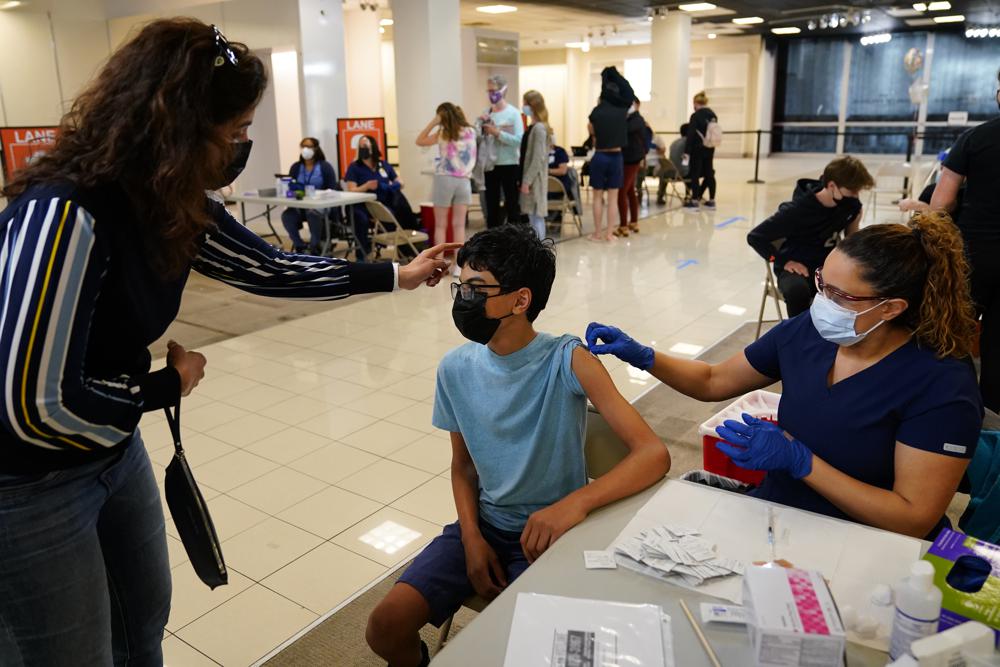
On Thursday, Governor Kay Ivey announced Alabama is expanding COVID-19 vaccination eligibility to include individuals age 12 and older, effective immediately. The U.S. Food and Drug Administration (FDA) authorized the Pfizer-BioNTech COVID-19 vaccine for emergency use in adolescents on Monday. The Center for Disease Control Director Rochelle Walensky stated, “The CDC now recommends the vaccine be used among this population, and providers may begin vaccinating them right away.” Ivey commented, “This is great and welcome news that the Pfizer-BioNTech vaccine will now be available for Alabamians 12 and up, offering another option for families in our state as we get back into full gear. We have seen good success so far with these safe and effective vaccines, and I encourage parents and children to consult with your pediatrician if you have any questions. The vaccine is our ticket back to normal, and I continue to feel optimistic and hopeful in the positive direction we are moving in as a state.” The Pfizer vaccine is available to individuals age 12 and up. The Moderna and Johnson & Johnson vaccines are available to individuals 18 years of age and older. On Twitter, Ivey stated, “Alabama is expanding #COVID19 vaccination eligibility to include individuals age 12 & older, effective immediately. This is great news! Folks, the vaccine is our ticket back to normal.” Alabama is expanding #COVID19 vaccination eligibility to include individuals age 12 & older, effective immediately. This is great news! Folks, the vaccine is our ticket back to normal. #alpolitics @ALPublicHealth https://t.co/tJenuuoqGn — Governor Kay Ivey (@GovernorKayIvey) May 13, 2021 “We encourage the vaccination of adolescents ages 12 and older to get the protection offered by the Pfizer COVID-19 vaccine,” State Health Officer Dr. Scott Harris stated. “This vaccine will be available at private providers and other sites which have Pfizer COVID-19 vaccine available.” As of May 12, 2,722,909 doses of COVID-19 vaccines have been administered.
Alabama NAACP offering chance to win $1,000 with vaccination

The Alabama NAACP is trying to boost COVID-19 vaccinations among younger people in the state by offering a chance to win $1,000 for getting a shot, a leader said Thursday. With health officials worried that too few young people are getting immunizations, the civil rights organization this week began promoting a program to offer anyone between the ages of 18 and 40 a chance to receive $1,000 for completing the vaccination process between May 1 and June 21. That means getting two shots of the Pfizer or Moderna vaccine or one shot of the Johnson & Johnson dose. “We just keep hearing that the Millennials and the Gen Zers don’t want to get the vaccine, so we’re doing what we can to encourage them to go ahead and get it,” said Bernard Simelton, state president of the NAACP. Entrants have to send a selfie of themselves and their vaccination cards to the organization, and organizers hope they’ll also share the images on social media. “We want them to encourage other young people to get vaccinated,” he said. While 1.1 million people are fully vaccinated in Alabama, that represents only about 20% of the state’s population. After briefly surpassing Mississippi in the rate of vaccination, statistics from the Centers for Disease Control show Alabama is again last in the nation. Health officials initially were worried that Black people distrustful of government health care initiatives wouldn’t get shots, but many did. The counties with the lowest rates of fully vaccinated residents now are primarily white and rural, statistics show. With federal officials considering the possibility of reallocating vaccine doses from states where demand is declining, Gov. Kay Ivey warned this week that Alabama could lose part of its vaccine supply if more people don’t get shots. “Y’all, we want shots in the arms and off the shelf,” she said in a statement. “If you have not made it a priority to schedule a vaccine, I encourage you to go get the shot as soon as you are able.” Republished with the permission of the Associated Press.
Kay Ivey awards COVID-19 recovery grants to four Alabama cities
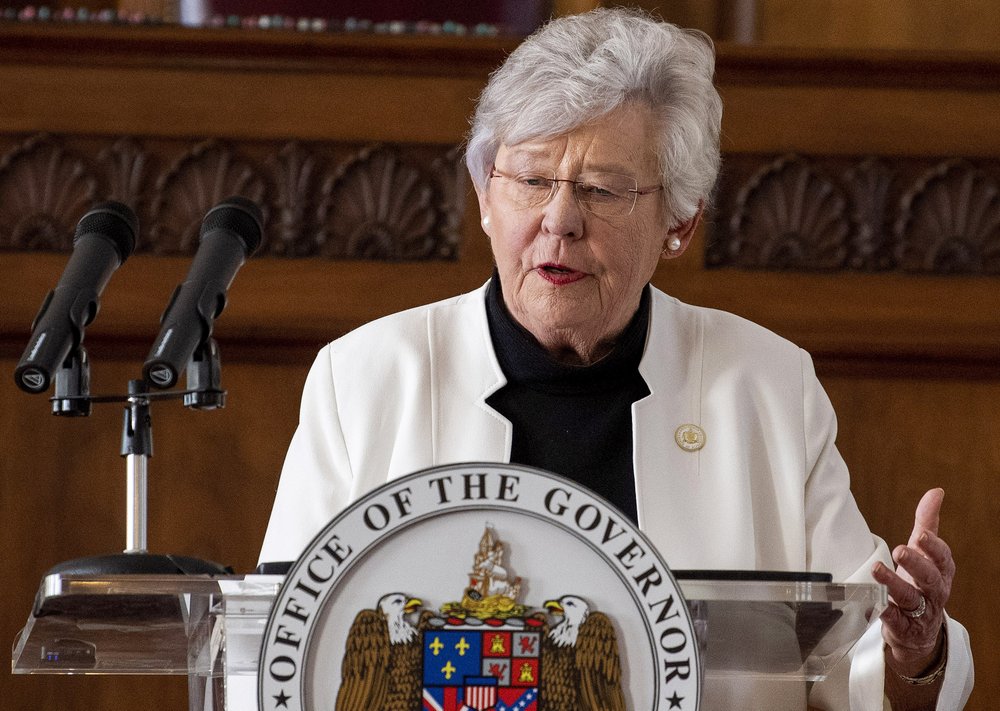
Governor Kay Ivey today awarded a total of $4.5 million to help four of Alabama’s most populous cities recover from the COVID-19 pandemic. $1.5 million each will go to the cities of Birmingham and Mobile and $750,000 each to the cities of Tuscaloosa and Decatur. On Twitter, Ivey commented, “I’m pleased to award $4.5 million to help four of Alabama’s most populous cities – Birmingham, Mobile, Tuscaloosa & Decatur – recover from the #COVID19 pandemic.” I’m pleased to award $4.5 million to help four of Alabama’s most populous cities – Birmingham, Mobile, Tuscaloosa & Decatur – recover from the #COVID19 pandemic. #alpolitics @ADECA https://t.co/KyJpI6OtiR — Governor Kay Ivey (@GovernorKayIvey) May 4, 2021 The money is from $40 million given to Alabama under the Coronavirus Aid, Relief and Economic Security (CARES) Act and was made available to the state by the U.S. Department of Housing and Urban Development. The funds can be used to support COVID-19 related issues like testing and vaccinations, rental, mortgage, and utility assistance, or assistance to food banks and pantries. The funding can also help with job creation, business assistance, and related projects to provide pandemic relief. “As Alabama continues to make progress to end this pandemic, these funds will help people in some of Alabama’s largest cities to rebound from COVID-19,” Governor Ivey stated in a press release. “I am pleased to award these funds and hope they will help these cities as they continue their recoveries.” Birmingham will use funds to supply food and health services to residents, aid the homeless, and improve virtual schooling for students. Mobile plans to use the funds to fortify food banks to help meet local needs, upgrade emergency equipment, improve health services for senior citizens, and provide legal services to residents to address fair-housing needs. The city of Tuscaloosa will rehabilitate an underutilized elementary school building and convert it into a community resource center. The city of Decatur will provide rental and utility assistance, assist small businesses with loans and improve fire and rescue equipment. Alabama Department of Economic and Community Affairs (ADECA) Director Kenneth Boswell commented, “These Alabama cities qualifying for this special CDBG Covid-19 relief assistance know their needs and have presented their plans for helping them get past this pandemic and to prepare for any major disruptions in the future. ADECA joins Governor Ivey in looking forward to working with these partnerships.”
CDC says many Americans can now go outside without a mask
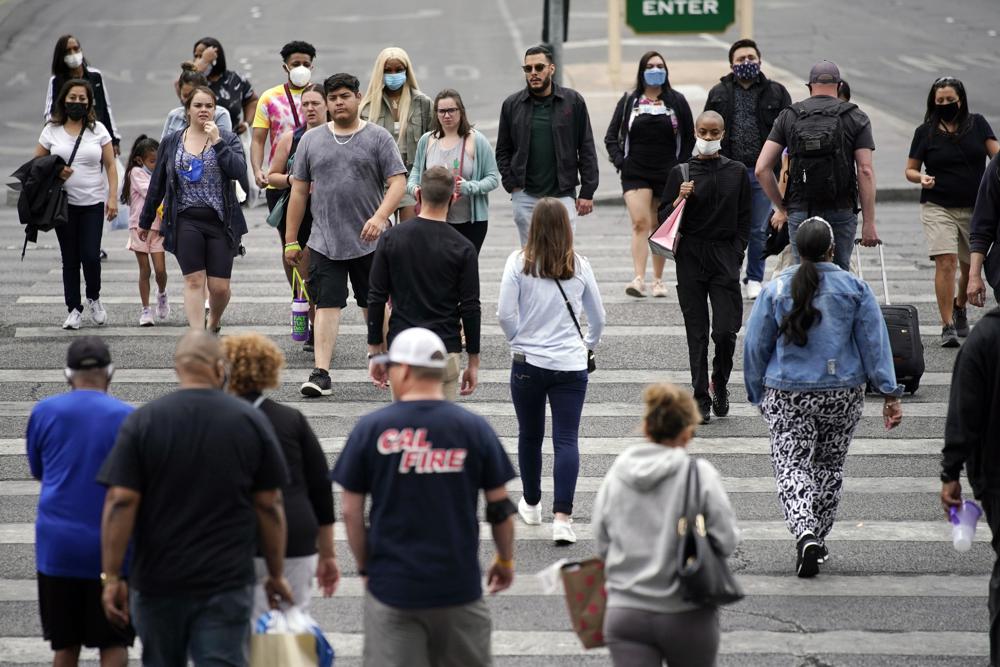
The Centers for Disease Control and Prevention eased its guidelines Tuesday on the wearing of masks outdoors, saying fully vaccinated Americans don’t need to cover their faces anymore unless they are in a big crowd of strangers. And those who are unvaccinated can go outside without masks in some situations, too. The new guidance represents another carefully calibrated step on the road back to normal from the coronavirus outbreak that has killed over 570,000 people in the U.S. For most of the past year, the CDC had been advising Americans to wear masks outdoors if they are within 6 feet of one another. “Today, I hope, is a day when we can take another step back to the normalcy of before,” CDC Director Dr. Rochelle Walensky said. “Over the past year, we have spent a lot of time telling Americans what you can’t do. Today, I am going to tell you some of the things you can do if you are fully vaccinated.” The change comes as more than half of U.S. adults — or about 140 million people — have received at least one dose of vaccine, and more than a third have been fully vaccinated. Walensky said the decision was driven by rising vaccination numbers, declines in COVID-19 cases, hospitalizations, and deaths, and research showing that less than 10% of documented instances of transmission of the virus happened outdoors. Dr. Mike Saag, an infectious disease expert at the University of Alabama at Birmingham, welcomed the change. “It’s the return of freedom,” Saag said. “It’s the return of us being able to do normal activities again. We’re not there yet, but we’re on the exit ramp. And that’s a beautiful thing.” Some experts portrayed the relaxed guidance as a reward and a motivator for more people to get vaccinated — a message President Joe Biden sounded, too. “The bottom line is clear: If you’re vaccinated, you can do more things, more safely, both outdoors as well as indoors,” Biden said. “So for those who haven’t gotten their vaccinations yet, especially if you’re younger or thinking you don’t need it, this is another great reason to go get vaccinated now.” The CDC, which has been cautious in its guidance during the crisis, essentially endorsed what many Americans have already been doing over the past several weeks. The CDC says that whether they are fully vaccinated or not, people do not have to wear masks outdoors when they walk, bike, or run alone or with members of their household. They can also go maskless in small outdoor gatherings with fully vaccinated people. But unvaccinated people — defined as those who have yet to receive both doses of the Pfizer or Moderna vaccine or the one-shot Johnson & Johnson formula — should wear masks at small outdoor gatherings that include other unvaccinated people, the CDC says. They also should keep their faces covered when dining at outdoor restaurants with friends from multiple households. And everyone, fully vaccinated or not, should keep wearing masks at crowded outdoor events such as concerts or sporting events, the CDC says. The agency continues to recommend masks at indoor public places, such as hair salons, restaurants, shopping centers, gyms, museums, and movie theaters, saying that is still the safer course even for vaccinated people. “Right now, it’s very hard to tease apart who is vaccinated,” Walensky explained. She said the CDC guidance should be a model for states in setting their mask-wearing requirements. The advice to the unvaccinated applies to adults and children alike, according to the CDC. None of the COVID-19 vaccines in use in the U.S. is authorized for children under 16. “The biggest thing that it helps us is our mental health,” said Tim Stephens, a 52-year-old software salesman in Birmingham, Alabama, who suffered a bout of COVID-19 and has since gotten vaccinated. “To be able to feel like we’re turning the corner and can confidently go out and experience life and do a lot of the things that we did before COVID became an acronym in our world. It’s one more step in the process of moving beyond this.” In Oxford, Nebraska, population 800, hardly anyone wears a mask, and the school district dropped its mask mandate last month. Superintendent Bryce Jorgensen said maybe 10 of the 370 students are still covering their faces. “What goes on in other states is what goes on in other states,” Jorgensen said. “You just can’t compare Chicago to Oxford, Nebraska. Things are just different.” Dr. Babak Javid, a physician-scientist at the University of California, San Francisco, said the new CDC guidance is sensible. “In the vast majority of outdoor scenarios, transmission risk is low,” Javid said. Javid has favored outdoor mask-wearing requirements because he believes they increase indoor mask-wearing, but he said Americans can understand the relative risks and make good decisions. He added: “I’m looking forward to mask-free existence.” “The timing is right because we now have a fair amount of data about the scenarios where transmission occurs,” said Mercedes Carnethon, a professor and vice-chair of preventive medicine at Northwestern University’s Feinberg School of Medicine in Chicago. What’s more, she said, “the additional freedoms may serve as a motivator” for people to get vaccinated. Republished with the permission of the Associated Press.
White House offers new tax credit to help spur vaccinations
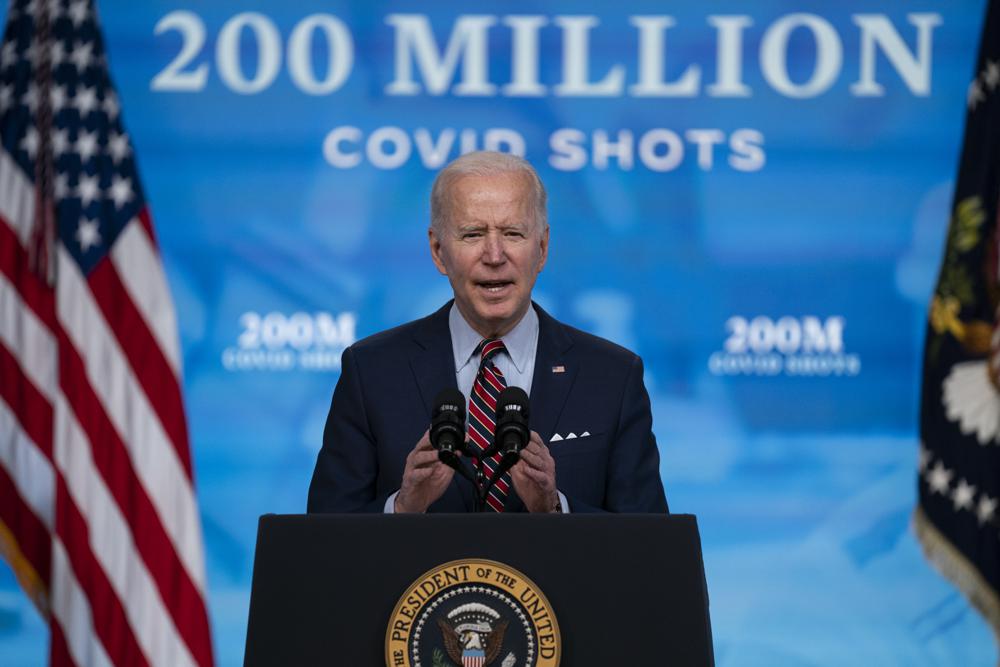
President Joe Biden on Wednesday announced new employer tax credits and other steps to encourage people reluctant to be inoculated to get the COVID-19 vaccine as his administration tries to overcome diminishing demand for the shots. The moves came as Biden celebrated reaching his latest goal of administering 200 million coronavirus doses in his first 100 days in office. With more than 50% of adults at least partially vaccinated and roughly 28 million vaccine doses being delivered each week, demand has eclipsed supply as the constraining factor to vaccinations in much of the country. In a White House speech on Wednesday, Biden acknowledged entering a “new phase” in the federal vaccination effort that relies on increased outreach to Americans to get their shots, both to protect them and their communities. “Vaccines can save your own life, but they can also save your grandmother’s life, your co-worker’s life, the grocery store clerk, or the delivery person helping you and your neighbors get through the crisis,” Biden said. “That’s why you should get vaccinated.” Over the past week, the pace of inoculation in the U.S. has slowed slightly. That is partly a reflection of disruptions from the “pause” in the administration of the Johnson & Johnson shot for a safety review, but also of softening interest for vaccines in many places even as eligibility has been opened to all those older than 16. As the vaccination program progresses, the administration believes it will only get more difficult to sustain the current pace of about 3 million shots per day. Roughly 130 million Americans have yet to receive one dose. Surveys have shown that vaccine hesitancy has declined since the rollout of the shots, but administration officials believe they have to make getting vaccinated easier and more appealing, particularly for younger Americans who are less at risk from the virus and do not feel the same urgency to get a shot. That means providing incentives and encouragement to get vaccinated, as well as reducing the friction surrounding the vaccination process. Biden announced a tax credit for small businesses to provide paid leave for those getting vaccinated or potentially needing to take time off to recover from side effects. Paid for through the $1.9 trillion virus relief package passed last month, the tax change would provide a credit of up to $511 per day per employee for businesses with fewer than 500 workers to ensure that those workers or businesses don’t suffer a penalty by getting vaccinated. The White House is urging larger employers, which have more resources, to provide the same benefits to their workers, and educate them about the shots and encourage them to get vaccinated. “We’re calling on every employer, large and small, in every state, give employees the time off they need with pay to get vaccinated,” Biden said. According to the White House, just 43% of working adults have received at least one shot. As Biden celebrated the vaccine milestone, there is a different reality in the states. In Iowa, nearly half of the counties are not accepting new doses of the COVID-19 vaccine from the state’s allotment because demand has fallen off. In Florida, Palm Beach County plans to close mass vaccination clinics at the end of May with thousands of available vaccine slots unclaimed. In rural West Virginia, a vaccine clinic at a casino/race track parking garage is opening shots to out-of-state residents to address lagging demand. The hope is that people from Washington, D.C., make the hour’s drive to get vaccinated. In Arizona, a plan collapsed that would have opened a federally run vaccine site in Tucson; demand is slipping, and county officials preferred more targeted, mobile locations. Asked about the dip in vaccinations, Health and Human Services Secretary Xavier Becerra said “fluctuation is not uncommon” and that “what we want to do is continue to encourage Americans to continue to get vaccinated.” “The pace of vaccination isn’t linear,” Becerra said, adding that “we are on a pretty good pace.” Through its partnership with more than 40,000 retail pharmacies, the White House says more than 90% of Americans now live within 5 miles of a vaccination site. The administration is encouraging state and local efforts to bring vaccines directly to people, whether through initiatives reaching the homebound or clinics at large employment sites. Many states have also begun to open up vaccination sites to walk-in appointments, reducing reliance on often-cumbersome reservation systems. Maximizing the number of Americans vaccinated in the coming months is critical for the White House, which is aiming to restore a semblance of normalcy around the July Fourth holiday and even more so by the beginning of the next school year. Administration officials have been careful to avoid predicting when the country will have vaccinated enough people to reach herd immunity — when enough people become immune to a disease to make its spread unlikely. The U.S. is on track to have enough vaccine supply for every adult by the end of May and for every American by July, but administering the shots will be another matter. With its stockpile secure and demand dropping at home, the president spoke again of sharing excess doses with allies. Biden said he talked with Canadian Prime Minister Justin Trudeau for about 30 minutes on Wednesday. “We helped a little bit there, we’re going to try to help some more,” Biden said, referring to his decision last month to share about 1.5 million doses of the AstraZeneca vaccine with Canada. “But there’s other countries as well that I’m confident we can help, including in Central America. But it’s in process.” He added. “We don’t have enough to be confident to send it abroad now. But I expect we’re going to be able to do that.” Biden set his goal of 200 million shots last month after meeting his 100 million-in-100 days goal just over a month ago. That original benchmark was announced Dec. 8, days before the U.S. had even one authorized vaccine, let alone the three that
Masks no longer required for students, staff in Lee County schools

A large school system in eastern Alabama will no longer require masks to be worn by students or employees. The rules were spelled out in a recent letter sent by Lee County Schools to staff and school stakeholders, The Opelika-Auburn News reported. Even though masks will not be required in school or at school events, the school system says it “strongly encourages” people to wear masks. The system includes 14 schools and nearly 10,000 students. Two nearby school districts — Auburn City Schools and Opelika City Schools — will end the school year with mask requirements, the newspaper reported. Republished with the permission of the Associated Press.
Virus recovery funds to promote tourism on Alabama coast

Beach season is heating up, and Alabama’s coast is getting federal money to help recover from tourism losses caused by the coronavirus pandemic. The Commerce Department’s Economic Development Administration said Thursday it will provide the Alabama Gulf Coast Convention and Visitors Bureau with $800,000 for a marketing program. The money will be combined with $200,000 in local funding. The agency is helping communities nationwide implement programs to counter economic hardships caused by the pandemic, Dennis Alvord, acting assistant secretary for economic development, said in a statement. “This investment will fund a strategic, multi-faceted marketing campaign designed to attract visitors to the Gulf Shores and Orange Beach area, resulting in continuous economic growth and job creation,” he said. Officials hope to boost business and reclaim tourists who couldn’t visit during the COVID-19 shutdown, which included the closure of the state’s beaches a year ago. Business owners have compared the loss to the fallout from the Gulf oil spill of 2010, and the problem was made all the worse by damage from Hurricane Sally in September. Stores and restaurants have been bustling this spring, and residents hope business will improve even more since the state lifted its mandatory face mask rule and other restrictions on Friday. At Crico’s Pizza in Gulf Shores, workers are giving customers the option of whether to cover their face. “If people feel more comfortable for us to have masks on when talking to them, we leave our masks on,” restaurant employee Jenifer Gouveia told WALA-TV. “If they’re OK with it not on, they don’t want to wear it, we’re no pressure on that.” More than 515,000 people have tested positive for COVID-19 in Alabama, according to the state health department, and more than 10,600 have died from the illness. While about 2 million vaccine doses have been administered in the state, Alabama ranks last nationally in the rate of vaccinations. Republished with the permission of the Associated Press.
NCAA fan’s death prompts contact tracing in Indiana
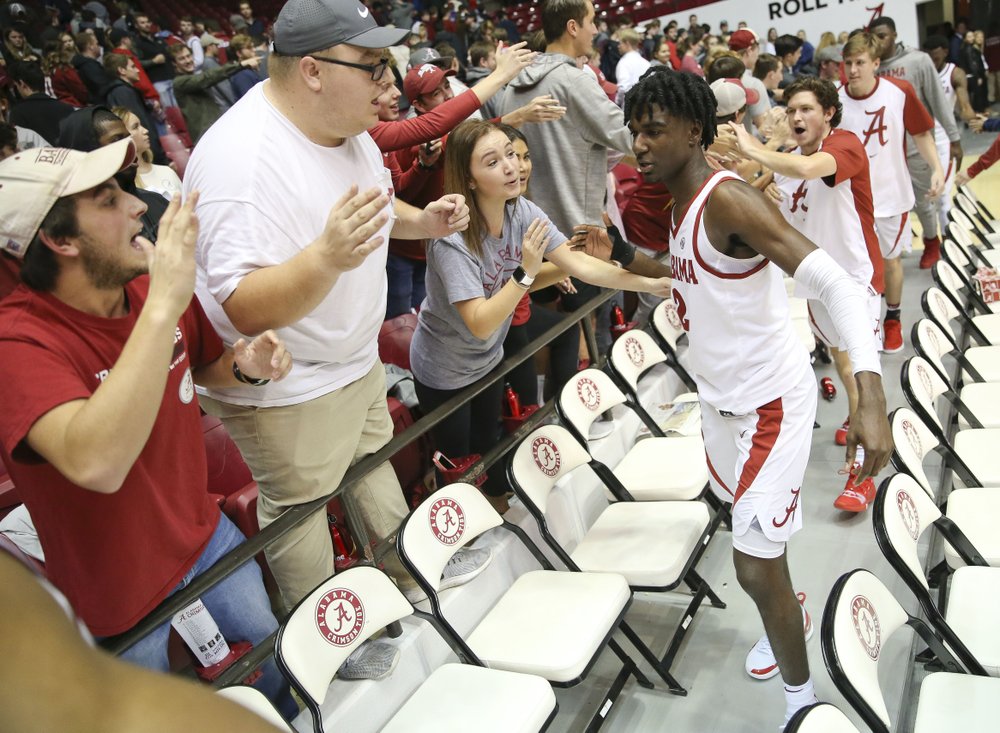
Health officials in Indiana said Saturday they are investigating whether anyone was exposed to COVID-19 by Alabama residents following Friday night’s death of a Crimson Tide fan who was in Indianapolis for the NCAA Tournament last weekend. Luke Ratliff, a 23-year-old Alabama student, died after a brief illness, his father, Bryan Ratliff, told The Tuscaloosa News. The newspaper, citing multiple sources it did not identify, reported Ratliff died of complications related to COVID-19. The elder Ratliff could not immediately be reached for comment Saturday by The Associated Press. “Based on a recent news story, the Marion County Public Health Department and the Indiana State Department of Health are contacting the Alabama Department of Public Health to determine if anyone in Indianapolis may have been exposed to COVID-19 by any Alabama resident who visited Indianapolis in recent days,” the county said in a statement provided by the NCAA. “We are conducting an investigation following the county and state’s standard contact tracing procedures.” The younger Ratliff was hospitalized shortly after returning to Tuscaloosa on March 29, one day after attending Alabama’s game against UCLA at Hinkle Fieldhouse in Indianapolis, the News reported. He was a well-known fan known as Fluffopotamus, familiar to many in his plaid jacket this season and the leader of the Crimson Chaos basketball campus support group. Republished with the permission of the Associated Press.
Health officials urging masks, caution over Easter holiday
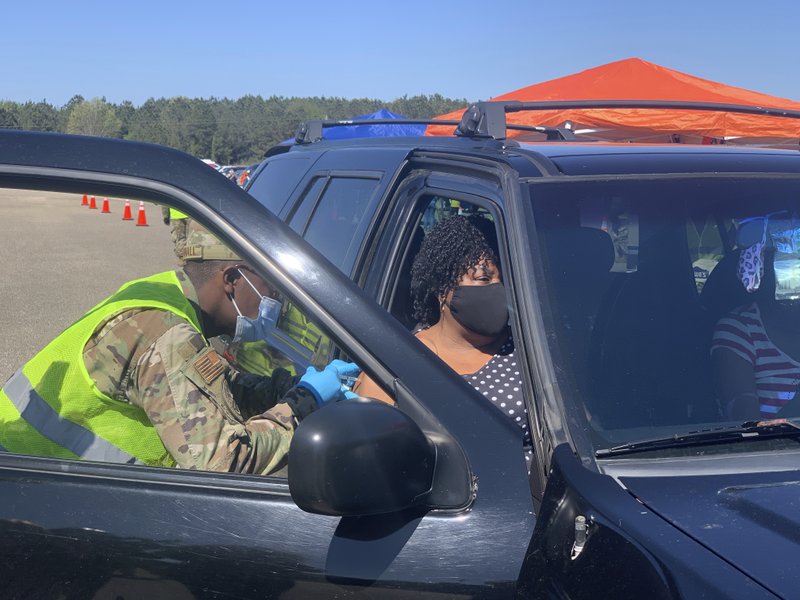
With the potential for crowded churches and big family gatherings over Easter, health officials are urging people to follow Alabama’s mandate for face masks and social distancing to avoid a new surge of COVID-19. Only 663,000 or so of the state’s 4.9 million residents are fully vaccinated against the new coronavirus, and Alabama is last in the nation in its rate of immunization. But many congregations are planning indoor services Sunday to celebrate the Christian holiday a year after Easter services were canceled or held outdoors. Since relatively few people are fully protected against the illness, Dr. Ellen Eaton of the University of Alabama at Birmingham said it’s “probably not the time” to participate in large indoor gatherings like church or family meals where people aren’t distanced and wearing masks, which are proven to slow the spread of the virus. “The concern is that with Easter, a lot of these spaces are going to be crowded, packed, more children and potentially travelers,” Eaton, an infectious diseases expert, told a news briefing Friday. Relatives coming in from out of town could bring in new strains of virus variants into communities, she said. Yet, infection likely would be spreading quickly from person to person before health experts even realized an area had become a “hot spot” of illness. State Health Officer Scott Harris said, “We still have a ways to go” in controlling the virus. “We still want people to be alert, to be careful, to remember the pandemic is not over yet,” said Harris, a doctor who leads the Alabama Department of Public Health. More than 10,600 people have died of COVID-19 in Alabama, and 516,000 confirmed cases have been reported. Cases are at the lowest point since 11 months ago, and the 347 people hospitalized statewide with the illness on Friday was the lowest in almost a year, state statistics showed. Everyone 16 and older will be eligible for COVID-19 vaccinations in Alabama beginning Monday, and Gov. Kay Ivey has said the state health rule requiring facial coverings in public will expire on Friday. Some businesses and organizations have said they will keep mask rules in place, and the city of Birmingham will consider Tuesday whether to continue requiring face masks. Birmingham Council President William Parker used a football analogy to explain the need for continuing the rule. “You can’t spike the ball on the 5-yard line. You have to run it into the end zone. And so we’re at the five-yard line now. We still have a lot more work to do before we can rid ourselves of COVID-19,” Parker told WBRC-TV. Republished with the permission of the Associated Press.
Alabama to begin vaccinating prison inmates

The Alabama prison system announced Thursday that it will begin vaccinating inmates for COVID-19 after previously only making vaccine available to prison officers and staff. The Alabama Department of Corrections announced that on April 12 it will begin vaccinating inmates who want to receive the vaccine. The prison system estimated that it will initially have 6,000 – 7,000 doses available to begin inoculating inmates. “As with our staff vaccination plan – we will begin with those facilities that house our most vulnerable inmates. Our intent is to inoculate entire facilities at one time – not focus on particular age groups or demographics,” the prison system wrote in an emailed response. Alabama ranks sixth in the country for inmate deaths from COVID-19 per 10,000 prisoners, according to data gathered by The Marshall Project and The Associated Press. In Alabama prisons, 63 inmates and 3 staff members have died after contracting COVID-19. Inmates and families have described the difficulty of avoiding the disease because of crowded dorms where inmates cannot socially distance. The vaccinations will begin at four facilities: the Hamilton Aged and Infirmed Center; the Hamilton Community-Based Facility/Community Work Center; the Limestone Correctional Facility and the Julia Tutwiler Prison for Women. The prison system is not requiring inmates or staff to become vaccinated. Inmates at one prison, Bullock Correctional Facility in Union Springs, began being vaccinated Thursday after the state health department offered 1,400 doses to the prison to ensure the doses did not expire after severe weather caused the cancellations of clinics. Prisoners are prioritized under federal vaccine guidelines, as well as the state vaccine plan that follows those guidelines, because of their increased risk of infection because of congregant living conditions. In many Alabama prison dormitories, inmates live in crowded rows of beds, or bunk beds, with less than a few feet between inmates. However, the prison system has so far prioritized vaccinations for prison staff, saying they are how the virus enters the systems. “This strategy is key to mitigating the spread of the disease, as staff are the primary source of COVID-19’s entry into our facilities,” the system wrote in an email. Republished with the permission of the Associated Press.
Dan Sutter: The hero treatment?

West Coast cities have passed “Hero Pay” ordinances, increasing grocery store workers’ pay by up to $5 per hour. Numerous stores have closed in response, putting the heroes out of a job. Such poor economic policies produce avoidable harm. Cities passing “Hero Pay” ordinances include Los Angeles, San Francisco, Oakland, and Seattle. The laws apply (in most cases) to large chain-owned stores and have mandated $4 or $5 per hour temporary pay increases (frequently for 120 days) due to workers’ exposure to COVID-19. Proponents point to grocery chains’ profits during the pandemic as evidence that they can afford the extra pay. Kroger is one chain that has closed stores after Hero Pay ordinances. The California Grocers’ Association, which is challenging the laws in court, claims that the pay hikes will increase labor costs by 20 percent and overall costs by 5 percent. While many Americans have worked from home during the pandemic, millions in retail, agriculture, transportation, and health care have had to work in person. Their willingness to work in the face of uncertain risk is courageous and has kept us fed and the lights on. We did not initially know exactly the lethality of COVID-19, its risk profile, or whether precautions like distancing and plexiglass would work. Do grocery workers deserve extra pay for their exposure to COVID-19? Quite likely. And the labor market has already addressed this. Employment is entirely voluntary. No business can make anyone work for them. Businesses must pay enough to recruit and retain workers willing to stock shelves and operate cash registers. When comparing jobs, people will consider job characteristics in addition to pay. Inherently interesting jobs require less pay, while physically demanding, boring, or dangerous jobs require more pay. The pandemic made on-site jobs less attractive. Grocery workers must interact with both coworkers and customers, increasing their risk. Many workers would demand extra compensation to risk exposure. Businesses will not want to lose experienced and reliable workers, so companies like Amazon, Walmart, Target, and Safeway increased pay last spring. What is wrong with the ordinances if companies were already offering some Hero Pay? Workers earn their pay by helping businesses produce goods and services, and competition for workers results in pay based on productivity. Grocery stores have very thin profit margins, and an extra $5 per hour could turn profit into loss, leading to store closures or reduce hours. How many city council members have managed grocery stores? Should we take then their assurances that stores can afford the extra pay seriously? Will these generous politicians reach into their own pockets to pay grocery workers who might lose their jobs? We do not honor heroes by possibly pushing them into unemployment. Leaving aside job losses, Hero Pay will hurt many of these politicians’ other constituents. When Kroger and Safeway close stores, Californians unable to afford delivery, must drive farther to shop and likely pay higher prices for groceries. Political observers contend that city councils are courting favor with grocery unions here. Perhaps, but there may be more involved. Government policies during COVID-19 have had sharply divergent class impacts. Many high-income earners shifted to remote working and locked themselves safely in their homes to await a vaccine, relying on others to deliver groceries and keep the internet working. Government policy has arguably imposed the “Zoom Privilege” class’s response on everyone. I suspect Hero Pay laws reflect guilt over the burden of lockdown policies on those who must work in person. San Francisco’s Hero Pay ordinance specifically mentions a need for extra pay for childcare with schools closed for in-person instruction. The workers who showed up for work during the pandemic exhibited bravery and deserve our recognition. But Californians might prefer if their politicians had merely designated a week to honor grocery workers. Daniel Sutter is the Charles G. Koch Professor of Economics with the Manuel H. Johnson Center for Political Economy at Troy University and host of Econversations on TrojanVision. The opinions expressed in this column are the author’s and do not necessarily reflect the views of Troy University.
