
Inspector general reviews Donald Trump’s relocation of Space Command

The Department of Defense’s inspector general announced Friday that it was reviewing the Trump administration’s last-minute decision to relocate U.S. Space Command from Colorado to Alabama. The decision on Jan. 13, one week before Trump left office, blindsided Colorado officials and raised questions of political retaliation. Donald Trump had hinted at a Colorado Springs rally in 2020 that the command would stay at Peterson Air Force Base in Colorado Springs. But the man with whom Trump held that rally, Republican Sen. Cory Gardner, lost his reelection bid in November, and Colorado, unlike Alabama, voted decisively against Trump. The Air Force’s last-minute relocation of command headquarters to Huntsville, Alabama — home of the U.S. Army’s Redstone Arsenal — blindsided Colorado officials of both parties, who have urged the Biden administration to reconsider the decision. On Friday, the inspector general’s office announced it was investigating whether the relocation complied with Air Force and Pentagon policy and was based on proper evaluations of competing locations. Colorado officials of both parties were thrilled. “It is imperative that we thoroughly review what I believe will prove to be a fundamentally flawed process that focused on bean-counting rather than American space dominance,” said Rep. Doug Lamborn, a Republican whose district includes Space Command. The state’s two Democratic U.S. senators, Michael Bennet and John Hickenlooper, also hailed the probe. “Moving Space Command will disrupt the mission while risking our national security and economic vitality,” the senators said in a joint statement. “Politics have no role to play in our national security. We fully support the investigation.” Among other duties, the Space Command enables satellite-based navigation and troop communication and provides warning of missile launches. Also based at Peterson are the North American Aerospace Defense Command, or NORAD, and the U.S. Northern Command. The Space Command differs from the U.S. Space Force, launched in December 2019 as the first new military service since the Air Force was created in 1947. The Space Command is not an individual military service but a central command for military wide space operations. It operated at Peterson from 1985 until it was dissolved in 2002, and it was revived in 2019. The Air Force accepted bids from locations for the command when it was revived and was considering six finalists, including Huntsville, when Trump hinted it’d stay in Colorado Springs. Republished with the permission of the Associated Press.
Donald Trump interviews Amy Barrett while weighing a high court nominee
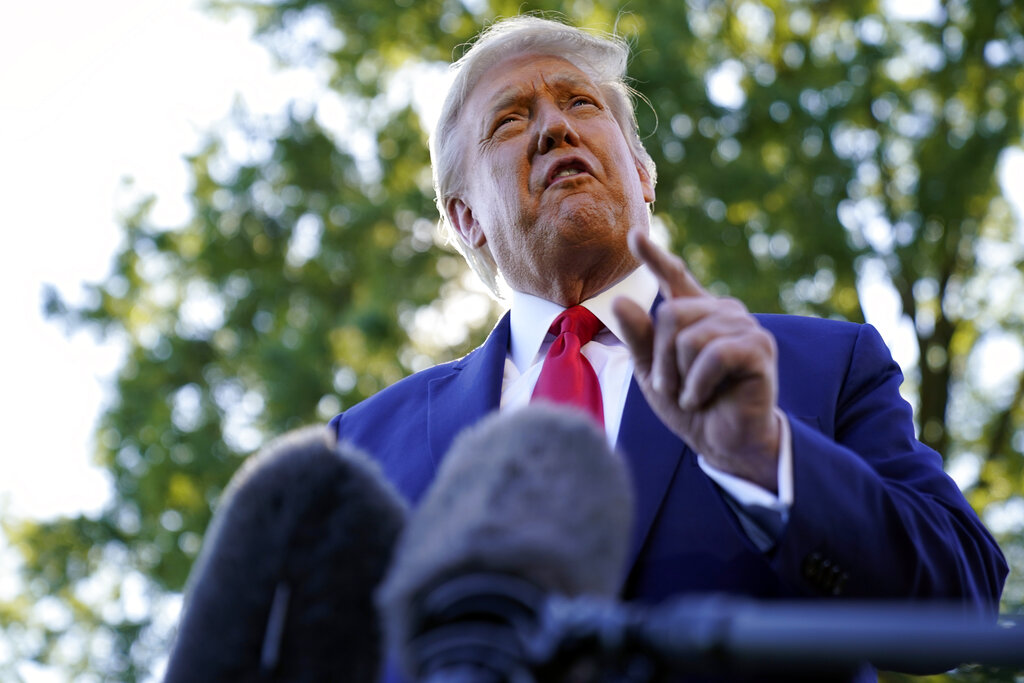
Trump said Monday he expects to announce his choice by week’s end, before the burial next week of Ginsburg.
GOP hopeful Supreme Court battle will help shift election
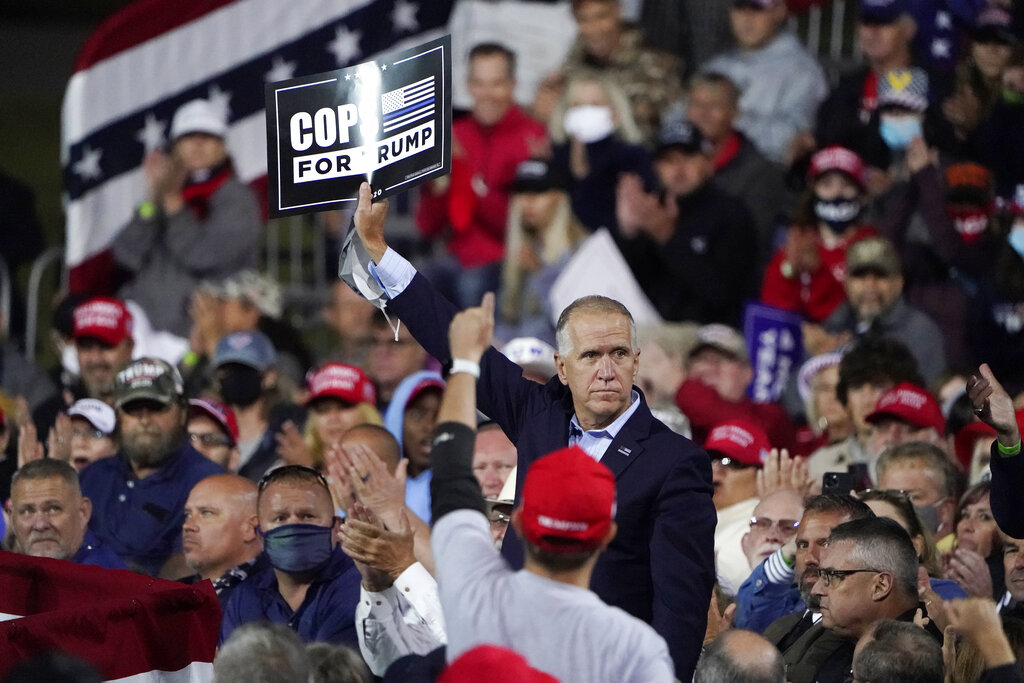
Republicans are looking to a Supreme Court nomination fight to unite a deeply fractured party as it faces the very real possibility of losing the White House and control of the Senate this fall.
GOP weighs jobless aid cuts to urge Americans back to work
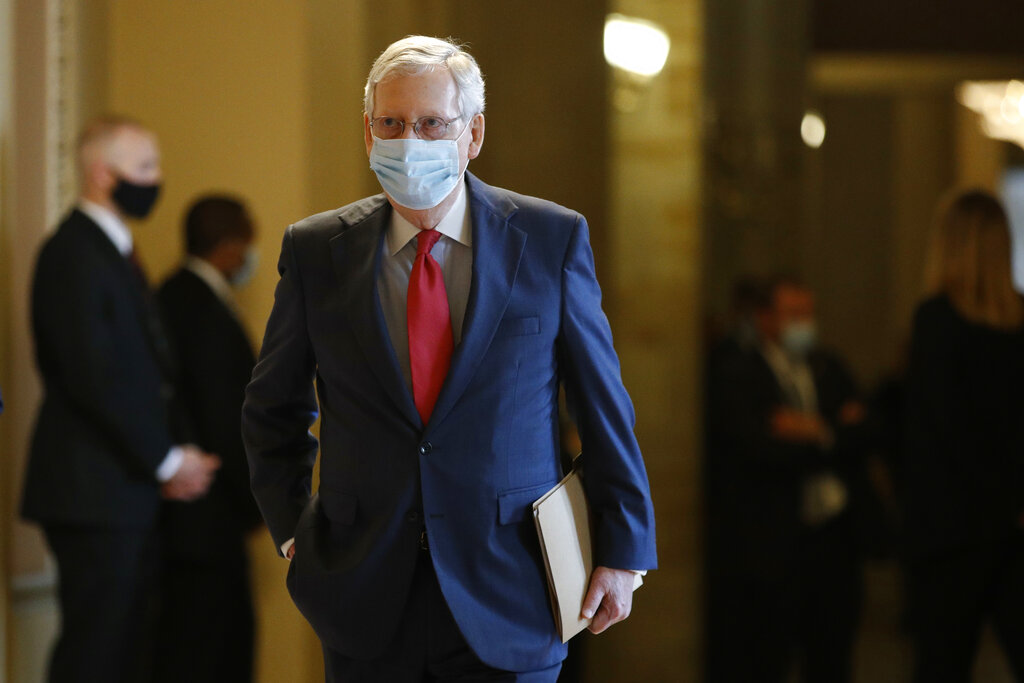
Revamping jobless aid is fast becoming the focus of debate over the next virus aid package.
Virus, stalled economy raise Democratic hopes to take Senate

Democrats have rising hopes of gaining the minimum three seats they’ll need to capture a majority.
Donald Trump takes Daytona 500 warmup lap in presidential limousine

Following the opening command, Donald Trump’s motorcade took to the track to join in a warm-up lap.
Some Democrats fear fallout from Bernie Sanders atop the ticket
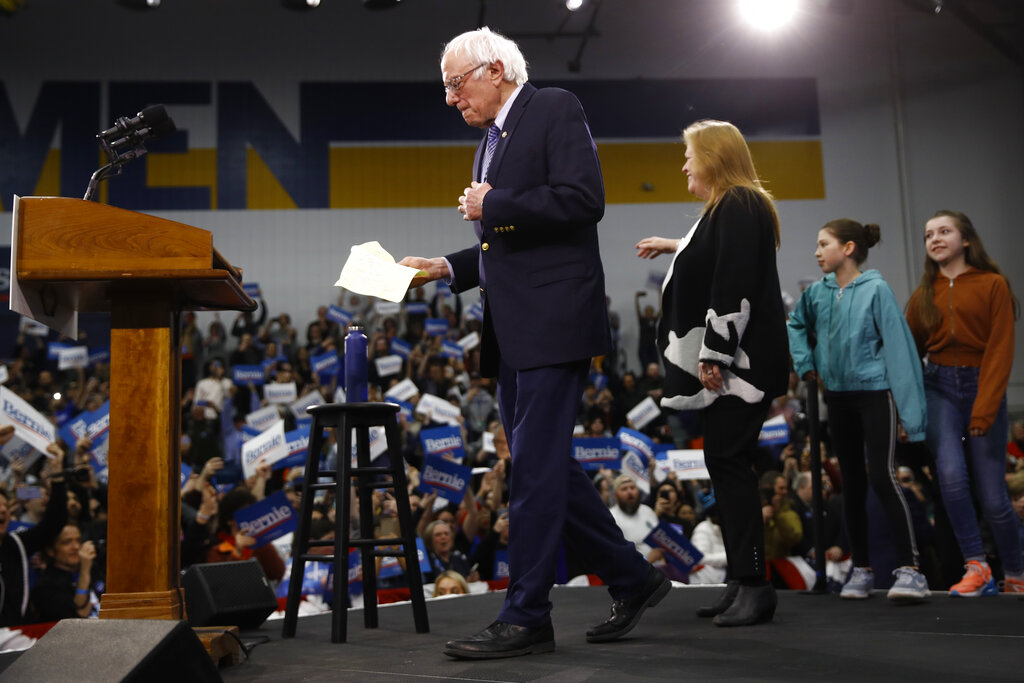
Democrats are worried that Sanders’ socialist label and unyielding embrace of controversial proposals such as medicare for all will repel voters.
GOP shows little desire for witnesses ahead of critical vote
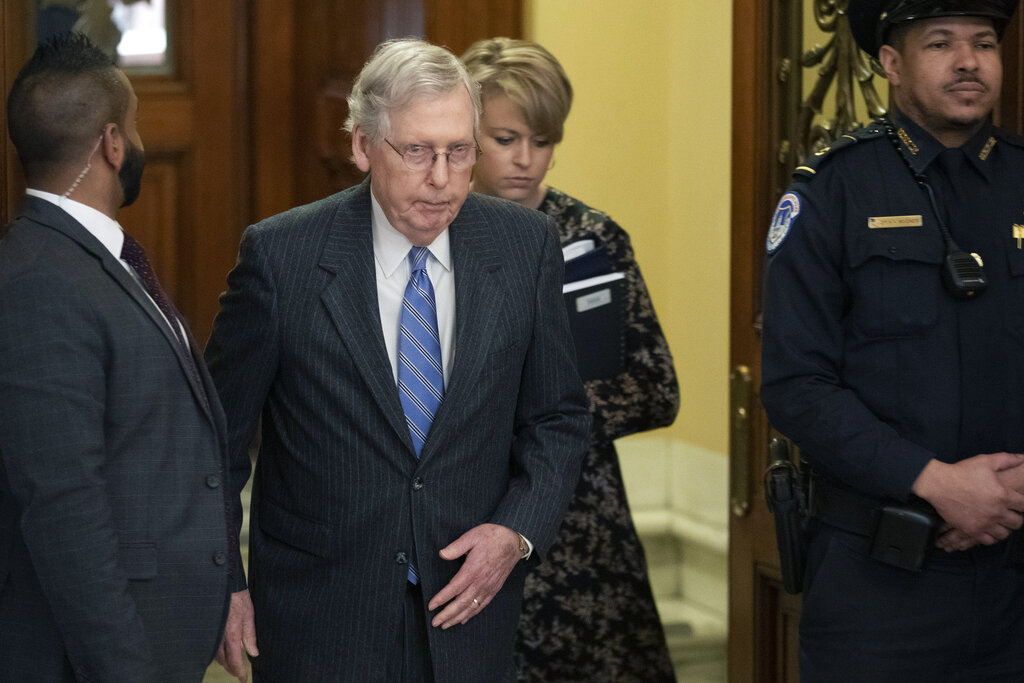
“We have heard plenty,” according to the Senate’s No. 3 Republican.
Donald Trump rakes in cash while some Senate Republicans lag
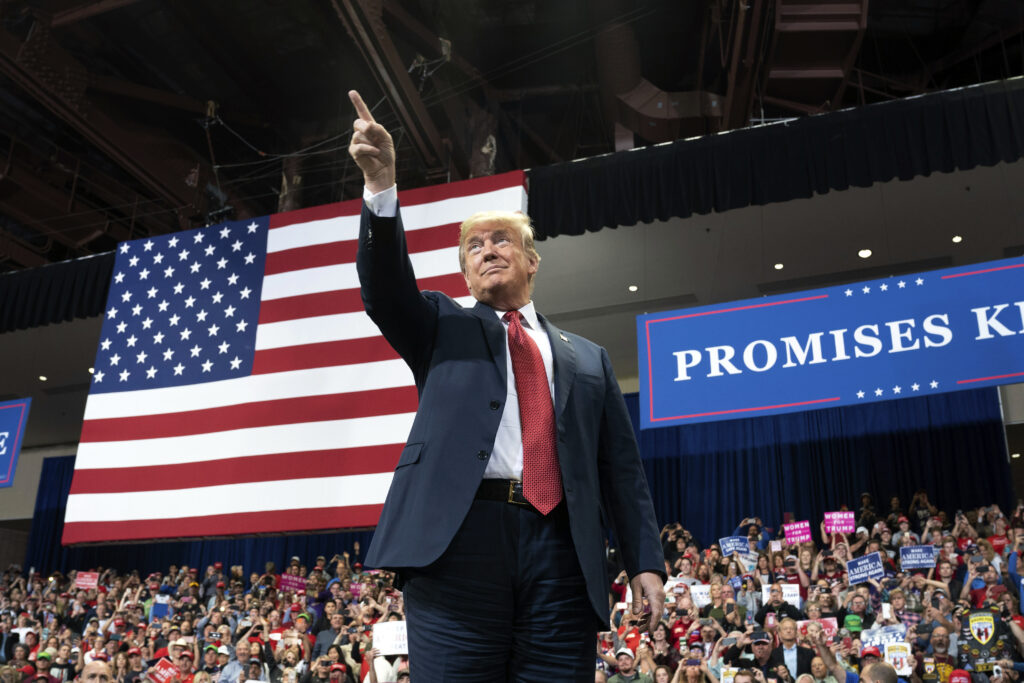
President Donald Trump is raising record amounts of cash for his 2020 reelection. But that fundraising might isn’t spilling over to the most vulnerable Republicans fighting to hold onto their seats in a narrowly divided Senate. During the third quarter, former astronaut Mark Kelly took in $2.5 million more than Republican Sen. Martha McSally in Arizona. In Maine, state House Speaker Sara Gideon bested longtime Republican Sen. Susan Collins by over $1 million. And in Colorado, Cory Gardner, who led Senate Republicans’ campaign arm in 2018, barely outraised former Gov. John Hickenlooper, who had been in the race just five weeks before the quarter ended. The trouble for Republicans extends to states where they’re supposed to be on firmer ground. Iowa Sen. Joni Ernst didn’t crack $1 million and was outraised by the leading Democrat. North Carolina Sen. Thom Tillis narrowly outraised Democrat Cal Cunningham but is also facing a primary challenge from the right that has forced him to spend millions in early TV and radio ads. The lagging numbers suggest that much of the enthusiasm among the GOP base is focused on Trump and doesn’t necessarily translate to Republicans running for other offices. Democrats, meanwhile, are paying close attention to races across the board, including the House, Senate and presidency, fueling them with small-dollar donations that Republicans have struggled to counter. Fundraising prowess isn’t always an indicator of who will actually win on Election Day. But the dynamic could complicate the GOP’s effort to maintain their 53-47 grip on the Senate. This should serve as a “real wakeup call,” said Scott Reed, a senior political strategist for the U.S. Chamber of Commerce, a group that has long been allied with Senate Republicans. The “ongoing Trump drama” over impeachment and other issues “drowns out all the political news back home every single night,” making it difficult for GOP candidates to get their message out, Reed said. But the challenges facing Republicans have mounted in recent weeks as the Democratic-controlled House pursues an impeachment inquiry. Instead of focusing on their own records, Republicans seeking reelection have often been barraged with uncomfortable questions about Trump’s conduct. The pressure will only grow if the Senate holds an impeachment trial, forcing these Republicans to decide whether Trump should be removed from office. “Republicans are going to struggle with fundraising and messaging if the only thing they can talk about is President Trump,” said Jonathan Kott, who was a senior adviser to Sen. Joe Manchin, a West Virginia Democrat, during his successful 2018 reelection bid. “What we found is no matter how popular the president is, you have to stand up to him when it’s good for your state. Democratic senators are finding a way to do that. Republican senators aren’t.” Democrats also have a small-dollar cash advantage. Despite an organized push, Republicans have yet to develop an online fundraising behemoth rivaling ActBlue, the Democrats’ donation platform, which enables donors across the country to direct a contribution of $1, $5 or any amount up to $2,800 with a few taps on a smartphone. “Democrats over the last several years have formulated a culture among the activist class where every time they are motivated by content or a candidate they contribute five bucks,” said Josh Holmes, an adviser to Senate Majority Leader Mitch McConnell, who is running for reelection in Kentucky and was outraised almost 5-to-1 last quarter even though the state isn’t considered a battleground. “Republicans have made strides, but we still have a long way to go.” Still, there are bright spots for the GOP. In order to regain control of the Senate, Democrats might have to win in states that have traditionally sided with Republicans over the past two decades, such as Arizona and Georgia. And some GOP candidates are successfully putting Democrats on defense. Michigan candidate John James, who came up short in his bid last year to oust Sen. Debbie Stabenow, is now beating Democratic incumbent Gary Peters in the money game. The African American, pro-Trump candidate raised $3 million, while Peters took in $2.4 million over the past three months, records show. In Georgia, where there will be two Senate seats on the ballot because of the retirement of Sen. Johnny Isakson, Democrats are still sorting out who all will run. Jon Ossoff was the top-raising Democrat in the contest to take on Republican incumbent David Perdue. But of the $1.3 million he took in, more than $500,000 was left over from his failed 2017 bid for a suburban Atlanta House seat. Perdue, meanwhile, raised about $2.5 million. While Republicans acknowledge they face an unfavorable political environment, it’s also early in the cycle. In 2018, Democrats appeared to be making strides in Senate contests as the election neared, but the party’s handling of a sexual misconduct allegation leveled against now-Supreme Court Justice Brett Kavanaugh galvanized the Republican base and helped them turn the tide. Kavanaugh denies the allegation. If Democrats were to mishandle the impeachment inquiry of Trump, it could deliver a similar jolt. “Democrats have found fundraising success pretty regularly during the last several years,” said Jesse Hunt, spokesman for the Republican Senatorial Campaign Committee. “In many cases, that’s not manifested itself into electoral victories.” By Brian Slodyski Associated Press Republished with the permission of the Associated Press.
Senate backs major public lands, conservation bill
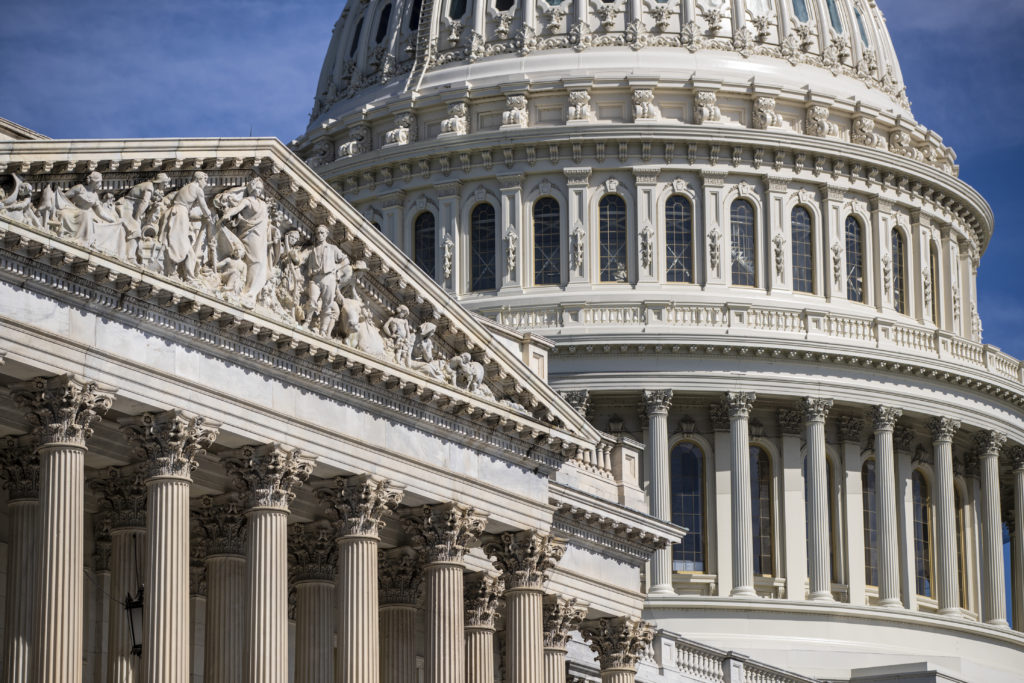
The Senate on Tuesday approved a major public lands bill that revives a popular conservation program, adds 1.3 million acres of new wilderness, expands several national parks and creates five new national monuments. The measure, the largest public lands bill considered by Congress in a decade, combines more than 100 separate bills that designate more than 350 miles of river as wild and scenic, add 2,600 miles of new federal trails and create nearly 700,000 acres of new recreation and conservation areas. The bill also withdraws 370,000 acres in Montana and Washington state from mineral development. The Senate approved the bill, 92-8, sending it to the House. Lawmakers from both parties said the bill’s most important provision was to permanently reauthorize the federal Land and Water Conservation Fund, which supports conservation and outdoor recreation projects across the country. The program expired last fall after Congress could not agree on language to extend it. “The Land and Water Conservation Fund has been a pre-eminent program for access to public lands” for more than 50 years, said Sen. Maria Cantwell, D-Washington. The program has supported more than 42,000 state and local projects throughout the U.S. since its creation in 1964. The hodgepodge bill offered something for nearly everyone, with projects stretching across the country. Even so, the bill was derailed last year after Republican Sen. Mike Lee objected, saying he wanted to exempt his home state of Utah from a law that allows the president to designate federal lands as a national monument protected from development. Lee’s objection during a heated Senate debate in December forced lawmakers to start over in the new Congress, culminating in Tuesday’s Senate vote. Sen. Cory Gardner, a Colorado Republican who clashed with Lee on the Senate floor, said the vote caps four years of work to reauthorize the Land and Water Conservation Fund and protect public lands. Sen. Lisa Murkowski, Republican-Alaska, who chairs the Senate Energy and Natural Resources Committee, said the bill enhances use of public lands and water, while promoting conservation and sporting activities such as hunting and fishing. The bill includes provisions sponsored by more than half of the senators, Murkowski said, applauding a “very, very collaborative” process. She and other senators called the Land and Water Conservation Fund one of the most popular and effective programs Congress has ever created. The program uses federal royalties from offshore oil and gas drilling to fund conservation and public recreation projects around the country. The fund is authorized to collect $900 million a year but generally receives less than half that amount from Congress. “This victory was a long time in the making, and it is the result of the steadfast efforts of many who care deeply about America’s natural treasures,” said Sen Richard Burr, Republican-N.C. “Protecting this program is the right thing to do for our children, grandchildren and countless generations so that they may come to enjoy the great American outdoors as we have.” The bill creates three new national monuments to be administered by the National Park Service and two others overseen by the Forest Service and Bureau of Land Management, respectively. The three park service monuments are the Medgar and Myrlie Evers Home National Monument in Mississippi and the Mill Springs and Camp Nelson national monuments in Kentucky. The Evers site was the home of the slain civil rights leader, while Mill Springs commemorates a Civil War battlefield. Camp Nelson was used as Union Army hospital and recruiting center during the Civil War. President Donald Trump proclaimed Camp Nelson a national monument last year, but the bill gives it permanent, congressionally approved protection. The bill also designates the former Saint Francis Dam site in California as a national memorial and monument. The dam outside Los Angeles collapsed in 1928, killing 431 people in one of the largest tragedies in California history. “While this monument will serve as a reminder of the consequences of a failure of infrastructure, it offers a lesson going forward,” said Sen. Kamala Harris, Democrat-Calif. The bill also sets aside 850 acres in central Utah as the Jurassic National Monument, designed to enhance the area’s “paleontological, scientific, educational and recreational resources.” Republished with permission from the Associated Press
Donald Trump leaves possibility of bailing on meeting with Kim open
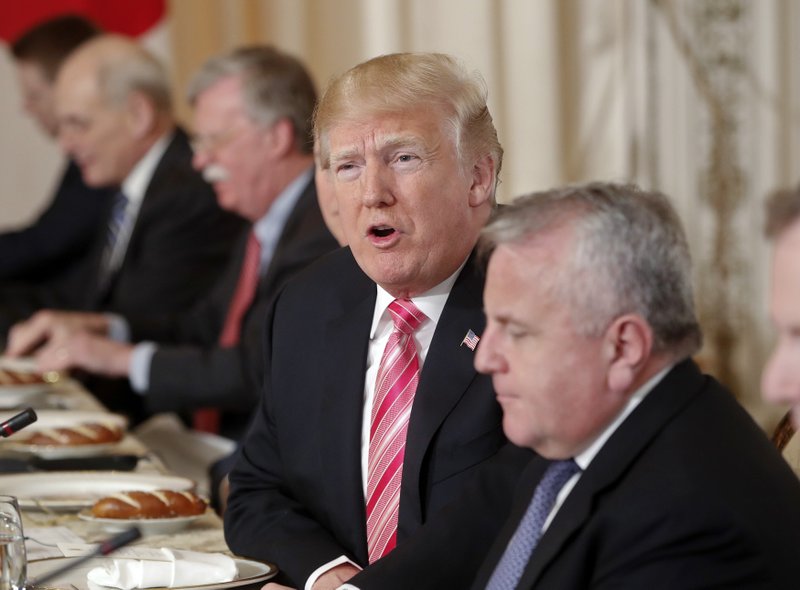
President Donald Trump said that although he’s looking ahead optimistically to a historic summit meeting with North Korean leader Kim Jong Un he could still pull out if he feels it’s “not going to be fruitful.” Trump said that CIA Director Mike Pompeo and Kim “got along really well” in their recent secret meeting, and he declared, “We’ve never been in a position like this” to address worldwide concerns over North Korea’s nuclear weapons. But speaking alongside Japanese Prime Minister Shinzo Abe on Wednesday, after the allies met at Trump’s Florida resort, he made clear that he’d still be ready to pull the plug on what is being billed as an extraordinary meeting between the leaders of longtime adversaries. “If I think that if it’s a meeting that is not going to be fruitful we’re not going to go. If the meeting when I’m there is not fruitful I will respectfully leave the meeting,” Trump told a news conference. He also said that a U.S.-led “maximum pressure” campaign of tough economic sanctions on North Korea would continue until the isolated nation “denuclearizes.” Abe echoed the sentiment. “Just because North Korea is responding to dialogue, there should be no reward. Maximum pressure should be maintained,” he said. Trump has said his summit with Kim, with whom he traded bitter insults and threats last year as North Korea conducted nuclear and missile tests, could take place by early June, although the venue has yet to be decided. It would be the first such leadership summit between the two nations after six decades of hostility following the Korean War. Other than the threat posed to by North Korea’s weapons of mass destruction, another issue overhanging the summit plans is the fate of three Americans detained there. Trump said that was under negotiation and there was a “good chance” of winning their release, but he wouldn’t say whether that was a precondition for sitting down with Kim. Pompeo raised the question of the three Americans in his meeting with Kim, a U.S. official said. Trump also said he had promised Abe he would work hard for the return of Japanese nationals abducted by North Korea. Tokyo says at least a dozen Japanese said to have been taken in the 1970s and 1980s remain unaccounted for. News of Pompeo’s trip to North Korea, which took place more than two weeks ago, emerged on Tuesday, as lawmakers weighed whether he should be confirmed to become secretary of state. Trump and Republican senators held up his highly unusual, secret mission as sign of Pompeo’s diplomatic ability. But the prospect of his confirmation hung in the balance as Democrats lined up against him. Sen. Robert Menendez, top-ranking Democrat on the committee that will have the first vote on confirmation, expressed frustration that the CIA chief had not briefed him on the visit that took place more than a week before Pompeo’s public hearing last Thursday. He is the most senior U.S. official to meet with a North Korean leader since Secretary of State Madeleine Albright met with Kim’s father in Pyongyang in 2000. “Now I don’t expect diplomacy to be negotiated out in the open, but I do expect for someone who is the nominee to be secretary of state, when he speaks with committee leadership and is asked specific questions about North Korea, to share some insights about such a visit,” Menendez said at the Center for Strategic and International Studies. The Senate Foreign Relations Committee is expected to vote on the nomination next week. Pompeo, whose hawkish foreign policy views and comments about minorities have raised Democratic hackles, would replace Rex Tillerson, who was pushed out by Trump last month. In the U.S. Senate, Republicans have a single-vote advantage on the 21-member panel that will have the first say on Pompeo’s nomination. With nine of the 10 Democrats already declaring they will oppose Pompeo, and at least one Republican, Rand Paul of Kentucky, also opposed, the panel could be forced to take the unusual step of sending the nomination to the full Senate without a favorable recommendation. Trump said Wednesday he expects Paul to come through on Pompeo. The president called Paul and the senator agreed to meet with Pompeo, but Paul’s spokesman said, “Nothing else has changed.” As for opposition by Democrats, Republican Cory Gardner, who chairs an Asia subcommittee, said in an interview that they “want to play partisan politics.” Despite meeting Pompeo on Tuesday, Gardner said he hadn’t been briefed on the trip and was awaiting more information about it. Still, he said the fact that the meeting happened gave weight to Pompeo’s testimony last week that the administration was committed to the “complete and verifiable denuclearization” of North Korea and sustaining sanctions pressure. It is not unprecedented for U.S. intelligence officials to serve as conduits for communication with Pyongyang. In 2014, the then-director of U.S. national intelligence, James Clapper, secretly visited North Korea to bring back two American detainees. Clapper did not, however, meet with Kim, who has only in recent weeks emerged from international seclusion after taking power six years ago and super-charging North Korea’s push to become a nuclear power. Kim met last month with China’s president and is to meet South Korea’s leader April 27. Republished with the permission of the Associated Press.
Why won’t Donald Trump condemn white nationalism?

Why doesn’t President Donald Trump just unequivocally condemn white supremacists? It’s a jarring question to ask about an American president. But it’s also one made unavoidable by Trump’s delayed, blame-both-sides response to the violence that erupted Saturday when neo-Nazis, skinheads and members of the Ku Klux Klan protested in Charlottesville, Virginia. Trump has faced such a moment before — one that would have certainly drawn swift, almost predictable condemnations from his recent predecessors, regardless of party. As a candidate and now as president, when racial tensions flared or fringe groups rallied around his message, Trump has shown uncharacteristic caution and a reluctance to distance himself from the hate. At times, his approach has seemingly inflamed racial tensions in a deeply divided country while emboldening groups long in the shadows. On Saturday, as Trump read slowly through a statement about the clashes that left dozens injured and one woman dead, he condemned hatred, bigotry and violence “on many sides.” The president was silent when journalists asked whether he rejected the support of nationalists’ groups. That silence was cheered by the white supremacist website Daily Stormer: “When asked to condemn, he just walked out of the room. Really, really good. God bless him.” Trump denies that he’s racist or sympathetic to such groups. Son-in-law Jared Kushner, the grandson of Holocaust survivors, and daughter Ivanka, who converted to Judaism, are among those who have defended the president against those charges. Still, he has a history of engaging in high-profile, racially fraught battles. Early in his career as a developer, Trump fought charges of bias against blacks seeking to rent at his family-owned apartment complexes. He long promoted the lie that the nation’s first black president, Barack Obama, was not born in the United States. As a candidate, he proposed temporarily banning Muslims from the United States. He retweeted a post from accounts that appeared to have ties to white nationalist groups. And he was slow to reject the endorsement of former KKK leader David Duke. Some of the president’s friends and advisers have argued that Trump is simply refusing to bend to liberals’ desire for political correctness. A boastful, proudly disruptive politician, Trump often has been rewarded for saying impolite and impolitic things. Some supporters cheered him for being someone who said what they could not. Democrats frequently assert that Trump sees a political advantage in courting the support of the far right. Indeed, he has benefited politically from the backing of media outlets such as Breitbart or InfoWars. They have consistently promoted Trump and torn down his opponents, sometimes with biased or inaccurate reports. Charlottesville’s mayor, Democrat Mike Signer, said Sunday that Trump made a choice during his campaign to “go right to the gutter, to play on our worst prejudices.” “I think you are seeing a direct line from what happened here this weekend to those choices,” Singer said on CBS’ “Face the Nation.” White House senior adviser Steve Bannon ran Breitbart before joining Trump’s campaign, and several of the president’s other aides believe Bannon continues to have influence over the website. In “Devil’s Bargain,” a new book about his role in the Trump campaign, Bannon is quoted as saying that attempts by Democratic presidential nominee Hillary Clinton to tie Trump to the alt-right and nationalists did not move voters. “We polled the race stuff and it doesn’t matter,” Bannon said, according to the book. But there here’s no reliable public polling on the scope of Trump’s support among those with white nationalist leanings or the percentage of the electorate they comprise. The reaction from Republicans following Trump’s statement Saturday suggests there may be greater political risks for the president in aligning himself with bigoted groups. “The president needs to step up today and say what it is,” said Sen. Cory Gardner, R-Colo., who was one of several GOP lawmakers urging Trump to be more strident in calling out the nationalists and neo-Nazis that gathered in Charlottesville. Gardner said plainly: “It’s evil. It’s white nationalism.” By Sunday, the White House was scrambling to try to clean up the president’s statement. The White House issued a statement saying the president does condemn “white supremacists, KKK, neo-Nazi and all extremist groups.” The spokeswoman who issued the statement refused to be named. And the president himself remained silent. Republished with permission of The Associated Press.
