
Lawmakers seek to bar insurrectionists from holding office
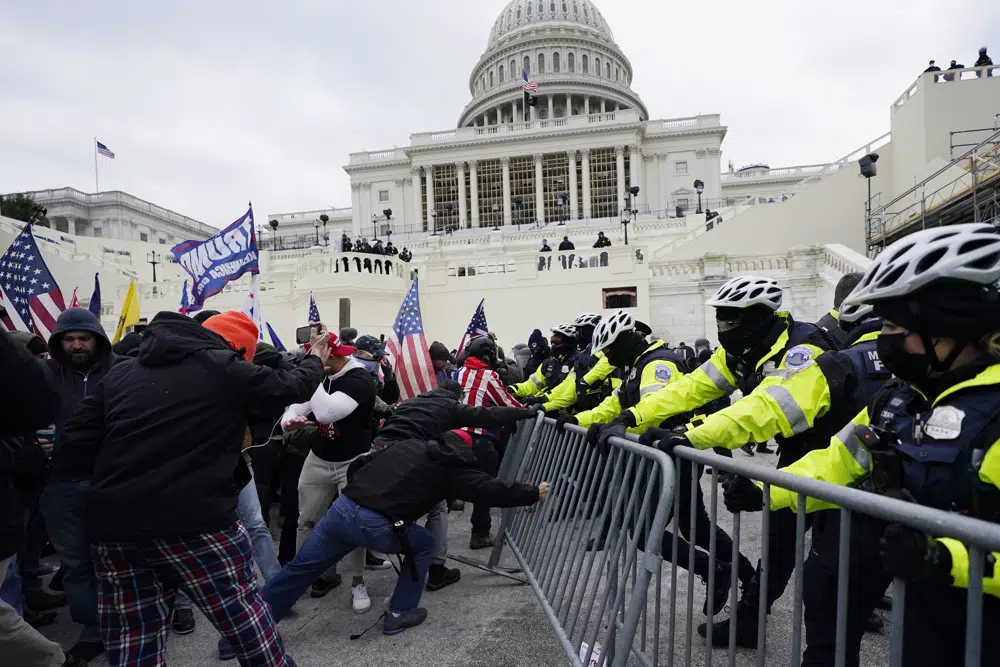
Democratic lawmakers in a handful of states are trying to send a message two years after the violent attack on the U.S. Capitol: Those who engage in an attempted overthrow of the government shouldn’t be allowed to run it. New York, Connecticut, and Virginia are among states where proposed legislation would prohibit anyone convicted of participating in an insurrection from holding public office or a position of public trust, such as becoming a police officer. While the bills vary in scope, their aim is similar. “If you’ve tried to take down our government through violent means, in no way should you be part of it,” New York state Sen. Brad Hoylman-Sigal said. He is sponsoring a bill that would bar people convicted of engaging in an insurrection or rebellion against the United States from holding civil office, meaning they would not be able to serve as a judge or member of the Legislature. Hoylman-Sigal said he introduced the bill this year because he saw more people who were involved in the riot in Washington on January 6, 2021, running for office last year. He described the assault on the Capitol as “a real attack on the foundations of our free and fair democracy and the values which enable that to persist. A Virginia lawmaker introduced a bill this month, on the second anniversary of the Capitol riot, that would prohibit anyone convicted of a felony related to an attempted insurrection or riot from serving in positions of public trust — including those involving policymaking, law enforcement, safety, education, or health. A Connecticut bill would prohibit people convicted of sedition, rebellion, insurrection, or a felony related to one of those acts from running for or holding public office. Senate Majority Leader Bob Duff, who introduced the measure, told The Associated Press that he wants the legislation eventually to bar them from holding state or municipal jobs. The legislation in the states comes after the House January 6 committee’s final report, which found Donald Trump criminally engaged in a conspiracy to overturn the lawful results of the 2020 presidential election he lost and failed to take action to stop his supporters from attacking the Capitol. The committee’s recently concluded work may have provided another springboard for lawmakers to act and propose ways to hold people accountable, said Victoria Bassetti, a senior policy adviser at States United Democracy Center, a nonpartisan organization that advocates for fair elections. Some Republicans say the legislation is unnecessary. In New York, Republican Assemblyman Will Barclay, the minority leader, called the bill there a “political statement,” saying it is “more political than it is a concern about public policy.” He said existing rules already apply to people in certain positions who are convicted of crimes and that those laws “should be sufficient.” The legislation is another example of how the Capitol riot has become a political Rorschach test in the country. Many Republicans refuse to see the attempt to violently halt the presidential certification — which was based on lies that 2020 election was stolen — as an insurrection, while a strong majority of the party continues to believe that President Joe Biden was not legitimately elected. Even students are being taught different versions of the attack, depending on whether they live in more conservative or liberal parts of the nation. The opposing realities came into sharp focus this month in Pennsylvania during a fraught exchange between two lawmakers. In a committee hearing, Republican state Sen. Cris Dush slammed his gavel as he ruled Democratic state Sen. Amanda Cappelletti out of order after she described the U.S. Capitol on January 6 as “the site of an insurrection.” “Insurrection, nobody has been charged with that,” Dush said. “There’s not been a single charge against any of those people as insurrectionists. In this committee, we are not using that term.” Nearly 1,000 people have been charged in the Capitol riot with federal crimes, with about half of them pleading guilty to riot-related charges and more than three dozen convicted at trial. The charges range from misdemeanors for those accused of entering the Capitol illegally but not participating in violence to felony seditious conspiracy for far-right extremist group members accused of plotting to stop the transfer of presidential power. In November, two leaders of the Oath Keepers extremist group were convicted of seditious conspiracy for what prosecutors alleged was a weekslong plot to use force to keep Trump in office. Leaders of the Proud Boys and additional members of the Oath Keepers are currently standing trial on the sedition charge, which carries up to 20 years behind bars. Weeks after the committee exchange, Cappelletti told The Associated Press that it’s important to make sure people understand that the attack on the Capitol was an insurrection. “These are factually correct things,” she said. “That doesn’t mean that we can’t disagree politically about policy or other things, but we can acknowledge that that happened and start to figure out how we move forward to work together to build up that public trust again.” Dush remained steadfast in his view that what unfolded on January 6 was not an insurrection. “If there had been some sort of plot for an insurrection, that would’ve come apart quite quickly after the government got the control back,” he said in a phone interview. There have been some earlier attempts to prevent certain officials from either running for or holding office. A New Hampshire bill that would have barred anyone who participates in an insurrection or rebellion from holding office in the state died last year. Also last year, groups brought lawsuits under a rarely cited section of the 14th Amendment dealing with insurrection. They sought to disqualify a handful of U.S. House members from seeking reelection for events surrounding the January 6 riot. In New Mexico, a state court in September disqualified a rural county commissioner from holding public office for engaging in the Capitol insurrection. Couy Griffin had been previously convicted in federal court of a misdemeanor for entering the Capitol grounds without going inside the building. He was sentenced to 14 days and given credit for time served. The judge permanently barred Griffin, who was
Cowboy politician 2nd person to go on trial in January 6 riot
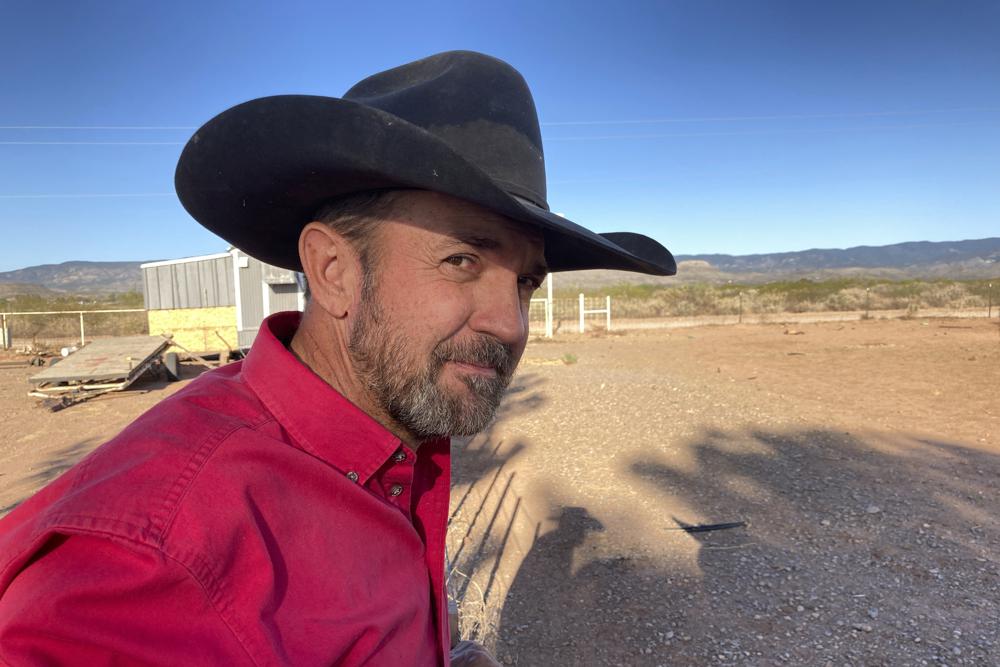
An elected official in New Mexico who helped found the group Cowboys for Trump is headed to trial in Washington next week on a charge related to the violent insurrection at the U.S. Capitol. He plans to show up for court on horseback in a defiant show of support for former President Donald Trump. Otero County Commissioner Couy Griffin has been charged with knowingly entering restricted areas of Capitol grounds, one of hundreds of pro-Trump supporters facing charges for disrupting the certification of Joe Biden’s 2020 presidential win. His trial will be the second among the hundreds of people arrested in the riot. He’s one of at least ten people charged in the riot who either held public office or ran for a government leadership post in the two and a half years before the attack. They include candidates for mayor in west Texas, city council in Kansas and West Virginia, county commission in Washington state, congressional seats in Florida, and statehouses in Pennsylvania, New York, and West Virginia. Another January 6 defendant is running this year for a congressional seat in New Hampshire. Seven of the ten defendants were accused of entering the Capitol building, and at least five had expressed doubts about the legitimacy of the presidential election. False claims about election security have become prevalent in Republican circles, and the outcome of Griffin’s trial could create political problems for other elected officials ensnared in the massive prosecution. Griffin has been in office since 2019 and is one of three elected officials responsible for management, administration, and budget. During his time in office, he also served on the county’s board for canvassing local election results. In 2019, he helped found Cowboys for Trump with a group of rodeo acquaintances to spread a conservative message about gun rights, immigration controls, and abortion restrictions. Many of those messages were delivered on horseback. Griffin, a former rodeo rider and former pastor, plans to drive his horse “Red” to the nation’s capital, as he has in earlier outings in Washington with the group, and then ride the animal to the courthouse. He rejects Biden’s 2020 election and believes Trump to be the real winner, despite a lack of evidence and statements by elected officials, local elections leaders, and Trump’s own attorney general that the results were correct. Griffin voted in January with his county commission to hire a private contractor to review the 2020 presidential election in Otero County — where Trump won with a 62% share — with door-to-door canvassing that has triggered concerns about voter intimidation. The review is still being conducted. Prosecutors have submitted a variety of images that show Griffin breaching barricades on the day of the 2021 insurrection — climbing a toppled fence and another barrier to access the Capitol steps. Images taken by Griffin’s own videographer show him reveling in the January 6 crowd and using a bullhorn to lead the throngs in prayer. Matthew Struck, the videographer who accompanied Griffin, has been granted immunity and is expected to testify at the trial, prosecutors said in a filing Thursday. He doesn’t deny that he was at the Capitol on January 6, 2021; he admits he entered a barricaded area to reach an outdoor balcony of the Capitol on the afternoon without going inside the building. But his attorneys have demanded that prosecutors provide first-hand evidence that then-Vice President Mike Pence was still at the Capitol — a prerequisite for the U.S. Secret Service to invoke access restrictions. Prosecutors say Pence’s exact location at the time the county commissioner entered the Capitol grounds is irrelevant — and that the Secret Service shouldn’t have to disclose sensitive security information concerning the riot response. Griffin pointedly disagrees. “People are charged with entering an unauthorized zone, and it might not have been an unauthorized zone, to begin with — that’s the legal question right now,” Griffin said in an interview with The Associated Press. “It’s really a shame on Mike Pence’s part — individually and personally — he should step up and let us know what time he left the building, unless he’s trying to defend the government and trying to continue to make patriots suffer.” U.S. District Court Judge Trevor McFadden ruled that prosecutors must call a witness to testify who has first-hand knowledge of Pence’s whereabouts during the attack if they want to try Griffin on a charge of entering and remaining in a restricted building or grounds. Earlier, McFadden rejected Griffin’s accusations of misguided and discriminatory prosecution. Griffin was arrested on January 17, 2021, by Capitol Police after he returned to Washington in opposition to Biden’s election and inauguration. He spent nearly three weeks in jail before his release pending trial. Back at home in southern New Mexico, Griffin withstood a recall election attempt. State election regulators sued Griffin over his refusal to register Cowboys for Trump as a political group. Griffin says the group is a for-profit business and that he worries about contributors being identified and harassed. In early March, Griffin confirmed that he won’t seek election this year as a commissioner or otherwise compete in the 2022 election cycle, saying he had lost faith in the political system. The fate of other politicians remains unclear. A former legislative candidate in Pennsylvania is now in prison on a 60-day sentence for his presence inside the Capitol building during the riot. A former West Virginia lawmaker who resigned his office three days after joining the mob into the building is charged with one count of civil disorder and is due in court on Friday. Overall, at least 765 people have been charged with federal crimes related to the Capitol riot. At least 231 of them have pleaded guilty, mostly to misdemeanors. At least 119 riot defendants have been sentenced, with 50 of them getting terms of imprisonment of jail time already served. Approximately 90 others have trial dates. The first trial of a rioter ended with a conviction on all counts. Republished with the permission of the Associated Press.
