Ukraine invasion leads U.S. lobbyists to ditch Russian clients

A half-dozen U.S. lobbying firms severed ties with Russian-linked businesses over the past week, a dramatic pullback for an industry that often has few qualms about representing controversial interests. The rush offers a measure of the potency of the Biden administration’s new sanctions, which were levied after Russian President Vladimir Putin ordered the invasion of Ukraine last week. They make it difficult, if not outright illegal, for U.S. companies to do business with Russia-based ones. Firms including McLarty Associates, BGR Group, and Venable LLP abruptly canceled arrangements that have collectively yielded millions of dollars in lobbying fees in recent years, records show. Among their former clients are investors and operators for the now-canceled Nord Stream 2 gas pipeline, which was supposed to deliver Russian gas to Germany, as well as Russian state-controlled banks and others. Thus far, it’s reversed the normal order of business when war breaks out, which often spurs foreign governments to enlist Washington-based firms to lobby the U.S. government, a review of lobbying records shows. “These lobbying firms and lobbyists were pulling in huge amounts of money,” said Craig Holman, a registered lobbyist for the good government group Public Citizen, who closely tracks the industry. “I really have a hard time believing that they suddenly became altruistic once Russia invaded Ukraine.” Holman said a more likely scenario was that the firms were “lobbying on behalf of the sectors, industries and projects” that were covered by the sanctions and thus required to cease their work. It’s difficult to assess just how many Russian companies or Russian-linked companies are still being represented by U.S. lobbyists. But the recent exodus suggests that the Ukraine invasion may have made representing the country’s interests too toxic even for an industry that has in the past welcomed payment from defense companies, despots, and rebel groups. In 2019, for example, a Libyan general seeking to consolidate his power in the North African country spent $2 million hiring a Texas-based firm to forge closer relations with the U.S. Many of the Russian-linked companies that were dropped were involved in the Nord Stream 2 project, a completed undersea pipeline that would bypass Ukraine to send Russian gas supplies to Europe via Germany. The opening of the pipeline, which would have given Russia tremendous leverage by making it an even larger energy supplier to Europe, was suspended by Germany after last week’s invasion, leading the U.S. to issue sanctions against the company operating it. McLarty quickly dropped five European energy companies that were investors in the project, which have paid the firm at least $3.4 million in fees since 2017, records show. For months, Republicans in the Senate have railed against the pipeline and sought sanctions on businesses involved in the project. But the effort, including legislation sponsored by Sen. Ted Cruz, R-Tex., went nowhere because it was opposed by President Joe Biden as well as Senate Democrats, who hold the majority. Lobbying records indicate McLarty lobbied Congress and the executive branch to “protect and further the company’s interest in the debate over natural gas as an element of European energy security.” “We felt the honorable thing to do in the aftermath of the Russian invasion was to support U.S. policy and withdraw from the pipeline project,” Richard Burt, who leads a wing of McLarty focused on foreign interests, wrote in an email. Burt had donated $14,000 to Biden’s 2020 election efforts, record show. The firms BGR Group and Roberti Global also dropped the pipeline project’s construction and operating company, Nord Stream 2 AG. The company is controlled by a subsidiary of the Russian state-owned company Gazprom, whose fuel sales support the Russian government budget. A representative of Roberti Global, which has collected at least $9.8 million in lobbying fees from Nord Stream 2 AG, did not respond to a request for comment. BGR President Jeffrey H. Birnbaum said in an email that his firm, which has collected at least $1.5 million in lobbying fees from Nord Stream 2 AG, ended its relationship to be in “compliance with economic and trade sanctions announced by the U.S. government.” Firms representing Russian banks also dropped clients. That includes Sberbank and VTB, Russia’s two largest state-run banks, which were targeted last week by sanctions aimed at limiting their businesses internationally. Venable LLP last week dropped an affiliate of Sberbank. The firm has collected at least $800,000 in lobbying fees and closely tracked legislation in Congress of interest to Russia, including economic “sanctions issues” and a bill called the “Defending Ukraine Sovereignty Act.” The two lobbyists who worked on the account, Gregory M. Gill and D. Edward Wilson, did not respond to requests for comment. The firm Sidley Austin also ended its roughly seven-year relationship as a registered “foreign agent” for VTB last Friday. The firm, which has represented the bank since 2015, was on a $40,000 a month retainer and typically collected about $360,000 or more a year in fees from the company. The firm provided “government strategies counsel” and ”lobbying directed toward the U.S. Congress” as well as the White House “regarding the imposition of sanctions by the U.S. government on Russian-affiliated banks,” according to Justice Department filings. A representative of Sidley Austin did not respond to a request for comment. Mercury Public Affairs, LLC similarly dumped clients. Late last week, the firm filed paperwork with the Justice Department to end its status as a “foreign agent” working on behalf of Sovcombank PJSC, as well as the metal and energy producer EN+ Group, which collectively paid the firm $100,000 a month on retainer. A Mercury representative did not respond to a request for comment. Filings state the firm provided “strategic consulting” and “government relations services, including outreach to U.S. Government officials.” Republished with the permission of the Associated Press.
Super PACs rise in influence in 2016 campaign
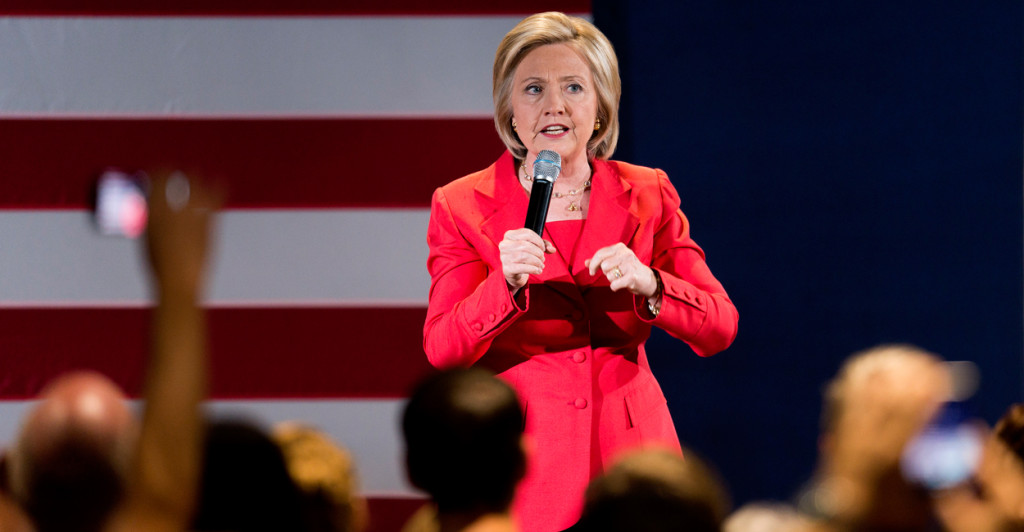
When Hillary Rodham Clinton takes the stage at fundraisers thrown by a group that wants to elect her president, she’s not presented as a White House candidate. She’s a “special guest.” When Jeb Bush raises money for a group preparing to run major parts of his all-but-certain presidential campaign, he doesn’t ask for the cash himself. And the hundreds of millions these groups will raise? They have to spend it without talking strategy with the candidates and campaigns they support. The groups are called super PACs, and their influence in selecting the next president will be without precedent. Born out of two Supreme Court decisions in 2010, they are governed by rules some see as a game of winks and nods, enforced by an agency bedeviled by partisan gridlock. As with most things in Washington, there’s not even agreement on whether they are a problem to solve, or are a solution to celebrate. “What’s really going on largely is a breakdown of the enforcement system of the campaign finance laws,” said Craig Holman of the left-leaning consumer group Public Citizen. “The Federal Election Commission is just broken.” Countered David Keating of the right-leaning Center for Competitive Politics, “I think this is overblown. The line has been drawn: It’s the First Amendment. So if people want to speak, let them.” The primary benefit for campaigns of the super PACs is that they can raise and spend unlimited amounts of money to advocate for and against candidates, with only a few rules holding them back. Among the rules is a ban on campaigns and super PACs working together. They cannot discuss political strategy or share key information such as internal polling. While candidates can attend super PAC events, they cannot technically ask for the unlimited donations that make the groups such a powerful force. “Most of these super PACs that are going to be spending millions of dollars, I think they have a good understanding of what the law is,” Keating said. But even should they break the rules, there are questions about what price they might pay. The six commissioners of the Federal Election Commission are split evenly between Republicans and Democrats, and they have only once cited someone for breaking the rules. In February, the campaign manager for a failed Virginia Republican congressional candidate pleaded guilty to funneling money illegally from a super PAC to bolster his campaign. Clinton has decried the existence of “unaccounted money” in politics and has suggested a constitutional amendment to overturn the case that helped usher in the new system. Yet during a California fundraising trip last week, she took her first steps to embrace Priorities USA Action, a Democratic super PAC that helped support President Barack Obama in 2012. Like other candidates, Clinton cannot legally ask donors to give more than $5,000 to the group. But she can appear as a “special guest.” Her husband, former President Bill Clinton, has headlined Priorities events in the past. On the Republican side, Bush is taking it even further. The former Florida governor is preparing to delegate many of the operations of his expected campaign to his allied Right to Rise super PAC, using the group to produce campaign ads, conduct voter data analysis and run get-out-the-vote efforts. Mike Murphy, one of Bush’s closest political advisers, is expected to lead the super PAC and is intimately involved in Bush’s current operation, where he guides staffing decisions, courts donors and shapes political strategy. Bush takes care to say he’s not yet a candidate, allowing him to work with Murphy and the super PAC in a way that won’t be allowed once he’s in the race. A dozen White House prospects are already benefiting from allied super PACs, frequently led by former political advisers and business partners. For example, Kentucky Sen. Rand Paul will benefit from a super PAC run by his former campaign manager, who is also married to Paul’s niece. Texas Sen. Ted Cruz‘s college roommate is working prominently in a network of four allied super PACs, while a longtime friend and financial backer, Dathan Voelter, is the treasurer. Voelter said the pro-Cruz groups have already raised more than $31 million. During his run for re-election in 2012, Obama never really warmed up to the super PAC world and the group supporting him, Priorities USA Action. He declined to appear at fundraising events even though his opponent, Republican Mitt Romney, frequently attended gatherings held by Restore Our Future, a pro-Romney super PAC. Seeking to succeed Obama in the White House, Clinton and her allies have taken steps recently to strengthen Priorities USA Action. Among them: She will appear at the group’s events and reach out to potential donors, something Obama declined to do. The group is also bringing aboard Guy Cecil, a former staff member of Clinton’s 2008 presidential campaign who remains close to Bill Clinton and previously worked for a firm stocked with longtime Clinton advisers. Republished with permission of The Associated Press.