
Chicken wings, movies and beer could get the most mileage out of driverless cars
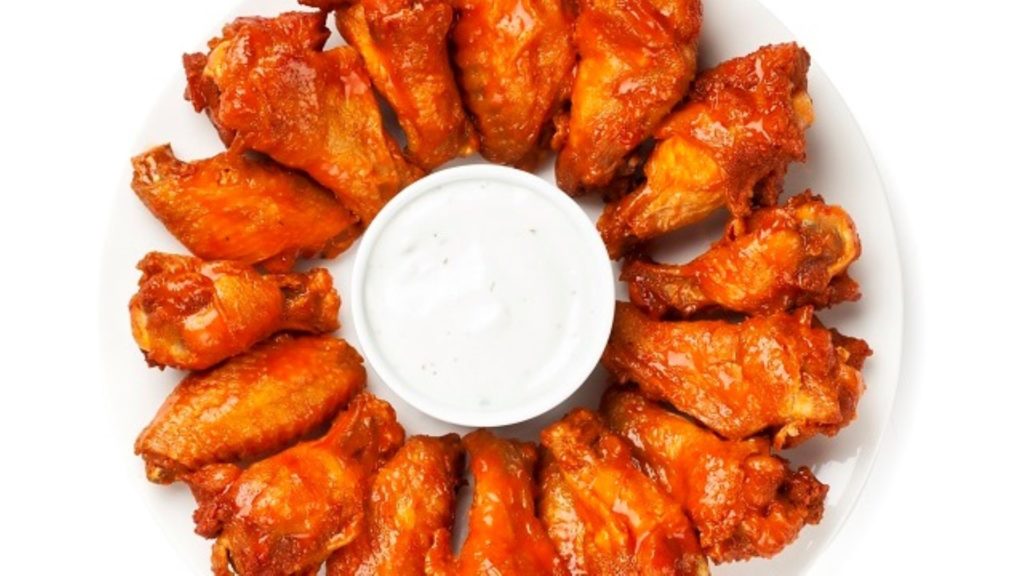
When analysts at Morgan Stanley were trying to handicap the driverless car race, their thoughts kept turning to chicken wings. And the Disney film “Frozen.” And beer. Strange? Actually, it makes a certain kind of sense. The analysts concluded that it’s a fool’s errand to try to call at this point which tech outfits or automakers are on the road to building the best, most profitable autonomous models. Better to focus on the activities – and the companies selling them – that will fill our time when we’re hanging out in cars with no steering wheels to grip. Which is where the bank’s investment picks on snacking (Buffalo Wild Wings Inc.), movie-watching (Walt Disney Co.) and brews (Constellation Brands Inc.) come in. “If you never had to drive again, how much more would you drink?” said Adam Jonas, Morgan Stanley’s automotive analyst. “It’s all about the adjacencies. If you invest in that, you’re less likely to be buying an over-hyped situation.” When your car does the driving, you’ll spend the free time doing something, and that means an opportunity for a variety of companies. (Getty Images) As for the brands of the vehicles we won’t be driving, it’s not only the Morgan Stanley analysts who aren’t ready to definitively make that bet. Jonas and his crew like Tesla Inc. at the moment for its Autopilot feature, which has racked up millions of miles of real-world testing. Still, Jonas said, “it’s too early to call a winner.” Instead, as the bank said in a recent report, it’s smart right now to look at products and services that will benefit from a technology “that liberates hundreds of billions of consumer hours for monetization.” With so many companies, from General Motors Co. to Daimler AG to Volvo Cars, promising to have fully loaded self-drivers on the road within four years, it can seem like the competition is entering the homestretch. But none of the contenders has really broken from the pack. The finished product hasn’t hit the streets. Many players tend to be long on hype and short on details about their designs. And it’s a really crowded field. “There are at least 46 different companies building software to control autonomous vehicles, including automakers,” said Mike Ramsey, an analyst for researcher Gartner Inc. “There’s no way to actually assess the capabilities of the companies. People are doing it by marketing, employment numbers and how many vehicles they have on the road – which are not very good metrics.” It’ll be a while before better ones emerge. Autonomous autos will arrive timidly, in fits and starts, with a few robo-taxis here, some airport shuttles there, a smattering of buses on college campuses. “There’s no clear way to tell who is going to be the winner right now for something we’re not going to have full clarity on for a long period of time,” said Barclays analyst Dan Levy. Investors love a horse race, though, which explains all the speculation about the winning robot-ride strategy and the response when there’s a new development. Recently, fusty old car-rental companies Avis Budget Group Inc. and Hertz Global Holdings Inc. became Wall Street darlings after they did deals to manage driverless fleets for Alphabet Inc.’s Waymo and Apple Inc. The thing is, early leaders in any emerging technology often fade away when rivals improve on their innovation. Just ask BlackBerry, once the most prominent smartphone vendor, or Netscape, the web browsing pioneer that went from dominance to decline in less than a decade. ‘Not that simple’ “The history of technological innovation is littered with these stories,” said Mark Wakefield, managing director and head of the automotive practice at consultant AlixPartners LLP. “When a new thing comes in, it’s pretty difficult up front to predict who is going to be the winner.” Brian Johnson, Barclays auto analyst, compares it to trying to pick the next miracle drug. “You could have a promising early lead, and then realize it can’t get through testing.” That’s why the safest plays now may be on the margins. Johnson advises clients to look at suppliers, such as Delphi Automotive PLC. Besides beer and wings, Morgan Stanley recommends electric utilities that will support battery-powered driverless cars and chipmakers like Intel Corp. and Nvidia Corp. that provide super-computing power and artificial intelligence. The bank also suggests Facebook Inc. and Amazon.com Inc., figuring we’ll be busier with social media and shopping when we have a whole bunch of new time on our hands – by some estimates, 600 billion hours of it a year. Morningstar Inc. analyst David Whiston sees gold in abandoned lots on the outskirts of big cities. Autonomous cars are expected to be battery powered and will need places to recharge and recuperate after rush hours, so unsightly real estate on the edge of town could end up a good investment as future car parks and charge stations. “People think it’s just very black and white, ‘Do I buy Google or do I buy the automakers?”’ Whiston said. “That may seem sexy, but it’s not that simple.” If there’s a favorite among prognosticators, it would be Waymo, formerly known as Google’s self-driving car project. It appears to have the most experience developing the algorithms for the sensors that allow the car to “see” its surroundings. But in the Darwinian driverless race, today’s killer app could be tomorrow’s road kill. Waymo’s expertise could be overtaken as systems are perfected to allow vehicles to communicate with each other and roadway infrastructure. “The technology is changing so fast,” Wakefield said. “In 10 years, there will be nothing left of that algorithm people are spending tons of money on today.” It’s hard to keep up. In April, researcher Navigant crowned Ford Motor Co. No. 1 on its autonomous Leaderboard for having the most advanced approach. A month later? Ford’s board of directors ousted Chief Executive Officer Mark Fields for not moving fast enough. Republished with permission of Alabama NewsCenter.
Mercedes hastens shift to electric cars as combustion era fades
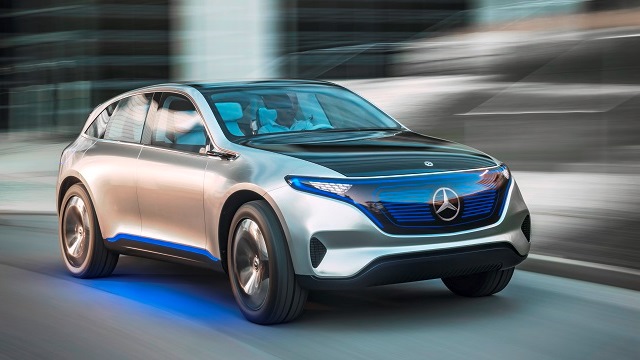
Mercedes-Benz is accelerating its rollout of battery-powered autos in a race to meet tighter emissions rules as European buyers turn away from fuel-efficient diesel cars. In a $10.8 billion project, the world’s largest luxury-carmaker intends to release 10 new electric vehicles by 2022, three years earlier than a target announced at the Paris auto show in September. The expedited time frame reflects the urgency facing manufacturers as they brace for a shift away from traditional automotive technologies. Combustion engines would continue to be refined for a “transitional period,” Mercedes parent Daimler AG Chairman Manfred Bischoff said Wednesday. “We want to shape the profound transformation of the automotive industry from the forefront,” Bischoff said at the company’s annual shareholder meeting in Berlin. “Further fundamental changes will be required for Daimler to remain successful,” as the industry adjusts to cars with electric motors and capable of self-driving. The faster pace comes as the industry battles a backlash against diesel cars stemming from Volkswagen AG’s cheating scandal. Daimler has been embroiled with German prosecutors investigating the Stuttgart-based automaker’s employees over diesel-manipulation allegations. The technology is key for meeting increasingly stringent rules for lower carbon-dioxide emissions. Daimler is “naturally” cooperating with authorities on the diesel probe, CEO Dieter Zetsche said last week in his first public comments on the matter since the investigation became public on March 22. He repeated that Germany’s motor authority and transport ministry found no violations in their tests of Daimler vehicles. After achieving steady reductions in CO2 emissions in previous years, Daimler struggled in 2016 with levels in Europe steady at 123 grams per kilometer as buyers favored larger vehicles. In its home region, Daimler needs to reach 100 grams per kilometer by 2021 or face fines. Flat emissions German diesel demand in December fell to the lowest level since September 2010, accounting for 43 percent of total sales, according to the Center for Automotive Research at the University of Duisburg-Essen. Early signs of carmakers shifting focus from combustion engines are showing, Germany’s IG Metall union said after conducting a survey of manufacturers and suppliers in Daimler’s home state of Baden-Wuerttemberg. “Among development teams, especially in diesel, there are signs there’s less to do as electrification is starting to have an impact,” said Roman Zitzelsberger, a union representative on Daimler’s supervisory board. “We found there are fewer follow-up requests and general degree of activity.” Like other automakers trying to prepare for a future of electric self-driving cars, Daimler is focusing investments on future technologies at the expense of short-term profits. The company plans to spend more than $1.7 billion on its global battery production facilities, about half of which will go to a subsidiary in Kamenz, Germany. To bridge the gap toward an era of fully electric vehicles, Daimler is continuing to develop plug-in hybrids. Mercedes already has eight such models for sale, with upcoming versions set to include a new hybrid S-Class sedan with an extended battery range of as much as 31 miles. “It is necessary to do one thing without stopping with the other,” said Zetsche. “That’s why we are strengthening both: the new and the old.” Republished with permission of Alabama NewsCenter.
