
Republicans announce nine new speaker candidates
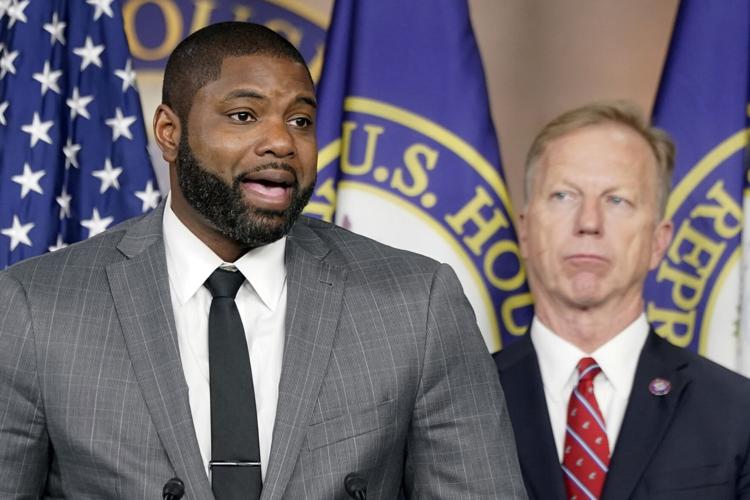
By Casey Harper | The Center Square Nine new Republican lawmakers have thrown their hat in the ring to become the next speaker of the U.S. House. Republican Conference Chair Rep. Elise Stefanik released the list of candidates, who had until noon Sunday to announce their candidacy. The list, which Stefanik posted on X, formerly known as Twitter, is as follows: The new list of candidates comes after former House Speaker Kevin McCarthy, R-Calif., was ousted from the role when Rep. Matt Gaetz, R-Fla., filed a motion to vacate. Then, Majority Leader Steve Scalise, R-La., was the party’s choice to become speaker, but he withdrew when he was unable to get the support he needed. House Judiciary Chair Rep. Jim Jordan, R-Ohio, was next in line and worked for several days to get the needed 217 votes to become speaker. However, at least 20 Republicans voted against him across his three floor-vote attempts, and on Friday, his nomination was revoked. Some of the candidates have more support than others. Donalds’ announcement drew more attention than some others. Emmer has been a rumored pick for speaker as well. However, conservative Republicans have expressed frustration with moderate Republicans for rejecting Jordan, who had significant support with the Republican base but was seen as a hardline conservative who questioned the results of the 2020 presidential election. “The most popular Republican in Congress was just knifed in an anonymous vote in a secret closed-door meeting in the basement of the Capitol,” Gaetz wrote on X Friday. “This is the Swamp at work.” Meanwhile, some more moderate Republicans have expressed frustration with Gaetz and do not want to reward his ousting of McCarthy with an aggressive conservative pick. As The Center Square previously reported, Jordan sparked pushback from his own party on Thursday after reports surfaced that he said behind closed doors he would back the speaker pro Tempore, U.S. Rep. Patrick McHenry, R-N.C., for a limited temporary speakership role so the government could be funded and other key legislative goals hit. The federal government faces a partial shutdown in November, and there is increasing pressure to send more funds for the Ukraine and Israel wars. President Joe Biden called on Congress to pass a spending package of $105 billion for those wars as well as some border funding and money for Taiwan, which national security experts say China could invade at any time. Jordan later addressed reporters, announcing he would drop that plan and instead hold another vote. That plan still has potential to take effect. While many Republicans have expressed opposition to the idea, Democrat Minority Leader Hakeem Jeffries has seemed open to the idea when talking with reporters. Republished with the permission of The Center Square.
Jerry Carl supports bill to allow flexibility in spending COVID-19 funds
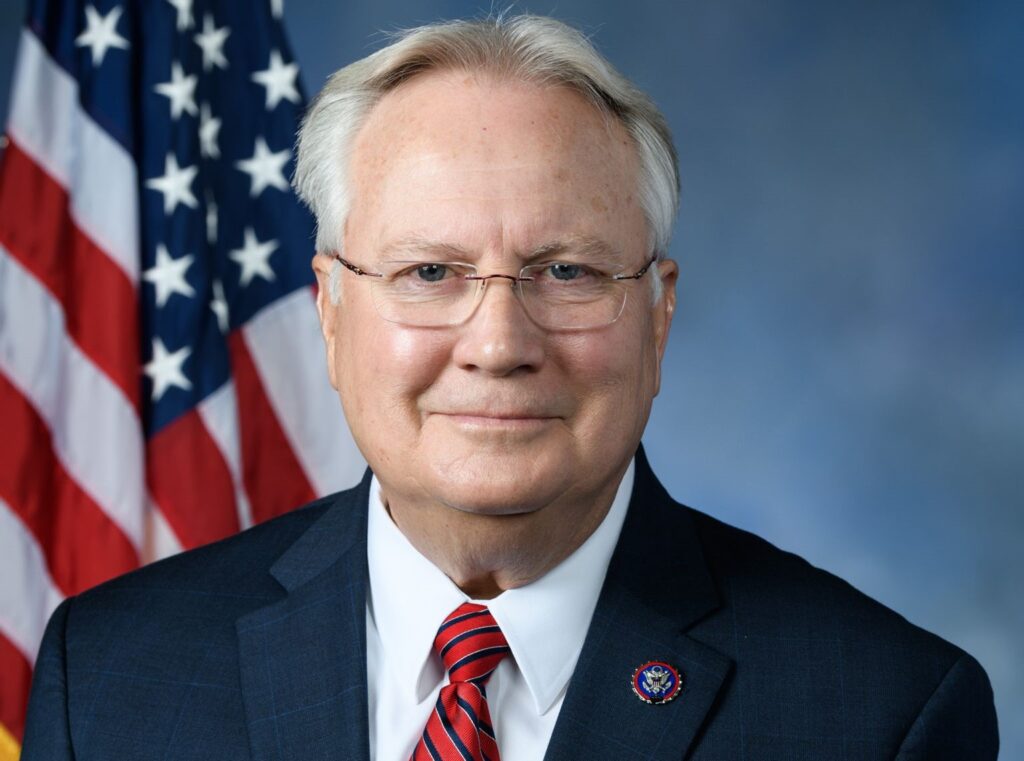
Congressman Jerry Carl announced he has co-sponsored a bipartisan bill to give state and local officials flexibility and time to spend the remainder of COVID-19 relief dollars. The State, Local, Tribal, and Territorial Fiscal Recovery, Infrastructure, and Disaster Relief Flexibility Act, introduced by Reps. Dusty Johnson and Carolyn Bourdeaux, aims to make various infrastructure investments eligible for payment with these funds. The legislation recently passed the U.S. Senate unanimously. Under the CARES Act, Congress did provide some flexibility for how COVID-19 funds could be spent, but the funds were not able to be used for infrastructure projects. This bill will give state and local officials additional flexibility and time to spend the remaining COVID-19 relief dollars responsibly. Carl supports the effort to add infrastructure spending as part of the COVID funding. Carl said in a statement, “South Alabama has a desperate need for investments in true infrastructure such as roads, bridges, ports, waterways, and broadband. As a former county commissioner, investing in our nation’s infrastructure is a top priority for me, so I’m proud to cosponsor this bipartisan bill to give states like Alabama the flexibility they need to spend unused COVID-19 relief dollars on critical investments in our nation’s infrastructure. “Unfortunately, Nancy Pelosi is holding the American people hostage by blocking this bill from being considered on the House floor. Despite passing the U.S. Senate unanimously and being introduced in the House by a large, bipartisan group, Nancy Pelosi is focused on raising our taxes, bankrupting America, and playing political games. It’s time to put the American people first and pass this bipartisan, commonsense bill.” South Dakota congressman Dusty Johnson posted on Twitter, “We need to cut the federal red tape. State governments need flexibility to administer remaining COVID-19 relief funds for critical infrastructure. Our bill would make that a reality & it’s already passed the Senate. Congress can get it done.” This legislation is cosponsored by Reps. Steve Scalise, Henry Cuellar, Rick Allen, Suzan DelBene, David Rouzer, Marilyn Strickland, Randy K. Weber, Jared Huffman, Steven Palazzo, Sanford D. Bishop, Jr., Andy Barr, Joseph Morelle, Dan Meuser, Albio Sires, Carlos A. Gimenez, Antonio Delgado, David B. McKinley, Kim Schrier, Peter Meijer, Darren Soto, Chris Pappas, Rick Crawford, Betty McCollum, William Timmons, Josh Gottheimer, Brad Wenstrup, Derek Kilmer, Don Young, and Tom O’Halleran.
