
Alabama bond sale for mega prisons falls $200 million short
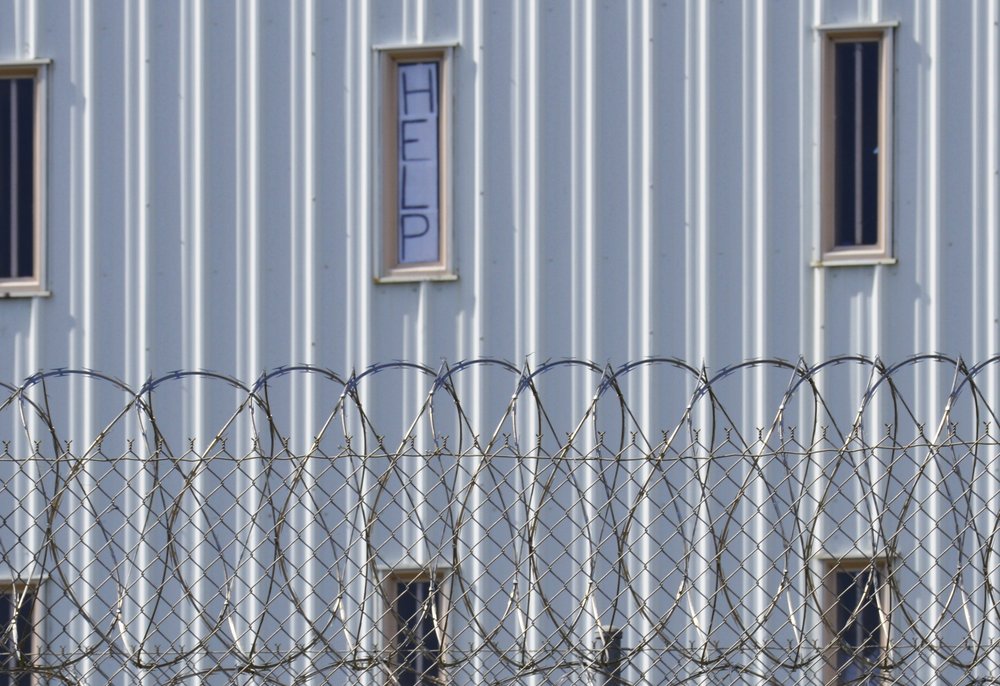
Alabama officials said Thursday that they will move forward with plans to build two supersize prisons despite a bond sale falling more than $200 million short amid a volatile market and pressure from activists. The Alabama Corrections Institution Finance Authority hoped to sell $725 million in bonds for the construction project but was only able to sell $509 million. The bond issue is a key funding piece for the $1.2 billion construction price tag. State Finance Director Bill Poole told reporters that the state had hoped to “sell a little bit more,” but officials were pleased with the result. He said the outcome would not impact the construction, and the state still anticipated opening the prisons in 2026. He said the state will look at options for the remainder of the money, including seeking additional funding from the Alabama Legislature or conducting another bond issue when conditions are more favorable. Alabama Gov. Kay Ivey called the bond sale a “significant and positive step forward in our prison construction process.” “Our job certainly is not done, however, and we will continue to take steps in the coming months and years to ultimately improve Alabama’s criminal justice system,” she said. While state officials blamed the result on a volatile market, a group of activists and impact investors had urged buyers to stay away from the bond offering. “They didn’t just fall short. They fell well, well, well short,” said Eric Glass, an adviser to Justice Capital, an investment fund that joined the call for a boycott. He said the state did face a volatile market, but there is also a recognition among investors that prison construction “is not a good thing to be investing in.” “I think it fell short because this has been a year-plus campaign around, uplifting and centering the idea that building prisons, whether private or public, shows a lack of creativity,” he added. “It shows inhumanity and cruelty, and we need to start thinking broadly and holistically around the things that lead to incarceration and improve those.” Alabama officials are pursuing construction of new prisons to replace aging facilities, calling that a partial solution to the state’s longstanding troubles in corrections. The U.S. Department of Justice has an ongoing lawsuit against the state over prison conditions and has cautioned that new buildings will not solve the problems. Critics of the construction plan argue that the state is ignoring the bigger issues — prison staffing levels and leadership — to focus on buildings. The two prisons would be located in Elmore and Escambia counties and would house up to 4,000 inmates each. The facilities would replace older prisons that would close. Dana Sweeney, a statewide organizer for Alabama Appleseed, said he was surprised to hear the state isn’t changing plans despite being $200 million short of the amount needed. “There are a lot of things that $200 million can be spent on, and I would be very, very interested to hear how lawmakers would react to being asked for hundreds of millions of dollars more,” he said. The Alabama Corrections Institution Finance Authority intends to finalize the bond sale on July 12. The U.S. Department of Justice has sued Alabama over a prison system it says is riddled with prisoner-on-prisoner and guard-on-prisoner violence. The Justice Department noted in an earlier report that dilapidated facilities were a contributing factor to the unconstitutional conditions but wrote “new facilities alone will not resolve” the matter because of problems in culture, management deficiencies, corruption, violence, and other problems. State officials maintain modern facilities will be safer for staff and inmates and help the prison system provide better health and vocational education services. Poole said those services are “very difficult to deliver in dangerous old facilities.” “We need to have safer facilities for the benefit of both the incarcerated population and for staff. It is very difficult to recruit staff to work in dangerous conditions,” Poole said. Republished with the permission of The Associated Press.
Senate Passes ’30 days to pay’ bill to reform payday lending
On Thursday, the Alabama Senate passed a bill that seeks to issue reforms to Alabama’s payday loan industry. The bill passed with bipartisan support on a vote of 20-4, and now moves to the House. Under current law, lenders are allowed to set the terms of their loans from 10 to 31 days, and can charge up to a 17.5 percent fee for the loan; giving a loan with payment due in 14 days an annualized interest rate of 456 percent. SB138 seeks to drop this rate to 200 percent by requiring payday lenders to give borrowers 30 days to repay their loans. Decatur-Republican Sen. Arthur Orr, the bill’s sponsor, believes it is a simple, but necessary change, and will make repayment easier for Alabamians who pay their loans monthly, alongside their household bills. “This simple reform enjoys bipartisan, overwhelming, statewide support, we are grateful for the responsive leadership that carried this bill through the Senate. Now, we look toward the House seeking the same level of commitment to the well-being of Alabama’s borrowers. Predatory lending reform is a priority for many Alabama voters who are tired of seeing this can kicked down the road year after year, and this bill is an opportunity for legislators to finally deliver on the change that their constituents have requested for so long.” Dana Sweeney with the Alabama Appleseed Center for Law & Justice, told Alabama News. Madison-Republican Sen. Bill Holtzclaw, Rainbow City-Republican Sen. Phil Williams, and Birmingham-Democrat Sen. Rodger Smitherman are co-sponsors of the bill.
