
Reps. Terri Sewell and Robert Aderholt support keeping Birmingham-Southern College open
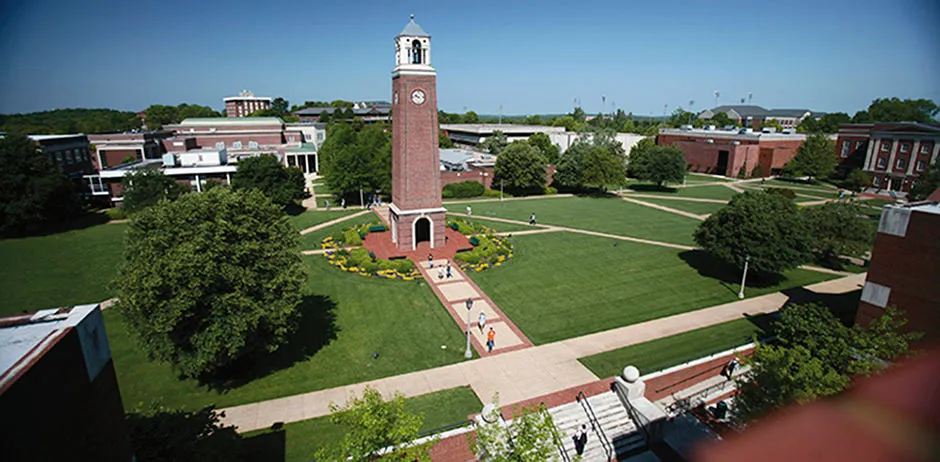
Birmingham Southern College (BSC) is probably going to close after Alabama Treasurer Young Boozer made the determination that the college is a bad credit risk and, therefore, refused to give the small liberal arts private college a bridge loan to keep its doors open last month. Congressmembers Robert Aderholt (R-AL04) and Terri Sewell (D-AL07) penned a joint editorial with the Alabama Medical Group arguing that keeping the failing liberal arts college open is good for Birmingham. “Although we represent different districts and different political parties in the U.S. House of Representatives, there are times that we agree when it comes to what’s best for Alabama,” Aderholt and Sewell wrote. “This is one of those times.” BSC is in Sewell’s district where the loss of 284 jobs would be keenly felt; while Aderholt is an alum of the school – as is his wife, Caroline. “When it comes to what is best for Alabama, we agree that keeping this 167-year-old college open and helping it achieve financial stability makes the list,” Aderholt and Sewell wrote. “We were glad when the Alabama Legislature passed SB278, which established the Distressed Institutions of Higher Learning Revolving Loan Program. Because Alabama had a once-in-a-generation, $2.8B surplus in the Education Trust Fund, setting aside $30 million for the loan program was accomplished without reduction to state-supported institutions. This was and is a great use of a small fraction of that surplus, giving BSC the operating capital it needs while it raises private funds to restore its endowment to a level that will sustain the College going forward.” “Without BSC, young people who want what BSC offers – a small, residential, nationally ranked college in a big Alabama city – will have to go elsewhere. And once they leave, they may not return,” Aderholt and Sewell wrote. “Alabama residents make up 60 percent of BSC’s student body. Half of BSC’s 17,000 graduates remain in Alabama, where their impact is seen and felt in every walk of life in every one of our 67 counties. We strongly urge Treasurer Boozer to rethink his decision to deny the bridge loan that was designed for this very situation: To help out a college or university in Alabama that brings significant value to its community, has been in business for more than 50 years, has assets sufficient to back the state’s loan, and has a solid plan for paying it back.” On Friday, BSC President Daniel Coleman insisted that the College would have enough money to finish out the academic year meaning that current students do not need to transfer as there will be a spring semester. “On August 15, the Birmingham City Council passed a resolution that charged Mayor Randall Woodfin with creating an economic development plan of up to $5 million to support Birmingham-Southern College,” Coleman wrote. “Since then, we have continued to work with Mayor Woodfin, who will formally present his plan to the Council on November 21. We are grateful to him and to the Council for their consideration of this critically important support.” “These developments give us confidence that, at a minimum, we will complete the academic year, during which we will continue to procure funds that will stabilize the College for the long term,” Coleman insisted. “That includes working with the Alabama Legislature, private donors, and other entities. Students, you should register for spring 2024 classes and continue with your plans for the January E-Term.” Montgomery Circuit Judge James Anderson dismissed BSC’s lawsuit attempting to compel Boozer to give them the loan. BSC has been in a long decline and today has fewer than 750 students. To connect with the author of this story or to comment, email brandonmreporter@gmail.com.
Judge dismisses Birmingham Southern College lawsuit
On Tuesday, Montgomery Circuit Judge James Anderson dismissed the lawsuit brought by Birmingham Southern College (BSC) to force State Treasurer Young Boozer (R) to give the troubled college a bridge loan to allow the private college to stay open. In this past legislative regular session, the Legislature approved controversial legislation to help BSC. The Distressed Institutions of Higher Learning Revolving Loan Fund Act, passed by the Legislature and signed by Alabama Governor Kay Ivey (R), empowered the State Treasurer to loan money to failing private colleges. Boozer had the power to give BSC the money, but after evaluating BSC’s financial viability, Boozer concluded that there was little chance that BSC would ever be able to pay the state back. BSC responded by suing Boozer, arguing that the legislative intent of the legislation was to give the school the money. Alabama Attorney General Steve Marshall (R) asked that the court dismiss the lawsuit. Judge Anderson agreed with the state’s arguments. Daniel Coleman is the President of BSC. “We are disappointed with this ruling and are exploring our options, which may include an appeal to the Alabama Supreme Court with a request for an expedited briefing,” said BSC President Coleman in a statement. “While the Alabama Constitution provides for immunity to state officials, such immunity should not apply to those who act arbitrarily or capriciously, or in bad faith, or who have misinterpreted the law in question.” “Our good faith was betrayed over the several months of working with Treasurer Boozer to deliver this bridge loan to the College,” Coleman added. “The timeline of our interactions clearly demonstrates that his behavior was arbitrary and capricious. We also believe he is misinterpreting the language of the Act pertaining to collateral.” The legislation allowed Boozer to give BSC a $30 million lifeline, providing the College with operating funds for three years. BSC claimed that during those three years, it could raise an endowment of up to $200 million to ensure its long-term financial stability. BSC likely would have closed in the spring of 2023 if not for the passage of the controversial bridge loan legislation. In a letter dated October 13, Boozer notified BSC that their loan application had been denied; the letter arrived on October 18. BSC claimed that during months of discussions, Boozer gave them no indication that any aspect of BSC’s application was incorrect or that he would not act as the Legislature intended, Coleman said. Coleman claims that Boozer has provided inconsistent reasons for his denial. Judge Anderson ruled that the legislation gives Boozer discretion over who he grants a loan to and was within his rights to deny the loan. Anderson said he sympathizes with the college. However, given the Legislature’s language, past precedent, and sovereign immunity, BSC has no case. Thus, he granted Marshall’s motion to dismiss. BSC, which has been declining for decades, has been hemorrhaging students in recent years and is reportedly down to just 731 students, while the college still has 284 employees. The college decided to stay open for the fall semester pending receiving the money from the state’s loan. At this point, however, it appears that the college will have to close soon, perhaps as soon as the end of the current semester. BSC had initially asked the Legislature and local government for a cash bailout. That request was rejected, but BSC alum State Senator Jabo Waggoner (R-Vestavia Hills) sponsored the Distressed Institutions of Financial Learning Revolving Loan Fund Act to save the failing liberal arts college. The closing of a private college is not without precedent in Alabama. Judson College, the state’s only women’s college, closed four years ago when its income could not meet its liabilities. To connect with the author of this story or to comment, email brandonmreporter@gmail.com.
Financially struggling Birmingham college stays open for now
Birmingham-Southern College will not close its doors this fall, officials at the financially struggling private college said Thursday, as the school works to stabilize its finances. The Methodist-affiliated liberal arts school announced the Board of Trustees unanimously voted to remain open. The vote settled questions, at least for the immediate future, about whether the college would close. Board chairman Rev. Keith D. Thompson said the trustees made the ”informed and thoughtful decision to keep Birmingham-Southern open,” but he said the college is still hoping to receive “bridge funding” from government sources as well as an influx of cash from a fundraising campaign. “We are already reaching out to our prospective students and will be hiring faculty and staff to ensure that we are delivering the full BSC experience this fall,” President Daniel Coleman said. “We will also be gearing up for the public phase of the endowment campaign, which will ensure our long-term financial resilience.” Local lawmakers said in December the school needed a $37.5 million bailout from state and local governments to help stay afloat. Alabama Gov. Kay Ivey and lawmakers have so far rejected the idea of using tax dollars to bail out the private college. However, House Speaker Nathaniel Ledbetter said Thursday there are new discussions about a collateral-secured state loan. “Certainly, we’d love to see them stay open, but we’ve got to do it the right way,” Ledbetter said. “Going from just asking for the money to having collateral and doing a loan helps.” Nestled in the Bush Hills neighborhood west of downtown Birmingham, the 200-acre campus makes up about half the community’s area and would become a risk for blight if closed, said Democratic Rep. Juandalynn Givan, who represents the area. The school dates to 1856, when Southern University was founded in Greensboro, Alabama. That school merged with Birmingham College in 1918 to become Birmingham-Southern. Republished with the permission of The Associated Press.
Daniel Sutter: Should taxpayers support Birmingham Southern?

Birmingham Southern College (BSC), founded in 1856, has requested $37.5 million in assistance from the state, the city of Birmingham, and Jefferson County. President Daniel Coleman warns that without assistance, the school could close this May. BSC’s troubles afford state lawmakers an opportunity for bold higher education reform. I will first mention but not evaluate several relevant considerations for potential aid. Is BSC truly near closing, or is the crisis being manufactured to help solicit state funds? Will this be one-time or continuing support? Will other Alabama colleges seek government assistance if BSC succeeds? One could take the principled stand that government should not assist private businesses or colleges. I favor this principle. Our state and local governments, however, do not follow this. They frequently offer incentives to businesses like paying for land and employee training. Large retailers get to keep some sales tax revenue. Tuskegee University receives annual appropriations from the state. Lawmakers cannot claim principle here. The important question becomes, what is the value proposition for taxpayers from supporting BSC? The state already has 14 four-year universities, including one in Birmingham and a liberal arts college in Montevallo. Similarity to our existing state universities lowers the value of preserving BSC. A transformed college could add value. Although a deep red state, Alabama’s state universities do not promote America’s founding values of personal freedom and limited government. Conservative and libertarian faculty and programs do exist, like Troy’s Johnson Center and Free Enterprise Scholars program. We lack a “red state” university. Florida Governor Ron DeSantis is acting on higher education, including appointing former Republican Senator Ben Sasse president of the University of Florida. Of relevance for BSC’s request, Governor DeSantis has appointed trustees with a mandate to transform Sarasota’s New College into the Hillsdale of the South. Why should Florida or Alabama emulate Hillsdale College? Hillsdale is a private liberal arts college in Michigan that achieved notoriety for refusing Federal funding. The school is highly conservative and free market and has often partnered with the Heritage Foundation. Hillsdale is perhaps the nation’s most recognized conservative college, attracting students from across the country. State assistance transforming BSC into Alabama’s Hillsdale would create value. One objection is public funding of education and scholarship with a political or ideological orientation. Liberals should not be forced to support an institution dedicated to teaching and researching about conservative and free market philosophies. Yet this objection implies ending government support for higher education. Many disciplines, including economics yield theories about the organization of society and role of government. Privatizing Alabama’s state universities is not on the table. Ideological neutrality by elected officials toward universities might seem appropriate, given bias concerns. Yet liberals far outnumber conservatives and libertarians in academia, with the imbalance growing. Official neutrality ensures liberal hegemony. Economist John Merrifield contends that creating a diverse menu of options should be the goal of K-12 education reform. Many students (and their parents) favor a traditional college education on the Hillsdale model. Ensuring diverse and valuable options means making this available in Alabama at in-state tuition rates. Changing the character of BSC would alter the terms of service for faculty and administrators who have worked for years. I am very sensitive to such an objection. I would prefer starting a new “red state” university, so everyone knew the mission from day one. Yet BSC’s financial problems mean change is likely coming without government support. Private investors or philanthropists could take over and transform BSC as proposed here. A college dedicated to traditional American values arguably should be private. BSC’s request for government assistance is why I have proposed state action. Public support for higher education is declining, and largely along partisan lines. Universities have birthed many ideas hostile to the traditional American way of life. We need red state universities, and state governments must step up, given their role in higher education. Birmingham Southern’s request offers our elected representatives an opportunity for bold action. Daniel Sutter is the Charles G. Koch Professor of Economics with the Manuel H. Johnson Center for Political Economy at Troy University and host of Econversations on TrojanVision. The opinions expressed in this column are the author’s and do not necessarily reflect the views of Troy University.
Terri Sewell announces $500,000 for student initiatives at Birmingham-Southern College
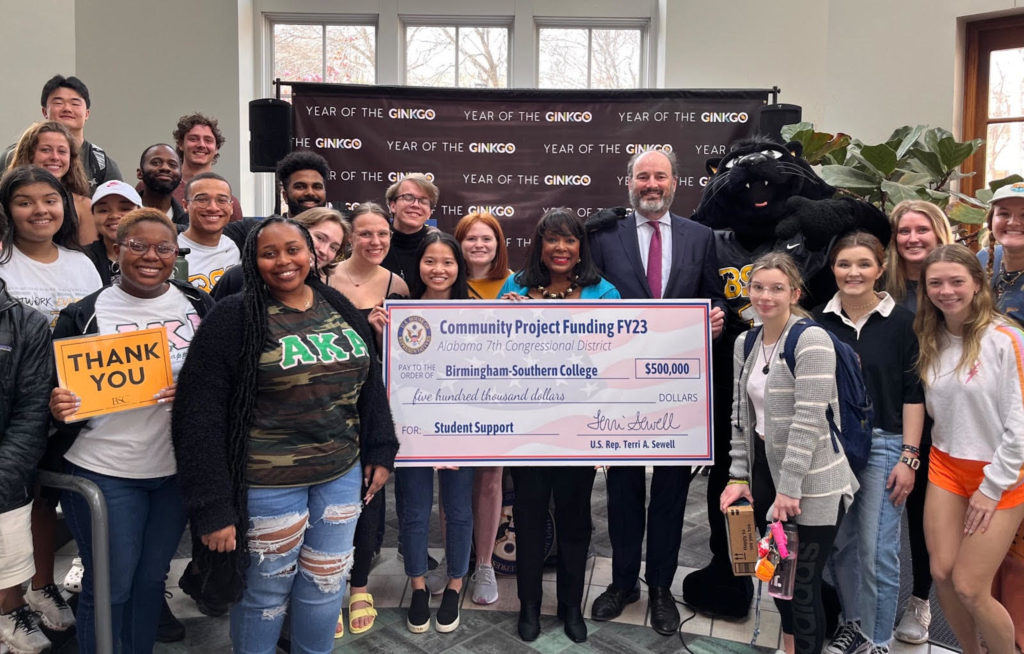
On Wednesday, Congresswoman Terri Sewell announced that Birmingham-Southern College (BSC) had been awarded $500,000 in federal funding for an experiential learning and civic engagement student initiative. Sewell was joined by BSC President Daniel Coleman and members of the student body for the funding announcement. “I was so proud to present a check for half a million dollars in federal funding to Birmingham-Southern College for experiential learning and student support,” said Rep. Sewell. “My team and I fought hard to ensure that funding for this project was included in this year’s government funding package so that students can benefit from high-impact internships and jobs during their time at BSC and beyond. Birmingham-Southern is a pillar of our community, and I urge our partners at the state and local level to do what they can to support this cherished institution and its students during this critical time.” At Wednesday’s press conference, Sewell presented a check for $500,000 to President Coleman and members of the student body. This funding is part of the $42.8 million Sewell helped secure in the Fiscal Year 2023 government funding package for local projects in Alabama’s Seventh Congressional District. The $500,000 in federal funding will strengthen the institution’s ability to facilitate placement in high-impact internships and jobs through multiple offerings of the Krulak Institute for Leadership, Experiential Learning and Civic Engagement on campus. Birmingham Southern College has recently made headlines over its well-documented financial difficulties. President Coleman has asked the Legislature, as well as the City of Birmingham and Jefferson County, for a substantial financial bailout. The small private college has been a fixture in Birmingham for over a century and has a broad alumni base. “Those efforts continue daily — even hourly — and have been encouraging enough to keep us moving forward with the plan,” BSC President Coleman said recently. “While we all wish we had a final (and positive) answer by now, the simple truth is that when public funds are involved, there are many, many moving parts and decision-makers. So we are working closely with our allies in Montgomery and statewide, and we expect to know something more definitive by the time the Alabama Legislature convenes on March 7, if not before.” The State Legislature will likely take up appropriating the ARPA money early in the Alabama regular legislative session that begins in less than two weeks. Sewell is in her seventh term representing Alabama’s Seventh Congressional District. She has been supportive of BSC and its efforts to seek taxpayer assistance to remain open. To connect with the author of this story or to comment, email brandonmreporter@gmail.com.
Birmingham Southern College is still seeking a taxpayer bailout
Over the weekend, students at troubled Birmingham Southern College (BSC) received emails from the administration stating that the college was still seeking a $37 million taxpayer bailout from the State of Alabama and local governments. “Those efforts continue daily — even hourly — and have been encouraging enough to keep us moving forward with the plan,” BSC President Daniel Coleman told students in the email. “While we all wish we had a final (and positive) answer by now, the simple truth is that when public funds are involved, there are many, many moving parts and decision-makers. So we are working closely with our allies in Montgomery and statewide, and we expect to know something more definitive by the time the Alabama Legislature convenes on March 7, if not before.” BSC’s Young Alumni Council hosted a live webinar on Monday telling students “how to effectively advocate with elected officials for the causes you care about.” The event will be led by two members of Congresswoman Terri Sewell’s Chief of Staff, Hillary Beard, and Legislative Coordinator Robyn Gulley. “Until we know more, we will operate as usual,” Coleman said. “As of today, Birmingham-Southern College has experienced great demand, with both our application and admitted student numbers at a five-year high. Applications have experienced a 25 percent growth, and admitted students are tracking a 33 percent growth since the same point in time last year. Over the past four years, the College has consistently experienced growth in both metrics.” BSC is a private college. Despite this, President Coleman has requested that state legislators give the college $30 million – $12.5 million in American Rescue Plan Act (ARPA) money and a $17.5 million appropriation from the education trust fund (ETF) budget – to give the college cash on hand and allow it to continue to operate. If the state legislature appropriates that $30 million bailout, BSC wants $2.5 million from the Jefferson County Commission and another $5 million from the Birmingham City Council to also provide bailout dollars. With those millions of dollars in hand, BSC will appeal to its donor base to pledge their dollars to get the college’s fundraising back on track. Coleman hopes to be able to raise the endowment to $200 million by the end of 2026. Enrollment had been declining, and BSC was hit hard by the lengthy COVID-19 closures. The administration, however, blames most of its current financial distress on a building program in the mid-2000s and the 2008/2009 recession that combined drew heavily upon the college’s endowment. While the economic downturn played a large role in the decline of BSC, much of the blame for BSC’s failure has been on those ambitious construction projects that were built while David Pollick was BSC’s President. BSC administrators have said that without the massive taxpayer-funded bailout, they won’t be able to accept incoming freshmen for the fall semester and will have to close its doors. The Legislature will likely take up appropriating the ARPA money early in the Alabama regular legislative session that begins on March 7. To connect with the author of this story or to comment, email brandonmreporter@gmail.com.
Legislators seek a bailout of Birmingham Southern College
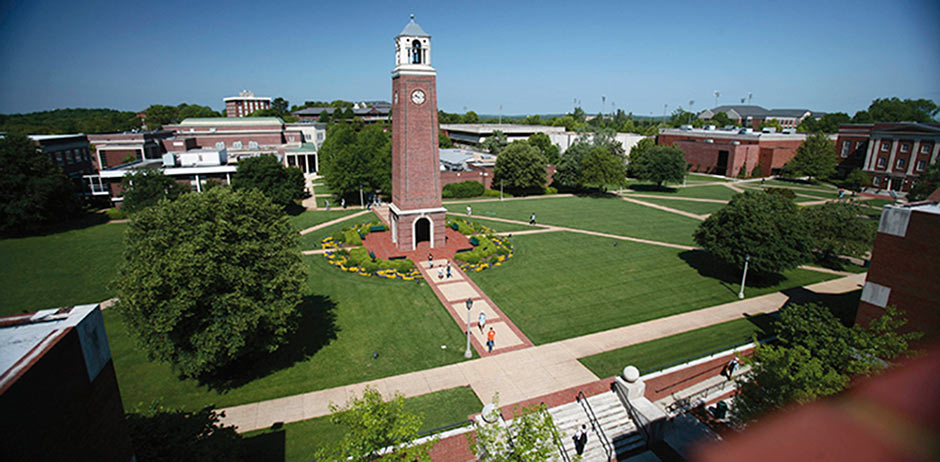
Members of the Jefferson County Legislative delegation met on Monday at Birmingham Southern College (BSC) to discuss their proposal to take $30 million of state dollars and give that to the struggling liberal arts college near Legion Field in Birmingham. The meeting was called by State Sen. Jabo Waggoner and State Rep. Jim Carns. “This plan includes a $30 million one-time infusion from the State of Alabama ($12.5 million from ARPA and $17.5 million from the Education Trust Fund). Along with smaller grants from the City of Birmingham ($5 million) and Jefferson County ($2.5 million), this infusion will cover projected deficits through May 31, 2026,” Waggoner and Carns wrote. “Without support from the state, the college will not be able to continue to operate past May 2023. Without a commitment from the state, the college will need to notify high school seniors that they will no longer be accepting applications by the middle of January.” The college released a statement acknowledging the dire straits that the school faces. “Over the past 18 months, BSC President Daniel Coleman has secured firm commitments from hundreds of private donors for $45 million toward a goal of raising $200 million by May 2026 to refresh its endowment fund. This is a remarkable demonstration of support for BSC and a reflection of the fact that the college is important—not only to Birmingham but to the State of Alabama. In order to allow sufficient time for this fund-raising effort to succeed and to give BSC breathing room to operate, we are seeking a one-time contribution of $12.5 million from the second tranche of the American Rescue Plan Act and $17.5 million from the Education Trust Fund (ETF). BSC is also asking for a commitment of $5 million from the City of Birmingham and $2.5 million from Jefferson County. We believe Birmingham-Southern College’s contributions to the greater Birmingham area and the state warrant such an investment, which is clearly permissible under state law and for which there is considerable precedent.” Coleman briefed legislators on his plan. “We believe with the time that the state funds will give us, we can gain support from the other 16,000 graduates we have not contacted as well as the many thousands of people and organizations of this state who appreciate the value of this College,” Coleman said. “Our target of $200 million of pledges by May 2026 is achievable, especially with our $45.5 million head start. Such an endowment will give us the financial stability that this college needs to thrive.” The administration blames its current financial distress on a “building program in the mid-2000s that drew heavily upon the endowment and caused the college to take on significant debt. The financial crisis of 2008-2009 and an error in the accounting of federal financial aid further depleted the college’s resources.” At the meeting on Monday, State Sen. Rodger Smitherman and State Rep. Juandalynn Givan added their bipartisan support to the bailout of the private college. “This is the urgency of now,” said Rep. Givan. “To lose Birmingham-Southern would be a travesty for all of us.” When Judson College in Marian County ran into financial trouble, the Legislature allowed the college to fail in 2021. Some Judson alums have asked why the state would bail out BSC and did nothing to save Judson. Birmingham-Southern College was founded back in 1898 as Birmingham College. Most of its students come from Alabama, and 28% self-identify as either African-American or Hispanic. In addition to potential state support, the school will need to raise about $150 million more to be back on its feet by 2026. At the meetings, the legislators said they plan to present their plan to bail out the struggling private liberal arts college to Alabama Governor Kay Ivey in the coming weeks. To connect with the author of this story, or to comment, email brandonmreporter@gmail.com.
Personnel note: Daniel Coleman named President of Birmingham-Southern College
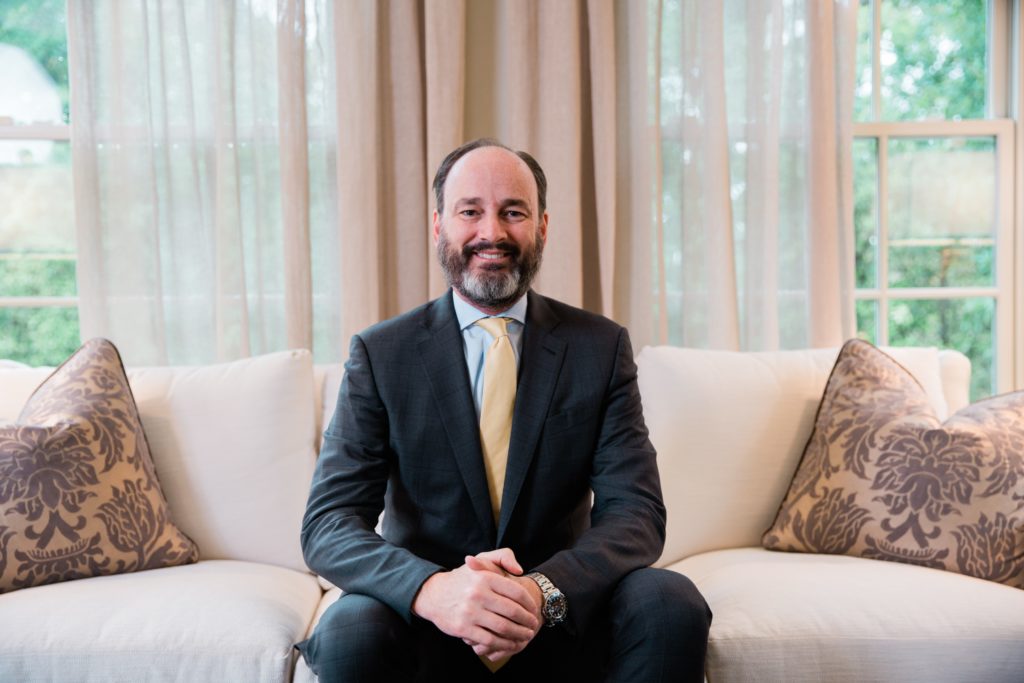
Aa Birmingham resident with more than three decades of experience in finance, has been named president of Birmingham-Southern College, a small, liberal arts school located in Birmingham, Ala. College officials announced Daniel Coleman as the new president, Thursday, Nov. 15. Coleman, who was CEO of the global financial services firm KCG Holdings until its 2017 sale, has been a member of the college’s Board of Trustees and is currently an adjunct professor of finance at the college. He said he wants Birmingham-Southern College to continue to expand its educational reach as it builds for its second century in Birmingham and to solidify its longtime role as “the intellectual heart of the city.” “I feel like the best way for me to have a positive impact on the city is to help Birmingham-Southern thrive,” Coleman said. “It has always been a special place here in Birmingham, and has such a history of and culture of service to the community.” Coleman, 54, who will take office as president on Dec. 3, has played a leading role in the evolution of automated trading in global financial markets. Until its 2017 sale to Virtu Financial, New York-based KCG was a leader in the securities and financial services industry, Before KCG, Coleman was CEO of GETCO, a privately-held automated trading firm based in Chicago. Prior to that, he worked for 24 years for UBS and its predecessor firms, ending up as global head of equities for UBS Investment Bank. “We are fortunate to have someone with such a thorough understanding of the college and broad experience shaping and growing complex organizations,” said BSC Board Chair Denson N. Franklin III ’85, who introduced Coleman to the campus at an event Thursday afternoon. “His love for Birmingham-Southern is apparent, but more than that, he brings an incredible skill set and perspective and impressed us with his ideas for moving BSC forward.” Coleman’s credentials Coleman earned his B.A. in English at Yale University and an M.B.A. at the University of Chicago. Coleman said his own background and work experience has epitomized the value of the kind of personalized liberal arts education that BSC provides. “I started my career in finance on a trading floor, but now, those jobs are almost all gone,” said Coleman. “When I think about college, I think about that kind of rapid professional evolution that’s happening in every field. We need to make sure students have jobs when they graduate, but we also have to make sure they have the ability to adapt so they have careers decades later. That’s something the liberal arts does like no other form of education.” Coleman replaces BSC President Emerita Linda Flaherty-Goldsmith, who retired from Birmingham-Southern earlier this semester due to health and family reasons.
