
Daniel Sutter: Gold, inflation and theft

President Donald Trump is reportedly considering former Godfather’s Pizza CEO and one-time presidential candidate Herman Cain for the Federal Reserve Board of Governors. Mr. Cain’s potential selection caused a stir for at least three reasons: accusations of sexual harassment which surfaced during his presidential run, a lack of training as an economist, and his advocating a return to a gold standard in a Wall Street Journal op-ed. Gold standard proponents perplex monetary economists because, I think, they raise primarily moral rather than economic arguments. Today most nations have government currencies managed by a central bank, like our Federal Reserve. Government monies are paper currencies, in contrast with the commodity or metallic monies of history. The dollar is money because the Federal government declares it to be. As each dollar states, “This note is legal tender for all debts, public and private.” Governments, though, did not invent money. Indeed, no one invented money; it emerged through the economic actions of people, particularly specialization in production and trade. A cobbler must trade the shoes she makes for food, clothing, and other things. Without money, the cobbler must use barter, and find a farmer, blacksmith, and clothier willing to take shoes for payment. Trading is easier to carry out when everyone accepts the same item in exchange for shoes, clothes, food, and everything else. This is money’s role. A commodity becomes money when people who do not want it for their personal use accept it in trade. No one person hit upon this idea and ordered everyone to use gold or silver as money. People saw how money made life easier. Money is an institution created by human action but not the product of human design. Money must maintain value to be useful in trading. If the money the cobbler accepts for her shoes disappeared or became worthless before she could buy food and clothes, she would get shortchanged. Counterfeiting threatens money. Today counterfeiters try passing off fake dollars for real dollars. Counterfeit currency allows people to acquire valuable goods and services without giving up anything of value. A law-abiding person’s money, if not a gift, represents something of value not yet traded away, unspent earnings, or a person’s time and effort. Counterfeiters effectively steal from people who acquire money honestly. Taking over supplying money allowed kings, and today governments, to create money not backed by production. No one could create commodity or metallic money out of nothing; alchemists tried in vain to turn lead into gold. Discoveries of gold or silver create riches, but still provide economic value – more gold to use as money. Under the gold standard, dollars were convertible into gold at a fixed rate. When the dollar was convertible at $35 per ounce, the supply of dollars was limited to $70,000 for every ton of gold reserve. The U.S. eliminated the domestic convertibility of dollars in 1933 and abandoned the last vestiges of a gold standard in 1971. Deliberate expansion of the money supply typically produces inflation and taxes everyone holding dollars. Modern monetary economists argue that the “tax” from inflation, or seigniorage, is typically very small, while control over the money supply can help stabilize the economy. Today the effective money supply exceeds the amount of currency in circulation, creating the potential for banking crises to destabilize the economy. Economists recognize the potential for governments to create too much money. Inflation, for example was a significant problem in the 1970s. Central bank independence, however, can curb politicians’ control over the money supply: enlightened monetary economists running the Federal Reserve will manipulate the money supply to our nation’s benefit. Monetary economists presume that whether governments should provide money was settled long ago and focus instead on managing our economy. Gold standard proponents want to relitigate this question, in large part to end the government’s ability to take wealth from citizens through inflation. ••• Daniel Sutter is the Charles G. Koch Professor of Economics with the Manuel H. Johnson Center for Political Economy at Troy University and host of Econversations on TrojanVision. The opinions expressed in this column are the author’s and do not necessarily reflect the views of Troy University.
Daniel Sutter: Is anything an accident?

California Attorney General Xavier Becerra has suggested charging Pacific Gas & Electric (PG&E) with murder in connection with last November’s Camp Fire. The deadliest wildfire in California history, Camp killed 86 people and destroyed the town of Paradise. A cause has not been officially determined, but evidence suggests that PG&E electric transmission wires may have started the blaze. The case illustrates a conundrum implied by the economics of accidents. I do not wish to accuse PG&E of starting the Camp Fire; that is to be determined. But Mr. Becerra’s comments, numerous lawsuits already filed, and news reports of PG&E’s potential bankruptcy, I think, justify this discussion. I am not a lawyer and wish to focus on the economics, not the legal requirements of sustaining murder charges or winning a civil lawsuit. The fire was not deliberately started and so in this sense was an accident. But could it have been avoided? Quite likely. Better maintenance on transmission lines and towers could have prevented aging, sagging power lines from sparking. Trimming trees would make high winds less likely to bring down power lines. PG&E could also have shut down parts of the electric grid on high fire risk days. The company formalized planned blackouts to prevent wildfires earlier in 2018 and shut off power to over 60,000 customers on a high risk day in October. Southern California utilities have also used blackouts to prevent wildfires. Power lines, of course, are not the only cause of wildfires; lightning and other human actions and carelessness are also causes. All power line related fires, however, could be prevented through enough maintenance, tree-trimming, and blackouts. If the Camp Fire could have been prevented, was it truly an accident? Diligence and safety can prevent most types of accidents. Workplace accidents claimed over 5,000 lives in 2017. The Occupational Safety and Health Administration has helped reduce workplace accidents significantly over the past fifty years. Still, more can always be done. Railings prevent falls; taller, sturdier railings make falls even less likely. Safety nets can help as well. Auto accidents kill 35,000, injure millions, and cause billions in property damage each year. Most traffic accidents are due to driver error, mechanical failures, and unsafe roads and bridges and are preventable. Highway redesign could further reduce accidents. And driving very slowly – imagine a 25 mph national speed limit – would dramatically reduce accident severity. Should we prevent all fires, workplace accidents, and highway crashes? Economics recommends balancing the benefits of preventing accidents against the costs. Such balancing will almost certainly involve accepting some accidents. Even if we think that human lives are infinitely valuable and should be saved whenever possible, accidents often involve fatal consequences either way. For instance, blacking out hospitals and nursing homes can cost lives. We will almost certainly choose a level of safety resulting in some accidents. If we deliberately choose less than perfect safety, are the fires, workplace mishaps, and traffic crashes truly accidents? This is debatable. We know that drunk drivers do not intend to maim people, but we consider this act so reckless as to be criminal. Some commentators think that deaths from workplace accidents and product defects are best viewed as corporate murder. Personally, I think that an important difference exists between mishaps occurring while pursuing a valuable and ethical goal and intentionally harming others. Still, many Americans find evaluating accident tradeoffs too explicitly discomforting. This is costly. As Vanderbilt economist Kip Viscusi notes, corporate America lags behind in applying risk analysis. Jurors find it offensive when a business determines how much it would cost to prevent deaths due to product design flaws or workplace risks and still chooses not to eliminate the risk. Because risk analysis seems to trigger mega-verdicts, businesses forego the analysis. Yet a lack of analysis merely leads to bad decisions, not safety. Economics suggests that perhaps nothing is an accident. But as humans, we can intuitively distinguish intentional harms and unfortunate events. However we resolve the conundrum, ignorance of risk analysis is definitely not bliss. ••• Daniel Sutter is the Charles G. Koch Professor of Economics with the Manuel H. Johnson Center for Political Economy at Troy University and host of Econversations on TrojanVision. The opinions expressed in this column are the author’s and do not necessarily reflect the views of Troy University.
Daniel Sutter: Heading for a fiscal cliff?

Is the Federal government spending us into financial ruin? The current numbers and budget projections suggest so. Yet I think that the scary numbers reflect an unresolved conflict over the role of government more than a threat of bankruptcy. The national debt of the United States, the accumulated borrowing since the Republic’s founding, stands at $21.85 trillion. The deficit, or amount borrowed to cover spending in excess of tax revenues, for fiscal year 2018 was $780 billion. A sense of magnitude is difficult to maintain once we get into the “illions” – meaning millions, billions, and trillions. A good way to size up Federal red ink is as a percentage of U.S. GDP, the value of all the goods and services produced in a year, which is currently $20.1 trillion. So 2018’s deficit and the national debt are 3.9 and 109 percent of GDP respectively. A second debt figure, the debt held by the public, confuses the matter. What is the difference? Some Federal government agencies hold debt, including Social Security and the military and civilian pension plans. As this debt is sometime described as “owed to ourselves,” some experts focus on debt held by the public, which is currently $16 trillion (78 percent of GDP). Which measure matters more? Debt held by the public is the amount the U.S. Treasury borrows in global credit markets. Interest rates are prices adjusting to bring demands for borrowing – by businesses and households in addition to government – into line with the supply of funds from savers and investors. Publicly-held debt potentially crowds out productive investment. The intra-government debt is also real. The $800 billion the Treasury has borrowed from the Department of Defense’s pension program is supposed to pay retirement benefits, but was used for other Federal spending. If not repaid, military pensions would need to be paid out of current taxes. Does the national debt spell inevitable bankruptcy? Warren Buffett has observed that the debt is not necessarily a problem because it was higher relative to GDP at the end of World War II. Mr. Buffett’s observation highlights the importance of budget projections. We borrowed to fight World War II, and investors expected spending to decline precipitously after the war. It did, and debt fell below 40 percent of GDP during the 1950s. By contrast, spending is expected to increase significantly in the future. The most recent Congressional Budget Office (CBO) 30-year forecast projects Federal spending to increase from 20.6 to 27.9 percent of GDP. An aging population using more medical care will increase spending on Social Security, Medicare, and Medicaid. The CBO expects debt held by the public to reach 152 percent of GDP by 2048. This will be uncharted territory for the U.S. and could trigger a debt cycle through rising interest rates. Will debt at 150 percent of GDP mean bankruptcy? Perhaps. Greece has teetered on the verge of bankruptcy with debt at 180 percent of GDP. But Japan remains sound despite debt at 220 percent of GDP. Debate over insolvency obscures a common assumption that tax revenues will not rise significantly. The CBO, for instance, projects Federal revenues of 19.5 percent of GDP in the 2040s, only three percentage points higher than today. A Cato Institute analysis of fiscal imbalance kept tax revenue at current levels. Potential Federal insolvency demonstrates that we cannot afford a European-style welfare state without European-style taxes. This tension, I think, goes back to Ronald Reagan, who pursued tax cuts even though his desired spending cuts proved politically unachievable. Reagan set Federal spending on a collusion course with our distaste for taxes, likely hoping that his tax cuts would eventually force spending cuts. Maintaining Social Security and Medicare as they are given demographic changes will require paying more taxes. I am not advocating for higher taxes and would prefer downsizing government. We cannot, however, afford a Cadillac on the payments for a Chevy and will soon have to decide whether we are truly willing to pay for big government. … Daniel Sutter is the Charles G. Koch Professor of Economics with the Manuel H. Johnson Center for Political Economy at Troy University and host of Econversations on TrojanVision. The opinions expressed in this column are the author’s and do not necessarily reflect the views of Troy University.
Daniel Sutter: World War I versus progress
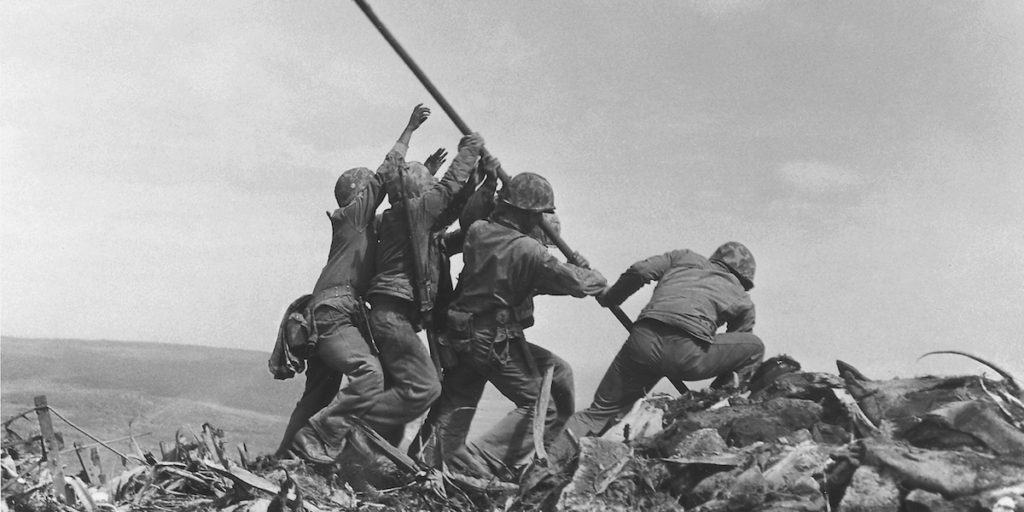
Veterans Day 2018 marks one hundred years since the end of World War I. Veterans Day was Armistice Day until America learned that we had not fought the war to end all wars. The Great War profoundly challenged the dominant ideology of the time, liberalism, with far-reaching consequences. We now call the 19th Century’s liberalism “classical liberalism” to distinguish it from the modern version. Classical liberalism provided the foundation for liberal democracy, and began with the premise that individuals’ happiness matters, not the fame and fortune of rulers. This was a radical idea; kings and emperors used people to build pyramids, fight wars, or otherwise serve them. If individuals are not means to anyone’s ends, then their interactions should be voluntary. In economics, this means economic freedom and free markets. Adam Smith explained how many of our institutions – including money, business, and language – arose spontaneously from voluntary interaction between people. John Locke and others extended voluntariness to government, maintaining that legitimate political leaders must serve the people, not the other way around. And reason allows us to make sense of the world. Modern science emerged with the Enlightenment, and its application to production yielded the Industrial Revolution. Classical liberals were not against religion, but did care about well-being in this world. The application of reason over time would produce progress and civilization, not regression. Liberalism dramatically improved the world. Economic historian Angus Maddison dates the takeoff of economic growth to England around 1700. For the first time in history, the average standard of living rose above subsistence. A dramatic increase in life expectancy and the diffusion of literacy and education followed. Britain and America developed political institutions limiting government and ending authoritarian rule. Britain never abolished its monarchy, but Parliament slowly exercised power. In America, our constitution limited government. The most explicit form of human servitude, slavery, was abolished in the 19th Century. Classical liberalism led to recognition of the immorality of slavery and demands for its abolition. Equal rights were extended to women. Progress was regrettably slow, particularly for African-Americans following abolition, but these accomplishments must be evaluated relative to thousands of years of dismal history. And then came World War I. The horrors of the Great War included trench warfare, disease, poison gas, and senseless slaughter. Nineteen thousand British soldiers were killed on the first day of the Battle of the Somme to capture three square miles of territory from the Germans. The U.S. suffered 116,000 military deaths, double our losses in Vietnam, in one year of fighting. Classical liberals saw international trade as an important means of maintaining peace. The saying, “When goods don’t cross borders, armies will,” captures the liberal view. Economic and cultural ties encourage recognition of our common humanity, making conflict less likely. And the potential disruption of trading relations during war creates political demands for peace. Yet Western Europe was highly integrated before World War I; not until the 1970s did its volume of international trade return to pre-1914 levels. Economic and cultural integration did not prevent war. The Great War seriously challenged the classical liberal worldview. Civilized nations surely could never perpetrate or tolerate the horrors of the Western Front. The ensuing malaise, voiced by the writers of The Lost Generation, contributed to the rise of fascism and thus to World War II. Professors can debate whether classical liberalism can be reconciled with the War; the start of the war can be blamed on illiberal Austria, Serbia, and Russia. What I find more significant is that educated contemporaries in Europe and America, who were quite familiar with liberalism, interpreted the War as a refutation. Progress has arguably resumed since the end of World War II. The incidence of extreme poverty across the world has fallen by more than half since 1990, and wars between nations have become less frequent. Hopefully progress will continue. But the Great War warns us that progress is never guaranteed. ••• Daniel Sutter is the Charles G. Koch Professor of Economics with the Manuel H. Johnson Center for Political Economy at Troy University and host of Econversations on TrojanVision. The opinions expressed in this column are the author’s and do not necessarily reflect the views of Troy University.
Daniel Sutter: Fake news and the market for ideas
Traditional social media have been criticized recently for purveying fake news. California may form a commission to investigate stemming fake news, while Congressional hearings have implored Facebook and Twitter to act. Is the news market failing? Classical liberals back to John Milton and John Stuart Mill have stressed freedom of speech and expression as crucial in allowing citizens to control government. Free expression is vital for two reasons. The first is the value of free inquiry in discovering the truth. The second is the potential for government power to regulate expression to stifle criticism. The metaphor of a marketplace of ideas illustrates the truth-seeking argument. Just as competition supplies us with cars, clothes or soft drinks, competition will work for ideas. Let truth and falsehood compete, and truth will win out. This reasoning believes that most citizens can distinguish good from bad arguments. Yet I find the marketplace of ideas metaphor slightly off. In my research on media bias, I emphasize how our evaluations of public policies draw on our personal values and information about the world. Is the $15 per hour minimum wage recently enacted by some cities wise policy? The answer depends in part on values – whether one believes that government should try to raise poorer households’ income. And also on information – the number of $9 an hour jobs eliminated by a $15 minimum wage. News deals with the information element of policy assessment. Peoples’ values differ, but to paraphrase Senator Daniel Patrick Moynihan, we all face the same facts. The news media hopefully provides truthful information for readers or viewers. Information differs from ideas. Assessing the truth of information requires significant resources and not just common sense; specifically, a news organization’s reporters and editors. Ideas combine information and values. Citizens have no capacity to verify a report claiming that the $15 minimum wage eliminated 10,000 jobs. Media bias involves deliberate manipulation of information to advance political values, not inevitable reporting errors. A story might deliberately exaggerate the job losses from the $15 minimum wage to influence people’s policy evaluation. We can only identify some relevant factors about when biased reporting will advance specific values. For example, the persons we trust most can most easily mislead us. Blatant propaganda is often recognized and consequently ineffective. Information advancing an organization’s values may be discounted. And bad news is frequently denied; President Trump dismisses any report suggesting that his policies are not working perfectly as fake news. President Trump has seemingly used evidence of liberal bias to convince his supporters to dismiss all news from prestigious news organizations as fake. Convincing analyses find that liberal bias is typically nuanced and subtle, involving misleading headlines, a lack of perspective, or perhaps omissions, not outright falsification. Biased news still contains truth. Charges of liberal bias are decades old, so what has changed? The more explicit branding of outlets as liberal or conservative, I think, encourages wholesale dismissal. Hosts like Sean Hannity or Rachel Maddow with conservative or liberal views organize most cable news content. (This is not necessarily bad; contrasting takes on current events may be a good way to assess the truth.) Editorials set a newspaper’s brand, even though the rules of objectivity still apply to the news content. And conservative outlets like Fox News and the Washington Times makes liberal branding of CNN and the Washington Post more plausible. The most surprising aspect in our more partisan news market has been the lack of an outlet building an information-only brand trusted across the political spectrum. The New York Times and Washington Post may think they occupy this space, but conservatives’ dismissal demonstrates otherwise. The marketplace of ideas is a powerful metaphor, but information is not ideas. Common sense cannot substitute for a network of trained, experienced reporters. Is the market for news hopelessly broken? Fortunately, a missing product creates a profit opportunity for a clever entrepreneur. Perhaps trusted news sources are evolving right now, obscured by the noise of current events. ••• Daniel Sutter is the Charles G. Koch Professor of Economics with the Manuel H. Johnson Center for Political Economy at Troy University and host of Econversations on TrojanVision. The opinions expressed in this column are the author’s and do not necessarily reflect the views of Troy University.
Daniel Sutter: Sustainable solar energy

Oregon recently took back $13 million in tax credits awarded to SolarCity based on inflated costs reported on 14 solar projects. This is just the latest in a long series of legal issues for renewable energy companies. Our governments have encouraged solar and wind energy through tax credits, subsidies from tax dollars, and mandates. But perhaps letting markets and entrepreneurs work might be a better way to develop renewable energy to truly benefit America. One billion in tax dollars were spent on Oregon’s Business Energy Tax Credit program, which the state’s Department of Energy badly mismanaged. SolarCity (now part of Tesla Motors) was allowed to report costs far in excess of amounts paid for the 14 projects, receiving tax credits which were then sold to businesses with tax liabilities. Selling tax credits is a common practice; the legal concerns arose from the overstated costs. Unfortunately, this sounds like yesterday’s news. In 2017, SolarCity paid almost $30 million to the U.S. Treasury for employing the same accounting move rejected by Oregon. Solyndra received $535 million in Federal loan guarantees and was prominently promoted by the Obama Administration before going bankrupt in 2011. The U.S. Department of Energy Inspector General concluded that Solyndra officials deliberately overstated sales to secure the loan guarantees. And this year, solar panel installation company Legend Solar, which ranked 27th on Inc. magazine’s list of top startups for 2016, has failed to deliver new panels for customers or perform repairs on panels under warranty. Do these cases mean anything other than that some shady characters have run some solar power companies? I think so. First, government subsidies and mandates likely slow the detection of poor quality and fraud. Customers (which might be businesses themselves) provide the main line of defense against fraud. Homeowners who paid deposits for Legend Solar’s panels, for example, alerted state officials. And yet customers subsidized by tax dollars or forced by rules to use solar power may not discipline a failure to deliver products of expected quality. More significantly, subsidies and mandates may adversely impact technology. The transcontinental railroads illustrate the potential danger. In 1869, the Central Pacific and Union Pacific Railroads met in Utah, with a golden spike symbolically linking the nation. The transcontinental railroads were mostly built with generous government subsidies and large land grants and were an economic waste. The subsidized railroads went bankrupt and had to be rebuilt. Only, the Great Northern Railway built by entrepreneur James J. Hill without government subsidies, avoided bankruptcy. Government assistance affected railroad construction. The subsidized railroads were built on steep grades through the mountains, making the hauling of trains very costly; Mr. Hill selected more favorable grades and invested in spur lines to collect freight from surrounding communities. As economic historian Burt Folsom explains, this should come as no surprise. The Union Pacific and Central Pacific were in the business of collecting government subsidies, not railroads; they laid track to collect handouts, not to create a profitable business. The interjection of politics could additionally affect the individuals who become entrepreneurs and start businesses. As my Johnson Center colleague G. P. Manish and I explored in a 2016 paper, many of America’s great market entrepreneurs appear to have been motivated by what psychologists call the mastery motive, meaning the desire to excel at tasks; making money was almost secondary. Each purchase of a product by consumers in the market validates entrepreneurs’ desire to know they have mastered their business. Politicized markets offer a very different form of validation and may draw a very different set of entrepreneurs into an industry. From the energy shortages of the 1970s to concerns over fossil fuels’ greenhouse gases, politicians have seemingly had good reasons to encourage renewable power. Economically viable renewable energy would be a boon for America but will require solar and wind systems capable of creating value, not merely collecting government subsidies. Perhaps government should step aside and let market entrepreneurs develop renewable energy in an economically sustainable manner. ••• Daniel Sutter is the Charles G. Koch Professor of Economics with the Manuel H. Johnson Center for Political Economy at Troy University and host of Econversations on TrojanVision. The opinions expressed in this column are the author’s and do not necessarily reflect the views of Troy University.
Daniel Sutter: A lesson from the school pickup line

Our school district does not provide school bus service, so parents must take their children to and from school each day. Waiting in line to pick up our children provides a first-hand lesson about an important category of economic contests. Troy Elementary School dismisses students at 3 p.m. I always want to be one of the first parents in line when I pick up my son. Chuck then gets perhaps an extra ten minutes at home. And I show him that he is important enough to me that I will make time to be first in line. Only try as I might, I have not yet this year gotten close to the front of the line. Even arriving 30 minutes early is not enough. The people of Troy love their children very much, which makes Troy a great place to live. We also seem to have very flexible schedules. As a group, we parents face a reality: only one person will be first in the pickup line. The line is an example of what economist Robert Frank labeled positional goods – where we care about our position relative to others. The pursuit of positional goods can be wasteful. Life features many positional goods. Black Friday, the day after Thanksgiving, is traditionally the biggest shopping day of the year. Some people line up well in advance of the store openings to show that they are the most serious shoppers. At the college I went to, students had a tradition of camping out in advance of hockey season tickets going on sale. The first students in line were the most serious supporters of the team. Positional goods can involve other forms of competition. Neighbors sometimes engage in positional contests to put up the most amazing Christmas light and decoration displays. The costs include the decorations and higher electricity bills. Having the newest, latest, and shiniest computer, big screen TV, or car is a positional contest as well. Competition in positional contests uses scarce resources just trying to move ahead of others when in the aggregate this isn’t possible. Even if parents waited all day in line after dropping off our children, only one would be at the front of the pickup line. Everyone engaged in a positional contest might agree that we would be better off spending less time and money. And yet our incentives work against us here. If all other Troy Elementary School parents arrived at 2:55 p.m., I would show up at 2:50 p.m. Economist Thomas Schelling explained how sometimes people might choose to have someone limit our freedom to compete. Government can perform this role, or associations which can enforce rules on their members. Two factors complicate limiting competition. First, competition may also improve contest quality. Consider high school football. Winning has a positional element – only one team can win the state title in each class each year. Extra practices, voluntary off-season workouts, and attending college camps may be seen as providing only a relative advantage. Yet this might also increase the quality of play, benefitting fans, coaches, and the players. A pure positional contest has no element of quality. Beyond this, working hard in pursuit of our goals is an important part of life. The players may enjoy working hard together during the offseason and may be building life-long friendships. The freedom to outwork others is integral to America’s opportunity society. To see this, imagine if students were not allowed to prepare for the SAT exam. An SAT score affects college admissions and scholarships; it matters for life. Aptitude tests do have a positional element. All students spending $1,000 on prep classes may not change their percentile rankings. Yet being denied the freedom to study hard and improve one’s performance seems profoundly unfair. We need to be aware of positional contests, of the times in life where we simply are trying to get ahead of others. We may want to accept limits on such contests to curb wasteful competition. But we also need to remember that the freedom to work and create opportunities for ourselves is a crucial part of life. ••• Daniel Sutter is the Charles G. Koch Professor of Economics with the Manuel H. Johnson Center for Political Economy at Troy University and host of Econversations on TrojanVision. The opinions expressed in this column are the author’s and do not necessarily reflect the views of Troy University.
Daniel Sutter: Rental scooters and innovation

Rental bikes and scooters came to Troy University this fall, courtesy of the rental company Spin. Similar efforts by Spin, Bird, and Lime across the country, however, have met with controversy. The so-called “Scooter Wars” reflect how government permission affects innovation and growth. Technology makes such rentals, long available in resort locales, economical. The companies use GPS tracking and electronic billing, and rentals can be unlocked by scanning a driver’s license. People leave the bike or scooter at their destination and an app directs customers looking for a ride to the nearest rental. The companies use public spaces like sidewalks to “store” their rental units. This makes the rentals convenient for customers, as walking several blocks to and from rental locations would offset most of the time savings on short trips. Yet bikes and scooters clogging sidewalks have contributed to hostile reactions. Numerous cities have banned the scooter companies, including Miami (which banned Bird and Lime within weeks), Seattle, Boston, Nashville, and St. Paul. The bans have occurred in part because the companies entered some cities by just dropping off bikes and scooters on the streets for use. And Miami’s ban may not be permanent; Denver, Portland, and Salt Lake City all eventually permitted scooter rentals after initial bans. The government permission of relevance is more than simple business licenses, which are generally issued upon completion of required paperwork and payment of relevant fees. Instead, the permission requested here can be denied altogether. And this alters the prospects for innovation in our economy. Should scooter companies need permission slips from cities? This is where the “Scooter Wars” highlight an important tension. Are people free to do whatever the law does not prohibit? Or do we need permission from government to start new businesses, offer new products and services, or use our property as we wish? Rentals undoubtedly raise some valid concerns. Increased bike and scooter use can affect traffic safety. The rentals take up space on sidewalks, interfering with pedestrians. They could obstruct building entrances. Wouldn’t it be wise for city officials to evaluate the tradeoffs involved and impose rules to reduce potential problems? Yes, but unfortunately requiring government permission does not produce only wise and benign oversight. Government permission empowers a NIMBY, or Not in My Backyard, society. NIMBY becomes the default response when people can object to a new venture for any reason, good, bad, or imagined. Do you find scooters unsightly, annoying, or threatening? Then pressure city officials to ban them. Requiring government permission also allows economic interests to block competition. Economist Joseph Schumpeter described capitalism as a process of creative destruction: automobiles, cell phones, and email rendered horse-drawn buggies, landlines, and traditional mail largely obsolete. Existing businesses, often long-standing pillars of local economies and politics, have an interest in preventing innovation. If local governments must give permission, people’s natural NIMBY reaction and existing business’ interests create biases against innovation. The scooter companies resorted to surprise deployments as a means, I think, of counteracting government’s status quo bias. Miamians took 30,000 trips on Lime scooters while they were available, and these users also spoke to city officials. The ride sharing company Uber similarly sought to develop loyal local customers to fend off local political efforts to ban ridesharing. Progress requires innovation, even though the new and different can be frightening. Unfortunately, the need to get government permission becomes a formula for stasis, as Tyler Cowen examines in The Complacent Class. And dynamic innovation doesn’t mix well with permission. Computers and technology have been leading sources of innovation in recent decades in part because innovation here often still doesn’t require permission. Personally, I’m too uncoordinated to try to use an electric scooter. So don’t expect to see me on a Spin scooter soon. But regardless of your age or coordination level, the Scooter Wars’ clash between NIMBY and innovation matters for us all. ••• Daniel Sutter is the Charles G. Koch Professor of Economics with the Manuel H. Johnson Center for Political Economy at Troy University and host of Econversations on TrojanVision. The opinions expressed in this column are the author’s and do not necessarily reflect the views of Troy University.
Daniel Sutter: Is Facebook really like Ma Bell?
Some commentators and politicians have proposed regulating Facebook, Twitter, and Google as public utilities. To make sense of this proposal, let’s consider the economic role of public utilities. Today’s social media giants might meet the popular definition of monopoly, namely having a very large market share. Economists, however, use a much stricter definition, and public utility regulation is applied only to the specific type known as a “natural” monopoly. Natural monopoly refers to industries where the cost per unit produced or customer served falls due to a very high first unit cost and a very low cost of serving extra customers. Consider the electric grid. Establishing the grid requires generation plants, transmission lines, substations, and finally the power wires in our communities. Once built, the cost of connecting one more home or business to the grid is very low. The same dynamic applies to water and sewer systems, landline telephones, and roads and streets. One large firm will likely dominate such industries. Why? Competition drives price down to the cost of production. Here the largest firm has a cost advantage and can profitably charge lower prices than its rivals. Smaller firms can either match the leader’s price and lose money or maintain a profitable price and likely lose customers. After the smaller guys go bankrupt, the large firm can raise its price and earn big profits. We frequently use anti-trust laws to prevent the establishment of or to break up existing monopolies. But breaking up a natural monopoly is unlikely to produce competition for long. The largest firm’s cost advantage doesn’t go away. What are the alternatives? One is government ownership of the utility, which we rely on for water, sewers, roads, and electricity in communities like Troy. Cooperative ownership by customers – electric and natural gas co-ops – prevents managers from trying to profit at customers’ expense. Public utilities regulation gives a private, for-profit company an exclusive service territory, albeit with restrictions. Government regulators, in Alabama the Public Service Commission, set prices and other terms of service. And the utility is a common carrier who must provide service to all customers willing to pay the regulated price. Economists and lawyers developed the public utilities doctrine around 1900. Another way to think about a public utility is that competition between profit-seeking businesses normally best serves customers. But the enormous cost of power grids renders multiple systems and competition unattractive. Perhaps having one grid and economists deliver the benefits of competition through rules makes more sense. Whether the public utilities doctrine served America well during the 20th Century is a question for another day. How about applying this model to social media today? Facebook and Google meet the popular definition of monopoly – they dominate their markets. Twitter dominates its unique product, but alternatives exist to push out messages. None of the three has a massive, critical physical infrastructure creating declining cost per customer. The social media giants do possess an advantage resembling natural monopoly. They have coordination value: the value of being on Facebook increases with the number of other users. Economists call this a network effect. Although many economists fear that network effects might lock us into inferior technology, in practice entrepreneurs can get consumers to switch: we do not still watch VHS movies and listen to cassettes. The social media companies serve their customers very well. For instance, YouTube’s advertising allows performers to earn money, with some stars earning millions per year. Facebook has offered users innovative features and an easy interface. Market domination due to better service benefits consumers. Alternatives to Facebook currently exist, like LinkedIn and even MySpace. More significantly, a new rival would not have to duplicate a massively costly physical infrastructure. The economic case for regulating the fast-changing digital world with a model designed for the physical world is weak. Today’s social media giants will likely have a much shorter time on our economic stage than phone and electric utilities unless we cement their positions via regulation. ••• Daniel Sutter is the Charles G. Koch Professor of Economics with the Manuel H. Johnson Center for Political Economy at Troy University and host of Econversations on TrojanVision. The opinions expressed in this column are the author’s and do not necessarily reflect the views of Troy University.
Daniel Sutter: Should we exercise the freedom to bet on sports?

Four states have already legalized sports betting in the wake of last May’s Supreme Court decision. While many Alabamians have moral objections to gambling, economics also provides a reason not to bet on sports, namely that betting will be unprofitable. And this illustrates an important aspect of financial markets in general. To understand the likely unprofitability of betting, let’s consider the most common football bet, one against the point spread. One team is favored by a given number of points and must win by this number to win a bet; the underdog wins by winning or losing by less than the spread. Bets against the spread should be fair, meaning that the favorite and underdog should be equally likely to win. Bets are not quite fair because sportsbooks deduct a fee so they can make money. Despite the fees, sports bettors who pick all winners will make handsome profits. And if you think you know football, you might think you can pick winners for at least some games. But sports’ entertaining unpredictability also makes picking just winners impossible. And because of the betting lines, you cannot profit by just betting on the Alabama Crimson Tide, who win almost every game. If point spreads are accurate, bettors will not be able to pick enough winners to profit. Accuracy does not mean that the spread exactly predicts each game, but is better at forecasting outcomes than any other method. Is this really true? Dozens of published papers have found that sports betting lines accurately predict outcomes. Alternatively, economists try to find profitable betting strategies given the sportsbooks’ fees; the published research yields few winning formulas. Accurate point spreads yield a surprising implication: experts should not do any better than amateurs or luck in picking winners. Flipping a coin to decide who to bet should be as reliable as a super handicapper’s “lock of the year.” This theory of efficient financial markets was first developed for the stock market. The price of a company’s stock should be our best forecast of its future performance. Some stocks clearly deliver tremendous returns: a $1,000 investment in Amazon or Netflix in 2007 would have been worth $12,000 and $51,000 respectively a decade later. But who knew to invest in Amazon in 1997, Apple in 1978, or General Motors in 1920? Warren Buffet passed on investing early in Amazon. How do financial markets accomplish this? Once markets exist for stocks, bonds, sports bets, gold, Bitcoin, or anything else, millions of investors can invest where they see value. If you think that Amazon’s stock is still underpriced, then buy now. Of course, someone will only sell to you because they do not think Amazon is undervalued at today’s price. Stocks, gold, and football point spreads must all be priced to balance the number of buyers and sellers most of the time. One guiding principle for financial research has been that it cannot be easy to get rich. If it were easy to get rich and remained so over time, then everyone would be rich. A satisfactory theory of financial markets must reflect this reality. Prices generally quickly incorporate news affecting a company’s or team’s prospects. Why then bet on sports? Some people enjoy having action on games and sweating their bets. Betting on your favorite team can also signal your loyalty. Finally, some people, I think, like the challenge of trying to beat the market by finding some heretofore unrecognized pattern. Market efficiency does not mean that nothing remains to be learned about teams’ performance. The potential to make money in stock, bond, futures, and foreign currency markets motivates similar efforts by analysts on Wall Street and across the world. This research further improves financial markets. Even should Alabama legalize sports betting, I won’t be placing many bets. I would be denying the power of markets if I did. Studying economics pays off, sometimes just by avoiding unprofitable decisions. ••• Daniel Sutter is the Charles G. Koch Professor of Economics with the Manuel H. Johnson Center for Political Economy at Troy University and host of Econversations on TrojanVision. The opinions expressed in this column are the author’s and do not necessarily reflect the views of Troy University.
Daniel Sutter: Paying for checked bags

United and Jet Blue recently increased their checked bag fee to $30. Nobody likes paying for things we didn’t used to pay for, like checked luggage. A bill in the U.S. Senate would limit airlines’ checked bag and other fees, which topped $7 billion in 2016. But economics suggests that bag fees can make air travel more efficient, not merely extract money from travelers. American was the major airline to charge for checked bags in 2008. The fee rose from $15 initially to $25, and almost all airlines except Southwest use this fee, while some regional airlines even charge for carry-on bags. Airline credit cards and frequent flier programs often allow free bags. It is tempting but inaccurate to say that until 2008 passengers did not pay for checked bags. Carrying luggage is costly: airlines need larger planes with cargo space and must hire baggage handlers, while extra weight requires extra jet fuel. U.S. airlines are businesses and cannot lose money for too long. Revenue must at least cover costs, with or without bag fees. Prior to 2008, the price of tickets covered the cost of carrying bags, averaged across all fliers. If passengers checked on average one bag each, perhaps $25 of the ticket price would have covered baggage costs. Fliers with many bags would prefer paying a ticket price covering the average number of checked bags, while passengers without bags effectively paid for others’ luggage. Travelers now must pay for checked luggage. This should make air travel more efficient overall. Previously passengers might have checked a bag with contents providing only $10 or $20 of value to them. If the $25 bag fee approximately equals the airlines’ cost of transporting bags, a bag valued at $10 will no longer fly, which is good because it was not worth the cost. My points about bags apply to other airline services like meals and beverages. If airlines do not charge for alcoholic beverages or meals, ticket prices must cover these costs. First class passengers still receive such “freebies” but their expensive tickets certainly cover the costs. Should airlines then charge for everything, including the reading light or the lavatory? Two factors limit charging for everything. One is the cost of restricting access and collecting money from willing users. Electronic payments make collecting fees easier, but lavatories would need to be accessible only after paying. Negative reactions from passengers also matter. People do not like being nickel-and-dimed for every little thing; losing a frequent flyer due to a $3 fee is bad business. Social media now amplifies customer complaints. Until 1978, the Civil Aeronautics Board (CAB) regulated U.S. airlines, including the routes airlines could fly and fares. Forty years of deregulation have reduced fares by 50 percent in exchange for few extra services. Today most Americans can fly at least occasionally; under government regulation, flying was primarily for business travelers and the well-to-do. Senators Markey of Massachusetts and Blumenthal of Connecticut have introduced the Forbid Airlines from Imposing Ridiculous Fees, or FAIR, Act to limit fees of any sort, including for changes or cancellation. Rebooking fees run from $75 to $300 plus the difference in price of the flights. Cancellations can result in seats going unused on high demand flights and thus cost airlines. While these fees seem high to me, airlines know much more about their operations and costs than I do. Competition between airlines for passengers is a better way to keep fees reasonable, fares low, and service quality high. Southwest advertises that bags fly free, and airlines seeking competitive advantage will undercut any excessive fees. If the Senators want to assist the flying public, they should address access to gates at our nation’s airports, a factor which economists find limits competition. Travelers will pay for checked luggage, either through fees for each bag or higher ticket prices. While it is nice when someone pays for us, air travel is more efficient when we each pay our own way. ••• Daniel Sutter is the Charles G. Koch Professor of Economics with the Manuel H. Johnson Center for Political Economy at Troy University and host of Econversations on TrojanVision. The opinions expressed in this column are the author’s and do not necessarily reflect the views of Troy University.
Daniel Sutter: Is Alabama’s school sales tax holiday good policy?

Last weekend was Alabama’s annual back-to-school sales tax holiday. If you have a child in school, I hope you were able to take advantage. Tax holidays provide an example of using tax policy to shape peoples’ decisions and raise questions about the role and even size of our government. Alabama was the first of sixteen states with school sales tax holidays in 2018. Alabamians could avoid sales tax on over $900 in school-related purchases, including clothes, books, and computers. A family could have saved over $80 in taxes. Tax exemptions encourage spending which we judge worthwhile. School supplies certainly qualify as worthy. Millions of children nationwide may not have the supplies they need for school, a gap that our teachers generously help fill. A recent survey found that 94 percent of teachers spend their own money on supplies for students, averaging almost $500 over two years. Letting a lack of supplies compromise a $12,000 annual per pupil expenditure on public schools would be a tremendous waste. Still, targeted tax exemptions and deductions are controversial. Some critics label these exemptions “tax expenditures” to highlight an equivalence to government spending. Consider our sales tax holiday. Alabama alternatively could have collected the sales tax as normal and purchased supplies for children. Tax expenditures are not identical to spending tax dollars, as no family is required to buy school supplies. But a resemblance exists. The individual and corporate income taxes contain America’s most significant tax expenditures. The ones most familiar are the mortgage interest and charitable contributions deductions. Deductions lower the cost of the designated activity, resulting in more people owning homes and more dollars going to charities. The Tax Foundation estimates that Federal tax expenditures in 2015 totaled $1.2 trillion and $130 billion for individual and corporate taxes. That amounted to almost 80 cents in tax expenditures for every dollar of individual income tax revenue, and over 50 cents per dollar of corporate tax revenue. Viewing taxes not collected as spending increases the size of the Federal government. Washington spent $4 trillion in 2017, or 21 percent of GDP. Adding tax expenditures brings this to almost 28 percent of GDP. Tax expenditures probably shouldn’t count equally to spending, because people would have bought school supplies and homes without tax breaks. But spending alone understates the impact of government. How one views reducing Americans’ taxes via deductions likely depends on how one views the relationship between government and citizens. Believers in limited government probably view citizens as entitled to keep the money they earn. And if government answers to the people as the Declaration of Independence proclaims, government shouldn’t tell us how to spend our money. People who believe that government should address pressing societal needs might view the loss of tax revenue as limiting the good government can do. Economists raise two points about tax expenditures. The first involves the impact on economic growth. A tax code with many deductions requires higher tax rates to collect the same amount of revenue. High tax rates reduce growth. Taxing all income at lower rates should increase economic growth without reducing government spending. The second point involves the consequences of government dispensing tax breaks as it chooses. A healthy, growing economy requires investment in promising businesses which provide new and better products and services and earn profits, not merely avoid paying taxes. Lobbying Congress for tax exemptions can become more profitable than expanding a successful business. The House of Representatives recently passed a Health Savings Accounts reform including tax breaks for gym memberships. Passage of this tax break increased the value of Planet Fitness’ stock by four percent. Nobody likes paying taxes, so giving people a break for good deeds seems reasonable. Yet exempting good causes, like school supplies, induces others to pursue tax breaks for themselves. When the dust clears, keeping tax ratees low and making everyone pay for school supplies might look like a better plan. ••• Daniel Sutter is the Charles G. Koch Professor of Economics with the Manuel H. Johnson Center for Political Economy at Troy University and host of Econversations on TrojanVision. The opinions expressed in this column are the author’s and do not necessarily reflect the views of Troy University.
