
Gas prices could spike amid Middle East conflict, experts say

By Casey Harper | The Center Square The ongoing conflict in the Middle East could lead to a spike in gas prices in the U.S. Oil prices have already signaled a surge in response to the major conflict between Israel and Hamas terrorists in Gaza, which could drag other nearby oil-producing nations into the fight. “The conflict will almost certainly drive up gas prices, but much will depend on its scope and duration,” Paige Lambermont, an energy expert at the Competitive Enterprise Institute, told The Center Square. “This uncertainty itself can drive up prices. But there is one thing that is certain: Increasing the oil supply would mitigate any price effects connected to the conflict and would help to reduce the extremely high gas prices that Americans were already dealing with when they go to the pumps.” Oil prices have fluctuated in the days since the attack, but overall there was an initial spike in crude oil futures of roughly 4-5% that has so far leveled off. Gas prices surged in the U.S. in the summer of 2022, hitting a national average of $5 per gallon of regular gas in part because of the Russian invasion of Ukraine. To combat those higher prices, President Joe Biden released tens of millions of barrels of oil from the Strategic Petroleum Oil Reserve, the nation’s stockpiles normally reserved in case of emergencies. According to the federal Energy Information Administration, that reserve has been nearly cut in half since 2020. Biden took fire for releasing the oil from critics who said he was only doing it because the 2022 midterm elections were drawing nearer and that lowering the stockpile so dramatically could leave the U.S. vulnerable in case of a large-scale conflict. Now that a conflict may be on the horizon and Middle East oil supplies are even more volatile, that criticism has resurfaced. “How high will oil prices go?” Peter St. Onge, an economist at the Heritage Foundation, wrote on X, formerly known as Twitter. “Goldman and Bloomberg are already calling $100 oil. Some are saying $150 if Iran gets involved. Joe Biden broke all the easy solutions after he drained the Strategic Petroleum Reserve to just 17 days. Then burned the Saudis over and over, who may be in no mood to help.” Lambermont said these and other policies have left the U.S. unprepared for global shocks. “Unfortunately, the Biden administration has long been pushing policies that reduce the oil supply,” she told The Center Square. “Just in the last several weeks, the administration canceled seven oil and gas lease sales in the Arctic National Wildlife Refuge, proposed a new rule to impose an outright ban on oil and gas leasing in the National Petroleum Reserve-Alaska, and released an offshore oil and gas lease sale plan that the administration boasts would have ‘the fewest oil and gas lease sales in history.’” As The Center Square previously reported, Hamas terrorists fired thousands of missiles into Israel over the weekend, and militants spread throughout the country, killing and capturing both soldiers and civilians. The casualty numbers are still in flux, but hundreds of Israelis were killed and even more injured. Israel quickly fired back, launching strikes in Gaza and declaring war, promising unparalleled retribution for the attacks. The conflict, which is likely to escalate and continue for at least the rest of this year, has raised questions about the U.S. financial and military aid to Israel as well as how oil markets will be impacted. “Historically, any tensions in the Middle East cause market volatility, and I don’t see this being any different, especially if Israel takes direct action against Iran,” Daniel Turner, executive director of the energy workers advocacy group, Power the Future, told The Center Square. “The Iranian regime feels particularly empowered right now. They see Carter-esque weakness in the White House and have built strong alliances with China and Russia.” According to AAA, the national average price for a gallon of regular gasoline is $3.66. “Despite sanctions and international pressure, many of our adversaries never stopped producing and selling oil, and now they are cash rich and emboldened,” Turner said. “Higher oil prices are better for them and will likely result from inevitable escalating violence in the region.” For now, experts say the impact on prices will largely depend on the length of the conflict and which world powers get involved. “Prices at the pump are sensitive to world oil markets because the cost of crude oil is set at the global level and makes up more than half the cost of refined gasoline in the United States, on average,” Travis Fisher, an economist at the Cato Institute, told The Center Square. “Any upticks in crude oil prices tend to translate to increases in gasoline prices. “For now, the price increases in global crude oil markets appear modest, but that could change if the conflict widens.” Republished with the permission of The Center Square.
Daniel Sutter: A tale of two debacles

In December, a winter storm grounded Southwest Airlines for nearly a week, even though major airlines quickly resumed service. In January, all flights were temporarily grounded due to the crash of a Federal Aviation Administration (FAA) system. The consequences of these debacles illustrate accountability in markets and politics. A winter storm across the northern United States snarled air and ground Christmas travel. But days after Christmas, Southwest was still canceling about half of its flights, almost ten times more than any other airline. Southwest’s disruption must then have involved additional factors. One appears to be Southwest’s point-to-point route structure in contrast with other airlines’ hub-and-spoke systems. This seemingly left many planes and crews stranded in weather-impacted cities. Failure of an outmoded crew tracking system is a second culprit, as it kept available crews from being used. The FAA’s Notice to Air Missions (NOTAM) system crashed on January 11, causing 7,000 flight delays and 1,000 cancellations. NOTAM delivers safety messages to flight crews prior to takeoffs, prompting the FAA to suspend takeoffs until the aged computers were back online. Neither debacle was unexpected since out-of-date technology was bound to eventually crash when stressed. Timely investment in new systems could have avoided the debacle. Why did this not happen, and what consequences have Southwest and the FAA faced? Gary Kelly was Southwest’s CEO from 2004 until early 2022 when current CEO Bob Jordan took over. Mr. Kelley’s background was in accounting, and he reportedly was not convinced of a sufficient return on investing to modernize crew communications. An alternative interpretation here is that the potential for December’s meltdown was too hypothetical to register in a cost analysis. New CEO Mr. Jordan was talking in November about overhauling antiquated systems, but then it was too late. The FAA’s failure combines the government’s long-standing underinvestment in infrastructure with mindless bureaucracy. The NOTAMs have been called useless. One aviation group described them as presenting “information in a coded, upper case, incredibly un-human-friendly format” and “overloaded with irrelevant information.” The NOTAMS included items like grass cutting at airports, resulting in reports upwards of 100 pages. Reason’s Christian Britschgi reports how two Air Canada pilots in 2017 missed a notice about a closed runway buried in a report and almost collided with four other planes. Let’s turn now to consequences. Mess-ups cost businesses customers and stock value. Stock markets are forward-looking; investors evaluate everything about a company, its competitors, and the economy to project future profitability. Once all current information is digested, stock price changes should reflect new information. Not surprisingly, Southwest’s stock price fell 11 percent between December 23rd and 27th, yielding a $2 billion loss based on market capitalization. The stocks for American, Delta, and United fell by only 2 to 3 percent over these days. A formal event study would be needed to confirm attribution, but markets punish businesses for mess-ups. Politics produces criticism. Transportation Secretary Pete Buttigieg has been ripped over the NOTAM failure and will likely face a Congressional hearing. Doing poorly as Transportation Secretary could degrade Mr. Buttigieg’s political prospects. But how many FAA bureaucrats will lose their jobs and pensions over this? Moreover, history shows that failure in the public sector frequently yields budget increases to “fix” the problem. Political “accountability” has produced continual technological obsolescence at the FAA. In the 1990s, the computers running America’s air traffic control system still used vacuum tubes, making the FAA scour the former Soviet bloc for spare parts. The FAA today tracks planes with paper flight strips instead of electronic slips like other developed nations; a partial transition may be completed by 2031. As Wired magazine noted, “Modernization, a struggle for any federal agency, is practically antithetical to the FAA’s operational culture, which is risk averse, methodical, and bureaucratic.” Every organization will make mistakes. Economic freedom necessarily entails the freedom for businesses to mess up. But because private businesses – unlike government bureaucracies – face financial penalties for their mistakes, businesses must improve or eventually face bankruptcy. Daniel Sutter is the Charles G. Koch Professor of Economics with the Manuel H. Johnson Center for Political Economy at Troy University and host of Econversations on TrojanVision. The opinions expressed in this column are the author’s and do not necessarily reflect the views of Troy University.
Less demand fuels national gas price drop to below $4 per gallon
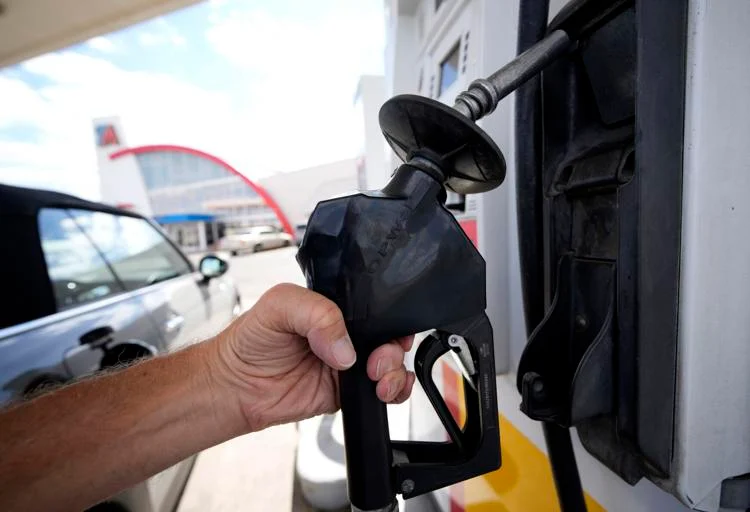
The national average price for a gallon of gas fell below $4 on Thursday for the first time since March, according to AAA, in large part because of decreased demand as motorists drive less. After hitting an all-time high of $5.02 per gallon in June, the national average price has now fallen just below $4 to $3.99, marking 58 consecutive days of declining gas prices. According to the U.S. Energy Information Association, however, the gasoline demand is about 3% lower than it was a year ago, indicating that the decrease in gas prices has failed to draw consumers back to the pump after many have shifted driving habits. A survey by AAA reports that almost a third (64%) of U.S. adults have changed their driving habits since March. The top three changes made were deciding to drive less (88%), combining errands (74%), and reducing shopping or dining out (56%). At the same time, the total gasoline supply in the U.S. has fallen to 220.3 million barrels from the previous week. AAA attributes the decline in gas prices, in part, to the decrease in demand as well as a decrease in the price of oil. “Oil is the primary ingredient in gasoline, so less expensive oil is helpful in taming pump prices,” said Andrew Gross, AAA spokesperson. “Couple that with fewer drivers fueling up, and you have a recipe for gas prices to keep easing.” Although the average national price for gas has fallen, prices vary from state to state, with California’s average price per gallon sitting at $5.34. Many other states, too, have gas prices over $4, including Hawaii, Illinois, Nevada, Oregon, Washington, and New York. President Joe Biden celebrated the continual decline of gas prices last week and said that he is doing everything he can to keep bringing them down. “I’m doing everything I can to bring down the cost of gas at the pump,” Biden said. “And today, America hit 50 days straight of falling gas prices – the fastest decline in over a decade.” Some say, however, that the U.S. should not celebrate yet. Daniel Turner, founder and executive director at Power The Future, a non-profit organization focused on energy research, said that prices are down because the economy is in a recession and that the U.S. needs to expand its domestic supply of oil. “While gas prices falling from their all-time high is a good thing, this is no time for the Biden Administration to take a victory lap. Joe Biden’s recession is the reason for the price drop, and our families are still paying too much because of his energy failures,” Turner said. “Winter is coming, and the drain from the Strategic Petroleum Reserve will end in October. To meet this rising demand in the long term, we must increase domestic supply, something the Biden Administration is unwilling to do.” Republished with the permission of The Center Square.
Biden administration cancels new oil leases as gas prices hit record highs

President Joe Biden canceled three pending oil and gas drilling leases in Alaska and the Gulf of Mexico this week as gas prices hit record highs. Biden has taken heavy fire for blocking new leases and pipelines as energy costs have surged but has defended his record. This latest development intensified that criticism. “It’s day 477 of the Biden administration, we have record gas prices, and they have still not leased one acre of land to drill oil,” Rep. Dan Crenshaw, R-Texas, said. The Department of Interior announced the decision late Wednesday, saying there was not enough industry interest in the areas. Experts argue the Biden administration’s fight to cancel all oil and gas leasing has made it risky and unappealing for the oil and gas industry to begin new investments in the U.S. The Alaska lease had difficulty receiving interest at certain points in the past before Biden took office. “Canceling oil and gas leases is part of Biden’s ongoing punishing of the industry including threatening banks for lending and investment,” said Daniel Turner, executive director of the energy workers advocacy group, Power the Future. “We are all living the consequence: outrageously high prices and growing shortages.” The decision comes just days after the U.S. hit record-high gas prices. According to AAA, the national average gas price is currently $4.42, up from $3 per gallon the same time last year, when prices had already begun to rise. Federal inflation data released Wednesday also showed a slight decline in energy costs in April but still overall a major increase in energy prices in the past year. Biden blocked all new oil and gas leasing on federal lands via executive order shortly after taking office, but a federal judge overturned that decision. Earlier this week, the White House defended Biden’s work on energy costs. “He’s also taken steps that are definitely smaller but meant to do anything possible, including issuing a waiver for E15 so that thousands of pumps in the Midwest could have gasoline that – and make it available to Americans so that that’s 10 cents less,” White House Press Secretary Jen Psaki said. “He also has noted … that oil companies should also do their part in ensuring they’re not price-gouging customers at the pump. As oil prices come down, so should gas prices at the pump. And that’s also something that we are going to continue to watch closely and continue to call on steps to be taken.” Meanwhile, many Republicans blasted Biden for the decision. “As gas prices hit an all-time high in the USA, [the president] canceled a vital round of oil and gas lease sales this morning,” Sen. Mike Lee, R-Utah, said. “High gas prices are preventable. Democrats are putting woke politics ahead of American families.” They also pointed to the record-high gas prices. “Yesterday Americans paid the highest price for gasoline in history,” Sen. Marco Rubio, R-Fla., said. “At the same time Biden just cancelled our largest pending American oil [and] gas lease sale” Critics say Biden’s green agenda has Americans paying the price. “Biden has repeatedly said he is doing everything in his power to lower gas prices, but then he pushes policies like this which cripple the industry’s ability to produce,” Turner said. “It also scares off any investment. Joe Biden made it clear in his campaign that he believes fossil fuels are the enemy. By making them scarce and expensive he creates a narrative to push his green agenda.” Republished with the permission of The Center Square.
Gasoline prices set record Tuesday as Joe Biden set to release plan on inflation
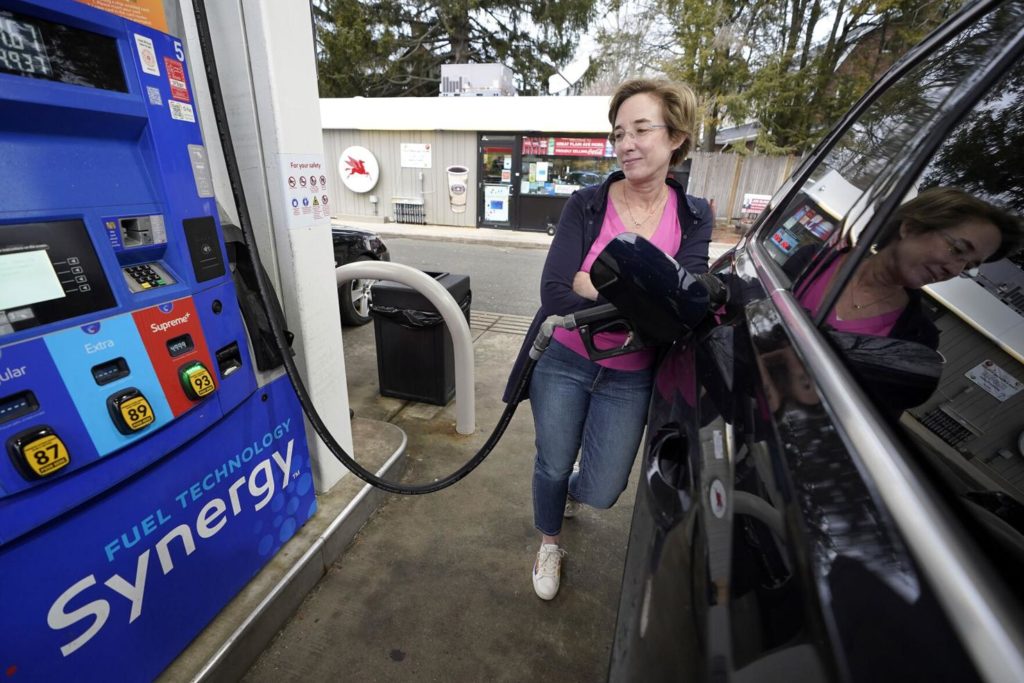
Gasoline prices set a record Tuesday ahead of President Joe Biden’s planned announcement to address rising inflation costs. Short of prioritizing and expanding domestic production, critics argue, any plan he offers won’t reduce gas prices, which are only expected to rise further over the summer. According to AAA, the cost at the pump for both regular gasoline and diesel fuel reached their highest recorded average price Tuesday morning. The national average of a regular gallon of gasoline was $4.374, up five cents from Monday, and $5.55 for diesel, up one cent from Monday. The nation’s 10 largest weekly increases, AAA reports, were in Michigan (+26 cents), New Jersey (+25 cents), Connecticut (+19 cents), Kentucky (+19 cents), Indiana (+19 cents), Rhode Island (+19 cents), Illinois (+18 cents), Washington, D.C. (+18 cents), Alabama (+18 cents) and Tennessee (+18 cents). The nation’s 10 most expensive markets continue to be in California ($5.82), Hawaii ($5.28), and Nevada ($5.11), followed by Washington ($4.83), Oregon ($4.81), Alaska ($4.73), Washington, D.C. ($4.69), Arizona ($4.66), Illinois ($4.59) and New York ($4.51). For the week ending March 14, weekly retail average gasoline prices across all grades was $4.41 a gallon, the U.S. Energy Information Administration (EIA) reported, the highest on record. As of Tuesday morning, the domestic benchmark, WTI Crude, was $102.74 a barrel and the international benchmark, Brent Crude, was $105.44 a barrel. Gas prices also are reaching record highs at a time of the year when they traditionally go up because refiners switch to producing more expensive summer blends. As travel picks up over the summer and demand for gasoline increases, gas prices are only expected to go up even further. Gas prices have been rising since Biden first came into office and began implementing a range of restrictions on domestic production. Within months of doing so, well before the Russian invasion of Ukraine, U.S. gas prices reached a seven-year high. Now, “Americans are waking up to the highest gas prices ever as President Biden’s energy failures continue to mount,” energy nonprofit Power The Future said in a statement. “The latest skyrocketing gas prices come less than two months from the previous record for regular gasoline while diesel has set a new record on a regular basis since last week.” “There is no doubt the White House is hoping that Americans simply become numb to yet another disastrous result of their energy failures, but the pain at the pump is too real and everyone intrinsically understands that Joe Biden is to blame,” the organization’s founder and executive director, Daniel Turner, said. “President Biden is now a two-time record holder for the highest gas prices, the most oil drained from the strategic reserve, and re-injecting the term ‘inflation’ back into the national lexicon for the first time since the 1970s. This type of failure doesn’t happen by accident,” he added. “The President’s green ideology is a man-made disaster and we’re all paying the price.” As gas and other prices keep climbing, Biden’s remained steadfast in restricting domestic production, instead turning to OPEC+ countries, including Russia, Saudi Arabia, and Venezuela, to produce more oil, while also releasing record amounts from the Strategic Petroleum Reserves. The U.S. Department of Energy recently announced it was investing $3.1 billion to bolster electric vehicle production with a goal of electric vehicles making up half of all vehicle sales in the U.S. by 2030. By the end of 2021, electric vehicle sales accounted for 3.4% of car sales, according to the EIA. As of March, more than 2.5 million plug-in electric vehicles had been sold nationwide, according to the DOE. Critics say if Biden hadn’t canceled the Keystone XL Pipeline, gas prices would be lower, and the pipeline would have strengthened U.S. GDP by an estimated more than $3 billion, carried roughly 830,000 barrels of oil a day from Canada to the U.S., and directly and indirectly provided up to 26,000 jobs. Sixteen attorneys general called on Biden to reinstate the pipeline, prioritize domestic energy production, and “reverse the damage” he’s done. Last month, they wrote the president saying, “It’s never too late to admit your mistakes.” Republished with the permission of The Center Square.
National gasoline average tops $4 a gallon, expected to continue to rise
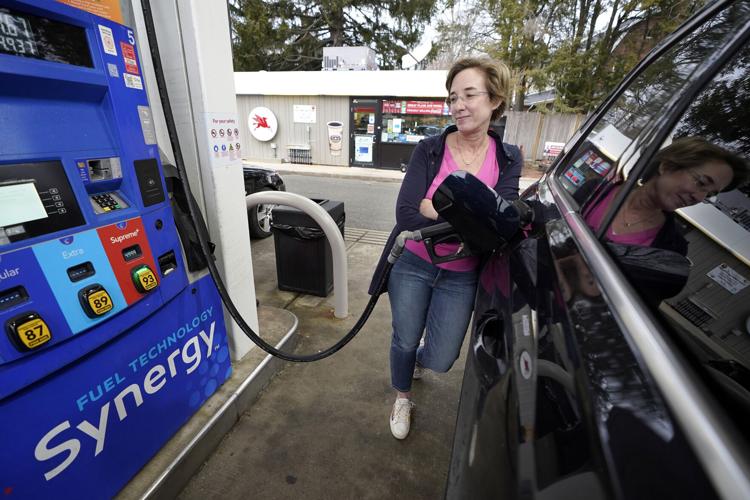
The average price for regular gasoline topped $4 a gallon Monday, the first time motorists paid so much at the pump since 2008. Analysts predict gas prices will continue their climb, and crude oil could hit $200 a barrel. The national average for regular gasoline was $4.065 a gallon Monday compared to the $3.610 average a week ago, $3.44 average a month ago, and $2.768 average a year ago, AAA reports. California continues to have the highest average price of $5.34 a gallon. The ten states that saw the largest weekly increases are Rhode Island (+58 cents), Nevada (+57 cents), Connecticut (+56 cents), Kentucky (+56 cents), Alabama (+56 cents), West Virginia (+55 cents), Virginia (+55 cents), Massachusetts (+54 cents), New Hampshire (+52 cents) and New Jersey (+52 cents), AAA reports. The ten most expensive markets in the U.S. are California ($5.34), Hawaii ($4.69), Nevada ($4.59), Oregon ($4.51), Washington ($4.44), Alaska ($4.39), Illinois ($4.30), Connecticut ($4.28), New York ($4.26) and Pennsylvania ($4.23). “The all-time high for the national average retail price of gasoline was $4.114 set July 17, 2008,” Andrew Lipow of Houston-based Lipow Oil Associates LLC told The Center Square in an email. “And we will break that record Tuesday as the national average heads to $4.50.” The all-time high for the national average retail price of diesel was $4.845 on July 17, 2008. “We will break that record in the next few days as the national average heads to $4.90,” Lipow added. Gas prices at the pump, and all costs impacted by gasoline prices, will continue to rise as the Biden administration continues to restrict U.S. domestic oil production, analysts say, and expands reliance on foreign production, which is greatly impacted by the Russia-Ukraine conflict. The U.S. and others are considering a ban on importing Russian crude as its invasion of Ukraine continues. The WTI Crude hit $130 a barrel Sunday night, dropping to $121 a barrel Monday morning, with Brent Crude surpassing $123 a barrel. By comparison, on Wednesday, February 23, the day before the Russian invasion of Ukraine, the WTI was $92 a barrel. “The market is pricing in a 3 million barrel per day disruption,” Lipow said. “A complete ban on Russian exports will lead to $150+ per barrel. This is happening at the same time 330,000 barrels per day has been shut in Libya by protesters and 400,000 barrels per day is offline in Iraq due to field maintenance.” Analysts at Bank of America predict that if the majority of Russian oil exports are cut off, there could be a 5 million barrel per day shortfall, causing crude to hit $200 a barrel, Reuters reported. If Russian oil supply faces continued disruption, Brent could end the year at $185 per barrel, JPMorgan analysts forecasted, according to Bloomberg News. On February 23, the national average retail price for diesel was $3.96. Today it’s $4.61, with California having the highest average of $5.69. On February 23, gasoline futures prices were $2.72 a gallon, Lipow notes, now up 96 cents a gallon today at $3.68. Diesel futures prices also skyrocketed from $2.83 a gallon to $4 a gallon, a 117 cent per gallon increase. “These increases will ultimately be passed through to the consumer in the form of higher gasoline prices, higher airline ticket prices since they use jet fuel, and all sorts of goods that are made from petroleum, as well as delivery service fees because trucks and railroads are using diesel,” Lipow said. “If one is heating their home with heating oil, those costs just went up as well.” Gas prices soared under President Joe Biden well before the Russian-Ukrainian conflict began due to a number of factors. Last October, oil prices hit a 7-year high as American oil and gas companies continued to fight the Biden administration over policies restricting production. As the economy began to reopen in 2021 and the demand for fuel increased, Biden, through executive order, halted and restricted oil and gas leases on federal lands, stopped construction of the Keystone Pipeline, and redirected U.S. policy to import more oil from the Organization of the Petroleum Exporting Countries and Russia (OPEC+) instead of bolstering American oil and gas exploration and production. Last November, Biden approved the largest release in the history of the Strategic Petroleum Reserve of 50 million barrels. He also consistently looked to OPEC+ member countries to increase production, including Russia. In January, before Russia invaded Ukraine, “tensions along the Ukrainian border have helped push crude oil prices higher almost daily,” AAA reported. “While President Biden is urging Russia and OPEC to increase production, the Interior Department is erecting roadblocks to American production,” Western Energy Alliance President Kathleen Sgamma said at the time. “Oil and natural gas from federal lands is among the most sustainably produced in the world and certainly cleaner than the oil produced in Russia. Besides the stricter environmental controls on public lands, producers agree to extra measures to protect wildlife, reduce emissions, reduce water use, and ensure stewardship of the land. “Further, the Interior Department continues to ignore diverse voices who have urged the administration to move forward with developing oil and natural gas in America,” she added. “Democratic governors, minority community leaders, tribes, small businesses, and many others have voiced support for continued federal oil and natural gas development, but the administration prioritizes activists and environmentalists over bipartisan policymakers and a broad array of stakeholders.” Still, Biden remained resolved to prioritize dependence on OPEC+ member country production and to continue to release oil from the Strategic Petroleum Reserve. Last week, he announced that 31 countries, including the U.S., were releasing 60 million barrels of oil from reserves around the world, with the U.S. releasing half. The U.S. alone requires 18 million barrels a day, Daniel Turner, founder and executive director of Power The Future, notes. Biden’s plan would only provide enough domestic supply for two days. “President Biden’s efforts aren’t going to solve any problems any time soon,” Turner said. “It’s clear the Biden
