
Kay Ivey asks mayors to keep ‘critical’ bridge project alive
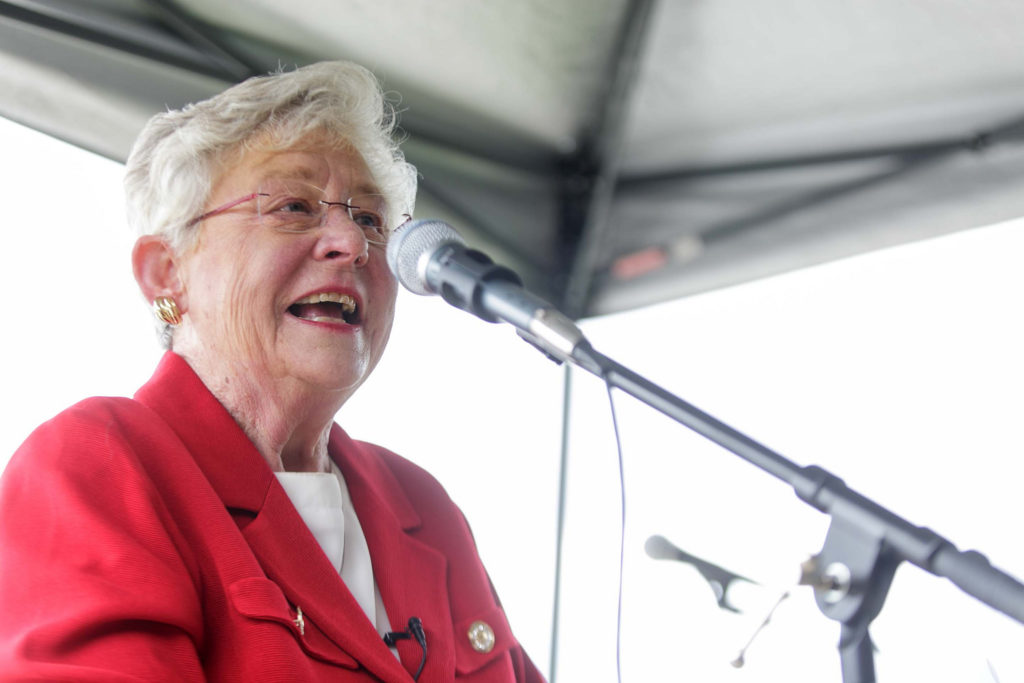
Alabama Govenor Kay Ivey is asking coastal officials to keep a “critical” Mobile Bay bridge project alive as they try to work out concerns about tolls. Ivey sent a letter Wednesday to the Mobile and Daphne mayors urging them to keep the proposed toll bridge project in the region’s long-range transportation plans. The bridge must be included to qualify for any federal funding. Opponents say the proposed tolls of up to $6 would hurt working families. Ivey wrote they will continue to look for a path forward and ways to reduce or eliminate tolls. Ivey said the project is critical “not only to Mobile and Baldwin Counties, but the entire Gulf Coast Region.” Republished with the permission of the Associated Press.
Mobile Baykeeper accuses Daphne Utilities of dumping untreated sewage into Mobile Bay

At the beginning of April, the Mobile Baykeeper, an environmental group, accused Daphne Utilities of Daphne, Ala. of dumping untreated sewage into the Mobile Bay. According to the group, Daphne Utilities released three million gallons of untreated sewage per day into the Blakeley River and Mobile Bay at the beginning of the year. The organization published pictures of the alleged brown sludge being released from the Daphne Utilities waste management plant, and now claims that the water has bacteria levels 4000 percent above the legal limit. Mobile Baykeeper also filed a lawsuit against the utility company in December of 2017, claiming the company violated the Clean Water Act and the Alabama Water Pollution Control Act, and are adding the new allegations to that lawsuit. Thursday evening, during a Daphne City Council meeting, Mayor Dane Haygood took time to discuss his stance on some of the issues facing Daphne Utilities regarding these allegations, according to Gulf Coast News Today. “I don’t believe the average person understands the distinction between Daphne Utilities and the City of Daphne,” said Haygood. “Some of the public relations response to these issues have an implication back to the City of Daphne, though. Whether or not they’re under direct management of the city, there is a reflection on the City of Daphne with these actions.” Mayor Haygood is one of five voting members on the Daphne Utilities board, and claimed he voted for the company to conduct a full examination of the allegations made by the Mobile Baykeepers. “I think the allegations are certainly concerning,” Haygood told the City Council. “As a board, I’m not sure the response has been correct. I hope these issues get behind Daphne Utilities for the sake of the utility board and the city as a whole.” Jon Gray, a representative of Daphne Utilities, said the company started to make changes earlier in the year, and by February was in compliance with current regulations. The Daphne Utility Board denied that the treated water in the pictures published by the Mobile Baykeeper was dangerous and are now accusing the Baykeepers of exaggerating the matter. “While we’re doing some of that maintenance we may see spikes in our test results to the outfall line, but that doesn’t mean we’re putting raw sewage in Mobile Bay,” Gray told WALA FOX 10.
Department of Justice called to investigate Alabama for possible voting rights violations
The Washington, D.C.-based Voting Rights Institute (VRI) has called on the Department of Justice (DOJ) to investigate Daphne, Alabama’s City Council’s March 21 decision to reduce the number of polling places in the city from five to two. VRI, a project of the American Constitution Society, Campaign Legal Center and Georgetown University Law Center, sent a letter Wednesday to the DOJ after receiving a complaint from African American leader and voter in Daphne, Willie Williams. According to the Institute, the city’s decision forced residents of one of the only districts with a sizable black population to travel more than two and a half miles away from their current polling place, while it preserved the polling locations for most of the city’s heavily white districts. “This is exactly the type of voting change that would have had to have been precleared by the Department of Justice before the Supreme Court’s disastrous ruling in Shelby County v. Holder,” said Harry Baumgarten, Legal Fellow with the Voting Rights Institute. “In gutting a key provision of the Voting Rights Act, the Supreme Court has opened the door for these potentially discriminatory measures to be passed and implemented throughout the country.” In addition to reducing the number of polling locations, the city also recently passed a new mid-decade redistricting plan whose impact on the black voting age population in each district is unclear. “We want fair and honest elections, and what the Daphne City Council has done in reducing polling locations is not fair and it’s not honest,” said Williams. “Voters need convenient polling places and need to be able to vote, and not be confused where to go to vote in their local elections.”
