
Darryl Paulson: Amnesty Don
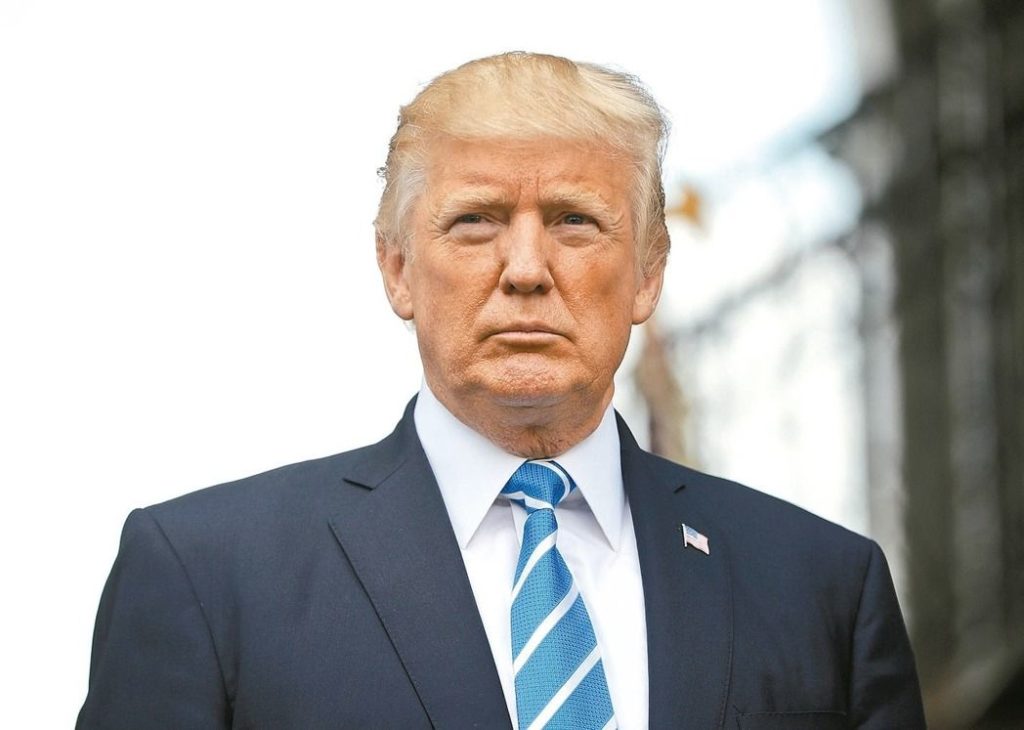
Amnesty Don. That’s what Steve Bannon and Breitbart News called President Donald Trump after news came out that the president and the Democratic leadership of congress brokered a deal concerning the Dreamers. According to reports, Trump struck a deal with Democratic leader of the Senate Chuck Schumer and Democratic House leader Nancy Pelosi. The supposed deal was to grant work visas and a pathway to citizenship for the children of illegal immigrants. Democrats agreed to bolster the number of immigration agents, but refused to support building a wall on the Mexican border. After conservative critics ranging from Laura Ingraham, Ann Coulter, Congressman Steven King and others attacked Trump for striking an amnesty deal with Democrats, Trump denied that any deal had been reached. Immigration policy has always been one of the most divisive issues in America. Much of the early controversy centered around the Irish and German immigrants, both associated with the Catholic Church. The attack on the Irish and German Catholics led to the formation of the “Know-Nothing Party in the 1850s. The party derived its name when members were asked about their beliefs, they were told to respond, “I know nothing.” Founded after the collapse of the Whig Party, the Know-Nothing Party swept Massachusetts elections in 1854. In the 1856 presidential election, their candidate was former Whig president Millard Fillmore, who won 21.5 percent of the vote. The party collapsed after the 1856 elections. Many critics of current anti-immigrants attempt to link their views to the Know-Nothing Party. In a 2006 editorial in The Weekly Standard, editor William Kristol attacked populous Republicans for “turning the GOP into an anti-immigrant, Know-Nothing Party.” In addition to the attacks on the Irish and Germans, later attacks focused on Southern Europeans, Africans and Asians. Congress passed the Chinese Exclusion Act in the 1880s, which completely stopped the flow of Chinese immigrants. The Simpson-Mazzoli Act of 1986 granted amnesty to illegal workers who resided continuously in the United States since Jan. 1, 1982, and paid a fine and back taxes. It was passed by the Democrat controlled House, the Republican Senate and signed into law by Republican Ronald Reagan. A flood of illegal immigrants since Simpson-Mazzoli has led to more recent efforts to grant permanent status to the most recent wave of illegals. In 2010, Congress considered the Dream Act which would have granted work permits to the children of illegal immigrants and create a pathway to citizenship. Although it passed the Democratic controlled House, the Senate was not able to get the 60 votes needed to stop a Republican filibuster. Because of the failure of Congress to pass the Dream Act, President Obama signed an executive order in 2012 to protect the Dreamers. The Deferred Action for Childhood Arrivals (DACA), was praised by the Democrats, but attacked by Republicans who argued the president lacked the authority to unilaterally change immigration policy. DACA became a focal point of the 2016 presidential campaign when candidate Donald Trump promised to end DACA on “Day One.” He also promised to build a wall on the Mexican border. Instead of “Day One,” it took Trump eight months to rescind DACA. There are currently four major legislative proposals before Congress to reform immigration. The Dream Act, sponsored by Democrat Dick Simpson of Illinois and Republican Lindsay Graham of South Carolina, would codify DACA, impose educational, work and military requirements and create a path to citizenship after 13 years. Florida Republican Congressman Carlos Curbelo has introduced the Recognizing America’s Children Act. This bill codifies DACA, imposes work and educational requirements, and creates a path to citizenship after 10 years. The American Hope Act sponsored by Democratic Representative Luis Gutierrez of Illinois, has 112 Democratic co-sponsors. There are no work or military requirements and Dreamers may apply for citizenship after five years. Finally, Republican House member Mike Coffman of Colorado has introduced the Bar Removal of Individuals [who] Dream and Grow our Economy (Bridge Act). Coffman is seeking to obtain 218 signatures and force DACA to the floor for a vote. Will President Trump’s negotiations with the Democratic leadership force Republicans to act, or will it alienate them from their president by shutting out Republicans from the negotiations? Will Republican leaders Mitch McConnell and Paul Ryan schedule a floor vote on DACA, especially if most Democrats support the bill and most Republicans oppose the bill? Will Democrats offer concessions to the president and Republicans in exchange for supporting DACA? Will Democrats agree to build a birder wall? Will Democrats support E-Verify to enforce immigration law? Will Democrats agree to hire more immigration agents? At this point, there are a lot more questions than there are answers. ••• Darryl Paulson is Emeritus Professor of Government at the University of South Florida in St. Petersburg specializing in Florida politics and elections.
Darryl Paulson: Obama’s electoral legacy: After 8 years, we get a Donald Trump

(Part 2 of the Obama legacy) With the inauguration of Donald Trump, it is a good time to review the electoral impact of eight years of the Obama White House. One of the impacts is the election of Trump which surprised the entire political universe. Whatever Obama may have achieved in public policy, it is that policy which is in great part responsible for setting “the post-World War II record for losses by the White House party,” according to Larry Sabato. Democrats lost over 1,000 seats at the state and national level. However important the Obama policies may have been, it is fair to argue that those policies contained the seeds of Democratic losses. The Wall Street and big bank bailouts led to the creation of the Tea Party. The Tea Party became a primary vehicle to organize disaffected Republicans against bailouts for Wall Street and not Main Street. Combined with opposition to the Affordable Care Act (ACA), mobilized Republicans took over control of both the House and Senate, and effectively denying Obama the needed votes to carry out the rest of his agenda. After the 2016 election, Democrats held 11 fewer Senate seats than they did Jan. 20, 2009, a 16 percent decrease. Democrats hold 62 fewer House seats than in 2009, a drop of 24 percent. They also lost control of the White House giving Republicans complete control of the national government. At the state level, the number of Democrat governors fell from 28 to 16, a 43 percent decline. In 2009, Democrats controlled both houses in 27 states; after 2016, the number dropped to dual control of only 14 states, a 48 percent drop. On top of this, Democrats lost 959 seats in the state legislatures, weakening them for years to come. These losses mean that Democrats will have a difficult time in passing their agenda at the state and national level. It also means that the Democratic bench of future leaders has been wiped out, making it difficult for them to find and finance competitive candidates. Finally, since Democrats foolishly changed the filibuster rules in 2013, cabinet nominees and most court appointees will need only 51 votes to be confirmed. This creates the possibility for more extreme nominees to win confirmation. One of the few positive thing for Democrats is that it is difficult to imagine them losing many more seats. The out-party normally makes gains in midterm elections. Unfortunately for Democrats, they must defend 25 of the 33 Senate seats up for election in 2018, and Trump won 10 of the 25 states that Democrats must defend. If the Democrats could pick up only two Senate seats in 2016 when Republicans had to defend 24 of the 34 seats, it is hard to imagine them doing better in 2018 when they must defend two out of every three Senate seats up for election. Without Obama on the ballot in 2016 and 2018, fewer young and minority voters will turn out at the polls. Although Democrats have dominated among young voters, few of them turn out, especially in off-year elections. Democrats have complicated their problem with young voters by having an array of senior citizen leaders. Nancy Pelosi has been the ranking Democratic leader for 6 terms, as has second-ranking Democrat Steny Hoyer. Third-ranking Democrat James Clyburn has served five terms as leader. Pelosi is 76, and Hoyer and Clyburn are 77. Although Democrats have been devastated during Obama’s tenure, he is not solely responsible. Obama is only the third Democratic president to twice win a popular vote majority, along with Andrew Jackson and Franklin Roosevelt. Democratic National Party Chair Debbie Wasserman Schultz, a Congresswomen from Florida, was widely viewed as an ineffective spokesperson for the party and was eventually ousted for what many Democrats viewed as her favoritism for Hillary Clinton over Bernie Sanders during the Democratic primaries. Obama appointed Wasserman Schultz to become chair of the Democratic Party and, critics contend, for standing by her for far too long. Politics is a strange beast. Six months ago, almost everyone believed the Republican Party was on its last legs, and the Trump nomination would doom them forever. Today the Republicans control all three branches of the federal government, and it appears that the Democrats are on life support. Who knows what tomorrow will bring? ••• Darryl Paulson is Emeritus Professor of Government at the University of South Florida St. Petersburg.
Darryl Paulson: A look at Obama’s legacy, foolish hope of ‘post-racial’ America
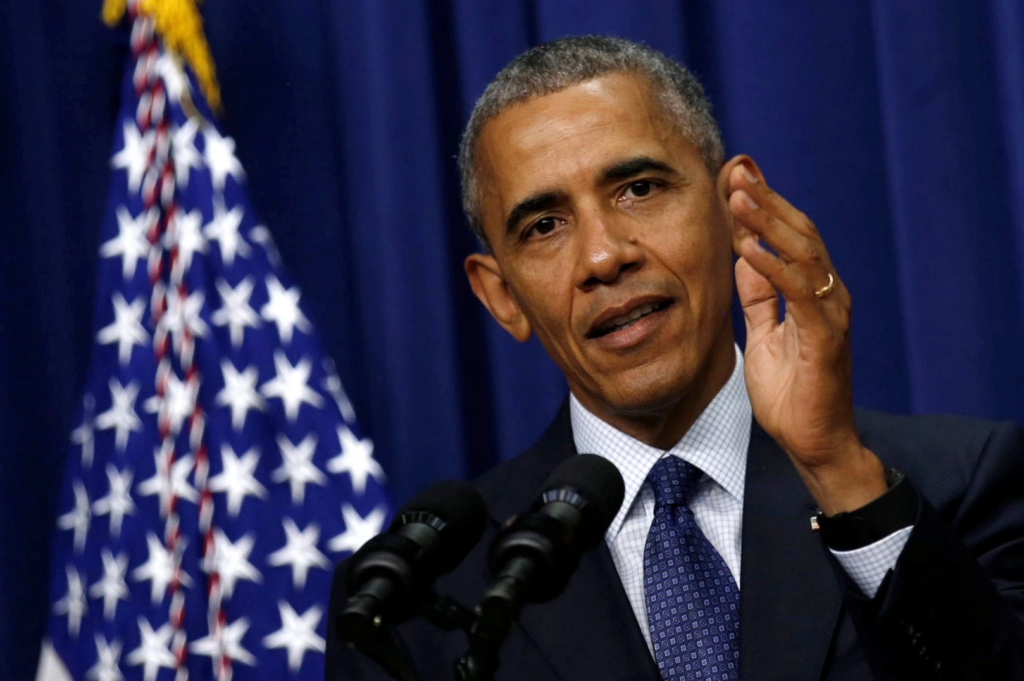
(Part 1 of two. Part two will deal with Obama’s political legacy) The 2008 presidential campaign of Barack Obama focused on the theme of change. Obama promised to “restore our moral standing” and “focus on nation-building here at home.” Obama, as a candidate, told audiences that “we are the ones we’ve been waiting for. We are the change we seek.” “Yes, we can” and “change you can believe in” became the campaign themes. Obama promised to “make government cool again.” This would be achieved by an activist, expanding federal government. Obama seemed to be contradicting the message of the last Democratic president, Bill Clinton, who argued that “the era of big government is over.” Although Obama viewed himself as a transformative president, much of his first year in office was spent stabilizing America’s collapsing economy and avoiding another Great Depression. America was losing 700,000 to 800,000 a month with no let up in sight. Major banks and Wall Street brokers were declaring bankruptcy, and the American auto industry was on the verge of collapse. If nothing else, Obama deserves credit for stabilizing the economy. His action plan included an unpopular stimulus program, a bailout of the auto industry that some described as socialism, and shoring up the big banks that were responsible for much of the economic instability with their risky loans. As a result of President Obama’s efforts, an economic catastrophe was avoided. We have had eight consecutive years of economic growth, although critics pointed out the less than 3 percent growth rate was low. The economic programs, in part, lead to an 88 percent increase in the national debt and the loss of the United States AAA bond rating. “Obamacare,” or the Affordable Care Act (ACA), was the primary domestic accomplishment of the Obama presidency. Young individuals could remain on their parent’s insurance until age 26, preexisting conditions would not disqualify you from coverage and 20 million more Americans received health care coverage. The ACA was not without its critics. The plan did not control health care costs as promised, and Obama’s promise to Americans that “if you like your doctors, you can keep them” and “if you like your health care plan, you can keep it” proved not to be true. In fact, Politics-Fact labeled those promises the “lie of the year.” The ACA was narrowly passed without a single Republican vote. That does not bode well for its long-term success. Major public policy change in the United States, to succeed, needs to be comfortably passed with bipartisan support. Civil rights legislation and Medicare are just two examples of that. Democrats contend that Republicans were not going to vote for the ACA and give Obama a major political victory. Republicans argued that the president made no attempt to reach out to them and find common ground. The president has many tools available to curry support, most importantly, the power of persuasion. For whatever reason, the goal seemed to pass the ACA with or without Republican votes. The election of Donald Trump now jeopardizes the ACA. Republicans must realize that if they attempt to “repeal and replace” Obamacare without Democratic support, their plan will fail just as Obama’s plan is likely to fail. Obama, the nation’s first African-American president, was supposed to lead to a “post-racial America.” That was a foolish and unrealistic expectation. During the 2008 campaign, Obama gave a speech on race in Philadelphia in an attempt to counter the negative public reaction to statements from Jeremiah Wright, the president’s longtime friend and minister. Wright attacked racism in America in many of his talks. The most explosive comment found Wright stating: “Not God bless America. God damn America!” In his address on race, Obama said Wright was correct in talking about racism but wrong in speaking “as if no progress had been made.” Almost as soon as he assumed the presidency, Obama dealt with one racial issue after another. In 2009, Obama said a police officer “acted stupidly” when he arrested Henry Louis Gates, a prominent black Harvard professor when Gates entered his home through a window after forgetting his house key. Obama quickly held a “beer summit,” inviting both Gates and the police officer to talk through their dispute. In 2012, the nation was divided when a white neighborhood watch volunteer shot and killed a young black male named Trayvon Martin. Obama told reporters that “if I had a son, he would look like Trayvon Martin.” The white shooter was found not guilty. A police shooting of another black teen in Ferguson, Missouri in 2014 led to criticism of Obama by both whites and blacks. Whites attacked the president for criticizing the police in “using excessive force” against protestors who were “lawfully exercising their First Amendment rights.” Blacks criticized the president for stating that there is “no excuse for violence against the police” or “those who would use this tragedy to cover for vandalism or looting.” In 2015, the nation was shocked by the brutal murder of nine black parishioners in Charleston, South Carolina by Dylann Roof, a young white male who had been invited to join the Bible study. The nation saw the moving acts of forgiveness as one relative after another of the victims said they forgave him. This act of grace led President Obama to conclude his remarks at the church by singing Amazing Grace. Obama was widely criticized for his foreign policy actions or inactions. Critics blamed the early exit if American forces from Iraq as creating a vacuum which allowed ISIS to emerge. His nuclear pact with Iran was criticized by Republicans, the military, Israel and others who saw the act as creating a nuclear-armed Iran in the Middle East. The president’s failure to enforce his “red line” in Syria if chemical weapons were used by Bashar al-Assad, created an inroad for both ISIS and the Soviets to expand their role. Like all presidents, Obama has a mixed bag of successes and failures as president. In his own analysis
Darryl Paulson: Donald Trump the demagogue: Have you no sense of decency?

(First of three parts) With Donald Trump‘s victory in Indiana and the withdrawal of his last two opponents, he is assured a first ballot victory at the July convention in Cleveland. The good news is that there will be no riots as Trump threatened with a deadlocked convention. The bad news is that Donald Trump is the Republican presidential nominee. Lincoln must be spinning in his grave. On June 9, 1954, Joseph Welch was testifying before the Army/McCarthy Hearings in Washington. Welch was chief counsel for the U.S. Army while that branch of the service was under investigation for communist activities before Sen. Joe McCarthy‘s Senate Permanent Subcommittee on Investigations. During the hearings, McCarthy attacked Fred Fisher, an attorney in Welch’s law firm. While a student at Harvard, Fisher had joined the Lawyers Guild, identified by the FBI as a communist-front organization. Fisher had notified Welch of his “youthful indiscretion,” and did not participate in the hearings. Nevertheless, McCarthy persisted in his attacks. Welch asked McCarthy not to “assassinate this lad further, Senator.” McCarthy continued his assault on Fisher. Welch interrupted and berated McCarthy. “You’ve done enough. Have you no sense of decency, sir, at long last? Have you left no sense of decency?” Welch’s confrontation with McCarthy attracted national attention. It was the beginning of the end for McCarthy and McCarthyism. Within three years, McCarthyism was dead and so was the senator. Has Trumpism now replaced McCarthyism? Right before the Indiana primary, Trump went on Fox and Friends and attacked Rafael Cruz, the father of Ted Cruz. Trump accused the elder Cruz of being involved with Lee Harvey Oswald in the assassination of President John F. Kennedy. Trump told Fox viewers that “this was reported and nobody talks about it.” Who reported the story? The National Enquirer, long known for its exposés on Hollywood starlets and their Martian babies. David Peeker, the CEO of the Enquirer, is a Friend of Trump and has endorsed his candidacy. The Enquirer previously ran a story accusing Cruz of having affairs with five women. McCarthy and Trump both destroy lives based on little or no evidence and a lot of lies. As long as their goal is advanced, it matters not what happens to the wrongly accused. New York Times columnist David Brooks has called Trump the “most dishonest person to run for high office in our lifetime.” Trump is “oblivious to accuracy.” In a position that demands the highest level of maturity, we are left with a childish man lacking a moral compass. Here are a baker’s dozen of reasons why Trump is unqualified to be president: Trump has called for “a total and complete shutdown of Muslims entering the U.S.” Forget that means 1.2 billion individuals and that it violates both U.S. and international law. Trump accuses Mexican illegals as “bringing drugs. They’re bringing crime. They’re rapists.” Trump wants to deport all 11 million illegals, but offers no plan on how to do it. Trump’s proposal to eliminate ISIS is very simple, and I mean that in the worse way possible. Trump says he would “bomb the shit out of them.” Now, that’s a plan. Carly Fiorina has an “ugly face! Would anyone vote for that?” Megyn Kelly asks a tough question of Trump and he accuses her of being unbalanced due to her period. Trump accuses Ben Carson of being “pathological” and, thus, unfit to be president. He stretches Carson’s youthful temper tantrums by comparing it to child molesters. Child molesters are “pathological” and “you don’t cure a child molester.” Trump attacks John McCain as not being a war hero because his plane was shot down over North Vietnam. “I like people who weren’t captured.” When asked to renounce the endorsement of longtime Klansman David Duke, Trump responded that he doesn’t know anything about Duke. Strange. In 2000, Trump wrote an opinion piece for The New York Times saying he was leaving the Republican Party because of its ties to Duke. Trump frequently asks participants at his rallies to raise their right arm and pledge allegiance to him. The salute reminded many of salutes to Adolf Hitler when he controlled Germany. Der Spiegel, a German magazine, called Trump “the world’s most dangerous man,” and the leader of a “hate-filled movement.” Trump encourages torture against terrorists and the killing of families of terrorists. Both would violate U.S. and international law. At his rallies, Trump spoke of wanting “to punch protesters in the face.” After a Black Lives Matter protester was assaulted, Trump said, “Maybe he should have been roughed up.” Trump’s language seeks to divide Americans rather than unite them. Trump talks about “you” and “we” needing to attack the dangerous “them.” His opponents are branded as “stupid,” “weak,” or “losers.” Trump often attacks people and then denies doing so. He said he would never “call Megyn Kelly a bimbo because that would be politically incorrect.” He called her a bimbo and then said he would never do it. Trump consistently distorts the truth, changes positions and lies. PolitiFact called Trump’s collection of misstatements the “lie of the year.” It found that 76 percent of the 77 Trump statements were False, Mostly False or Pants on Fire. Trump is the first and only presidential candidate to defend the size of his penis in a debate. I wish reason would be sufficient to sway individuals from supporting Trump, but I know that reason seldom succeeds. Like in most mass movements, Trump’s supporters will deny that Trump ever said or did the things he has done. They will rally to his defense. Trump is not fit to be president. The sooner Americans realize this, the sooner we can end this national nightmare that is Donald Trump. Part II on Monday: Democracy and Demagogues will examine why demagogues so frequently emerge in democracies. *** Darryl Paulson is Emeritus Professor of Government at USF St. Petersburg.
Darryl Paulson: Candidate’s running mate rarely affects outcome of presidential election
The national conventions are less than three months away and, as the nomination phase comes to a close, attention will gravitate toward potential vice presidential candidates. Let’s focus on the factors that have been used in selecting vice presidents. Most conventional wisdom is wrong. To begin with, most people and many presidential candidates select a vice president who they believe will help them win the election. Few vice presidents have had any effect on the election results. Jack Kemp did not help carry his home state for Bob Dole and Paul Ryan did not win Wisconsin for Mitt Romney. On the Democratic side, Sen. Lloyd Bentsen was not able to carry Texas for Michael Dukakis, nor did John Edwards help the Democrats win South Carolina or other southern states. One of the few times a vice president actually helped a president carry a state was in 1960 when John F. Kennedy picked Sen. Lyndon Johnson as his running mate. If Kennedy had not won Texas, Richard Nixon would have won the presidency. In like fashion, vice presidents are sometimes selected to provide regional balance, although there is no evidence that this helps. When Bill Clinton of Arkansas picked fellow southerner Al Gore as his vice president, many thought this unbalanced regional ticket was crazy. When the Clinton-Gore team captured the electoral vote of four southern states, something that Democrats had been unable to do in recent presidential elections, Clinton’s choice looked like genius. In addition to regional balance, vice presidents are sometimes selected to provide ideological balance. With increased polarization in recent years, this is becoming a less important factor. In 1976, Ronald Reagan announced Sen. Richard Schweiker of Pennsylvania as his vice presidential choice prior to the convention. Reagan hoped to alleviate the fears of some that he was too conservative and needed a moderate to balance the ticket. More importantly, Reagan hoped that picking Schweiker would convince some Pennsylvania delegates to support his candidacy over incumbent Gerald Ford. The pick of Schweiker did not help Reagan and Ford went on to win the nomination. Many Democrats in 2016 see Hillary Clinton as too conservative and too establishment and have urged her to choose a progressive as vice president. In addition to Bernie Sanders, other progressive names being floated are Sen. Sherrod Brown of Ohio and Sen. Elizabeth Warren of Massachusetts. A vice president is sometimes selected to stimulate participation by a particular group. Walter Mondale selected Geraldine Ferraro to get more women to vote. That pick didn’t provide much help. Mondale won only his home state of Minnesota and the District of Columbia against Reagan. Vice presidents have been picked to add gravitas to the ticket. Concerns about Reagan’s limited government experience led him to pick George Herbert Walker Bush as his vice president. Bush had been a member of Congress, the U.S. ambassador to the United Nations and to China, head of the Republican National Committee and head of the CIA prior to his selection. Bush’s son, George W., picked Dick Cheney as his vice president to add heft to his ticket. Cheney had served as Chief-of-Staff to Ford, been a member of the House, and served as Secretary of Defense for George W’s father. In fact, Cheney headed George W’s vice presidential selection team and concluded he was the best candidate. Do any of these factors help a presidential candidate win? The answer is no. A study by two political scientists, Bernard Grofman and Reuben Kline, analyzed 11 presidential elections between 1968 and 2008 and found the net effect of a vice president was 1 percent at most. If Clinton is the Democratic nominee, she may pick a progressive or choose someone like Secretary of Housing and Urban Development Julian Castro. Although not well known, Castro’s youth and Hispanic background might help stimulate Hispanic turnout. If Trump is the GOP nominee, it is easier to put together a list of people he would not select than those he would. There is little chance that “lying Ted,” “little Marco,” or “low energy Bush” would want to join forces with Trump. Gov. Scott Walker of Wisconsin is one possibility since he dropped out of the nomination race early before Trump had the opportunity to insult him. Chris Christie is another option because he was the first major candidate to endorse Trump after Christie withdrew. Another option is Florida Gov. Rick Scott. Florida is a “must win” state and Scott endorsed Trump as a “businessman outsider who will shake up the status quo in Washington.” Although most of the factors in the vice presidential selection process have been shown to have little impact, there are two general rules that no president should ignore. First, pick someone you feel comfortable working with. Second, and most important, pick someone who is ready to be president. Nothing else matters. *** Darryl Paulson is Professor Emeritus of Government at USF St. Petersburg.
Darryl Paulson: Voters don’t understand or like the Electoral College

Here are a few basic facts about the electoral-college system. First, very few voters understand how it works. Second, most voters hate the system. Third, the system is almost impossible to change. Those who drafted the Constitution had little trust in democracy. James Madison, in The Federalist Papers, wrote that unfettered majorities tend toward “tyranny.” John Adams, signer of the Declaration of Independence and second President, noted that “Democracy never lasts long. It soon wastes, exhausts, and murders itself. There never was a democracy that did not commit suicide.” Reflecting their distrust of democracy, the drafters of the Constitution wanted to create a process where the president would be indirectly selected. Direct election was rejected because they believed that most voters were incapable of making a wise choice. Voters would likely vote for a well-known person, especially one from a voter’s home state. A Committee of Eleven was appointed and they recommended a compromise where each state would appoint presidential electors equal to the number of representatives and senators. The electors would cast a vote for president and vice president. The candidate with the most votes would be president and the candidate with the second highest vote would be vice president. The compromise was accepted and Alexander Hamilton described the electoral-college plan “if the manner of it be not perfect, it is at least excellent.” The compromise worked until the 1800 presidential election when electors cast an equal number of votes for Thomas Jefferson, who the Anti-Federalists wanted to be president and Aaron Burr, who they wanted as vice president. After 36 ballots, the House selected Jefferson as president. The 12th Amendment, adopted in 1804, separated the electoral vote for president and vice president. There is little doubt that Americans hate the Electoral College system and prefer the direct election of the president. The system has allowed the election of four presidents who lost the popular vote, but won the electoral vote. In 1824, Andrew Jackson won the popular vote, but lost when the House selected John Quincy Adams. In 1876, Samuel Tilden won the popular vote by a quarter million votes, but lost the electoral vote to Republican Rutherford B. Hayes. In 1888, Grover Cleveland received more popular votes but lost to Republican Benjamin Harrison. Finally, in 2000, Democrat Al Gore won the popular vote, but lost the election when Florida’s electoral votes were awarded to George W. Bush. Another complaint about the electoral college is that the winner-take-all feature does not reflect the popular will. A candidate with a plurality of the popular vote would win all of a state’s electoral votes in a three or four person race. Critics contend that the system discourages candidates from campaigning in states that they are sure to win or lose. No sense wasting time and money campaigning in those states. Instead, all of the attention is focused on a half-dozen competitive states like Florida and Ohio. If no candidate gets a majority of the electoral votes (270), the election is thrown into the House of Representatives. Each state, regardless of population, gets one vote. The least populated state has one vote; the most populated state gets one vote. If a state delegation’s vote is equally split, they get no vote until the deadlock is broken. Although reforms of the system have been pushed, the likelihood of reform is small. Small states, which have disproportionate power under the plan, are not likely to give up that power to support direct election. Supporters of direct election argue that it is the most democratic, which is precisely why the drafters of the Constitution dismissed it. Supporters also argue that it would force candidates to conduct national campaigns since every vote would matter. Critics of direct election argue that it would create gridlock in close elections. Imagine having to review over 100 million votes in a close election to see if they should be counted or dismissed. Would voters have confidence if a candidate won by a few thousand votes? What does the electoral-college system tell us about 2016. Hillary Clinton is a flawed candidate seeking a third consecutive win for Democrats, something that is difficult to do. However, we know that Republicans are not happy with either Donald Trump or Ted Cruz. The possibility of a contested convention further muddies Republican chances. A look at the electoral-college maps shows that Democrats usually win fewer states than Republicans, but they win the states with large numbers of electoral votes. While the electoral-college map of America looks overwhelmingly red, it is likely the Republicans will end up feeling blue. Larry Sabato, of the University of Virginia, projects that in a Clinton-Trump election, Clinton is likely to win 347 electoral votes to Trump’s 191. If so, an easy Clinton victory means there will be no pressure to reform the electoral-college system. *** Darryl Paulson is Professor Emeritus of Government at USF St. Petersburg.
Darryl Paulson: Conventions have been disrupted by credentials, rules, platforms
(Second of three parts) Political parties have held conventions in America since 1824. Many aspects of the convention have changed little in almost two centuries. This year, because the Summer Olympics are being held in August, both major parties will conduct their convention in July, with Republicans going first in Cleveland and Democrats following in Philadelphia. The first televised convention took place in 1940 when New York City’s NBC affiliate broadcast the Republican convention in Philadelphia. The other major networks quickly joined in and provided gavel-to-gavel coverage. As John Chancellor of NBC noted in 1972, “convention coverage is the most important thing we do. The conventions are not just political theater, but really serious stuff.” That attitude changed by 2004, when all the major networks cut back their coverage to several hours at night. As early as 1996, the networks were complaining that little of substance takes place. Ted Koppel, host of ABC’s Nightline, announced in 1996 that he was going home because the Republican Convention “is more of an infomercial than a news event.” What changed? It is true that many of the conventions of the 1940s through the 1970s made for great television. Platform fights were common, sometimes leading to a walkout of delegates. Just as explosive were fights over rules changes and the city of delegates. What made for good television, made for bad election results for the parties. They did not want to project an image of a divided party to the American electorate. Both parties instituted rules that made conventions less dramatic. The party image improved, but television now found conventions bland. During the first two days of the convention, the delegates decide on credentials, rules and the party platform. The credentials process determines the seating of state delegations and resolves any challenges to their legitimacy. The major credentials challenge in modern political history took place at the 1964 Democratic Convention. Two delegations from Mississippi both claimed to be the legitimate one. One delegation was the traditional, all-white Democratic delegation. No blacks were members or even allowed to participate in the selection of delegates. The other delegation came from the Mississippi Freedom Democratic Party (MFDP), which was open to both whites and blacks. The MFDP argued that its members should be seated because the party was open to all races, supported the party platform and backed the election of Lyndon Johnson. Many in the all-white delegation opposed the platform and its civil rights plank, and many supported Republican Barry Goldwater for president. Johnson selected his Vice President, Hubert Humphrey, to negotiate a solution. Humphrey’s solution was to seat the all-white delegation and several members of the MFDP. At all future Democratic conventions, race couldn’t be a factor in selecting delegates. Like most compromises, neither side was pleased. Platforms have often produced divided conventions. At the 1948 Democratic Convention in Philadelphia, the delegates narrowly approved a stronger civil rights plank introduced by Minneapolis Mayor Hubert Humphrey. Southern Democrats walked out and met several weeks later in Alabama and selected South Carolina Gov. Strom Thurmond to lead the Dixiecrats. Democrats feared that the split would cause Harry Truman to lose to Republican New York Gov. Thomas Dewey, but Truman won by a slim margin. The 1964 Republican platform led to a split between the moderate and conservative wings of the party. When the Goldwater forces defeated a moderate civil-rights plank by a 2-1 margin, it was clear that the Republican Party had moved to the right. Disputes over party rules have also led to disastrous conventions. In 1968, there were only 15 party primaries for the Democrats. Party committees or party leaders chose most delegates. The party leaders selected Humphrey and not the anti-war candidate Eugene McCarthy. In response to the 1968 fiasco in Chicago, the Democrats formed the McGovern-Fraser Committee to revise convention rules. The committee recommended that in the future, most delegates must be selected in primaries or caucuses, and that the delegates had to mirror the population of the state they represented. McGovern would be the Democratic presidential nominee in 1972. Some found it more than coincidental that the person who wrote the rules changes became the next nominee. Many Democrats considered McGovern too radical to win, and “ABM” committees (Anybody but McGovern) sprang up to oppose him. His opponents tried to stop McGovern by denying him all of California’s delegates that he won in a winner-take-all primary. The effort failed, but in retaliation, McGovern forces challenged Mayor Richard Daley‘s Chicago delegation as not meeting the diversity requirements. Daley and the other 58 members of the Chicago delegation were thrown out of the convention and replaced by a diverse slate elected by no one. For probably the first time in his life, Chicago Sun-Times journalist Mike Royko supported Daley. Royko said the new delegates contained only one Italian and three Poles. “Your reforms,” wrote Royko, “have disenfranchised Chicago’s white ethnic Democrats, which is a strange reform.” After McGovern lost 49 of the 50 states to Richard Nixon, the Democrats were back in the reform mode. This time, they created over 700 “super-delegates” who were party officials and elected Democrats who would be guaranteed seats at the convention and help to select the most “winnable” Democrat. If Hillary Clinton wins the Democratic nomination because she has the overwhelming support of super-delegates, look for Democrats to once again reform their rules. Republicans would never do that. They are still following the rules their grandparents made. (Tomorrow: Donald Trump needs 498 more delegates to avoid contested convention.) *** Darryl Paulson is Emeritus Professor of Government at USF St. Petersburg. He can be reached at darryl.paulson@gmail.com.
Darryl Paulson: The Antonin Scalia battle: The stakes have seldom been as high
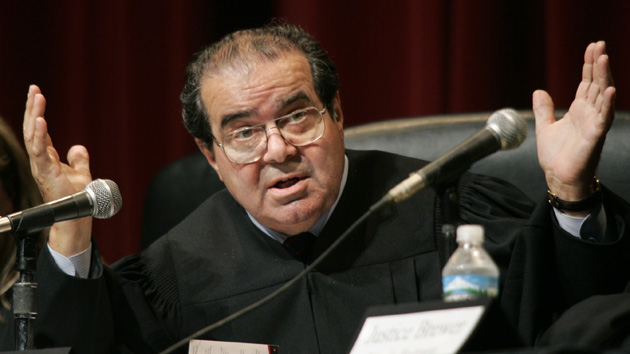
The passing of Supreme Court Justice Antonin Scalia on Feb. 3, has created an opportunity for both the executive and legislative branches to work together. If they can’t, American politics will face a crisis of enormous magnitude. That is how serious the situation has become. Whether liberal or conservative, most agree that Scalia was a judge who profoundly influenced the court during his three decades there. Many rank him among the giants such as John Marshall, Oliver Wendell Holmes, Jr., and William Brennan. Besides his opinions on court decisions, Scalia’s primary contribution was pushing the doctrines of “originalism” and “textualism.” Scalia’s doctrine of originalism argued against the grain of existing legal thought that the Constitution was a living document constantly in change. Scalia believed that the Constitution should be interpreted as the 18th-century framers understood it. In other words, there is no protection for abortion and gay rights, and no sanction for affirmative action. “Textualism” was a more widely accepted doctrine. According to Scalia, textualism meant that when interpreting laws, the courts must not look at the legislative history or Congressional intent, but the courts must only look at the words of the law. Among the current court, only Justice Stephen Breyer rejects textualism. There is little doubt about Scalia’s intellectual ability. He was valedictorian at Xavier High School, finished first in his class at Georgetown and was magna cum laude at Harvard Law School. After spending six years in private practice, he taught four years at the University of Virginia Law School. He then served as legal counsel for a federal agency before having a distinguished career at the University of Chicago Law School. Scalia had disappointments. When Ronald Reagan was elected president in 1980, Scalia wanted to be appointed Solicitor General. Instead, he lost out to Rex Lee and told his biographer that “I never forgot it.” Scalia was appointed to the District of Columbia Circuit Court in 1982. That circuit serves as a feeder to the Supreme Court, and that happened in 1986 when Reagan nominated Scalia to a position on the highest court. Scalia was confirmed 98-0 and would be the last ideological judge to be confirmed without opposition. The next year, the Senate rejected Robert Bork, and “borking” became the process of defeating ideologues. Within hours of the announcement of Scalia’s death, leaders in both parties were trying to define the nomination process. Senate Majority Leader Mitch McConnell announced that the Senate should wait until after the 2016 presidential election to confirm a replacement. “The American people have a voice in the selection of the next Supreme Court Justice,” said McConnell. “Therefore, this vacancy should not be filled until we have a new president.” Within minutes, Senate Democratic leader Harry Reid responded that the American people did have a voice. They elected Barack Obama as president in 2012. Reid argued that the nation cannot afford to go a full year with a split Supreme Court. “Failure to fill this would be a shameful abdication of one of the Senate’s most essential Constitutional responsibilities,” Reid said. To be confirmed, any Obama nominee would need a minimum of 50 senate votes in a body where Republicans now hold 54 of the 100 seats. The threat of a Republican filibuster would mean that the Democrats would need all 46 Democrats to support the nominee along with 14 of the 56 Republicans. That is very unlikely in the era of “borking.” The Supreme Court is facing many controversial issues this term including abortion, contraception, unions, voting rights and affirmative action. All may be affected by Scalia’s death and the possibility of a 4-4 deadlock on the court. For example, in the Fredricks v. California Teachers Association case, it appeared during oral arguments that it looked like a five-member majority would reverse a lower court decision requiring teachers who did not join the union to pay for the benefits of any collective bargaining agreement. Without Scalia, a 4-4 decision would mean the lower court decision would prevail. There are many political calculations at play. Will Obama nominate a moderate candidate to win Republican support? If so, will progressive Democrats balk? Will Obama nominate another liberal like Sonia Sotomayor or Elena Kagan? If so, will Republicans even hold hearings? Will moderate Republicans running for re-election in swing states pressure party leaders to hold hearings so that the party will not appear obstructionist? Will McConnell accept a moderate and risk jeopardizing his leadership position? Will Democrats accept a moderate and risk appearing to cave in to the Republican majority? When both sides shooting political bullets, will one of the parties be willing to holster the gun? Will that party look like the good guys acting responsibly, or will they look like political wimps unwilling to fight the good fight? The stakes are high; the outcome is indeterminate. *** Darryl Paulson is Professor Emeritus of Government at the University of South Florida St. Petersburg and resides in Palm Harbor, Florida.
Darryl Paulson: Why Donald Trump won’t win the GOP nomination

As we rapidly approach the Iowa caucuses and the New Hampshire primary, speculation increases that Donald Trump will likely be the Republican presidential nominee. I believe Trump has no better than a 20 percent chance of winning the nomination. We all know the common criticisms of Trump. He has made outrageous statements about Mexicans as “rapists,” John McCain as not a military hero, and his rants against Carly Fiorina‘s ugly face and Megan Kelly bleeding from “wherever.” We know Trump has flip-flopped on almost every major issue including abortion, national health care and his attitude toward Hillary and Bill Clinton. We know that Trump has spent far more time as a Democrat or independent than as a Republican and he has given most of his $1.5 million in political donations to Democrats, including large contributions to Nancy Pelosi and the Clinton Foundation. We know that Trump has never been a conservative. Besides calling himself a liberal on health care, Trump quit the Republican Party in 1999 saying, “Republicans are just too crazy right.” We know that PolitiFact awarded Trump the “lie of the year” for his numerous misstatements during the campaign. Of the 77 statements PolitiFact investigated, they rated 76 percent of them Mostly False, False or Pants on Fire. Among the lies cited by PolitiFact was Trump’s comment that he watched “thousands of Muslims” cheering the fall of the World Trade Center on 9/11. You think at least one person would have a photo or video of that incident. None of it has damaged the Trump campaign yet. In fact, the more outrageous his statements, the more his numbers rise. So, why will Trump not win the Republican nomination? Because he will either suffer a Howard Dean-like fall, or because his support is concentrated among people who are not Republicans and people who are less likely to vote. Ross Douthat wrote in The New York Times that Trump’s support will vanish as Election Day approaches. As Joe Trippi, Howard Dean’s campaign manager wrote, “People get more pragmatic the closer they get to an actual vote.” According to Trippi, this is what happened to Dean. Why waste a vote on someone unlikely to win? Second, Trump will lose because much of his support comes from people who are not Republican and who don’t vote. Trump’s strongest support comes from what The New York Times called “a certain kind of Democrat.” It is hard for anyone to win the nomination of a political party when much of their support comes from people in the other party. As we get past the early caucuses and primaries, the candidates will face several closed primaries, where only members of a party can vote. If his support comes from Democrats, they will not be able to vote for him in states such as Florida and New York where Trump is doing well in the polls. A final problem for Trump is that much of his support comes from individuals who are least likely to vote, especially in caucuses and primaries. Civis Analytics, in a study of 11,000 Republican-leaning supporters, found that Trump would get 40 percent of the vote of those who have less than a 20 percent chance of voting. Unless Trump has a plan to compensate for these problems, he may quickly find himself, much like Dean, going from first place to out of the race in a period of weeks. If Trump loses the Iowa caucus, where Cruz is now leading, the bottom could fall out of his campaign very quickly. For a “winner” like Trump to lose the first major race of the campaign season would reduce the sense of inevitability that Trump will win the nomination. As other Republicans fall by the wayside, it is unlikely that Trump will win their support. Conservative and evangelical voters are unlikely to align with Trump, who is only a Republican of convenience. • • • Darryl Paulson is Professor Emeritus of Government at the University of South Florida St. Petersburg and resides in Palm Harbor, Florida. For more state and national commentary visit Context Florida.
