
Tommy Tuberville supports allowing cannabis businesses to access the banking system

On Wednesday, U.S. Senator Tommy Tuberville told reporters that he would vote in favor of the Secure and Fair Enforcement Banking Act (SAFE Banking Act) of 2023. The SAFE Banking Act is a bill that would prevent federal banking regulators from prohibiting or penalizing a bank from providing financial services to a state-sanctioned cannabis business. “Yea, I am a supporter of the SAFE Banking Act,” Tuberville said when asked by a reporter during his weekly press call. The legislation creates a safe harbor for financial institutions to provide services to licensed, state-legal cannabis businesses. “We need to get it passed, but the Democrats obviously control the Senate floor, and there is no way we can get it down there,” Tuberville said. “You know, a lot of them want to legalize marijuana entirely, which is a separate issue, but safe banking is about the access to basic banking service for businesses that are legal in the states where they operate. On Monday, the Alabama Medical Cannabis Commission approved 21 applications for entities to open legal medical marijuana businesses in the state of Alabama. None of those businesses will be able to bank with their neighborhood bank. Those businesses likely will not be able to write checks or use a debit or credit card. Alabamians with a legitimate medical need and a recommendation from their doctor for medical cannabis will likely have to withdraw cash from their accounts to take to the legal medical marijuana dispensary in order to buy their medical marijuana. The dispensary cannot legally bank that money. Criminals and street thugs also know that people about to walk into a dispensary will likely have hundreds of dollars on their person and that the dispensary likely has thousands of dollars in untraceable paper currency at the premises. “Under current federal law, banks and credit unions are not allowed to bank for legal cannabis businesses or businesses that provide services to legal cannabis businesses,” Tuberville explained. So we’ve got to protect people’s cash.” Tuberville said that this is a public safety issue. “I have been in contact with people from all over the country that have worked with cannabis over the last few years, and it is a major public issue of people storing cash in their businesses…..underground,” Tuberville said. “We have got to make it safer, and if it is going to be legal in the state of Alabama, which medical marijuana is headed our way, then we have got to make sure people are safe. That is what the Safe Banking Act is all about, but getting it on the floor…Senator [Chuck] Schumer is not very cooperative with Republicans, and so we will see what happens with that.” The bill was reintroduced in the House and Senate on April 26, 2023. Senators Steve Daines (R-Montana) and Jeff Merkley (D-Oregon) sponsored the legislation in the upper chamber, and Representatives Earl Blumenauer (D-Oregon) and David Joyce (R-Ohio) in the House. “Montanans should be able to conduct their small business without fearing for their safety,” Daines said in a statement. “Our bipartisan bill would provide the security and peace of mind that legal Montana cannabis businesses need to freely use banks, credit unions, and other financial products without a fear of punishment. This bill will help keep our Montana communities safe, keep crime off the streets, support Montana law enforcement and small businesses, and bolster local economies.” Tuberville was elected to the Senate in 2020. To connect with the author of this story or to comment, email brandonmreporter@gmail.com.
House GOP votes to oust Democrat Ilhan Omar from major committee

The Republican-led House voted after raucous debate Thursday to oust Democratic Rep. Ilhan Omar from the chamber’s Foreign Affairs Committee, citing her anti-Israel comments, in a dramatic response to Democrats last session booting far-right GOP lawmakers over incendiary remarks. House Speaker Kevin McCarthy was able to solidify Republicans to take action against the Somali-born Muslim in the new Congress, although some GOP lawmakers had expressed reservations. Removal of lawmakers from House committees was essentially unprecedented until the Democratic ousters two years ago of hard-right Republican Reps. Marjorie Taylor Greene of Georgia and Paul Gosar of Arizona. The 218-211 vote, along party lines, came after a heated, voices-raised debate in which Democrats accused the GOP of going after Omar based on her race. Omar, who has apologized for 2019 remarks widely seen as antisemitic, defended herself on the House floor, asking if anyone was surprised she was being targeted. Democratic colleagues hugged her during the vote. “My voice will get louder and stronger, and my leadership will be celebrated around the world, as it has been,” Omar said in a closing speech. House Republicans focused on six statements she has made that “under the totality of the circumstances, disqualify her from serving on the Committee of Foreign Affairs,” said Rep. Michael Guest of Mississippi, the incoming chairman of the House Ethics Committee. “All members, both Republicans and Democrats alike who seek to serve on Foreign Affairs, should be held to the highest standard of conduct due to the international sensitivity and national security concerns under the jurisdiction of this committee,” Guest said. Republicans have clashed with Omar since she arrived in Congress, and former President Donald Trump frequently taunted her at his rallies in ways that appealed to his supporters. The resolution proposed by Rep. Max Miller, R-Ohio, a former official in the Trump administration, declared, “Omar’s comments have brought dishonor to the House of Representatives.” Democratic leader Hakeem Jeffries of New York said Omar has at times “made mistakes” and used antisemitic tropes that were condemned by House Democrats four years ago. But that’s not what Thursday’s vote was about, he said. “It’s about political revenge,” Jeffries said. Rep. Alexandria Ocasio-Cortez, D-N.Y., went further, referring to the Sept. 11, 2001, attack as she called the GOP’s action part of one of the “disgusting legacies after 9/11, the targeting and racism against Muslim-Americans throughout the United States of America. And this is an extension of that legacy.” She added, “This is about targeting women of color.” McCarthy denied the Republican decision to oust Omar was a tit-for-tat after the Greene and Gosar removals under Democrats, though he had warned in late 2021 that such a response might be expected if Republicans won back the House majority. “This is nothing like the last Congress,” he said Thursday. He noted that Omar can remain on other panels, just not Foreign Affairs, after her anti-Israel comments. Omar is one of the first two Muslim women elected to Congress. She is also the first to wear a hijab in the House chamber after floor rules were changed to allow members to wear head coverings for religious reasons. She quickly generated controversy after joining Congress in 2019 with a pair of tweets that suggested lawmakers who supported Israel were motivated by money. In the first, she criticized the American Israel Public Affairs Committee or AIPAC. “It’s all about the Benjamins, baby,” she wrote, invoking slang about $100 bills. Asked on Twitter who she thought was paying members of Congress to support Israel, Omar responded, “AIPAC!” Omar’s remarks sparked a public rebuke from then-House Speaker Nancy Pelosi and other Democrats who made clear that she had overstepped. She soon apologized. “We have to always be willing to step back and think through criticism, just as I expect people to hear me when others attack me about my identity,” Omar tweeted. “This is why I unequivocally apologize.” Also, in a May 2021 tweet, she made reference to Israel as “an apartheid state” over its treatment of Palestinians. Democrats rallied Thursday in a fiery defense of Omar and the experiences she brings to Congress. “This clearly isn’t about what Ilhan Omar said as much as who she is — being a smart, outspoken Black woman of the Muslim faith is apparently the issue,” said Rep. Mark Pocan, D-Wis. Black, Latino, and progressive lawmakers, in particular, spoke of her unique voice in the House and criticized Republicans for what they called a racist attack. “Racist gaslighting,” said Rep. Cori Bush, D-Mo. A “revenge resolution,” said Rep. Pramila Jayapal of Washington, the chair of the progressive caucus. “It’s so painful to watch,” said Rep. Rashida Tlaib, D-Mich., who joined Congress with Omar as the first two female Muslims elected to the House. “To Congresswoman Omar, I am so sorry that our country is failing you today through this chamber,” Tlaib said through tears. “You belong on that committee.” In the weeks leading up to the vote, the chairman of the committee, Rep. Michael McCaul of Texas, argued for excluding Omar from the panel during a recent closed-door meeting with fellow Republicans. “It’s just that her worldview of Israel is so diametrically opposed to the committee’s,” McCaul told reporters in describing his stance. “I don’t mind having differences of opinion, but this goes beyond that.” At the White House, press secretary Karine Jean-Pierre said of the ouster, “It’s a political stunt.” McCarthy has already blocked Reps. Adam Schiff and Eric Swalwell, both California Democrats, from rejoining the House Intelligence Committee once the GOP took control of the chamber in January. While appointments to the intelligence panel are the prerogative of the speaker, the action on Omar required a House vote. Several Republicans skeptical of removing Omar wanted “due process” for lawmakers who face removal. McCarthy said he told them he would work with Democrats on creating a due process system, but acknowledged it’s still a work in progress. One Republican, Rep. David Joyce of Ohio, voted present. In the last Congress, several Republicans had joined Democrats in removing Greene and Gosar from
Kevin McCarthy’s race for speaker risks upending House on Day One
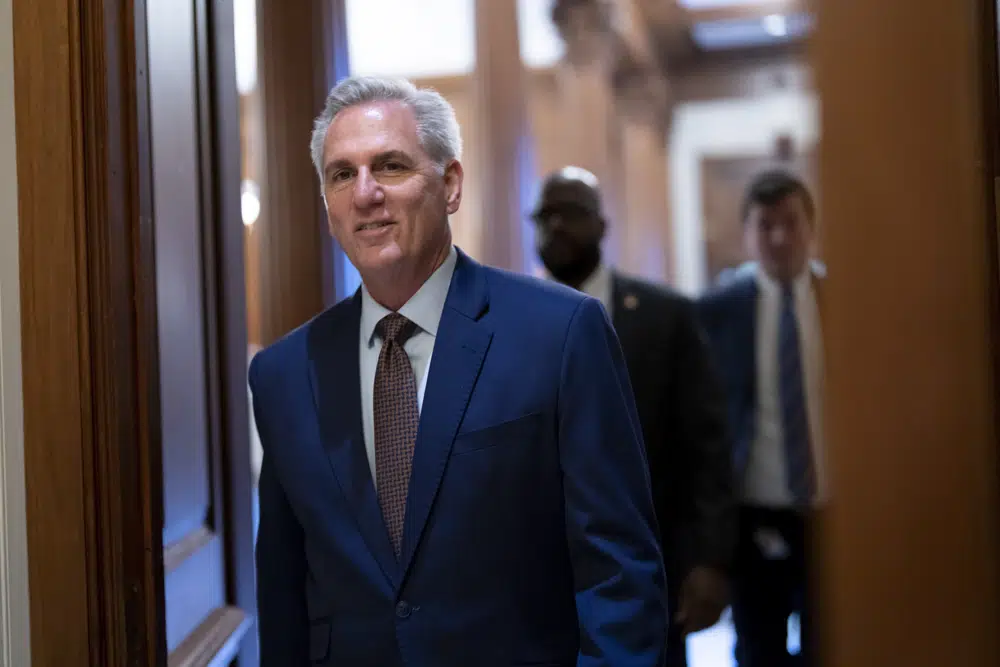
In his quest to rise to House speaker, Kevin McCarthy is charging straight into history — potentially becoming the first nominee in 100 years unable to win the job on a first-round floor vote. The increasingly real prospect of a messy fight over the speaker’s gavel on Day One of the new Congress on Jan. 3 is worrying House Republicans, who are bracing for the spectacle. They have been meeting endlessly in private at the Capitol, trying to resolve the standoff. Taking hold of a perilously slim 222-seat Republican majority in the 435-member House and facing a handful of defectors, McCarthy is working furiously to reach the 218-vote threshold typically needed to become speaker. “The fear is that if we stumble out of the gate,” said Rep. Jim Banks, R-Ind., a McCarthy ally, then the voters who sent the Republicans to Washington “will revolt over that and they will feel let down.” Not since the disputed election of 1923 has a candidate for House speaker faced the public scrutiny of convening a new session of Congress only to have it descend into political chaos, with one vote after another, until a new speaker is chosen. At that time, it eventually took a grueling nine ballots to secure the gavel. McCarthy, a Republican from Bakersfield, California, who was first elected in 2006 and who remains allied with Donald Trump, has signaled he is willing to go as long as it takes in a floor vote to secure the speaker’s job he has wanted for years. The former president has endorsed McCarthy and is said to be making calls on McCarthy’s behalf. McCarthy has given no indication he would step aside, as he did in 2015 when it was clear he did not have the support. But McCarthy also is acknowledging the holdouts won’t budge. “It’s all in jeopardy,” McCarthy said Friday in an interview with conservative Hugh Hewitt. The dilemma reflects not just McCarthy’s uncertain stature among his peers but also the shifting political norms in Congress as party leaders who once wielded immense power — the names of Cannon, Rayburn, and now Pelosi adorn House meeting rooms and office buildings — are seeing it slip away in the 21st century. Rank-and-file lawmakers have become political stars on their own terms, able to shape their brands on social media and raise their own money for campaigns. House members are less reliant than they once were on the party leaders to dole out favors in exchange for support. The test for McCarthy, if he is able to shore up the votes on Jan. 3 or in the days that follow, will be whether he emerges a weakened speaker, forced to pay an enormous price for the gavel, or whether the potentially brutal power struggle emboldens his new leadership. “Does he want to go down as the first speaker candidate in 100 years to go to the floor and have to essentially, you know, give up?” said Jeffrey A. Jenkins, a professor at the University of Southern California and co-author of “Fighting for the Speakership.” “But if he pulls this rabbit out of the hat, you know, maybe he actually has more of the right stuff.” Republicans met in private this past week for another lengthy session as McCarthy’s detractors, largely a handful of conservative stalwarts from the Freedom Caucus, demand changes to House rules that would diminish the power of the speaker’s office. The Freedom Caucus members and others want assurances they will be able to help draft legislation from the ground up and have opportunities to amend bills during the floor debates. They want enforcement of the 72-hour rule that requires bills to be presented for review before voting. Outgoing Speaker Nancy Pelosi, D-Calif., and the past two Republican speakers, John Boehner and Paul Ryan, faced similar challenges, but they were able to rely on the currency of their position to hand out favors, negotiate deals, and otherwise win over opponents to keep them in line — for a time. Boehner and Ryan ended up retiring early. But the central demand by McCarthy’s opponents’ could go too far: They want to reinstate a House rule that allows any single lawmaker to file a motion to “vacate the chair,” essentially allowing a floor vote to boot the speaker from office. The early leaders of the Freedom Caucus, under BC, the former North Carolina congressman turned Trump’s chief of staff, wielded the little-used procedure as a threat over Boehner and later, over Ryan. It wasn’t until Pelosi seized the gavel the second time, in 2019, that House Democrats voted to do away with the rule and require a majority vote of the caucus to mount a floor vote challenge to the speaker. Rep. Chip Roy, R-Texas, said the 200-year-old rule was good enough for Thomas Jefferson, so it’s one he would like to see in place. “We’re still a long way from fixing this institution the way it needs to be fixed,” Roy told reporters Thursday at the Capitol. What’s unclear for McCarthy is even if he gives in to the various demands being made by the conservatives, whether that will be enough for them to drop their opposition to his leadership. Several House Republicans said they do not believe McCarthy will ever be able to overcome the detractors. “I don’t believe he’s going to get to 218 votes,” said Rep. Bob Good, R-Va., among the holdouts. “And so I look forward to when that recognition sets in and, for the good of the country, for the good of the Congress, he steps aside, and we can consider other candidates.” The opposition to McCarthy has promoted a counteroffensive from other groups of House Republicans who are becoming more vocal in their support of the GOP leader — and more concerned about the fallout if the start of the new Congress descends into an internal party fight. Rep. David Joyce, R-Ohio, who leads the Republican Governance Group, was wearing an “O.K.” button on his lapel — meaning, “Only Kevin,” he explained. Some have
Speaker Paul Ryan says the nation will be ‘living with Obamacare for the foreseeable future’
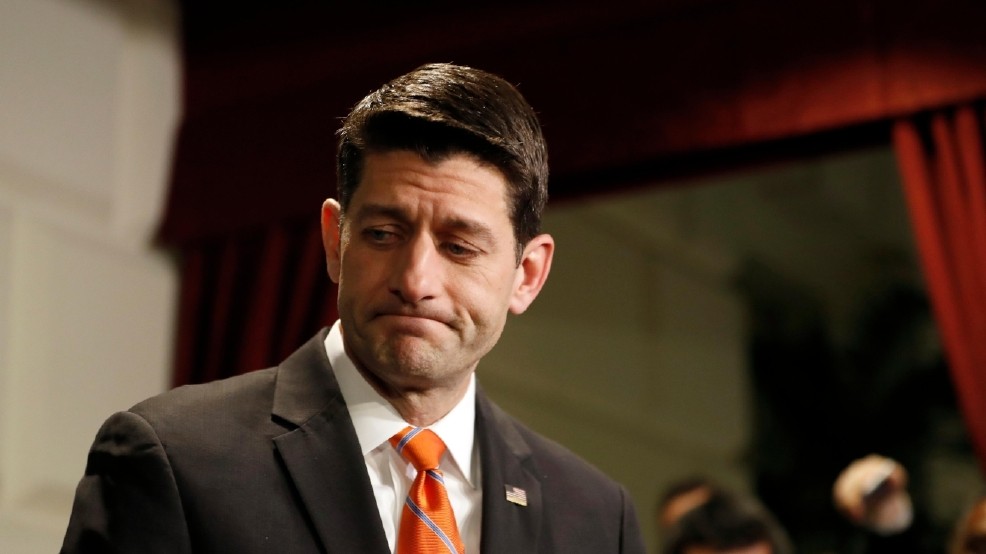
Speaker Paul Ryan says the nation will be ‘living with Obamacare for the foreseeable future’ In a humiliating setback, President Donald Trump and GOP leaders pulled their “Obamacare” repeal bill off the House floor Friday after it became clear the measure would fail badly. It was a stunning defeat for the new president after he had demanded House Republicans vote on the legislation Friday, threatening to leave “Obamacare” in place and move on to other issues if the vote failed. The bill was withdrawn minutes before the vote was to occur. The president’s gamble failed. Instead Trump, who campaigned as a master deal-maker and claimed that he alone could fix the nation’s health care system, saw his ultimatum rejected by Republican lawmakers who made clear they answer to their own voters, not to the president. Republicans have spent seven years campaigning against former President Barack Obama‘s health care law, and cast dozens of votes to repeal it in full or in part. But when they finally got the chance to pass a repeal bill that actually had a chance to get signed, they couldn’t pull it off. What happens next is unclear, but the path ahead on other priorities, such as overhauling the tax code, can only grow more daunting. And Trump is certain to be weakened politically, a big early congressional defeat adding to the continuing inquiries into his presidential campaign’s Russia connections and his unfounded wiretapping allegations against Obama. The development came on the afternoon of a day when the bill, which had been delayed a day earlier, was supposed to come to a vote, come what may. But instead of picking up support as Friday wore on, the bill went the other direction, with some key lawmakers coming out in opposition. Congressman Rodney Frelinghuysen of New Jersey, chairman of a major committee, Appropriations, said the bill would raise costs unacceptably on his constituents. Rep. Barbara Comstock of Virginia, a key moderate Republican, and GOP Rep. David Joyce of Ohio also announced “no” votes. The defections raised the possibility that the bill would not only lose on the floor, but lose big. In the face of that evidence, and despite insistences from White House officials and Ryan that Friday was the day to vote, leadership pulled back from the brink. The GOP bill would have eliminated the Obama statute’s unpopular fines on people who do not obtain coverage and would also have removed the often-generous subsidies for those who purchase insurance. Republican tax credits would have been based on age, not income like Obama’s, and the tax boosts Obama imposed on higher-earning people and health care companies would have been repealed. The bill would have ended Obama’s Medicaid expansion and trimmed future federal financing for the federal-state program, letting states impose work requirements on some of the 70 million beneficiaries. The nonpartisan Congressional Budget Office said the Republican bill would have resulted in 24 million additional uninsured people in a decade and lead to higher out-of-pocket medical costs for many lower-income and people just shy of age 65 when they would become eligible for Medicare. The bill would have blocked federal payments for a year to Planned Parenthood. Democrats were uniformly opposed. “This bill is pure greed, and real people will suffer and die from it,” said Rep. Pramila Jayapal of Washington state. Republished with permission of The Associated Press.
