
Tom Holmes running for Congressional District 1

The court-appointed special master that redrew Alabama’s Congressional Districts made the Congressional District 1 (CD1) much more conservative, White, and Republican-friendly in order to make the Second Congressional District (CD2) winnable for minority voters. This redistricting in CD1 has not deterred Mobile Democrat Tom Holmes, who has qualified to run for Congress in the district anyway. Holmes is a licensed lay preacher with the Episcopal Diocese of Central Gulf Coast. He is also a volunteer Board President at The Arc of Mobile County. Tom Holmes is a United States Navy Veteran who served during the Vietnam War era. He attends and is an active member of Trinity Episcopal Church. During his career, Holmes was the Chief of Science and Technology Section for the Alabama Department of Economic and Community Affairs (ADECA) from 1996-2001. He was a planning/economic development specialist for ADECA from 1979-1996. He was previously the director of the Area Agency on Aging for the Birmingham Regional Planning Commission from 1975-1979. He also worked for the Mobile County Probate Court as a personnel development specialist for the Anniston and Area Agency on Aging. He is also a former teacher at both Dunbar Junior High School and Murphy High School. Holmes is actively involved in his community, including the Cottage Hill Civitan Club in Mobile, The Arc of Alabama, Boy Scouts of America, Alabama Council on Developmental Disabilities, National Eagle Scout Association, and Alpha Phi Omega National Service Fraternity. Holmes has a master’s degree in public administration from Jacksonville State University and a bachelor’s degree in political science from the University of Mobile. Holmes was the Democratic nominee for Alabama State Board of Education, District 1 in 2020, where he lost to Republican Jackie Zeigler. He was also the Democratic nominee for Alabama State Senate, District 35 in 2018 where he lost to Republican David Sessions. Holmes was the only Democrat to qualify, so he is effectively the Democratic nominee for CD1. He will face the winner of the March 5 Republican primary in the general election on November 5. Incumbent Congressman Jerry Carl (R-AL01) faces Congressman Barry Moore (R-AL02) after Alabama’s congressional districts were redrawn by a court-appointed special master. Moore and his native Coffee County were redistricted into CD1. Most of the City of Mobile and the northernmost counties of CD1 were redistricted into CD2. In exchange, CD1 picked up the southern half of the wiregrass, including Enterprise and most of Dothan stretching along the Florida line all the way to the Georgia state line. To connect with the author of this story or to comment, email brandonmreporter@gmail.com.
Gov. Kay Ivey signs legislation making Yellowhammer Cookie Alabama’s official state cookie
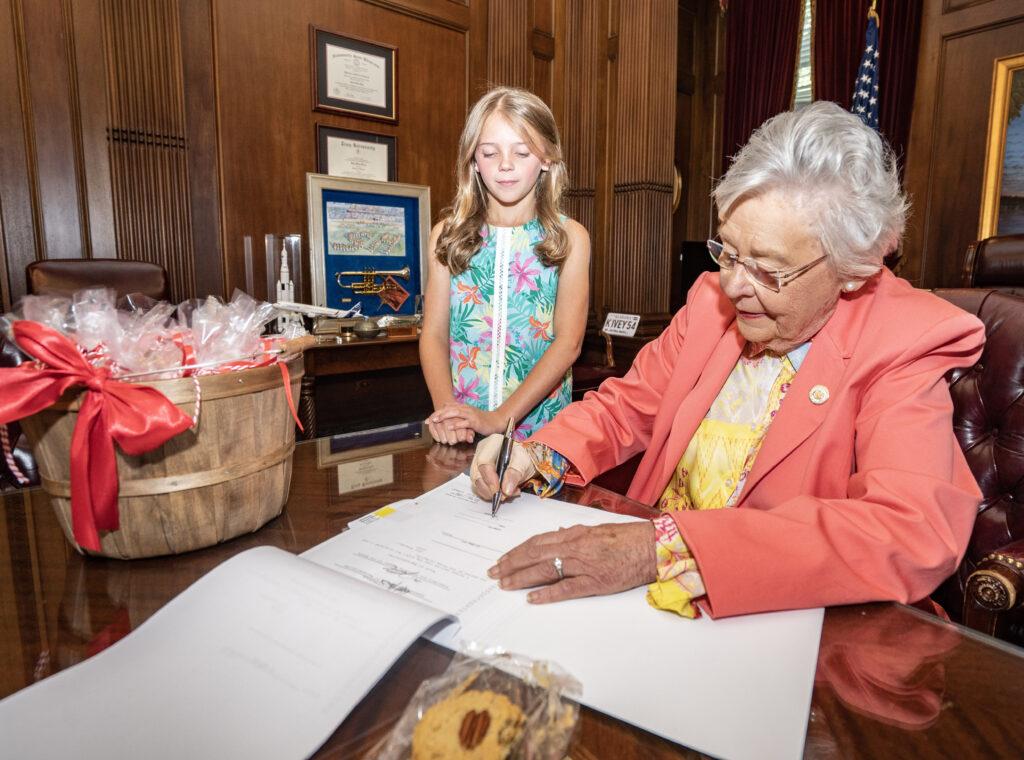
On Friday, Alabama Governor Kay Ivey met with Montgomery 4th grader and recipe creator Mary Claire Cook to consider whether or not to sign legislation making Cook’s creation, the Yellowhammer Cookie, the official state cookie of the State of Alabama. Governor Ivey taste-tested the cookie for herself and gave it the stamp of approval. Ivey added her signature on the bill to officially name the Yellowhammer Cookie the official state cookie. Governor Ivey commented, “Sweet Home Alabama just got a little sweeter!” House Bill 421 (HB421) is sponsored by State Representative Reed Ingram (R-Montgomery). The legislation was carried in the Alabama Senate by State Senator Will Barfoot (R-Pike Road). “This week, you all have had the opportunity to see, and more importantly taste, the yellowhammer cookie,” Barfoot said, holding one up in the air for members to see. “This was brought to me by some fourth graders at Trinity Presbyterian School.” Reed explained that the students learned that Alabama did not have an official state cookie, so the students resolved to fix this situation by holding a cookie contest. The fourth graders submitted cookies, and the seniors judged them. Ultimately the Yellowhammer Cookie was judged the best cookie to submit to the legislature. “Twenty-four recipes were submitted,” Barfoot said. “That was narrowed down to five. Seniors from the government class at Trinity were brought in to judge the cookies, and the yellowhammer cookie was selected.” The cookies contain peanuts, pecans, and oats – all crops grown and well-adapted to Alabama. The pecan is already the official nut of Alabama, and the peanut is the official legume of the state of Alabama. Alabama Today asked Cook if making the cookie was something an ordinary person could do or if it required a factory to produce. “George Washington Carver’s work at Tuskegee Institute on peanuts is important to Alabama,” Barfoot said. Sen. David Sessions (R-Mobile) said, “It has peanuts and pecans. I raise both of them on my farm.” The legislation passed the Senate 35 to 0. Cook was joined at the Statehouse by her teachers Katherine Bandy and Kylie Osborne to lobby legislators. Former Congresswoman Martha Roby (R-AL02) also played an active role in these efforts. Lieutenant Governor Will Ainsworth recognized Cook for her work, and she was applauded by the members of the Senate. Tuesday will be the last day 25 of the 2023 Alabama Regular Legislative Session. To connect with the author of this story or to comment, email brandonmreporter@gmail.com.
Legislature sends the Yellowhammer cookie legislation to Gov. Kay Ivey
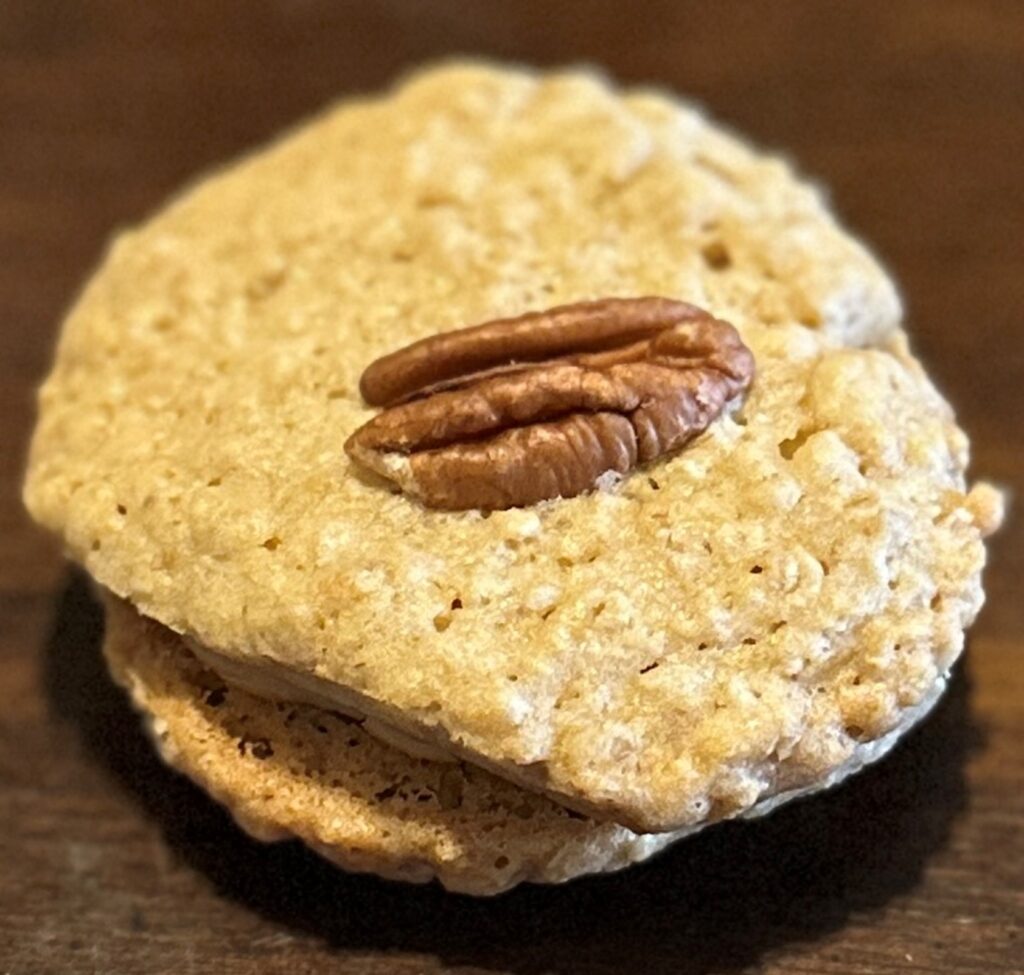
On Wednesday, the Alabama Senate voted unanimously to make the Yellowhammer cookie the official cookie of the state of Alabama. The Yellowhammer cookie is the creation of Mary Claire Cook, a fourth-grade student at Trinity Presbyterian School in Montgomery, with some help from her grandmother. The students at Trinity were studying state symbols when they learned that Alabama did not have an official state-designated cookie, so they endeavored to create one. House Bill 421 (HB421) is sponsored by State Representative Reed Ingram (R-Montgomery). The legislation was carried in the Alabama Senate by State Senator Will Barfoot (R-Pike Road). “This week, you all have had the opportunity to see, and more importantly taste, the yellowhammer cookie,” Barfoot said, holding one up in the air for members to see. This was brought to me by some fourth graders at Trinity Presbyterian School.” “Twenty-four recipes were submitted,” Barfoot said. “That was narrowed down to five. Seniors from the government class at Trinity were brought in to judge the cookies, and the yellowhammer cookie was selected.” The cookies contain peanuts, pecans, and oats – all crops grown and well-adapted to Alabama. The pecan is already the official nut of Alabama, and the peanut is the official legume of the state of Alabama. “George Washington Carver’s work at Tuskegee Institute on peanuts is important to Alabama,” Barfoot said. Sen. Linda Coleman-Madison (D-Birmingham) said that the contest to select the state cookie should have been more “statewide.” “I think there should be some guidelines if we are going to do it,” Coleman-Madison said. “There are children who have food allergies to peanuts. I really wish we had some more participation.” “This is state law that we are passing,” Coleman-Madison continued. “When people come to the state of Alabama, this is the state cookie. We need to have some criteria. We need to have some more involvement.” Sen. David Sessions (R-Mobile) said, “It has peanuts and pecans. I raise both of them on my farm.” The legislation passed the Senate 35 to 0. Cook was viewing from the gallery with her teachers Katherine Bandy and Kylie Osborne. Lieutenant Governor Will Ainsworth recognized Cook for her work, and she was applauded by the members of the Senate. The legislation has already passed the House of Representatives. It now goes to the Governor for her consideration. Wednesday was day 25 of the 2023 Alabama Regular Legislative Session. To connect with the author of this story or to comment, email brandonmreporter@gmail.com.
Andrew Sorrell and David Sessions rank highest scorecards for Club for Growth Foundation

On Wednesday, Club for Growth Foundation released its annual legislative economic scorecard, which tallied up the 2021 legislative year based on criteria for “economic growth issues,” 1819 News reported. According to a release, Club for Growth Foundation based their scoring on each lawmaker’s record on votes related to “pro-growth policies and computed an Economic Growth Score on a scale of 0 to 100.” “A score of 100 indicates the highest support for pro-growth policies. The Foundation’s study examined over 2,500 floor votes and, in the end, included 21 Alabama House votes and 20 Alabama Senate votes.” According to the scorecards, Republican Senator David Sessions had the highest rating with a 35%. The lowest-rated Republican was Larry Stutts, with a score of 16%. The highest-rated Democrat Senator was William Beasley with 30%, and the lowest-rated Democrat was Kirk Hatcher with a score of 0%. For the House, Republican Andrew Sorrell was the highest rated Represenative, with a score of 95%. The lowest rated Republican was Dickie Drake with a 14%. The highest rated Democrat was Dexter Grimsley with a score of 20% and several Democrats rated lower than 6%. Other key takeaways include: Alabama Senate Average Republican Score: 27% (Up from 21% in 2020) Average Democrat Score: 11% (Up from 6% in 2020) Alabama House Average Republican Score: 28% (Up from 15% in 2020) Average Democrat Score: 12% (Up from 0% in 2020) “Through the release of this scorecard series, the Club for Growth Foundation is looking at how state legislatures perform in terms of pro-growth policies,” Club for Growth Foundation president David McIntosh said in a release. “We believe that this scorecard will help inform citizens and entrepreneurs about who supports the policies that promote economic prosperity.” According to their website, their mission is “to inform the general public about the many benefits of economic freedom and limited government.” Some of the Club for Growth’s top policy goals include: Reducing income tax rates and repealing the death tax Replacing the current tax code with a fair/flat tax The full repeal of ObamaCare and the end of abusive lawsuits through medical malpractice/tort reform Reducing the size and scope of the federal government Cutting government spending and passing a Balanced Budget Amendment to the United States Constitution Regulatory reform and deregulation School choice
Seven State Senate seat races to watch
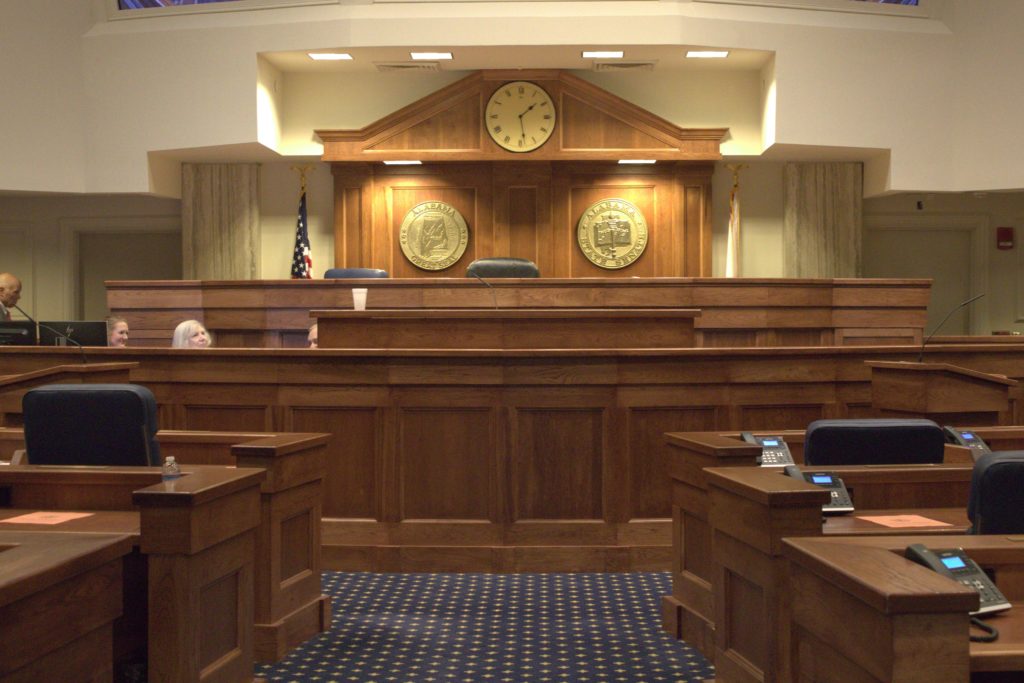
All 35 State Senate seats are up for grabs in the November 8 general election. Republicans hold a 27 to 8 margin over Democrats in the current makeup of the Alabama Senate. The Alabama Republican Party is running candidates in 29 seats. The GOP is defending all of the 27 seats they currently hold and are running candidates in two districts currently held by Democrats. Alabama Democrats are defending the eight seats they currently hold and are challenging the GOP in six districts currently held by Republicans. Libertarians currently hold no seats in the Alabama Senate but are running twelve candidates in State Senate races. There are a number of contested State Senate races on the November ballot. These are the seven races with the most chance of becoming interesting. Democrat Lisa Ward is challenging Republican incumbent State Sen. Gerald Allen in Senate District 21. Both of these candidates are well known in the Tuscaloosa area. Allen has represented the district for three terms and served in the Alabama House of Representatives before that. Ward is a former city councilwoman who is very active in the community. According to filings with the Alabama Secretary of State’s office, Allen has a $204,872.68 campaign account balance entering September, which includes August contributions of $8,250. Ward, the challenger, meanwhile raised $23,149.76 in August and has a cash balance of $31,968.94 entering September. Neither faced a primary opponent. Democrat Kim Lewis versus Republican incumbent State Sen. Tom Butler in Senate District 2. Butler has represented Madison County in the legislature for parts of five decades, but this is one of the fastest growing areas in the state, and there are thousands of new people that bring different politics with them to the area. Lewis is hoping that an increasingly purple Madison County will result in a win. Butler was pushed hard in the Republican primary by former State Sen. Bill Holtzclaw. Butler raised $44,500 in the month of August and enters September with $38,166.63. Lewis raised $7,830 in August and comes into September with $27,859.70. In Senate District 33, incumbent Democratic Sen. Vivian Figures faces Republican challenger Pete Riehm. This has been a very safe Democratic district consisting of the poorest parts of Mobile as well as Mobile County suburbs like Prichard, but redistricting meant that the new district now goes deep into Baldwin County and picked up the very prosperous and heavily Republican community of Spanish Fort. This district went from very blue to purple thanks to the legislature’s redistricting and efforts to “unpack” Black voters from majority-minority districts. Is it purple enough for a Republican to take it away from the Democrats? That is for the voters to decide on November 8. Sen. Figures raised $31,500 in the month of August to enter September with $110,497.02. Riehm had contributions of $19,577.54 in August and enters September with $60,911.31. Democrat Sherri Lewis versus Republican Jay Hovey in Senate District 27. Hovey, an Auburn City Councilman, just narrowly defeated incumbent Tom Whatley (R-Auburn) in a heavily contested GOP primary. Hovey, who has the challenge of unifying Republicans, raised $85,500 in contributions in August to enter September with a cash balance of $70,074.17. Reese meanwhile raised $1,806.20 in August to bring a total of $2,703.33 into the month of September. Senate District 23 – here, there are three candidates vying for the open seat formerly held by State Sen. Malika Sanders-Fortier, who vacated the seat in an unsuccessful bid for governor. Democrat Robert Lee Stewart narrowly defeated former State Sen. Hank Sanders in a hard-fought Democratic primary runoff in June. Stewart faces both a Republican in Michael Nimmer and a Libertarian in Portia Stephens. Stewart raised $16,987 in August to bring $17,872.84 into September. The Libertarian, Stephens, reported raising $2,060 in August to finish the month with $6,285 in cash on hand. The Republican, Nimmer, has not filed a campaign finance report. Alabama does not have general election runoffs, so when there are multiple candidates, the candidate with the most votes wins even if they got less than half of the votes. There is another three-way contest in Senate District 29. There, incumbent Republican Sen. Donnie Chesteen (R-Dothan) faces both Democrat Nathan “Nate” Mathis and Libertarian Floyd “Pete” McBroom. Matthis reported raising no money in August, but he has $5,719.36 in cash on hand. McBroom has not filed a campaign finance report with the Secretary of State’s office yet. The incumbent, Chesteen, raised $25,500 in August to enter September with $327,660.86. In Senate District 12, Republican Keith Kelley is battling Democrat David McCullars for the open seat currently held by Sen. Del Marsh. Kelley raised $29,658.24 in August and has $65,102.13 in cash on hand. McCullars only raised $265 in the month of August and entered the month of September with $4,377.15 in cash on hand. Kelley had a hard-fought Republican primary. This is a district that has given Marsh a close call in the 2014 general election. In other contested Alabama Senate races · SD3 incumbent Arthur Orr (R-Decatur) faces Libertarian Rick Chandler · SD4 incumbent Garlan Gudger (R-Cullman) faces Libertarian Jacob Marlow · SD6 incumbent Larry Stutts (R-Sheffield) faces Libertarian Kyle Richard-Garrison · SD7 incumbent Sam Givhan (R-Huntsville) faces Democrat Korey Wilson · SD15 incumbent Dan Roberts (R-Mountain Brook) faces Libertarian Michael Crump · SD17 incumbent Shay Shelnutt (R-Trussville) faces Libertarian John Fortenberry · SD24 incumbent Bobby Singleton (D-Greensboro) faces Libertarian Richard Benderson · SD25 incumbent Will Barfoot (R-Montgomery) versus Libertarian Louie Woolbright · SD28 incumbent Billy Beasley (D-Clayton) faces Libertarian David Boatwright · SD35 incumbent David Sessions (R-Grand Bay) faces Libertarian Clifton Hudson Republican incumbents Tim Melson, Greg Reed, Steve Livingston, Clay Scofield, Andrew Jones, Randy Price, April Weaver, Jabo Waggoner, Greg Albritton, Clyde Chambliss, Chris Elliott, and Jack Williams are all running unopposed. Republican newcomers Lance Bell in SD11 and Josh Carnley in SD31 are also unopposed in the general election. Democratic incumbents Rodger Smitherman, Linda Coleman-Madison, and Kirk Hatcher are all also unopposed in the general election. State Rep. Merika Coleman is unopposed in SD19, which is being vacated by the retirement of Priscilla Dunn (D-Bessemer). In 2022 Republican candidates in Alabama have received $44,321,108.97 in contributions. Political Action Committees have received $17,846,761.05. Democratic candidates have received $6,629,199.43, and all other candidates have received just $111,950.87. The general
Steve Flowers: Incumbency reigns supreme in State Senate
Being an incumbent state senator in Alabama is like owning that seat. The level of re-electability odds is probably better than that of an incumbent congressman, which is about the same as being elected to a seat in the Russian Communist Politburo. Being a freshman state senator in Alabama is a more powerful position than being a freshman U.S. congressman, especially if you want to affect public policy. Many times, a 50-year old, successful person who is interested in seeking a representative role will approach me and seek my advice about running for either a state senate seat or an open congressional seat. I will quickly advise them that as a state senator, you are one of 35, and you immediately have an impact on your first year as a state senator. However, if you win a congressional seat, you are one of 435. Because of the seniority system, it will be 15 years before they know your name in Washington and 25 years before you are chairman of a committee, and then it is time to retire. In the 35-member Alabama Senate, there are 27 Republicans and 8 Democrats – a pretty supermajority for the GOP. Twenty-four of the twenty-seven senate Republicans are running for reelection. Republicans Jimmy Holley, Del Marsh, and Jim McClendon are retiring. These seats will be filled by another Republican. Therefore, when the Senate organizes next January, the 27 to 8 supermajority will remain the same. The lines are drawn to protect incumbents on both sides of the aisle. The Constitution provides the power of the pencil for legislators to draw their own legislative districts. Seventeen of the 24 Republican incumbents have no opposition in the Republican Primary. Of the seven Republican senators who drew a Republican opponent, they only got an opponent the last day of qualifying, and their opposition is token at best. All 24 Republican incumbents will be reelected. If my prognostication is correct, that is a 100% re-electability rate. There are only two GOP incumbents that were first thought to have viable opponents. Tom Whatley, at first blush, was rumored to have a race. However, polling and fundraising reveal he will win easily. The only interesting race may be in the Huntsville area, where incumbent Tom Butler is being challenged by Bill Holtzclaw, who previously served in that senate seat. The rule of incumbency also prevails on the Democratic side of the aisle. There is only one Democratic seat open. Priscilla Dunn holds the post in name only. She has never attended a senate day in Montgomery for this entire quadrennium. The Senate has, in essence, been operating with 34 senators. In actuality, the Democrats have only seven senate seats. There are 150,000 residents of Jefferson County who have had no voice or vote in the Alabama Senate for four years. There are two Democratic House members vying to fill this seat, Merrika Coleman and Louise Alexander. Ms. Coleman is favored to win this open Senate seat. The cadre of leadership on the Democratic side will return, including powers Bobby Singleton, Rodger Smitherman, and Vivian Figures. Hank Sanders will return to represent Selma and the Black Belt after a four-year sabbatical. His daughter was in the seat this last quadrennium. The entire leadership of the Republican-led Senate will return unopposed, including Greg Reed, Jabo Waggoner, Clay Scofield, Arthur Orr, Greg Albritton, Steve Livingston, Gerald Allen, and especially Clyde Chambliss. They will be joined by a superstar freshman class, who will become even more powerful. This class of leaders includes Will Barfoot, Garlan Gudger, April Weaver, Sam Givhan, Donnie Chesteen, and a trio contingency of Baldwin/Mobile senators Chris Elliott, Jack Williams, and David Sessions. Another member of this sterling class, Dan Roberts of Jefferson, has an opponent but will be reelected. The three open Republican seats and one Democratic open seat will give us some interesting senate races to follow. One of, if not the most important ingredients which creates the power of incumbency is the almighty campaign dollar. Money is the mother’s milk of politics. Most of this campaign money comes from Special Interest Political Action Committees. Ninety percent of those special interest dollars go to incumbents. Thus, over 90% of Alabama state senators are reelected. See you next week. Steve Flowers is Alabama’s leading political columnist. His weekly column appears in over 60 Alabama newspapers. He served 16 years in the state legislature. Steve may be reached at: www.steveflowers.us.
Kay Ivey hosts a ceremonial bill signing for 2021 legislative session
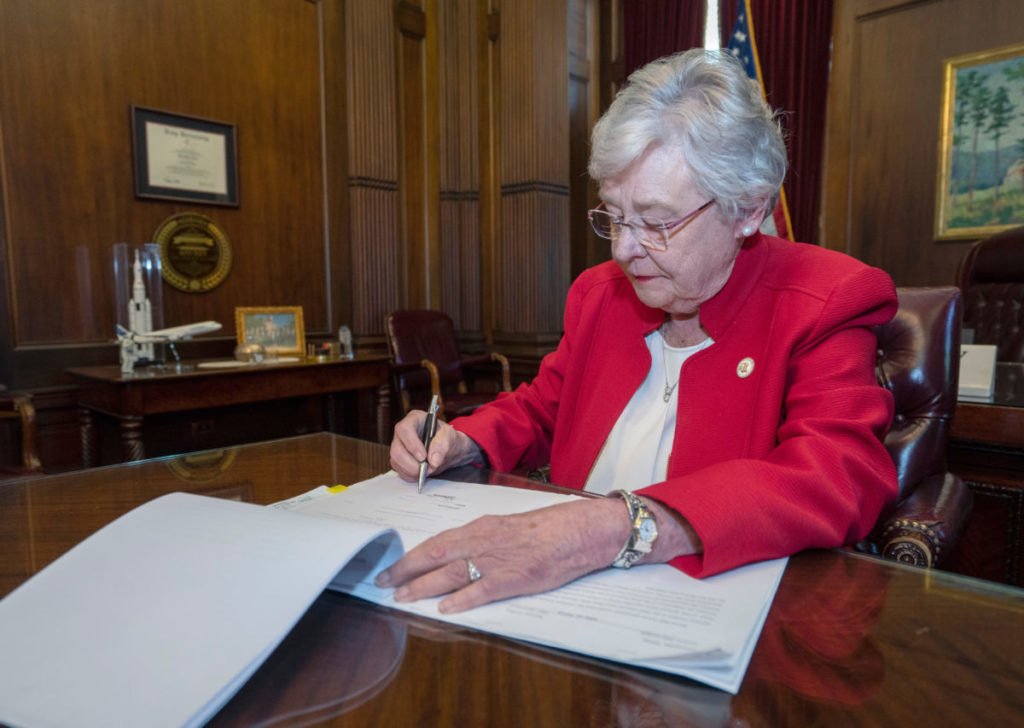
On Thursday, Governor Kay Ivey hosted a ceremonial bill signing for legislation passed during the 2021 Regular Session. The following bills will be ceremonially signed by the governor: House Bill 322 – This bill, sponsored by Rep. Danny Crawford, Sen. Clyde Chambliss, and Sen. Tom Whatley, gives the responsibility of nominating members of the State Board of Registration for Foresters to the Alabama Division of the Society of American Foresters and any active state forestry organization that meets the criteria established by the Board. (Act 2021-433) House Bill 227 – Sponsored by Rep. Joe Lovvorn, Sen. Dan Roberts, and Sen. Tom Whatley, provides an income tax credit for the acquisition, construction, or installation of a qualified storm shelter. (Act 2021-540) House Bill 2 – Sponsored by Rep. Mike Holmes and Sen. Dan Roberts, HB 2 adds Tianeptine to the list of Class II controlled substances. (Act 2021-325) Senate Bill 261 – This bill, sponsored by Sen. Clyde Chambliss and Rep. Chip Brown, prohibits indemnification provisions for liability of a third party in contracts for design professionals. (Act 2021-318) House Bill 130 – Sponsored by Rep. Chip Brown and Sen. David Sessions, House Bill 130 is named after Aniah Blanchard and provides additional offenses that would allow a judge to deny bail to a defendant. (Act 2021-267) House Bill 136 – This legislation, sponsored by Rep. Chip Brown and Sen. David Sessions, designates the Dauphin Island Sea Lab’s Alabama Aquarium as the official aquarium of Alabama. (Act 2021-411) House Bill 137 – Sponsored by Rep. Chip Brown and Sen. David Sessions, provides certain rights to victims of sexual assault and creates the Sexual Assault Task Force. (Act 2021-481) House Bill 166 – Sponsored by Rep. Matt Simpson and Sen. David Sessions, creates a mental health diversionary program and funds a mental health court in Baldwin County. (Act 2021-154) Senate Bill 39 – SB 39, sponsored by Sen. Randy Price and Rep. Matt Simpson, establishes the Alabama State of Emergency Consumer Protection Act and creates the crime of aggravated home repair fraud. (Act 2021-272) Senate Bill 308 – This bill, sponsored by Sen. Randy Price and Rep. Proncey Robertson, establishes the Alabama Uniform Concealed Carry Permit Act and authorizes lifetime concealed carry permits. (Act 2021-246) Senate Bill 43 – This legislation, sponsored by Sen. Randy Price and Rep. Joe Lovvorn, requires EMA to adopt guidelines for identifying and designating safe place shelters throughout the state. (Act 2021-165) House Bill 172 – Sponsored by Rep. Barbara Drummond and Sen. Bobby Singleton, requires the Chief Procurement Officer and the Secretary of State’s office to collect data on minority and women-owned businesses in the state and the participation of those businesses in the state procurement process. (Act 2021-223) House Bill 274 – Sponsored by Rep. Barbara Drummond, this bill provides for the licensure and regulation by the Board of Cosmetology and Barbering of mobile hair salons. (Act 2021-406) House Bill 175 – HB 175, sponsored by Rep. Joe Lovvorn, adds computer science teachers serving in underserved areas of the state to the current AMSTEP loan repayment program for public high school math and science teachers. (Act 2021-389) House Bill 153 – This legislation, sponsored by Rep. Joe Lovvorn, expands eligibility of children allowed to receive tuition assistance from the Police Officer’s and Firefighter’s Survivors Educational Assistance Program. (Act 2021-425) Senate Bill 61 – SB 61, sponsored by Sen. Donnie Chesteen and Rep. Joe Lovvorn, establishes the Education Retirees Trust Fund in the State Treasury to fund periodic bonuses for education retirees. (Act 2021-464)
“Wolf in Sheep’s Clothing” supposed animal welfare bill opposed by states animal advocates

Animal advocates from around the state are calling for all hands on deck to reach out to their elected officials to oppose a piece of legislation they have called a “Wolf in Sheep’s Clothing”. Below are several of the calls to action regarding Senate Bill 183. The bill was filed by Senator David Sessions. The Greater Birmingham Humane Society has posted numerous posts and videos on their FaceBook page opposing the legislation. Their original post reads: 🚨ACT NOW AND MAKE YOUR VOICES HEARD! CALL YOU COUNTY’S SENATOR NOW! Read and share on how Senate Bill 183 is a WOLF in sheep’s clothing. 🚨There has been a significant development in the Alabama legislature relating to puppy mills and retailers that sell puppies. This past Tuesday, Senate Bill 183 was introduced and unanimously passed out of committee Wednesday. Senate Bill 183 is fast-tracking its way through the Alabama Legislature, and our staff and our partners are deeply concerned about it. If this bill passes, it could permanently STOP our ability to get protection for puppies and their parents in puppy mills. We have been unable to get lawmakers to pass meaningful legislation, so we have started approaching municipalities and asking THEM to pass ordinances that prohibit puppy mill breeding. We have also asked them to pass ordinances that would appropriately and properly license, tax, inspect and regulate certain breeders.If SB 183 passes, the local regulation of pet stores will become null and void and existing ordinances are no longer enforceable. In the last two years, similar bills have been rejected in every state they have been attempted including Georgia, Florida, Oklahoma, Nebraska, Tennessee, and Michigan. SB 183 was drafted by lobbyists to appear to be an animal welfare bill regulating puppy-selling pet stores. But read the bill. It has a fatal flaw. It protects puppy mills by securing their pet store supply chain because provisions allow pet stores to source from both unregulated, unlicensed breeders that operate with zero oversight and USDA-licensed breeders without certain violations under the Animal Welfare Act. The problem with that model is that ABOUT TWO YEARS AGO, THE USDA STOPPED MAKING VIOLATIONS PUBLIC AND NO LONGER RELEASE SPECIFIC BREEDERS’ INSPECTION REPORT INFORMATION. SO HOW WOULD ALABAMA OR ALABAMIANS KNOW IF THERE WAS A PENDING OR PAST VIOLATION AGAINST A BREEDER? The commercial and high-end breeders defined in this bill (as well as the pet stores) know this provision is completely unenforceable because the USDA no longer releases specific breeders’ inspection report information. The Alabama Puppy Mill Project wrote this on their FaceBook page: IT’S TIME TO LIGHT UP THE PHONES! IF YOU DON’T, ALABAMA IS ABOUT TO BE KNOWN AS PETLAND’S PAWNYOU MUST CALL AND EMAIL YOUR LEGISLATOR NOW – TODAY AND TOMORROW! If you don’t call and bombard these legislators and tell them to VOTE NO ON SB 183 we can all kiss it goodbye with Alabama ever passing legislation to regulate puppy mills, much less any sort of meaningful animal welfare legislation.
House bill seeks to rebalance renter-tenant protections
Grand Bay-Republican state Rep. David Sessions introduced a bill to lessen the amount of time given to tenants to correct minor violations of their lease contracts. Under current law, tenants are entitled to up to four curable breaches of contract over the course of a 12-month period. If the lease contract is breached, landlords can provide tenants with a notice giving them seven days to either cure the breach, if it is curable, or move out. Sessions’ bill, titled HB421, seeks to shorten the notice of noncompliance within a lease contract from seven to three days, expand the list of non-curable lease breaches, and change the amount of curable breaches from four to two, within a 12-month period. The bill would also make a second breach of contract non-curable, no matter how small the infraction. “In Alabama, tenant laws are so restrictive on the landlords that getting a bad tenant out is often a lengthy, complicated process. Whats happening now, is that if landlords have a bad tenant, and the tenant takes the landlord to court, it can take 6 months to get them out, and all the court costs associated with the case are on the landlord.” “We’re not to here to punish anyone, we’re not here to throw people on the street, we’re just trying to streamline the process of getting a bad tenant out.” Opponents of the bill say it will undermine important protections for Alabama renters, and would be unforgiving towards tenants. “Just three days. If HB 421 becomes law, that’s all the time Alabama renters would get to correct a minor lease violation before landlords could kick them out of their homes,” wrote Arise Citizens’ Policy Project in a legislative alert to their supporters. “Alabama’s 2006 Landlord-Tenant Act set out a balanced set of protections for both sides of the rental relationship. But HB421 would tilt the scales back in landlords’ favor by allowing wildly disproportionate responses to minor breaches, while giving tenants no meaningful opportunity to fix issues before losing their homes.” The group also gave an example of how they think the bill will be used. “If a landlord on a Friday found a guest’s vehicle parked outside a rental house for a second time without a valid tag, that tenant could end up on the street by Tuesday… Alabama families shouldn’t be kicked out of their homes over minor mistakes,” they wrote.
Mobile delegation opposes amendment to allow vote on minimum wage hike

The House Committee on Mobile County Legislation met Wednesday to discuss a slew of local legislation, including HB248 from Rep. Napoleon Bracy (D-Mobile). The constitutional amendment would allow Mobile citizens to vote on whether or not to raise the county’s minimum wage to $10.10 an hour. Bracy brought forth the bill in the form of a constitutional amendment in order to skirt around legislation passed earlier this session. HB174 from Rep. David Faulkner (R-Birmingham), also known as the Alabama Uniform Minimum Wage and Right to Work Act, was filed to thwart efforts by the Birmingham city council to gradually raise that city’s minimum wage to $10.10 an hour over three years. After being signed into law by Gov. Robert Bentley, the bill effectively bars in Alabama city or county from raising its minimum wage. If passed, the amendment would have been voted on by Mobile County voters in the upcoming November election. At the time of the committee’s vote Wednesday, eight committee members were present. The four representatives who voted against the bill, causing voting to end in a tie and causing the bill to gain an unfavorable report, were Reps. David Sessions (R-Mobile), Victor Gaston (R-Mobile), Margie Wilcox (R-Mobile) and Jack Williams (R-Mobile). The four Democrats on the committee voted in favor of the measure. Because of its failure to garner a favorable report in the committee hearing, the bill will not be heard by the full House of Representatives.
Alabama animal rights groups ready for Senate decision on dog chaining
Animal welfare activists are preparing for a critical decision from the Senate this week in the push for stronger animal rights legislation in Alabama. In a Facebook message this week, Alabama Voters for Responsible Animal Legislation (AVRAL) called on its 7,000 members to reach out to lawmakers in support of Senate Bill 468, also known as the Alabama Dog Tethering and Outdoor Shelter Act. The bill would make it illegal for dog owners to tie their pets to stationary objects and says that any pet kept outside must have adequate food, water, and shelter. An owner who violates the statute could be charged with a Class B misdemeanor and face up to six months in jail, according to the Alabama criminal code. The Senate Judiciary committee is scheduled to vote on Senate Bill 468 this Wednesday. With the 2015 legislative session drawing to a close, the dog chaining bill could be the last of four closely-watched protections against animal cruelty before lawmakers this year: Earlier this month, a measure to set care, confinement, and breeding restrictions on Alabama puppy mills failed in the House Agriculture and Forestry Committee when chairman Rep. David Sessions refused to put the bill on the agenda. Rep. Paul Beckman sponsored House Bill 548 and told AL.com that the chairman thought it was a “’bad bill’ that makes criminals out of dog breeders.” Legislation filed by Rep. Patricia Todd and Rep. Howard Sanderford would ensure that only veterinarians can make surgical or medical decisions for animal treatment and allow veterinarians to work at nonprofit spay/neuter facilities. House Bill 563 is Rep. Todd’s third attempt at strengthening regulations on Alabama spay and neuter clinics. A House committee gave the bill a favorable report last week, but with so few days left in the session, Rep. Todd told AL.com the bill may not get much further. She indicated that she may try the legislation again next year. President of Animal Advocates of Alabama Joey Kennedy said, however, that another bill may not be necessary. In a statement on the organization’s website, Kennedy said: “The nonprofit spay/neuter clinics are operating now and can provide more services than would be allowed even under Todd’s bill. Plus, there is more scrutiny of the state Board of Veterinary Medical Examiners, which has spent years and hundreds of thousands of dollars trying to shut down the clinics.” That scrutiny, Kennedy said, might be enough to protect the clinics. The fourth bill, Senate Bill 51, would force shelter operators to publish monthly census reports, detailing how animals enter the facility, the number of adoptions or transfers, and reasons the animals were euthanized. The companion bill was voted down in the House in March. AL.com reported concerns from members that the bill would encourage lawsuits from animal activists and that moving from yearly to monthly reports would add to shelter workloads. Senate Bill 51 has passed the Senate and is now pending in the House committee on public safety and homeland security. The bill is not on the committee’s agenda for the coming week.
