
Senate confirms Robert Wilkie for Veterans Affairs secretary
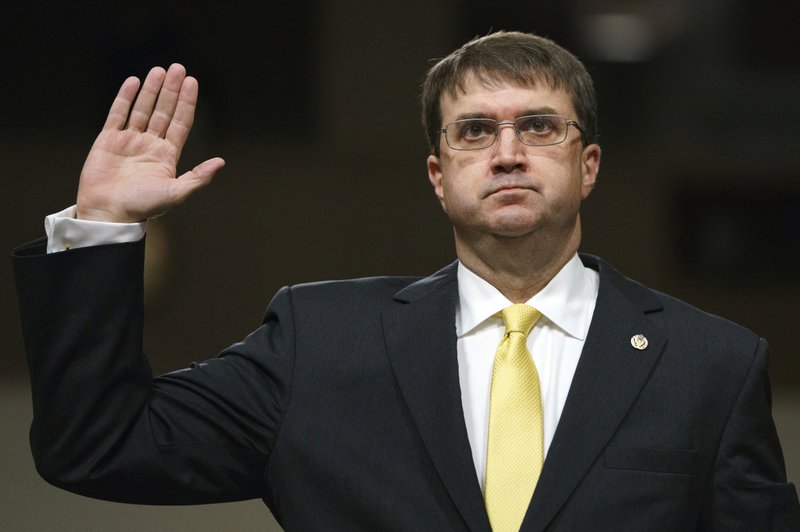
The Senate on Monday confirmed Pentagon official Robert Wilkie to be secretary of Veterans Affairs, charged with delivering on President Donald Trump’s campaign promises to fire bad VA employees and steer more patients to the private sector. Wilkie won approval on a bipartisan vote of 86-9, securing the backing of many Democrats after insisting at his confirmation hearing that he will not privatize the government’s second-largest department. It was a moment of respite from the sharp political divisions engulfing Trump’s other nominees in the final months before congressional midterm elections. Wilkie is Trump’s third pick for the job in 18 months. The longtime public official says he will “shake up complacency” at VA, which has struggled with long waits in providing medical treatment to millions of veterans. In a statement released by the White House, Trump applauded the confirmation vote and said he looked forward to Wilkie’s leadership. “I have no doubt that the Department of Veterans Affairs will continue to make strides in honoring and protecting the heroic men and women who have served our nation with distinction,” he said. Trump selected Wilkie for the post in May after firing his first VA secretary, David Shulkin, amid ethics charges and internal rebellion at the department over the role of private care for veterans. Trump’s initial replacement choice, White House doctor Ronny Jackson, withdrew after allegations of workplace misconduct surfaced. Wilkie, a former assistant secretary of defense under President George W. Bush, has received mostly positive reviews from veterans’ groups for his management experience, but the extent of his willingness to expand private care as an alternative to government-run VA care remains largely unknown. Trump last year pledged he would triple the number of veterans “seeing the doctor of their choice.” Currently more than 30 percent of VA appointments are made in the private sector. Under repeated questioning at his hearing, the Air Force and Navy veteran said he opposed privatizing the agency of 360,000 employees and would make sure VA health care is “fully funded.” When pressed by Sen. Jon Tester, the top Democrat on the panel, if he would be willing to disagree with Trump, Wilkie responded “yes.” “I have been privileged to work for some of the most high-powered people in this town,” said Wilkie, currently a Pentagon undersecretary for Defense Secretary Jim Mattis. “They pay me for their opinions, and I give those to them.” Wilkie’s main task in the coming months will be carrying out a newly signed law to ease access to private health providers. That law gives the VA secretary wide authority to decide when veterans can bypass the VA, based on whether they receive “quality” care, but the program could face escalating costs. Some Democrats have warned the VA won’t be able to handle a growing price tag, putting it at risk of budget shortfalls next year. Major veterans’ groups want full funding for core VA medical centers, which they see as best-suited to veterans’ specialized needs such as treatment for post-traumatic stress. As VA secretary, Wilkie also will have more power under a new accountability law to fire VA employees. Lawmakers from both parties have recently raised questions about the law’s implementation, including how whistleblower complaints are handled and whether the law is being disproportionately used against rank-and-file employees rather than senior managers who set policy. “The tone has been set by President Trump on the direction of VA reforms,” said Dan Caldwell, executive director of the conservative Concerned Veterans for America. “There have been a tremendous number of bills passed in the last year and half, and all will require a lot of work to make sure they are properly implemented.” Republican Sen. Johnny Isakson of Georgia, chairman of the Senate Veterans Affairs Committee, praised Wilkie as “eminently qualified,” saying he will “bring stability and leadership” to VA. Wilkie served as acting VA secretary after Shulkin’s firing in March, before returning to his role as Pentagon undersecretary. He will replace current acting VA secretary Peter O’Rourke, who clashed with the VA inspector general after refusing to release documents relating to VA whistleblower complaints and casting the independent watchdog as an underling who must “act accordingly.” Under pressure from Congress, the VA agreed last week to provide documents to the IG. Republished with the permission of the Associated Press.
Donald Trump’s VA choice bows out in latest Cabinet flame-out
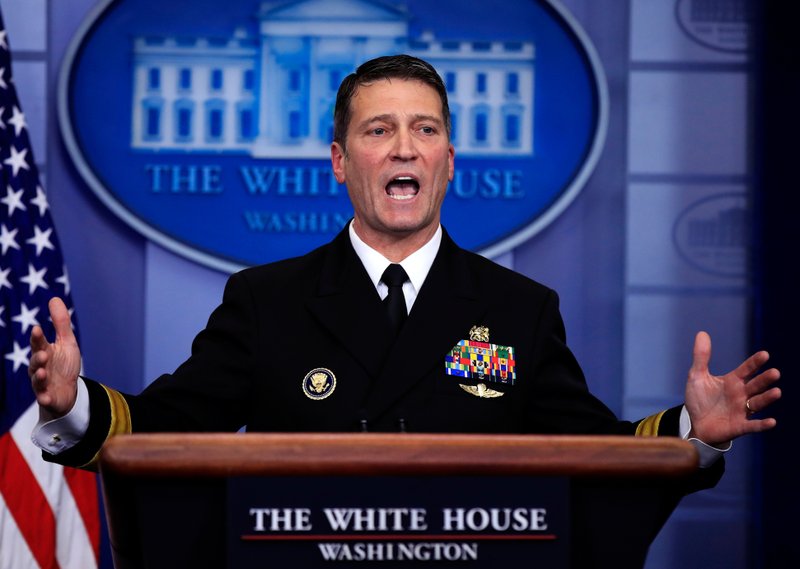
President Donald Trump’s White House doctor reluctantly withdrew his nomination to be Veterans Affairs secretary Thursday in the face of accusations of misconduct, the latest embarrassing episode highlighting Trump’s struggles to fill key jobs and the perils of his occasional spur-of-the-moment-decision-making. The weeks-long saga surrounding the nomination of Navy Dr. Ronny Jackson leaves the government’s second-largest agency without a permanent leader while it faces an immediate crisis with its private health care program. And it abruptly tarnished the reputation of a doctor beloved by two presidents and their staffs. White House officials say they are taking a new look at the way nominees’ backgrounds are checked — and they believe they will persuade Trump to take additional time to ensure that a replacement is sufficiently vetted. The leading person now under consideration for the VA post is former Rep. Jeff Miller, who chaired the House Veterans Affairs Committee before retiring last year, according to White House officials. Miller is a strong proponent of expanding private care for veterans, a Trump priority. Trump quickly selected Jackson, a rear admiral in the Navy, to head the VA last month after firing Obama appointee David Shulkin following accusations of ethical problems and a mounting rebellion within the agency. Jackson, a surprise choice who has worked as a White House physician since 2006, faced immediate questions from Republican and Democratic lawmakers as well as veterans groups about whether he had the experience to manage the massive department of 360,000 employees serving 9 million veterans. Then this week’s unconfirmed allegations by current and former colleagues about drunkenness and improper prescribing of controlled substances, compiled and released by Democrats, made the nomination all but unsalvageable. “The allegations against me are completely false and fabricated,” Jackson said in a statement announcing his withdrawal. Press secretary Sarah Huckabee Sanders said Jackson was back at work at the White House on Thursday. But his future there remains uncertain. He had stepped aside from directing Trump’s medical care and leading the medical unit while his nomination was being considered. “I would hope the White House would closely consider whether he is the best person to provide medical care for the president,” said Democratic Sen. Chris Coons of Delaware. Trump himself praised Jackson, saying, “He’s a great man, and he got treated very, very unfairly.” Then the president went after Democratic Sen. Jon Tester of Montana, who released a list of allegations against Jackson that was compiled by the Democratic staff of the Senate Veterans Affairs Committee. Trump aides said the president was furious with Tester, who faces a tough re-election fight this fall, and plans to aggressively campaign against him. “I think Jon Tester has to have a big price to pay in Montana,” Trump warned on “Fox & Friends” on TV. Tester, meanwhile, called on Congress to continue its investigation of Jackson. “I want to thank the service members who bravely spoke out over the past week. It is my constitutional responsibility to make sure the veterans of this nation get a strong, thoroughly vetted leader who will fight for them,” he said. Elsewhere in the capital, Congress was questioning another Trump official whose job appears in jeopardy. Scott Pruitt, head of the Environmental Protection Agency, was questioned closely by House Democrats about revelations of unusual security spending, first-class flights, an advantageous condo lease and more. Even Republicans who support Pruitt’s deregulation efforts, said his conduct needed scrutiny. Tom Price, Trump’s first secretary of the Department of Health and Human Services, resigned last year after criticism of his use of private charter flights and military jets. The turmoil at the VA comes as it faces a budget shortfall for its private-sector Veterans Choice program, a campaign priority of Trump’s, with lawmakers deadlocked over a long-term fix due to disagreements over cost and how much access veterans should have to private doctors Veterans are “exhausted by the unnecessary and seemingly never-ending drama,” said Paul Rieckhoff, executive director of Iraq and Afghanistan Veterans of America. “VA’s reputation is damaged, staff is demoralized, momentum is stalled and the future is shockingly unclear.” The VA issued a statement late Wednesday that it would push to have Congress move on an expansion of Choice next month. Sen. Johnny Isakson of Georgia, chairman of the Veterans Affairs Committee, said Thursday he would “work with the administration to see to it we get a VA secretary for our veterans and their families.” White House officials were visibly dismayed Wednesday and Thursday as they watched Jackson suffer the blows of the allegations. The doctor, who is well-liked by and has personal relationships with many White House staffers, cited the withering pressure for withdrawing from consideration for the post, but maintained he had done nothing wrong. Trump said on Fox that he has an idea for a replacement nominee, adding it will be “someone with political capability.” Miller, the former congressman who was described as the leading candidate, is a strong proponent of expanding private care for veterans, Miller led the push to create Choice in 2014. However, major veterans groups and Democrats stand opposed to an aggressive expansion of Choice, seeing the effort as a potential threat to VA medical centers. Dan Caldwell, executive director of the conservative Concerned Veterans for America, urged the White House to take more time “to carefully select and vet a new nominee” who could head VA. “The VA currently has a competent Acting Secretary in Robert Wilkie who can manage the VA along with the rest of his leadership team,” he said. “Considering the tremendous challenges that the last three VA secretaries have faced, it is important that a capable individual with a high level of integrity is selected.” During the presidential campaign, Trump repeatedly pledged to fix the VA by bringing accountability and expanding access to private doctors, criticizing the department as “the most corrupt.” At an Ohio event last July, Trump promised to triple the number of veterans “seeing the doctor of their choice.” Currently, more than 30
Senators considering a delay for VA confirmation hearing
Senators were discussing plans to delay the confirmation hearing for President Donald Trump’s pick to be Veteran Affairs secretary over growing questions about the nominee’s ability to manage the government’s second-largest department. The hearing for Ronny Jackson, Trump’s White House doctor and a Navy rear admiral, was scheduled for Wednesday. “Some Republican colleagues have told me that they think the hearing should be postponed, which certainly deserves consideration,” said Sen. Richard Blumenthal, D-Conn., a member of the Senate Veterans Affairs Committee. “I think there may well be a need for more time, in fairness to Admiral Jackson, so he and the administration have an opportunity to answer these questions fully and fairly,” he said. Blumenthal declined to discuss why more time might be needed. White House and VA officials were also discussing a delay with key allies outside the administration A spokeswoman for Sen. Johnny Isakson, R-Ga., the committee’s chairman, did not return requests for comment. Trump selected Jackson to head the VA last month after firing former Obama administration official David Shulkin following an ethics scandal and mounting rebellion within the agency. But Jackson has since faced numerous questions from Republican and Democratic lawmakers as well as veterans groups about whether he has the experience to manage the massive department of 360,000 employees serving 9 million veterans. Sen. Mike Rounds, R-S.D., and a committee member, said Jackson’s small staff at the White House will be an issue as he prepares to lead the VA. “We’ve got 360,000 people there,” he said. “Are they going to manage the secretary or is the secretary going to manage the VA? That’s a good question to ask, and he needs to answer it. He needs to be the leader. A lot of folks want to be led and managed.” Rounds said the committee still needs more paperwork from the White House on Jackson before the nomination can go forward. Republished with the permission of the Associated Press.
Donald Trump hails border wall start, but it’s not quite true
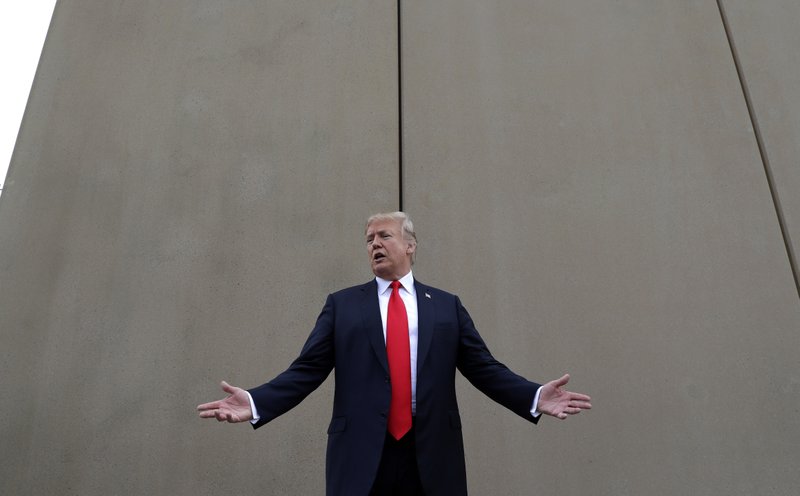
President Donald Trump hailed the start of his long-sought southern border wall this past week, proudly tweeting photos of the “WALL!” Actually, no new work got underway. The photos showed the continuation of an old project to replace two miles of existing barrier. And on Saturday, he ripped Amazon with a shaky claim that its contract with the post office is a “scam.” Trump and his officials departed from reality on a variety of subjects in recent days: the census, Amazon’s practices and the makeup of the Supreme Court among them. Here’s a look at some statements and their veracity: TRUMP: “Great briefing this afternoon on the start of our Southern Border WALL!” — tweet Wednesday, showing photos of workers building a fence. TRUMP: “We’re going to be starting work, literally, on Monday, on not only some new wall — not enough, but we’re working that very quickly — but also fixing existing walls and existing acceptable fences.” — Trump, speaking the previous week after signing a bill financing the government. THE FACTS: Trump’s wrong. No new work began on Monday or any other time this past week. And the photos Trump tweeted were misleading. They showed work that’s been going on for more than a month on a small border wall replacement project in Calexico, California, that has nothing to do with the federal budget he signed into law last week. The Calexico project that began Feb. 21 to replace a little more than 2 miles (3.2 kilometers) of border wall was financed during the 2017 budget year. A barrier built in the 1990s mainly from recycled metal scraps is being torn down and replaced with bollard-style barriers that are 30 feet (9.1 meters) high. Ronald D. Vitiello, acting deputy commissioner of U.S. Customs and Border Protection, defended the president’s statements, saying Friday “there’s construction” underway. TRUMP: “If the P.O. ‘increased its parcel rates, Amazon’s shipping costs would rise by $2.6 Billion.’ This Post Office scam must stop. Amazon must pay real costs (and taxes) now!” — tweet Saturday. TRUMP: “I have stated my concerns with Amazon long before the Election. Unlike others, they pay little or no taxes to state & local governments, use our Postal System as their Delivery Boy (causing tremendous loss to the U.S.), and are putting many thousands of retailers out of business!” — tweet Thursday. THE FACTS: Trump is misrepresenting Amazon’s record on taxes, the U.S. Postal Service’s financial situation and the contract that has the post office deliver some Amazon orders. Federal regulators have found that contract to be profitable for the Postal Service. People who buy products sold by Amazon pay sales tax in all states that have a sales tax. Not all third-party vendors using Amazon collect it, however. As for the post office, package delivery has been a bright spot for a service that’s lost money for 11 straight years. The losses are mostly due to pension and health care costs — not the business deal for the Postal Service to deliver packages for Amazon. Boosted by e-commerce, the Postal Service has enjoyed double-digit increases in revenue from delivering packages, but that hasn’t been enough to offset declines in first-class letters and marketing mail, which together make up more than two-thirds of postal revenue. While the Postal Service’s losses can’t be attributed to its package business, Trump’s claim that it could get more bang for its buck may not be entirely far-fetched. A 2017 analysis by Citigroup concluded that the Postal Service was charging below-market rates as a whole for parcels. The post office does not use taxpayer money for its operations. Trump is upset about Amazon because its owner, Jeff Bezos, owns The Washington Post, one of the targets of his “fake news” tweets. TRUMP: “Because of the $700 & $716 Billion Dollars gotten to rebuild our Military, many jobs are created and our Military is again rich. Building a great Border Wall, with drugs (poison) and enemy combatants pouring into our Country, is all about National Defense. Build WALL through M!” — tweets Sunday and Monday. THE FACTS: Trump is floating the idea of using “M″ — the Pentagon’s military budget — to pay for his wall with Mexico. Such a move would almost certainly require approval from Congress and there’s plenty of reason to be skeptical about the notion of diverting military money for this purpose. Only Congress has the power under the Constitution to determine federal appropriations, leaving the Trump administration little authority to shift money without lawmakers’ approval. Pentagon spokesman Chris Sherwood referred all questions on the wall to the White House. Spokeswoman Sarah Huckabee Sanders declined to reveal specifics, but said Trump would work with the White House counsel to make sure any action taken was within his executive authority. DAVID SHULKIN, citing reasons Trump fired him as veterans affairs secretary: “I have been falsely accused of things by people who wanted me out of the way. But despite these politically based attacks on me and my family’s character, I am proud of my record and know that I acted with the utmost integrity.” — op-ed Thursday in The New York Times. THE FACTS: His statement that he and his family were subjected to politically based attacks is disingenuous, though politics contributed to his dismissal. White House support for Shulkin eroded after a blistering report in February by VA’s internal watchdog, a non-partisan office. The inspector general’s office concluded that he had violated ethics rules by accepting free Wimbledon tennis tickets. The inspector general also said Shulkin’s chief of staff had doctored emails to justify bringing the secretary’s wife to Europe with him at taxpayer expense. It is true, though, that Shulkin had encountered resistance from about a half-dozen political appointees at the VA and White House who rebelled against him. In an extraordinary telephone call, John Ullyot, a top communications aide, and VA spokesman Curt Cashour asked the Republican staff director of the House Veterans Affairs Committee to push for Shulkin’s
The doctor is in: White House physician nominated to lead VA
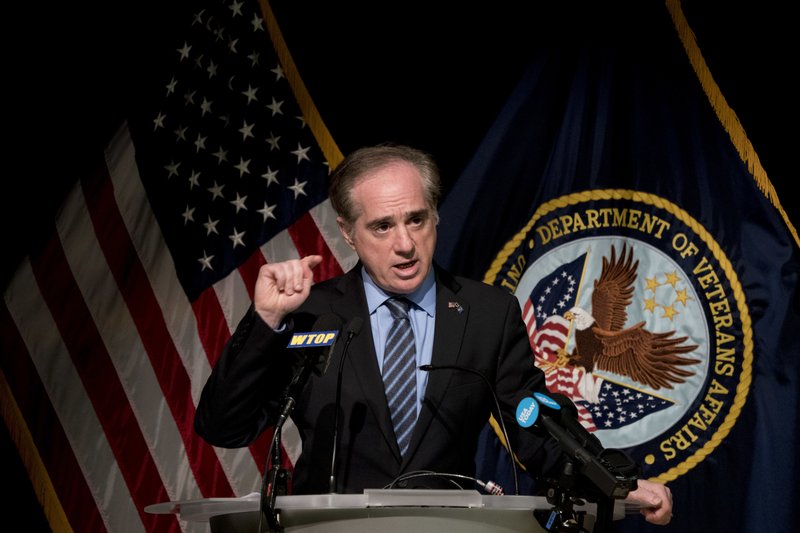
President Donald Trump fired Veterans Affairs Secretary David Shulkin and nominated White House doctor Ronny Jackson to replace him following a bruising ethics scandal and a mounting rebellion within the agency. A Navy rear admiral, Jackson is a surprise choice to succeed Shulkin, a former Obama administration official and the first nonveteran to head the VA. Trump had been considering replacing Shulkin for weeks but had not been known to be considering Jackson for the role. In a statement, Trump praised Jackson as “highly trained and qualified.” It was a decision that signaled Trump chose to go with someone he knows and trusts, rather than choosing a candidate with a longer resume, to run a massive agency facing huge bureaucratic challenges. Shulkin said he was undone by advocates of privatization within the administration. He wrote in a New York Times opinion piece that they “saw me as an obstacle to privatization who had to be removed.” He added: “That is because I am convinced that privatization is a political issue aimed at rewarding select people and companies with profits, even if it undermines care for veterans.” Jackson has served since 2013 as the physician to the president, one of the people in closest proximity to Trump day in and day out. His profile rose after he conducted a sweeping press conference about the president’s medical exam in January in which he impressed Trump with his camera-ready demeanor and deft navigation of reporters’ questions as he delivered a rosy depiction of the president’s health, according to a person familiar with the president’s thinking but not authorized to discuss private conversations. Jackson eagerly embraced the idea of moving to the VA, according to a White House official who spoke on condition of anonymity to discuss personnel matters. Ironically, it was Shulkin who had recommended Jackson for an undersecretary position at the agency in fall. Jackson was vetted during that time on his policy positions and other issues, the official said. The promotion of Jackson marks the latest Trump hire to be driven at least as much by personal familiarity with the president as by his vision for the role at government’s second-largest department, responsible for 9 million military veterans in more than 1,700 government-run health facilities. Brig. Gen. Dr. Richard Tubb, who trained Jackson, said in a letter read at Jackson’s briefing that the doctor had been attached like “Velcro” to Trump since Inauguration Day. “On any given day,” he wrote, “the ‘physician’s office,’ as it is known, is generally the first and last to see the President.” A White House official said Shulkin was informed of his dismissal by chief of staff John Kelly before the president announced the move on Twitter on Wednesday. A major veterans’ organization expressed concern over Shulkin’s dismissal and Trump’s intention to nominate Jackson, whom they worried lacked experience to run the huge department. “We are disappointed and already quite concerned about this nominee,” said Joe Chenelly, the national executive director of AMVETS. “The administration needs to be ready to prove that he’s qualified to run such a massive agency, a $200 billion bureaucracy.” Rep. Phil Roe, chairman of the House Veterans Affairs Committee, said he believed Shulkin did a “fantastic job” and didn’t think he should have been dismissed, but “at the end of the day, Cabinet secretaries serve at the pleasure of the president.” “I respect President Trump’s decision, support the president’s agenda and remain willing to work with anyone committed to doing the right thing on behalf of our nation’s veterans,” said Roe, a Republican from Tennessee. Shulkin is the second Cabinet secretary to depart over controversies involving expensive travel, following Health and Human Services Secretary Tom Price’s resignation last September. Trump said in a statement he is “grateful” for Shulkin’s service. Shulkin had agreed to reimburse the government more than $4,000 after the VA’s internal watchdog concluded last month that he had improperly accepted Wimbledon tennis tickets and that his then-chief of staff had doctored emails to justify his wife traveling to Europe with him at taxpayer expense. Shulkin also blamed internal drama at the agency on a half-dozen or so rebellious political appointees, insisting he had White House backing to fire them. But the continuing VA infighting and a fresh raft of watchdog reports documenting leadership failures and spending waste — as well as fresh allegations that Shulkin had used a member of his security detail to run personal errands — proved too much of a distraction. It was the latest in a series of departures of top administration officials, including Secretary of State Rex Tillerson and national security adviser H.R. McMaster. The VA change comes as Trump is trying to expand the Veterans Choice program, fulfilling a campaign promise that major veterans’ groups worry could be an unwanted step toward privatizing VA health care. His plan remains in limbo in Congress. Having pushed through legislation in Trump’s first year making it easier to fire bad VA employees and speed disability appeals, Shulkin leaves behind a department in disarray. Several projects remain unfinished, including a multibillion-dollar overhaul of electronic medical records aimed at speeding up wait times for veterans seeking medical care as well as expanded mental health treatment for veterans at higher risk of suicide. Trump selected Robert Wilkie, undersecretary of defense for personnel and readiness, to serve as the acting head of the VA. Republished with the permission of the Associated Press.
Watchdog report: Failed VA leadership put patients at risk
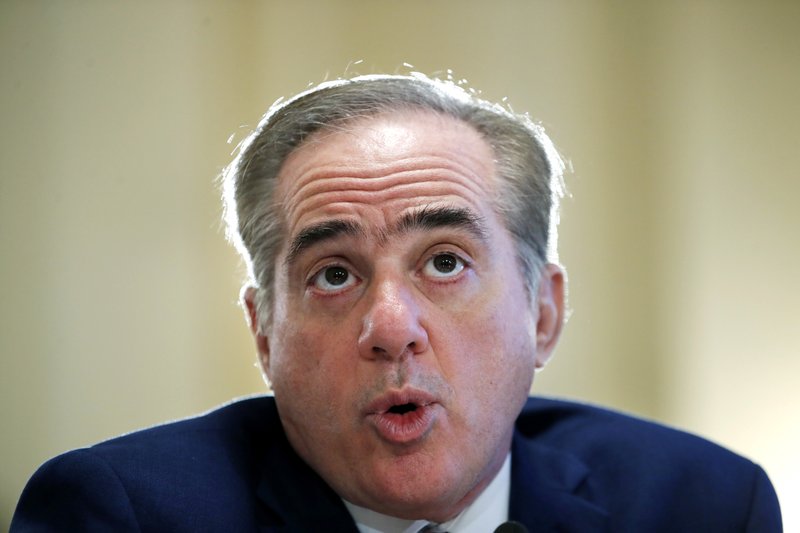
As a top Veterans Administration official in the Obama administration, current Secretary David Shulkin took no action to fix longstanding problems of dirty syringes and equipment shortages that put patients at risk at a major veterans hospital, according to an investigation released Wednesday that finds “failed leadership” and “climate of complacency” at agency. The 150-page report by the VA internal watchdog offers new details to its preliminary finding last April of patient safety issues at the Washington, D.C., medical center. Painting a grim picture of communications breakdowns, chaos and spending waste at the government’s second largest department, the report found that at least three VA program offices directly under Shulkin’s watch knew of “serious, persistent deficiencies” when he was VA undersecretary of health under former President Barack Obama from 2015 to 2016. Shulkin, who was elevated to VA secretary last year by President Donald Trump, told government investigators that he did “not recall” ever being notified of problems. The findings are the latest in a series of problems coming to the light at the VA under Shulkin, who has been struggling to keep a grip on his job since a blistering report by the inspector general last month concluded that he had violated ethics rules by improperly accepting Wimbledon tennis tickets and that his then chief of staff had doctored emails to justify his wife traveling to Europe with him at taxpayer expense. He also faces a rebellion among some VA staff and has issued a sharp warning to them: Get back in line or get out. “I suspect that people are right now making decisions on whether they want to be a part of this team or not,” he said last month. The latest IG investigation found poor accounting procedures leading to taxpayer waste, citing at least $92 million in overpriced medical supplies, along with a threat of data breaches as reams of patients’ sensitive health information sat in 1,300 unsecured boxes. No patient died as a result of the patient safety issues at the Washington facility dating back to at least 2013, which resulted in costly hospitalizations, “prolonged or unnecessary anesthesia” while medical staff scrambled to find needed equipment at the last minute as well as delays and cancellations of medical procedures. The report also noted improvements made at the Washington facility since the IG’s first report in April, when Shulkin replaced the medical center’s director and pledged broader improvements. Still, VA inspector general Michael Missal cautioned of potential problems without stronger oversight across the VA network of more than 1,700 facilities. “Failed leadership at multiple levels within VA put patients and assets at the DC VA Medical Center at unnecessary risk and resulted in a breakdown of core services,” Missal said. “It created a climate of complacency … That there was no finding of patient harm was largely due to the efforts of many dedicated health care providers that overcame service deficiencies to ensure patients received needed care.” In the report, Shulkin responded that he had expected issues involving patient harm or operational deficiencies to be raised through the “usual” communication process, originating from the local level and regional office to VA headquarters in Washington — and that it apparently didn’t happen. While the IG did not make specific conclusions on whether Shulkin actually was warned by direct subordinates, it broadly faulted an “unwillingness or inability of leaders to take responsibility for the effectiveness of their programs and operations,” and cited a “sense of futility” at multiple levels in bringing about improvements. In its written response to Wednesday’s report, the department generally agreed to implement recommendations for improved health procedures at the Washington facility and pledged a “reliable pathway” for local VA and regional officials to report high-priority concerns to senior leadership at VA headquarters. “It was difficult to pinpoint precisely how the conditions described in this report could have persisted at the medical center for so many years,” Missal wrote. “Senior leaders at all levels had a responsibility to ensure that patients were not placed at risk,” he said. Shulkin has maintained White House support despite the travel controversy. He has acknowledged some mistakes in the handling of the trip and said he relied too much on the judgment of his staff to ensure full compliance with travel policies. He has since said he reimbursed the $4,000 plane ticket for his wife. His chief of staff, Vivieca Wright Simpson, has left the agency. Several major veterans organizations are standing behind him as the best guardian of the VA amid a planned overhaul of the Veterans Choice program, a Trump campaign priority aimed at expanding private care outside the VA system. Major veterans groups are wary of an aggressive Choice expansion as a potential threat to the viability of VA medical centers, which it sees as best-suited to treat battlefield injury such as post-traumatic stress disorder. Republished with permission from the Associated Press.
White House: VA’s David Shulkin not a candidate for HHS secretary
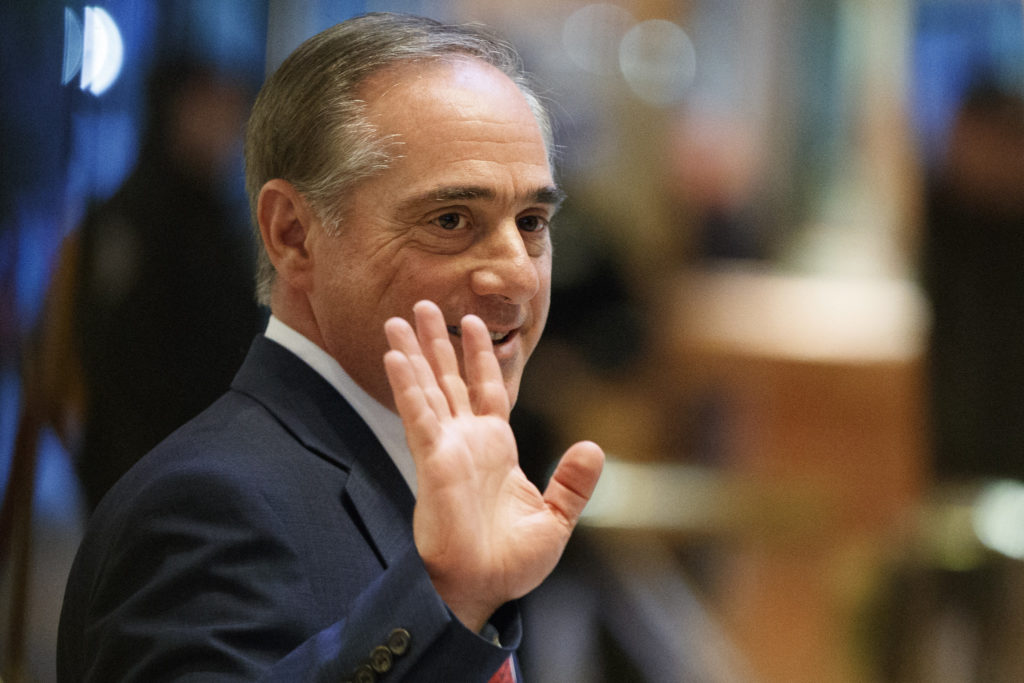
Veterans Affairs Secretary David Shulkin, who is under investigation for taking a 10-day trip to Europe that mixed business with sightseeing, is not being considered for the top job at Health and Human Services, the White House said Wednesday. Shulkin has been cited in media reports as a leading contender to replace former HHS Secretary Tom Price, who resigned last month following an outcry over his use of costly private planes for official travel. The Wall Street Journal reported over the weekend that Shulkin was interviewed by the White House and had “made his case” for becoming HHS secretary. But a White House official said Shulkin did not have an interview and “was never under consideration for the position.” The official, who insisted on anonymity because the official was not authorized to speak on the record about a personnel matter, declined to discuss reasons behind who was being considered and why. A VA spokesman did not comment, referring questions about Cabinet-level positions to the White House. Shulkin is one of several Cabinet members who have faced questions about travel after Price resigned. The VA inspector general earlier this month opened an investigation into Shulkin’s taxpayer-funded trip with his wife to Denmark and England to discuss veterans’ health issues. Travel records released by VA show four days of the July trip were spent on personal activities, including attending a Wimbledon tennis match. The VA said Shulkin traveled on a commercial airline, and that his wife’s airfare and meals were paid for by taxpayers. Major veterans’ organizations had expressed concern about uncertainty at VA should Shulkin leave his job, citing major changes underway to improve care for millions of veterans. The VA has numerous job vacancies, including top posts in its health care division. Shulkin, a physician, served as VA’s undersecretary of health during the Obama administration since 2015. President Donald Trump tapped Shulkin in January to head the VA, the government’s second-largest agency. Republished with permission from the Associated Press.
Martha Roby: New law, policy change are good news for veterans
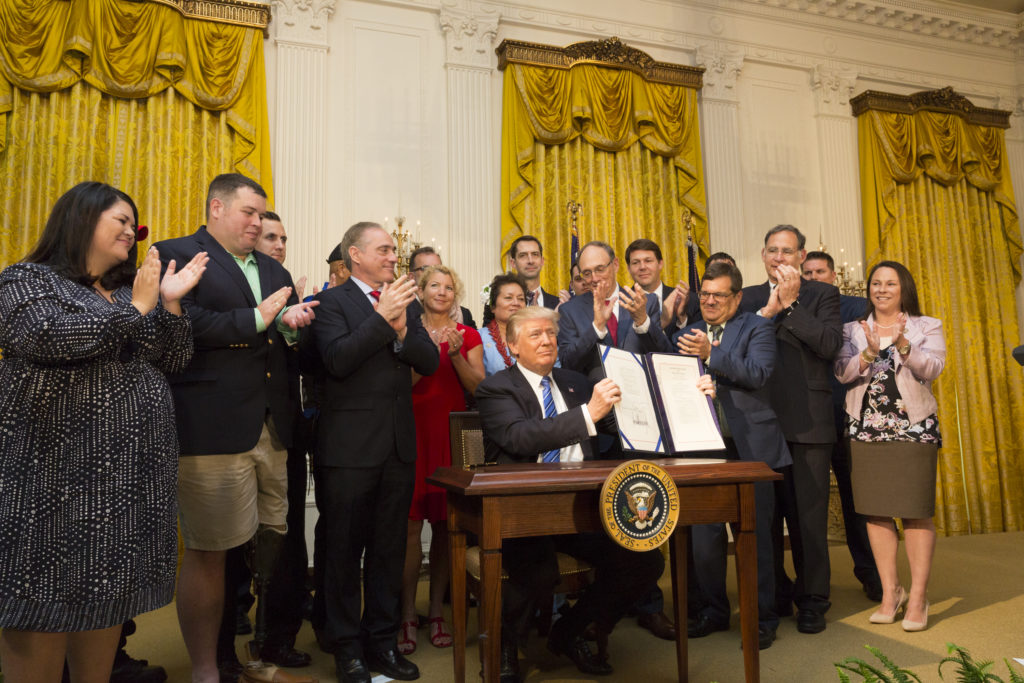
I was honored to be on hand at the White House as President Donald Trump signed the Department of Veterans Affairs Accountability and Whistleblower Protection Act into law. It was one of two recent developments that will bring significant improvements to veterans’ services in this country. For the last several months, Congress has been working to build upon the VA reforms we passed in the wake of the 2014 veteran wait list scandal. That law took an important step to increase accountability by making it easier to remove high ranking VA officials. However, our efforts to extend that flexibility to fire problem employees down the chain of command to rank-and-file workers were unsuccessful due to objections from the Obama Administration and the then-Democratic Majority Senate. I’ve always maintained that senior managers aren’t the only ones responsible for misconduct at the VA. Everyone entrusted with the care of veterans should be accountable for a high standard of service and integrity. Another improvement we’ve needed is protection for whistleblowers who come forward to expose wrongdoing. The brave whistleblowers who told me the truth about the misconduct and abuse at the Central Alabama VA faced serious retaliation for their efforts, and many others around the country have reported similar treatment. The new law grants Secretary of Veterans Affairs Dr. David Shulkin increased flexibility to fire, suspend, or demote any VA employee for poor performance or misconduct. It increases protections for whistleblowers and establishes a new independent office within the VA specifically to look out for those who bring misconduct to light. Another important provision of the new law streamlines the hiring process for VA medical center directors. I personally advocated for this new authority after bureaucratic problems delayed the hiring of a new director for the Central Alabama VA for more than two years. To be clear, most VA employees care deeply for veterans and work hard to offer the best care and service, but for too long a culture of complacency has allowed some to get away with poor performance, negligence, or misconduct. Our veterans deserve the very best care we can give them, and I believe those who depend on the VA will be better served as a result of these reforms. Earlier this month, Secretary Shulkin announced the VA is finally modernizing its patient health record system and bringing it in line with the platform used by the Department of Defense. This is long overdue. It has never made sense to me that the VA would use a different health record system than the military. Think about a veteran who has recently returned from a deployment who has symptoms of PTSD or another battlefield injury. They need access to care right away, but too often they have trouble because the systems don’t communicate properly. We hear from veterans every day who face these gaps in health care, and it is past time the problem was fixed. Congress has prioritized funding for modernizing the health record system, and I am very pleased Secretary Shulkin is using his authority to make this change. Our new reform law and this important policy change within the Department of Veterans Affairs show that Congress and the Trump Administration are working together to turn around the VA and improve services for veterans. I appreciate President Trump and Secretary Shulkin for their commitment to working with lawmakers to put these important changes in place. Three years after the waitlist scandal erupted in our own backyard, I remain directly engaged in pushing for improvements at the VA facilities Alabama veterans count on. Last week I met with VA Inspector General Michael Missal and his staff in my office for an update on their efforts to perform facility inspections and investigate allegations of wrongdoing. I also held my regular call with Central Alabama VA Director Dr. Linda Boyle and her team to go over various issues facing the system. On both a national and local level, the endless saga at the VA has demonstrated the importance of strong, consistent oversight. As your Representative in Congress, I intend to keep applying that oversight and I will continue to keep you updated on our progress. ••• Martha Roby represents Alabama’s Second Congressional District. She lives in Montgomery, Alabama with her husband Riley and their two children.
David Shulkin stresses ‘lot of work to do’ to fix beleaguered VA
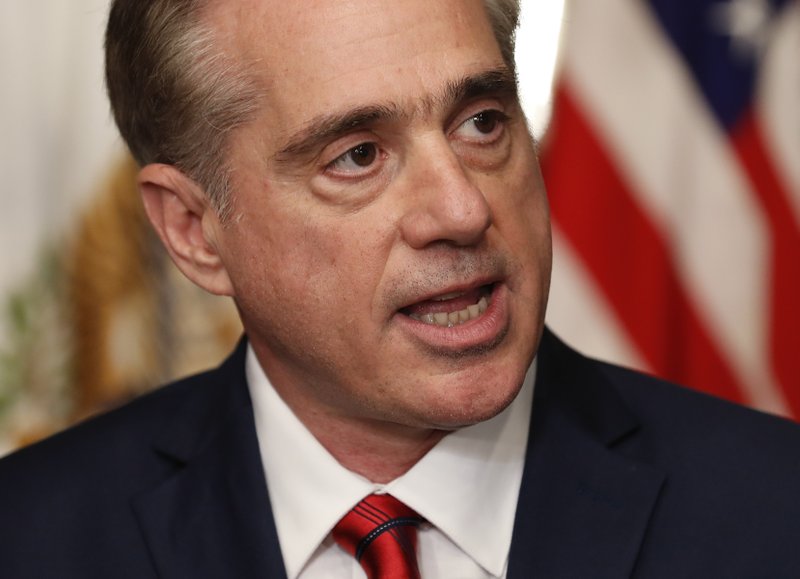
Veterans Affairs Secretary David Shulkin warned Wednesday that the VA is “still in critical condition” despite efforts that predate his tenure to reduce wait times for medical appointments and expand opportunities to seek care in the private sector. In a “State of the VA” report, Shulkin, a physician, issued a blunt diagnosis: “There is a lot of work to do.” Veterans can get “same-day” services at medical centers but are still waiting too long – more than 60 days – for new appointments at about 30 locations nationwide. Many primary care centers are understaffed or running out of space. Appeals of disability claims remain backed up with years of wait. Inventory systems at several VA facilities are woefully out of date, and employee accountability is “clearly broken.” Shulkin said the department had about 1,500 disciplinary actions against employees on hold, citing legal requirements that it must wait at least a month before taking action for misconduct. That means people are being paid “for violating our core values,” he said in a 17-page report. “Our veterans and their families have benefited from our early success, but have suffered due to the failures of the past to effect real change,” Shulkin said. Shulkin provided his “top to bottom review” at a critical time. His biggest proposals for revamping the VA – and fulfilling the campaign promises of President Donald Trump – will need to be acted on soon by an increasingly polarized Congress if measures are to be passed by this fall. The wish list includes an accountability bill to make it easier to fire VA employees, expanding the Veterans Choice program of private-sector care and stemming veterans’ suicide. About 20 veterans take their lives each day. “That should be unacceptable to all of us,” Shulkin said at a White House briefing. Other efforts include an overhaul of information technology systems, plans to reduce 400 vacant buildings and 735 underutilized facilities, consolidation at VA headquarters in Washington and partnerships with local governments and the private sector. Shulkin announced that a promised White House hotline for veterans’ complaints should be fully operational by Aug. 15. Testing begins Thursday. The telephone number is (855) 948-2311. During the campaign, Trump promised a 24-hour hotline so veterans’ complaints will not “fall through the cracks.” Shulkin, who served in the Obama administration and was promoted by Trump, described the president as being “deeply engaged” on veteran issues, a subject Trump highlighted during the campaign. He pledged to make the department and its health care system work better for veterans. “His commitment to being involved in veteran issues is one of his top domestic priorities,” Shulkin said at the briefing. “Anything that we need, the White House has been extremely responsive and they are impatient and anxious for us to get on with this.” Trump’s budget plan calls for a 3.7 percent increase in total VA funding, mostly to pay for rising costs of medical care. It specifically calls for $29 billion over the next decade for Choice, which allows veterans to seek outside medical care from private doctors. To cover rising costs, the VA would cap the amount of educational benefits veterans could receive under the GI bill and halt “individual unemployability” benefit payments to out-of-work disabled veterans once they reach age 62. Major veterans’ organizations oppose such cuts, with the American Legion describing the trade-offs as “stealth privatization.” Veterans’ groups worry the Trump administration is seeking to expand Choice to the detriment of core VA programs. Besides Choice, Shulkin said he was seeking to implement another campaign priority: a VA accountability office, established by executive order last month, Shulkin said he still needed the Senate to pass accountability legislation that would give him broader authority, such as lowering the evidentiary standard to fire employees. The Senate is scheduled to vote on the bill June 6. The Associated Press reported this week that federal authorities were investigating dozens of new cases of possible opioid and other drug theft by employees at VA hospitals, a sign the problem isn’t going away after the VA announced “zero tolerance” in February. Since 2009, in only about 3 percent of the reported cases of drug loss or theft have doctors, nurses or pharmacy employees been disciplined. Republished with permission of The Associated Press.
VA limiting new hiring as it aims to widen private care
Despite the lifting of a federal hiring freeze, the Department of Veterans Affairs is leaving thousands of positions unfilled, citing the need for a leaner VA as it develops a longer-term plan to allow more veterans to seek medical care in the private sector. The order by VA Secretary David Shulkin is described in an internal April 14 memorandum obtained by The Associated Press. The VA indicated it would proceed with filling open positions previously exempted under the hiring freeze. Noting that the White House had ordered all departments to be leaner and “more accountable,” the VA indicated that more than 4,000 jobs would still be left vacant unless they were specially approved “position by position” by top VA leadership as addressing an “absolute critical need.” These positions include roughly 4,000 in the VA’s health arm and 200 in benefits, plus more than 400 information technology positions and over a 100 human resource positions, according to VA data provided to the Senate Veterans Affairs Committee earlier this month. Government auditors have previously faulted the department for recent shortages in IT and HR, which it said had hurt its ability to recruit and hire key staff department-wide. Major veterans organizations also worry this could be a sign of future tightening at the VA, coming after the department had previously warned it would need “hiring surges” to address a rapidly growing disability backlog. The groups have cautioned against any “privatization” efforts at the VA that could expand private care for veterans while reducing investment in the VA itself. “It seems to be a reversal of what they have been saying, and it’s disappointing,” said Garry Augustine, executive director of Disabled American Veterans’ Washington headquarters. Carlos Fuentes, legislative director of Veterans of Foreign Wars, said his group was concerned the VA would overlook positions that didn’t directly affect health care, such as staffing of its suicide prevention hotline. The VA said in a statement Wednesday that the hiring restrictions were needed to “streamline VA’s corporate structure and administrative positions.” While President Donald Trump‘s budget blueprint calls for a 6 percent increase in VA funding, the memo indicated that the government’s second-largest agency with nearly 370,000 employees was no different from other departments that needed to improve “efficiency, effectiveness and accountability.” It left open the possibility of “near-term” and “long-term workforce reductions.” Shulkin is also putting together a broader proposal by fall to expand the VA’s Choice program of private-sector care. “This memo lifts the federal hiring freeze. However, this does not mean business as usual for hiring,” stated VA chief of staff Vivieca Wright Simpson. She said VA leadership aimed to proceed in the coming months with “deliberative hiring strategies” as it seeks to build “a future VA of Choice.” The memo comes as the Trump administration seeks to highlight accomplishment and accountability at the VA. During the 2016 campaign, Trump repeatedly criticized the VA as “the most corrupt” and pledged to expand private care. Trump planned to sign an executive order Thursday at the VA to create a new Office of Accountability and Whistleblower Protection. The head of the office will report directly to the secretary to help VA officials identify “barriers” that impede the reassignment of employees who are no longer deemed fit to work at the department in the service of veterans, Shulkin said at a White House briefing. Existing employees will staff the office. Shulkin said he didn’t have an exact figure on what the office would cost. Shulkin also has signaled, without naming specific locations, that underutilized VA facilities will have to close. “There are some parts of the country where facilities are sitting empty, and there is no sense in keeping them empty,” he has said. The Republican-led House last month approved legislation to make it easier for the VA to fire, suspend or demote employees for poor performance or bad conduct. But the measure has been slow to move in the Senate after Democrats and unions cast it as an attack on workers’ rights. Republished with permission of the Associated Press.
VA tests partnership with CVS to reduce veterans’ wait times
Some ailing veterans can now use their federal health care benefits at CVS “MinuteClinics” to treat minor illnesses and injuries, under a pilot program announced Tuesday by the Department of Veterans Affairs. The new program, currently limited to the Phoenix area, comes three years after the VA faced allegations of chronically long wait times at its centers, including its Phoenix facility, which treats about 120,000 veterans. The Phoenix pilot program is a test-run by VA Secretary David Shulkin who is working on a nationwide plan to reduce veterans’ wait times. Veterans would not be bound by current restrictions under the VA’s Choice program, which limits outside care to those who have been waiting more than 30 days for an appointment or have to drive more than 40 miles to a facility. Instead, Phoenix VA nurses staffing the medical center’s help line will be able to refer veterans to MinuteClinics for government-paid care when “clinically appropriate.” Shulkin has made clear he’d like a broader collaboration of “integrated care” nationwide between the VA and private sector in which veterans have wider access to private doctors. But, he wants the VA to handle all scheduling and “customer service” — something that veterans groups generally support but government auditors caution could prove unwieldy and expensive. On Wednesday, President Donald Trump plans to sign legislation to temporarily extend the $10 billion Choice program until its money runs out, pending the administration’s plan due out by fall. That broader plan would have to be approved by Congress. “Our number one priority is getting veterans’ access to care when and where they need it,” said Baligh Yehia, the VA’s deputy undersecretary for health for community care. “The launch of this partnership will enable VA to provide more care for veterans in their neighborhoods.” Sen. John McCain, R-Ariz., a long-time advocate of veterans’ expanded access to private care, lauded the new initiative as an “important step forward.” “Veterans in need of routine health care services should not have to wait in line for weeks to get an appointment when they can visit community health centers like MinuteClinic to receive timely and convenient care,” he said. The current Choice program was developed after the 2014 scandal in Phoenix in which some veterans died, yet the program has often encountered long waits of its own. The bill being signed by Trump seeks to alleviate some of the problems by helping speed up VA payments and promote greater sharing of medical records. Shulkin also has said he wants to eliminate Choice’s 30-day, 40 mile restrictions, allowing the VA instead to determine when outside care is “clinically needed.” Despite a heavy spotlight on its problems, the Phoenix facility still grapples with delays. Only 61 percent of veterans surveyed said they got an appointment for urgent primary care when they needed it, according to VA data. Maureen McCarthy, the Phoenix VA’s chief of staff, welcomed the new CVS partnership but acknowledged a potential challenge in providing seamless coordination to avoid gaps in care. She said a veteran’s medical record will be shared electronically, with MinuteClinic providing visit summaries to the veteran’s VA primary care physician so that the VA can provide follow-up services if needed. The VA previously experimented with a similar program last year in the smaller market of Palo Alto, Calif., a $330,000 pilot to provide urgent care at 14 MinuteClinics. CVS says it is pleased the VA has opted to test out a larger market and says it’s ready to roll the program out nationally if successful. CVS, the biggest player in pharmacy retail clinics, operates more than 1,100 of them in 33 states and the District of Columbia. “We believe in the MinuteClinic model of care and are excited to offer our health care services as one potential solution for the Phoenix VA Health Care System and its patients,” said Tobias Barker, chief medical officer of CVS MinuteClinic. Republished with permission of The Associated Press.
Bradley Byrne: Taking better care of our veterans
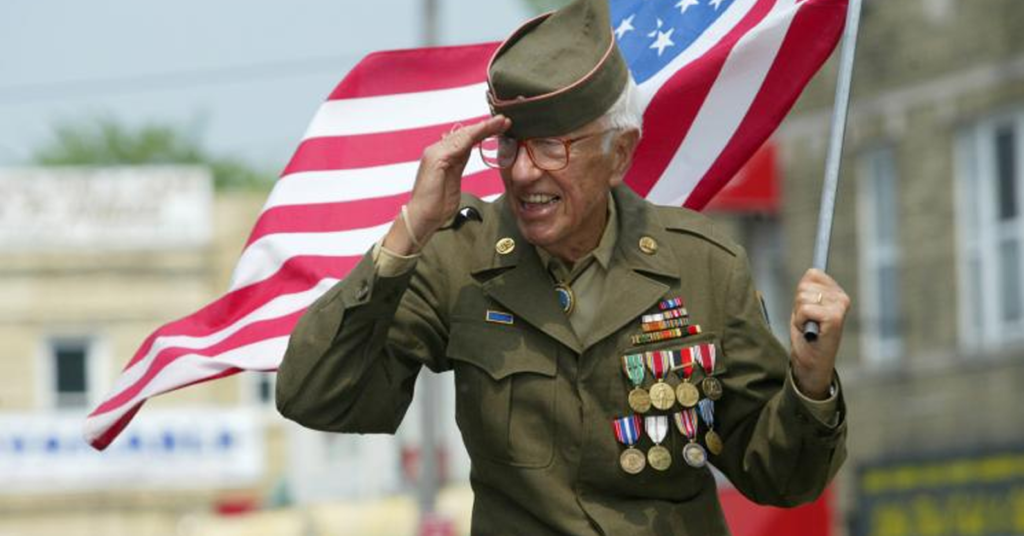
I’ve held over 75 town hall meetings since being elected to Congress, and these meetings allow me to get a feel for what issues are most important to the people I represent. At every single town hall meeting, I get at least one question about problems at the Department of Veterans Affairs (VA). We have all read different stories about the VA in the newspapers – stories about secret wait lists, VA employees stealing drugs, veterans dying while waiting for care, and doctors overprescribing pain medication. During my town hall meetings, veterans stand up and put a real, human face on the horrible problems at the VA. I have seen veterans literally break into tears when talking about the lack of timely care or bureaucratic roadblocks. The stories are heartbreaking. Our veterans deserve better than this. The culture of complacency and lack of accountability at the VA is simply unacceptable. Now, I know not everyone who works in the VA system is a bad actor. There are certainly people who work tirelessly day in and day out to serve our veterans. Unfortunately, their stories are overshadowed by the widespread challenges. Ultimately, I think we need to fundamentally reconsider the way we care for our nation’s veterans. These men and women have put their lives on the line to protect our freedoms, and we should do everything we can to ensure they receive the care they deserve. I recently introduced H.R. 1032, the Full Choice for Veterans Act. This short, two-page bill would change the law to ensure every veteran eligible for VA care is also able to seek medical care from private doctors, specialists, and hospitals in their local community. In other words, my bill would give veterans access to private, local medical care instead of forcing them into the broken VA system. Giving veterans the choice of private care will allow them to receive more timely access to better care. Congress passed a law a few years ago to create a similar program, known as the Veterans Choice Program. Sadly, the VA put up restrictions that created confusion and greatly limited veterans access to private care. My bill would do away with those restrictions and open the program up to all veterans eligible for VA care. By doing this, I think we will see two major benefits. First, we will get better and timelier care for our veterans in their local communities instead of forcing them to drive out of the way to a VA hospital or clinic. Second, we will save taxpayer money by cutting back on the bloated VA bureaucracy. Giving veterans greater access to private medical care is something President Trump talked about repeatedly on the campaign trail, and I hope I can work with his Administration to actually give veterans the choices they deserve. President Donald Trump’s pick to lead the VA, David Shulkin, was recently confirmed by the Senate, and I stand ready to work with him and his team to succeed where his predecessors have failed in changing the culture of complacency at the VA. Until the system changes, I will also continue working to ensure the current VA system works for our veterans. If you, or someone you know, is having a hard time navigating the bureaucracy at the VA, I hope you will encourage them to contact my office at 251-690-2811. My staff and I stand ready to help. There is no group more deserving of timely care and treatment than those who have served our country. By giving them greater choices and access to private care, I think we can do right by our veterans. • • • Bradley Byrne is a member of U.S. Congress representing Alabama’s 1st Congressional District.
