
Senators strike deal to end government shutdown without protections for Dreamers
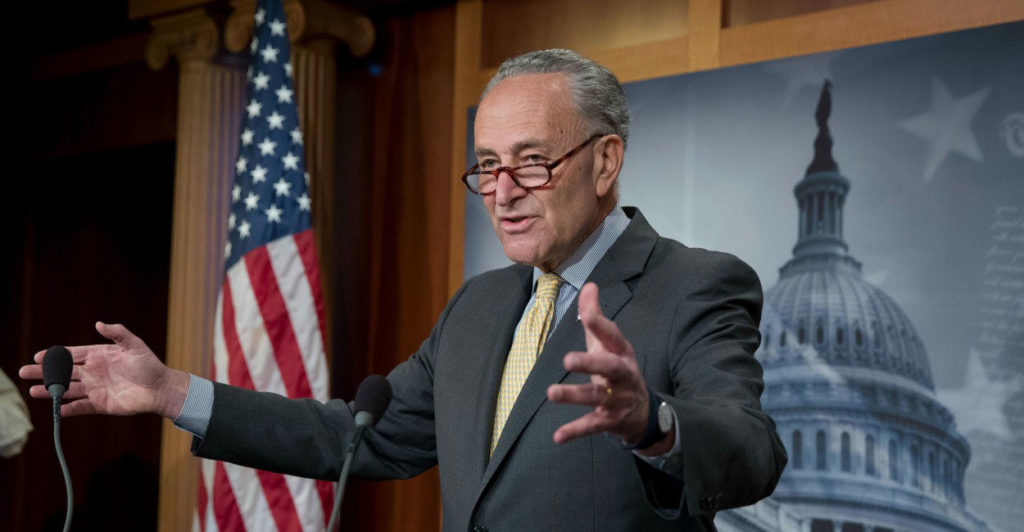
The partial shutdown of the federal government is poised to end after Senate Republicans and Democrats reached a deal Monday on a temporary funding bill. Senate Democrats are accepting a deal made with Kentucky-Republican, Senate Majority Leader Mitch McConnell for an immigration vote, in return for temporary government funding. Late Sunday evening, McConnell promised his colleagues he would take up an immigration bill that would protect an estimated 800,000 “Dreamers” from deportation if the two sides aisle can’t agree to one by Feb. 8. “It would be my intention to take up legislation here in the Senate that would address DACA, border security, and related issues as well as disaster relief, defense funding, health care, and other important matters,” McConnell said. “It would be my strong preference for the Senate to consider a proposal that can actually be signed into law, a bipartisan, bicameral group is already negotiating, and I look forward to completion of its work.” Alabama’s newly elected Democratic Sen. Doug Jones said he was encouraged by McConnell’s words a little before midnight Sunday evening. “I’ve participated in discussions w/ colleagues from both sides that have focused on finding a bipartisan path forward to keep the gov’t operating. I’m encouraged by the comments made by @SenateMajLdracknowledging our efforts & the broad interest in finding common ground,” Jones tweeted. New York-Democrat and Senate Minority Leader Charles Schumer said McConnell’s pledge was enough to convince some Democrats to switch their votes. “After several discussions, offers and counteroffers, the Republican leader and I have come to an arrangement. We will vote today to reopen the government to continue negotiating a global agreement,” Schumer said. Three-day shutdown is expected to end in a few hours.
Darryl Paulson: Amnesty Don
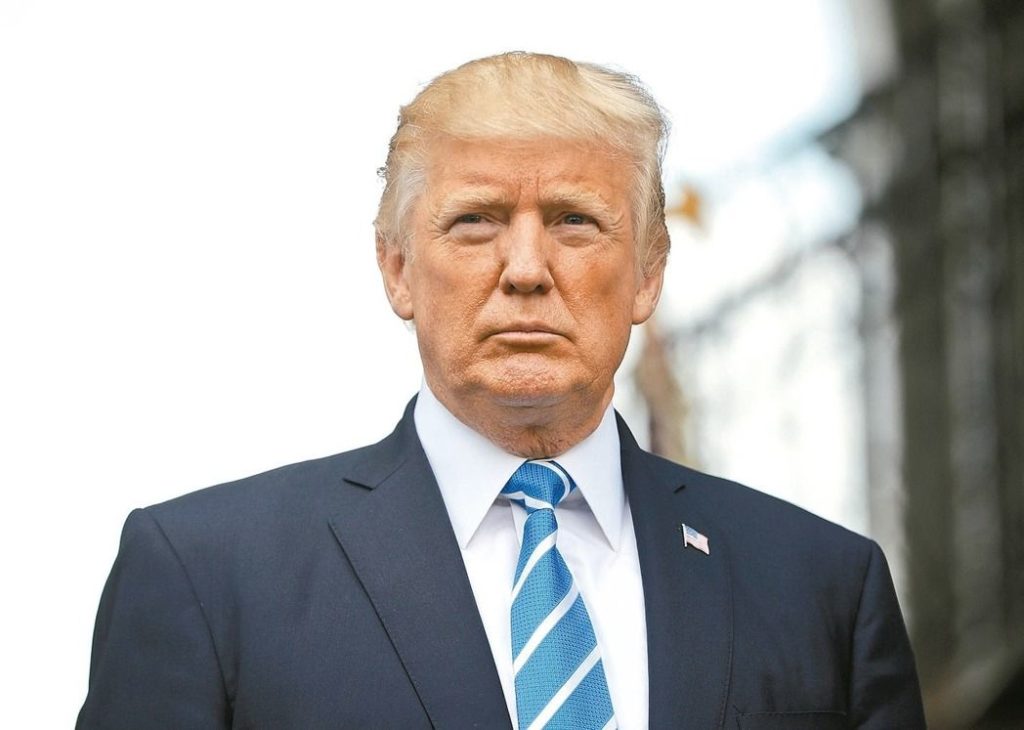
Amnesty Don. That’s what Steve Bannon and Breitbart News called President Donald Trump after news came out that the president and the Democratic leadership of congress brokered a deal concerning the Dreamers. According to reports, Trump struck a deal with Democratic leader of the Senate Chuck Schumer and Democratic House leader Nancy Pelosi. The supposed deal was to grant work visas and a pathway to citizenship for the children of illegal immigrants. Democrats agreed to bolster the number of immigration agents, but refused to support building a wall on the Mexican border. After conservative critics ranging from Laura Ingraham, Ann Coulter, Congressman Steven King and others attacked Trump for striking an amnesty deal with Democrats, Trump denied that any deal had been reached. Immigration policy has always been one of the most divisive issues in America. Much of the early controversy centered around the Irish and German immigrants, both associated with the Catholic Church. The attack on the Irish and German Catholics led to the formation of the “Know-Nothing Party in the 1850s. The party derived its name when members were asked about their beliefs, they were told to respond, “I know nothing.” Founded after the collapse of the Whig Party, the Know-Nothing Party swept Massachusetts elections in 1854. In the 1856 presidential election, their candidate was former Whig president Millard Fillmore, who won 21.5 percent of the vote. The party collapsed after the 1856 elections. Many critics of current anti-immigrants attempt to link their views to the Know-Nothing Party. In a 2006 editorial in The Weekly Standard, editor William Kristol attacked populous Republicans for “turning the GOP into an anti-immigrant, Know-Nothing Party.” In addition to the attacks on the Irish and Germans, later attacks focused on Southern Europeans, Africans and Asians. Congress passed the Chinese Exclusion Act in the 1880s, which completely stopped the flow of Chinese immigrants. The Simpson-Mazzoli Act of 1986 granted amnesty to illegal workers who resided continuously in the United States since Jan. 1, 1982, and paid a fine and back taxes. It was passed by the Democrat controlled House, the Republican Senate and signed into law by Republican Ronald Reagan. A flood of illegal immigrants since Simpson-Mazzoli has led to more recent efforts to grant permanent status to the most recent wave of illegals. In 2010, Congress considered the Dream Act which would have granted work permits to the children of illegal immigrants and create a pathway to citizenship. Although it passed the Democratic controlled House, the Senate was not able to get the 60 votes needed to stop a Republican filibuster. Because of the failure of Congress to pass the Dream Act, President Obama signed an executive order in 2012 to protect the Dreamers. The Deferred Action for Childhood Arrivals (DACA), was praised by the Democrats, but attacked by Republicans who argued the president lacked the authority to unilaterally change immigration policy. DACA became a focal point of the 2016 presidential campaign when candidate Donald Trump promised to end DACA on “Day One.” He also promised to build a wall on the Mexican border. Instead of “Day One,” it took Trump eight months to rescind DACA. There are currently four major legislative proposals before Congress to reform immigration. The Dream Act, sponsored by Democrat Dick Simpson of Illinois and Republican Lindsay Graham of South Carolina, would codify DACA, impose educational, work and military requirements and create a path to citizenship after 13 years. Florida Republican Congressman Carlos Curbelo has introduced the Recognizing America’s Children Act. This bill codifies DACA, imposes work and educational requirements, and creates a path to citizenship after 10 years. The American Hope Act sponsored by Democratic Representative Luis Gutierrez of Illinois, has 112 Democratic co-sponsors. There are no work or military requirements and Dreamers may apply for citizenship after five years. Finally, Republican House member Mike Coffman of Colorado has introduced the Bar Removal of Individuals [who] Dream and Grow our Economy (Bridge Act). Coffman is seeking to obtain 218 signatures and force DACA to the floor for a vote. Will President Trump’s negotiations with the Democratic leadership force Republicans to act, or will it alienate them from their president by shutting out Republicans from the negotiations? Will Republican leaders Mitch McConnell and Paul Ryan schedule a floor vote on DACA, especially if most Democrats support the bill and most Republicans oppose the bill? Will Democrats offer concessions to the president and Republicans in exchange for supporting DACA? Will Democrats agree to build a birder wall? Will Democrats support E-Verify to enforce immigration law? Will Democrats agree to hire more immigration agents? At this point, there are a lot more questions than there are answers. ••• Darryl Paulson is Emeritus Professor of Government at the University of South Florida in St. Petersburg specializing in Florida politics and elections.
After Donald Trump deal, Nancy Pelosi predicts greater leverage for Dems
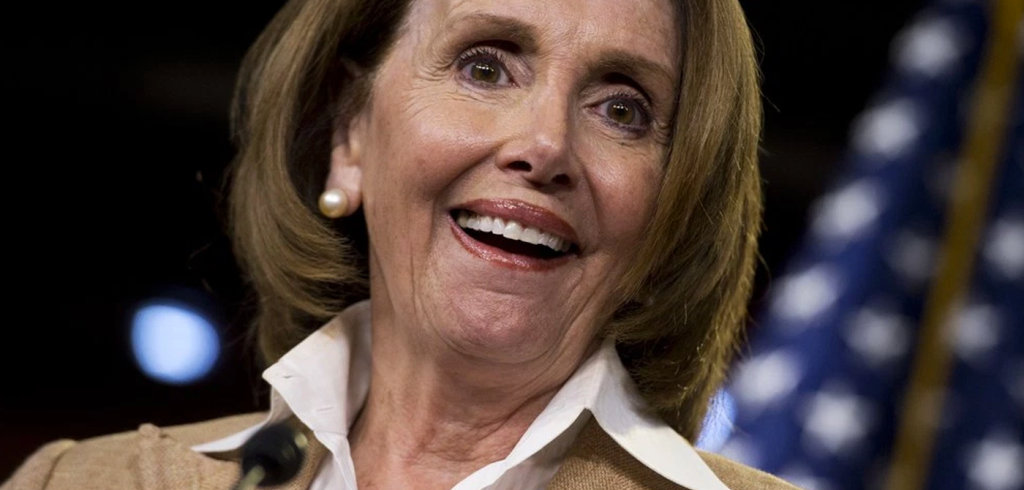
House Minority Leader Nancy Pelosi predicted on Friday that Democrats will have increased leverage on immigration and other issues, after a debt and disaster aid deal they cut with President Donald Trump passed the House on the strength of Democratic votes. Pelosi said she makes “no apology” for working across the aisle with a president disdained in her home state of California, arguing that the president now understands Democrats are committed to compromise, “but also to stand our ground.” The package of Harvey aid money coupled with a short-term increase in the debt ceiling and government spending passed Friday 316-90, with all 90 “no” votes coming from Republicans. Pelosi said that vote suggests Republicans are going to have a hard time passing other upcoming spending bills on their own, and will have to turn to Democrats again. “If it’s depending on Democratic votes, it increases our leverage,” Pelosi said in an interview with a small group of reporters. “It gives us a possibility for passing the DREAM Act” as an amendment to spending legislation. The DREAM Act refers to legislation that would provide legal status to immigrants brought illegally to the country as children. Some 800,000 of these immigrants are currently protected from deportation by temporary work permits granted by an Obama administration program, but Trump has said he will dismantle it. He has given Congress six months to act before the program ends. At Pelosi’s urging, Trump sent a tweet Thursday morning reassuring so-called “Dreamers” that they would not be subject to deportation during that six-month period. Pelosi discussed her conversation with Trump precipitating the tweet. She said that after a discussion with Democratic lawmakers about fears in the immigrant community, she had planned to call White House Chief of Staff John Kelly Thursday morning to talk about it. Trump called her first; aides have previously said one purpose was to boast about positive news coverage of the debt deal struck the day before in the Oval Office over GOP objections. But Pelosi launched into the topic of immigration, telling Trump: “‘I’m so glad you called because this is the challenge that we have. I know you did not mean to instill fear, but that is what is happening.’” “‘Well what can I do?’” the president asked, according to Pelosi. “I said, ‘Well, what you always do,’” Pelosi replied, laughing as she recalled the exchange. “‘Put out a message of assurance to people and we want to hold you accountable to that message of assurance.’” Sure enough, no sooner did Pelosi get off the phone and head into a meeting with fellow Democrats where she began recounting her call with the president, the tweet appeared: “For all of those (DACA) that are concerned about your status during the 6 month period, you have nothing to worry about – No action!” Asked her takeaway from that exchange, Pelosi said: “We have to always assume that people are acting with love in their heart. I’m a big believer in that, until they prove differently to me you have to believe it. And I don’t know if the president fully, I don’t know if he understood how cruel that act was,” she said, referring to the decision to end the immigration program. Pelosi also talked about the now-famous Wednesday meeting at the White House where Trump sided with her and Senate Minority Leader Chuck Schumer on the three-month debt limit extension, dismissing calls for a longer extension from Speaker Paul Ryan, Senate Majority Leader Mitch McConnell, R-Ky., and Treasury Secretary Steven Mnuchin. Pelosi said Democrats had the leverage because Republicans didn’t have the votes to pass the longer extension they wanted on their own. She said Trump quickly grasped that. “The president has been in a business where knowing your numbers has been essential,” Pelosi said. “He saw that they didn’t have the votes; we had a plan.” She said voters expect lawmakers and the president to work together. “We have a responsibility to get something done for the American people,” Pelosi said. “I make no apology for trying to do that with the person who’s going to sign the bill.” Republished with permission from the Associated Press.
