
Harry Reid, former Senate majority leader, dies at 82
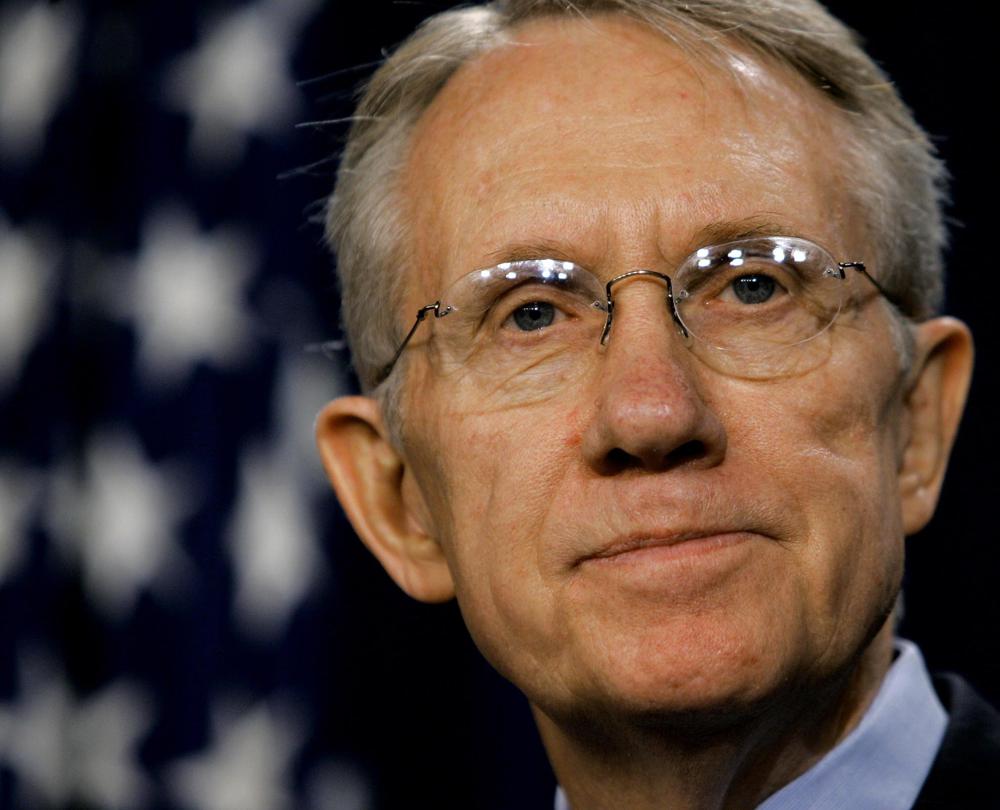
Harry Reid, the former U.S. Senate majority leader and Nevada’s longest-serving member of Congress, has died. He was 82. Reid died Tuesday “peacefully” and surrounded by friends at home in suburban Henderson, “following a courageous, four-year battle with pancreatic cancer,” according to family members and a statement from Landra Reid, his wife of 62 years. “Harry was a devout family man and deeply loyal friend,” she said. “We greatly appreciate the outpouring of support from so many over these past few years. We are especially grateful for the doctors and nurses that cared for him. Please know that meant the world to him,” Landra Reid said. Funeral arrangements will be announced in the coming days, she said. Harry Mason Reid, a combative former boxer-turned-lawyer, was widely acknowledged as one of toughest dealmakers in Congress, a conservative Democrat in an increasingly polarized chamber who vexed lawmakers of both parties with a brusque manner and this motto: “I would rather dance than fight, but I know how to fight.” Over a 34-year career in Washington, Reid thrived on behind-the-scenes wrangling and kept the Senate controlled by his party through two presidents — Republican George W. Bush and Democrat Barack Obama — a crippling recession and the Republican takeover of the House after the 2010 elections. President Joe Biden said that during the two decades they served together in Congress, and the eight years they worked together when Biden was vice president, Reid met the marker for what he believed was the most important measure of a person — their actions and their words. “If Harry said he would do something, he did it. If he gave you his word, you could bank on it. That’s how he got things done for the good of the country for decades,” Biden said in a statement. Reid retired in 2016 after an accident left him blind in one eye and revealed in May 2018 that he’d been diagnosed with pancreatic cancer and was undergoing treatment. Less than two weeks ago, officials and one of his sons, Rory Reid, marked the renaming of the busy Las Vegas airport as Harry Reid International Airport. Rory Reid is a former Clark County Commission chairman and Democratic Nevada gubernatorial candidate. Neither Harry nor Landra Reid attended the December 14 ceremony held at the facility that had been known since 1948 as McCarran International Airport, after a former U.S. senator from Nevada, Pat McCarran. Reid was known in Washington for his abrupt style, typified by his habit of unceremoniously hanging up the phone without saying goodbye. “Even when I was president, he would hang up on me,” Obama said in a 2019 tribute video to Reid. Reid was frequently underestimated, most recently in the 2010 elections when he looked like the underdog to tea party favorite Sharron Angle. Ambitious Democrats, assuming his defeat, began angling for his leadership post. But Reid defeated Angle, 50% to 45%, and returned to the pinnacle of his power. For Reid, it was legacy time. “I don’t have people saying ‘he’s the greatest speaker,’ ‘he’s handsome,’ ‘he’s a man about town,’” Reid told The New York Times in December that year. “But I don’t really care. I feel very comfortable with my place in history.” Born in Searchlight, Nevada, to an alcoholic father who killed himself at 58 and a mother who served as a laundress in a bordello, Reid grew up in a small cabin without indoor plumbing and swam with other children at a pool at a local brothel. He hitchhiked to Basic High School in Henderson, Nevada, 40 miles (64 kilometers) from home, where he met the wife he would marry in 1959, Landra Gould. At Utah State University, the couple became members of the Church of Jesus Christ of Latter-day Saints. The future senator put himself through George Washington University law school by working nights as a U.S. Capitol police officer. At age 28, Reid was elected to the Nevada Assembly and at age 30 became the youngest lieutenant governor in Nevada history as Gov. Mike O’Callaghan’s running mate in 1970. Elected to the U.S. House in 1982, Reid served in Congress longer than anyone else in Nevada history. He narrowly avoided defeat in a 1998 Senate race when he held off Republican John Ensign, then a House member, by 428 votes in a recount that stretched into January. After his election as Senate majority leader in 2007, he was credited with putting Nevada on the political map by pushing to move the state’s caucuses to February, at the start of presidential nominating season. That forced each national party to pour resources into a state that, while home to the country’s fastest growth over the past two decades, still only had six votes in the Electoral College. Reid’s extensive network of campaign workers and volunteers twice helped deliver the state for Obama. Obama in 2016 lauded Reid for his work in the Senate, declaring, “I could not have accomplished what I accomplished without him being at my side.” The most influential politician in Nevada for more than a decade, Reid steered hundreds of millions of dollars to the state and was credited with almost single-handedly blocking construction of a nuclear waste storage facility at Yucca Mountain outside Las Vegas. He often went out of his way to defend social programs that make easy political targets, calling Social Security “one of the great government programs in history.″ Reid championed suicide prevention, often telling the story of his father, a hard-rock miner who took his own life. He stirred controversy in 2010 when he said in a speech on the floor of the Nevada legislature it was time to end legal prostitution in the state. Reid’s political moderation meant he was never politically secure in his home state or entirely trusted in the increasingly polarized Senate. Democrats grumbled about his votes for a ban on so-called partial-birth abortion and the Iraq war resolution in 2002, something Reid later said it was his
A year after ‘Obamacare’ vote, Democrats see election cudgel
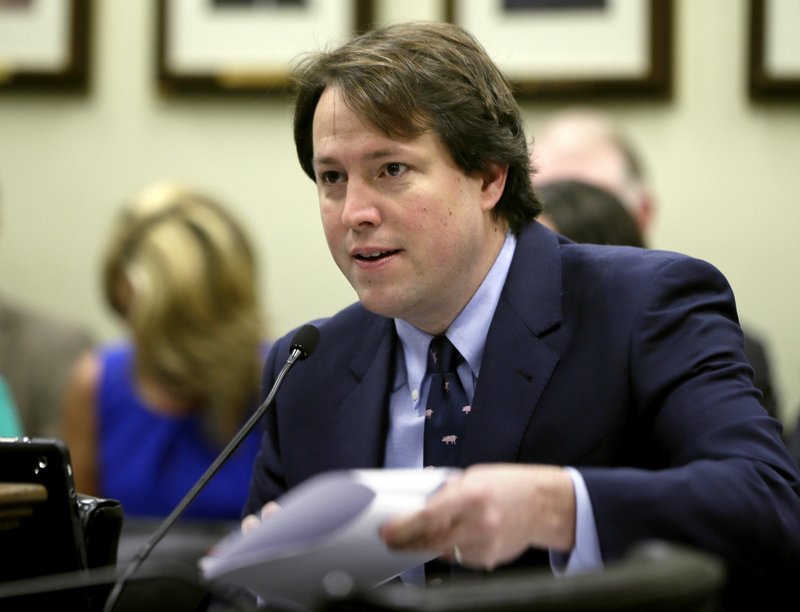
When Republicans muscled legislation scuttling the Obamacare health care law through the House a year ago Friday, Democrats waved sarcastically and giddily serenaded them with chants of, “Nah nah nah nah, hey hey, goodbye.” Now, Democrats are trying to make good on their taunts. They’re trying to use the vote as campaign weapon, hammering Republicans for voting to replace a popular statute with a bill Congress’ own budget experts said would have driven up premiums and the ranks of the uninsured. They’re already using it in ads from Georgia to Arizona and planning others in their drive to win House control in this November’s elections — often coupling it with December’s tax cuts, which disproportionately benefited businesses and wealthy Americans. “They walked the plank on a disastrous economic agenda,” said Charlie Kelly, executive director of the House Majority PAC, which backs Democratic candidates. He said the votes underscore a narrative of: “Wait a minute, these guys are absolutely not standing with working families. They’re trying to screw me on my health care.” Republican strategists offer mixed views on the issue’s impact, with the most optimistic hoping to damage Democrats by accusing them of favoring government-financed health care. About a third of Senate Democrats and two-thirds of House Democrats have backed such legislation, a favorite with the party’s most liberal voters, which Republicans say will prompt government decision-making about care and tax increases to finance the proposal’s huge costs. “A bigger government is not something they want to run on,” GOP pollster Jon McHenry said of Democrats. That’s not stopping Democrats from featuring health care in the campaign’s earliest ads. Georgia Democratic hopeful Bobby Kaple, seeking the nomination for an Atlanta-area district, says “Thank God for Obamacare” in his spot showing his two young children, born premature but healthy after expensive medical bills. In Arkansas, cancer survivor Clarke Tucker says he’ll “stand up to anyone who tries to take your health insurance” as he competes for the Democratic nomination for a seat surrounding Little Rock. “Health care is on their mind every day, and I understand that,” Tucker said of area voters in an interview. Democrats are also using the issue in their battle for the Senate, where Republican proposals to scrap Obama’s law flopped last summer, dooming the effort. Rep. Jacky Rosen, D-Nev., seeking to oust GOP Sen. Dean Heller, has run an ad saying, “Repeal and replace Sen. Dean Heller” that highlights his support for repeal legislation after initially opposing it. In Arizona, Democratic Senate hopeful Rep. Kyrsten Sinema is highlighting her family’s loss of health insurance when she was a child, saying, “I know what it’s like for a family to struggle to make ends meet.” The Democratic charge on health care represents a turnaround from recent elections. In 2010, just months after passage of the Affordable Care Act, Democrats lost control of the House as Republicans tapped into fears about the government’s growing role in health care. Four years later, Republicans grabbed Senate control following the botched rollout of the health law’s online insurance markets and some people’s loss of policies that fell short of the statute’s coverage requirements. The failed GOP repeal effort helped turn the tables. A Wall Street Journal-NBC News poll last month showed people trust Democrats over Republicans for handling health care by 18 percentage points. A Kaiser Health Tracking Poll in February showed Obama’s law with a favorable rating from 54 percent of Americans, its highest score in more than 80 Kaiser surveys since the statute’s enactment. “Voters are very upset with the actions Republicans took” trying to repeal Obama’s law, said Sen. Chris Van Hollen, D-Md., who heads Senate Democrats’ campaign committee. “This is an issue that we’re seeing at the top of voters’ minds, and this is across all states.” Even some Republicans concede the issue will be a tough one. Pennsylvania Rep. Charlie Dent, among only 20 Republicans who voted against the House repeal bill, said GOP candidates will be vulnerable because of the bill’s impact and because President Donald Trump privately labeled the GOP measure “mean” a month after it passed. “That ad more or less writes itself,” Dent said of the inevitable Democratic campaign spots. Former Rep. Tom Davis, R-Va., who once headed the House GOP’s campaign organization, said Republicans “would have owned” health care and steadily growing insurance premiums had they successfully enacted legislation. Instead, he says, “They may or may not own the outcomes,” adding, “I don’t think it’s a silver bullet for Democrats.” Democrats say they’ve gotten further ammunition from subsequent GOP actions. These include Trump’s halt of federal subsidies that helped insurers contain some costs and his easing of restrictions on short-term insurance plans with low costs but skimpy coverage. Last May, the nonpartisan Congressional Budget Office estimated that the House-passed bill would have left 23 million additional people uninsured by 2026 and boosted premiums an average 20 percent this year. Marking the vote’s anniversary, progressive groups planned more than a dozen rallies Friday from California to Virginia. The liberal Save My Care was airing a 30-second television ad in Washington, D.C., showing top Republicans celebrating the House vote with Trump in the White House Rose Garden. “We won’t forget” appears on a black screen after newscasters intone the bill’s impact, including letting insurers charge higher prices for people with pre-existing medical conditions. Republished with the permission of the Associated Press.
Analysis: Donald Trump unlikely to avoid blame for health care loss
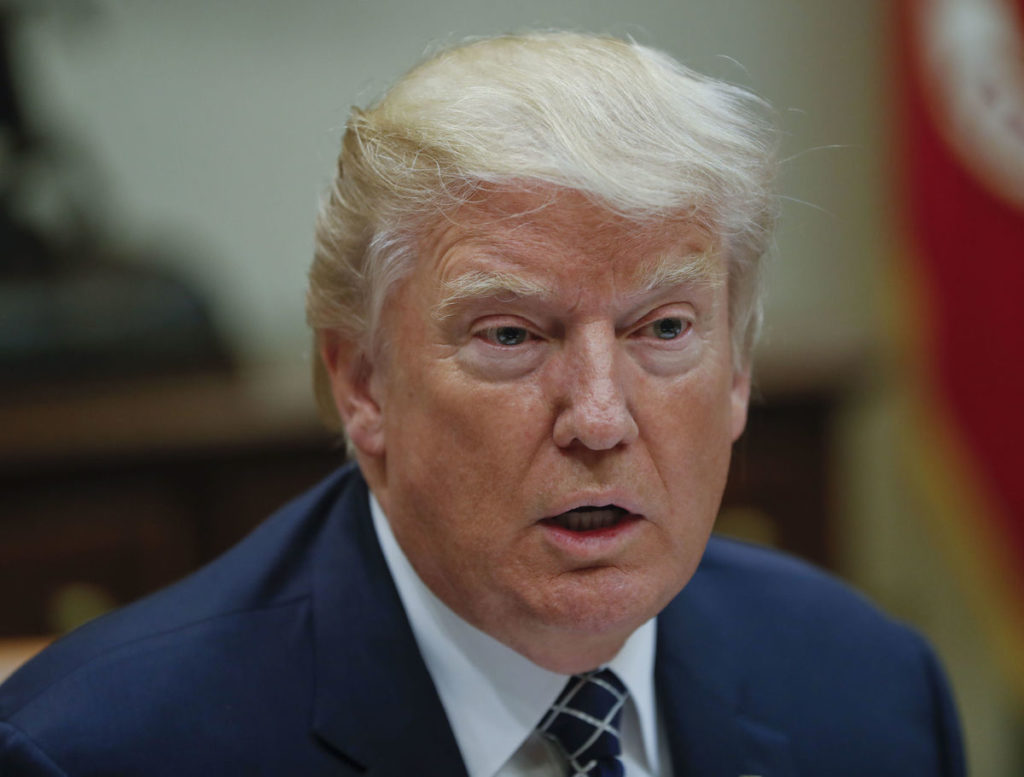
It was a far cry from “The buck stops here.” President Donald Trump, dealt a stinging defeat with the failure of the Republican health care bill in the Senate, flipped the script from Harry Truman’s famous declaration of presidential responsibility and declared Tuesday, “I am not going to own it.” He had tweeted earlier, “We were let down by all of the Democrats and a few Republicans.” This is the same president who thundered night after night on the campaign trail that it would be “so easy” to repeal and replace the Obama health care law on Day One of his administration. Try and tweet as he might, Trump can’t now avoid a share of the blame for the stall-out of that repeal effort. It’s a president’s burden to shoulder the nation’s problems whether they are inherited or created in real time. Barack Obama took office with the American economy facing its worst crisis since the Great Depression. John F. Kennedy accepted responsibility for the failure of the invasion of Cuba at the Bay of Pigs, ordered on his own watch. “That’s the nature of being elected president: You own the policies, the economy and the government,” said presidential historian Julian Zelizer, a professor at Princeton University. “You own the positives and negatives of the job whether you think it’s your fault or not. You live in the White House: You can’t disassociate yourself from what happens if you don’t like it.” Trump took office armed with Republican control of both houses of Congress and an ambitious agenda that would begin with the repeal and replacement of Obamacare. Six months later, the collapse of the GOP plan was a sharp rebuke for the president, who was unable to cajole or threaten Republicans to stay in line and who exerted little of his diminished political capital to see through a promise that had been at the core of his party since Obamacare became law seven years ago. The president’s disjointed support for the health care plan did little to persuade Republicans to support it, and the fact that his approval ratings had dropped below 40 percent didn’t help either. Trump never held a news conference or delivered a major speech to sell the bill to the public. He never leveraged his popularity among rank-and-file Republican voters by barnstorming the districts of wavering GOP senators. And he never spearheaded a coherent communications strategy — beyond random tweets — to push for the plan. “The best way to motivate members is talk to their constituents and at no point did he try to talk to Americans about health care reform in any sort of serious way,” said Alex Conant, a Republican strategist who worked on Florida Sen. Marco Rubio’s 2016 presidential campaign. “His attention seems to drift with whatever is on cable news on any given moment as opposed to what is on the Senate floor any given week.” Sounding almost like a bystander during his brief Oval Office remarks Tuesday, Trump six times expressed “disappointment” that the Republican effort had failed. And he insisted the fault rested with Democrats and suggested Obamacare should be left to fail on its own. “I’m not going to own it,” Trump insisted. “I can tell you that Republicans are not going to own it.” Democrats blasted Trump’s blame game, with Senate Minority Leader Chuck Schumer saying his refusal to accept responsibility demonstrated “such a lack of leadership.” “That is such a small and petty response,” Schumer said. “Because the president, he’s in charge. And to hurt millions of people because he’s angry he didn’t get his way is not being a leader.” Despite Trump’s efforts to shift blame across the aisle, the White House made little effort to court Democrats. Instead of initially pursuing an infrastructure plan — which would have likely received support from unions and blue-collar workers, making it hard for Democrats to oppose — Trump opted to tackle the far more polarizing issue of health care first. He outsourced most of the work to House Speaker Paul Ryan and Senate Majority Leader Mitch McConnell. It became a strictly Republican effort which, due to the party’s slight advantages in the House and Senate, had little margin for error. And it was conservatives from Trump’s own wing of the Republican party who thwarted him. The conservative House Freedom Caucus defied him and ignored his Twitter threats. The two senators who withdrew their support Monday night, effectively killing the bill, didn’t even give the White House a heads-up before announcing their decisions. And even though Trump allies have threatened to aid primary challengers to a pair of on-the-fence senators — Jeff Flake of Arizona and Dean Heller of Nevada — the Republicans did not cave, potentially setting a worrisome precedent for the White House as it tries to move ahead with the rest of its stalled agenda. Former House Speaker Newt Gingrich, a Trump adviser, believes that both Congress and the White House share blame after seemingly forgetting that “opposition parties pass press releases that get vetoed, while governing parties pass bills in which every paragraph gets scrutinized.” “I hope the president learns that do something really, really big, you need to be disciplined and focused and sort out your communications program,” said Gingrich. “So far, they are clearly not capable of doing that.” Republished with permission of The Associated Press.
Donald Trump trashes media, cheers wins at $10 million fundraiser
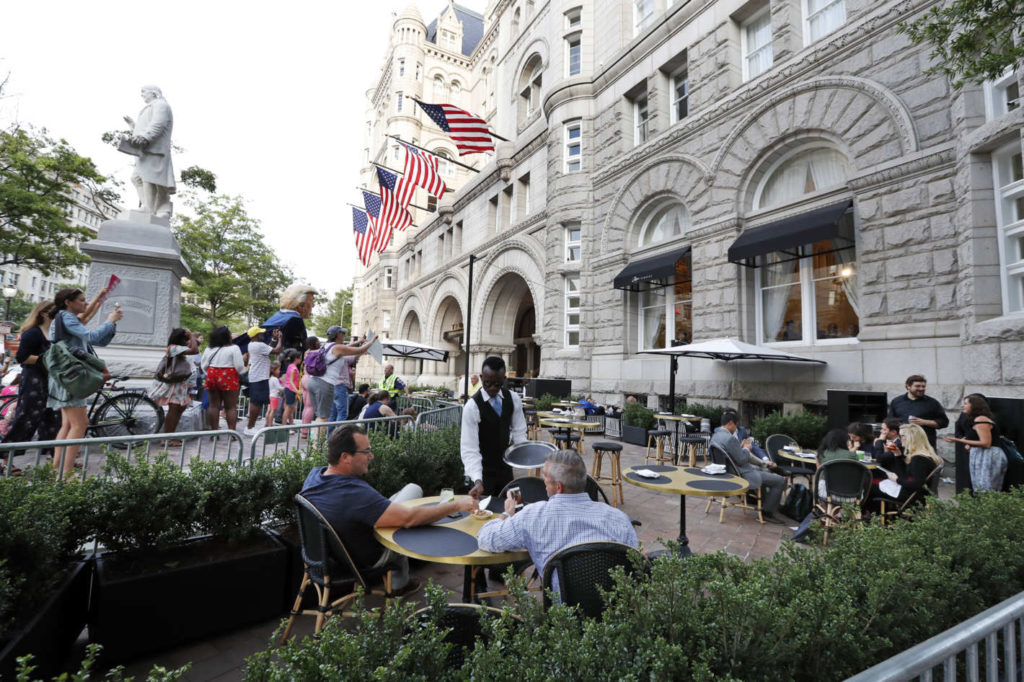
Republican donors paid $35,000 apiece to hear familiar a message from President Donald Trump: The media, particularly CNN, keep trying to take him down, and yet Republicans just keep on winning elections. He noted with pride that his party had won four special elections this year. The president was whisked a few blocks from the White House to the Trump International Hotel, his name-branded Washington venue, for an evening of hobnobbing behind closed doors Wednesday with major party financiers, including Las Vegas casino mogul Steve Wynn. One attendee stood out: Nevada Sen. Dean Heller, part of a small group of Republicans whose objections just a day earlier had doomed — at least for now — the Senate’s effort to repeal and replace President Barack Obama’s health care law. Trump did not single out Heller, but Wynn, the lead fundraiser for the Republican National Committee, gently jabbed him by urging all Republicans to come together to support the president’s agenda. Breaking with the tradition of his predecessor, Trump barred reporters from the event, despite an announcement earlier in the day that a pool of reporters would be allowed inside. Two people in the room, demanding anonymity to discuss a private event, relayed the messages given by Trump and Wynn. “It’s a political event, and they’ve chosen to keep that separate,” White House deputy press secretary Sarah Huckabee Sanders said when asked why the event was closed to the media. Trump’s first re-election fundraiser comes some 40 months ahead of Election Day. Joined by first lady Melania Trump and top advisers, he held court for about two hours at an event attended by about 300 people that raised more than $10 million. The money is to be spread among Trump’s campaign, the RNC and other GOP entities. Security was tight at the hotel, where guests in long gowns and crisp suits began arriving around 5 p.m. But the event also drew critics. The president’s motorcade was greeted by dozens of protesters, who hoisted signs with slogans like “Health care, not tax cuts” and chanted “Shame! Shame!” Among the event’s guests: Longtime GOP fundraiser-turned television commentator Mica Mosbacher and Florida lobbyist and party financier Brian Ballard. The Trump International Hotel has become a place to see — and be seen — by current and former Trump staffers, lobbyists, journalist and tourists. Several Washington figures of considerable influence popped into the lobby even though they didn’t plan to attend the fundraiser in an adjacent ballroom. Trump’s decision to hold a fundraiser at his own hotel has raised issues about his continued financial interest in the companies he owns. Unlike previous presidents who have divested from their business holdings or interests before taking office, Trump moved his global business empire assets into a trust that he can take control of at any time. That means that when his properties — including his Washington hotel — do well, he stands to make money. Trump technically leases the hotel from the General Services Administration, and profits are supposed to go to an account of the corporate entity that holds the lease, Trump Old Post Office LLC. It remains unclear what might happen to any profits from the hotel after Trump leaves office, or whether they will be transferred to Trump at that time. Under campaign finance rules, neither the hotel nor the Trump Organization that operates it can donate the space for political fundraisers. It must be rented at fair-market value and paid for by the Trump campaign, the RNC or both. Although this was Trump’s first major-donor event, his re-election campaign has been steadily raising money since the day he was inaugurated, mostly through small donations and the sale of Trump-themed merchandise such as the ubiquitous, red “Make America Great Again” ball caps. The campaign raised about $7 million in the first three months of the year, according to Federal Election Commission reports. The RNC also is benefiting from the new president’s active campaigning, having raised about $62 million through the end of last month. The party has raised more online this year than it did in all of 2016 — a testament to Trump’s success in reaching small donors. Trump’s re-election money helps pay for his political rallies. He’s held five so far, and campaign director Michael Glassner says those events help keep him connected to his base of voters. The constant politicking, however, means it is challenging for government employees to avoid inappropriately crossing ethical lines. Some watchdog groups have flagged White House employee tweets that veer into campaign territory. White House spokeswoman Lindsay Walters says the employees work closely with lawyers to avoid pitfalls. Walters also says the White House takes care to make sure that Trump’s political events and travel — including the Wednesday fundraiser — are paid for by the campaign and other political entities. Republished with permission of The Associated Press.
